Archive for ‘Trade’

10/12/2014

World’s longest train journey reaches its final destination in Madrid – Xinhua | English.news.cn

The train, named “Yixinou” arrives in Madrid Abronigal railway station in Madrid, Spain, on Dec. 9, 2014. Madrid was the final destination on Tuesday for a train which has set the record for the longest train journey in history: 13,052 kilometers between the Chinese city of Yiwu and the Spanish capital. (Xinhua/Xie Haining)

MADRID, Dec. 9 (Xinhua) — Madrid was the final destination on Tuesday for a train which has set the record for the longest train journey in history; 13,052 kilometers between the Chinese city of Yiwu and the Spanish capital.

The train which arrived in Madrid at 11a.m. local time (1000GMT), departed from Yiwu on November 18th with 40 wagons, carrying 1,400 tons of cargo, consisting of stationary, craft products and products for the Christmas market and it will return to China filled with luxury Spanish produce such as cured ham, olive oil and wine.

The results of this first historic journey which will then be evaluated with the aim of opening a regular two-way rail link between China and Spain, which could commence operations in early 2015.

Two major advantages of rail travel are that the goods were transported much faster than would otherwise be possible by boat, arriving in Spain in half of the time a cargo vessel would need to cross from China to Spain, while the train produces 62 percent less carbon dioxide contamination less than a lorry making the same journey by road.

The marathon journey crossed China, Kazakhstan, Russia, Belarus, Poland, Germany and France, before arriving in Spain with 30 of the wagons it had originally set out with.

The 13,052 kilometers between Madrid and Yiwu is a greater distance than that between the north and south pole, although the distance was not covered using the same crew, nor the same engine.

The engine was changed approximately every 800 kilometers, while the crew changes with each country the train traversed. Meanwhile special stops were necessary at the frontier cities of Dostyk (Kazakhstan), Brest (Belarus) and Irun (Spain) in order to deal with the different railway gauges encountered along the route.

A host of dignitaries, such as Spain’s Public Works Minister Ana Pastor, the Mayor of Madrid Ana Botella, as well as the Director of Business at the Chinese Embassy in Madrid Mr. Huang Yazhong, and the Director of Commerce for the Government of Zhejiang Province Mr. Zhang Shuming.

Mr. Huang said the journey showed the great importance China gave to strengthening relations with Europe, while thanking all of the authorities which had helped to make such a historic trajectory possible, while Mrs Botella commented that the 13,053 of railway which had made the historic feat possible was like a “new silk road for the 21st century, except that now the commerce will travel in both directions.

via World’s longest train journey reaches its final destination in Madrid – Xinhua | English.news.cn.

04/12/2014

Visas for travel: Common sense comes to India | The Economist

RED TAPE is the bane of frequent business travellers. Many places in the world require arduous and expensive visa applications for even the most routine travel. I have two passports just so I can juggle concurrent applications when necessary. But the best policy, for business travellers and tourists alike, is a less-restrictive visa regime. The Schengen Area has proven a huge boon to European travellers; this blog has long supported making it easier for people to travel abroad.

Now there’s some good news. India, a nation notorious for bureaucracy and red tape—not to mention the long queues outside its diplomatic missions of people hoping to visit the country (see picture above of India House in London)—has dramatically loosened its visa policies. Travellers from 43 nations, including Germany, Japan, Russia and America, will now be able to receive visas upon arrival. There are, unfortunately, some restrictions:

You have to apply online four days in advance, pay a $60 fee, and upload a passport photo and a scan of your passport.

It only works for the international airports in nine cities: Delhi, Mumbai, Chennai, Kolkata, Hyderabad, Bengaluru, Thiruvananthapuram, Kochi and Goa.

It is valid for 30 days, and you can only get two per year.

Narendra Modi‘s government has referred to the changes as being for a “tourist visa”. But the announcement makes clear the visa can be used for a “casual business visit”, and many Gulliver readers may decide that’s good enough for them.

The new policy is far from perfect, but it’s a step in the right direction and one that travellers should applaud. It will “send out a clear message that India is serious about making travel to the country easy,” Mahesh Sharma, the country’s tourism minister, said in a statement. That’s an encouraging attitude. If Mr Modi’s government can pull off more changes along these lines, travellers—and the Indian economy—should benefit greatly.

via Visas for travel: Common sense comes to India | The Economist.

30/09/2014

Obama-Modi Meeting Offers Chance to Reset U.S.-India Ties – Businessweek

President Barack Obama and Indian Prime Minister Narendra Modi’s meetings in Washington give the two leaders to chance to reinvigorate an economic relationship that both see crucial to growth and security.

Indian Prime Minister Narendra Modi

The two days of talks, which began with a private dinner for Modi at the White House last night, are pivotal, U.S. officials said ahead of the summit. In addition to Obama’s sessions with Modi, Vice President Joe Biden and Secretary of State John Kerry will host today a luncheon for the Indian leader.

This is the first time Obama and Modi have met, and it also is Modi’s first visit to the U.S. since he was denied a visa in 2005 over anti-Muslim riots in his state of Gujarat three years earlier. Modi won a landslide election win in May, and the U.S. is seeking to repair relations while India is wooing foreign investors to revive its economy.

“The U.S. is eagerly trying to move forward with Modi in order to put the past behind them,” Milan Vaishnav, an associate in the South Asia program at the Carnegie Endowment for International Peace in Washington, said in a phone interview. “The two sides have a foundation in terms of a bilateral government-to-government relationship and a people-to-people relationship to build on. In terms of a leader-to-leader relationship, this is almost like starting anew.”

via Obama-Modi Meeting Offers Chance to Reset U.S.-India Ties – Businessweek.

30/09/2014

Fake Trade Documents Sneak Money in and Out of China – Businessweek

Companies have “faked, forged, and illegally reused” trade documents to sneak $10 billion of hot money in and out of China since April of this year, a Chinese official announced yesterday.

Fake China Trade Disguises at Least $10 Billion of Hot Money Flows

A multi-month investigation into China’s dodgy export and import numbers has revealed the latest invoicing scams, said Wu Ruilin, a deputy head of the State Administration of Foreign Exchange, at a press briefing in Beijing on Thursday, reported China Daily today.

Much of the financial funny business was carried out through the port of Qingdao, where a commodity financing scandal was unearthed earlier, he added. The fraudulent trades have “increased pressure from hot money inflows and provided an illegal channel for criminals to move funds,” Wu said, adding that they had also distorted trade data.

China’s long-standing problem with false invoicing got an added level of official scrutiny after unusually high export numbers early last year. Companies have long inflated export numbers to disguise capital inflows, often aiming to benefit from China’s appreciating currency or to invest in property when that market was still hot. Exaggerating imports has been used to spirit money out of China, by contrast.

The practices of China’s banks will now be in the spotlight, as they have failed in “verifying the authenticity of the deals, which helped increase the fraudulent activities,” China Daily reported Wu as saying. All told, the foreign exchange regulator found 967 separate illicit foreign-exchange transactions through August, and imposed 180 million yuan (almost $30 million) in fines. The investigation now covers 24 provinces and cities across China.

via Fake Trade Documents Sneak Money in and Out of China – Businessweek.

20/09/2014

Modi Uses Another International Visit to Raise His Local Profile – India Real Time – WSJ

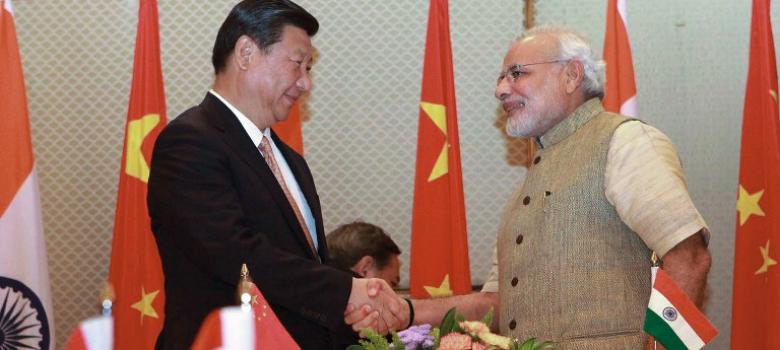
Prime Minister Narendra Modi’s meetings with Chinese President Xi Jinping this week once again showed that Mr. Modi is a master of media management.

The summit of the heads of the world’s two most-populous countries produced mixed results. A lot of agreements were signed, but the $100 billion in Chinese investment pledges that some local media had predicted did not materialize. And just as the leaders were shaking hands, there was an embarrassing faceoff between Chinese and Indian troops along the countries’ disputed boundary.

That didn’t stop India’s prime minister from again using photo opportunities and body language to broadcast his confidence, an impression that is likely to remain long after local media stop discussing the border tension and whether China had promised enough money.

Indians watching the visit wouldn’t have missed some of the symbolism. Mr. Xi flew into Mr. Modi’s home state, on the Indian prime minister’s birthday. Mr. Xi wore an  Indian vest that Mr. Modi gave him. Video of the two showed Mr. Modi walking in front of Mr. Xi at one event and swinging on a swing with him. At one point it even looked like Mr. Xi was carrying an umbrella for Mr. Modi.

Reuters Xi Jinping looked like he was carrying an umbrella for Narendra Modi during a recent visit to Gujarat.

The Indian prime minister has used the same charisma in photo ops during other international summits, most recently in Japan where he gave Prime Minister Shinzo Abe a big bear hug and later performed a solo on traditional Japanese drums.

All of this has been beamed into Indian homes and marks a major change from the demeanor of the country’s previous prime minister, Manmohan Singh, who was soft- spoken and slow-moving.

Mr. Modi’s multimedia skills are one of the things that made him prime minister.  Whether it is his controversial selfies, the sight of hundreds of supporters wearing Modi masks, campaign speeches delivered through hologram, his stylish outfits or his willingness to put on almost any kind of regional headwear, Mr. Modi knows how to make an impression.

via Modi Uses Another International Visit to Raise His Local Profile – India Real Time – WSJ.

18/09/2014

Trade, investment hopes as China’s Xi visits India – Businessweek

Chinese President Xi Jinping landed in the Indian prime minister‘s home state of Gujarat on Wednesday for a three-day visit expected to focus on India’s need to improve worn out infrastructure and reduce its trade deficit.

Xi was greeted on the tarmac by state officials carrying fringed umbrellas to guard him from the sun in Gujarat’s main financial city of Ahmedabad.

Prime Minister Narendra Modi is expected to court Chinese business and seek investment to upgrade creaky infrastructure, banking on China’s track record at building highways, railways, and industrial zones. India is also eager to address the imbalance in their annual trade, which now totals around $65 billion but is skewed toward imports of Chinese electrical equipment and parts.

Modi and the Gujarat government are staging a lavish welcome for Xi, with billboards across Ahmedabad showing a smiling Modi and Xi. A banquet dinner was being held Wednesday night on the banks of the Sabarmati River in Ahmedabad. Modi was also celebrating his 64th birthday.

Xi has been equally effusive in expressing excitement for the visit.

China-India relations have become one of the most dynamic and promising bilateral relations in the 21st century,” Xi wrote in an article published Wednesday in The Hindu newspaper.

via Trade, investment hopes as China’s Xi visits India – Businessweek.

18/09/2014

Despite the Xi-Modi bromance, Indians and Chinese don’t actually like each other

One in two Indians thinks China is a major threat.

In the last two days alone, Chinese President Xi Jinping has called India an ancient, magic, enchanting, and beautiful land. And Indian Prime Minister Narendra Modi has reciprocated with syrupy adjectives, reminding visiting journalists how ancient Chinese technology was responsible for sugar being called cheeni in India.

The pictures of the two leaders’ bonhomie on Wednesday went even further. By the time you get to the sight of Modi and Xi sitting on a swing by the Sabarmati, most would imagine that India and China are steadfast allies who support each other through thick and thin.

Which is why it might be worth pointing out that we don’t actually like each other very much, and that Indians and Chinese people have very different intentions for the bilateral relationship. And it’s not just about the trade deficit and the border disputes. Ordinary Indians and Chinese people simply aren’t sure whether they like each other.

via Scroll.in – News. Politics. Culture..

17/09/2014

Is China Ready to Step Up and Invest in India? – India Real Time – WSJ

While Chinese companies have been great at peddling their products in India, they have been surprisingly reluctant to invest here. China has invested less in India than even Poland, Malaysia or Canada have.

President Xi Jinping’s three-day visit to India starting Wednesday is likely to include some massive pledges to try to remedy this imbalance.

When Prime Minister Narendra Modi visited Japan recently, Japan pledged to invest $35 billion in India. President Xi is expected to try to eclipse Japan’s promises, possibly pledging $100 billion in investment according to some local reports. His meetings with Mr. Modi are predicted to lay the groundwork for a wave of Chinese money to build industrial parks and bullet trains.

Annual trade between India and China has galloped to $66 billion from $3 billion 14 years ago, something that underscores the rise of Beijing as the global manufacturing hub and India’s growing appetite for everything from phones to machinery from China.

While the trade relationship between the two countries has bloomed, foreign direct investment from China has not. According to Indian government statistics, the country has received a total of around $400 million from China in investment in the last 14 years. Even if you add the $1.2 billion of direct investment India received from Hong Kong, China is still well behind the $22 billion in foreign direct investment from the United Kingdom, $17 billion from Japan, $13 billion from the Netherlands and $1.9 billion from Spain.

It’s not that China doesn’t invest abroad. According to data from United Nations Conference on Trade and Development, China was the third biggest source of foreign direct investment last year, having invested more than $100 billion in other countries. In the seven years to 2012, it invested more than $25 billion in the 10 members of the Association of Southeast Asian Nations alone.

Chinese investment has tended to focus on the resources sector to power its economy. Much of it has gone into getting control of oil, natural gas and coal in Africa, Australia, Indonesia and elsewhere. India has not attracted much of this investment as it is a net importer of resources and has a heavily regulated energy sector, said Rajiv Biswas, economist for IHS.

“China wants to increase investment in India and wants Chinese companies on the ground there,” Mr. Biswas said. “Most of it will be in manufacturing and infrastructure space.”

Chinese companies may also be looking to move some of their manufacturing to India as they struggle with rising wages at home, said Ajay Sahai, director general and chief executive at Federation of India Export Organization.

If India can’t find better ways to fix its trade imbalance with China, New Delhi may want to increase taxes on some imports such as auto-components and pharmaceuticals to encourage Chinese companies to set up factories in India, he said.

“This will not only raise Chinese investment in India but also help in fixing the trade imbalance,” said Mr. Sahai.

via Is China Ready to Step Up and Invest in India? – India Real Time – WSJ.

17/09/2014

Indian President flies out of Vietnam

President Pranab Mukherjee Wednesday wrapped up his four-day state visit to Vietnam and flew back to India.


Embed from Getty Images

During the President’s visit, India and Vietnam called for a peaceful, unfettered South China Sea, inked seven agreements including for direct Delhi-Hanoi flights and an extended line of credit for purchase of military equipment. Both countries also set a target of $15 billion bilateral trade by 2020

via President flies out of Vietnam.

17/09/2014

Project Mausam, India’s answer to China’s maritime might: Explained – News Oneindia

In a significant move, the Narendra Modi Government will soon launch ‘Project Mausam’ for countering Beijing’s growing influence in the Indian Ocean region. This transnational program is aimed at restoring India’s ancient maritime routes and cultural links with republics in the region.

'Mausam' to check China’s maritime might

Project Mausam: India’s answer to China’s ‘Maritime Silk Road

It is Narendra Modi Government’s most significant foreign policy initiative to counter-balance the maritime silk route of China.

The project emphasises on the natural wind phenomenon, mainly the monsoon winds used by Indian sailors in ancient times for maritime trade.

This initiative will enable India re-connect and re-establish communications with its ancient friends in the Indian Ocean region.

It would lead to an enhanced understanding of cultural values and concerns.

The project purposes to determine the Indian Ocean “world” – expanding from East Africa, the Arabian Peninsula, the Indian subcontinent and Sri Lanka to the Southeast Asian archipelago.

What is China’s maritime silk route?

It an initiative to develop regions along an ancient route connecting Western China with South and Central Asia.

The aim of this initiative is to strengthen China’s economic ties with various nations, including those within Asia and Europe.

It proposes China to work with partners to develop maritime infrastructure, especially ports.

Originally, the “maritime silk road” was proposed to foster cooperation and goodwill between China and the ASEAN countries.

The “maritime silk road” is parallel to the land-based “new silk road,” which runs westward from China through the Central Asian states.

The route is likely to see China further intensify its naval activities in the region.

It extends from its naval base in Hainan Island (South China Sea) to Bagamayo in Tanzania, Africa, with several of the ports encircling mainland India.

Hambantota (Sri Lanka), Gwadar (Pakistan), Chittagong (Bangladesh) and Marao Atoll (Maldives) are the ports being built by China as per the initiative.

What is Silk Route?

It is a series of trade and cultural transmission routes.

It connected the West and East by linking traders, merchants and other persons from China to the Mediterranean Sea.

It derives its name from lucrative Chinese silk trade, a major reason for the connection of trade routes into an extensive transcontinental network.

via Project Mausam, India’s answer to China’s maritime might: Explained – News Oneindia.

Law of Unintended Consequences

continuously updated blog about China & India

ChiaHou's Book Reviews

continuously updated blog about China & India

What's wrong with the world; and its economy

continuously updated blog about China & India