Chindia Alert: You’ll be Living in their World Very Soon
aims to alert you to the threats and opportunities that China and India present. China and India require serious attention; case of ‘hidden dragon and crouching tiger’.
Without this attention, governments, businesses and, indeed, individuals may find themselves at a great disadvantage sooner rather than later.
The POSTs (front webpages) are mainly 'cuttings' from reliable sources, updated continuously.
The PAGEs (see Tabs, above) attempt to make the information more meaningful by putting some structure to the information we have researched and assembled since 2006.
Like hundreds of thousands of people across India, Sujitha‘s journey from an under-developed village in India’s south to the outskirts of the city of Chennai (Madras), has transformed her life.
“My native place is a small village called Kizhattur. There is not even proper transport over there,” says Sujitha. “Because I grew up in that situation, I knew that I had to study hard and find a job.”
And she did just that – albeit against the wishes of her family who wanted her to marry and settle down.Sujitha secured a diploma and when Renault-Nissan advertised a position for a junior engineer five years ago, she jumped at the opportunity.”I can’t even imagine what I would be doing if I did not work in this factory. Perhaps I would be in the village doing small jobs on the farm,” she says. “I would just about make ends meet.”
Nissan and Renault are two of several international carmakers that have set up shop outside Chennai in the last 10 years.
Nearly a fifth of all cars made in India are produced in the area around Chennai in Tamil Nadu state
Today the area, known as the “Detroit of Asia”, is a thriving manufacturing hub where cars are produced for export as well as for the domestic market.India makes about 24 million vehicles a year, nearly a fifth of them in this region of Tamil Nadu state.
“We have seen a number of other car manufacturers establish plants in the state and that has helped us attract and help local suppliers relocate and set up in Tamil Nadu itself,” says Colin Macdonald, managing director of Renault-Nissan.
“Since 2010, we had about 15% of our suppliers in the Tamil Nadu area. We are now operating with 60% of our Indian suppliers in Tamil Nadu. So from an employment perspective, this is huge.
“High unemployment
Creating jobs is central to Prime Minister Narendra Modi‘s Make in India campaign, an effort to promote inclusive growth in the country.Modi has promised foreign players he will make it easier to do business in India.
But more than two years after taking power, and after introducing a raft of policies, unemployment rates are at a five-year high.According to a recent government survey, about 77% of Indian households have no regular wage or salaried person, and so for many, life is not improving fast enough.
Domestic market growth
Despite that, success in places like Chennai is a sign that India remains appealing to foreign companies.Now that the area has become an auto hub, cost-effective raw materials can be sourced. With the port less than 100km away, it is easy to import parts and export products back out. Labour is cheap too.
Several car companies have set up shop on the outskirts of Chennai. Workers here are seen at Ford’s plant in Chengalpattu
The growth of the domestic market only adds to India’s appeal.”Today, only 20 in 1,000 people in India own a vehicle but we expect that to grow dramatically in the next five years and we expect the market to be five million cars by 2020, making India the third biggest market on the planet,” says Colin Macdonald.
A matter of pride
For Sujitha Rajendrababu, owning a car one day has become more of a reality than a dream.
“What I had dreamed of becoming in the future was made true by this job. I do not know how to express this.”
The daughter of a farmer, she has already used the money she has earned to buy a fridge, a TV, some jewellery and even a holiday around India. But her ambitions don’t stop there.
“My long-term goal is to become the manager of the stamping shop. I don’t only want to be the manager of the stamping shop, but of this organisation as well.”
And she wants the same for other people just like her.
“A lot of people in my village ask me if I can help them find jobs for their children. That makes me feel proud.”
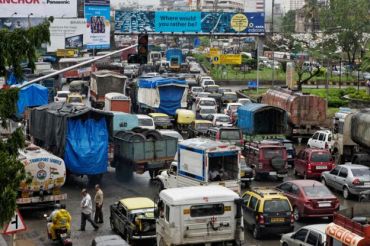
For a crash course in India’s car-crash culture, go to Mumbai. There are more accidents here than any other Indian city. You’ll witness a dangerous mix of pedestrians, scooters, cars, buses and lorries jostling through choked junctions. Many ignore both signals and the traffic police.Officers can do little about such rampant law-breaking.
“We can catch a maximum of two offenders at a time – maximum,” one shouts at me above the horns and revving engines at one particularly busy junction. “The rest,” he says flicking his wrist, “just go. There are no consequences.”
Mumbai: “A dangerous mix of pedestrians, scooters, cars, buses and lorries”
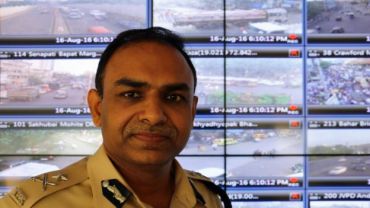
Mumbai’s commissioner of traffic police, Milind Bharambe, says this will soon end. From his cool office, flanked by monitors with live CCTV feeds of notorious accident spots, he explains how cameras will enforce the law electronically, targeting those who speed and run red lights. Combine that with the recent introduction of stiff new fines and within six months, he promises “a sea change” in driver behaviour.
Milind Bharambe, Mumbai’s commissioner of traffic police
But bad driving and weak enforcement are only part of the problem. Another aspect of it is the rapidly growing number of vehicles – a new one joins the chaos every 10 seconds. It adds up to almost 9,000 new vehicles a day, or more than three million a year.
This means that the streets are increasingly choked. It’s almost impossible to leave a safe distance between vehicles, and when space does open up, frustrated drivers often respond by putting their foot down.
Neal Razzall presents Fixing India’s Car Crash Capital on Crossing Continents, at 11:00 BST on Radio 4 – catch up on BBC iPlayer Radio
The problem is perhaps most acute in Mumbai, which is surrounded by water on three sides and has little room to grow. Officials here have in the past responded to the crush of cars by tearing out pavements to make room for more.”The government still thinks the major issue is ‘How do we move people in cars faster and quicker?'” says Binoy Mascarenhas from the pedestrian advocacy movement, Equal Streets. In reality, he says most journeys are local and, in theory, can be done on foot.
Pavements are often non-existent on Mumbai roads
In theory. He grew up in Mumbai, and used to walk to school. His daughter now goes to school in a car because it’s too dangerous to walk. Pavements, where they exist, are often in such a poor state people have to walk on the roads. No wonder then that pedestrians account for 60% of road deaths in Mumbai.
There are dangers outside the city, too.
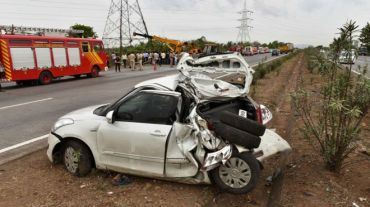
India’s first expressway, between the cities of Mumbai and Pune, opened in 2002. It has three wide lanes and room to move at high speed – a relief after the congestion of the city. But drive it with one of India’s few professional crash investigators, Ravi Shankar, and a quiet terror settles in. He’s studied thousands of crashes on this road and can point to dangers all around.
“There are small, man-made engineering problems that are actually killing people,” he says. Instead of rumble strips to warn drivers they’re at the road’s edge, there are black and yellow curb stones embedded into the concrete. Hit one of those, Shankar says, and your car can flip over. Then there are cliffs with no barriers, and guard-rails with tapered ends, which, he says, can send cars into the sky “like a rocket launcher”.
Things like this are happening all the time. The expressway is just 94km (58 miles) long but about 150 people die on it every year.
“That’s serious. That’s a very bad number,” Shankar says.
He and his colleagues at JD Research have identified more than 2,000 spots on the expressway where relatively simple engineering fixes, from better barriers to clearer signs, could save lives.Jump media playerMedia player helpOut of media player. Press enter to return or tab to continue.
“Road engineers are not serious about this problem,” Shankar says. “So we keep fighting with them on this point. How many deaths are you going to wait for, until you really understand that this is a serious concern?”
In this context, Prime Minister Narendra Modi‘s plan for the biggest expansion of roads in Indian history is unnerving. In the next few years he wants to pave a distance greater than the circumference of the earth and there’s a particular push to build highways and expressways.
Piyush Tewari, CEO of the safety charity Save Life India, says without putting the country on a “war footing”, including a complete overhaul of road safety legislation and a modern road-building code, Modi’s new roads will only add to the number of dead.
“Road crash deaths will increase at the rate of one death for every 2km of new road that is constructed. That’s the average death rate on Indian highways – one death every 2km, annually. So if we don’t fix any of this, if we’re constructing 100,000km of highways, 50,000 deaths is what the average maths tells us will be added to the total,” he says.
Image copyrightROLEX AWARDS/JESS HOFFMANImage captionPiyush Tewari believes the planned new roads could lead only to more fatalities
Modi’s government insists the new roads will be safer. “We are improving the road engineering; we are improving the traffic signal system; we are making crash barriers”, transportation minister, Nitin Gadkari, tells me.
There is progress in other areas too. When Mumbai’s commissioner of traffic police predicts a “sea change” in driver behaviour he is partly putting his faith in a new motor vehicle bill, now before parliament, which if passed would increase fines, toughen vehicle registration requirements and mandate road-worthiness tests for transport vehicles.
And earlier this year, a Good Samaritan Act came into effect which ended the crazy situation whereby people who helped crash victims could be held liable for the costs of treating them or even accused by police of causing the crash in the first place. That alone, campaigners say, will save thousands of lives.
More from the Magazine
When a road accident occurs, bystanders will usually try to help the injured, or at least call for help. In India it’s different. In a country with some of the world’s most dangerous roads, victims are all too often left to fend for themselves.
Save Life India estimates that half of all road deaths are the result of treatable injuries. That means 75,000 lives could be saved every year just with better medical care.
One man trying to save some of those lives is Mumbai neurosurgeon Dr Aadil Chagla, who is working with volunteers to build a series of clinics along Highway 66, south of Mumbai – many of them in rural areas – to prevent victims having to be driven for hours to the city.
The first is more than half-built. It looks out over rice paddies and lush hills, but Dr Chagla estimates it will be treating victims from “one or two crashes a day, every day”.
“If I can have an ambulance service and trauma centres every 50 to 100km run by the locals it would make huge difference to this entire highway – with or without government support,” he says.
Image captionDr Chagla’s as-yet-unopened clinic to treat victims of road accidents
Since Dr Chagla started practising in the 1980s, the number killed on India’s roads has increased by 300%.
“I waited all this time and nothing has really come through so it’s important that I should do something about it,” he says.
So if transportation minister Nitin Gadkari is to make good on his promise to cut road deaths from 150,000 to 75,000 per year in two years, it will be thanks in part to the efforts of volunteers.
The state corporation that owns the Mumbai-Pune Expressway, meanwhile, says it will reduce deaths to zero – yes, zero – by 2020. It has accepted the list of essential improvements identified by crash investigator Ravi Shankar and authorised them to be made and then audited by Save Life India.
But there’s a snag, which suggests India is not yet on a “war footing” when it comes to safety.
The state government owns the road, but a private company runs it in exchange for collecting tolls. The two sides dispute who should make the safety upgrades. The official in charge of the expressway says the work will be done, even if it requires litigation to recover the costs.
While the dispute drags on, 100,000 vehicles use the expressway every day in its current, dangerous state. In the past week, it claimed six more lives.
Germany’s Daimler AG plans to sell Mercedes-Benz branded all-electric battery cars in China, its China chief said on Wednesday, as the automaker capitalizes on government initiatives aimed at growing the market for new-energy vehicles (NEVs).
Hubertus Troska said the government’s push, which involves tax breaks and other policy support, helped the number of NEVs sold last year surpass 300,000, making China the world’s biggest market for electric, gasoline-electric and other such vehicles.
The majority of those vehicles were priced under 250,000 yuan ($37,515) and offered mainly by Chinese automakers, Troska said at an analyst and investor conference in Beijing.
Given factors including the government push – which falls under a broader drive to cut oil dependence and air pollution – Daimler is “very confident NEVs will be an important factor of the Chinese market,” Troska said.”Mercedes-Benz is also going to play a role in China in NEVs,” he said, referring to the planned cars.
He also said he sees demand over time shifting toward a “higher segment” of more expensive and capable all-electric battery cars and plug-in hybrids.Troska did not elaborate on the planned cars such as cost, pricing, models or launch dates. But investor relations head Björn Scheib said Daimler plans to show a concept electric car at the Paris Motor Show which opens to the public on Oct. 1.
Daimler currently sells one all-electric battery model in China under its smart brand, and one under the Denza brand it operates with local partner BYD Co Ltd.
Its China line-up also includes plug-in gasoline-electric hybrid versions of the Mercedes-Benz C-class and S-class sedans and GLE crossover sport utility vehicle.
LATE last month a black-and-white photograph of a professor from Beijing Jiaotong University spread on social media. His image was edged by a black frame, like those displayed at funerals in China, and trimmed with white flowers of mourning. Though Mao Baohua is still very much alive, he had angered netizens enough to depict him as dead. His crime? To suggest that Beijing should follow the likes of London and Stockholm, by charging drivers 20-50 yuan ($3-7.50) to enter the capital’s busiest areas in the hope of easing traffic flow in the gridlocked city.
Most Chinese urbanites see buying a vehicle as a rite of passage: a symbol of wealth, status and autonomy, as it once was in America. Hence their outrage at any restraint on driving. Since car ownership is more concentrated among middle- and high-income earners in China than it is in richer countries, any attack on driving is, in effect, essentially aimed at the middle class, a group the Communist Party is keen to keep on side. That makes it hard to push through changes its members dislike.
Since 2009 officials in Beijing and the southern city of Guangzhou have repeatedly aired the idea of introducing congestion charges. Netizens have fought back, accusing their governments of being lazy, brutal and greedy. Many also gripe that the policy would be “unfair” because the fee would have less impact on the super-rich. Complaints about the inequality of congestion charging echo those made in London and other cities before they launched such schemes. But the party, nervous of being accused of straying from socialism, is particularly sensitive to accusations that it is favouring the wealthiest.
Because of such objections, city governments have not pushed their proposals very hard. But that is now changing in Beijing, where officials face a dilemma. Traffic jams in the city and appalling air pollution—30% of which comes from vehicle fumes, by official reckoning—may end up causing as much popular resentment as any surcharge. The local government is trying to work out how close it is to this tipping point. It is conducting surveys to “pressure test” how people would react to a congestion fee, says Yuan Yue of Horizon, China’s biggest polling company (the results will not be made public). It is likely that a concrete plan for a congestion charge will be announced soon. Beijing’s environmental and transport departments (not usual partners) are collaborating on a draft. State media have recently published a flurry of articles about this, not all in favour.
Public opinion is not the only challenge a congestion scheme faces. The urban planners who conceived Beijing’s layout, and that of other Chinese cities, never imagined that so many people would want to drive. The capital now has 3.6m privately owned cars: the number per 1,000 people in Beijing has increased an astonishing 21-fold since 2000, according to our sister company, the Economist Intelligence Unit (see chart).
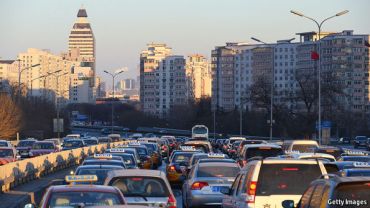
On most days large tracts of the capital are now bumper to bumper amid a cacophony of car horns. Beijingers have the longest average commute of any city in China, according to data collected by Baidu, a Chinese search engine. The problem is not confined to Beijing. The capital has higher vehicle ownership than any other Chinese city, but car use is rising rapidly across the country. Many second- and third-tier cities are already clogged.
Beijing’s congestion scheme would be the first outside the rich world, where a handful of cities now charge drivers to enter a designated area. (Singapore has a different form of road pricing, with tolls on individual arterial roads.) Such measures have been credited with reductions in downtown car-use, improved traffic flow and greater use of public transport. They have also cut pollution, including emissions of the tiny PM2.5 particles that are particularly dangerous to health and abundant in Beijing’s air.
Transport planners reckon a congestion zone would have similar effects in Beijing, and complement existing attempts to restrict car use. In 2008, after Beijing staged the Olympic games, the city launched the current system whereby each car is banned from the urban core one workday per week, depending on the last digit of its licence plate. Beijing is now one of 11 Chinese cities with similar restrictions.
But some drivers choose to pay the 100 yuan fine, which is far higher than the congestion charge that Beijing is now mulling (around the sums suggested by Professor Mao). People also drive without plates, or buy second cars, to bypass the rules. In 2011 the capital introduced a lottery for obtaining new licence plates (six other cities do this). In Beijing the scheme has slowed the increase in car ownership, but not enough to cut congestion; some residents use vehicles registered elsewhere. Also in 2011 the capital raised parking fees, hoping to deter drivers. But people often park on pavements and traffic islands instead, usually with impunity.
Delhi has implemented severe restrictions on which cars are allowed on the road again in hopes of combating the megacity’s horrendous air-pollution problem.
Similar air-clearing measures had mixed results during the peak Winter smog season but this time citizens are hoping for better results.
For the two weeks starting April 15, most cars in the Indian capital will only be allowed on the roads every other weekday. In the so-called odd-even program, cars with license plate numbers that end in odd numbers are allowed on the roads on odd-numbered days and Sundays while cars with even license plate numbers are allowed on even days and Sundays. For the first few days of the plan most offices and schools were closed for a string of national holidays and the weekend, so Monday is the true test of whether the restrictions are working.
Delhi to Revive Odd-Even Restrictions to Battle Pollution “Today is the litmus test for the odd-even plan. Like the last time, we all need to cooperate to make it a success,” Delhi’s Transport Minister Gopal Rai tweeted from his verified account on Monday. There are 2.6 million private cars and almost 5 million motorcycles and scooters registered in Delhi, according to the latest figures from the capital’s Transport Ministry.
There are many exceptions to the regulations, meaning the number of cars on the streets will not be slashed by half. Women driving alone or with children, disabled drivers, emergency services, cars with diplomatic plates and motorcyclists are all exempt from the restrictions as are military vehicles and taxis.
If this initiative gathers momentum, China will do more for electric cars (and for climate change) than the rest of the world put together!
“The China-focussed consortium that bought bankrupt Swedish automaker Saab – and bet on going all electric – unveiled its first major deal on Thursday, a mammoth $12 billion (8 billion pounds) order for electric cars for a Chinese leasing company.
The single order for 250,000 electric vehicles, including 150,000 cars based on the Saab 9-3 sedan, appeared to be all but unprecedented. There were just 665,000 electric cars in the world and 83,000 in China as of the end of 2014, according to the International Energy Agency.
National Electric Vehicle Sweden (Nevs) said it would swiftly hire hundreds of workers in Sweden to start building cars for Panda New Energy, a Chinese firm it said leases zero-emission vehicles to chauffeur-driven fleets.
Those based on the Saab 9-3 compact sedan will have a new chassis for electric drive, with bodies built and painted in Sweden and sent to China for final assembly. No details were given about the other 100,000 but a company spokesman said they would primarily be built in China.
Nevs bought the assets of the bankrupt 70-year-old Swedish automaker in 2012 with the aim of transforming it into a leading global producer of electric cars. It exited corporate reorganisation procedures in April.
“This is a strategic collaboration for Nevs not only in terms of the numbers of vehicles, but it is also an important step to implement our vision and new business plan,” Nevs Vice Chairman Stefan Tilk said in a statement.
“Cooperating with many chauffeured car service platforms in China, Panda aims to become one of the biggest electric vehicle leasing companies in the world,” Nevs said of its customer.
Nevs, which was created in 2012, has so far sold only a limited number of gasoline-powered cars based on Saab’s latest model. The deal is the first it has signed in line with its plans to go electric.
“It will be a huge challenge to produce that many cars. Their around 800 suppliers will make up a substantial part of that challenge,” said Skovde University business administration professor Mikael Wickelgren.
Nevs is co-owned by a holding company called National Modern Energy Holdings, as well as the Beijing State Research Information Technology Co. (SRIT) and Chinese industrial park Tianjin Binhai Hi-tech industrial Development Area (THT).
Nevs said at the time of the purchase of Saab’s assets that it would convert the Saab 9-3 to electric power, while simultaneously developing an all-new model to produce in Sweden for the European market and in China for the Chinese market.
Chinese police attributed 80,200 traffic accidents in 2013 to road rage, and the number rose by 2.4% in 2014. Men account for 97% of road rage incidents, official data show.
China is a notoriously dangerous place for driving in general. The World Health Organization has estimated that 261,000 people died on China’s roads in 2013. Chinese government data show that last year 1,895 people died in traffic accidents when crossing roads, and 4,180 people died between 2011 and 2014 on public buses that were speeding or overloaded.
Yet when it comes to the surge in road rage, experts point to a range of possible explanations. One is that the rapid development of China’s car market has led the country’s roads to become increasingly crowded, creating frustration and anger on the streets. Sociologists also link road rage to general anxiety and fickleness, one of the side products of China’s rapid economic growth — and its accompanying social pressure — over the past three decades.
In China, the total number of vehicles has increased by more than 18 million cars for each of the past five years. As of the end of October, China had 169 million autos, according to Ministry of Public Security statistics, next only to the U.S.’s 240 million. The number of license-holders has risen even more quickly; since 2010, China has added more than 20 million new drivers each year. Now one in five Chinese has a license.
The country’s infrastructure has struggled to keep up. Data from the Ministry of Public Security show that 35 Chinese cities now have more than one million automobiles. Ten of those cities — including Beijing, Chengdu and Shenzhen – each have more than two million cars on the road. But while the number of China’s motor vehicles and drivers has each risen more than 20-fold since 1987, the country’s road capacity has increased only 3.4 times over the same period.
The rash of new drivers is also posing safety hazards. The official Xinhua News Agency cited a spokesman from the Ministry of Public Security as saying that drivers with less than one year of experience play a large role in traffic accidents. To be sure, China has some safety regulations in place. For example, drivers and front-seat passengers are required to wear seatbelts, and the use of mobile phones while driving is prohibited. But these laws are often ignored in practice. Distracted driving – operating a vehicle while texting, talking on the phone, watching videos, eating or reading – contributed to more than a third of fatal traffic accidents in 2014, causing 21,570 deaths, the Ministry of Public Security said.
Chinese authorities are working to counter the trend. In the past month, the Ministry of Public Security launched a public education campaign on road etiquette after several high-profile cases of road rage violence this year. It advocated against dangerous driving behaviors including street racing, drunk driving, aggressive driving and blocking emergency lanes.
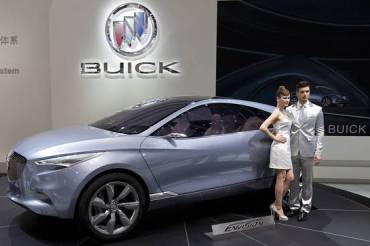
Yale Zhang, the head of Shanghai-based consultancy Automotive Foresight, called the export of the Buick Envision SUV from China to the U.S. a “landmark.”
“It means that China’s manufacturing quality has met the requirements of the world’s strictest market,” he said.
GM introduced the Buick Envision SUV in China last October. Since then, it has been one of the best-selling cars sold by GM in the country. According to the China Association of Automobile Manufacturers, a government-backed industry group, the Envision ranked seventh in China’s fast-growing SUV market in October, with monthly sales of 17,300 vehicles. Data from Automotive Foresight show that sales of Buick Envision SUVs totaled 100,826 cars in the period from January to September.
Despite the progress, experts say that Chinese home-grown car manufacturers will continue struggling to compete with foreign brands, even in China.
China is already the world’s largest market for cars in terms of sales and production. But global auto makers have been slow to ship Chinese vehicles to the U.S. and Europe on worries that Western buyers would shun them over quality concerns. European car maker Volvo Car Corp., which is owned by China’s Zhejiang Geely Holding Group Co., was the first to challenge that assumption when it started shipping sedans from a plant in China to the U.S. this spring. A Volvo China spokesman declined to disclose how many Chinese-made Volvos have been shipped to the U.S., saying only that it is a “small volume.”
A study released by automotive industry consultants J.D. Power in October shows that although Chinese car makers have been improving in quality in recent years, they still lag behind international brands in producing reliable vehicles. According to the study, Chinese brands had 120 problems for every 100 vehicles this year, compared with 131 in 2014 and 155 in 2013. International brands had 98 problems for every 100 vehicles in 2015.
“Buick is a household brand in the U.S.,” said Ms. Li from Deren Electronic. “American consumers are probably not aware that the car is made in China. But Chinese local auto brands, like Chery and Geely, are little known outside of China.” Victor Yang, a spokesman for Zhejiang Geely Holding Group Co., said that as a global player, it’s normal for GM to sell its China-made cars at home in the U.S. “All the cars made by foreign companies in China should be produced in line with their global standards,” Mr. Yang said.
“Geely aims to sell its cars to developed markets including the U.S. By doing so, our quality and technology will be well recognized,” he said, without specifying a time frame. Jin Yibo, a vice president for Chery Automobile, said that Chinese home-grown auto makers “will absolutely go to the U.S. and other developed markets to sell their cars.”
China will aim to have the capacity to make 30 million autos a year by 2020, according to an industry association, a figure that is lower than analysts’ estimates of its current annual production capacity.
The capacity target was in an advance copy of a speech that Vice-Secretary Shi Jianhua of the China Association of Automobile Manufacturers (CAAM) is due to make on Friday, predicting what targets the Communist Party will set out for the auto industry when it meets later this month to decide the country’s economic blueprint for 2016 to 2020.
The speech does not specify whether the 30 million refers to passenger cars or the overall auto market, but consultancy IHS estimates China will produce 23.5 million passenger and light commercial vehicles this year and already has capacity to make 36 million annually.
Shi predicts that the country’s next five-year plan will aim for an annual production capacity of 2 million units for plug-in hybrids and battery-electric vehicles by 2020, and to have already produced 5 million vehicles, the speech says.
It also aims to lift the market share of Chinese brand vehicles to more than 60 percent, from roughly 41 percent of the passenger car market so far this year, to create five globally competitive automakers.
China’s government will also target to boost auto exports to 3 million compared to this year’s goal of 860,000.
Maruti Suzuki India Ltd(MRTI.NS), India’s top-selling carmaker, said on Tuesday first-quarter net profit rose 56 percent helped by lower costs, favourable foreign exchange rates and higher sales, but still missed bullish analyst estimates.
Maruti, controlled by Japan’sSuzuki Motor Corp (7269.T), said profit for the April-June quarter was 11.9 billion rupees ($185.94 million), up from 7.6 billion rupees in the same period a year earlier. Analysts had expected a profit of 12.35 billion rupees, according to Thomson Reuters I/B/E/S.
Net sales rose about 18 percent to 130.8 billion rupees, the company said, as India’s car trade continues to grow. India is expected to become the world’s third-largest car market by 2020, moving up three places.
“During the quarter, higher volumes, cost reduction efforts, lower sales promotion expenses, and favourable foreign exchange helped improve the performance,” the company said in a stock exchange statement.
Total expenses as a percentage of net sales fell to 91 percent during the quarter from about 96 percent in the year ago period, while finance costs were halved to 190.4 million rupees. Maruti, which imports certain car components from Japan and also pays royalty to its Japanese parent, Suzuki, is benefiting from the yen’s weakening.
The carmaker, which sells about one in every two cars in India, wants to increase its share of the premium car segment at a time when rivals like Honda Motor Co (7267.T) and Ford Motor Co (F.N) are launching cheaper, compact cars – Maruti’s mainstay.
Maruti has had little prior success in the premium segment and is now planning an aggressive rollout of new vehicles and dealerships to capture buyers with deeper pockets – a move that is expected to boost margins and profits, say analysts.
Next week Maruti will launch the S-Cross – a crossover between a sport-utility vehicle and a hatchback – the first car to be sold at its new Nexa showrooms. These spruced-up showrooms will differ from existing dealerships in design and service, managing director Kenichi Ayukawa said recently.
“It is a very good strategy because as income levels rise we will see that more and more consumers will prefer premium vehicles,” said Nitesh Sharma, auto analyst at Mumbai-based brokerage, Phillip Capital, adding that it will boost margins.
Shares in Maruti, valued by the market at about $20 billion at Monday’s close, were trading 0.5 percent higher at 4,200 rupees a share at 0850 GMT in a weak Mumbai market.
Maruti’s shares have risen more than 25 percent since January – the highest among major automobile companies in India.








 CHINDIA ALERT: You'll be living in their world, very soon