Archive for ‘economy’

15/06/2019

Chinese, Turkish presidents vow to promote bilateral cooperation

TAJIKISTAN-DUSHANBE-XI JINPING-TURKISH PRESIDENT-MEETING

Chinese President Xi Jinping (R) meets with his Turkish counterpart Recep Tayyip Erdogan in Dushanbe, Tajikistan, June 15, 2019. (Xinhua/Wang Ye)

DUSHANBE, June 15 (Xinhua) — Chinese President Xi Jinping met his Turkish counterpart, Recep Tayyip Erdogan, here on Saturday, agreeing to promote bilateral cooperation on the sidelines of the fifth summit of the Conference on Interaction and Confidence Building Measures in Asia.

Xi said that he highly values China-Turkey relations and is willing to work with Erdogan to translate bilateral friendship into mutual trust, and constantly open new chapters in promoting the China-Turkey strategic cooperative relationship.

China and Turkey should give each other firm support on issues that touch their respective core interests and major concerns, and step up the anti-terrorism cooperation, Xi said.

Calling Turkey a traditional Silk Road country, Xi said that China stands ready to enhance their mutually beneficial cooperation within the Belt and Road framework.

The Chinese president also called on the two countries, both important members of the Group of 20 (G20), to strengthen their communication and coordination on multilateral arenas such as the G20.

Agreeing with Xi, Erdogan said that Turkey attaches great importance to relations with China, adding that Turkey is willing to strengthen high-level exchanges between the two countries and expand their cooperation in economy, trade, finance, infrastructure construction and other fields.

The Belt and Road Initiative is very important to Turkey, he said, adding that his country is willing to actively participate in its joint construction and cooperation.

Source: Xinhua

04/06/2019

Tiananmen Square: What happened in the protests of 1989?

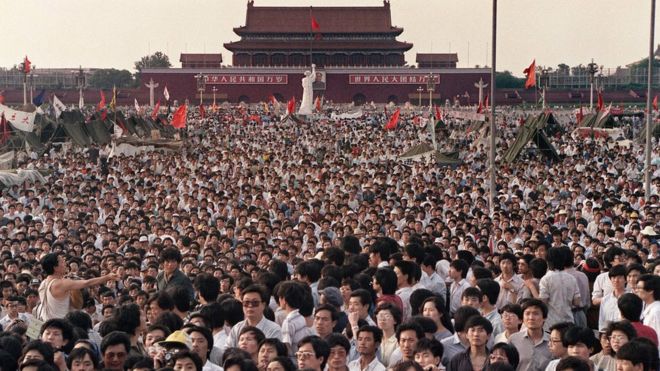
File photo of protestersImage copyright AFP
Image caption By early June 1989, huge numbers had gathered in Tiananmen Square

Thirty years ago, Beijing’s Tiananmen Square became the focus for large-scale protests, which were crushed by China’s Communist rulers.

The events produced one of the most iconic photos of the 20th Century – a lone protester standing in front of a line of army tanks.

What led up to the events?

In the 1980s, China was going through huge changes.

The ruling Communist Party began to allow some private companies and foreign investment.

Leader Deng Xiaoping hoped to boost the economy and raise living standards.

However, the move brought with it corruption, while at the same time raising hopes for greater political openness.

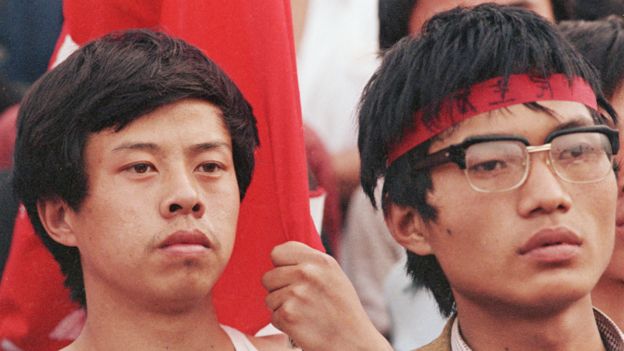
Protesters in Tiananmen SquareImage copyright GETTY IMAGES
Image caption Protesters in Tiananmen Square, 1989

The Communist Party was divided between those urging more rapid change and hardliners wanting to maintain strict state control.

In the mid-1980s, student-led protests started.

Those taking part included people who had lived abroad and been exposed to new ideas and higher standards of living.

How did the protests grow?

In spring 1989, the protests grew, with demands for greater political freedom.

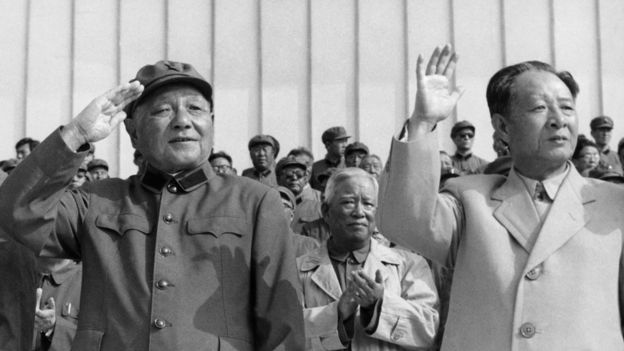
Protesters were spurred on by the death of a leading politician, Hu Yaobang, who had overseen some of the economic and political changes.

Archive picture of Deng and HuImage copyrigh AFP
Image caption Deng Xiaoping (left) with Hu Yaobang

He had been pushed out of a top position in the party by political opponents two years earlier.

Tens of thousands gathered on the day of Hu’s funeral, in April, calling for greater freedom of speech and less censorship.

In the following weeks, protesters gathered in Tiananmen Square, with numbers estimated to be up to one million at their largest.

The square is one of Beijing’s most famous landmarks.

It is near the tomb of Mao Zedong, the founder of modern China, and the Great Hall of the People, used for Communist Party meetings.

What was the government’s response?

At first, the government took no direct action against the protesters.

Party officials disagreed on how to respond, some backing concessions, others wanting to take a harder line.

The hardliners won the debate, and in the last two weeks of May, martial law was declared in Beijing.

On 3 to 4 June, troops began to move towards Tiananmen Square, opening fire, crushing and arresting protesters to regain control of the area.

Who was Tank Man?

On 5 June, a man faced down a line of tanks heading away from the square.

He was carrying two shopping bags and was filmed walking to block the tanks from moving past.

"Tank Man" in BeijingImage copyright GETTY IMAGES

He was pulled away by two men.

It’s not known what happened to him but he’s become the defining image of the protests.

How many people died in the protests?

No-one knows for sure how many people were killed.

At the end of June 1989, the Chinese government said 200 civilians and several dozen security personnel had died.

Other estimates have ranged from hundreds to many thousands.

In 2017, newly released UK documents revealed that a diplomatic cable from then British Ambassador to China, Sir Alan Donald, had said that 10,000 had died.

Do people in China know what happened?

Discussion of the events that took place in Tiananmen Square is highly sensitive in China.

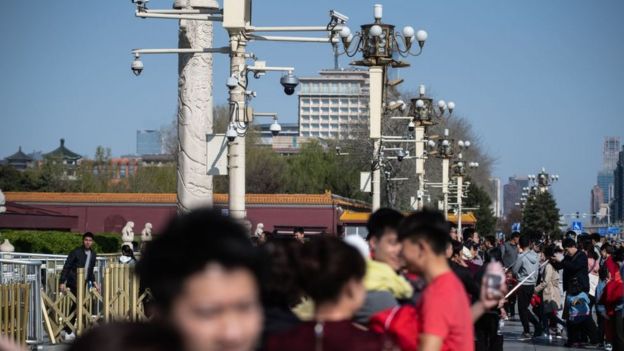
View of Tiananmen SquareImage copyright GETTY IMAGES
Image caption Tiananmen Square now – full of tourists and surveillance cameras

Posts relating to the massacres are regularly removed from the internet, tightly controlled by the government.

So, for a younger generation who didn’t live through the protests, there is little awareness about what happened.

Source: The BBC

25/05/2019

Feature: Governors compete for investment at China-U.S. Governors Forum

LEXINGTON, the United States, May 24 (Xinhua) — Chinese and U.S. governors gathered here on Thursday, competing to promote their state or province for investment at the Fifth China-U.S. Governors Forum.

“I want to be a little bit more objective. I’ll tell you not what I think, but what U.S. News (and World Report) just said,” said Cyrus Habib, lieutenant governor of the U.S. state of Washington, grabbing the opportunity when he took the podium to present his state. “In the U.S. News ranked states in the United States, they ranked Washington state No. 1 overall.”

The national media U.S. News and World Report published its yearly Best States Rankings on May 14, putting Washington state on top based on several criteria including health care, education, economy and opportunity.

“It is not a coincidence for Washington to get ranked the No. 1 place to do business and the No. 1 place to live,” he said. “I always tell them the key is international relationships … We are the No. 1 exporter per capita of any state in the country.”

“We are the No. 1 source of U.S. imports into China and so our relationship with China is absolutely key central to the success that we have had now economically in terms of trade,” he added.

Dianne Primavera, lieutenant governor of the U.S. state of Colorado, advertised her state by saying “according to the U.S. News and World Report, Colorado is home to the No. 1 economy in the United States.”

“Our business climate is an active mix of knowledge-based industries and entrepreneurial activity that drives successful startups,” Primavera said. “Colorado welcomes the opportunity to do business with China.”

Matt Bevin, governor of Kentucky and host of the event, was also eager to grasp the opportunity to talk about the benefits of his state.

“We have rivers and roads and railways that transect through this state. You can put goods on the Ohio River and take them straight to any port in China,” he said. “We want you here, we want your investment here.”

U.S. state of Tennessee Governor Bill Lee introduced his state as a neighbor of Kentucky, saying “when Kentucky or Tennessee has investment from companies, from countries like China, then we both benefit. We are a regional economy and what is good for one state and our region is good for another state in our region.”

Local Chinese officials also presented their province or municipality.

Mayor of Chongqing Tang Liangzhi said the southwestern Chinese municipality has an important role in regional development and China’s opening-up layout, and that he hopes to cooperate with U.S. states in many fields like intelligent industry, auto manufacturing, and environmental protection.

Liu Guozhong, governor of China’s northwestern Shaanxi Province, deliberated on the long-standing history and culture, as well as the recent tax-cutting policies of his province, hoping to expand cooperation in technological innovation and environmental protection between the two countries.

Chinese and U.S. companies signed three cooperation agreements at the forum on Thursday. Meanwhile, China’s southeastern province of Jiangxi and the U.S. state of Kentucky signed a memorandum of understanding.

Initiated in 2011, the China-U.S. Governors Forum has become an important platform to promote exchanges and cooperation between the local governments of the two countries.

Source: Xinhua

17/02/2019

China-Europe great example of cultural dialogue, engagement: senior Chinese official

MUNICH, Germany, Feb. 16 (Xinhua) — People-to-people and cultural exchanges are thriving, making China and Europe a great example of cultural dialogue and engagement, a senior Chinese official said here Saturday.

Yang Jiechi, a member of the Political Bureau of the Communist Party of China (CPC) Central Committee, said this in his keynote speech themed “Working for a Community with a Shared Future for Mankind by Promoting International Cooperation and Multilateralism” at the 55th Munich Security Conference.

Fifteen years since the establishment of the China-EU comprehensive strategic partnership, the two sides have developed an all-dimensional and multi-tiered framework of exchanges and cooperation covering wide-ranging areas, said Yang, who is also director of the Office of the Foreign Affairs Commission of the CPC Central Committee.

Efforts to build China-EU partnerships for peace, growth, reform and civilization have made substantial progress, Yang noted.

“It is essential that our two sides continue to draw on each other’s strengths, focus on shared interests, remove obstacles and work together to seize the opportunities presented by the Fourth Industrial Revolution and meet our people’s aspirations for a better life,” said the official.

This year marks the 70th anniversary of the founding of the People’s Republic of China. Under the leadership of the Communist Party of China, Yang said, the country has embarked on the right path, one that is suited to its national conditions and follows the trend of the times.

The Chinese economy has entered a new phase of transitioning from high-speed growth to high quality development, operating within a proper range and maintaining overall stability and continued progress, he added.

“Facing lackluster new drivers and mounting downward pressure in the global economic context, China has enough resilience and huge potential to keep the economy on a sound track for a long time to come,” Yang said.

The enormous effective demand being generated by the 1.4 billion Chinese people who are moving up the income ladder will provide the world with even more opportunities in terms of market, investment and cooperation, he reassured.

Source: Xinhua

07/02/2019

China Focus: 2022 Olympics preparation warms up winter sports, economy

BEIJING, Feb. 6 (Xinhua) — Although winter vacation has come, 11-year-old Wang Aoyun still goes to school every day, for skating.

As school athletes, Wang and 20-plus teammates practice speed skating on a cornfield-turned ice rink at Taipingzhuang central school in Beijing’s Yanqing District.

In three years, the 2022 Winter Olympics will be held in Beijing and Zhangjiakou, Hebei Province.

While construction of stadiums and infrastructure projects has been accelerated, winter sports and the related economy at the venues have also been heating up.

With its ice rink built in 2016, Taipingzhuang school is the first that had an ice rink in Yanqing District, where competitions of alpine skiing, bobsled, skeleton, and luge will be held in 2022.

Teachers take shifts to water the ice rink every night in winter, said Ding Jianpei, principal of the school.

“Most of our students may not be engaged in winter sports in the future, but we think it’s worth it if they feel the happiness in the sports,” Ding said.

Winter sports used to be a luxury 20 years ago in Beijing. People had to travel hundreds of miles to find a ski slope. The first large ski resort in the Chinese capital, Shijinglong, was not open until the late 1990s, in Yanqing.

Local villager Guo Junhua, 35, was among the first batch of ski lovers. Last year, she quit her job as a ski coach in southwest China and opened a ski training school in Yanqing District. To date, she has trained 50 children.

The district government also encourages local people to learn winter sports.

“Influenced by the atmosphere of the Winter Olympics, more and more residents show up on ice rinks and ski fields,” said Ma Zhiyong, sports bureau deputy chief of Yanqing District, adding that more ice rinks and ski training bases are mushrooming.

This winter, Shijinglong resort received 60,000 visitors, up 10 percent year on year.

Five km away from the 2022 alpine skiing competition venue, local resident Zhang Haichao has rented and decorated 10 households, with more being constructed.

Zhang, general manager of a homestay brand company, is confident about the prospective of homestay market near his hometown.

“My friends and I love skiing, but bringing heavy snowboards to hotels is very inconvenient,” Zhang said. “Now that the Winter Olympics are coming, more visitors will come to ski, a golden opportunity for homestay business.”

He is also consulting some ski gear companies, planning to offer ski gear renting service at his homestay houses.

The district has attracted over 120 homestay brands, with the reservation rate of some brands reaching 90 percent for the Lunar New Year, said Zheng Aijuan, deputy director of Yanqing’s tourism commission.

Song Haitian, deputy director of Winter Olympics preparation office of Yanqing District, said the 2022 Winter Olympics would have a profound impact on Yanqing’s development.

“We hope the global sports event not only stimulates the sustainable development of Yanqing, especially the winter economy, but also helps upgrade the quality of both people’s health and civil society,” Song said.

Source: Xinhua

28/01/2019

China Focus: A healthier Shanghai economy a bliss to the world

SHANGHAI, Jan. 27 (Xinhua) — China’s eastern metropolis of Shanghai pledges to further open up its door to let the world share the benefits of its high-quality growth.

While delivering the government work report at the annual session of the municipal legislature, Shanghai mayor Ying Yong promised that the city will strengthen its efforts in reform and opening up, while pursuing high-quality growth in the year 2019.

Shanghai recorded an overall economic growth of 6.6 percent last year, with its GDP per capita exceeding 20,000 U.S. dollars. The city expects to attain a growth rate of 6 percent to 6.5 percent this year.

HEALTHIER ECONOMY

Experts said the GDP per capita is an important indicator of a region’s economic wellbeing. The fact that it has exceeded 20,000 U.S. dollars means that Shanghai’s growth has reached a higher level.

Quan Heng, deputy head of the Shanghai Academy of Social Sciences, said as China aims to build itself into a moderately prosperous society by 2020, the growth of GDP per capita is a key measurement.

Quan added that besides per capita GDP, other factors such as economic structure, efficiency and technological innovation are also important indicators of development.

According to the government work report, Shanghai has seen the structure, quality and efficiency of its economy continuing to improve last year. The added value of the tertiary sector accounted for 69.9 percent of the GDP. Total research and development expenditures accounted for 4 percent of the city’s GDP.

The city has been boosting its real economy, with the industrial investment increasing by 17.7 percent in 2018, the greatest growth rate the city has seen during the past decade. It recorded around a 10 percent growth rate in the output of emerging industries including new energy cars, high-end medical equipment, integrated circuits and biomedicine.

The city vows to further promote high-quality growth this year. It will deepen supply-side structural reform and advance the construction of a modern industrial system featuring modern services, strategic emerging industries and advanced manufacturing.

The city will further boost its science and innovation sector and fortify its function as an international financial, trade and shipping center.

Meanwhile, Shanghai will further upgrade the real economy and come up with supporting policies for industries including integrated circuits, artificial intelligence and biomedicine.

The city will push ahead with industrial innovation projects such as intelligent connected vehicles, and it expects to see the mass production of 14 nanometer-integrated circuits this year.

OPENING-UP MEASURES

Development of the Shanghai free trade zone (FTZ) is expecting new momentum, as a new section will be built this year. Policies and systems will also be adopted in alignment with international norms to upgrade the FTZ, said Mayor Ying.

A science and technology innovation board will be set up with a pilot registration system for listed companies in the Shanghai Stock Exchange, said the report.

The city will further improve the private investment environment. In an effort to ease enterprises’ access to market and financing, the city vows to put into good use the bailout fund worth 10 billion yuan (1.48 billion U.S. dollars) for listed companies.

It will channel 10 billion yuan of credit and secured loans to high-quality small and medium private companies.

It will also gradually increase the size of policy-based financing guarantee funds for medium, small and micro enterprises to 10 billion yuan.

At the same time, Shanghai is actively participating in the integrated development of the Yangtze River Delta region.

This year, the city will cooperate with its partners in constructing programs in infrastructure, scientific innovation, industrial collaboration, environment and market systems, the mayor said.

Cooperation mechanisms will be further improved in public services such as pension service, medical and health services, human resources and social welfare.

THE SECOND IMPORT EXPO

Shanghai is determined to successfully host the second China International Import Expo (CIIE) this year, according to the mayor.

The city will normalize the expo’s pilot mode of bonded display and trade, having it occur on a regular basis.

As the world’s first import-themed national-level expo, the first CIIE was held in Shanghai from Nov. 5-10 in 2018 and concluded with deals worth about 57.83 billion U.S. dollars. The expo attracted 3,617 foreign exhibitors and more than 400,000 buyers from home and abroad.

Ying said the city plans to open wider for foreign investment and foreign firms, amplifying the expo’s spillover effects.

According to the CIIE bureau, more than 500 companies from more than 40 countries and regions have confirmed participation in the 2019 CIIE. Among them, there are over 70 Fortune Global 500 firms and leading enterprises in various industries.

Source: Xinhua

24/01/2019

Interview: China economy has multiple sources of growth potentials, resilience

NEW YORK, Jan. 23 (Xinhua) — China’s economy enjoys multiple sources of growth potentials and resilience, and its structural change brings about optimism on the country’s ability to tide through difficulties, according to a senior investment advisor with UBS Wealth Management.

Growth potentials and resilience of the Chinese economy stem from a mixed combination of effective fiscal and monetary policies, and the fact that the economy has become more consumption-oriented and less export-dependent, Jorge O. Mariscal, Emerging Markets Chief Investment Officer at UBS Wealth Management, said on Tuesday.

The ongoing transformation of the Chinese economy relies less on traditional exports and more on an increasing number of technological breakthroughs such as 5G and industrial internet, Mariscal said in an email interview with Xinhua.

China’s supply side reform generates the potential momentum of a new model of growth, which fosters innovation and less bureaucracy, Mariscal added.

“The above structural change makes us optimistic about China’s ability to navigate the current difficult juncture,” said Mariscal.

Mariscal said he expected that the Chinese economy would grow 6.1 percent in 2019 amid some mixed trends.

China’s economy, the world’s second largest, grew 6.6 percent year on year to reach 90.0309 trillion yuan (about 13.28 trillion U.S. dollars) in 2018, above the official target of around 6.5 percent, according to data issued by the National Bureau of Statistics (NBS) on Monday.

China also would have higher debt-to-GDP ratio in 2019 due to the slowdown in economic expansion and the easing of fiscal policies, which will likely lead to a rebound of the property sector, liquidity level, and ideally consumption to investment level in 2019, according to Mariscal.

Chinese economy underwent a meaningful slowdown caused by deleveraging in 2018, compounded by negative investment and consumer sentiment due to trade tensions with the United States and a slow and gradual policy response, said Mariscal.

Mariscal also expected more fiscal policies and further expansionary monetary policies from China as China’s central bank has already lowered reserve requirement ratio by 100 basis points so far 2019 with 83 billion U.S. dollars injected to the banking system.

China is still likely to report weak economic indicators in the first quarter of 2019 as the transmission of policies into real economy takes time and the effects of supportive policies are likely to be felt after the first quarter, said Mariscal.

Chinese investment growth has rebounded since October 2018 due to high infrastructure investment from local governments, but it remains to be seen whether it is sufficient to stabilize growth in 2019, according to Mariscal.

A stable economic performance in China will of course promote the stability of global economy as China makes up about 15 percent of global GDP, said Mariscal.

Whether China could manage to mitigate the downside risks by setting forth a series of counter-cyclical policies is crucial to the global economy, especially amid the uncertainties of trade tension between the United States and China.

The impacts from tariffs in 2018 were not as bad as expected based on the most recent statistics of Chinese trade balances, according to Mariscal.

It is estimated that China contributed to nearly 30 percent of the world’s economic growth and remained the largest contributor to global growth in 2018 as China’s economic growth entered a new normal of slower economic growth.

Source: Xinhua

14/01/2019

Economists upbeat about China’s economy

BEIJING, Jan. 13 (Xinhua) — China’s economy is expected to remain steady in 2019 as the country rolled out a raft of fiscal and monetary policies to support the economy, economists and experts have said.

“It takes time for policies to make actual effects on China’s economy after implementation,” Sheng Songcheng from the People’s Bank of China (PBOC) was quoted by Securities Daily as saying.

Sheng forecast that the country’s economy will stabilize after the first quarter of 2019 and is likely to warm up in the second half of the year.

China’s gross domestic product (GDP) expanded 6.7 percent year on year in the first three quarters of 2018, above the government’s annual growth target of around 6.5 percent.

Sheng also said the growth of the M2, a broad measure of money supply, is expected to rebound in 2019 with the upgrade of investment structure, the acceleration of industrial transformation and upgrading, and the growth of services consumption.

PBOC data showed that M2 rose 8 percent year on year to 181.32 trillion yuan at the end of November 2018.

The M2 growth was flat with that registered in October 2018 and 1.1 percentage points lower than that of the same period a year earlier.

Zhu Baoliang, an economist with the State Information Center, said the structure, quality, and efficiency of China’s economy have made some progress and the financial risks have also been partly released.

To maintain stable economic growth, China may take measures such as further reducing taxes and fees, and expanding fiscal budget deficit, among others, some experts said.

04/01/2019

China slashes banks’ reserve requirements again as economy slow

BEIJING (Reuters) – China’s central bank said on Friday it was cutting the amount of cash that banks must hold as reserves for the fifth time in the past year — freeing up $116 billion for new lending as it tries to reduce the risk of a sharper economic slowdown.

The latest support measures come amid mounting worries about the health of the world’s second-largest economy, which is facing both slowing demand at home and punishing U.S. tariffs on its exported goods.

Global stock markets sold off on Thursday after a warning from tech giant Apple Inc about slowing China sales, while data earlier this week showed the country’s manufacturing activity shrank in December for the first time in over two years.

The cut in banks’ reserve requirement ratios (RRR) is the

first in 2019 by the People’s Bank of China (PBOC) as the economy faces its weakest growth since the global financial crisis and mounting pressure from U.S. tariffs.

Reserve requirement ratios (RRRs) – currently 14.5 percent for large institutions and 12.5 percent for smaller banks – will be lowered by a total of 100 basis points (bps) in two stages, the People’s Bank of China (PBOC) said.

The cuts will be effective Jan. 15 and Jan. 25, and come ahead of the long Lunar New Year celebrations when cash conditions often get tight.

The moves will free up a net 800 billion yuan (£91.8 billion) after banks use some of the 1.5 trillion yuan in liquidity released into the financial system to pay back maturing medium-term loans.

“Policy easing will be stepped up further over coming months,” Capital Economics said in a research note.

“With credit growth still slowing and, typically, a six-month lag before any turnaround in credit affects the economy, worries about the outlook for China will persist for several months yet.”

MORE HELP COMING

Further cuts in the RRR had been widely expected this year, especially after a spate of weak data in recent months showed China’s economy was continuing to lose steam. The size of the move was on the upper end of market expectations, and the net funds released would be the largest amount in the five cuts since last January.

The announcement came just hours after Premier Li Keqiang said China would take further action to bolster the economy, including RRR cuts and more cuts in taxes and fees.

The central bank said China’s economic growth is still within a reasonable range and it will continue to implement a prudent monetary policy, without engaging in massive stimulus.

“We will maintain reasonable and sufficient liquidity, maintain reasonable growth in the scale of money and credit and social financing, stabilise macro-leverage, and seek internal and external balances,” it said.

China’s economic growth is expected to have cooled to around 6.5 percent last year, in line with Beijing’s target but down from 6.9 percent in 2017.

A further deceleration is seen this year, with some analysts forecasting growth will cool to nearly 6 percent, which would mark China’s weakest expansion since 1990.

03/01/2019

Full speed ahead for China’s high-speed rail network in 2019 in bid to boost slowing economy

  • The state-owned China Railway Corporation plans to put a total of 6,800km of new track into service this year, a 45 per cent increase in expansion from 2018
  • Significant infrastructure investment by a Beijing government keen to offset the trade war with the United States
PUBLISHED : Thursday, 03 January, 2019, 6:16pm
UPDATED : Thursday, 03 January, 2019, 6:16pm

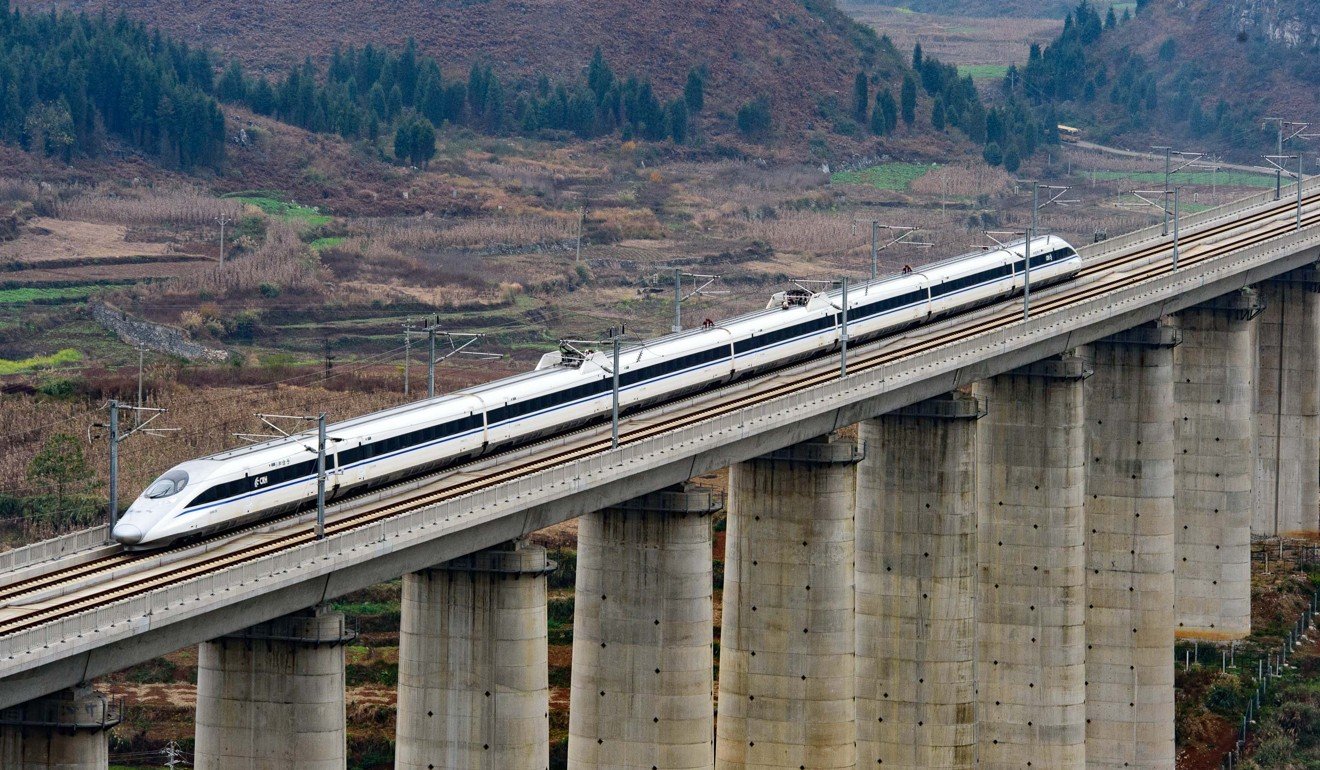
China plans to expand its high-speed rail network by 3,200km in 2019, which is more than is currently being operated in either Spain, Japan, Germany or France, in a bid to aid a slowing economy locked in the trade war with the United States.

The China Railway Corporation, the state-owned agency in charge of railway construction, plans to put a total of 6,800km of new track into service in 2019 as Beijing again relies on infrastructure investment to arrest an economic slowdown, according to a government plan released this week.

Spain, which has the world’s second biggest high-speed rail network after China, only has a total of around 3,100km of track in operation, followed by Japan, Germany and France.

China’s spending spree on railway infrastructure, which started in the aftermath of the global financial crisis a decade ago, means Beijing is well ahead of its schedule to build a total of 30,000km of high-speed railway lines by 2020.

At the end of 2018, China had over 29,000km of 250km/h (155mph) high-speed railway lines, two thirds of the world’s total, having added 4,100km in 2018 as part of a 4,683km overall expansion project last year.

As China is completing its strategic goal of building a nationwide high-speed rail network after a decade of construction, which has greatly reduced travel time between major Chinese cities, the railway authority is now looking at new lines that extend deep into the country’s remote corners.

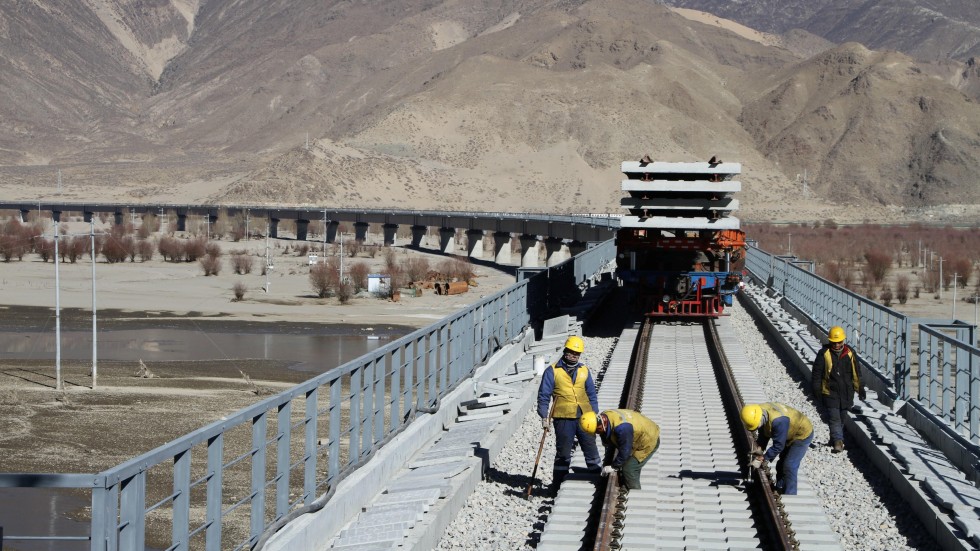
These include a second railway from Sichuan to Tibet – a line that is strategically important but also has to cross some of the deepest valleys in the world along the route.

China Railway said a feasibility study of the 1,700km line winding through the “roof of the world”, with a budget of 250 billion yuan (US$36.42 billion), is scheduled to be completed in the second quarter before before a possible start to construction in the third quarter. The project is not included in the 6,800km total for 2019.

Beijing’s determination to invest in railway infrastructure came after the country’s fixed asset investment, a major growth engine, slowed to a decade-low of 5.9 per cent in the first 11 months of 2018.

Infrastructure construction, including roads and railways, surprisingly slowed to 3.7 per cent from January to November from 20.1 per cent a year earlier.

The slowdown in investment helped to drag down China’s overall economic growth with the world’s second biggest economy facing headwinds from the trade war with the United States.

Iris Pang, chief Greater China economist of ING Bank, said Beijing needs to start making preparations because no one knows for sure what next direction the trade war will take next.

The 90-day trade truce with the United States will end on March 2, right ahead of China’s Two Sessions meeting, during which Premier Li Keqiang will announce the 2019 gross domestic product growth target, fiscal deficit ratio and probably the money supply goal.

China’s first quarter growth for 2019 is widely believed to be a test to Beijing’s policymakers because substantial damages from current US tariffs will be felt, with some predicting it will drop below the psychologically important threshold of 6 per cent in the first half of the year.

“One of the defensive measures would be to push up railway investment when the national economy slowed to certain point, such as below 6 per cent,” said Pang.

At their annual work conference on Wednesday, general manager Lu Dongfu said China Railway “will maintain the intensify” of spending.

While the specific spending target was not disclosed, China’s total investment in its rail network could easily hit a record high in 2019.

Railway construction is often used as a countercyclical tool, with investment plans adjusted according to government needs.

For instance, Beijing had originally planned to cut 2018 railway investment to 732 billion yuan (US$106.63 billion) from 801 billion yuan in 2017, but instead opted to raise spending after the first round of US tariffs were imposed on Chinese exports, eventually spending 802.8 billion yuan last year.

“The infrastructure investment could be stabilised at the current level, but it won’t reach the high growth like [seen a decade earlier],” added Pang.

China’s railway fixed-asset investment jumped 61.5 per cent to 416.8 billion yuan in 2008, when the country started the construction of its high-speed rail network, government data showed.

Investment rose another 69.1 per cent to 701.3 billion yuan in 2009, as the authority stepped up domestic construction to offset the global financial crisis.

Law of Unintended Consequences

continuously updated blog about China & India

ChiaHou's Book Reviews

continuously updated blog about China & India

What's wrong with the world; and its economy

continuously updated blog about China & India