Archive for ‘engineers’

08/05/2020

China Focus: Return capsule of China’s experimental manned spaceship comes back successfully

(EyesonSci)CHINA-INNER MONGOLIA-RETURN CAPSULE-LANDING-SUCCESS (CN)

Staff members pose for a group photo to celebrate the timely finding of the return capsule of the trial version of China’s new-generation manned spaceship that successfully returned to the Dongfeng landing site in north China’s Inner Mongolia Autonomous Region, May 8, 2020. The return capsule successfully returned to the Dongfeng landing site at 1:49 p.m. (Beijing Time) Friday, according to the China Manned Space Agency (CMSA). (Photo by Wang Jiangbo/Xinhua)

by Xinhua writers Quan Xiaoshu, Yu Fei and Li Guoli

JIUQUAN, May 8 (Xinhua) — The return capsule of the trial version of China’s new-generation manned spaceship successfully returned to the Dongfeng landing site in north China’s Inner Mongolia Autonomous Region at 1:49 p.m. (Beijing Time) Friday, according to the China Manned Space Agency (CMSA).

The test was a complete success, the agency said.

Following the instructions from the Beijing Aerospace Control Center, the experimental spaceship applied the brake and entered the return orbit at 12:21 p.m., and its return capsule separated with its service capsule at 1:33 p.m.

After it re-entered the atmosphere and reached the designated altitude, the two deceleration parachutes and three main parachutes on the return capsule opened, slowing the flight speed of the spacecraft to the driving speed of an urban vehicle. Before touching down, its six airbags were deployed and inflated to help it land softly, according to the China Aerospace Science and Technology Corporation (CASC).

At 1:49 p.m., the return capsule landed safely. The search team found it in a timely manner and confirmed that the capsule structure was intact.

China launched the trial version of the new spaceship without a crew by the Long March-5B carrier rocket from the Wenchang Space Launch Center in southern China’s island province of Hainan on Tuesday.

The experimental spaceship flew in orbit for two days and 19 hours, during which it carried out a series of space science and technology experiments, including space 3D printing, said CMSA.

It also tested key technologies including the heat shielding and control during its re-entry into the atmosphere, as well as multi-parachute recovery and partial reuse, CMSA said.

The new-generation manned spaceship is an advanced space transport vehicle adapted to multiple tasks. It can be used not only in low-Earth orbit missions to support the construction of China’s space station but also for deep-space exploration, such as manned lunar exploration, CMSA said.

INNOVATIVE DESIGN

Developed by the China Academy of Space Technology (CAST) under the CASC, the test spaceship is nearly 9 meters tall and about 4.5 meters at its widest point. It weighs more than 20 tonnes.

Different from the three-capsule structure of Shenzhou spaceships currently in use, the new spacecraft comprises a return capsule, which is the command center and the living place for astronauts, and a service capsule, which provides power and energy, according to the CAST.

In Shenzhou spaceships, astronauts have to go back and forth between two smaller capsules for life and work. The return capsule of the new ship has a larger sealed space. In the future, it can be partitioned to set up a work area, entertainment area, dining area and bathroom, so as to provide a more comfortable living environment for astronauts.

The capsule can also be equipped with large screens for entertainment and display instruments connected with wearable devices so that astronauts can enjoy colorful space travel and be kept informed of the ship’s conditions.

The new design can also shorten the spaceship development cycle and cut the development costs, which will show a significant advantage in the future with space exploration activities more and more frequent, said Yang Qing, a designer of the experimental spaceship with the CAST.

Researchers have integrated the power supply, propulsion, fuel resources and other subsystems all into the service capsule, so that the same return capsule can be paired with different service capsules to meet variant needs of multiple tasks, including the space station operation and subsequent manned space missions.

The return capsule is designed to be reusable. Star sensors, computers and other high-value equipment have been moved from the service capsule to the return capsule so that they can be recycled after returning to Earth.

The return capsule is wrapped in two items of “clothing.” The inner layer is made of new metal materials and acts as a “wall” around the “driving cab.” The outer layer is made of a new type of light heat-resistant material, which can withstand ablation of thousands of degrees Celsius in the process of re-entry and return, according to Guo Bin, a member of the development team of the experimental spaceship with the CAST.

The new heat-resistant materials, adopted for the first time, are lighter than the traditional materials by 30 percent but have a greater heat-shielding capacity. They are also replaceable to improve the reusable rate of the capsule, Guo said.

The return capsule also uses a non-toxic propulsion system, consisting of 12 monopropellant-powered engines with the largest thrust in the world, which are applied for the first time in China to make the capsule safer and reusable, Guo said.

NEW DREAM SHIP

China started its manned space program in 1992 and has so far witnessed 11 astronauts enter space and return safely.

However, when the country eyes on the moon and the deeper space, Shenzhou spaceships and Tianzhou cargo spacecraft are no longer enough to meet its greater dreams.

Engineers started to create the new test spaceship from January 2017 and completed it in just three years after making many technological breakthroughs.

It can transport both people and goods, greatly expanding the capability and application of China’s manned spacecraft, Yang said.

It can be called a “space bus” as it is able to send six to seven astronauts at a time into low-Earth orbit. It can also be converted into a “space truck” according to new mission requirements, delivering a large number of supplies to the space station or bringing back space engineers’ test samples to Earth, Yang said.

The reliability, safety, comfort, economy and intelligence of the new spaceship have been greatly improved.

When in orbit, the ship’s “brain” — the guidance, navigation and control systems — can control the flight independently without relying on instructions from the ground. Through the combination of high-performance computers and sensors, the ship can fulfill emergency orbit entry, orbit raising and lift control autonomously, enabling it to cope with various emergencies quickly and calmly.

If a “health problem” occurs, the new spaceship can make a diagnosis itself through its intelligent system to locate the lesion and remove it temporarily or permanently. It will then share the work of the malfunctioning part by optimizing and recombining the functions of other parts, which can greatly simplify the ground control and support work.

In addition to the non-toxic monopropellant-powered engines, the new spacecraft adopts a series of advanced technologies, including the distributed integrated electronic system, solar cells with high conversion efficiency and multi-terminal human-computer interaction system, which improve its overall performance by leaps and bounds.

The engineers also installed a data acquisition system in the test spaceship, which will help provide scientific reference for the development and optimization of the follow-on versions of the new spaceship.

“The new and old spaceships will compliment each other. Just as trucks, buses and vans are all available on the road, there should be more transport means between space and Earth, and the new ship will enrich the selections,” Yang said.

Source: Xinhua
28/04/2020

China honors young individuals, groups for outstanding contributions

BEIJING, April 28 (Xinhua) — China’s youth organizations awarded May Fourth Medals to 94 individuals and 34 groups Tuesday for their great contributions to the country.

The medals, which are awarded annually, are the top honor for young Chinese. The Central Committee of the Communist Youth League and the All-China Youth Federation released the list of winners.

Medical teams assisting Hubei Province to combat the novel coronavirus disease (COVID-19) epidemic are among the groups awarded.

Covering a wide range of sectors, the individual winners include firefighters, military personnel, scholars, teachers, engineers, workers and medical staff.

Among the list, 34 were honored posthumously, including those who sacrificed their lives in the fight against COVID-19.

Source: Xinhua

01/04/2020

Coronavirus: India’s race to build a low-cost ventilator to save Covid-19 patients

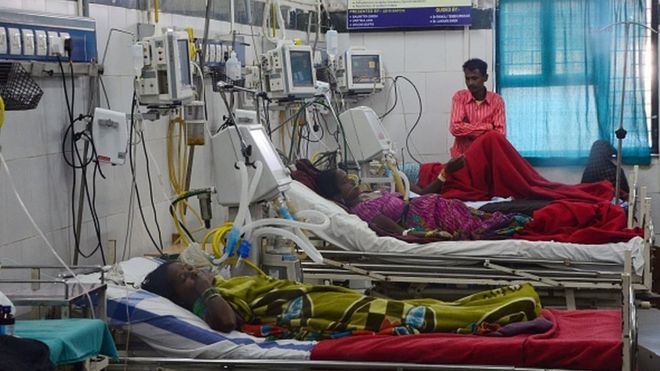
Patients on ventilators in an Indian hospitalImage copyright GETTY IMAGES
Image caption India has an estimated 48,000 ventilators and most of them are already in use

In an 8,000 sq ft (743 sq m) facility in the western Indian city of Pune, a bunch of young engineers are racing against time to develop a low-cost ventilator that could save thousands of lives if the coronavirus pandemic overwhelms the country’s hospitals.

These engineers – from some of India’s top engineering schools – belong to a barely two-year-old start-up which makes water-less robots that clean solar plants.

Last year, Nocca Robotics had a modest turnover of 2.7 million rupees ($36,000; £29,000). The average age of the mechanical, electronic and aerospace engineers who work for the firm is 26.

India, by most estimates, only has 48,000 ventilators. Nobody quite knows how many of these breathing assistance machines are working. But it is a fair assumption that all those available are being used in intensive care units on existing patients with other diseases.

About one in six people with Covid-19 gets seriously ill, which can include breathing difficulties. The country faces seeing its hospitals hobbled as others around the world have been, with doctors forced to choose who they try to save.

At least two Indian companies make ventilators at present, mostly from imported components. They cost around 150,000 ($1,987; £1,612) rupees each. One of them, AgVa Healthcare, plans to make 20,000 in a month’s time. India has also ordered 10,000 from China, but that will meet just a fraction of the potential demand.

The invasive ventilator being developed by the engineers at Nocca Robotics will cost 50,000 rupees ($662). Within five days of beginning work, a group of seven engineers at the start-up have three prototypes of a portable machine ready.

They are being tested on artificial lungs, a prosthetic device that provides oxygen and removes carbon dioxide from the blood. By 7 April, they plan to be ready with machines that can be tested on patients after approvals.

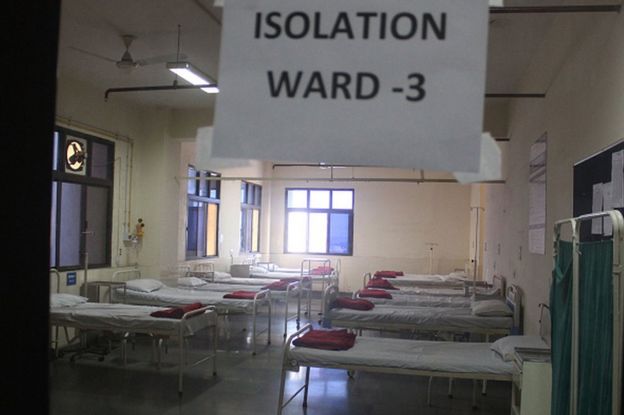
India hospitalImage copyright GETTY IMAGES
Image caption India is beefing up isolation beds in hospitals

“It is most certainly doable,” said Dr Deepak Padmanabhan, a cardiologist at Bangalore’s Jayadeva Institute of Cardiovascular Sciences and Research, and a key advisor on this project. “The simulations on artificial lungs have been done and seem to work well.”

Inspiring story

The race to develop this inexpensive, home-grown invasive breathing machine is an inspiring story of swift coordination and speedy action involving public and private institutions, something not common in India.

“The pandemic has brought us all together in ways I could never imagine,” says Amitabha Bandyopadhyay, a professor of biological sciences and bioengineering at Indian Institute of Technology (IIT), Kanpur, and a key mover of the project.

The young engineers mined open source medical supplies groups on the internet to find information on how to make the ventilators. After securing permissions, it took them exactly eight hours to produce the first prototype. Of particular use, say doctors, were some designs by engineers at MIT. With imports stalled, the engineers picked up pressure sensors – a key component of the machine that helps supply oxygen to lungs at a pressure that doesn’t cause injury – from those used in drones and available in the market.

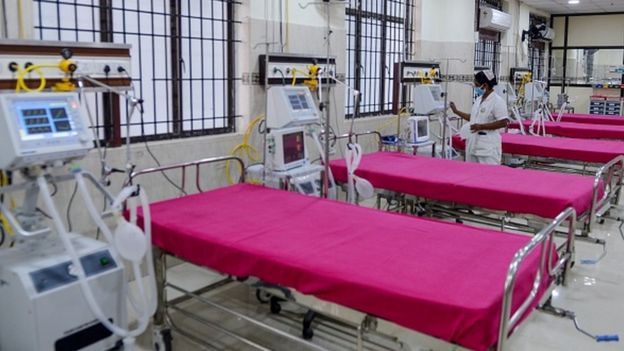
India hospitalImage copyright AFP
Image caption India needs thousands of ventilators to cope with a possible rush of patients

Local authorities helped open firms that stock components – each machine needs 150 to 200 parts – and made sure that a bunch of engineers who had returned home to Nanded after the lockdown were still able to travel 400km (248 miles) back to Pune to work on the machine.

Some leading Indian industrialists, including a major medical device-making company, have offered their factories to manufacture the machines. The plan is to make 30,000 ventilators, at around 150-200 a day, by the middle of May.

Social media influencers joined the effort. Rahul Raj, a lithium battery-maker and an IIT alumnus, crowd-sourced a group called Caring Indians to “pool resources and experience” to cope with the pandemic. Within 24 hours, 1,000 people had signed up. “We tweeted to the local lawmaker and local police in Pune to help the developers, and made contacts with people who would be interested in the project,” Mr Raj said.

‘No-frills machine’

Expat Indian doctors and entrepreneurs who went to the same school – IIT is India’s leading engineering school and alumni include Google chief Sundar Pichai – held Zoom meetings with the young developers, advising them and asking questions about the machine’s development. The head of a US-based company gave them a 90-minute lecture on how to manage production. A former chief of an info-tech company told them how to source the components.

Lastly, a bunch of doctors vetted every development and asked hard questions. In the end, more than a dozen top professionals – pulmonologists, cardiologists, scientists, innovators, venture capitalists – have guided the young team.

Doctors say the goal is to develop a “no-frills” breathing machine tailored to Indian conditions.

Ventilators depend on pressurised oxygen supply from hospital plants. But in a country where piped oxygen is not available in many small towns and villages, developers are seeing whether they can also make the machine run on oxygen cylinders. “In a way we are trying to de-modernise the machine to what it was barely 20 years ago,” says Dr Padmanabhan.

“We are not experienced. But we are very good at making products easily. The robots that we make are much more complex to make. But this is a life-saving machine and carries risk, so we have to be very, very careful that we develop a perfect product which clears all approvals,” said Nikhil Kurele, the 26-year-old co-founder and chief executive officer of Nocca Robotics.

In just a week’s time, India will learn whether they pulled off the feat.

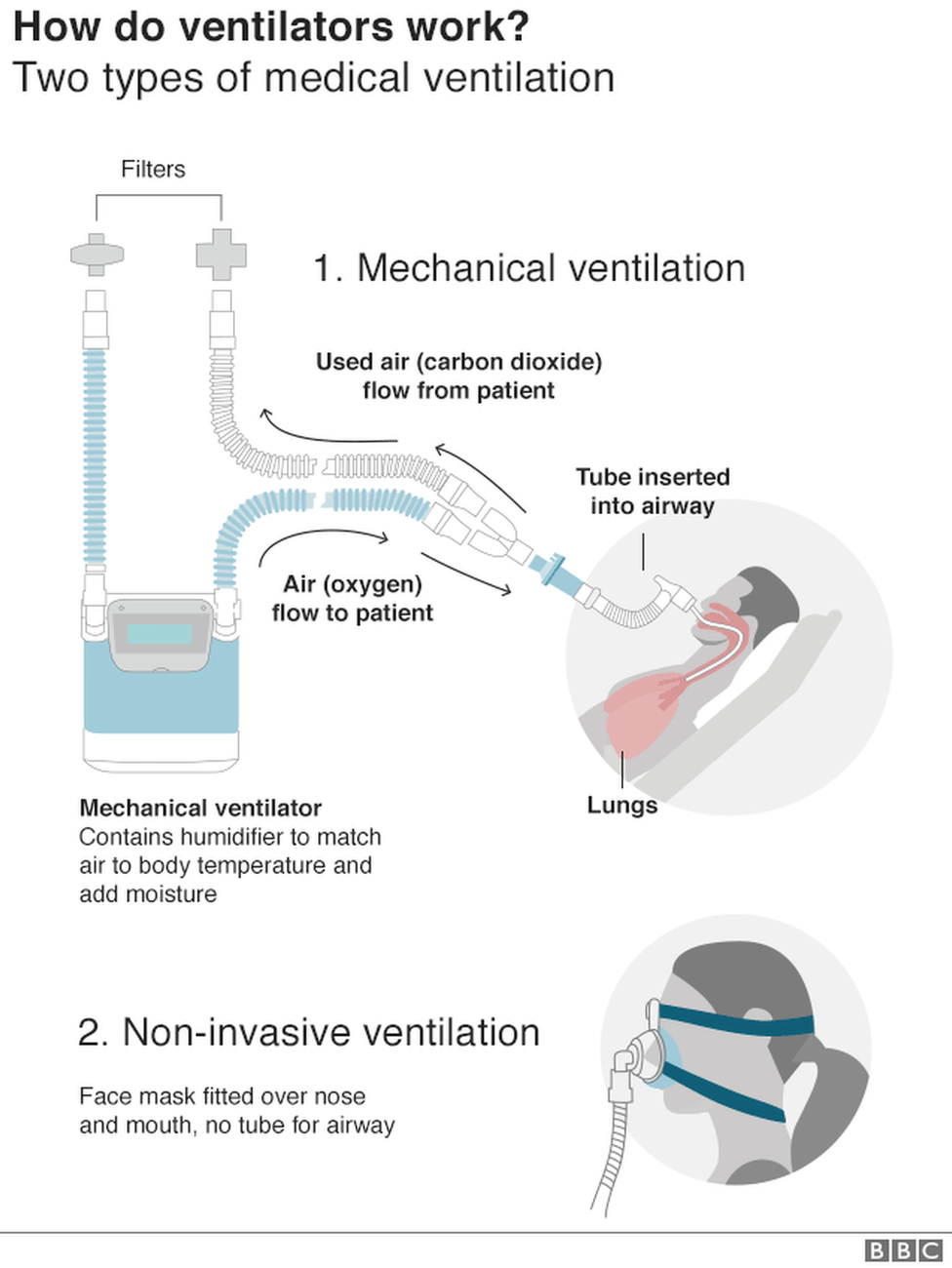
Graphic showing two common types of medical ventilation
Presentational white space

Source: The BBC

08/02/2020

India’s soldiers ‘not ready for women in combat’

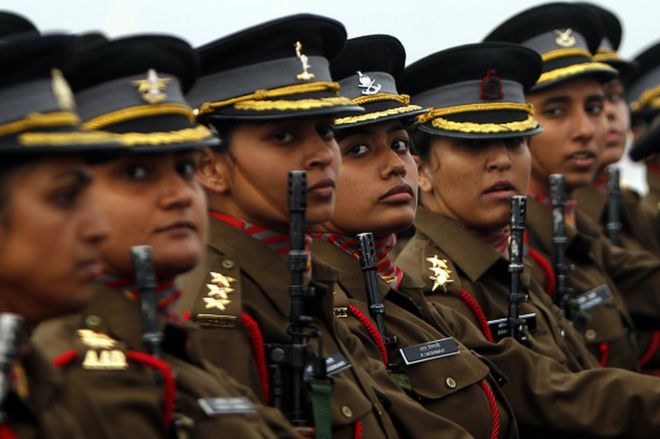
Women officer contingent of the Indian Army march during the Army Day parade at Delhi Cantt on January 15, 2015 in New Delhi.Image copyright GETTY IMAGES
Image caption India’s armed forces began inducting women officers in 1992

Last month, India’s Supreme Court appeared to nudge the government to consider lifting the military’s official ban on women in combat roles – and to give them commanding roles.

“Test them on [the] same footing as men. Do not exclude them [women officers] as a class. [A] change of mindset is required,” the court said.

Earlier this week, the government responded. Its lawyers told the top court that women were not fit to serve in ground combat roles. For one, male soldiers are not “yet mentally schooled to accept women officers in command”. Then there were the “challenges of confinement, motherhood and childcare”.

This, according to military historian Srinath Raghavan, is an “extraordinary and regressive” claim, reminiscent of the claims of colonial rulers that Indian soldiers would never accept Indian commanders. “Military training is about fundamentally reshaping norms and attitudes that soldiers bring from their social backgrounds,” he says.

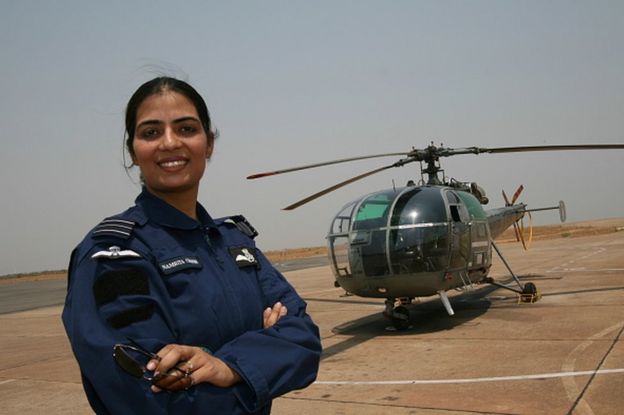
India’s armed forces began inducting women officers in 1992. Over the decades, they have been given combat roles in the air force. Women have been inducted as fighter pilots and have flown sorties into combat zones; they will be inducted as sailors as soon as ships that can accommodate them are ready. Last year, a 24-year-old became the navy’s first woman maritime reconnaissance pilot.

The army is a striking exception. Women have worked here as doctors, nurses, engineers, signallers, administrators and lawyers. They have treated soldiers on battlefields, handled explosives, detected and removed mines, and laid communication lines. Women officers have also been given permanent commission – a 20-year service, depending on eligibility and rank. Last year, women were cleared to join the military police.

Squadron leader Namrita Chandi Naidu, the senior-most woman pilot in the Indian Air ForceImage copyright GETTY IMAGES
Image caption Namrita Chandi Naidu is a senior woman pilot in India’s air force

So they have ended up doing almost everything except combat roles: women are still not allowed to serve in infantry and the armoured corps. According to 2019 figures, women comprise only 3.8% of the world’s second-largest army – compared to 13% of the air force and 6% of the navy. There are some 1,500 female officers compared to more than 40,000 male officers.

All this, says Akanksha Khullar, a researcher at Delhi’s Institute of Peace and Conflict Studies, cannot really be considered a “milestone for women empowerment, as the doors have opened up with an extremely limited capacity”. India’s national security narrative, she told me, is “shaped, limited, and permeated by ideas about gender – with an overt masculine predominance and the structural exclusion of women”.

Media caption The all-women crew from the Indian navy that is sailing around the world

She says the gender disparities are “well reflected in institutional attitudes right at the top” and that “patriarchal notions are probably more ingrained in the army” than the other forces.

She’s correct. In 2018, former army chief and the current Chief of Defence Staff Gen Bipin Rawat told a news network that there weren’t any women soldiers serving in front line combat positions because “a woman would feel uncomfortable at the front line”.

He said maternity leave was an issue, women need more privacy and protection, and that India was not yet ready to accept “body bags of women” killed in combat. He also said that women need to be “cocooned” from the eyes of subordinate soldiers. Mr Rawat’s comments had sparked considerable outrage.

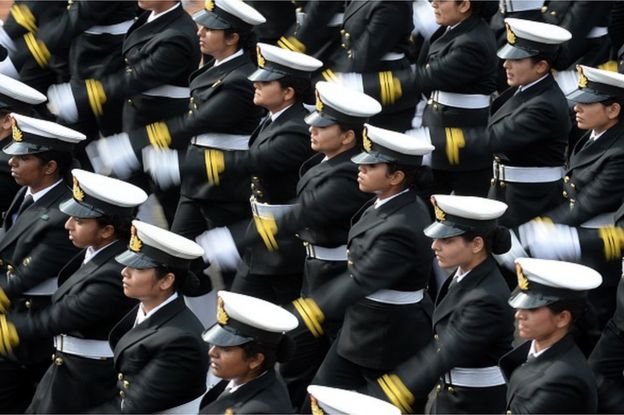
Indian Navy women contingent march in formation down Rajpath during the full Republic Day Dress rehearsal in New Delhi on January 23, 2015.Image copyright AFP
Image caption A contingent of women belonging to the Indian navy march during a parade in Delhi

Around the world, getting women into combat roles has been a hard won battle. More than a dozen nations allow women in combat roles.

When women officially became eligible for combat positions in the American military in 2013, it was widely hailed as another step towards the equality of sexes. In 2018, the UK military lifted a ban on women serving in close combat ground roles, clearing the way for them to serve in elite special forces. At that time, critics pointed out that mixed-gender teams in close combat could lack cohesion, and there was some evidence that women are less likely to pass the tests and aerobic fitness.

“While some can argue that women, in general, may not be able to cope with the rigour of combat due to the sheer physical strength required, why deny the opportunity to those who can? In my view, the right of a woman to serve in any role in the armed forces must be equal to a man’s as long as the physical and qualitative standards are not compromised,” says HS Panag, a retired Indian general.

In other words, patriarchy should not come in the way of equality and common sense.

Source: The BBC

02/05/2019

China Int’l Emergency Medical Team (Macao SAR) certified by WHO

MACAO, April 30 (Xinhua) — China International Emergency Medical Team (Macao SAR) successfully passed the evaluation and certification of the World Health Organization (WHO) on Tuesday, becoming the fifth Chinese international emergency medical team, a WHO verification team said in the special administrative region (SAR).

Macao SAR Health Bureau held a press conference on Tuesday afternoon to introduce the preparation work of Macao’s international emergency medical team, and show its facilities and operation to local media.

Ian Norton, a representative from WHO Emergency Medical Team (EMT) Secretariat, told media that the Macao team not only meets the relevant WHO standards, but also has unique advantages in use of languages. Besides their mother tongue, the team members can also speak in English and Portuguese, and can be deployed to Portuguese-speaking countries.

He added that the Macao team will also bring back the experience and expertise they have learned from assistance missions, and better serve Macao and its residents.

The medical team members were drawn from the staff of Health Bureau and Fire Department of Macao SAR government. A total of 120 members were divided into four squads, each consisting of doctors, paramedics, pharmacists, engineers and logistics personnel.

The standard deployment of the whole team covers an area of 3,600 square meters with 41 tents, can diagnose and treat over 100 persons per day, and independently complete the clinical medical work for 14 days.

Macao’s international emergency medical team is the 25th in the world and the fifth in China certified by WHO.

Source: Xinhua

Law of Unintended Consequences

continuously updated blog about China & India

ChiaHou's Book Reviews

continuously updated blog about China & India

What's wrong with the world; and its economy

continuously updated blog about China & India