26/04/2020
SHANGHAI (Reuters) – China’s smog-prone northern province of Hebei met its air quality targets by a big margin over the winter after concerted efforts to tackle emissions, a local official said on Sunday, without mentioning coronavirus-related factory shutdowns.
Average PM2.5 concentrations over the October-March period dropped 15% from a year earlier to 61 micrograms per cubic metre, while sulphur dioxide also fell by a third, said He Litao, vice-head of the provincial environmental bureau.
Most experts have attributed the significant decline in air pollution throughout China in the first quarter to the coronavirus outbreak and tough containment measures, which saw cities and entire provinces locked down and sharply reduced traffic and industrial activity throughout the country.
With millions staying at home, concentrations of lung-damaging PM2.5 particles fell by nearly 15% in more than 300 Chinese cities in the first three months of 2020.
Shanghai saw emissions fall by nearly 20% in the first quarter, while in Wuhan, where the pandemic originated, monthly averages dropped more than a third compared to last year.
However, He of the Hebei environmental bureau attributed the local decline in pollution to the “conscientious implementation” of government decisions even in the face of unfavourable weather conditions.
According to a winter action plan published last year, 10 cities in Hebei were expected to cut lung-damaging small particles known as PM2.5 by 1%-6% compared to the previous year.
Despite the decline, average PM2.5 was still much higher than China’s official standard of 35 micrograms, and the recommended World Health Organization level of 10 micrograms.
Source: Reuters
Posted in 10, 15, 15%, 20%, 2020, 300, 35, according, action plan, air pollution, air quality, also, at home, attributed, Average, averages, “conscientious implementation”, big, China, China's, China’s, cities, compared, concentrations, concerted, conditions, containment, coronavirus outbreak, coronavirus-related, Country, cubic metre, cut, decisions, decline, dropped, earlier, efforts, emissions, entire, environmental bureau, even, expected, experts, face-of, Factory, fall, Fell, first, first quarter, from, Government, Hebei, industrial activity, known as, last year, level, local, local official, locked down, lung-damaging, March, margin, measures, mentioning, micrograms, millions, monthly, months, more than, most, nearly, northern province, October, Official, originated, over, pandemic, particles, Period, PM2.5, Pollution, previous, provinces, provincial environmental bureau, published, recommended, reduced, said, saw, Shanghai, sharply, shutdowns, significant, small, standard, staying, sulphur dioxide, Sunday, tackle, targets, third, Three, throughout, tough, traffic, Uncategorized, unfavourable, weather, which, while, winter, without, World Health Organization, Wuhan, year |
Leave a Comment »
23/11/2019
- Researcher says some might find it hard to accept that early humans they assumed to be their ancestors ‘were stupid’
- Report suggests that isolation may have made Peking Man less adaptable
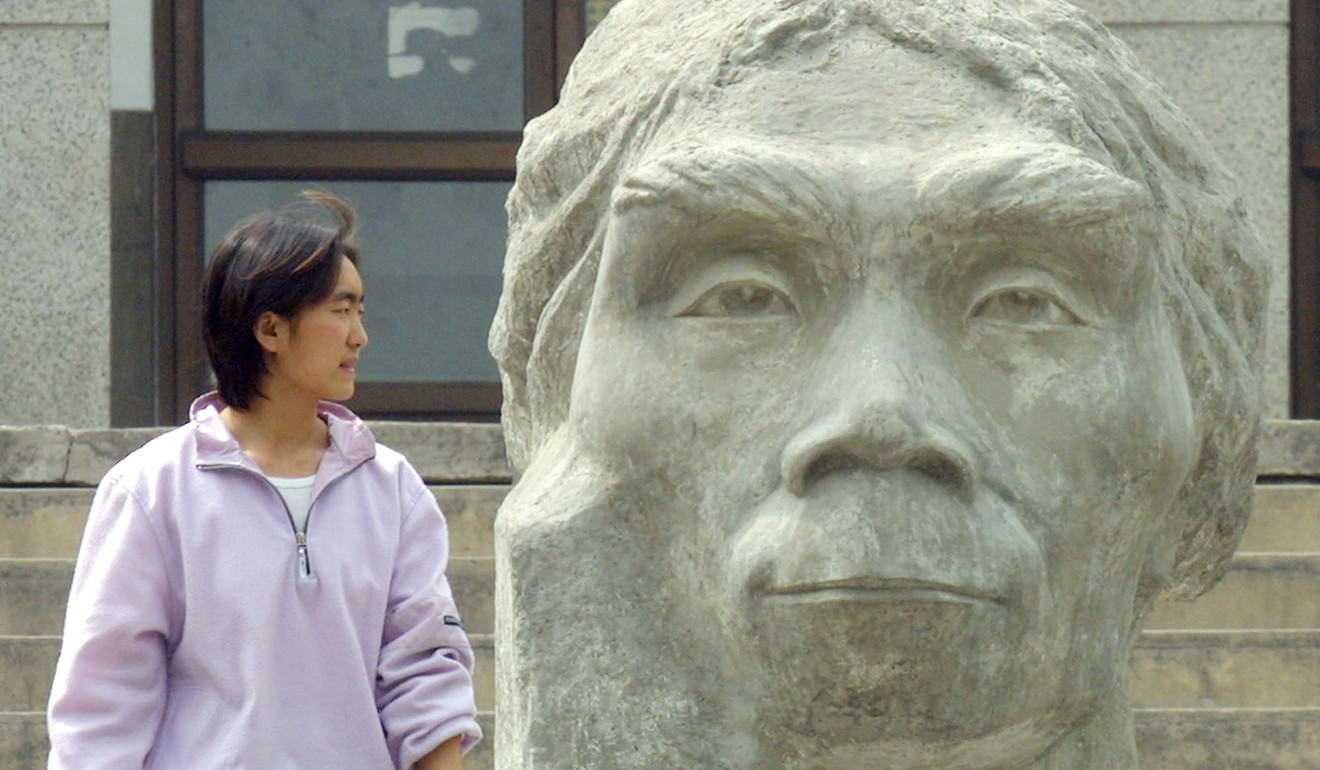
Peking Man is the earliest human sub species discovered in China. Photo: Reuters
“Peking Man”, the Stone Age humans who are believed to be ancestors of the Chinese, left little evidence that they had ever evolved, according to a Chinese scientist.
“It may be hard for some people to accept, but evidence shows they [
] were stupid,” said Professor Wei Qi, a researcher with the Institute of Vertebrate Palaeontology and Palaeoanthropology at the Chinese Academy of Sciences in Beijing.
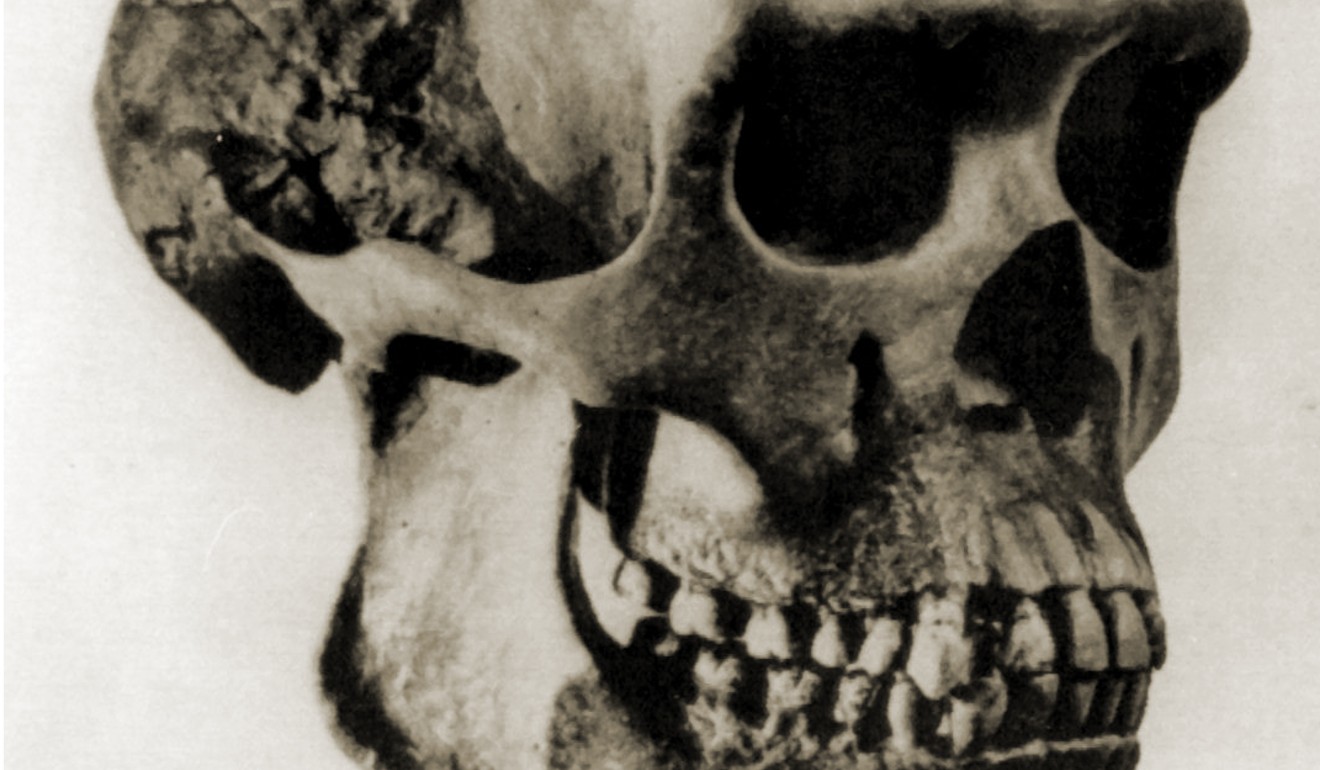
In 1929, a nearly complete skull of Homo erectus pekinensis was discovered in a cave at Zhoukoudian in southwest Peking, as the Chinese capital was then known.
Peking Man became a household name as the earliest human sub species discovered in China, and some scientists maintained that they passed their DNA on to present-day Chinese.
Peking Man is thought to be an ancient ancestor of modern Chinese. Photo: AP
In a paper for the journal Fossils to be published at the end of the month, Wei compared stone tools found at the Peking Man site to those made by the Nihewanians, palaeolithic humans who lived in what is now Yangyuan, northern Hebei province, more than a million years ago.
According to the theory of evolution, the human brain’s complexity should increase over time, expanding creativity and improving the quality of tools.
SUBSCRIBE TO US CHINA TRADE WAR
Get updates direct to your inbox
SUBMIT
Wei said his study found very little evidence of evolution in Peking Man. He said they tended to work a piece of stone by repeatedly striking it on one side but rarely turning it.
How Asian fossils could rewrite history of human evolution
Most of the stones worked by the Nihewanians for cutting or other purposes had marks all over them. “It means they would try another side to get a better result,” Wei said. “That is a sign of intelligence.”
He said there was more evidence in Peking Man finds, including many coarse artefacts and few finely processed tools.
Other researchers have said the same thing over the years. Pei Wenzhong, a palaeontologist who discovered some of the first Peking Man remains, said the tools appeared primitive compared to other early human artefacts, but there was no investigation at the time.
A Chinese report suggests there is little evidence of evolution to be found in Peking Man remains. Photo: UPI
Wei, who analysed more than 140 finds dated to roughly 700,000 years ago, said the structural changes in Peking Man skulls found in different layers of sediment from various times suggested an unusually slow evolution over half a million years.
Professor Chen Quanjia, a palaeoanthropologist with the college of humanities at Jilin University in northeastern China, said there was an appearance of roughness to Peking Man tools, but that did not mean a lack of intelligence.
“The blame lies in the material,” he said.
Peking Man made tools with quartz, the only material available in the area. Quartz is not easy to handle, often creating a rough surface that makes further processing difficult.
The caves of Zhoukoudian on the outskirts of Beijing are still a treasure trove for archaeologists. Photo: AFP
Wei said material could not explain the difference. A few fine tools made with quartz were found at Zhoukoudian but they were dated to about 300,000 years ago.
“Making high-quality tools with quartz is not a problem, but [that becomes possible] only when the maker becomes smart enough,” he said.
100,000 year old human remains ‘show evidence of cannibalism’
Why Peking Man crafts were so poor remains a big question. Wei said that some patterning on their tools suggested they might be an offshoot of the Nihewanians that was driven out and settled in Zhoukoudian – now a World Heritage Site – about 200km (124 miles) away.
In that isolated environment, Peking Man might have interbred over many generations, Wei said.
This increases the chances of offspring being born with so-called deleterious traits such as inherited conditions and illnesses that affect quality of life and the ability to adapt and survive.
Source: SCMP
Posted in ancestors, Chinese, even, Peking Man, researcher, says, scientist, smart, Stone Age, stupid, Uncategorized, wasn’t |
Leave a Comment »




 CHINDIA ALERT: You'll be living in their world, very soon