Archive for ‘extinct’

28/01/2020

Endangered cheetahs can return to Indian forests – court

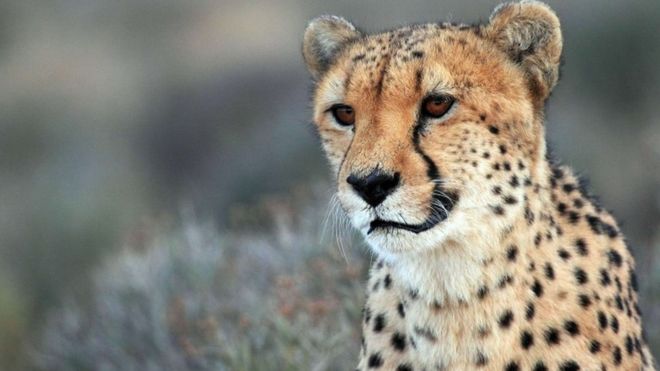
CheetahImage copyright AFP
Image caption The majority of the 7,100 cheetahs left in the world are in Africa

India’s top court has said cheetahs can be reintroduced in the country, 70 years after they were wiped out.

Responding to a plea by the government, the Supreme Court said African cheetahs could be introduced to the wild in a “carefully chosen location”.

Cheetahs are an endangered species, according to the Convention on International Trade in Endangered Species (Cites).

Only 7,100 cheetahs are left in the wild, almost all of them in Africa.

The Asiatic cheetah, which once roamed parts of India, is now only found in Iran, where there are thought to be about 50 left.

India’s Supreme Court said the animal would have to be introduced on an experimental basis to find out if it could adapt to Indian conditions.

Studies show that at least 200 cheetahs were killed in India, largely by sheep and goat herders, during the colonial period. It is the only large mammal to become extinct after the country gained independence in 1947.

India’s former environment minister Jairam Ramesh welcomed the decision to reintroduce the animal.

For more than a decade, wildlife officials, cheetah experts and conservationists from all over the world have discussed the reintroduction of the spotted big cat to India and have agreed that there is a strong case for it.

But leading conservationists have harboured doubts about the plan. They fear that in its haste to bring back the cheetah, India will end up housing the animals in semi-captive conditions in huge, secured open air zoos rather than allowing them to live free.

They add that without restoring habitat and prey base, and given the high chances of a man-animal conflict, viable cheetah populations cannot be established.

They have also pointed to India’s chequered record of reintroducing animals to the wild.

Lions were reintroduced in the Chandraprabha sanctuary in northern Uttar Pradesh state in the 1950s, but were then poached out of existence.

Presentational grey line

You may also be interested in…

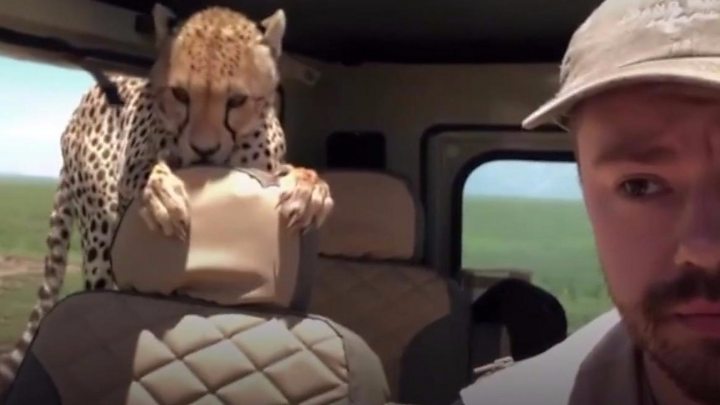
Media caption Curious cheetah joins safari group in Tanzania
Presentational grey line

However, conservationists who have led the initiative insist that these fears are unfounded. They say a decision will only be taken after shortlisted sites are fully examined for habitat, prey and potential for man-animal conflict.

The first cheetah in the world to be bred in captivity was in India during the rule of Mughal emperor Jahangir. His father, Akbar, recorded that there were 10,000 cheetahs during his time.

Much later, research showed that were at least 230 cheetahs in India between 1799 and 1968 – and the cat was reportedly sighted for the last time in the country in 1967-68.

Source: The BBC
17/09/2019

China gripped after sighting of its own ‘Loch Ness Monster’

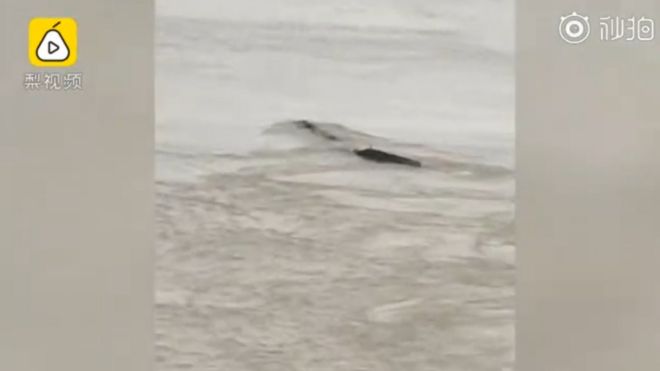
Footage showed a long black creatureImage copyright PEAR VIDEO
Image caption Grainy footage showed something that appeared to have a tail slithering back and forth in the water

Something is lurking in the deep in China’s famous Yangtze River – and social media discussion is rife over what it might be.

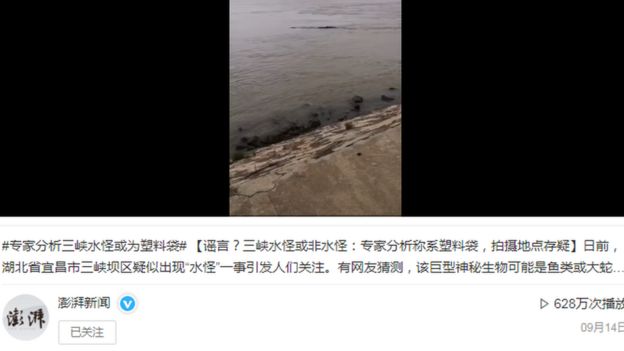
On Friday, footage appeared on China’s popular Sina Weibo microblog of what appeared to be a long, black creature, manoeuvring through the waters, and it has dominated online discussion ever since.

Footage has quickly racked up millions of views, and theories are rife.

Specialists have weighed in – but some think there may be a simple, and less murky, explanation.

Excitement over footage

A video filmed off the coast of the city of Yichang in western Hubei province, close to the Three Gorges Dam, captured the unusual scene.

The video has racked up more than six million views and hundreds of thousands of likes after being shared by the popular Pear Video, and shows what looks like a giant eel or snake slithering along the surface of the water.

Locals are filmed watching the creature from the shore – and social media users have similarly been captivated over theories about what the creature might be.

Many have posted using the hashtag #ThreeGorgesMonsterPhotos, and specialists have begun to weigh in with their thoughts.

In an interview with Pear Video, Professor Wang Chunfang from the Huazhong Agricultural University dismissed the idea of it being a new species, saying it was likely a simple “water snake”.

Some users said that “external factors such as pollution” could have a role to play in a sea snake growing to an extraordinary size. But not everyone was convinced.

Separate footage has led some users to question whether the unidentified object is actually a living creature at all.

Different footage of China's 'Loch Ness'Image copyright THE PAPER
Image caption Millions have watched footage of the item, but some think it might be a piece of simple rubbish

Popular news website The Paper shared separate footage of something long and black moving in the water that appeared to be less animated.

It asked if the whole thing was simply “a rumour” – and interviewed a biologist, Ding Li, who said that the object was neither a fish nor a snake, but simply “a floating object”.

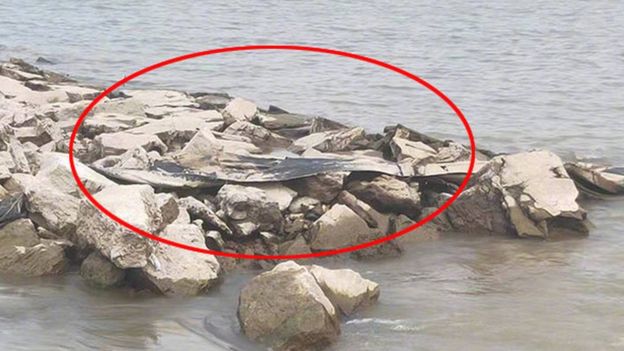
A picture has since gone viral showing a long piece of black cloth washed up on some rocks, fuelling discussion this might have been the mysterious object.

Could the item have been a piece of black cloth?Image copyright THE PAPER
Image caption The appearance of some cloth washed up on some rocks has got users asking if they were mistaken

Both have led to jokes about whether the local government was trying to attract tourism to the area, given the millions of dollars involved in building and maintaining the Three Gorges Dam.

Others have made jokes about the quality of the footage, despite the rapid development in China of high quality smartphones.

Some joked that the user obviously didn’t have a Huawei phone. Another said: “Monsters always appear only when there are few pixels.”

So what does live in the Yangtze?

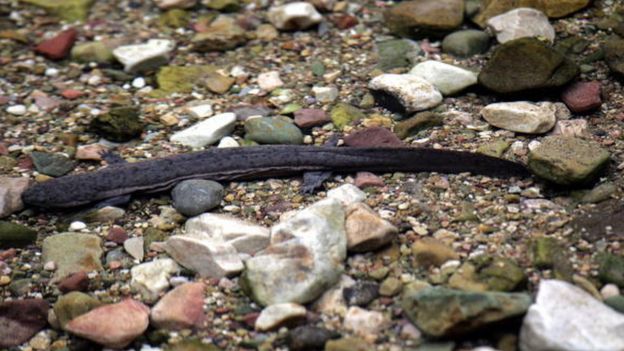
A baby Giant Chinese salamanderImage copyright AFP
Image caption Giant Chinese salamanders live in the Yangtze river. They can grow to 1.8 metres in length

The Yangtze River is the longest river in Asia, and at 3,900 miles in length (6,300km), is the third longest in the world.

But pollution has severely affected the river in recent years, meaning that its ecosystem has become narrower, rather than wider.

The largest creature thought to exist in the waters at present is the Chinese giant salamander, which can reach some 1.8m in length.

This species is critically endangered, largely as a result of pollution.

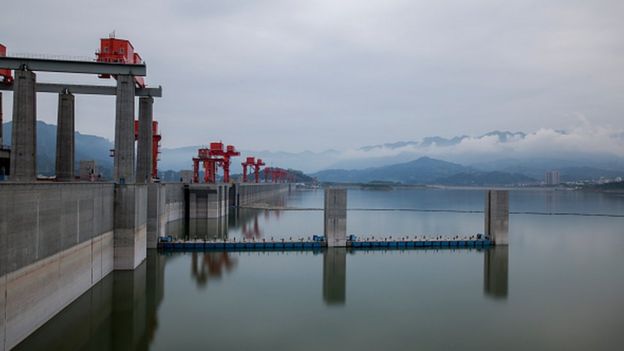
The Three Gorges Dam is the world's latest hydroelectric damImage copyright ZHANG PENG/GETTY IMAGES
Image caption The Three Gorges Dam is the world’s latest hydroelectric dam

China’s other ‘Nessies’

China is no stranger to conspiracy theories about mythical creatures lurking in the deep.

Since 1987, questions have been asked about whether a “Lake Monster” exists in the Kanas Lake in north-western Xinjiang, following numerous reports of sightings.

However, specialists believe that this is a giant taimen, a species of salmon that can grow to 180cm long, the official China Daily said.

More recently, in August 2017, footage went viral showing an unusual water creature seemingly raising its head in the waters of Luoping County in Southwest Yunnan province.

Officials, however, dismissed the “monster” as either an alligator, or a piece of floating rubbish.

Source: The BBC

Law of Unintended Consequences

continuously updated blog about China & India

ChiaHou's Book Reviews

continuously updated blog about China & India

What's wrong with the world; and its economy

continuously updated blog about China & India