19/02/2020
- US secretary of state is eager to promote US investment as an alternative to China, which holds the lion’s share of Angola’s foreign debt
- Isabel dos Santos, the former president’s daughter, became Africa’s richest woman but now stands accused of massive fraud
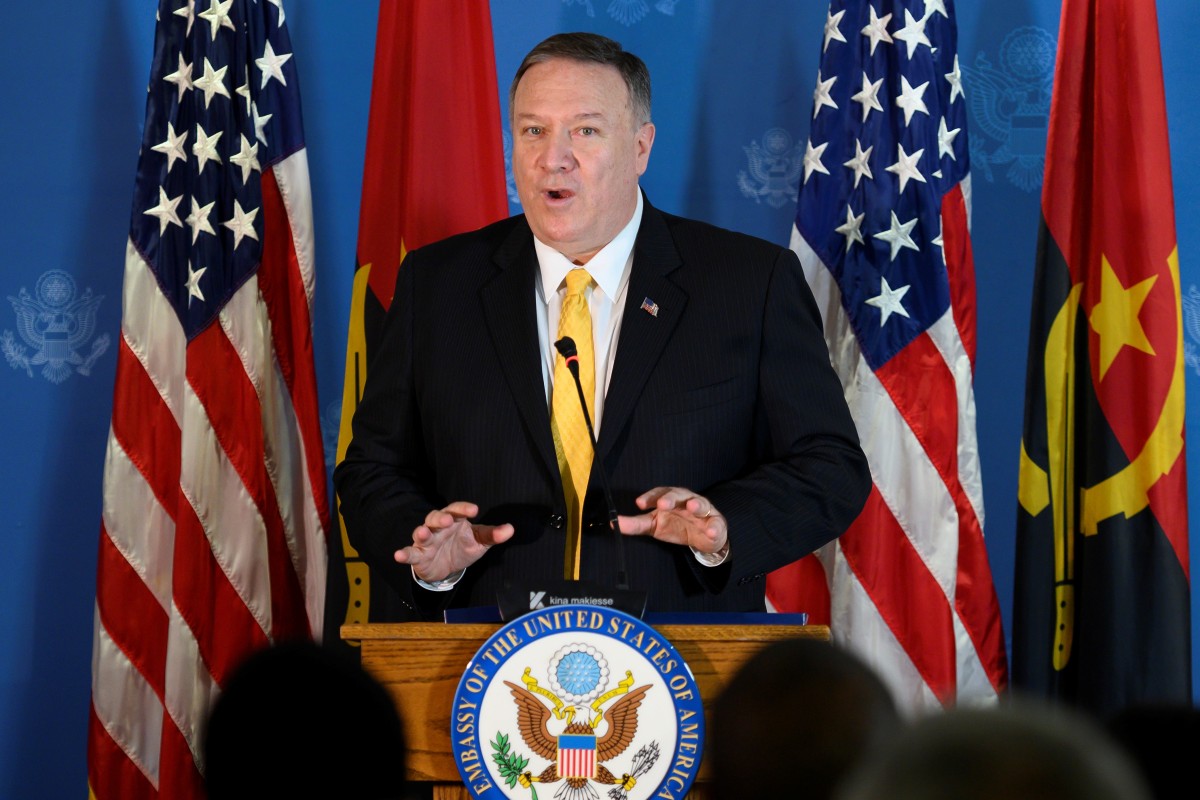
US Secretary of State Mike Pompeo in Luanda, Angola. Photo: Reuters
US Secretary of State Mike Pompeo denounced corruption and touted American business on Monday during the second leg of an African tour in Angola, where the government is seeking to claw back billions of dollars looted from state coffers.
Pompeo is aiming to promote US investment as an alternative to Chinese loans while assuaging concerns over a planned US military withdrawal and the expansion of visa restrictions targeting four African countries.
In Angola’s capital Luanda, Pompeo met with President Joao Lourenco, who took office in 2017 promising wide-ranging economic reforms and a crackdown on the endemic corruption that marked his predecessor Jose Eduardo dos Santos’ four-decade rule.
“Here in Angola, damage from corruption is pretty clear,” he told a group of businessmen following that meeting. “This reform agenda that the president put in place has to stick.”
Here in Angola, damage from corruption is pretty clear Mike Pompeo
Portugal’s public prosecutor has ordered the seizure of bank accounts belonging to
, the former president’s billionaire daughter, who is a suspect in an Angolan fraud investigation. Reputedly the richest woman in Africa, she has repeatedly denied any wrongdoing.
Angola, with Sub-Saharan Africa’s third-largest economy and its second-largest oil producer is ranked as one of the world’s most corrupt nations, in 165th place on a list of 180 countries, according to anti-corruption group Transparency International.
US oil majors ExxonMobil and Chevron have significant stakes in Angolan oilfields.
Last year, Chevron signed onto a consortium to develop Angola’s natural gas assets alongside Italy’s Eni, France’s Total, BP and Angolan state oil company Sonangol.
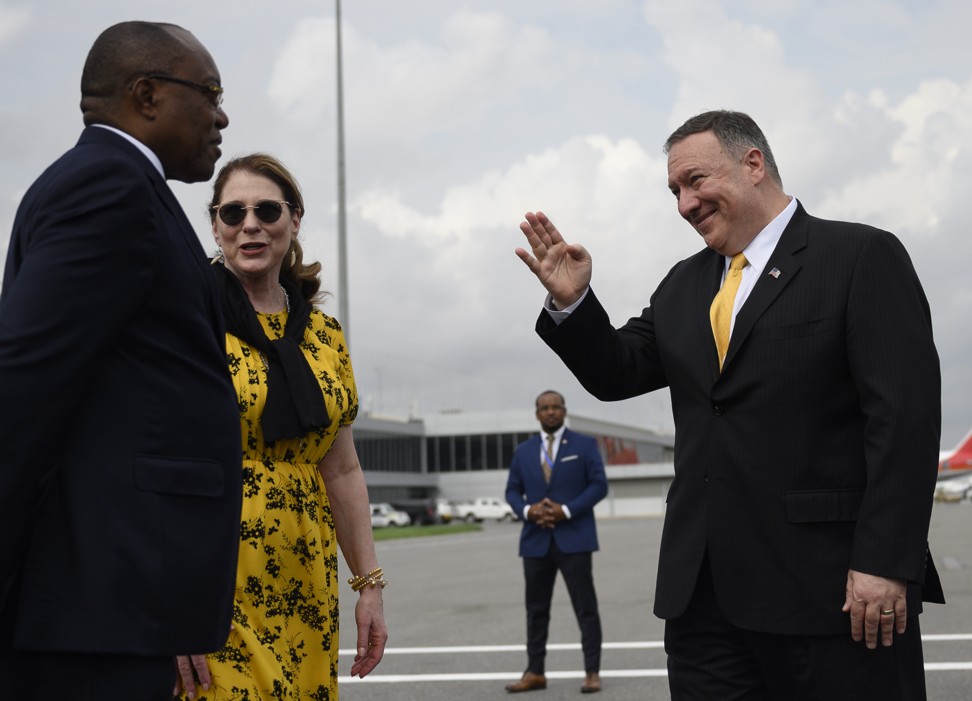
Mike Pompeo and his wife Susan greet Angola Foreign Minister Manuel Domingos Augusto in Luanda on Monday. Pool photo: AFP
“We’ve got a group of energy companies that have put more than US$2 billion in a natural gas project. That will rebound to the benefit of the American businesses for sure, but to the Angolan people for sure as well,” Pompeo said.
With a revamped International Development Finance Corporation and its new Prosper Africa trade and investment strategy, the administration is seeking to combat Chinese influence on the continent.
But the push comes as some governments are questioning US President Donald Trump’s commitment to Africa.
Do Africa’s emerging nations know the secret of China’s economic miracle?
The White House last month tightened visa restrictions on nationals from Sudan, Tanzania, Eritrea and Nigeria.
West African governments are also worried about a proposed US troop withdrawal from the region just as Islamist groups with links to Islamic State and al-Qaeda are gaining ground.
During the first leg of his African trip in Senegal on Sunday, Pompeo sought to put some of those fears to rest.
“We have an obligation to get security right here, in the region. It’s what will permit economic growth, and we’re determined to do that,” he told reporters.
Source: SCMP
Posted in Al-Qaeda, alternative, Angola, Angola Foreign, Angolan oilfields, belt and road projects, BP, Chevron, Chinese, corruption, eager, Eritrea, ExxonMobil Corp, France’s Total, International Development Finance Corporation, Investment, Islamic state, Italy’s Eni, Luanda, Mike Pompeo, natural gas project, Nigeria, Portugal’s public prosecutor, Prosper Africa trade and investment strategy, Sonangol, Sudan, Tanzania, Transparency International, Trump administration, Uncategorized, US Secretary of State, West African governments, White House |
Leave a Comment »
27/06/2019
- First Qatar, and now Saudi Arabia, are competing to dominate China’s fast-growing natural gas market, already the third largest in the world, as Beijing encourages the switch from coal to cleaner, greener energy
-
A PetroChina LNG tank at Rudong port in Nantong, Jiangsu province. China’s massive and rapidly growing appetite for natural gas is sparking off a scramble in the Middle East, as energy producers compete to become the biggest player in the market. Photo: Reuters
As more countries turn towards clean energy, the geoeconomic impact of natural gas as a fuel has become second only to that of oil. Over the past decade, the global demand for this carbon-free energy source has risen considerably and one major buyer is China.
The third largest global market for natural gas, China has implemented government policies to replace the use of coal as fuel and millions of households are switching over to clean energy. Consequently, China’s market for gas expanded by a record 43 billion cubic metres last year to reach 280 billion cubic metres at the end of 2018.
With the recent
, China’s gas consumption should continue to grow in the year ahead. As the demand spirals further, natural gas consumption in China is estimated to grow to around 620 billion cubic metres in 2030.
Prioritising its energy security, Beijing last year approved a 22-year gas supply deal between QatarGas and PetroChina International Co. The agreement is PetroChina’s largest LNG supply deal by volume, and will provide 3.4 million tonnes of liquefied natural gas annually.
With this deal, which QatarGas initiated with Total and ExxonMobil Corp as partners, Qatar achieved regional dominance and filled a vacuum left by major gas producer Iran, currently the target of US sanctions. Interestingly, Beijing has also unwittingly sparked off a competition between Qatar and Saudi Arabia, the kingpins of the Middle Eastern energy industry.
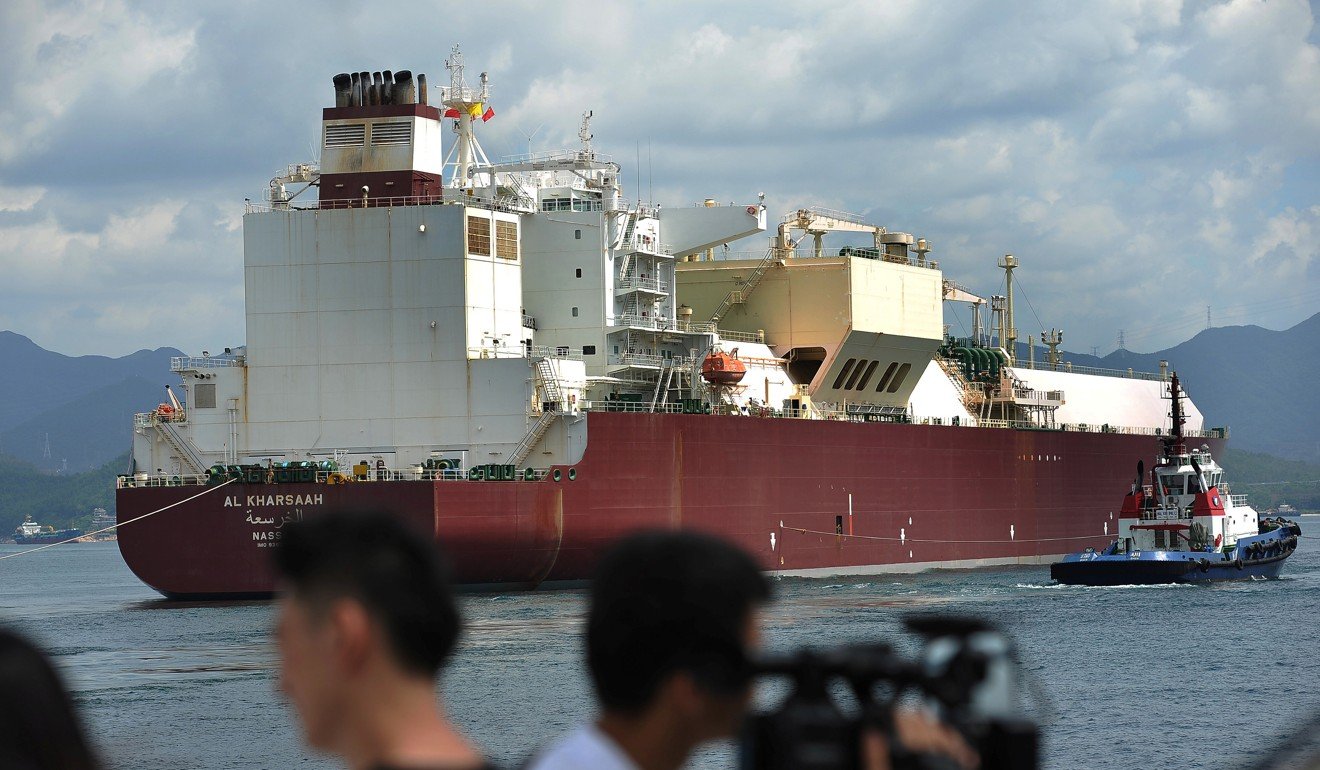
A vessel carrying Qatar LNG looking to berth in Shenzhen, China last August. Qatar’s recent deal highlighted the massive and growing Chinese appetite for natural gas. Photo: Reuters
China to become world’s top natural gas importer in 2019: report
By exporting gas, as well as oil, Qatar sail unruffled through the
imposed by Saudi Arabia, the United Arab Emirates, Bahrain and Egypt in June 2017, over allegations that Qatar supports terrorism and is friendly with Iran, which the region sees as an enemy. Qatar denies this. Meantime, Qatar plans to further increase its gas output. To attract more buyers, it is offering attractive long-term supply contracts to other countries in the region.
Inspired by the success of Qatar Gas, Saudi Arabia has stepped up its efforts to capture this new market. The Saudi state-owned oil giant Aramco plans to build an “energy bridge” between Saudi Arabia and China to better meet Beijing’s growing requirements for oil, gas, including LNG, said Aramco’s chief executive Amin Nasser at an industry event in Beijing in March.
Aramco, already a major supplier of crude oil to China, would need to invest US$150 billion over the next decade to realise its plans to convert crude oil into chemicals, and eventually become a gas producer. “We need to help our stakeholders – including here in China and the wider Asia region – realise that oil and gas will remain vital to world energy for decades to come,” said Nasser.
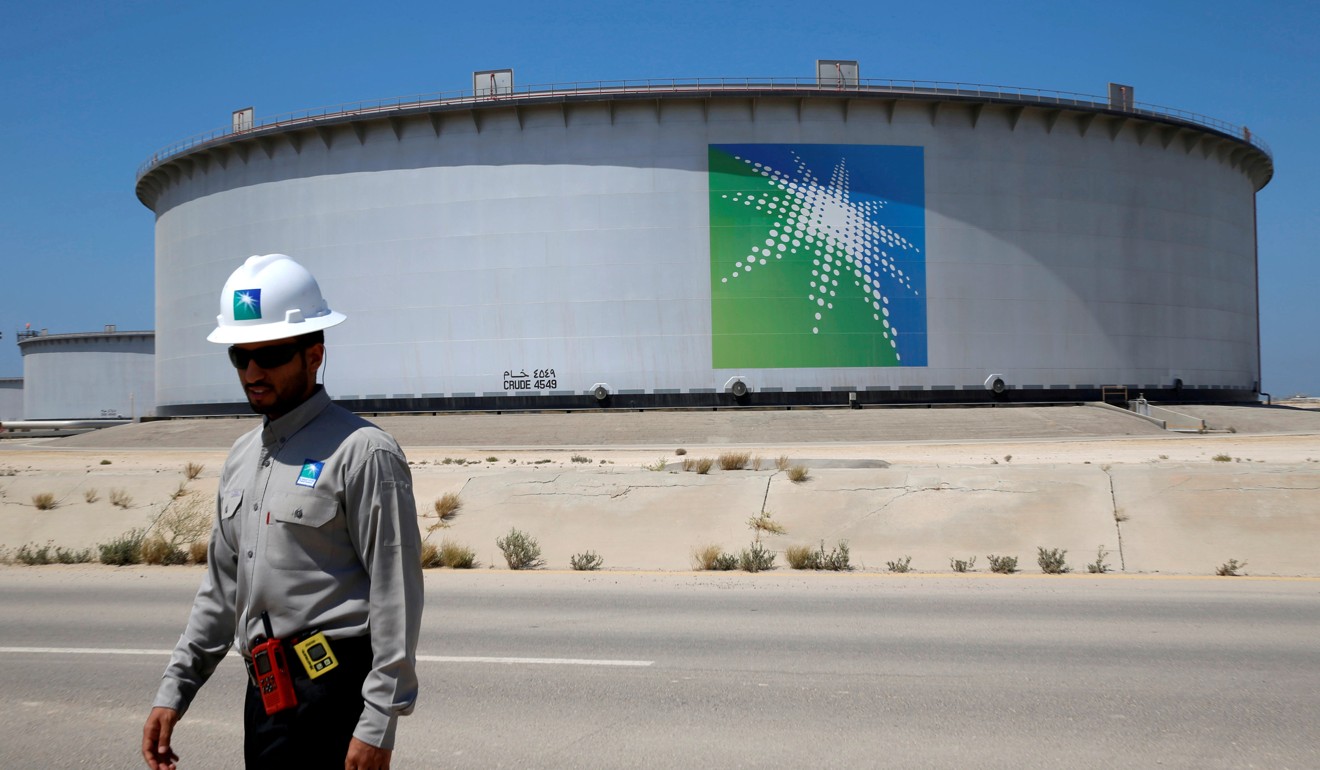
An Aramco employee near an oil tank in Saudi Arabia. Aramco has grand ambitions to become a major producer of natural gas. Photo: Reuters
The vision of Saudi Arabia as a major natural gas producer is in in line with Saudi Crown Prince Mohammed bin Salman’s economic plan Vision 2030. Riyadh has only Qatar to beat, with Iran on the back foot. Under sanctions pressure, Tehran, despite plans to increase gas exports, has clung on to just 1 per cent of the natural gas market, exporting 36.24 million cubic metres daily. Yet Iran was once part of the so-called regional gas troika along with Russia and Qatar, and is located at the cusp of several energy transit corridors. China, defying sanctions, continues to buy oil from Iran.
In around five years, Riyadh could become a major gas exporter. Saudi Arabia has already replaced Iran as the main energy provider in countries such as China, Pakistan and India, and has made huge investments in energy projects in these countries.
However, Qatar is also playing smart, sharply lowering its prices to clinch deals and make the right business connections. The competition for the growing natural gas market is a long game. The main possible setback for Riyadh is that its gas reserves do not match those in Qatar and Iran.
Source: SCMP
Posted in Aramco, Bahrain, Beijing, China’s growing demand, clean energy, Egypt, ExxonMobil Corp, India alert, iran, jiangsu province, LNG tank, Middle East, Nantong, Natural gas, Pakistan, PetroChina, Qatar, QatarGas, Riyadh, Rudong port, Russia, Saudi Arabia, Shenzhen, sparks contest, Total, Uncategorized, United Arab Emirates (UAE) |
Leave a Comment »




 CHINDIA ALERT: You'll be living in their world, very soon