17/04/2020
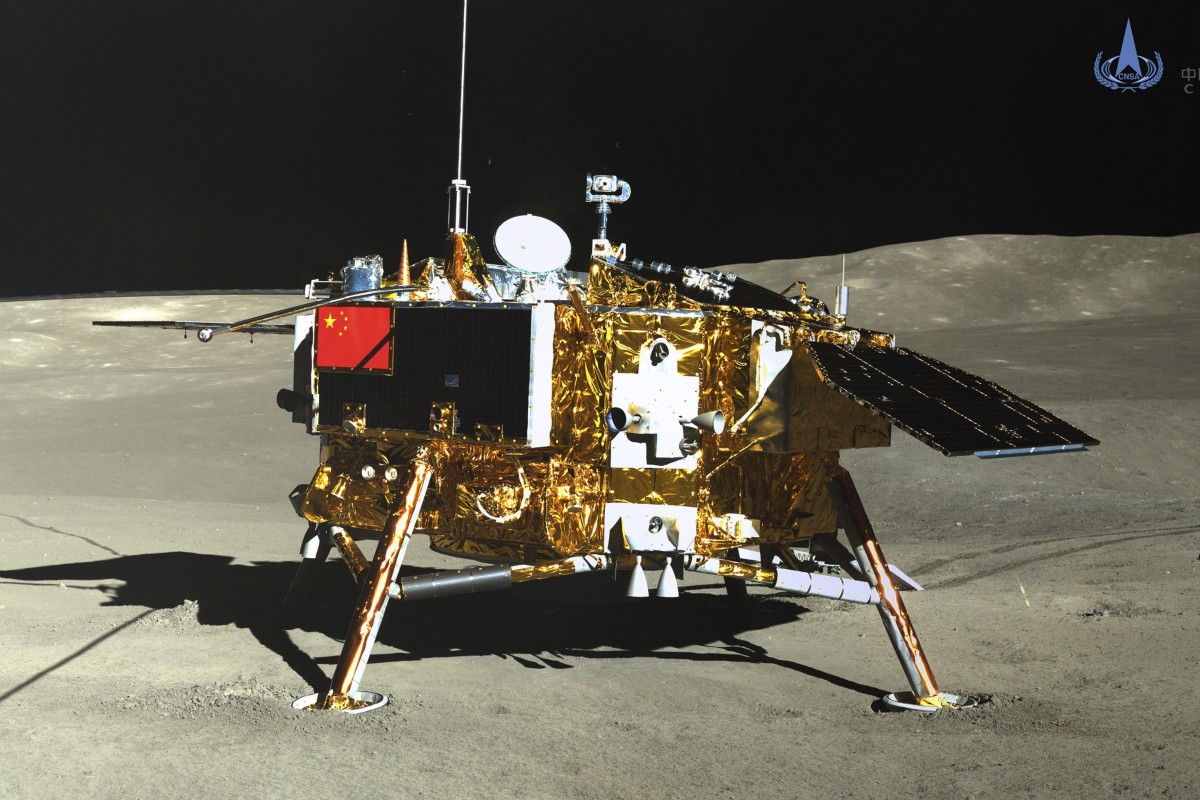
BEIJING, April 17 (Xinhua) — The lander and rover of the Chang’e-4 probe have resumed work for the 17th lunar day on the far side of the moon after “sleeping” during the extremely cold night.
The lander woke up at 1:24 p.m. Friday (Beijing time), and the rover awoke at 8:57 p.m. Thursday. Both are in normal working order, according to the Lunar Exploration and Space Program Center of the China National Space Administration.
The Chang’e-4 probe, launched on Dec. 8, 2018, made the first-ever soft landing on the Von Karman Crater in the South Pole-Aitken Basin on the far side of the moon on Jan. 3, 2019.
A lunar day equals 14 days on Earth, and a lunar night is the same length. The Chang’e-4 probe, switching to dormant mode during the lunar night due to the lack of solar power, has survived about 470 Earth days on the moon.
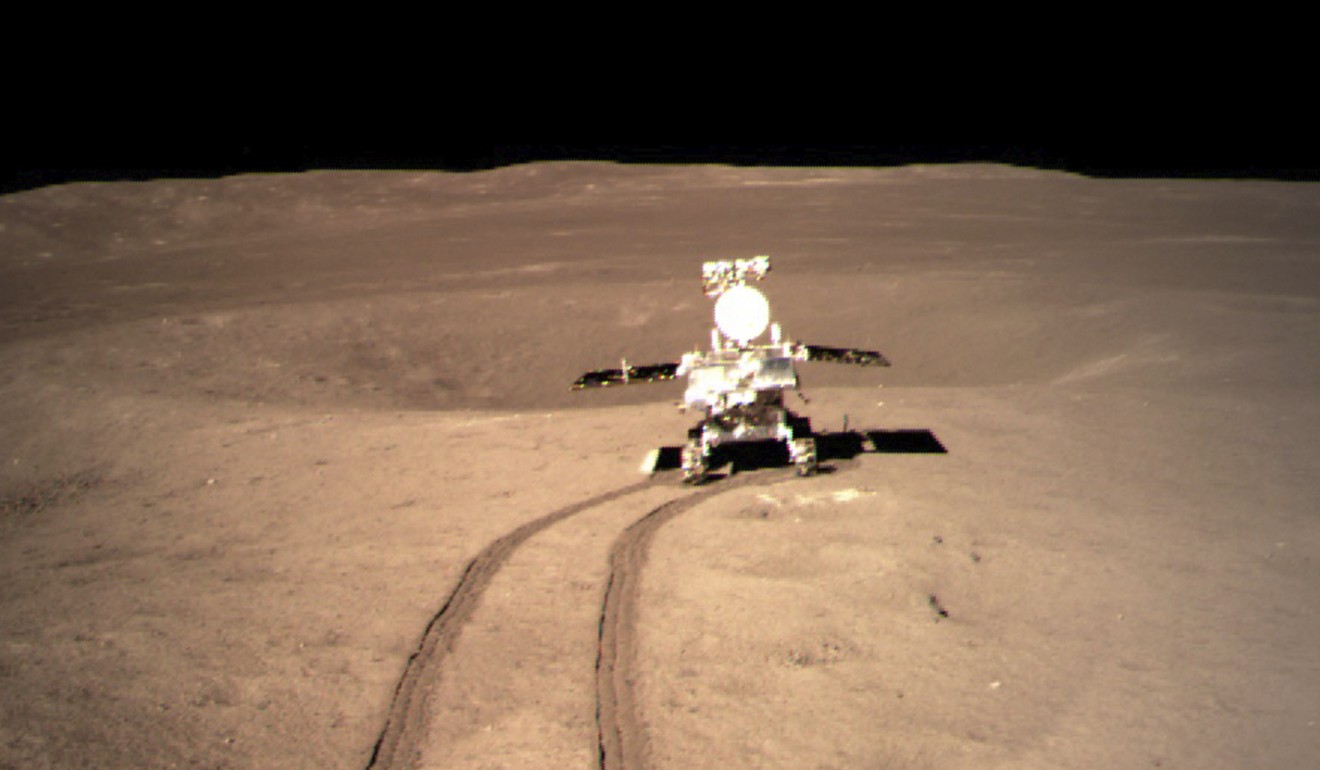
The rover Yutu-2, or Jade Rabbit-2, has worked much longer than its three-month design life, becoming the longest-working lunar rover on the moon.
Carrying scientific instruments such as panoramic camera, lunar penetrating radar, infrared imaging spectrometer and neutral atom detector, the rover will continue to move northwest to conduct scientific detection.
The scientific tasks of the Chang’e-4 mission include conducting low-frequency radio astronomical observation, surveying the terrain and landforms, detecting the mineral composition and shallow lunar surface structure and measuring neutron radiation and neutral atoms.
The Chang’e-4 mission embodies China’s hope to combine wisdom in space exploration with four payloads developed by the Netherlands, Germany, Sweden and Saudi Arabia.
Source: Xinhua
Posted in "sleeping", 14 days, 17th, 2018, 2019, 8, Beijing, Carrying, Chang'e-4, Chang'e-4 probe, China National Space Administration, China's, combine, conduct, conducting, day, Dec., detecting, developed, dormant mode, Earth, equals, extremely cold night, far side on the moon, first-ever, four, Friday, Germany, infrared imaging spectrometer, Jan. 3, lack of, lander, lander and rover, launched, longest-working, low-frequency radio astronomical observation, lunar, lunar day, Lunar Exploration and Space Program Center, lunar night, lunar penetrating radar, measuring, mineral composition, mission, neutral atom detector, neutral atoms, neutron radiation, normal working order, northwest, panoramic camera, payloads, probe, resumes, rover, Saudi Arabia, scientific detection, scientific instruments, scientific tasks, shallow lunar surface structure, solar power, South Pole-Aitken Basin, Space exploration, surveying, Sweden, terrain and landforms, the Netherlands, Thursday, Uncategorized, Von Karman Crater, wisdom, work |
Leave a Comment »
04/06/2019
- Yutu’s discovery of olivine helps pave the way for scientists to confirm existence of a mantle beneath the moon’s crust
- Crystallised mineral likely came from a crater caused by a meteor strike
China’s lunar rover, Yutu, has made a groundbreaking discovery. Photo: Xinhua
China’s lunar rover, Yutu, has made a groundbreaking discovery that proves what scientists have been thinking for decades: that the moon has a mantle.
Scientists have long suspected that the moon has a mantle under its crust, just like the Earth, but for the past 60 years lunar explorations, including the US Apollo missions, have failed to provide proof. While there were clues, there was no direct evidence.
“Now we have it,” said Professor Li Chunlai, deputy director of the National Astronomical Observatory of China and a lead scientist on the Chang’e-4 mission that put Yutu, or Jade Rabbit as it is known in English, on the moon.
The findings, published in the latest issue of journal Nature on Thursday, answer some fundamental questions about the moon, such as its internal structure and history of its formation.
The rover discovered olivine in surface samples collected near its landing site. Photo: Xinhua
During its first mission on January 3, Yutu discovered olivine, a green, crystallised mineral usually found deep underground – like the upper mantle of the Earth – in surface samples collected near its landing site.
Further analysis showed that the olivine was not local, but had originated from a 72km diameter (45-mile) crater nearby.
The far side of the moon has more craters than the near side, which faces the Earth, and a meteor strike probably penetrated to the mantle and brought up materials to the surface.
What you need to know about Chang’e 4’s mission to the moon
Yutu’s landing site used to be littered by rocks, but cosmic rays and solar wind weathered them to dust, Li said.
“What we found is the first direct evidence of materials from deep below the lunar crust,” though how deep is still unknown, he said.
It is generally believed that the moon was once covered by oceans of molten rock. Lighter substances rose to the surface and formed a crust while heavier ones sank to form the mantle and core. The new findings support that theory.
China is the first country to land a rover on the far side on the moon and is planning to send a larger spacecraft there later this year to bring back samples.
The first Chinese astronauts will land on the moon between 2025 to 2030, according to Beijing’s latest schedule.
The Apollo missions brought back many rock samples, some of which contained olivine, but some scientists suspected they might have come from a volcanic eruption.
First photo of lunar rover leaving ‘footprints’ on moon
China, the United States and other nations have all announced plans to launch missions to exploit the moon’s resources within the next decade or two.
Yutu’s discovery could help scientists to draw a more accurate map of those resources, including the volume and distribution of minerals, researchers said.
In Chinese folklore, Yutu or Jade Rabbit as it is known in English, is a companion of the moon goddess Chang’e. Photo: Handout
US President Donald Trump gave Nasa an additional US$1.6 billion budget to put Americans back on the moon by 2024.
Li said Chinese scientists were willing to work with their colleagues in the US, but Washington had blocked any such collaboration.
“Our door remains open,” he said.
Source: SCMP
Posted in Chang’e-4 lunar exploration mission, crater, discovery, far side on the moon, Jade Rabbit, Lunar rover, meteor strike, mineral olivine, moon’s mantle, NASA, National Astronomical Observatory, riddle, Uncategorized, United States, US Apollo missions, US President Donald Trump, Washington, Yutu |
Leave a Comment »




 CHINDIA ALERT: You'll be living in their world, very soon