Archive for ‘firecrackers’

12/02/2020

An ‘unhappy marriage’ that has saved thousands of lives

Uma Preman

Arranged marriages can often throw up surprises. Uma Preman’s unhappy marriage transformed not only her life, but also the lives of thousands of others – because it left her with the skills and motivation to help disadvantaged Indians gain access to medical treatment.

The moment

Uma always dreamed of a perfect wedding in a traditional south Indian temple. She imagined it decorated throughout with colourful flowers – and a big party by the beach.

But it never happened.

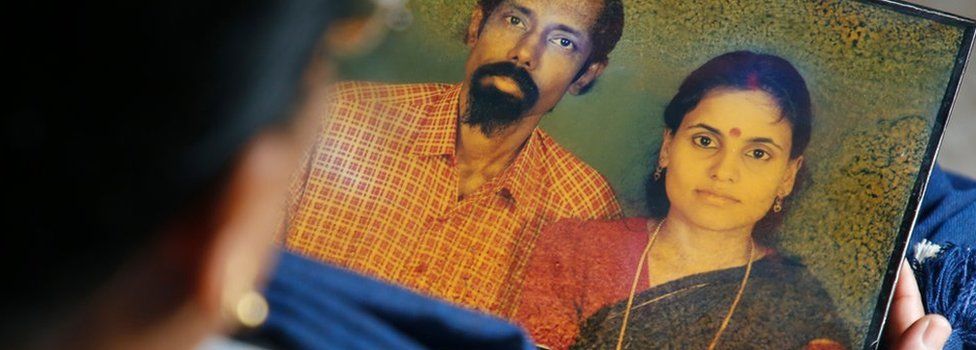
Uma still remembers the grey February morning 30 years ago when her mother introduced her to Preman Thaikad. Uma was only 19, and Preman was 26 years older.

They had never met before, but she was told he was her husband. There were no festivities and no music – in fact there wasn’t even a wedding.

“My mother told me that I was now Preman’s property. He told me that I was his wife but I had no rights over his property,” says Uma.
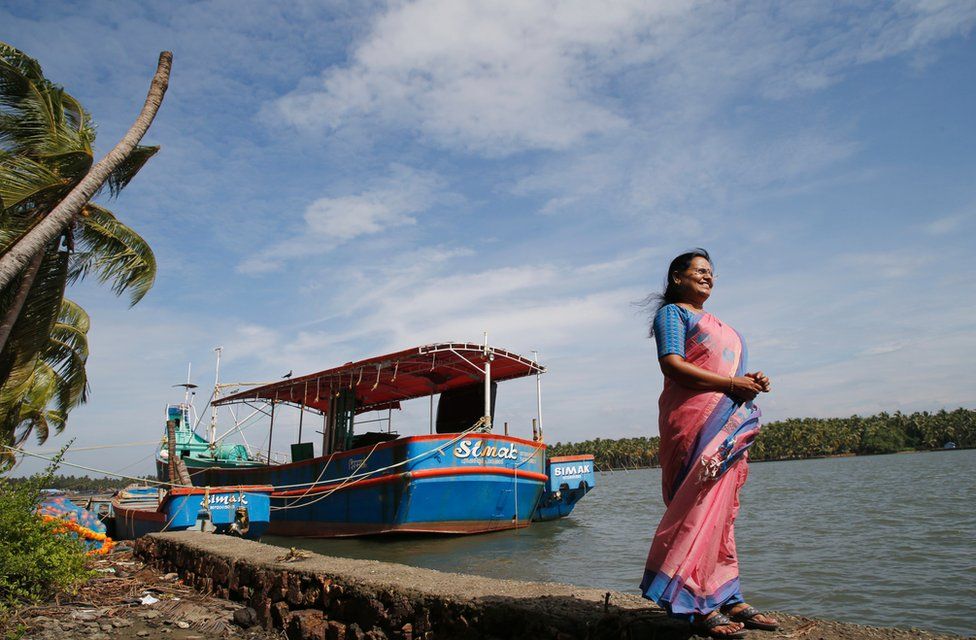
Uma Preman

Preman took her to his house and left her there for the night. She still remembers that she couldn’t sleep and just stared at the pale yellow ceiling and the rickety fan.

The next morning, Preman returned at 6am and asked her to accompany him to a bar. He kept drinking for several hours while she sat in silence, trying to figure out the strange direction her life had taken.

He told her that she was his second wife, but she quickly learned that she was actually his fourth. He also revealed that he had a severe form of tuberculosis – and that her main job was to be his carer.

Before

Uma grew up in Coimbatore, a busy town in the southern Indian state of Tamil Nadu. As a child, she wanted to become a doctor like her father, TK Balakrishnan.

Balakrishnan had studied medicine for a year before his uncle asked him to drop out and work on his farm. He had learned the basics and would use his knowledge to dress wounds, change dressings and treat fevers with basic medicines. Uma heard that the families of the patients would often give him treats – so she began to accompany him on his rounds.

“I just loved food and eating and that’s why I went with him,” she says.

But one day she saw something that made her realise how serious her father’s work was. Her father was treating a patient with gangrene. The stench, Uma says, was unbearable.

“He was using gardening gloves because he didn’t have surgical ones, but he was so calm.”

Short presentational grey line

Find out more

Short presentational grey line

But Uma’s mother hated the fact that her husband was spending most of his time helping others, Uma says.

When she was eight, her mother gave her some money to buy firecrackers for the Hindu festival of Diwali – and when she came back, her mother was gone.

“I found out later that she loved another man and she left with him,” Uma says.

Suddenly it was up to Uma to take care of her three-year-old brother. She says she didn’t know how to cook, but she decided to learn because she couldn’t bear the food her father made for them.
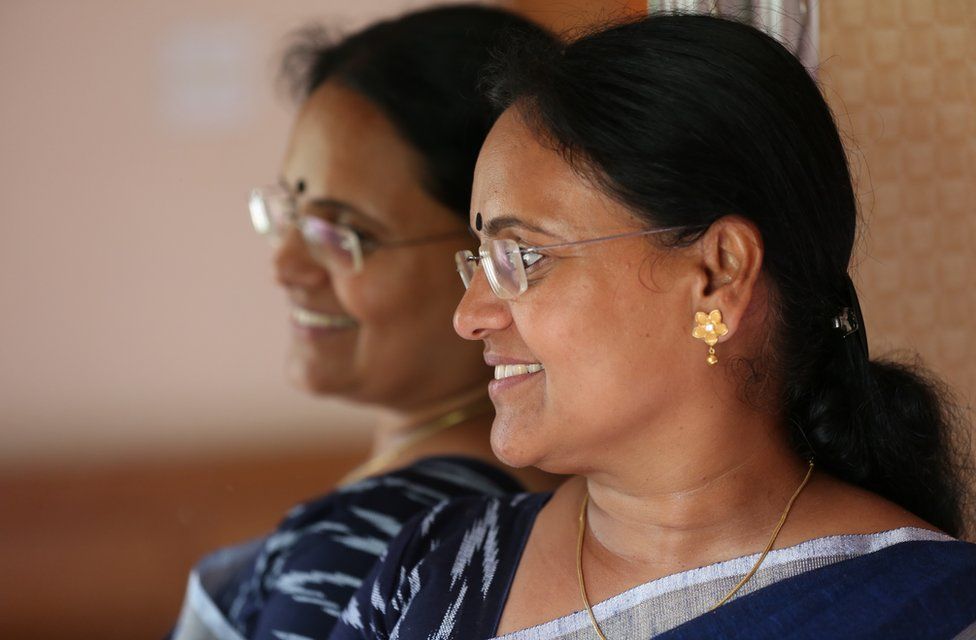
Uma Preman

“I went to nearby homes and requested the ladies to teach me. They said I wouldn’t be able to cook because I was small,” Uma says. But within days they had taught her to make a variety of dishes, and cooking became part of her daily routine.

“I would wake up at 5am to make breakfast and lunch. Then I would go to school at 9am. I would come back in the evening and take care of my brother and cook dinner,” Uma says.

“My friends played every evening – they were enjoying their life. But I was happy taking care of my family.”

She kept thinking about her mother though, and worrying that she might never see her again.

Years later, when Uma was 17, she went with some neighbours to visit a famous temple in Guruvayur – 87 miles from Coimbatore – and there she met a man who told her he’d seen a woman who looked exactly like her.

Uma left her address with him and a few days later a letter arrived in the post.

It was from her mother.

Uma Preman

Uma rushed back to Guruvayur to be reunited with her, but it quickly became clear there was a problem. Her second husband had borrowed large sums of money, then abandoned her – and the lenders were demanding payment.

“I would see people coming to her house every day to harass her for money,” Uma says. “It was painful to see.”

Her mother’s solution was for her to marry Preman, who was wealthy enough to clear her debts. Uma was reluctant. She tried to get work instead, but failed. Then she returned to her father – but he felt betrayed by her decision to resume contact with her mother, and turned his back on her.

Eventually, Uma gave in.

“I felt worthless. I just accepted my fate and went with Preman.”

After

“Every day before he left for work, Preman would lock me inside the house,” Uma remembers.

“I wasn’t allowed to meet anybody or to go out – not even for a minute. For six months, I was alone. I started talking to walls. I lost my confidence and self-respect.”

As the years passed, Preman’s tuberculosis worsened. The couple started spending most of their time in hospitals, and in 1997, seven years after Uma had moved in with him, Preman died. Although he had once said she would have no right over his property, he left her comfortably off.

Uma says she felt free for the first time in her life.

“I didn’t want him to die, but I couldn’t help but feel that life had given me a second chance.”
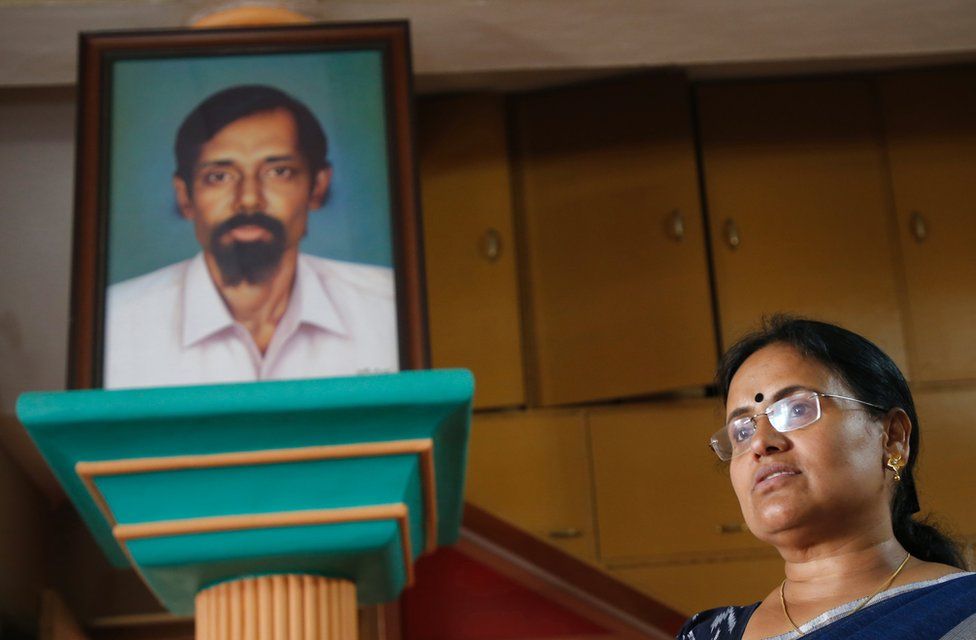
Uma with Preman's photograph
Image caption Uma with Preman’s portrait in the background

It took a while for it to become clear what she would do with this new freedom.

During her years with Preman, Uma had observed that poor people were often unable to get proper medical treatment, not only because they couldn’t afford it but also because they didn’t have the right information – they didn’t know what treatments and facilities were available.

So Uma had started helping them, filling in forms for them, guiding them to the right doctors and sometimes just listening to their problems.

When she left the hospital in Trivandrum where Preman had spent the last six months of his life, she was missed. But she wasn’t completely beyond reach. There was a booth where she had often called Preman’s family, she says, and the person who owned it gave her number to people in need of help.

Soon hundreds of people started calling for advice and that’s how the Santhi Medical Information Centre was born. Uma had found her life’s calling – she wasn’t treating people, as her father had done, but she was helping them get treatment.
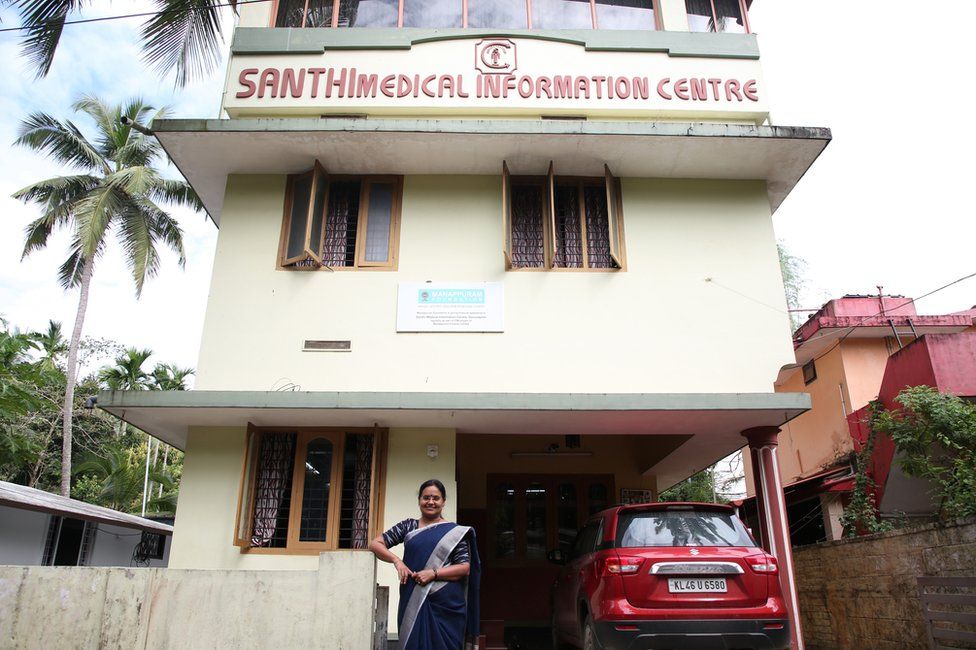
Uma Preman

However, to help other people Uma had to acquire knowledge herself, and in the late 1990s the internet wasn’t yet widely available in India. She had to travel across the country to collect data about treatments, hospitals and the places where people could get free or subsidised treatment.

“I had to travel because no hospital replied to my letters,” she says.

Even when she met people face to face, they often didn’t take her seriously. In other Indian states there was also a language barrier, as Uma spoke only Tamil.

In the past decade, the Santhi Centre’s top priority has been helping people with kidney disease.
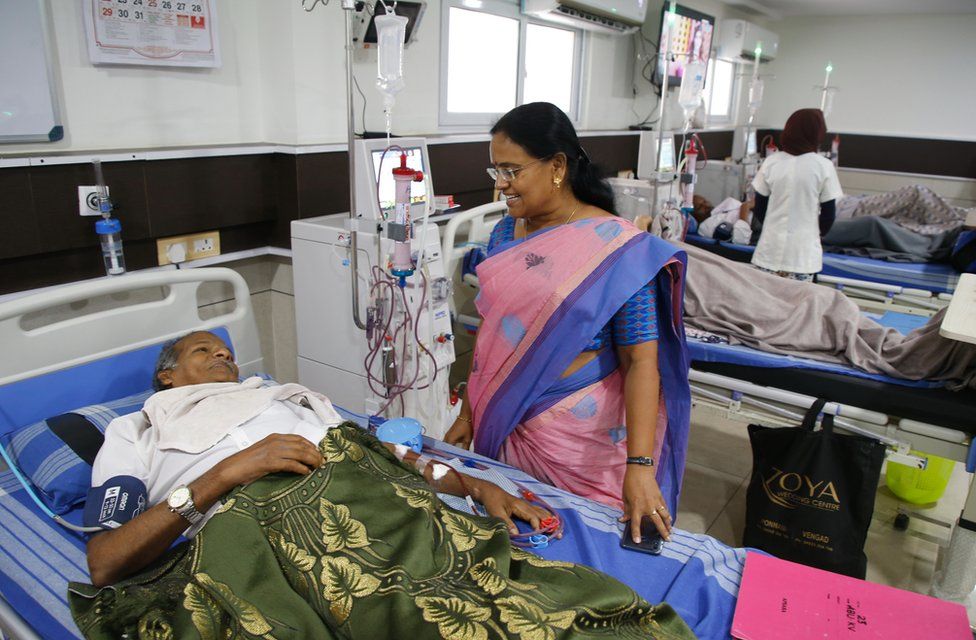
Uma Preman

There are not enough dialysis centres in the country and the rate of kidney donation is poor. Uma has been working to change this, raising funds for new facilities open to all.

“Our first dialysis centre started in Thrissur district in Kerala. Now we have 20 centres across India. Many rich people donated for the cause,” she says.

Uma says persuading people to donate a kidney is not easy because they often worry about the impact on their own health.

So she decided to set an example, and donated one of her own kidneys. She gave it to an orphan whose kidneys had failed.
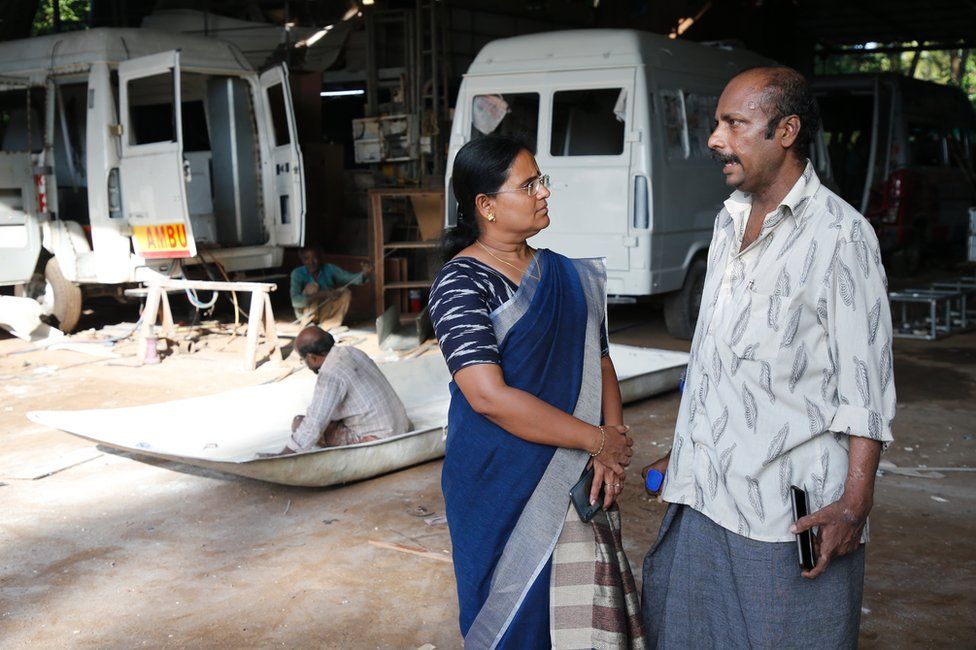
Uma Preman with Salil
Image caption One of Uma’s kidneys enables Salil to live a normal life

Salil says he owes his life to her.

“I was 26 when I was undergoing dialysis. When she met me, she told me that she would donate her kidney on the condition that I continued to work after the transplant.”

He did continue to work – in fact, after a while he went to work for Uma.

Salil says Uma is a woman who truly believes in Mahatma Gandhi’s words that “you have to be the change you want to see”.

“Everyone wants to change the world but no-one is ready to change themselves,” Uma says. “I changed my attitude and I donated one kidney, but I also got a brother in return.”

Source: The BBC
30/10/2019

The explosive truth about the link between Chinese fireworks and India’s dim Diwali

  • Black market imports from China, confusing regulations and pollution concerns are undermining India’s fireworks industry
  • Industry sources say Diwali sales this year were down by 30 per cent
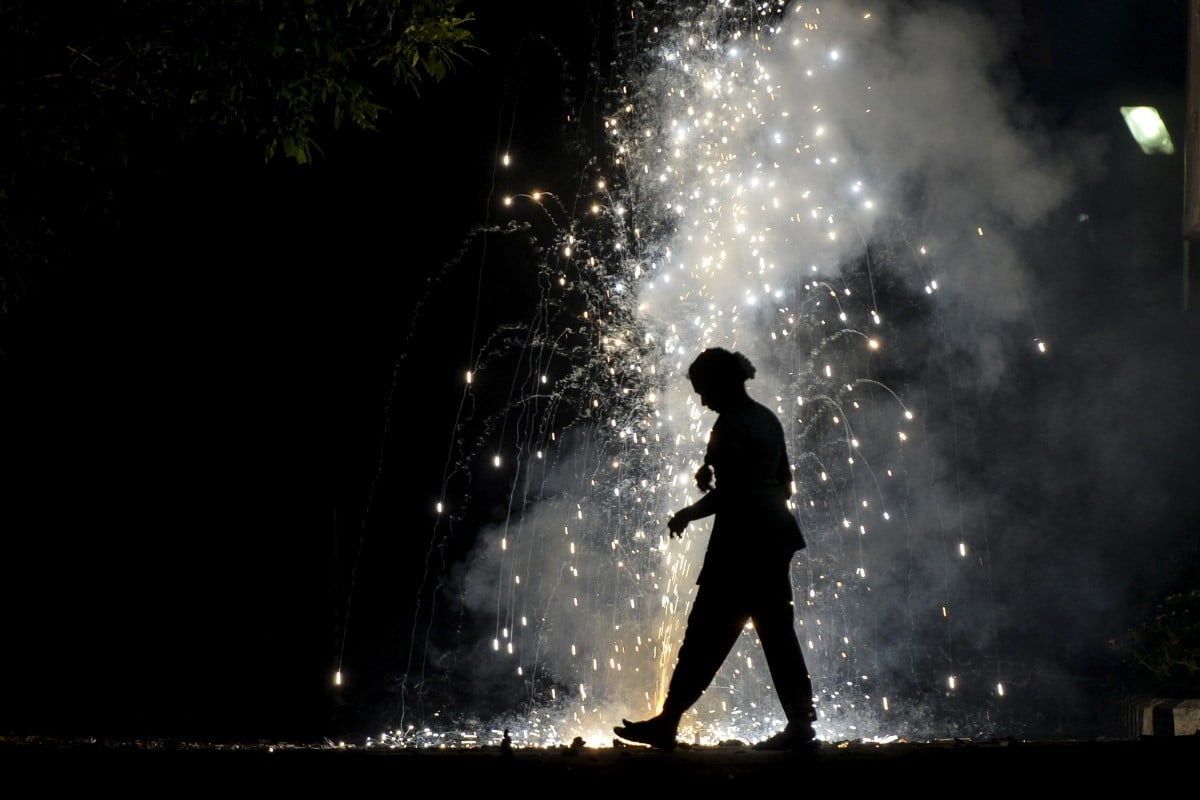
A woman is silhouetted by lit firecrackers during Diwali celebrations in Chennai. Photo: AFP

Arumugam Chinnaswamy set up his makeshift booth selling firecrackers in a Chennai neighbourhood a week ahead of Diwali, the Hindu festival of lights, with great expectations of doing a brisk trade.

Yet a week later, he has been forced to pack up more than half his stock in the hope he’ll have better luck next year.

“Four years ago, I sold firecrackers worth 800,000 rupees (US$11,288) on the eve of Diwali alone. This year, the sales have not even been a quarter of that,” said Chinnaswamy, 65, painting a grim picture that will be recognised by many in the Indian fireworks industry.

Chinnaswamy buys his firecrackers in Sivakasi, an industrial town in the southern Indian state of Tamil Nadu that produces more than 90 per cent of the country’s fireworks.

Sivakasi’s dry climate has helped to make it the firework capital of India and many production facilities in the town have been in the business for close to a century. For the most part, the industry has resisted mechanisation and still deals in handmade products. Its 1,100-plus manufacturing units provide jobs for 800,000 mostly uneducated workers and its diligent labour force have earned the town the nickname of ‘Little Japan’.
A worker lays firecrackers in an outdoor yard at a manufacturing unit involved in the production of firecrackers ahead of the Hindu festival of Diwali, in Sivakasi. Photo: AFP

But this reputation is under threat, struggling under the weight of an anti-pollution campaign, regulatory uncertainty and the arrival of cheap black-market Chinese imports. Irregular monsoons and a slowdown-induced cash crunch have not helped matters either.

Industry figures estimate the Diwali sales of India’s 80 billion-rupee firecracker industry took a 30 per cent drop this year.

A TOXIC PROBLEM

With pollution in Indian cities among the worst in the world, the government has come under pressure to do something about the nation’s toxic air – a problem that becomes more acute during Diwali due to the toxic fumes emitted when celebratory fireworks are set off. This Diwali, for instance, many areas in New Delhi recorded an Air Quality Index (AQI) of 999, the highest possible reading (the recommended limit is 60).

That makes the fireworks industry seem like an easy target when it comes to meeting government air quality targets.

Trouble began brewing in October last year when the Supreme Court banned the manufacture of traditional fireworks containing barium nitrate, a chief polluter. That decision put a rocket under the industry, as barium nitrate is cheap and is used in about 75 per cent of all firecrackers in India.

Factories in Sivakasi responded with a four-month shutdown protest that decimated annual production levels by up to a third.

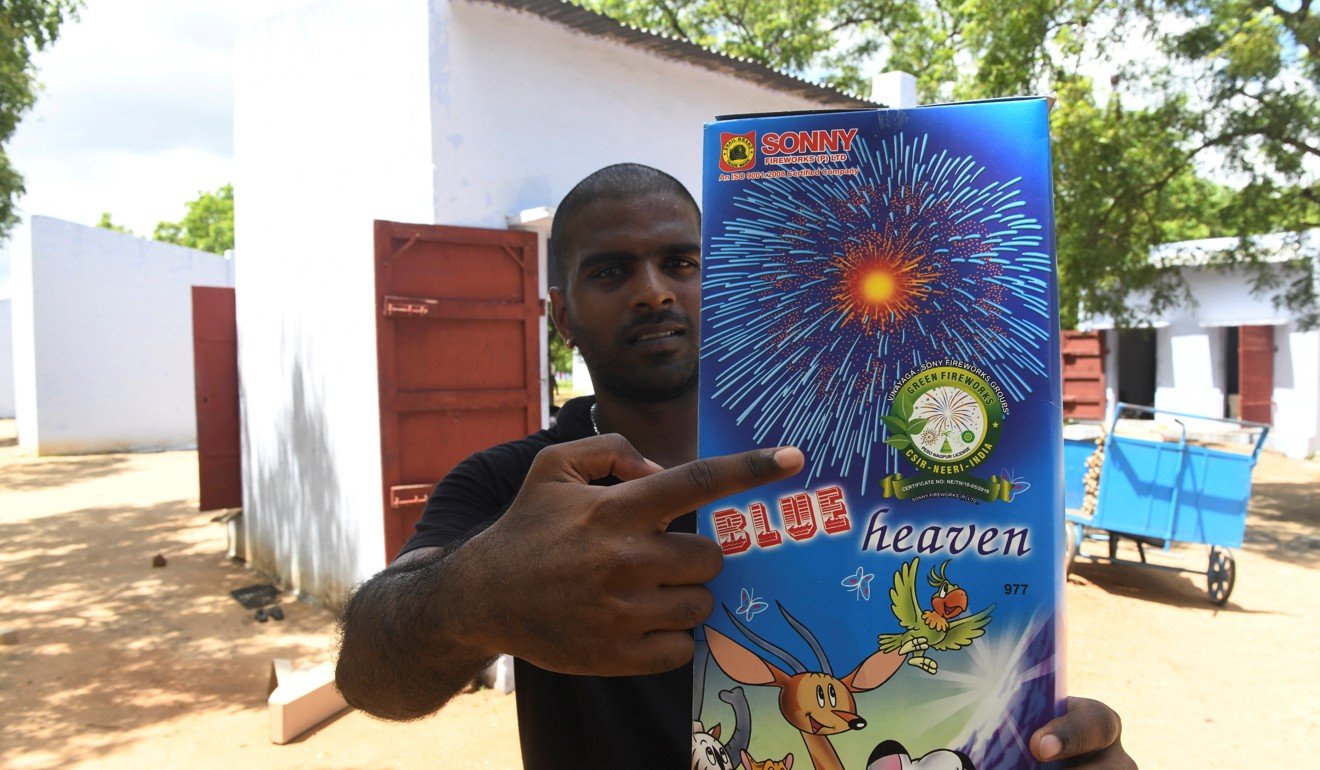
A seal denotes environment friendly ‘Green Fireworks’ at a manufacturing unit in Sivakasi. Photo: AFP

Apparently realising it had overstepped the mark – and that enforcing the Supreme Court regulations would be next to impossible – the government stepped in to rescue the industry, offering its assistance in the manufacture of environment-friendly crackers containing fewer pollutants, but it was too little, too late.

“The Supreme Court verdict was simply Delhi-centric with the vague idea of [cracking down on] urban pollution. It lacked any on-the-ground knowledge of the fireworks industry,” said Tamil Selvan, president of the Indian Fireworks Association, which represents more than 200 medium and large manufacturers.

Singapore travellers give Hong Kong a miss over Diwali long weekend

“Fireworks are low-hanging fruit for the anti-pollution drive as the industry is unorganised. Could the government or judiciary place a similar blanket ban on more pollution-causing industries like automobiles, plastics or tobacco?” asked Selvan.

CHINESE COMPETITION

The industry has also been hit by a flood of cheap Chinese firecrackers that are smuggled into the country on the black market.

In September, the country’s federal anti-smuggling agency, the Directorate of Revenue Intelligence, cautioned various government departments that huge quantities of Chinese-produced firecrackers had reached Indian soil in the lead up to Diwali.

But industry sources complain they have seen little action from the government to combat the problem.

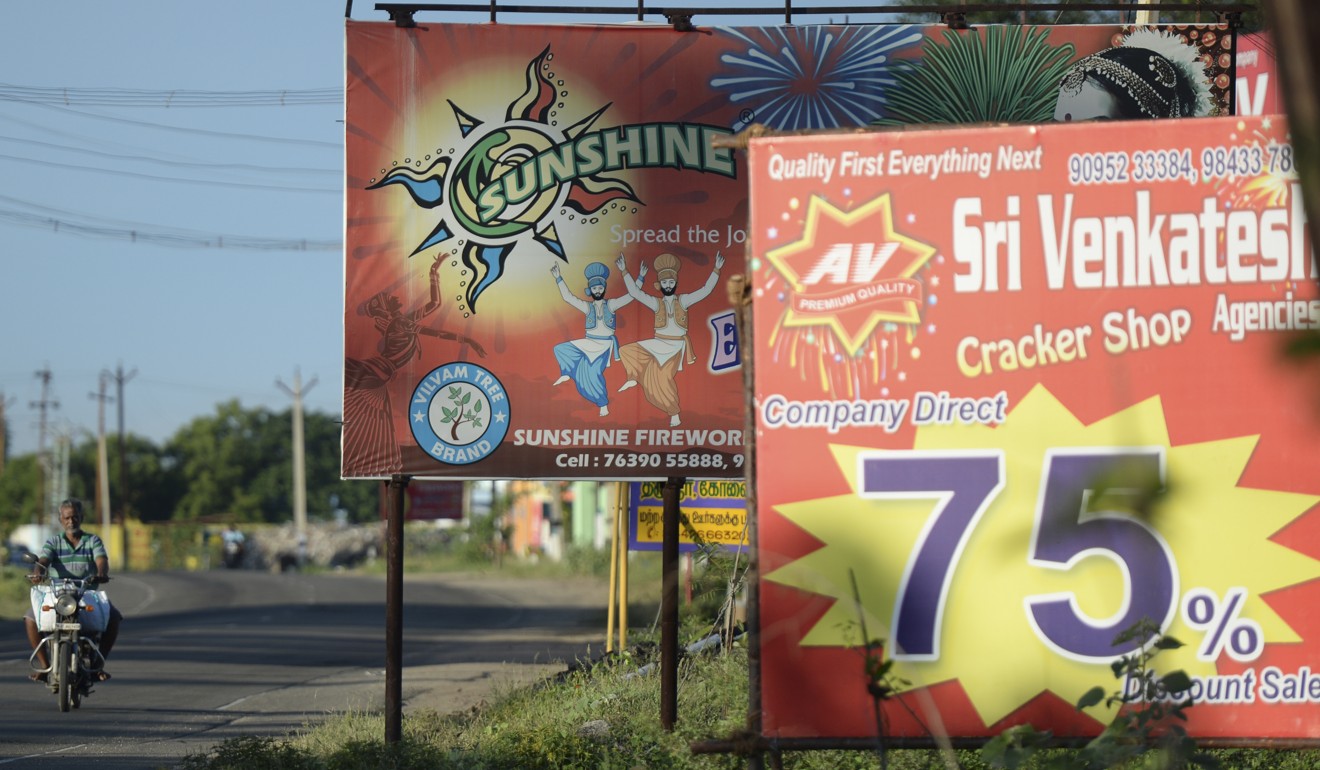
An advert for firecrackers ahead of the Hindu festival of Diwali, in Sivakasi. Photo: AFP

Legally, Indian manufacturers can neither import nor export firecrackers. The Indian firecracker industry is the second-largest in the world after China’s.

Raja Chandrashekar, chief of the Federation of Tamil Nadu Fireworks Traders, a lobbying body, said low-end Indian-manufactured firecrackers such as roll caps and dot caps – popular among children – had struggled to compete with Chinese-made pop pops and throw bombs.

“Despite our repeated complaints to government bodies, Chinese firecrackers find a way into India, particularly in the northern parts. This is severely affecting our business,” said Chandrashekar.

While more Chinese fireworks might be entering India, the effect has been to undermine the industry, resulting in fewer sales overall.

FIZZLING OUT?

The Sivakasi fireworks industry faces other problems, too. Not least among these is the use of child labour, which had been rampant until a government crackdown a few years ago, and the practice of some factories to operate without proper licences and with questionable safety standards.

But despite the darker aspects of the industry, its role goes beyond merely helping Diwali celebrations go with a bang every year.

India is crazy about gold. But can the love last as prices skyrocket?

“The livelihoods of over five million people who are indirectly involved in the business, in areas such as trade and transport, depend on the survival of the industry,” said Chandrashekar.

That survival looks increasingly in question. Dull sales of fireworks have been reported in major cities including New Delhi, Mumbai, Bangalore and Hyderabad, though exact numbers can be hard to come by due to the unregulated nature of the industry and unreliable numbers shared by manufacturers.

So great has the resultant outcry been that some cynics even wonder whether the industry is struggling as much as it claims or whether it is part of a ploy by manufacturers to gain more government concessions and avoid any further crackdown.

“These firecracker manufacturers lie through their teeth about the Diwali sales for self-serving motives such as tax avoidance. The overall business is healthy,” said Vijay Kumar, editor of the Sivakasi-based monthly magazine Pyro India News.

“Though there was a 30-40 per cent shortage in annual production, all the manufactured products have been sold this year. No large stockpile is left with any manufacturer.”

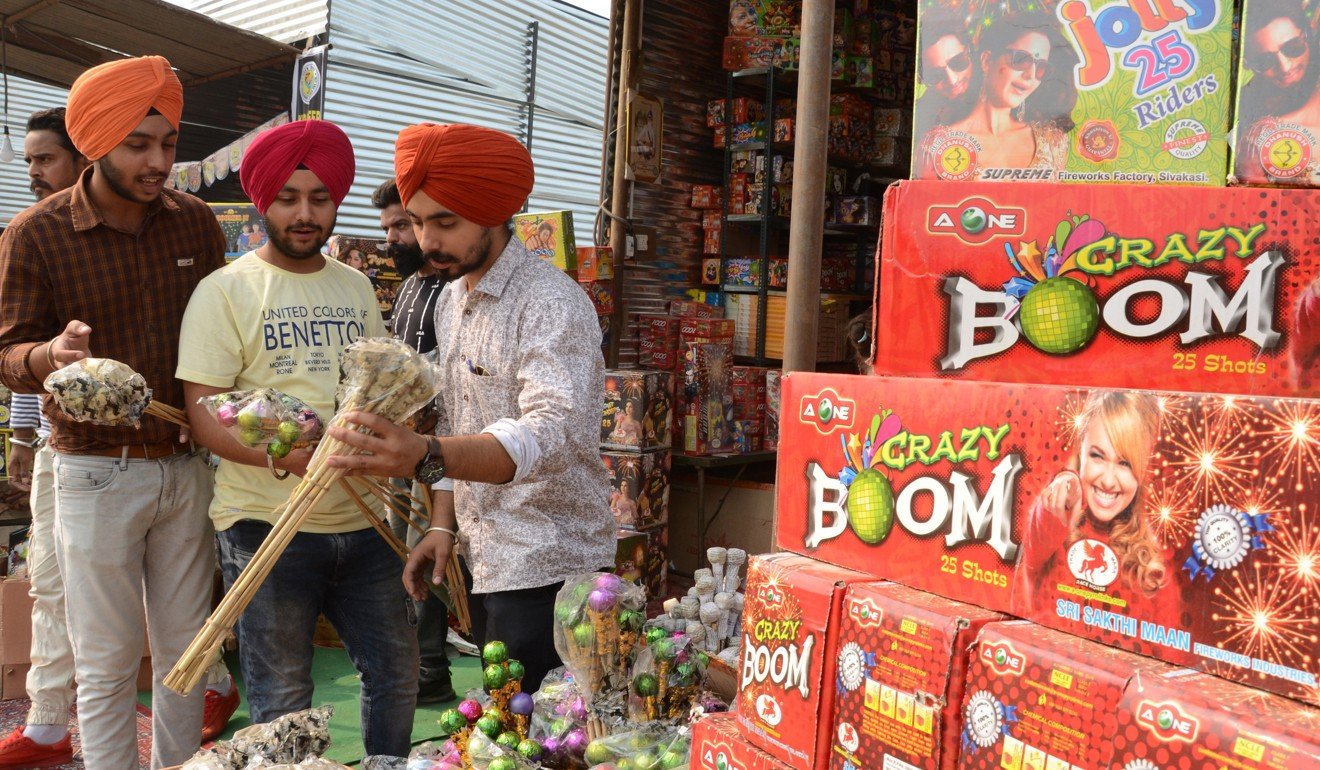
Customers buy firecrackers on the eve of the Hindu festival of Diwali in Amritsar. Photo: AFP

Still, regardless of the manufacturers’ motives, the result of the industry’s struggles has been that street sellers like Chinnaswamy have fewer fireworks to sell – and they are struggling even to sell those.

Chinnaswamy says people are confused about the government’s anti-pollution drive and about what firecrackers are now legal and this has discouraged them from buying. Despite the government’s effort to promote “green crackers” he says these are too hard to come by to be a ready solution, at least for this year.

“There was no clarity on what type of firecrackers, whether green crackers or otherwise, can be set off and at what time of the day. Many consumers even asked me whether or not the conventional firecrackers are totally banned while there was much misinformation floating about on social media,” said Chinnaswamy.

Shaking his head, all he can do is hope that next year his Diwali goes with more of a bang.

Source: SCMP

18/10/2019

Tens of thousands to run in New Delhi, one of the world’s most heavily polluted cities

NEW DELHI (Reuters) – Tens of thousands of runners have signed up for the Indian capital’s half marathon and other races on Sunday, officials said, despite the air quality hitting dangerous levels in one of the most heavily polluted cities in the world.

New Delhi’s air quality index was around 300 on Thursday, classified as very poor and meaning prolonged exposure can cause respiratory illness.

Delhi Chief Minister Arvind Kejriwal, who has described the city as a “gas chamber” in winter, has ordered emergency measures, including restricting the number of private vehicles on the roads under an “odd-even” scheme based on number plates.

Race organisers said pollution was a worry but they would take steps to reduce the impact on runners. Hours ahead of and throughout the race, the course will be sprayed with water.

“The air quality is a concern and will remain a concern, there is no question about it,” said Vivek Singh, joint managing director of Procam International that conducts the race sponsored by telecom operator Bharti Airtel.

“The measures that we take for those few hours to give our runners a good experience have worked in the past.”

The race has been moved this year to avoid a sharp rise in pollutants during Diwali, the Hindu festival of lights, when hundreds of thousands of firecrackers are lit.

But farmers burning crop stubble in the states north of Delhi have turned the air over Delhi toxic. The forecast for the next few days and into Sunday is “very poor”.

A record 40,633 people have signed up for the 21-km, 10-km and a 5-km races. Last year there were 34,916 runners, many of whom wore masks.

A former Olympic gold medallist, Carmelita Jeter of the United States, is the international event ambassador.

Doctors have advised citizens to restrict their outdoor activities and said runners must be made aware of the risks they are taking.

“Just two weeks before the odd-even scheme comes into play, how have the civic authorities allowed more than 30,000 people to expose themselves to toxic air?” asked said Desh Deepak, senior chest physician at the city’s Ram Manohar Lohia Hospital.

Source: Reuters

21/07/2019

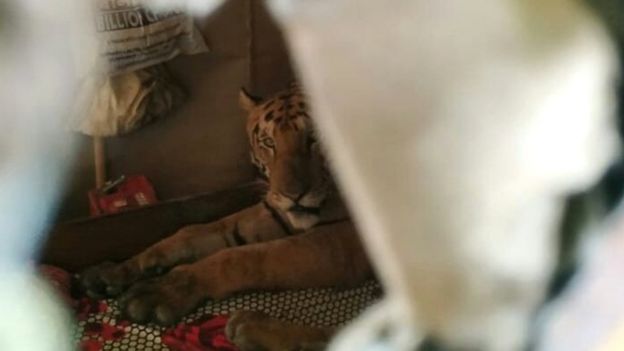
India floods: Tired tiger takes nap in resident’s bed

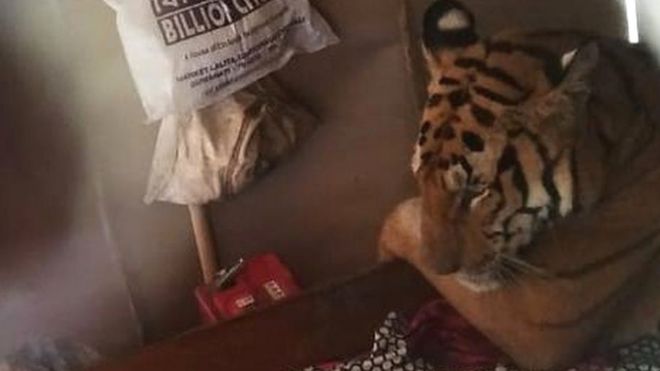
A tiger lying on a bed in Assam stateImage copyright WTI
Image caption The tiger was seen relaxing in a bed in Assam state

A female tiger which fled a wildlife park in India’s flood-ravaged state of Assam was found relaxing on a bed inside a local resident’s house.

She is believed to have fled the Kaziranga National Park, where 92 animals have died in recent days amid heavy flooding.

Officials from a wildlife conservation group arrived at the house and created a safe escape route for her.

She was guided in the direction of the jungle.

According to the Wildlife Trust of India (WTI), the tigress was first spotted next to a highway on Thursday morning, some 200 metres away from the national park.

She was likely to have been disturbed by the busy road and ended up seeking refuge in the house, which is located near the highway, it said.

Tiger in residence's houseImage copyright WTI
Image caption The house owner fled as soon as he saw the tiger

Rathin Barman, who led the rescue operation, said the tigress entered the house – which is next to a shop – at 07:30 local time (02:00 GMT) and slept throughout the day.

“She was very exhausted and had a nice day-long nap,” he told the BBC.

The house owner, Motilal, who also owns the adjoining shop, fled the house along with his family members as soon as they saw the tiger walking in.

“The great thing was that nobody disturbed her so she could rest. There’s a lot of respect for wildlife in this region,” Mr Barman said.

“[Motilal] says he will preserve the bed sheet and pillow on which the tiger rested.”

WTI officials were later called to the scene and began preparing a safe escape route for her.

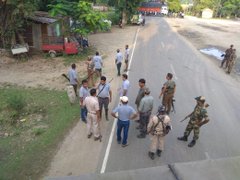
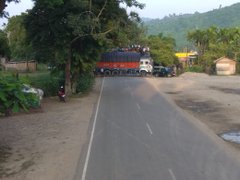
They blocked traffic on the highway for an hour and set off firecrackers to wake the animal up. She eventually left the house at 17:30 local time, crossed the highway and went in the direction of the forest.

Media caption Floods cause death and destruction in north India

Mr Barman said it was not clear if she had actually entered the forest or if she had just “walked off into an adjoining area”.

The Unesco-recognised Kaziranga National Park is home to 110 tigers, but none of them have died in the flooding.

Animals killed in the park include 54 hog deer, seven rhinos, six wild boars and one elephant.

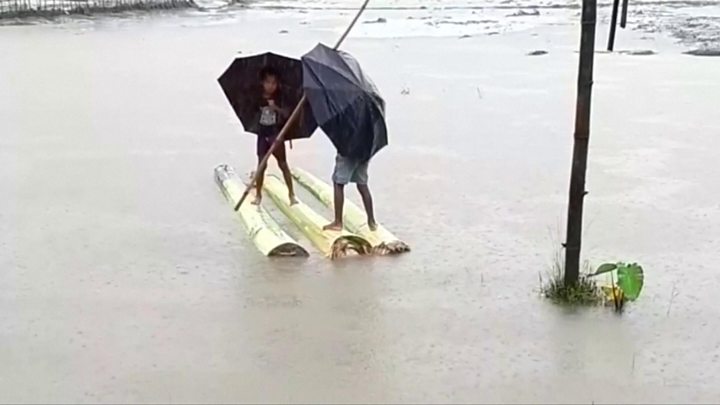
Monsoon floods have devastated the eastern states of Bihar and Assam, killing more than 100 people and displacing millions.

The monsoon season, which lasts from June to September, has also wreaked havoc in Nepal and Bangladesh.

Source: The BBC

25/02/2019

Chinese kidnap victim reunited with parents after 31 years

  • Tears of joy as hundreds turn out to welcome home the lost boy of their village
  • DNA samples crack the case after decades of heartache

Chinese kidnap victim reunited with parents after 31 years

25 Feb 2019

16 Feb 2019

The tearful moment a man is finally reunited with his parents 31 years after he was abducted as a three-year-old. Photo: Weibo

A man who was abducted as a child 31 years ago was finally reunited with his parents in a celebration which included hundreds of people from surrounding villages in Sichuan province, southwest China.

Qin Yujie – whose given name was Cheng Xueping – knelt and sobbed as he hugged his long-lost parents in Chengjiawan village, surrounded by “Welcome Home” banners and the noise of firecrackers.

“I have been looking for you for years and couldn’t find a clue,” Qin told his weeping parents Cheng Jiguang and Gaolingzhen at their reunion on Friday, according to the Western China City Daily newspaper.

As well as the joy of seeing their son again, the Chengs were also able to meet Qin’s wife and children for the first time as hundreds of people gathered around them, many of them in tears.

Qin was three years old in 1988 when he was snatched from a construction site in Guizhou province, southern China, where his parents were working. They searched frantically for their son over many hours that day and, since then, have spent their life savings and borrowed money to travel all over China looking for traces of their son.

Eventually they provided DNA samples to a national database established by the police to assist in the search for China’s many abducted children.

In 2018, a DNA sample Qin provided to his employers yielded an unexpected result. Sichuan police were alerted to a match between Qin’s DNA sample and Cheng’s, his birth father.

Police tracked him down and contacted the Chengs to provide another DNA sample to be sure of the results and, in February this year, the new test confirmed that Cheng and Gao were indeed Qin’s biological parents.

A video of their emotional reunion has been making the rounds on Chinese social media.

The abduction of women and children is a common crime in China. In December 2018 two child traffickers, Zhang Weiping and Zhou Rongping, were sentenced to death for their role in eight separate cases, involving the sale of nine children between 2003 and 2005.

In one particularly brutal case, their gang broke into a rented home, tied up a woman and took away her son to be sold through a middleman, police said. Zhang, Zhou and the other gang members were finally detained in 2016.

In recent years, there have been several official as well as grassroots efforts to help abducted children find their parents. The Ministry of Public Security established an official system called Tuanyuan in 2016 which sends alerts of missing children’s information through social media platforms and mobile phone texts, similar to the “Amber Alert” system in the US.

As of May 2018, Chinese media reported the system had published information about 3,053 missing children and helped find 2,980 of them.

On Baobeihuijia, a grassroots website run by volunteers, there are still 43,858 families looking for their children and 39,446 people looking for their families.

Source: SCMP

Law of Unintended Consequences

continuously updated blog about China & India

ChiaHou's Book Reviews

continuously updated blog about China & India

What's wrong with the world; and its economy

continuously updated blog about China & India