Archive for ‘Flipkart’

29/08/2019

Exclusive: India set to outlaw six single-use plastic products on October 2 – sources

NEW DELHI (Reuters) – India is set to impose a nationwide ban on plastic bags, cups and straws on Oct. 2, officials said, in its most sweeping measure yet to stamp out single-use plastics from cities and villages that rank among the world’s most polluted.

Prime Minister Narendra Modi, who is leading efforts to scrap such plastics by 2022, is set to launch the campaign with a ban on as many as six items on Oct. 2, the birth anniversary of independence leader Mahatma Gandhi, two officials said.

These include plastic bags, cups, plates, small bottles, straws and certain types of sachets, said the officials, who asked not to be identified, in line with government policy.

“The ban will be comprehensive and will cover manufacturing, usage and import of such items,” one official said.

India’s environment and housing ministries, the two main ministries leading the drive, did not respond to emails from Reuters to seek comment.

In an Independence Day speech on Aug. 15, Modi had urged people and government agencies to “take the first big step” on Oct. 2 towards freeing India of single-use plastic.

Concerns are growing worldwide about plastic pollution, with a particular focus on the oceans, where nearly 50% of single-use plastic products end up, killing marine life and entering the human food chain, studies show.

The European Union plans to ban single-use plastic items such as straws, forks, knives and cotton buds by 2021.
China’s commercial hub of Shanghai is gradually reining in use of single-use plastics in catering, and its island province of Hainan has already vowed to completely eliminate single-use plastic by 2025.
India lacks an organized system for management of plastic waste, leading to widespread littering across its towns and cities.
The ban on the first six items of single-use plastics will clip 5% to 10% from India’s annual consumption of about 14 million tonnes of plastic, the first official said.
Penalties for violations of the ban will probably take effect after an initial six-month period to allow people time to adopt alternatives, officials said.
Some Indian states have already outlawed polythene bags.
The federal government also plans tougher environmental standards for plastic products and will insist on the use of recyclable plastic only, the first source said.
It will also ask e-commerce companies to cut back on plastic packaging that makes up nearly 40% of India’s annual plastic consumption, officials say.
Cheap smartphones and a surge in the number of internet users have boosted orders for e-commerce companies, such as Amazon.com Inc (AMZN.O) and Walmart Inc’s (WMT.N) Flipkart, which wrap their wares – from books and medicines to cigarettes and cosmetics – in plastic, pushing up consumption.

Source: Reuters

29/07/2019

How a wave of Chinese money is powering Indian start-ups

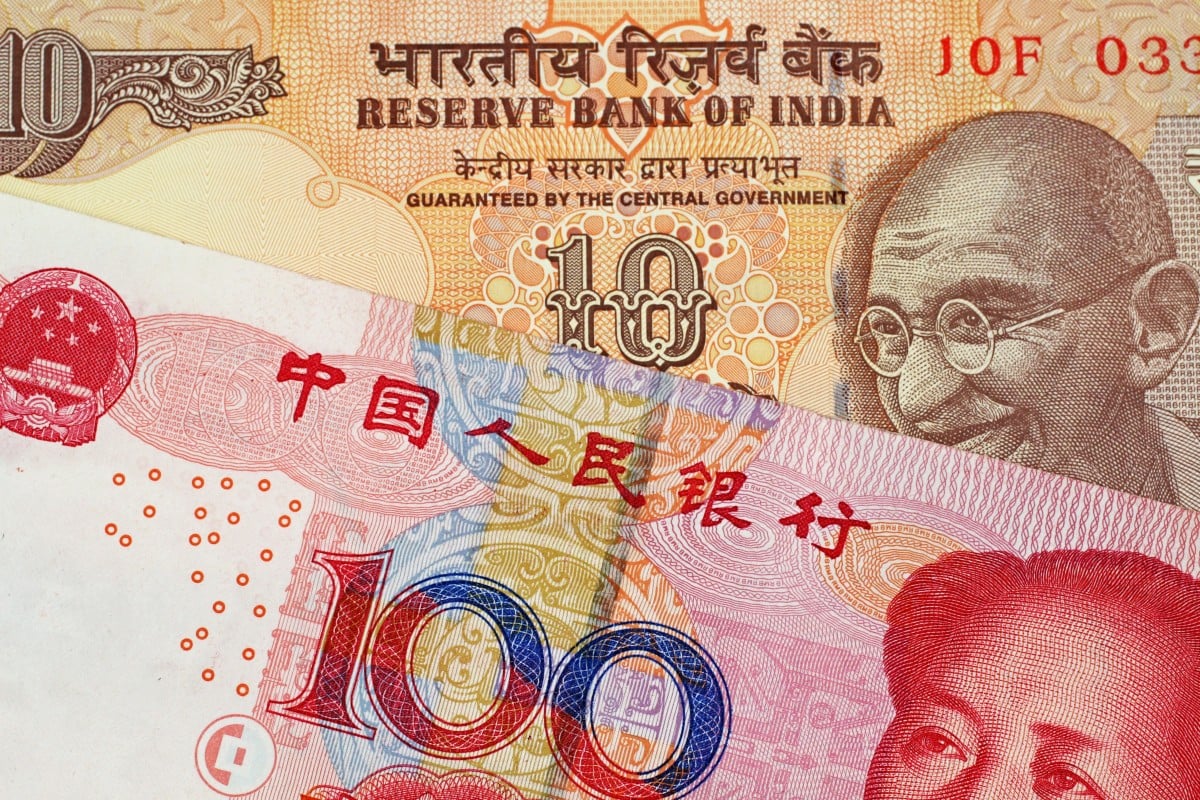
  • China last year poured US$2.5 billion into firms in India, which is a healthy breeding ground for up-and-coming tech outfits
  • Active cooperation between these investors and entrepreneurs holds a multitude of benefits for both sides, according to industry pundits
Chinese venture capitalists are injecting funds into a variety of cash-hungry Indian businesses. Photo: Shutterstock
Chinese President Xi Jinping and

Indian Prime Minister Narendra Modi

look set for another informal summit in October, and a key item on the agenda will be

the flow of money between their nations

.

Indian start-ups have become a major target for

deep-pocketed Chinese investors

, who have been looking to emulate their United States counterparts such as Tiger Global and Sequoia Capital that dominate the sector.

On top of this, a slowdown in start-up deals in China has nudged the country’s investors to look beyond their borders, and

India

’s affordable labour market and strong economic growth provide a healthy breeding ground for young tech outfits.

Can Bollywood be the bridge that binds India and China?
Led by heavyweights such as Shunwei Capital, Fosun International, Tencent Holdings, Xiaomi and Alibaba Group Holding – which owns the South China Morning Post –

Chinese venture capitalists

have been injecting funds into a variety of cash-hungry Indian businesses.

For many of these start-ups, the knowledge and technology of Chinese investors act as the backbone of their business Ntasha B, Venture Gurukool

Beneficiaries have included advertising firm Media.net, e-commerce operator Snapdeal, digital payment provider Paytm, online travel firm MakeMyTrip, messaging platform Hike, health tech start-up Practo and news aggregator Dailyhunt.

“For many of these

start-ups

, the knowledge and technology of Chinese investors act as the backbone of their business, along with the operational expertise of Indians in the domestic market,” said Ntasha B, co-founder of Venture Gurukool, a mentoring platform for start-ups which works closely with Indian diplomatic missions in China.

Chinese President Xi Jinping and Indian Prime Minister Narendra Modi are set to meet again in October. Photo: Xinhua

She added that Chinese investors usually had a hands-on approach and were a bit inflexible, unlike their American counterparts, who gave some elbow room in hiring local teams.

A senior executive with an Indian start-up, who did not wish to be identified, said it was sometimes straightforward to convince Chinese investors as they could relate to Indian business models and requirements that were dissimilar to those from the Western world.

The world’s second-largest economy invested nearly US$2.5 billion in Indian start-ups last year, a figure that has touched almost US$1 billion so far this year, according to finance research firm Venture Intelligence. The number of such deals jumped from just one in 2013 to 27 last year.

What does Amazon’s China departure mean for its Indian e-commerce battle?

Indian start-ups are estimated to have raised US$3.9 billion from around the globe in the first six months of this year, and the inflow from Chinese behemoths played a key role in pushing them to turn east to source funding.

“What’s more interesting about [Chinese investors’] strategy is that they’re paying more attention to rural India. If you look at the companies they’ve invested in, a fair amount of their businesses target the rural segment,” said Sandeep Murthy, managing partner at venture capital firm Lightbox Ventures, which keeps a close watch on Chinese investments. He said the brisk economic activities in India’s tier two and tier three towns are more attractive to Chinese investors than India’s urban centres.

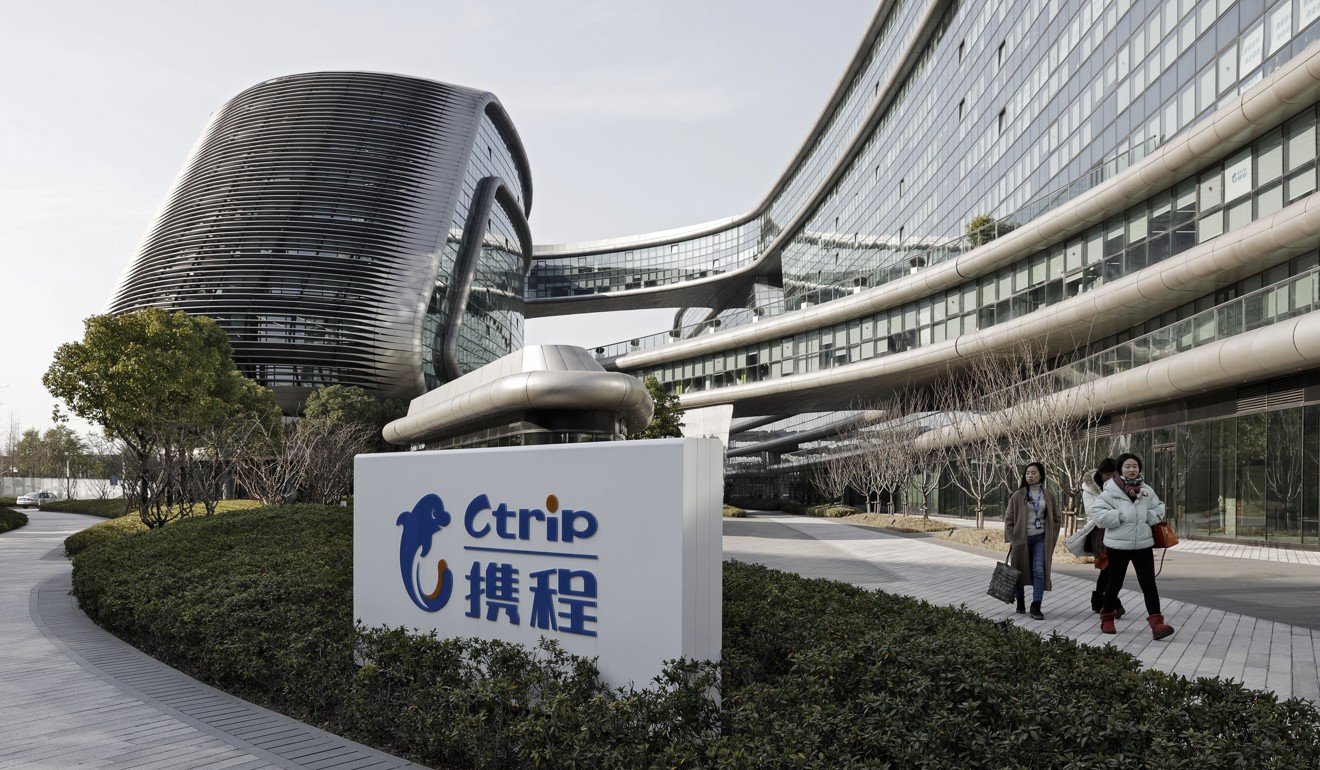
Ctrip, China’s largest online travel agency, is drawn to the size and rapid advancement of the Indian market. Photo: Bloomberg

WHY INDIA?

For Ctrip – China’s largest online travel agency, which in April took a 49 per cent stake in MakeMyTrip – the appeal of India was its whirlwind technological advancement and the disposable income of its massive young population.

“[MakeMyTrip has] achieved fast growth in the online travel market and is becoming well recognised in the Indian market. Their comprehensive products and services, management team and the opportunities in India result in our confidence that they will continue to succeed,” said Wei Yuan Min, a member of Ctrip’s global team. Behind the US and China, India houses the world’s third-largest start-up ecosystem in terms of the number of companies. As for the number of unicorns – start-ups valued at over US$1 billion – India ranks third, offering a vibrant habitat for entrepreneurial ventures. The country is home to 32 such firms, with the addition of nearly half a dozen so far this year and 15 last year.

In India, one man took on Chinese firm ByteDance to shut down TikTok – and he wants to do it again

New Delhi expects there to be 12,000 tech start-ups in the country by next year, up from 7,200 last year. There were 1,200 new tech firms in the sector last year, according to industry body Nasscom.

One of those capitalising on this opportunity is the Beijing-headquartered technology company Xiaomi, which last year promised to pump US$1 billion into 100 Indian start-ups over the next five years. Most of these Indian firms are involved in businesses that are ancillary to Xiaomi’s key operations.

Chinese firm Xiaomi is banking on Indian start-ups to strengthen its own products. Photo: Reuters

“These start-ups help us in building a stronger product offering,” a Xiaomi spokesperson said. “The idea is to invest in start-ups which can further boost the mobile ecosystem in India. They could be into mobile gaming, service providers, value-added services or servicing the mobile industry.”

Xiaomi has been rapidly expanding its businesses in India, selling smartphones, television sets, security cameras, speakers, power banks, and more. India was the first market outside China where Xiaomi introduced its television sets.

Asked which sector would be Xiaomi’s focus for investment in the coming years, the spokesperson said the company was looking to focus on hardware-related start-ups in the ecosystem which could offer “robust solutions” to its Indian requirements.

Amazon, Uber and Google struggled in China, but Indian hotel chain Oyo is succeeding.

Here’s why

While hopes for India’s start-up sector are high, there have been some disappointments. There were reports this month that Alibaba, a major shareholder in Paytm, was unhappy with the Indian firm’s performance, pressuring it to realign its strategies and looking unlikely to provide fresh capital.

Paytm, a digital-payment-system unicorn, launched its own e-commerce Paytm Mall in 2016 when Walmart-backed Flipkart and Amazon were dominating the market.

However, the venture has yet to take off and is burning through cash.

Paytm refused to comment on the matter.

Paytm has attracted investment from Alibaba, but its Paytm Mall venture is struggling. Photo: Bloomberg

NEW REVENUE STREAMS

Chinese firms’ coordinated effort to enter the Indian start-up scene has made it easy for Indian ventures to access new sources of revenue. For instance, the state-run Industrial and Commercial Bank of China (ICBC), the country’s largest lender, launched an India-specific investment fund for Chinese investors in May last year.

Several Chinese venture capitalists are also providing platforms for entrepreneurs through fellowship schemes. Four Indian ventures – Zefo, Healthy Buddha, NowFloats and Grozip – took part in one such fellowship initiative run by Alibaba last year.

Gold, jewels, ‘Islamic’ finance: how India’s I Monetary Advisory built a US$365 million Ponzi scheme

India has warmly welcomed these initiatives. Amitabh Kant, chief executive of state-backed policy think tank Niti Aayog and a close aide of Modi, has publicly said China should become the topmost investor in its neighbour.

Vikram Misri, India’s ambassador to China, has also been pushing for increased economic cooperation and Chinese investment since he took charge in January, despite expressing concerns over New Delhi’s widening trade deficit with Beijing.

Vikram Misri, India’s ambassador to China, is looking for more economic cooperation between the two countries. Photo: Xiaomei Chen

The increased Chinese investment in Indian ventures has coincided with the Modi administration’s 2015 launch of the Startup India initiative, an umbrella scheme aimed at easing related activities through measures such as tax exemptions and simplified paperwork.

Industry pundits say active cooperation between Chinese investors and Indian entrepreneurs holds a multitude of benefits for both sides.

“The cooperation gives Chinese investors global scale and opportunity to diversify their investments,” said Neil Shah, partner and research director at the technology market research firm Counterpoint.

The cooperation gives Chinese investors global scale and opportunity to diversify their investmentsNeil Shah, Counterpoint

“For Indian start-ups, this gives cross-border learning, guidance from their global investors on dos and don’ts, tactical and long-term strategy, how to create value, run operations efficiently as well as expand beyond India.”
Nilaya Varma, partner and leader of markets enablement at KPMG India, said there was a cultural shift happening in the country where young Indians brimming with ideas wanted to pursue their dreams rather than work for someone else. This brought out the entrepreneurial spirit of this generation, he said.
“The knowledge, concepts, ideas and innovations of the small start-ups in India will have a global appeal. So it makes a lot of sense for Chinese big players to invest here,” he said. 
Source: SCMP
19/05/2019

Modi’s jobs deficit: J&J’s largest India plant idle three years after completion

ENJERLA/NEW DELHI, India (Reuters) – It was supposed to be Johnson & Johnson’s biggest manufacturing plant in India. It was to eventually employ at least 1,500 people and help bring development to a rural area near Hyderabad in southern India.

Yet, three years after the U.S. healthcare company completed construction of production facilities for cosmetics and baby products on the 47-acre site, they stand idle.

Two sources familiar with J&J’s operations in India and one state government official told Reuters production at the plant, at Penjerla in Telangana state, never began because of a slowing in the growth in demand for the products.

One of them said that demand didn’t rise as expected because of two shock policy moves by Prime Minister Narendra Modi: a late 2016 ban on then circulating high-value currency notes, and the nationwide introduction of a goods and services tax (GST) in 2017.

J&J spokespeople in its Mumbai operations in India and at its global headquarters in New Brunswick, New Jersey, declined to respond to a list of questions from Reuters.

Modi’s office did not respond to a call and an email with questions.

Aimed at rooting out corruption and streamlining the tax system, the double whammy of ‘demonetization’ and GST – were two of Modi’s signature policy moves. But instead of encouraging economic activity as intended, they did the opposite, at least in 2016-2018, by sapping consumer demand, according to some economists.

Many businesses, especially small and medium-sized enterprises, complained publicly – some in their financial statements – that they suffered a drop off in orders. The suspended J&J project stands as one of the most vivid examples of the impact on the broader investment picture.

In the first month after demonetization, some business surveys showed that sales of products such as shampoos and soap fell more than 20 percent.

Lack of jobs growth and a farm-income crisis because of low crop prices have hurt Modi in the current general election, according to several political strategists.

Still, Modi and his ruling Hindu nationalist Bharatiya Janata Party are expected by many of the strategists to be in a position to get a second term – probably with support of some other parties – when votes are counted on Thursday, partly because of his strong stance on national security issues.

BIG INVESTMENTS, GREAT EXPECTATIONS

A range of Modi’s business policies, such as capping prices of medical devices, forcing tech companies to store more data locally and stricter e-commerce regulations have in the past two years hurt plans of American multinationals such as J&J, Mastercard, Amazon and Walmart-owned Flipkart.

The groundbreaking of the J&J facility in Penjerla, its third in the country, was carried out with much fanfare in 2014, attended by Telangana state’s Chief Minister Chandrashekar Rao, who hailed the foreign investment as a big win for local communities. A document dated April 2017 that lists products the company planned to make at the facility, submitted to the Telangana government and reviewed by Reuters, names baby oil, baby shampoo, baby lotion, baby hair oil, face wash and creams.

Shaukat Ali, running a tea shop under a bamboo stall on barren land outside the plant, said local workers check in routinely for possible vacancies at the J&J site, but nothing has come up in years.

At the local pollution control board office, the member secretary Satyanarayana Reddy said the J&J plant had all the required approvals and he was not sure why it hadn’t started production.

“It is unusual for such a big plant to stay idle for so long,” he said. “But there is no problem from our side.”

Chandrasekhar Babu, an additional director at the Telangana industries department, said a J&J company official told him the plant hadn’t started due to lack of demand.

GST and demonetization were two key reasons the plan didn’t kick off, one of the sources said, adding that lack of consumer demand since then dented company’s plans.

The second source familiar with J&J’s plans said the company miscalculated Indian market demand.

On a recent visit by a Reuters reporter to the J&J plant, plush, furnished conference rooms and cubicles sat inactive; M. Sairam, who said he was the site manager, told Reuters production areas with machines were idle too.

PLANNED FURTHER EXPANSION

Local officials had hoped the initial J&J plant would be only the beginning. After the groundbreaking in 2014, Pradeep Chandra, who was Telangana’s special chief secretary of industries, told Business Today magazine that “based on the extent of land (J&J) have acquired we believe that they are looking at much larger expansion here.”

Local media reports at the time said the J&J facility would employ some 1,500 people.

A J&J official, who was not identified by name, was reported subsequently in December 2016 in India’s Business Standard assaying that the $85 million plant would be operational by 2018 after it had overcome procedural delays. The official was quoted as saying the company had earmarked an additional $100 million for expansion.

Vikas Srivastava, the managing director of J&J Consumer(India), who was at the 2014 groundbreaking, did not respond to calls for comment.

Reuters also talked to two workers outside a sprawling Procter & Gamble facility making detergents and diapers, which is next to the J&J plant. They said they were part of the P&G plant’s production team and the plant had been running below capacity.

A P&G spokesperson denied that, saying the plant was “operating at full capacity in line with our business plans”. “India is a priority market for P&G globally and in recent quarters, P&G’s business in India has registered strong double-digit growth consistently,” the company said.

The weak rural economy, where most Indians work, has also hurt growth in sales of basic items such as detergents and shampoo in the past year.

Hindustan Unilever Ltd, an industry bellwether that would compete with the likes of J&J and P&G in some categories, said its volume growth shrank to 7 percent in the quarter ended March 31, down from double-digit growth in the previous five quarters.

The company warned that the daily consumer goods segment in India was “recession resistant … not recession proof.”

Source: Reuters

29/01/2019

Exclusive: Walmart’s Flipkart warns of major ‘customer disruption’ if new India rules not delayed

NEW DELHI (Reuters) – Walmart Inc’s online retailer Flipkart has told the Indian government the company faces the risk of “significant customer disruption” if the implementation of new curbs for e-commerce is not delayed by six months, a source told Reuters.

India’s new foreign investment restrictions will, from Feb. 1, bar e-commerce companies from selling products from firms in which they have an equity interest and also ban them from reaching deals with sellers to only sell on one platform.

In a letter to India’s industries department earlier this month, Flipkart Chief Executive Kalyan Krishnamurthy said the rules required the company to assess “all elements” of its business operations, according to a person privy to the communication.

“Redesigning numerous elements of our technology systems to ensure that we can validate and evidence our compliance, in such a compressed period of time, has caused us to divert significant resources,” Krishnamurthy wrote in the letter. The new curbs were only announced on Dec. 26.

He also said the regulations could cause “significant customer disruption” if the deadline for compliance wasn’t extended. He asked for a six-month delay.

The contents of Flipkart’s letter have not been previously reported. Flipkart declined to comment.

Indian officials have said the government is unlikely to change the policy’s implementation date. The industries department declined to comment for this article.

The policy move has jolted Walmart, which last year invested $16 billion in Flipkart in its biggest ever deal, and Amazon, which has committed $5.5 billion in India investments.

Industry sources have said the new policy would raise compliance costs and force Amazon and Flipkart to review their business arrangements in the country.

Flipkart and Amazon have both started working on approaching thousands of sellers on their platforms to ensure the companies comply with the regulations, three sources aware of the matter said, even as they seek a deadline extension.

For Flipkart, the process would take five-to-six months, said one of the sources, who told Reuters: “the company is right now focusing on working with sellers (for compliance), all rest is on the back burner”.

UNFAIR MARKETPLACE?

India’s small traders had complained that large e-commerce companies used their control over inventory from their affiliates to create an unfair marketplace that allowed them to offer deep discounts on some products. Such arrangements would be barred under the new policy.

Amazon told Reuters last week it had written to the Indian government to seek an extension of four months. With more than 400,000 sellers and “hundreds of thousands of transactions” daily, Amazon said it needed the time to understand the policy.

Flipkart, in its letter, said the group has more than 80,000 employees and contractors and the number of shipments and packages which move daily were between 500,000 and 600,000.

The new policy “imposes several new conditions, which we believe could potentially have undesirable impacts on the continued growth of e-commerce in India”, Krishnamurthy wrote.

The company added that it wanted to work with the federal government to promote “pro-growth policies” which can help develop the e-commerce sector. Before the policy change, Morgan Stanley estimated India’s e-commerce market would grow 30 percent a year to $200 billion in the 10 years up to 2027.

The U.S. government has been concerned and earlier this month told Indian officials to protect Walmart and Amazon’s investments in the country, citing “good relations” between the two countries, Reuters reported on Thursday.

Source: Reuters

Law of Unintended Consequences

continuously updated blog about China & India

ChiaHou's Book Reviews

continuously updated blog about China & India

What's wrong with the world; and its economy

continuously updated blog about China & India