Archive for ‘France’

21/04/2019

How much of Europe does China own?

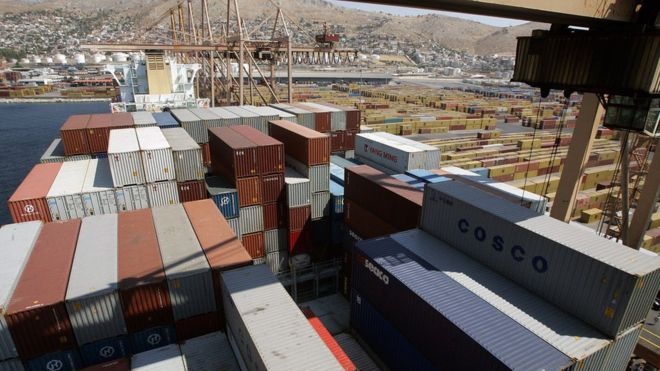
Shipping containers at PiraeusImage copyrightAFP
Image caption China now has a majority stake in the Greek port of Piraeus

The European Union has introduced a new mechanism for screening foreign investment.

It’s widely believed to have been prompted by concerns over China’s economic ambitions in Europe.

It will allow the European Commission – the EU’s executive arm – to give an opinion when an investment “threatens the security or public order” of more than one member state or undermines an EU-wide project such as the Galileo satellite project.

In March, the European Commission called China a “systemic rival” and a “strategic competitor”.

The Chinese Ambassador to the EU urged the bloc to remain “open and welcome” to Chinese investment, and not to “discriminate”.

How much foreign investment is in the EU?

China’s ownership of EU businesses is relatively small, but has grown quickly over the past decade.

A third of the bloc’s total assets are now in the hands of foreign-owned, non-EU companies, according to a report from the European Commission in March.

Of these, 9.5% of companies had their ownership based in China, Hong Kong or Macau – up from 2.5% in 2007.

That compares with 29% controlled by US and Canadian interests by the end of 2016 – down from nearly 42% in 2007.

So, it’s a significant increase, but the total amount is not huge, comparatively speaking.

China in the EU

Foreign direct investment into the 28 member stAlthough the levels of Chinese foreign direct investment in the EU have been increasing rapidly, it peaked at €37.2bn in 2016 amidst a slowdown in Chinese investment globally, according to the Rhodium Group and the Mercator Institute for China Studies.

In European countries outside the EU, investment also dropped in 2018.

What and where is China investing?

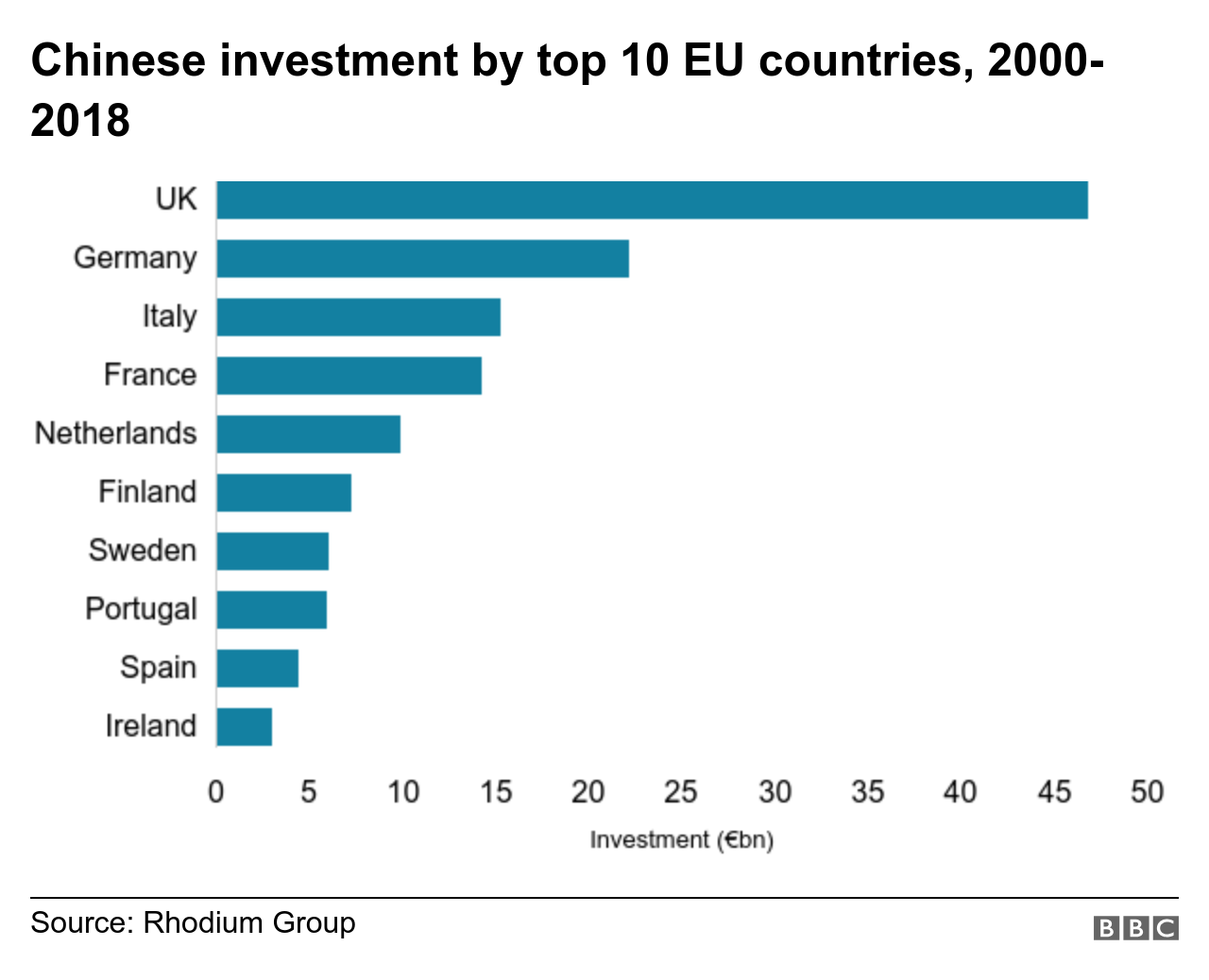
A large proportion of Chinese direct investment, both state and private, is concentrated in the major economies, such as the UK, France and Germany combined, according to the Rhodium Group and Mercator Institute.

Chinese investment by top EU countries

Analysis by Bloomberg last year said that China now owned, or had a stake in, four airports, six maritime ports and 13 professional soccer teams in Europe.

It estimated there had been 45% more investment activity in 30 European countries from China than from the US, since 2008.

And it said this was underestimating the true extent of Chinese activity.

What about infrastructure?

In March, Italy was the first major European economy to sign up to China’s new Silk Road programme – known as the Belt and Road Initiative (BRI).

It involves huge infrastructure building to increase trade between China and markets in Asia and Europe.

Officially more than 20 countries in Europe (including Russia) are part of the initiative.

For example, China is financing the expansion of the port of Piraeus in Greece and is building roads and railways in Serbia, Montenegro, Bosnia-Herzegovina and North Macedonia.

This could prove attractive to poorer Balkan and southern European countries, especially as demands for transparency and good governance can make EU funding appear less attractive.

However, analysts point out that Chinese loans come with conditions – such as the involvement of Chinese companies – and also risk burdening these countries with large amounts of debt.

Will Chinese investment grow?

Globally, China’s outward direct investment has slowed over the last year or two, after more than a decade of expansion.

“This is mainly the result of stricter controls on capital outflows from China, but also of a changing political environment globally concerning Chinese investment,” says Agatha Kratz of the Rhodium Group.

China’s global investment slows

The Trump administration is taking a tougher line towards China’s economic activities.

Governments elsewhere are more cautious – particularly when it comes to investment in sensitive areas of the economy, such as telecommunications and defence.

But there’s little doubt China is now a significant player in Europe, whether through direct investments or via the new Silk Road project.

Source: The BBC

19/04/2019

China asks Britain for help to boost image of Belt and Road Initiative

  • China’s Ambassador to the UK Liu Xiaoming cites ‘rule-making’ as an area for bilateral cooperation with the UK
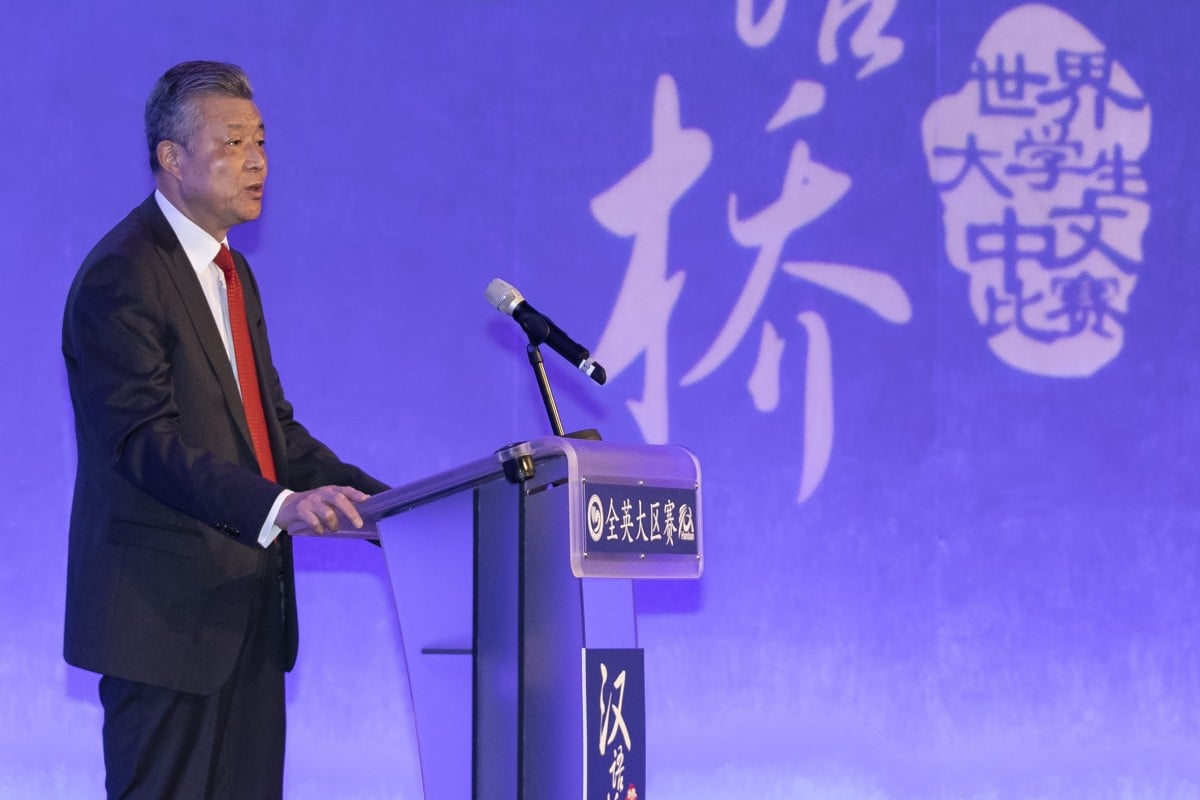
Chinese Ambassador to the UK Liu Xiaoming gives a keynote speech during the ‘Chinese Bridge’ Chinese Proficiency Competition for Foreign College Students UK Regional Final in London. Photo: Xinhua
China has asked Britain for help to offset claims its “Belt and Road Initiative” investments are opaque and justify its overseas spending to critics.
It made the move days before UK Chancellor Phillip Hammond was expected to head to the belt and road forum in Beijing.

In an article in London’s Evening Standard on Wednesday, China’s Ambassador to the UK Liu Xiaoming cited “rule-making” as an area for bilateral cooperation.

“Britain has played a leading role in the establishment and management of the Asian Infrastructure Investment Bank,” Liu said. “In [belt and road] development, Britain could have a big role to play in ensuring that the projects are of higher quality, at a higher standard, with higher return.”
Four years ago the UK defied the US and joined the AIIB.
Liu’s comments followed news the UK’s Department for International Development (DFID) was asked to join a new initiative aimed at improving China’s international accounting and transparency standards.
China is thought to see DFID as a model for its new aid outfit, China International Development Cooperation Agency (CIDCA), which was established last year to oversee Beijing’s foreign aid.
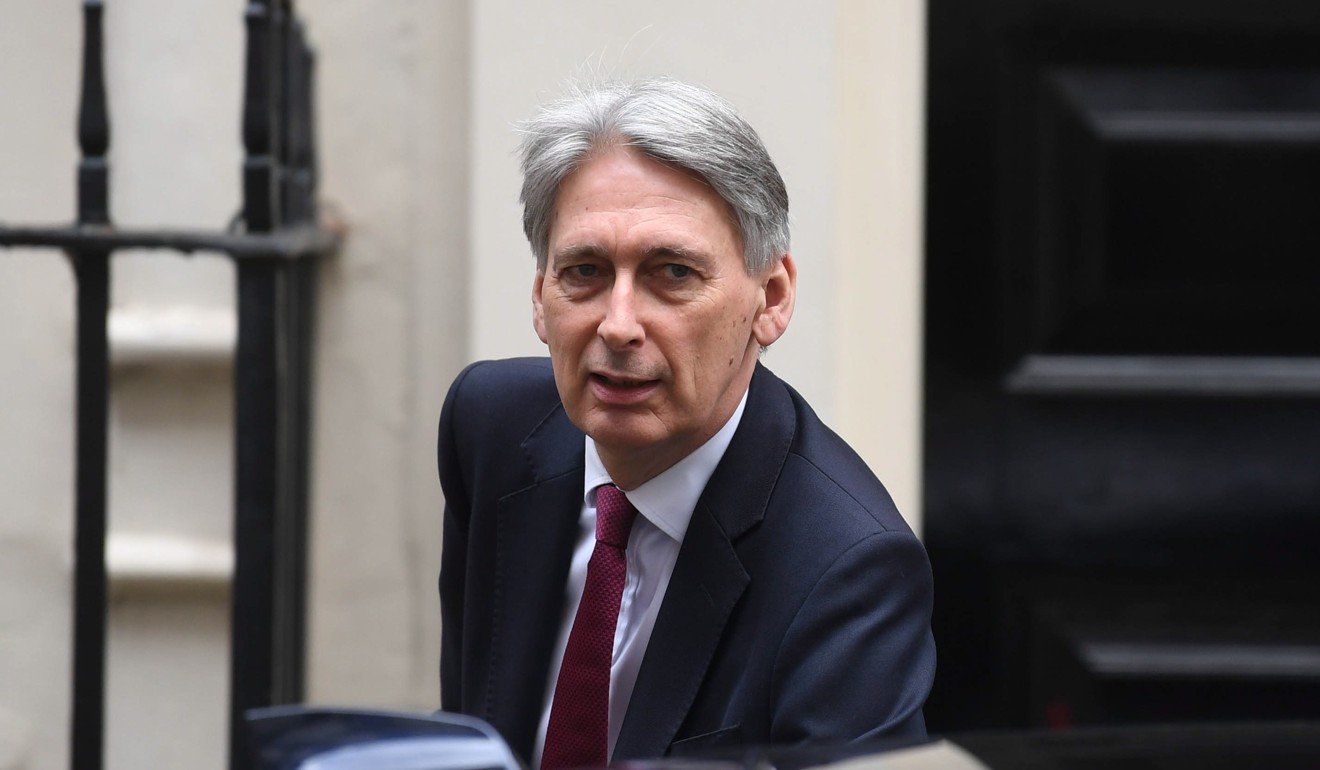
Britain's Chancellor of the Exchequer Phillip Hammond. Photo: EPA-EFE
Britain’s Chancellor of the Exchequer Phillip Hammond. Photo: EPA-EFE

The DFID was the third most transparent donor in the world after the Asian Development Bank and UNDP, according to the aid data-crunching website Publish What You Find. China was the least.

Critics say part of the problem is Beijing prefers to deliver loans and other investments through local elites. There are also often several government departments involved, each directed by their own rules and priorities, making financial reporting more complex.

“I think the Chinese are instead playing by a different set of rules, not all of them in conflict with the West’s … but most definitely not fully aligned with what the West wants or expects”, said Eric Olander, managing editor of Shanghai-based The China Africa Project. “Therefore, I would not expect to see the kind of meaningful change in its accounting and financial standards in the near term.”

‘Cooperate or stop criticising’, China’s foreign minister Wang Yi says as belt and road summit nears

The MOU proposed by China is more a statement of intent than a plan of action but the UK welcomed it as a positive sign

“China’s proposal to set up a ‘Multilateral Cooperation Centre for Development Finance’ has real potential to ensure its huge investments in developing countries meet the key international standards that matter to all of us – on debt, transparency, environment and social safeguards,” UK International Development Secretary Penny Mordaunt said at the World Bank Spring Meeting recently.

A source at DFID told the SCMP that the UK has not signed the MOU yet but said while other countries are aware of the proposal, it is the only country so far to be formally invited to participate by China.

France and Germany were two possible future signatories, and MCCDF has been discussed in EU member state meetings in Beijing.

“[China] is clearly frustrated that it feels misunderstood by the international community,” said Olander.

“I have attended one seminar after another where African stakeholders ask the Chinese for more transparency and the Chinese respond with a sympathetic smile that says ‘I’d love to but I’m not sure how we can do that given our political culture and the current political realities’.”

With the Chinese economy slowing at home and the losses abroad in places like Venezuela starting to mount, there are indications that the Chinese policy banks are becoming far more risk-averse in places like Africa and the Americas.

Even so according to figures released on Thursday, the Export Import Bank of China provided more than a trillion yuan (US$149 billion) to more than 1,800 Belt and Road projects since 2013. China Development Bank (CDB) said in March it had provided US$190 billion in the same period.

“The UK is very concerned by rising debt levels, particularly in emerging market economies and in low-income countries,” Mordaut told the World Bank.

“Unsustainable debt levels are a real risk that can undermine or reverse development gains.”

The IMF said recently 24 out of 60 of the poorest countries are either in debt distress or at a high risk of falling into it.

China is also looking to the UK to help manage the BRI projects and organise part of the financing, something the City of London and the government are keen to do, Liu said.

Describing it as “third-party involvement in BRI development” he said: “The UK, with its unique strengths in professional services, project-management and financing, could tap into this potential.”

China is keen for the UK to sign a BRI MOU like Italy, and soon Switzerland, but so far it has resisted. A report released earlier this month by the parliament’s Foreign Affairs Committee called for a rebranding of the “golden era” started by the former chancellor George Osborne, now the editor of the London Evening Standard.

Britain is keen to cement closer ties with Beijing as the world’s fifth largest economy looks to reinvent itself as a global trading nation if and when it leaves the European Union.

Source: SCMP

17/04/2019

‘Masood Azhar issue being resolved’: China tells US to hold new resolution

Beijing also rejected the report that the US, the UK and France asked China to lift the technical hold on Azhar by April 23, failing which they will move a formal resolution for discussion, vote and passage at the UN Security Council (UNSC).

WORLD Updated: Apr 17, 2019 15:31 IST

Indo Asian News Service
Beijing
masood azhar,china,US
China on Wednesday said the issue of blacklisting Pakistan-based terrorist Masood Azhar at the UN panel was heading towards a settlement and asked the US not to force through its own resolution on the matter.(AP)
China on Wednesday said the issue of blacklisting Pakistan-based terrorist Masood Azhar at the UN panel was heading towards a settlement and asked the US not to force through its own resolution on the matter.

Beijing also rejected the report that the US, the UK and France asked China to lift the technical hold on Azhar by April 23, failing which they will move a formal resolution for discussion, vote and passage at the UN Security Council (UNSC).

“On the issue of the listing of Masood Azhar, China’s position remains unchanged. We are also having communication with relevant parties and the matter is moving towards the direction of settlement,” Chinese Foreign Ministry spokesperson Lu Kang said here.

Asked to elaborate further, Lu did not answer clearly.

“The matter is now moving in the direction of settlement. As to the specifics for the discussion in the 1267 committee, there are clear procedures and regulations regarding UNSC and its subsidiary bodies. We think members should follow and abide by such procedures.”

He was responding to a question whether anything was achieved after China claimed “positive progress” on the issue of declaring Azhar a terrorist.

China in the past has put four technical holds on the resolutions by India, the US, the UK and France to ban Azhar at the UN 1267 sanctions committee.

Beijing’s latest technical hold came last month after Azhar’s outfit claimed responsibility for the deadly attack in Jammu and Kashmir that killed 40 Indian military personnel in February.

This prompted the US to draft a new resolution and take it directly to the Security Council for an informal discussion. Beijing slammed the move, saying this will complicate matters when some progress has already been achieved.

Lu again reiterated it when asked if China will support such a resolution in the Security Council.

“Regarding what you said relevant parties are forcing a new resolution through the Security Council. We firmly oppose that. In relevant discussions, most members expressed that this issue should be discussed within the 1267 committee and they don’t hope to bypass the 1267 committee to handle the issue.

“We hope the relevant country can respect the opinions of most members of the Security Council to act in a cooperative manner and to help resolve this issue properly within the framework of the 1267 committee,” he added.

Asked if Beijing has been set a deadline of April 23 to lift the technical hold on resolution banning Azhar at the 1267 committee, Lu said: “I don’t know from where you get such information, but the Security Council and it’s subsidiary bodies like the 1267 committee, they have clear rules of procedures and you have to seek clarification from those sources.”

“China’s position is very clear. This issue should be resolved through cooperation and we don’t believe that any efforts without the consensus of most members will achieve satisfying results.”

Source: Hindustan Times

13/04/2019

China targets nuclear fusion power generation by 2040

HEFEI, China (Reuters) – China aims to complete and start generating power from an experimental nuclear fusion reactor by around 2040, a senior scientist involved in the project said, as it works to develop and commercialize a game-changing source of clean energy.

China is preparing to restart its stalled domestic nuclear reactor program after a three-year moratorium on new approvals, but at a state laboratory in the city of Hefei, in China’s Anhui province, scientists are looking beyond crude atom-splitting in order to pursue nuclear fusion, where power is generated by combining nuclei together, an endeavor likened by skeptics to “putting the sun in a box”.

While nuclear fusion could revolutionize energy production, with pilot projects targeting energy output at 10 times the input, no fusion project has up to now created a net energy increase. Critics say commercially viable fusion always remains fifty years in the future.

China has already spent around 6 billion yuan ($893 million) on a large doughnut-shaped installation known as a tokamak, which uses extremely high temperatures to boil hydrogen isotopes into a plasma, fusing them together and releasing energy. If that energy can be utilized, it will require only tiny amounts of fuel and create virtually no radioactive waste.

Song Yuntao, deputy director of the Institute of Plasma Physics at the Hefei Institute of Physical Science, said on Thursday that while technological challenges remain immense, the project has been awarded another 6 billion yuan in funding, and new construction plans are underway.

“Five years from now, we will start to build our fusion reactor, which will need another 10 years of construction. After that is built we will construct the power generator and start generating power by around 2040,” he said at the site, built on a leafy peninsula jutting into a lake.

China has been researching fusion since 1958, but at the current stage, it is still more about international cooperation than competition, Song said. The country is a member of the 35-nation ITER project, a 10-billion euro ($11.29 billion) fusion project under construction in France.

China is responsible for manufacturing 9 percent of ITER’s components, and is playing a major role in core technologies like magnetic containment, as well as the production of components that can withstand temperatures of over 100 million degrees Celsius (180 million degrees Fahrenheit).

ITER is scheduled to generate first plasma by 2025. A demonstration reactor will then be built, with the aim of creating 500 megawatts of power from just 50 megawatts of input, a tenfold return on energy.

Despite the critics who say dependable fusion energy is unrealistic, Song said he was confident breakthroughs are being made.

“Because we have a lot of technology now, a lot of challenges in plasma physics have been overcome, and I think this will speed up the entire process,” he said.

($1 = 6.7188 yuan)

($1 = 0.8859 euros)

Source: Reuters

09/04/2019

China supports France, Germany’s efforts in upholding multilateralism: spokesperson

BEIJING, April 8 (Xinhua) — China on Monday voiced its support for multilateralism after France and Germany jointly proposed an “Alliance for Multilateralism” during a recent session at the United Nations Security Council (UNSC).

French Foreign Minister Jean-Yves Le Drian and his German counterpart Heiko Maas intended to officially launch the Alliance during the 74th session of the UN General Assembly scheduled for September.

“China has always staunchly upheld, supported and practiced multilateralism,” spokesperson Lu Kang said at a press briefing while commenting on the proposed Alliance, adding that China supports the efforts of the international community including France and Germany in maintaining multilateralism.

Lu said China stands ready to work with all parties in preserving the international order and regime with the purposes and principles of the UN Charter at its core, and the rule-based multilateral trade regime with the World Trade Organization (WTO) at its core, with a commitment to multilateralism.

Against the backdrop of a surging trend toward economic globalization and multi-polarization as well as a constant increase in global challenges, the world needs multilateralism more than ever before, the spokesperson said.

Speaking of Chinese President Xi Jinping’s remarks at a forum on global governance attended by French, German and EU leaders during Xi’s recently-concluded European visit, Lu mentioned Xi’s advocacy for safeguarding multilateralism, enhancing international dialogue and cooperation, and jointly addressing the deficits in governance, trust, peace and development, so as to improve global governance.

“China is ready to work with all parties in facilitating a new type of international relations featuring mutual respect, fairness, justice and win-win cooperation, to jointly build a community of shared future for mankind,” Lu added.

Source: Xinhua

07/04/2019

China-EU tourism cooperation receives boost, official says

BRUSSELS, April 6 (Xinhua) — China-European Union (EU) relations in tourism get a boost as the 2018 EU-China Tourism Year has scored a success, an official recently said.

During the tourism year, China and the EU held more than 100 promotional activities. It “has been extremely successful,” said Eduardo Santander, executive director of the European Travel Commission (ETC).

There was a 5.1-percent year-on-year increase in Chinese arrivals in EU destinations in 2018, and among the top ones in terms of the volume of Chinese arrivals were Britain, Germany and France, according to the latest figures from the ETC and the air travel analysis agency ForwardKeys.

“We continue to see the benefits in 2019,” Santander added. “The growth in Chinese travellers has been solid, and the near future, judging by current bookings, will see the EU continuing to increase its share of this valuable market, not just to traditional destinations, but lesser-known and emerging ones as well.”

Chinese bookings to the EU for the first four months of 2019 are 16.9 percent ahead of where they were at the end of 2017, said the ETC, adding that this compares very favorably to the global trend, which is 9.3 percent ahead.

According to a recent report by China Tourism Academy and China’s online travel agency Ctrip, 70 percent of Chinese tourists in 2018 chose “package tours” when traveling in Europe, due to language, visa, culture and other factors.

Nevertheless, the proportion of independent and customized travel continues to rise. In 2018, the demand for customized European tours booked by the travel website increased by 127 percent over the past year, far higher than the growth rate of the overall market, said the report.

In addition, a number of new routes were launched between China and Europe in 2018, including direct flights from Fuzhou to Moscow, Changsha to London, Jinan to Paris, and Shenzhen to Brussels. In 2018, there were more than 600 flights a week between China and Europe, according to the report.

Ctrip in 2018 forecast that consumption of each tourist in Europe will exceed 25,000 yuan (about 3,721 U.S. dollars) in two years, with the total annual consumption to reach 150 billion yuan (about 22.3 billion dollars).

“Our findings confirm what a concerted effort to boost tourism can achieve. It also appears to have lasting effects, as we can see in the forward booking figures,” said Olivier Jager, CEO of ForwardKeys.

China’s domestic travel agencies are also deepening the cooperation with Europe. For example, the SkyScanner, Ctrip’s online travel search platform, set up its first overseas calling service center in Edinburgh in April 2018.

Source: Xinhua

07/04/2019

Greece says EU’s China concerns must not harm its economic interests

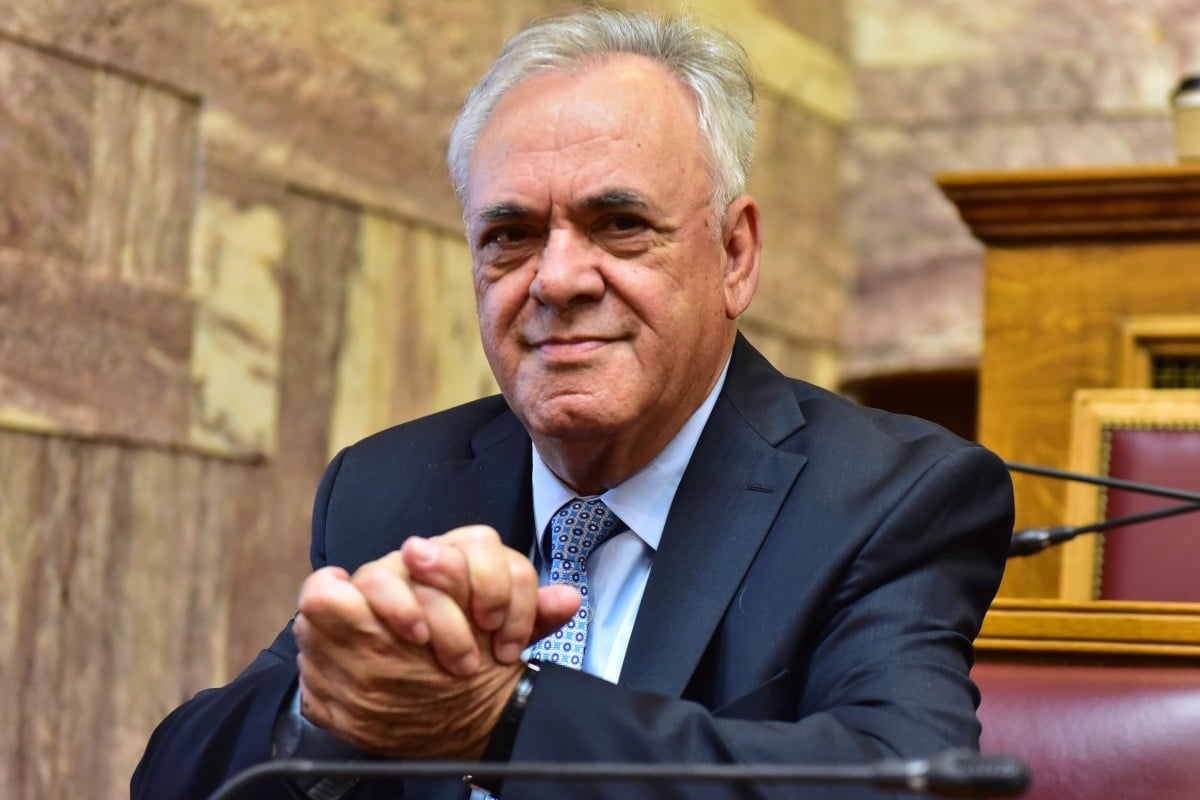
  • Deputy prime minister Yannis Dragasakis hopes ‘logic will prevail’ ahead of EU-China summit
  • Affirms Greek support for Beijing’s belt and road plan for global trade
Greece’s deputy prime minister Yannis Dragasakis says the European Union’s suspicion about China is in danger of becoming a “self-fulfilling prophecy”. Photo: Alamy
The deputy prime minister of Greece has warned that European Union suspicion of China is in danger of becoming a “self-fulfilling prophecy” while reaffirming his country’s support for Beijing’s controversial “Belt and Road Initiative”.
In an exclusive interview with theSouth China Morning Post in Athens on Monday, Yannis Dragasakis said he hoped logic would prevail in the EU’s relationship with the world’s second-largest economy.
“We would like to see the EU having good relations with China,” he said.
“Seriously, we should start [the discussion about China] from the opposite end, which is, what are the needs and problems that we can work on with China?”
Dragasakis was speaking ahead of the annual summit between the EU and China in Brussels on Wednesday, which this year will take place against a backdrop of suspicion among some EU countries over Beijing’s political and commercial ambitions in the region.
Europe has been divided over whether to work with China’s enormous belt and road plan, which aims to link China by sea and land with southeast and central Asia, the Middle East, Europe and Africa, through an infrastructure network along the lines of the old Silk Road.
Italy becomes first G7 nation to sign up for China’s belt and road plan

Washington has criticised the scheme as a “vanity project”, and the EU looks set to refer to China as a “strategic rival”, with some European leaders fearing Beijing’s diplomatic manoeuvres could derail unity among member states.

Last month Italy, which is grappling with its third recession in a decade, became the first G7 nation to join the belt and road programme, in a bid to boost exports and upgrade its port facilities.

Last year Greece – ranked second lowest in economic competitiveness within the EU by the World Economic Forum in 2018 – signed up to the scheme, after years of relying on China to help it through its own financial crisis.

Chinese state-owned shipping company Cosco bought a 51 per cent stake in Pireaus Port, Greece’s most important infrastructure hub in 2016 with an option to buy another 16 per cent after five years.

China aims to make the port the “dragon head” of its belt and road programme, serving as a gateway for its cargo to Europe and North Africa.

Will Greece be China’s bridge to the rest of Europe?

With its warming relationship with Beijing, Athens has, at times, departed from EU positions on China.

In 2016, Greece helped stop the EU from issuing a unified statement against Chinese aggression in the South China Sea. The following year, Athens stopped the bloc from condemning China’s human rights record. Days later, it opposed tougher screening on China’s investments in Europe.

Dragasakis was clear that the EU should not devise any policies that may hinder Greece’s ability to revive its economy.

“Greece badly needs investment. We hope logic will prevail at the end of the day, which means we should take advantage of all opportunities and build on these prospects to further our collaboration,” he said.

“Greece will keep following a multidimensional policy, an inclusive policy, without excluding anyone.”

Dragasakis hit back at France and Germany for treating China as a geopolitical rival, while simultaneously signing up to trade agreements with Beijing.

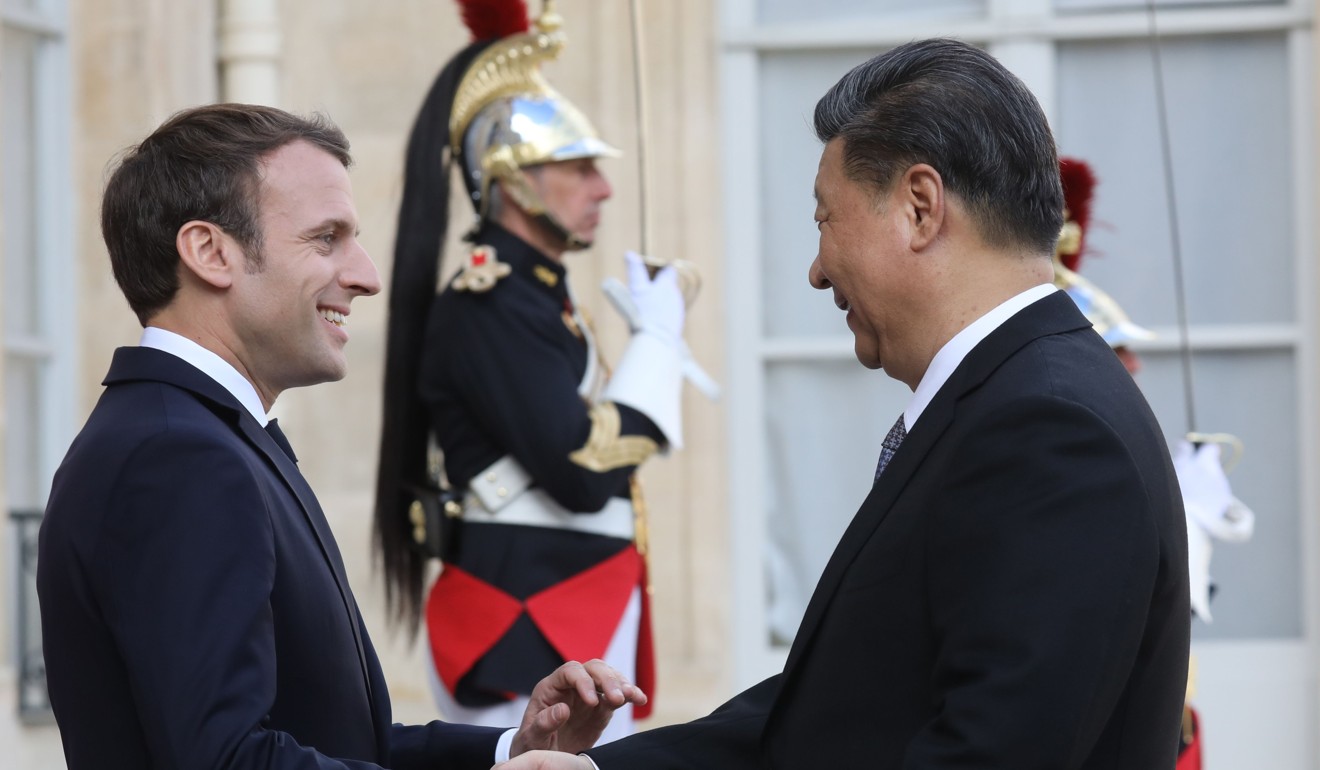
Days before receiving Chinese President Xi Jinping in France last month, President Emmanuel Macron declared that the “time of European naivety” towards China was over – a remark the Greek deputy prime minister described as “interesting” during the interview.

“It’s so interesting, yes. Mr Macron, despite his statement, actually signed very large-scale agreements with China,” he said, adding: “Germany, the same”.

French President Emmanuel Macron welcomes Chinese President Xi Jinping to the Elysee Palace in Paris last month. Photo: AFP

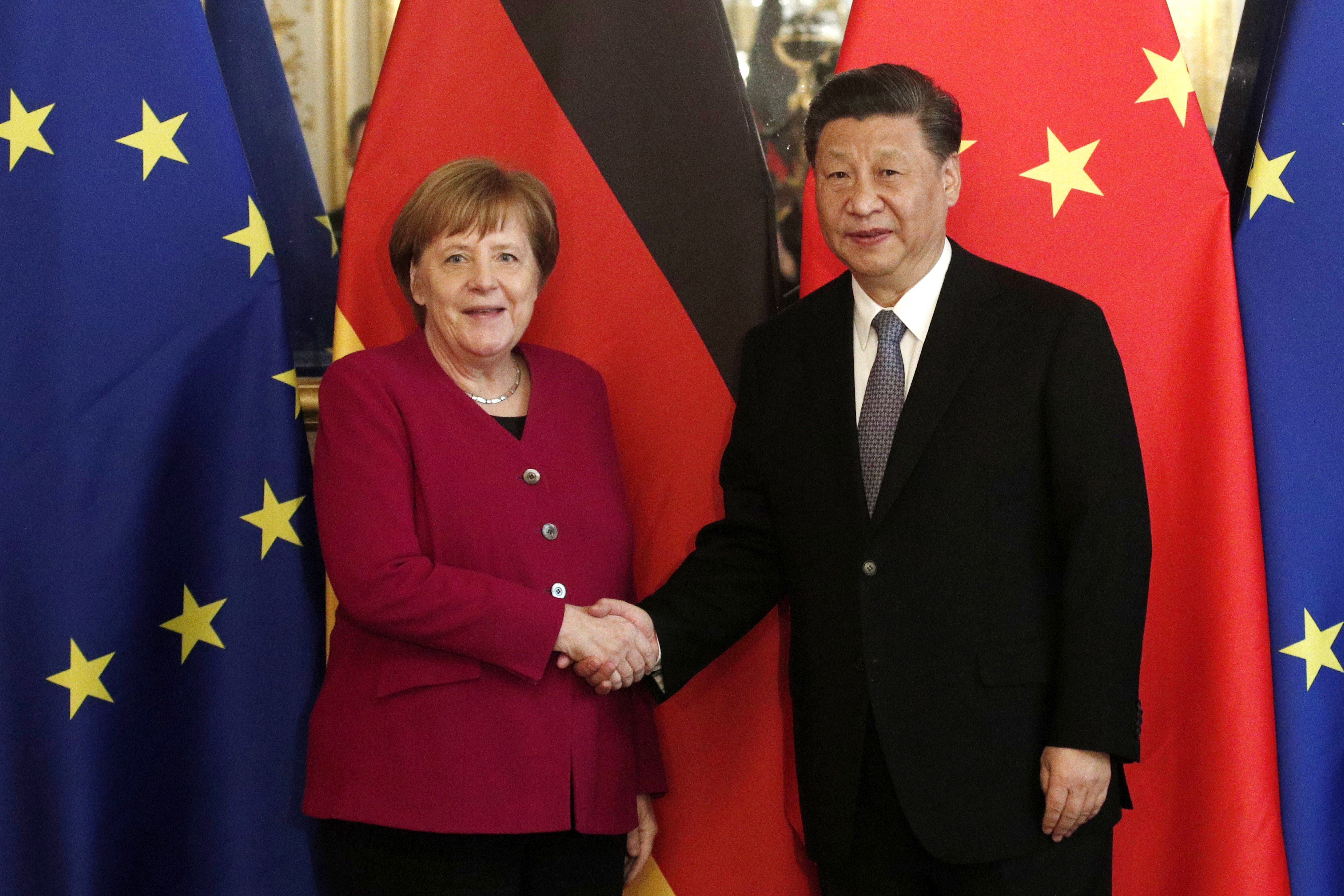
Macron invited German Chancellor Angela Merkel and European Commission President Jean-Claude Juncker to his meeting in Paris with Xi, where the four sought to reassure each other over economic cooperation between the European trading bloc and China.

Dragasakis said Greece’s relations with China were based on “very solid ground” with the two countries sharing complementary interests, particularly through the belt and road plan.

Greek Prime Minister Alexis Tsipras is understood to be considering joining Foreign Minister George Katrougalos at the belt and road summit in Beijing, which will be hosted by Xi later this month.

More than 40 heads of state are expected to attend the summit, with China’s foreign ministry recently saying that Europe had started to see the value of the scheme.

If confirmed, Tsipras’ presence at the summit will be interpreted as an attempt by Greece to consolidate Chinese support in the wake of Italy’s joining of the scheme.

He will also need to mend ties with Beijing, following a recent decision by Greece’s archaeological body to block a plan by Cosco to upgrade facilities at the Piraeus port, throwing the future of the multimillion euro privatisation deal into uncertainty.

Portugal’s support for China’s belt and road plan ‘bad news’ for EU

Dragasakis said there were strong prospects for the future relationship between Greece and China because of the two countries’ reciprocal interest.

Relations with other Asian countries, while not yet as close as Greek ties with China, would continue to be developed, he said.

Dragasakis said Athens would not adopt discriminatory policies against any country as it looked to shore up foreign investments to boost its economy.

India, for instance, has set its sights on Greece as a potential business partner, with President Ram Nath Kovind becoming its first titular head of state to visit Greece last year.

“Relations with India are lagging behind – they are not at the same level as with China, but of course we are mulling further developments with India,” Dragasakis said, adding that Greece would also work more closely with Japan, South Korea and Vietnam.

EU leaders hold out olive branch to Chinese ‘rival’ by saying they want active role in Belt and Road Initiative

EU leaders hold out olive branch to China over belt and road

Read more

China will not divide Europe, senior diplomat says

China will not divide Europe, senior diplomat says

Read more

Beijing calls for ‘objective’ assessment of human rights record.


Source: SCMP

04/04/2019

China Focus: Premier Li’s Europe visit to inject impetus to China-EU ties

BEIJING, April 3 (Xinhua) — Chinese Premier Li Keqiang’s upcoming visit to Europe will intensify cooperation between China and European countries and provide new impetus to the China-EU comprehensive strategic partnership, a Foreign Ministry official said Wednesday.

Li’s visit, scheduled for April 8 to 12, will take him to Brussels for the 21st China-EU leaders’ meeting, and Croatia for an official visit and the eighth leaders’ meeting of China and Central and Eastern European countries (CEEC), Vice Foreign Minister Wang Chao said at a press briefing.

This is the first overseas trip to be made by Li this year as well as another significant high-level exchange between China and Europe after Chinese President Xi Jinping’s successful state visits to Italy, Monaco and France in March, demonstrating the importance that China attaches to its relations with Europe, Wang noted.

A SIGNIFICANT MEETING FOR CHINA AND EUROPE

“The China-EU leaders’ meeting, a high-level platform for strategic communication between the two sides, has played a leading role in deepening China-EU relations and promoting dialogue and cooperation,” Wang said.

He stressed that this year’s meeting, the fifth co-chaired by Premier Li, European Council President Donald Tusk and European Commission President Jean-Claude Juncker, will be the last China-EU leaders’ meeting during the tenure of the current EU institutions, thus bearing transitional significance.

China and the EU are enjoying sound development of ties, close high-level connections, deepening cooperation and robust people-to-people exchanges, he added.

“We share broad common interests in deepening win-win practical cooperation, common positions on upholding multilateralism and free trade, and common goals in improving global governance and maintaining world peace and stability.”

Leaders of the two sides will exchange views on bilateral ties and major international and regional issues of common concerns, and witness the signing of cooperation documents on energy, competition policies and other areas, Wang said.

“We believe that this meeting will inject new impetus to the China-EU comprehensive strategic partnership, take our dialogue and cooperation across the board to a new level, and strengthen the stability, reciprocity and strategic significance of our relations,” Wang said.

A BOOST FOR 16+1 COOPERATION

Wang Chao said China-CEEC cooperation (16+1 cooperation) was a beneficial mechanism of regional cooperation between China and Central and Eastern European (CEE) countries, and has provided a platform for China and CEE countries to deepen traditional friendship and enhance mutually beneficial cooperation.

Initiated in 2012, the 16+1 cooperation has gained broad support and active participation from 16 CEE countries, and has built up an all-round and multi-tiered cooperation framework, said Wang, adding that the 16+1 cooperation has played a positive role in promoting trade and expanding pragmatic cooperation across-the-board between China and other countries.

This year marks the 70th anniversary of the founding of the People’s Republic of China. Some CEE countries also established diplomatic relations with China 70 years ago.

Wang said this year’s meeting, to be held in Croatian city Dubrovnik, was of important significance to the promotion of the steady, long term development of 16+1 cooperation as well as China-Europe relations.

Noting the theme of this year’s meeting of building new bridges of openness, innovation and partnership, Wang said leaders attending the meeting would review new progress of 16+1 cooperation, have insightful discussions on key future work directions, and announce a series of new measures on pragmatic cooperation.

China hopes that the 16+1 cooperation will become a bridge of openness, innovation and partnership through enhancing exchanges and cooperation of mutual benefit and win-win results, he said.

According to the vice minister, outcome documents charting 16+1 cooperation will be released after the meeting and related parties will ink cooperation agreements on infrastructure construction, trade, finance, education, quality inspection, personnel exchanges, and mutual recognition of driving licenses.

China believes this year’s meeting will inject new impetus to relations between China and the CEE countries and the development of the China-Europe comprehensive strategic partnership, he said.

CHINESE PREMIER’S FIRST VISIT TO CROATIA

“Li’s visit will be the first ever by a Chinese premier to Croatia since the establishment of diplomatic ties. Therefore, it is significant in consolidating traditional friendship and advancing our comprehensive cooperative partnership as well as China-EU relations,” Wang Chao said.

Hailing Croatia as an important member of CEE countries and a key stop on the ancient Silk Road, Wang said relations between China and Croatia had been growing rapidly with the development of the Belt and Road Initiative and 16+1 cooperation.

In addition to close top-level exchanges, fruitful cooperation in trade, investment and infrastructure construction, and ever-deepening friendship between the two peoples, China-Croatia relations face a broad space for future development, he added.

During Li’s visit, the two sides will issue a joint statement summarizing any important consensus reached by their leaders and mapping out future cooperation. The prime ministers of the two countries will witness the signing of government cooperation documents and commercial contracts covering multiple sectors.

China hopes the visit will help synergize both countries’ development strategies, enhance mutual understanding and political trust, deepen cooperation and bring bilateral ties to a higher level, Wang said.

02/04/2019

China, France to beef up partnership in financial innovation

BEIJING, April 1 (Xinhua) — China and France have signed a Memorandum of Understanding on bilateral cooperation in financial innovation recently, the country’s top securities watchdog said Monday.

Both parties will share information and strengthen cooperation in the development trend of financial technologies and relevant policies for regulation, the China Securities Regulatory Commission (CSRC) said in a statement on its website.

The two countries’ securities regulators also achieved consensus on enhancing green finance cooperation and exploring ways to advance connecting the two countries’ capital markets, according to the statement.

Source: Xinhua

26/03/2019

Xi, Macron agree to forge more solid, stable, vibrant China-France partnership

FRANCE-PARIS-CHINA-XI JINPING-MACRON-TALKS

Chinese President Xi Jinping (L) holds talks with his French counterpart Emmanuel Macron at the Elysee Palace in Paris, France, March 25, 2019. (Xinhua/Xie Huanchi)

PARIS, March 26 (Xinhua) — Chinese President Xi Jinping and his French counterpart, Emmanuel Macron, on Monday agreed to carry forward the high-level ties between the two countries and forge a more solid, stable and vibrant China-France comprehensive strategic partnership on a new starting point in history.

The consensus was reached during the talks between Xi and Macron at the Elysee Palace in Paris.

Xi said that great changes have taken place in the international situation, but the China-France relations have always kept developing on a high level and in a sound and stable way.

He said that since President Macron took office, the bilateral ties have reached a new high in just less than two years, with many new outcomes achieved.

This year is of special commemorative significance, as it marks the 55th anniversary of China-France diplomatic ties, the 100th anniversary of the Chinese Work-Study Movement in France, and also the 70th anniversary of the founding of the People’s Republic of China, Xi said.

“Knowing the past can help people judge today and move on better,” he said.

The world is undergoing major changes rarely seen in a century, and humanity stands at a crossroads, and for China, France and Europe, they also come to a critical stage of development, the Chinese president said.

“China is willing to work with France to inherit the past and create the future, enable our close and enduring comprehensive strategic partnership to continue leading the way, and make more historic contributions to building an open, inclusive, clean and beautiful world that enjoys lasting peace, universal security and common prosperity,” Xi said.

TRUST, COOPERATION AND FRIENDLY SENTIMENTS

The Chinese president proposed that in order to develop the relations between China and France in a sound way, the two countries should have political mutual trust, practical cooperation and friendly sentiments between the two peoples.

“Under the new situation, the two sides should do much better in those three aspects, and continue to explore the way for major countries to get along with each other, which should feature independence, mutual understanding, foresight, mutual benefit and win-win outcomes,” Xi said.

“In politics, we should not only build a strong ‘dam’ of mutual trust, but also a ‘lighthouse’ of ideal,” he said.

He suggested that the two countries deepen communication and exchanges in an all-round way and on various levels, fully leverage the roles of all institutional dialogues, and increase the exchanges between governments, legislative bodies, political parties and armed forces.

The two sides should insist on respecting and accommodating each other’s core interests and major concerns, pursue harmony in diversity, and seek common ground while reserving differences, Xi said.

He urged the two countries to strengthen cooperation under the United Nations (UN), the Group of 20 and other multilateral frameworks, push for the implementation of the Paris agreement on climate change and the 2030 Agenda for Sustainable Development, take practical action to safeguard multilateral trading regime and uphold the basic norms governing international relations as underpinned by the purposes and principles of the UN Charter.

On practical cooperation between China and France, Xi said the two countries should not only explore the “source of flowing water” in market, but also facilitate the “river channels” in policies.

The two sides should deepen cooperation in nuclear energy, aviation, aerospace and other traditional sectors, and expedite cooperation in emerging areas including scientific and technological innovation, agriculture, finance and elderly care, Xi said.

President Macron has on many occasions expressed the willingness of carrying out practical cooperation with China on the Belt and Road Initiative (BRI), which China appreciates, Xi said, adding that the two sides need to earnestly implement the BRI-related demonstration projects in third-party markets.

He asked the two countries to provide more support and convenience for bilateral trade and investment.

Noting that China has newly approved its foreign investment law, Xi pledged that the country will continue to greatly relax market access, optimize business environment, strengthen intellectual property rights protection, and create a new pattern of high-level opening-up.

“We welcome more French businesses to invest and develop in China, and in the meantime, we hope the French side offers fair, open and non-discrimination treatment for Chinese businesses to invest in France,” Xi said.

On people-to-people and cultural exchanges, Xi called for enhancing both intergovernmental cooperation and non-governmental contacts.

The two countries should fully use the China-France high-level people-to-people and cultural exchange mechanism, and promote cooperation in culture, tourism, language, youths and at local level, he said.

Xi also asked the two countries to well organize the commemorative activities on the 55th anniversary of China-France diplomatic ties and the 100th anniversary of the Chinese Work-Study Movement in France, and to host a culture and tourism year in each other’s country in 2021.

Calling China and the European Union (EU) two major forces, markets and civilizations of today’s world, Xi said China attaches importance to Europe’s strategic status and role, and has always regarded deepening China-EU relations as a diplomatic priority.

China supports France in continuing to play a leading role in the process of Europe’s uniting for self-improvement, and hopes France exerts a more positive influence in pushing forward China-EU ties, Xi said.

The Chinese president also urged both sides to accelerate the negotiations on a China-EU investment treaty, and initiate a joint feasibility study on the China-EU free trade agreement at an early date.

Macron said since France and China forged diplomatic relations 55 years ago, the two sides have always respected each other, which allowed them to conduct extensive and productive cooperation.

Noting that the keynote of France-China comprehensive strategic partnership is cooperation, the French president extended his country’s congratulations to the People’s Republic of China for its huge achievements since its founding 70 years ago, and said that France is committed to being China’s reliable and assured strategic partner, and is willing to join efforts with China to build a balanced, stable, safe and prosperous world.

France has full confidence in the future of France-China relations, Macron said, pledging to boost cooperation with China in such fields as aviation, aerospace, nuclear energy, agriculture, finance, scientific research, automobile manufacturing and elderly care, and to align France’s Industry of the Future initiative with Made in China 2025.

France stands ready to actively participate in the second Belt and Road Forum for International Cooperation and the second China International Import Expo (CIIE), Macron said, adding that his country supports vigorously promoting bilateral exchanges and cooperation in education, culture, sports, tourism, military and defense affairs.

Speaking highly of China’s important leading role in tackling climate change and multilateral affairs such as peacekeeping, Macron stressed that France deems protectionism unacceptable.

France and China have a lot of common ground in international affairs and have maintained close communication and coordination, he said.

France and China, as well as the EU and China, can work together in advancing more global agenda, improving global governance system, and protecting multilateralism and free trade, he added.

The French president also pledged to actively push forward the EU-China cooperative relations, saying his country holds that the EU’s connectivity strategy and the BRI should be docked with each other.

After their talks, the two leaders witnessed the exchange of bilateral cooperation documents including third-party markets cooperation, and met the press together.

Macron held a grand welcome ceremony for Xi at the Arc de Triomphe before the talks.

Xi arrived in Paris from the southern French city of Nice on Monday to continue his trip to the country. Two French fighter jets escorted Xi’s plane as it flew from Nice to Paris.

It is the second state visit by Xi to the European country in five years.

France is the final stop of Xi’s three-nation Europe tour, which has already taken him to Italy and Monaco.

Source: Xinhua

Law of Unintended Consequences

continuously updated blog about China & India

ChiaHou's Book Reviews

continuously updated blog about China & India

What's wrong with the world; and its economy

continuously updated blog about China & India