Archive for ‘freedom of speech’

29/05/2020

Hong Kong: What is the BNO and what does the UK move mean?

A Petitioner is seen holding up a BNO passport outside the British Consulate in Hong Kong on August 21, 2019Image copyright GETTY IMAGES
Image caption Around 300,000 in Hong Kong hold a British National (Overseas) passport

The UK has said it is considering more rights for holders of a special passport issued to some people in Hong Kong.

The territory, which used to be a British colony, was handed back to China in 1997. Anyone born before then is eligible to apply for a British National (Overseas) passport, known as a BNO.

If China implements a controversial proposed security law, people holding the BNO, could get a “path to citizenship”, the UK said.

What is the BNO and who has one?

The BNO passport is essentially a travel document that does not carry citizenship rights with it – although you are entitled to some consular assistance outside of Hong Kong and China with it.

It was issued to people in Hong Kong by the UK before Hong Kong was handed over to China.

Around 300,000 people currently hold a BNO passport, allowing them to visit the UK visa-free for six months. An estimated 2.9 million people are eligible for a BNO passport, said the British Consulate General in Hong Kong.

Though it gives the passport holder the right to remain in the UK for up to six months, it doesn’t automatically allow them to reside or work there. They also aren’t allowed to access public funds, including things like government benefits.

BNO holders cannot pass this status on to their children.

What is the UK proposing – and why?

China on Thursday formally approved a plan to impose controversial national security legislation in Hong Kong. It could go into effect as early as the end of June.

Hong Kong was handed back to China, on a number of conditions. These include the region’s high level of autonomy and maintaining certain rights like freedom of speech that do not exist in mainland China.

But this new plan, if put into law, would make it a crime to undermine Beijing’s authority in Hong Kong, and many are concerned it could end Hong Kong’s unique status.

The move triggered a wave of  criticism around the world, with many – including Chris Patten, the last governor of Hong Kong – urging the UK to stand up for the territory.
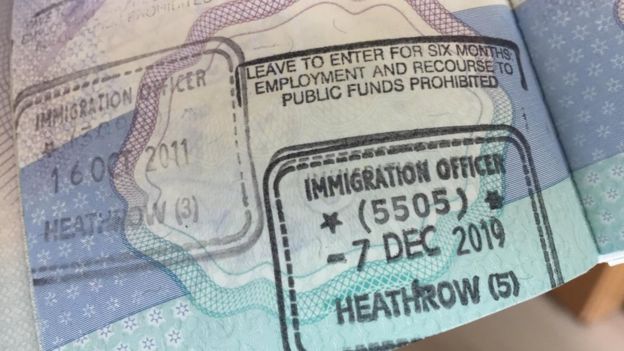
A BNO passport
Image caption Under current rules, BNO holders are allowed to stay for six months

Later on Thursday, UK Foreign Secretary Dominic Raab said the country would move to scrap the six-month stay limit for BNO holders if China goes on to officially implement the law.

Mr Raab said that BNO passport holders would be allowed to “apply to work and study for extendable periods of 12 months and that will itself provide a pathway to future citizenship”.

What difference could it make?

As a way to help people in Hong Kong who would rather not stay there if the new security laws are implemented, it might prove more symbolic.

For starters only a small percentage of people in Hong Kong currently have a BNO.

But also, the people who the security laws are aimed at – the young anti-mainland protesters who have been getting into violent confrontations with police for months – are not likely to be eligible for the BNO because of their age.

Additionally, though the BNO gives the passport holder the right to visit the UK for up to a year potentially, it’s not clear what other benefits the extension might bring, or if the UK would make it any easier administratively for those already in the country to apply for work or study.

On social media, some Hong Kongers dismissed it as a gesture that amounted to little more than a 12-month tourist visa.

Effectively, it means that those who come to stay in the UK for a year, and who have the funds to be able to extend this enough, could eventually be eligible to apply for citizenship.

It cuts out some of the administrative hoops BNO holders would have had to jump through before this move if they wanted this path.

How has China reacted?

China has firmly opposed the move by the UK, saying it is a violation of the handover agreement that stipulates BNO passport holders do not enjoy UK residency.

China has repeatedly warned Britain to stay out of its affairs in Hong Kong.

The Chinese ambassador to the UK Liu Xiaoming had previously accused some British politicians of viewing Hong Kong “as part of the British empire”.

Source: The BBC
07/02/2020

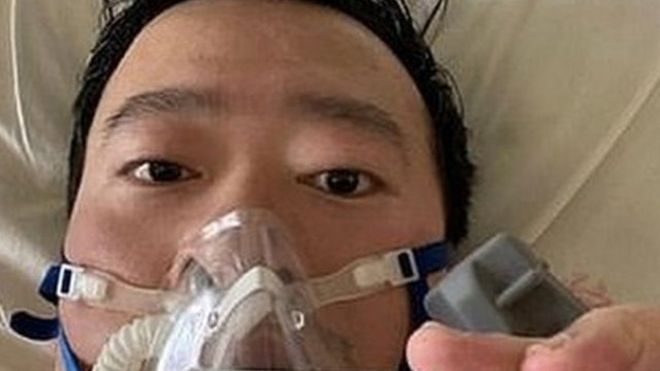
Li Wenliang: Coronavirus death of Wuhan doctor sparks anger

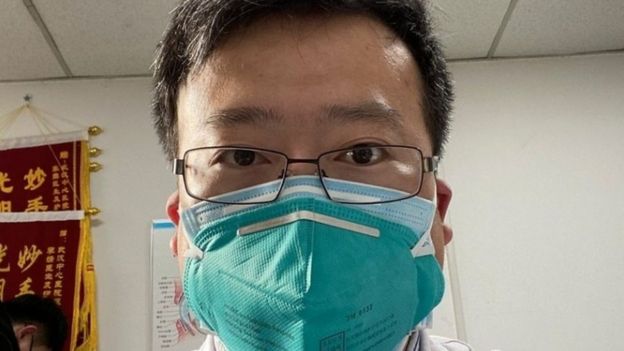
Dr Li posts a picture of himself in a gas mask from his hospital bed on FridayImage copyright DR LI WENLIANG
Image caption Dr Li had posted a picture of himself on social media from his hospital bed

The death of a Chinese doctor who tried to warn about the coronavirus outbreak has sparked an unprecedented level of public anger and grief in China.

Li Wenliang died after contracting the virus while treating patients in Wuhan.

Last December he sent a message to fellow medics warning of a virus he thought looked like Sars – another deadly coronavrius.

But he was told by police to “stop making false comments” and was investigated for “spreading rumours”.

News of his death was met with an intense outpouring of grief on Chinese social media site Weibo – but this quickly turned into anger.

There had already been accusations against the government of downplaying the severity of the virus – and initially trying to keep it secret.

Dr Li’s death has fuelled this further and triggered a conversation about the lack of freedom of speech in China.

The country’s anti-corruption body has now said it will open an investigation into “issues involving Dr Li”.

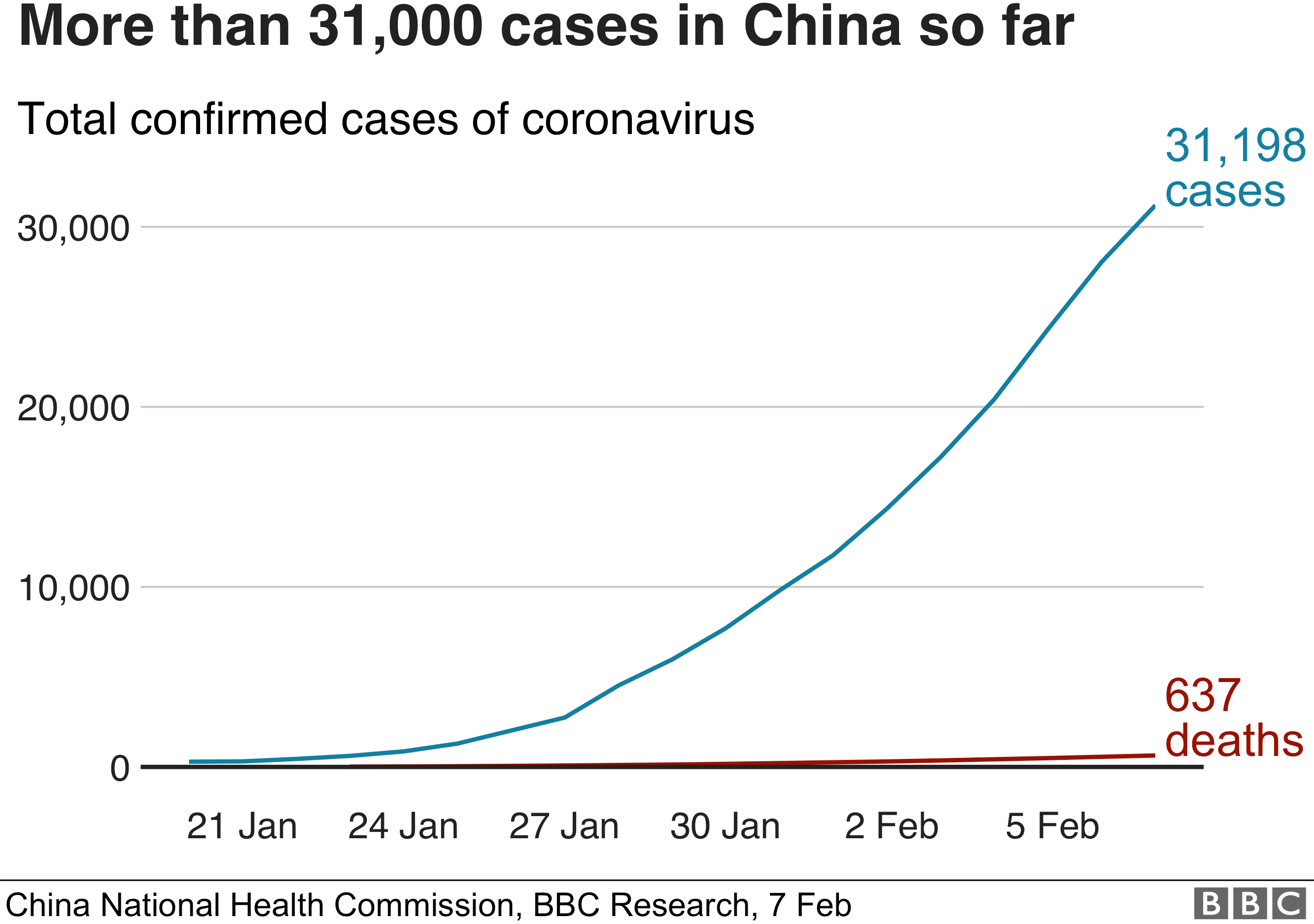
The Chinese government has previously admitted “shortcomings and deficiencies” in its response to the virus, which has now killed 636 people and infected 31,161 in mainland China.

Graphic showing the number of cases in China so far
Presentational white space

According to Chinese site Pear Video, Dr Li’s wife is due to give birth in June.

What has the public reaction been?

Chinese social media has been flooded with anger – it is hard to recall an event in recent years that has triggered as much grief, rage and mistrust against the government.

The top two trending hashtags on the website were “Wuhan government owes Dr Li Wenliang an apology” and “We want freedom of speech”.

Both hashtags were quickly censored. When the BBC searched Weibo on Friday, hundreds of thousands of comments had been wiped. Only a handful remain.

“This is not the death of a whistleblower. This is the death of a hero,” said one comment on Weibo.

A photo circulating on Twitter reportedly sourced from messaging platform WeChat also shows a message in Chinese saying “Farewell Li Wenliang” written in the snow on a riverbank.

Many have now taken to posting under the hashtag “Can you manage, do you understand?” – a reference to the letter Dr Li was told to sign when he was accused of disturbing “social order”.

These comments do not directly name him – but are telling of the mounting anger and distrust towards the government.

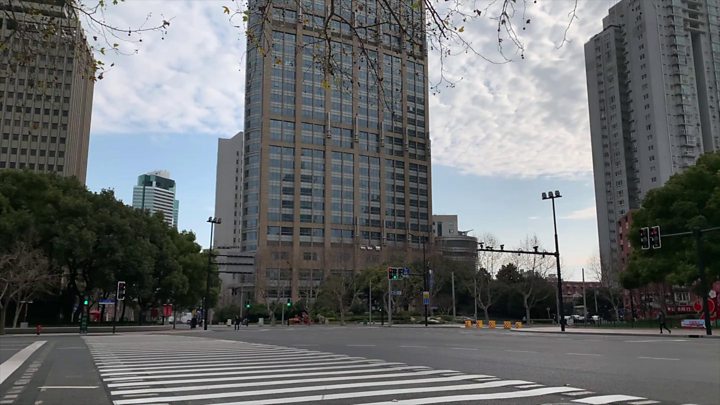
Media caption Coronavirus: Shanghai’s deserted streets and metro

“Do not forget how you feel now. Do not forget this anger. We must not let this happen again,” said one comment on Weibo.

“The truth will always be treated as a rumour. How long are you going to lie? What else do you have to hide?” another said.

“If you are angry with what you see, stand up,” one said. “To the young people of this generation, the power of change is with you.”

Presentational grey line

An epic political disaster

Analysis box by Stephen McDonell, China correspondent

The death of Dr Li Wenliang has been a heart-breaking moment for this country. For the Chinese leadership it is an epic political disaster.

It lays bare the worst aspects of China’s command and control system of governance under Xi Jinping – and the Communist Party would have to be blind not to see it.

If your response to a dangerous health emergency is for the police to harass a doctor trying to blow the whistle, then your structure is obviously broken.

The city’s mayor – reaching for excuses – said he needed clearance to release critical information which all Chinese people were entitled to receive.

Now the spin doctors and censors will try to find a way to convince 1.4 billion people that Dr Li’s death is not a clear example of the limits to the party’s ability to manage an emergency – when openness can save lives, and restricting it can kill.

Chinese people are going to take some convincing.

Presentational grey line

How was the death announced?

There was confusion over when exactly Dr Li had actually died.

He was initially declared dead at 21:30 on Thursday (13:30GMT) by state media outlets the Global Times, People’s Daily and others.

Hours later the Global Times contradicted this report – saying he had been given a treatment known as ECMO, which keeps a person’s heart pumping.

Journalists and doctors at the scene said government officials had intervened – and official media outlets had been told to change their reports to say the doctor was still being treated.

But early on Friday, reports said doctors could not save Dr Li and his time of death was 02:58 on Friday.

Li WenliangImage copyright LI WENLIANG
Image caption Li Wenliang contracted the virus while working at Wuhan Central Hospital

What did Li Wenliang do?

Dr Li, an ophthalmologist, posted his story on Weibo from a hospital bed a month after sending out his initial warning.

He had noticed seven cases of a virus that he thought looked like Sars – the virus that led to a global epidemic in 2003.

On 30 December he sent a message to fellow doctors in a chat group warning them to wear protective clothing to avoid infection.

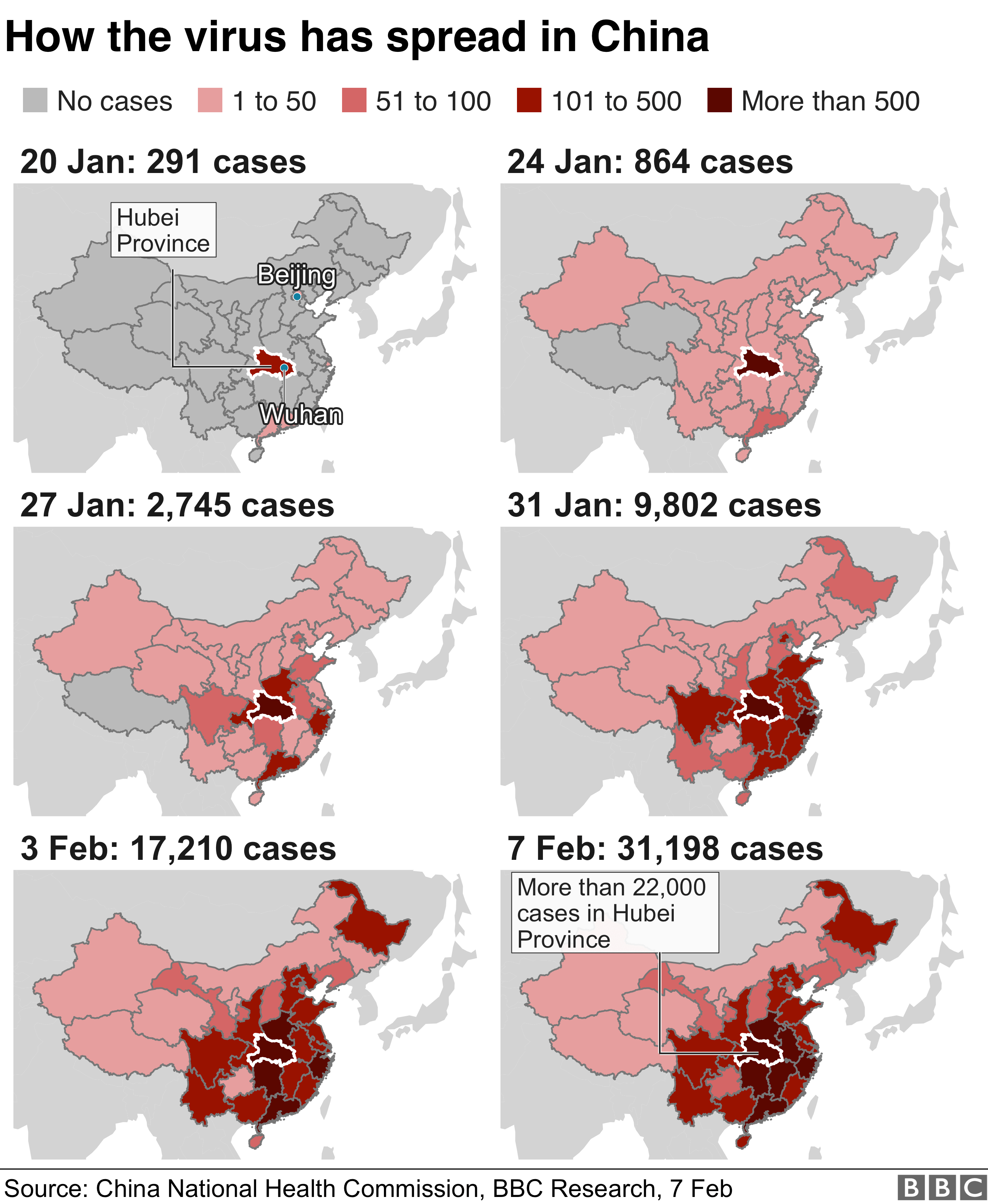
Graphic showing how the virus spread inside China
Four days later he was summoned to the Public Security Bureau where he was told to sign a letter.

In the letter he was accused of “making false comments” that had “severely disturbed the social order”. Local authorities later apologised to Dr Li.

In his Weibo post he describes how on 10 January he started coughing, the next day he had a fever and two days later he was in hospital. He was diagnosed with the coronavirus on 30 January.

Media caption The BBC’s online health editor on what we know about the virus

What is the latest on the coronavirus?

Chinese President Xi Jinping has told his US counterpart Donald Trump that China is “fully confident and capable of defeating the epidemic”. The country has introduced more restrictive measures to try to control the outbreak:

  • The capital Beijing has banned group dining for events such as birthdays. Cities including Hangzhou and Nanchang are limiting how many family members can leave home each day
  • Hubei province has switched off lifts in high-rise buildings to discourage residents from going outside.

The virus has now spread to more than 25 countries. There have been more than 28,000 cases worldwide but only two of the deaths have been outside mainland China.

Source: The BBC

03/10/2019

As protests rack Hong Kong, China watchdog has Cathay staff ‘walking on eggshells’

HONG KONG (Reuters) – Staff at Cathay Pacific Airways, Hong Kong’s flagship airline, are on edge.

A Cathay Pacific Boeing 777-300ER plane lands at Hong Kong airport after it reopened following clashes between police and protesters, in Hong Kong, China August 14, 2019. REUTERS/Thomas Peter
Their city has been gripped by months of anti-government protests, and their company is feeling the wrath of China’s aviation regulator after some staff members took part or expressed support.
Since an Aug.9 directive by the Civil Aviation Authority of China (CAAC) that called for the suspension of staff who supported or participated in the demonstrations, the regulator has rejected some entire crew lists without explanation, two sources with knowledge of the matter told Reuters.
The rejections have forced Cathay to scramble, pulling pilots and flight attendants off standby while it investigates social media accounts in an effort to determine which crew member has been deemed a security threat, one of the sources said.
Other disruptions have come in the form of a huge jump in the number of plane inspections upon landing, four pilots said.
The flexing of regulatory muscle has contributed to a climate of fear within the airline, with employees telling Reuters they felt Cathay’s longer-term future as an independent company was highly uncertain and subject to Beijing’s whims.
The CAAC’s labelling of employees who support the protest as a security risk and its demand that they be suspended from flying over mainland airspace has been a de facto career killer.
Around three quarters of Cathay flights use mainland airspace and due to the directive, 30 rank-and-file staff, including eight pilots and 18 flight attendants, have been fired or resigned under pressure, according to the Hong Kong Cabin Crew Federation.
Cathay CEO Rupert Hogg and his top deputy also resigned in August amid the mounting regulatory scrutiny on the 73-year-old airline, one of the region’s most high-profile brands that draws on Hong Kong’s British heritage.
“Things changed very quickly,” said Jeremy Tam, a pro-democracy lawmaker and pilot who resigned from the airline after the CAAC directive, likening the atmosphere to a political trial. “The threat is huge and it’s almost like zero to 100 in two seconds.”
Reuters talked to 14 current and former employees for this article. Nearly all declined to be identified for fear of being fired or due to the sensitivity of the matter.
The CAAC did not respond Reuters requests for comment on the rejections of crew lists or the increase in plane checks.Cathay said in a statement it must comply with all regulatory requirements. “Quite simply, this is our licence to operate; there is no ground for compromise,” it said.
The airline declined to comment on the number of employee departures, but said any terminations took into account factors such as a person’s ability to perform their role.

DEMERIT SYSTEM

Aviation regulators around the world conduct occasional plane inspections at airports to ensure an airline is in compliance with safety regulations.

But after the CAAC’s Aug. 9 directive, the once-infrequent inspections occurred almost daily and included the new and unusual step of checking phones owned by crew for anti-China photos and messages, the pilots said, adding that this had led to flight delays.

The step-up in checks has increased the likelihood of regulators finding minor issues to write up, which pilots said had included dirt on the plane’s exterior and scratches on a fire extinguisher.

Infractions can have outsized consequences under the CAAC’s strict demerit points system, they said, noting the regulator could force Cathay to reduce its number of flights, cut destinations or in a worst-case scenario, revoke the airline’s right to fly to mainland China.

Management has urged staff to do their utmost to avoid infractions.

“It is nothing less than the survival of the airline at stake,” said a senior employee. “Management have made that abundantly clear at meetings.”

Executives are particularly sensitive after seven incidents outside mainland China in the past two months in which pre-flight checks found emergency oxygen bottles for crew were depleted.

The CAAC is more public than many regulatory peers about disclosing safety violations, warnings and punishments.

In 2017, Emirates was banned from expanding its operations for six months following two safety incidents, while flag carrier Air China Ltd was ordered last year to cut Boeing Co 737 flights by 10% after an emergency descent linked to a pilot smoking an e-cigarette in the cockpit.

Cathay declined to provide information on its points under the CAAC system but said it wanted to emphasise that there had been no impact on its flight services into mainland China.

The pilots said the high frequency of airplane checks, which one described as “very intimidatory”, was starting to recede.

A THOUSAND CUTS

Employees are also feeling pressure from other regulatory bodies.

Last week, ahead of China’s National Day on Oct.1, immigration officers at some mainland airports requested photos of crew with the Chinese flag, said a pilot at regional arm Cathay Dragon who flies to the mainland regularly.

He said to his knowledge, most pilots – many of whom are expats from Western countries – had refused but Hong Kong cabin crew were “too nervous to say no” given the scrutiny on their actions by the company and the Chinese government.
“Everyone is walking on eggshells in China,” the pilot said.
Cathay did not respond to a request for comment, while China’s Ministry of Public Security, which oversees immigration, did not respond to a request for comment during a week of public holidays.
There has been no let-up in the widespread, sometimes violent, unrest that has beset Hong Kong. Triggered by a now-withdrawn extradition bill, it has morphed into an outpouring of opposition to the former British colony’s Beijing-backed government.

The crisis has also meant a sharp drop in travel demand to Hong Kong, putting more pressure on Cathay.

Cathay’s overall passenger numbers were down 11.3% in August. Flights at Cathay Dragon, which does most of Cathay’s mainland flying, were on average 60-65% full in September, down from the usual 80%, according to estimates from two pilots.

The pilots said while the sharp drop in demand was in some ways similar in scale to that weathered by Cathay during the SARS epidemic and the global financial crisis, there were key differences that felt more threatening to the company’s future.

Some state-controlled firms such as China CITIC Bank International and Huarong International have told employees to avoid flying with Cathay, and it has been attacked by Chinese state news organisations as well as by many mainland consumers on social media.

CAAC’s Aug.9 statement which called staff who supported the protests a security risk has also put Cathay’s reputation as one of the world’s safest airlines under a cloud it does not deserve, employees said.

Many acknowledged the new management team, which oversees around 33,000 employees, has few palatable options in dealing with the situation given the sway Beijing holds over the airline’s operations.

But they lamented the loss of freedom of speech and sense of job security, saying employees are afraid to speak about anything even vaguely political or voice support for protests on social media for fear of being reported by colleagues under a whistleblower policy.

“It has become a Hong Kong company with mainland employment terms,” a pilot at Cathay Dragon said. “The risk is death by a thousand cuts.”

Source: Reuters

12/09/2019

Hong Kong protesters sing and boo China anthem

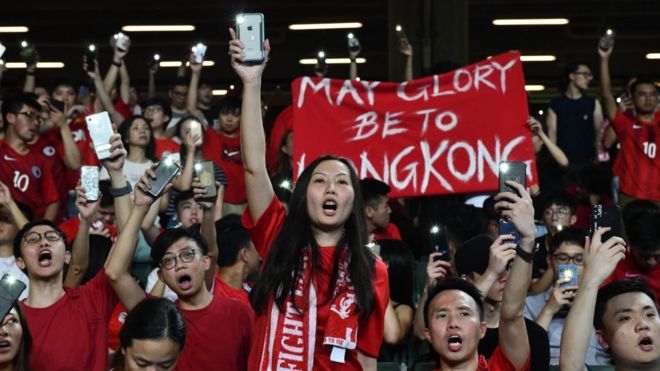
Football fans hold up their phones and shout during a protest at the end of the World Cup qualifying match between Hong Kong and Iran at Hong Kong Stadium on September 10, 2019Image copyright GETTY IMAGES
Image caption Protesters sang their new rallying cry at a stadium on Tuesday night

Hong Kong’s protest movement made its presence felt in a sports stadium and shopping malls on Tuesday.

Fans attending a football match drowned out the pre-game Chinese national anthem with loud booing.

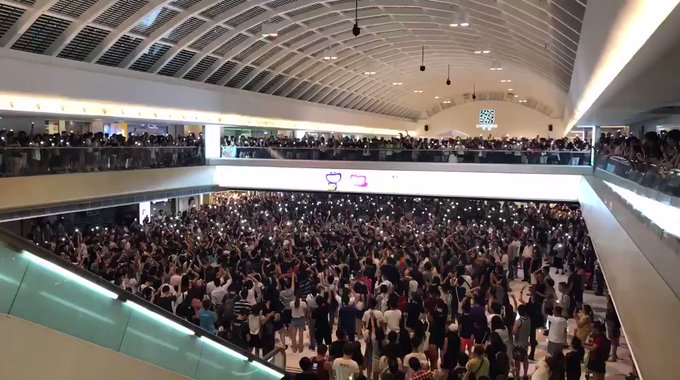
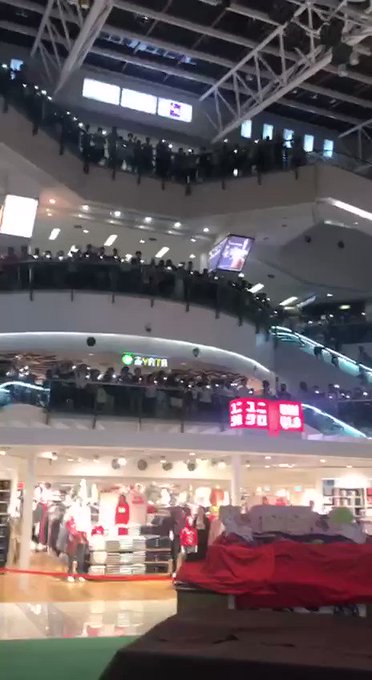
Protesters have also staged flash events in shopping malls, singing Glory to Hong Kong which has become an unofficial anthem of the movement.

The protesters won a major concession last week when the extradition bill which sparked the unrest was scrapped.

But this has failed to end the unrest as protesters continue to demand full democracy and an investigation into allegations of police abuses.

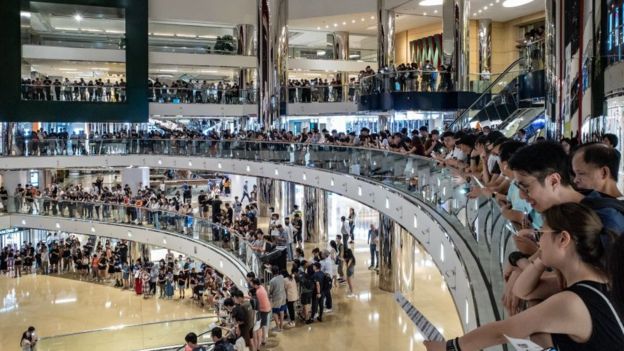
On Tuesday night, thousands of protesters gathered in shopping malls across Hong Kong chanting slogans and singing Glory to Hong Kong.

Residents and protesters sing songs and shout slogans as they gather at a shopping mall after business hours in Tai Koo districtImage copyright GETTY IMAGES
Image caption Many protesters flooded shopping malls

In the popular shopping district of Mongkok, a sea of protesters dressed in black were seen congregating across the different levels of one mall.

Another video showed protesters chanting “Go Hong Kong” – a phrase that has been used frequently as a sign of encouragement.

Shopping malls have been the scene of clashes in recent weeks, with one incident in July seeing riot police fight battles with protesters inside a mall in the district of Sha Tin.

But the recent events have played out peacefully.

Glory to Hong Kong was written by a local musician in response to calls for an anthem for protesters.

The lyrics include lines such as “Do you feel the rage in our cries? Rise up and speak up” and “persevere, for we are as one”.

The new rallying cry has joined other popular songs used by the protest movement, including Do You Hear the People Sing? from musical Les Miserables and the Christian hymn Sing Hallelujah to the Lord.

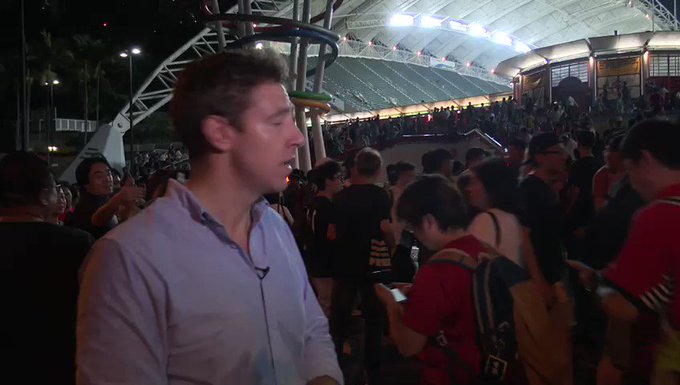
It was also heard at the Hong Kong v Iran football match on Tuesday at Hong Kong Stadium.

The 2022 Fifa World Cup qualifier saw thousands of protesting booing when the Chinese national anthem played before the start of the game.

The jeering, which could be heard from outside the stadium, was intended as a clear “message” to Beijing that they do not want to be part of China in the future, says the BBC’s Nick Beake who was at the game.

It’s not the first time people in Hong Kong have been heard booing the Chinese anthem – though it is not clear how long they might be able to do this.

In 2017 China passed a law making it illegal to disrespect the anthem, but the law has yet to be passed in Hong Kong.

‘Too little, too late’

Hong Kong, formerly a British colony, returned to Chinese rule in 1997.

Under the “one country, two systems” rule, the city is granted a high level of autonomy, an independent judiciary and rights such as freedom of speech.

But those freedoms – the Basic Law – expire in 2047 and it is not clear what Hong Kong’s status will then be.

There has been growing anti-mainland sentiment in recent years, and anger at what many feel is increasing mainland interference in Hong Kong affairs.

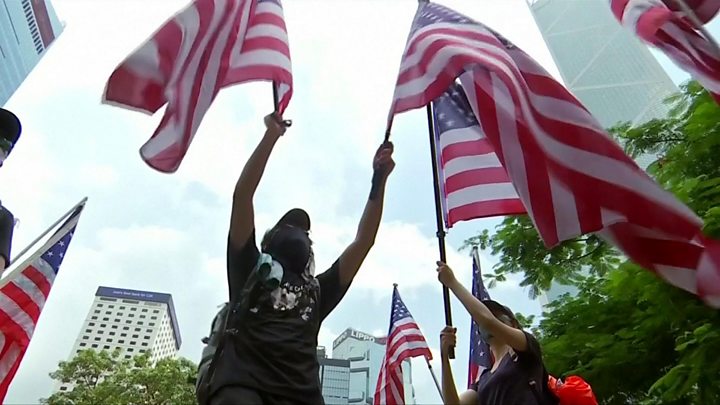
Media caption Protesters sang the US anthem outside the consulate

This reached a tipping point when the Hong Kong parliament proposed a new law that would have enabled suspects in Hong Kong to be extradited to China.

Hundreds of thousands of people marched on the streets in protest of the law, demanding that it be abandoned. The government initially suspended in June, and then finally dropped earlier this week – almost three months after protests first begun.

But protesters have said this is “too little, too late”, and their demands have evolved into calls for a much wider set of reforms, including a call for universal suffrage.

Source: The BBC

Law of Unintended Consequences

continuously updated blog about China & India

ChiaHou's Book Reviews

continuously updated blog about China & India

What's wrong with the world; and its economy

continuously updated blog about China & India