Archive for ‘Gansu Province’

10/05/2020

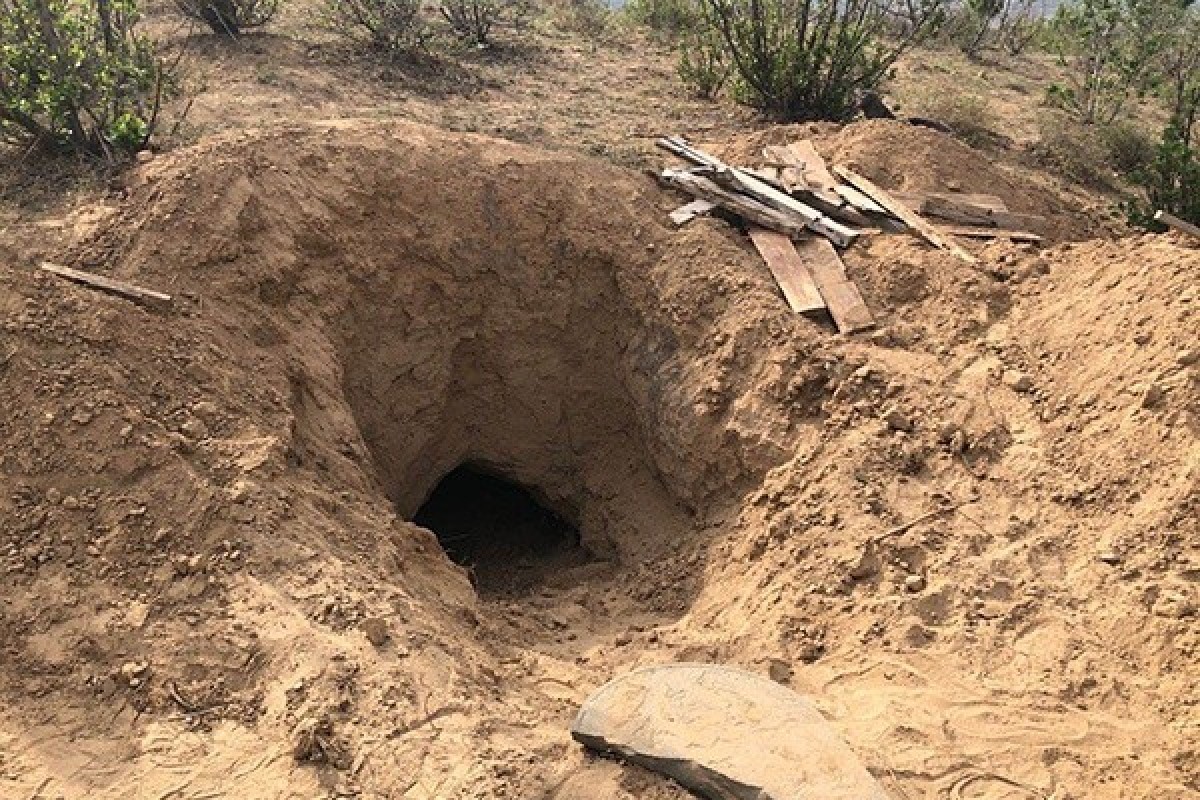
Elderly Chinese woman rescued three days after being ‘buried alive by son’

  • Police in Shaanxi province dug up 79-year-old from grave in woods after suspect’s wife tipped them off
  • Woman is now in a stable condition in hospital while her son is facing an attempted murder charge
The woman was rescued from the grave in Shaanxi province after three days. Photo: Handout

A man in northwest China has been detained after his 79-year-old mother was buried alive.

The woman, who was partially paralysed, was rescued after three days and is in a stable condition in a hospital in Shaanxi province, police said.

Prosecutors in Jingbian county said the woman’s son, a 58-year-old identified only by his surname Ma, had been charged with attempted murder.

On Tuesday his wife told local police that Ma had taken the bedridden woman named Wang away on a cart and she had not returned home.

Police said the man had confessed to burying her in the woods and she was rescued later that day.
The elderly woman is now recovering in hospital. Photo: Handout
“Ma was there when police were digging up the two metre deep grave. He didn’t say anything or respond when he saw his mother was still alive,” an unidentified Jingbian police official told news portal Thepaper.cn.

The website reported that Ma had been sent to live with his uncle after his father died, while his mother remarried and moved to Gansu province with her younger son when Ma was 12 years old.

The mother returned to Jingbian a few years ago to live with the younger son after her second husband died and only moved in to Ma’s house last year when her health started to deteriorate.

Breakthrough in 28-year-old Chinese murder case as DNA test leads police to suspect

25 Feb 2020

Police said Ma began to resent her presence after she became bedridden after a fall last November and he complained that her incontinence was making the house smell bad.

A statement from the national health commission and national office of elderly care called for severe punishment for the man and said he had “crossed the bottom line in law, morality and human relations”.

The two organisations have sent staff to Jingbian county to help with the woman’s medical treatment and rehabilitation, and to arrange her future care.

Source: SCMP

30/03/2020

Drop in China’s new coronavirus cases; none in Wuhan for sixth day

WUHAN, China (Reuters) – China reported a drop in new coronavirus infections for a fourth day as drastic curbs on international travellers reined in the number of imported cases, while policymakers turned their efforts to healing the world’s second-largest economy.

The city of Wuhan, at the centre of the outbreak, reported no new cases for a sixth day, as businesses reopened and residents set about reclaiming a more normal life after a lockdown for almost two months.

Smartly turned out staff waited in masks and gloves to greet customers at entrances to the newly-reopened Wuhan International Plaza, home to boutiques of luxury brands such as Cartier and Louis Vuitton.

“The Wuhan International Plaza is very representative (of the city),” said Zhang Yu, 29. “So its reopening really makes me feel this city is coming back to life.”

Sunday’s figure of 31 new cases, including one locally transmitted infection, was down from 45 the previous day, the National Health Commission said.

As infections fall, policymakers are scrambling to revitalise an economy nearly paralysed by months-long curbs to control the spread of the flu-like disease.

On Monday, the central bank unexpectedly cut the interest rate on reverse repurchase agreements by 20 basis points, the largest in nearly five years.

The government is pushing businesses and factories to reopen, as it rolls out fiscal and monetary stimulus to spur recovery from what is feared to be an outright economic contraction in the quarter to March.

China’s exports and imports could worsen as the pandemic spreads, depressing demand both at home and abroad, Xin Guobin, the vice minister of industry and information technology, said on Monday.

The country has extended loans of 200 billion yuan (22.75 billion pounds) to 5,000 businesses, from 300 billion allocated to help companies as they resume work, Xin said.

Authorities in Ningbo said they would encourage national banks to offer preferential credit of up to 100 billion yuan to the eastern port city’s larger export firms. The city government will subsidize such loans, it said in a notice.

VIRUS CONCERNS

While new infections have fallen sharply from February’s peak, authorities worry about a second wave triggered by returning Chinese, many of them students.

China cut international flights massively from Sunday for an indefinite period, after it began denying entry to almost all foreigners a day earlier.

Average daily arrivals at airports this week are expected to be about 4,000, down from 25,000 last week, an official of the Civil Aviation Administration of China told a news conference in Beijing on Monday.

The return to work has also prompted concern about potential domestic infections, especially over carriers who exhibit no, or very mild, symptoms of the highly contagious virus.

Northwestern Gansu province reported a new case of a traveller from the central province of Hubei, who drove back with a virus-free health code, national health authorities said.

Hubei authorities say 4.6 million people in the province returned to work by Saturday, with 2.8 million of them heading for other parts of China.

Most of the departing migrant workers went to the southern provinces of Guangdong and Fujian, the eastern provinces of Zhejiang and Jiangsu, and northeast China.

In Hubei’s capital of Wuhan, more retail complexes and shopping streets reopened.

Electric carmaker Tesla Inc has also reopened a showroom in Wuhan, a company executive said on Weibo.

Shoppers queued 1-1/2 metres (5 ft) apart for temperature checks at Wuhan International Plaza, while flashing “green” mobile telephone codes attesting to a clean bill of health.

To be cleared to resume work, Wuhan residents have been asked to take nucleic acid tests twice.

“Being able to be healthy and leave the house, and meet other colleagues who are also healthy is a very happy thing,” said Wang Xueman, a cosmetics sales representative.

Source: Reuters

23/03/2020

147 medics from Gansu return home

CHINA-GANSU-LANZHOU-MEDICAL STAFF-RETURN HOME-ARRIVAL (CN)

A man shows a welcome cardboard written to his girlfriend, one of the medics supporting virus-hit Hubei Province, in Lanzhou, northwest China’s Gansu Province, March 22, 2020. The third batch of medical assistance team supporting Hubei from Gansu, which consists of 147 members, returned home on Sunday as the epidemic situation in Hubei has been greatly eased. (Xinhua/Du Zheyu)

Source: Xinhua

08/03/2020

Shanghai tightens airport checks as imported virus infections in China jump

BEIJING (Reuters) – Shanghai increased airport screening on Saturday as imported coronavirus infections from countries such as Italy and Iran emerge as the biggest source of new cases in China outside Hubei, the province where the outbreak originated.

Mainland China had 99 new confirmed cases on Friday, according to official data. Of the 25 that were outside Hubei, 24 came from outside China.

Shanghai, which had three new cases that originated from abroad on Friday, said it would step up control measures at the border, which had become “the main battlefield”.

At a news conference, Shanghai Customs officials said they city would check all passengers from seriously affected countries for the virus, among other airport measures.

Shanghai already requires passengers flying in from such countries, regardless of nationality, to be quarantined for 14 days. They will now be escorted home in vehicles provided by the government.

Tighter screening has greatly lengthened waiting times at Shanghai’s Pudong International Airport – some passengers say they have had to wait as long as seven hours.

The Shanghai government vowed on Saturday to severely punish passengers who concealed infections.

Beijing police said on Saturday they would work with other departments to prevent imported infections. They said some members of a Chinese family flying in from Italy on March 4 had failed to fill in health declarations accurately, and later tested positive for the virus.

MIGRANT WORKERS

In addition to the growing risk of imported infections, China faces a challenge in trying to get migrant workers back to work by early April.

So far, 78 million migrant workers, or 60% of those who left for the Lunar New Year holiday in January, have returned to work.

Yang Wenzhuang of the National Health Commission (NHC) said that the “risk of contagion from increased population flows and gathering is increasing … We must not relax or lower the bar for virus control”.

But new cases in mainland China continued to decline, with just 99 new cases on Friday, the lowest number the NHC started publishing nationwide figures on Jan. 20, against 143 on Thursday.

Most of these cases, which include infections of Chinese nationals who caught the virus abroad, were in the northwesterly Gansu province, among quarantined passengers who flew into the provincial capital Lanzhou from Iran between March 2 and 5.

For the second day in a row, there were no new infections in Hubei outside the provincial capital Wuhan, where new cases fell to the lowest level since Jan. 25.

The total number of confirmed cases in mainland China so far is 80,651, with 3,070 deaths, up by 28 from Thursday.

Hubei reported 28 deaths, 21 of them in Wuhan.

Source: reuters

07/03/2020

China reports almost all new infections outside Wuhan originated abroad

BEIJING (Reuters) – About a quarter of China’s new confirmed cases and almost all of those outside the epidemic’s epicentre in Wuhan originated outside the country on Friday, according to official data.

Most of these cases, which include infections of Chinese nationals who caught the virus abroad, were in China’s northwestern Gansu province, among quarantined passengers who entered the provincial capital of Lanzhou on commercial flights from Iran between March 2 and March 5.

Mainland China had 99 new confirmed cases of coronavirus infections on Friday, the country’s National Health Commission (NHC) said on Saturday, down from 143 cases a day earlier and marking the lowest number since Jan. 20, when the NHC started to publish nationwide figures.

Outside of central China’s Hubei province, there were 25 new confirmed cases reported on March 6, of which 24 came from outside China.

The capital Beijing reported four new cases on Friday, of which three came from Italy, according to a notice from the Beijing health commission posted on its official Weibo account on Saturday.

There were also three cases in Shanghai that originated abroad, and one in Guangdong province on Friday, according to the National Health Commission.

The total nationwide number of cases that originated outside China reached 60 as of the end of Friday.

For the second day in a row, there were no new infections in Hubei outside of the provincial capital of Wuhan, where new cases fell to the lowest level since Jan. 25.

Special institutions like prisons, detention centres and nursing homes in Wuhan, which have seen nearly 1,800 confirmed cases as of March 5, still have potential risks in virus control and prevention, the Communist Party’s Politics and Law Commission said on Saturday.

The total number of confirmed cases in mainland China so far is 80,651.

Source: Reuters

06/03/2020

China’s Hubei reports no new coronavirus cases outside city of Wuhan

BEIJING (Reuters) – China’s central province of Hubei, excluding the provincial capital Wuhan, has reported zero new cases of coronavirus over 24 hours for the first time in the outbreak, as authorities seek to stem imported infections in other areas.

Wuhan, the centre of the epidemic, reported 126 new confirmed cases on Thursday but there were no new infections elsewhere in the province, the National Health Commission said on Friday.

Elsewhere in China, schools in provinces reporting no new cases for a number of days started to set reopening dates.

Qinghai, a northwesterly that had reported no new infections for 29 days as of March 5, said it would stagger the start date of different schools between March 11 and March 20, according to a notice posted on an official website.

The southwesterly province of Guizhou has said its schools will start reopening from March 16.

Outside of Hubei, there were 17 new confirmed cases, bringing the total new infections in mainland China to 143 on Thursday, up from 139 cases a day earlier.

Of the 17 new cases, 16 were imported from outside of China – 11 in Gansu province, four in Beijing and one in Shanghai.

A total of 311 passengers arriving at Gansu’s provincial capital Lanzhou from Iran were quarantined, state television reported late on Thursday.

Beijing’s four new cases had come from Italy. On Friday, one of the city’s government officials described its epidemic control campaign as being at its most challenging period, adding that roughly 827,000 people who had returned to the capital from outside – most of them from extended Lunar New Year holidays – were currently undergoing home observation.

Last month, Gansu became the first province to lower its emergency response measures from level I to level III, reflecting the lack of new infections.

Tibet became the latest region to lower its emergency response level on Friday, announcing on an official website that some areas had eased to level II and others to level III.

OPTIMISM FOR WUHAN

Health authorities in Shanghai said that the city had recorded three new cases in the first 12 hours of Friday. All were Chinese nationals who had studied in Iran, state media reported. [B9N28E04N]

All three had been transferred by Shanghai customs to quarantine on March 3, a spokeswoman for the city’s health commission told a news briefing.

Despite the fresh cases in Wuhan, senior Chinese government officials expressed optimism about its situation as the city shut its second makeshift hospital on Friday afternoon, state radio reported.

“As the situation in Wuhan and Hubei improves, relevant authorities, with approvals, will make timely adjustments according to China’s Infectious Diseases Law and public health emergency regulations,” Ding Xiangyang, vice secretary general at the State Council, told a news briefing.

“When I went out in the morning, the cherry blossoms were blooming in front of my door, telling us that winter has passed and spring has come. I think the day everyone has been looking forward to is not far away,” he said.

As new cases dwindle in China, attention has turned to potential infections arriving from overseas.

Authorities in Beijing, Shanghai and Guangdong have all vowed to quarantine travellers from countries hit the hardest by the coronavirus, which Beijing identified as South Korea, Japan, Iran and Italy.

The overall accumulated number of confirmed cases in mainland China stood at 80,552 as of Thursday.

The death toll from the outbreak in mainland China was 3,042 as of the end of Thursday, up by 30 from the previous day.

Hubei reported 29 new deaths, while in Wuhan, 23 people died.

Source: Reuters

22/02/2020

China reports fall in new coronavirus cases but concerns grow over rising global spread

BEIJING (Reuters) – China reported a sharp decrease in new deaths and cases of the coronavirus on Saturday but a doubling of infections in South Korea and 10 new cases in Iran added to unease about its rapid spread and global reach.

Mainland China had 397 new confirmed cases of coronavirus infections on Friday, down from 889 a day earlier, but only 31 cases were outside of the virus epicentre of Hubei province, the lowest number since the National Health Commission started compiling nationwide data a month ago.

But infection numbers continued to rise elsewhere, with outbreaks worsening in South Korea, Italy and Lebanon and Iran, prompting a warning from the World Health Organization that the window of opportunity to contain the international spread was closing..

South Korea saw another spike in infections, with 229 new confirmed cases, taking its tally to 433. Officials warned that could rise substantially as more than 1,000 people who attended a church at the centre of the outbreak had shown flu-like symptoms.

Iran, which had no reported cases earlier this week, saw 10 new cases, one of which had died, taking the number to 28 infections and five deaths.

Concerns about the virus weighed on U.S. stocks on Friday, driven by an earlier spike in cases in China and data showing stalling U.S. business activity in February. [MKTS/GLOB]

It has spread to some 26 countries and territories outside mainland China, killing 13 people, according to a Reuters tally.

WHO director-general Tedros Adhanom Ghebreyesus on Twitter expressed concern on Saturday about cases with no clear link to China and called on all countries to invest urgently in preparedness. He made an appeal for $675 million to support the most vulnerable countries.

On Friday, he said now was the time to act decisively.

“We still have a chance to contain it,” he said. “If we don’t, if we squander the opportunity, then there will be a serious problem on our hands.”

An outbreak in northern Italy worsened with its first two deaths, among 17 confirmed cases including its first known instance of local transmission.

Japan confirmed 14 new coronavirus cases on Saturday, among those a teacher who had shown symptoms while working at her school.

Japan is facing growing questions about whether it is doing enough to contain its spread, and concern about whether it could scupper this year’s Tokyo Olympics. Organisers on Saturday postponed the start of training for volunteers as a precaution.

The Bank of Japan’s governor on Saturday shrugged off talk that the widening epidemic is triggering an outflow of funds from Asia.

Online site for coronavirus news – here

GRAPHIC: Tracking the novel coronavirus – here

NEW COMPLICATIONS

The total number of confirmed cases in mainland China rose to 76,288, with the death toll at 2,345 as of the end of Friday. Hubei reported 106 new deaths, of which 90 were in Wuhan.

But new, albeit isolated findings about the coronavirus could complicate efforts to thwart it, including the Hubei government’s announcement on Saturday that an elderly man took 27 days to show symptoms after infection, almost twice the presumed 14-day incubation period.

That follows Chinese scientists reporting that a woman from Wuhan had travelled 400 miles (675 km) and infected five relatives without showing signs of infection, offering new evidence of asymptomatical spreading.

State television on Saturday showed the arrival in Wuhan of the “blue whale”, the first of seven river cruise ships it is bringing in to house medical workers, tens of thousands of which have been sent to Hubei to contain the virus.

Senior Chinese central bank officials sought to ease global investors’ worries about the potential damage to the world’s second-largest economy from the outbreak, saying interest rates would be guided lower and that the country’s financial system and currency were resilient.

Chen Yulu, a deputy governor of the People’s Bank of China, said policymakers had plenty of tools to support the economy, and were fully confident of winning the war against the epidemic.

“We believe that after this epidemic is over, pent-up demand for consumption and investment will be fully released, and China’s economy will rebound swiftly,” Chen told state television.

China has recently cut several key lending rates, including the benchmark lending rate on Thursday, and has urged banks to extend cheap loans to the worst-hit companies which are struggling to resume production and are running out of cash.

The transport ministry said businesses would resume operations on a larger scale later this month and said more roads, waterways and ports were returning to normal.

Online media and Weibo users posted footage and images on Saturday of some malls reopening, including in the cities of Wuxi, Hangzhou and in Gansu province, with shoppers queuing in near-empty streets outside for mandatory temperature checks as trickles of customers in masks perused luxury goods shops and makeup counters.

Some analysts believe China’s economy could contract in the first quarter from the previous three months due to the combined supply and demand shocks caused by the epidemic and strict government containment measures. On an annual basis, some warn growth could fall by as much as half from 6% in the fourth quarter.

However, transport restrictions remain in many areas and while more firms are reopening, the limited data available suggests manufacturing is still at weak levels, with disruptions starting to spillover into global supply chains.

Samsung Electronics (005930.KS) said on Saturday that one coronavirus case had been confirmed at its mobile device factory complex in Gumi, causing a shutdown of its entire facility.

Finance leaders from the Group of 20 major economies were set to discuss risks to the world economy in Saudi Arabia this weekend.

The WHO’s Tedros on Twitter said 13 priority countries in Africa had been identified for help because of their direct links to China or high travel volume. That would include 30,000 personal protective kits on the way to six countries and 60,000 more for 19 states in the weeks ahead.

Source: Reuters

27/10/2019

China establishes research center for Dunhuang studies

LANZHOU, Oct. 26 (Xinhua) — Dunhuang Academy China and Peking University have signed an agreement to establish a research center for Dunhuang studies, aiming to nurture more high-level research talent in the area.

Rong Xinjiang, a professor with Peking University, and Zhao Shengliang, the head of the Dunhuang Academy, will be the directors of the new center.

With a focus on the documents of Dunhuang and grottoes art, Dunhuang studies is an emerging interdisciplinary subject that covers areas such as history, geography, archeology and art.

The Dunhuang Academy, located in northwest China’s Gansu Province, administers the Mogao Grottoes, a renowned UNESCO World Heritage site that showcases the cultural integration and mutual learning among different civilizations along the ancient Silk Road.

The Mogao Grottoes are home to a priceless collection of Buddhist artwork — more than 2,000 colored sculptures and 45,000 square meters of murals — in 735 caves carved along a cliff by ancient worshippers.

Peking University is a pioneer of Dunhuang studies in China, with scholars of its predecessor beginning research in the area in the early 20th century.

Source: Xinhua

14/10/2019

Senior official stresses eradicating poverty in west China on schedule

LHASA, Oct. 13 (Xinhua) — A senior official has called for enhanced efforts in eradicating poverty in west China’s underdeveloped areas and making sure to win the battle against poverty on schedule.

Hu Chunhua, a member of the Political Bureau of the Communist Party of China Central Committee and chief of the State Council leading group of poverty alleviation and development, made the remarks when he inspected poverty-eradication work in Tibet Autonomous Region from Oct. 11 to 13.

Parts of Tibet, Xinjiang Uygur Autonomous Region, and provinces of Sichuan, Qinghai, Gansu and Yunnan are major targeted areas for the country to win an overall combat against poverty on schedule.

Hu said the poverty alleviation campaign has entered a crucial stage and the country will continue its efforts unswervingly to ensure all rural population living in poverty-hit areas will be lifted out of poverty.

More efforts should be made to satisfy the need of poor population in terms of compulsory education, basic medical care, safe housing and drinking water.

To consolidate achievements of poverty relief campaign, more measures should be taken, including boosting poverty-alleviation industries and county-level economy, and enhancing follow-up support for people relocated from harsh living conditions, he added.

Source: Xinhua

19/09/2019

Int’l fellowship program shares China’s development with world

LANZHOU, Sept. 18 (Xinhua) — A total of 26 participants from 21 countries including Brazil, New Zealand and the United States attended the closing ceremony of the Gansu International Fellowship Program held Tuesday in the capital city of Lanzhou, northwest China’s Gansu Province.

Held by the provincial government, the 30-day program, starting from Aug. 20, focused on China’s overall development in areas such as the economy, society and culture, as well as its anti-poverty campaign.

Economic experts, scientists and sociologists from local universities and research institutes as well as government departments were invited to share their experience and give lectures.

During the program, all participants visited the Mogao Grottoes, a UNESCO World Heritage site. Based on the culture courses, they exchanged ideas with local officials and experts.

“I was very impressed with the comprehensive structure planning being undertaken to turn Lanzhou and Gansu as a whole into a major hub of China,” said Robert Love, a strategy and policy planner with Selwyn District Council, New Zealand, after his visit to the Lanzhou Urban Planning Exhibition Hall.

Philippe Dall’Agnol, a state attorney from Brazil, told Xinhua that China’s poverty alleviation efforts and means of increasing production were particularly worth studying, adding that when he returns to Brazil, he will continue to be a messenger of peace and a bridge of friendship, to actively promote exchanges and cooperation between the two countries.

Since it was initiated in 2006, a total of 309 participants from 62 countries have graduated from the program, making it an important platform for international exchanges and cooperation.

Source: Xinhua

Law of Unintended Consequences

continuously updated blog about China & India

ChiaHou's Book Reviews

continuously updated blog about China & India

What's wrong with the world; and its economy

continuously updated blog about China & India