11/03/2020
BANGKOK (Reuters) – Thailand will temporarily suspend issuing visas on arrival to visitors from 19 countries and territories, including China, to contain the spread of the coronavirus, its interior minister said on Wednesday.
The suspensions were the latest measures imposed in the tourism-reliant Southeast Asian country, which has reported 59 cases of the virus and one death so far. Globally, over 113,000 people have been infected in over 100 countries.
“People from any country who want to come will need to apply for a visa with our embassies,” Minister of Interior Anupong Paochinda told reporters.
“Thai embassies everywhere will ensure that no sick people will travel to Thailand.”
Visa on Arrival (VoA) will be suspended for nationals of all 19 countries and territories previously eligible, including Bulgaria, Bhutan, China, Cyprus, Ethiopia, Fiji, Georgia, India, Kazakhstan, Malta, Mexico, Nauru, Papua New Guinea, Romania, Russia, Saudi Arabia, Taiwan, Uzbekistan, and Vanuatu, according to a list provided to reporters by the Ministry of Foreign Affairs.
However, Russian passport holders will not be affected by the suspension of the visa on arrival from Russia, as they can still travel to Thailand and stay for 30 days under a visa waiver agreement, an official at the ministry told Reuters.
Visa exemptions will be cancelled for South Korea, Italy and Hong Kong, Anupong said.
“These measures will solve the problem of foreigners arriving from risky zones,” he said.
Anupong said he would start the process immediately but it was not immediately clear when they will be effective.
Chatree Atchananant, director-general of the foreign ministry’s Consular Affairs Department, said visa applicants will need to present medical certificates and insurance as part of the screening at Thai embassies.
Last week, Thailand designated South Korea, China, Macao, Hong Kong, Italy and Iran as “dangerous communicable disease areas.”
Thai authorities urged people arriving from the six places to self-quarantine for 14 days.
Source: Reuters
Posted in 14 days, Bangkok, Bhutan, Bulgaria, China, Consular Affairs Department, coronavirus, countries, Cyprus, embassies, Ethiopia, Fiji, Georgia, Hong Kong, India, iran, Italy, Kazakhstan, limit, Macao, Malta, Mexico, Minister of Interior, Ministry of Foreign Affairs, Nauru, Papua New Guinea, restricts, Romania, Russia, Saudi Arabia, self quarantine, South Korea, spread, Taiwan, territories, Thai, Thailand, Uncategorized, Uzbekistan, Vanuatu, Virus, Visa on Arrival (VoA), visitor visas |
Leave a Comment »
02/12/2019
(Reuters) – Asian companies dominate the market for electric vehicle (EV) batteries and they are expanding their production capacity in Europe, China and the United States in a fight to win lucrative contracts from global automakers.
Some carmakers worry, however, there won’t be enough batteries for all the EVs they plan to launch in the coming years and a bitter row between South Korea’s SK Innovation and LG Chem risks exacerbating the potential shortfall.
Below are details of the world’s leading EV battery makers with details of their customers and expansion plans:
CATL
China’s Contemporary Amperex Technology (CATL), the world’s biggest EV battery maker, counts BMW (BMWG.DE), Volkswagen (VOWG_p.DE), Daimler (DAIGn.DE) – which makes Mercedes cars – Volvo, Toyota Motor Corp (7203.T) and Honda Motor Co (7267.T) among its customers.
The company emerged as a major force partly thanks to Beijing’s policy of only subsidising vehicles equipped with Chinese batteries in the world’s biggest EV market. Beijing is phasing out EV subsidies next year.
CATL, which operates factories in China, is building its first overseas plant in Germany and is considering a U.S. factory.
PANASONIC CORP (6752.T)
Japan’s Panasonic, a supplier of U.S. EV pioneer Tesla (TSLA.O), said it has installed equipment to ramp up production at Tesla’s Nevada plant to 35 GWh from its current production of around 30 GWh as of late October. Panasonic has said it is investing about $1.6 billion in the factory.
Panasonic also produces EV batteries in Japan, China and plans to shift some of its plants to a new joint venture with Toyota. Panasonic’s clients also include Honda and Ford Motor Company (F.N).
For a graphic of expansion plans: tmsnrt.rs/35tFmOL
BYD CO LTD (002594.SZ)
China’s BYD, which is backed by U.S. investor Warren Buffett, is also one of the world’s biggest EV battery makers. It mainly uses them in-house for its own cars and buses. BYD said last year it is was considering cell production in Europe.
LG CHEM LTD (051910.KS)
The South Korean firm was an early industry mover, winning a contract to supply General Motor’s (GM.N) Volt in 2008. It also supplies Ford, Renault (RENA.PA), Hyundai Motor (005380.KS), Tesla, Volkswagen and Volvo.
It is investing 3.3 trillion won ($2.8 billion) to build and expand production facilities near Tesla’s plant in Shanghai. It has a joint venture (JV) in China with Geely Automobile Holdings (0175.HK), which makes Volvos, and is in talks with other carmakers about JVs in major markets.
The firm is considering building a second U.S. factory in addition to its facility in Michigan and is expanding its plant in Poland.
SAMSUNG SDI CO LTD (006400.KS) Samsung SDI an affiliate of South Korean tech giant Samsung Electronics (005930.KS), has EV battery plants in South Korea, China and Hungary, which supply customers such as BMW (BMWG.DE), Volvo and Volkswagen. Samsung SDI is investing about 1.2 billion euros ($1.3 billion) to expand its factory in Hungary though the EU is investigating whether Budapest’s financial support complies with the bloc’s state aid rules.
Samsung started production last year on the Hungary plant, which will produce batteries for 50,000 EVs a year.
SK INNOVATION CO LTD (096770.KS) LG Chem’s cross-town rival SK Innovation supplies batteries to Volkswagen, Daimler and Kia Motors (000270.KS), as well as Jaguar Land Rover [TAMOJL.UL] and Ferrari (RACE.MI).
An oil refiner that came to the battery industry late, SKI is investing about $3.9 billion to build three plants in the United States, China and Hungary, with a goal of expanding its annual production capacity to 33 GWh by 2022.
SKI currently operates one battery factory in South Korea, with a capacity of 4.7 GWh annually.
It set up a joint venture with Beijing Automotive Industry Corporation (BAIC) of China in August 2018 and another Chinese partner. It is in talks with Volkswagen about another battery JV and is building a $1.7 billion factory in the U.S. state of Georgia, not far from Volkswagen’s Chattanooga plant.
Source: Reuters
Posted in automakers, batteries, battery, Beijing Automotive Industry Corporation (BAIC), Beijing’s, biggest, BMW, BMW (BMWG.DE), Budapest’s, BYD, BYD CO LTD (002594.SZ), Chattanooga, China alert, Chinese, Contemporary Amperex Technology (CATL), contracts, Daimler, Electric vehicle, equipped, Europe, EV pioneer, Factory, Ferrari (RACE.MI), firm, Ford, Ford Motor Company (F.N), Geely Automobile Holdings (0175.HK), General Motor’s (GM.N), Georgia, Germany, global, Honda Motor Co (7267.T), Hungary, Hyundai Motor (005380.KS), industry mover, Japan, Japan’s, Kia Motors (000270.KS), LG Chem, LG CHEM LTD (051910.KS), Makers, Mercedes, Michigan, Nevada, Panasonic, PANASONIC CORP (6752.T), Plant, Poland, policy, Renault (RENA.PA), Rover [TAMOJL.UL], Samsung Electronics (005930.KS), SAMSUNG SDI CO LTD (006400.KS), Shanghai, SK Innovation, SK INNOVATION CO LTD (096770.KS), South Korea, South Korean, subsidising, Tesla (TSLA.O), Toyota Motor Corp (7203.T), U.S., U.S. investor, Uncategorized, United States, vehicles, Volkswagen, Volkswagen (VOWG_p.DE), Volt, Volvo, Warren Buffett, world's |
Leave a Comment »
08/07/2019
- Settlements along the route linking Europe and Asia thrived by providing accommodation and services for countless traders
- Formally established during the Han dynasty, it was a 19th-century German geographer who coined the term Silk Road
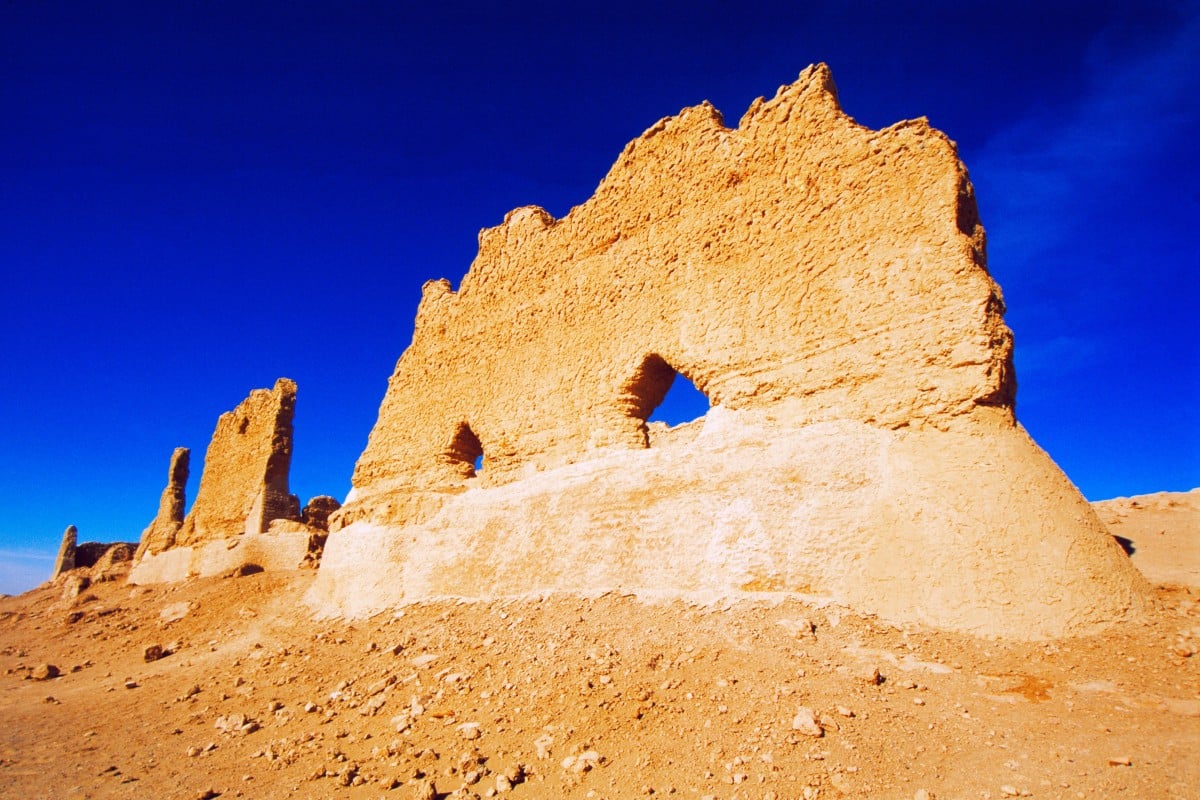
The ruins of a fortified gatehouse and customs post at Yunmenguan Pass, in China’s Gansu province. Photo: Alamy
We have a German geographer, cartographer and explorer to thank for the name of the world’s most famous network of transcontinental trade routes.
Formally established during the Han dynasty, in the first and second centuries BC, it wasn’t until 1877 that Ferdinand von Richthofen coined the term Silk Road (historians increasingly favour the collective term Silk Routes).
The movement of merchandise between China and Europe had been taking place long before the Han arrived on the scene but it was they who employed troops to keep the roads safe from marauding nomads.
Commerce flourished and goods as varied as carpets and camels, glassware and gold, spices and slaves were traded; as were horses, weapons and armour.
Merchants also moved medicines but they were no match for the bubonic plague, which worked its way west along the Silk Road before devastating huge swathes of 14th century Europe.
What follows are some of the countless kingdoms, territories, (modern-day) nations and cities that grew rich on the proceeds of trade, taxes and tolls.
China
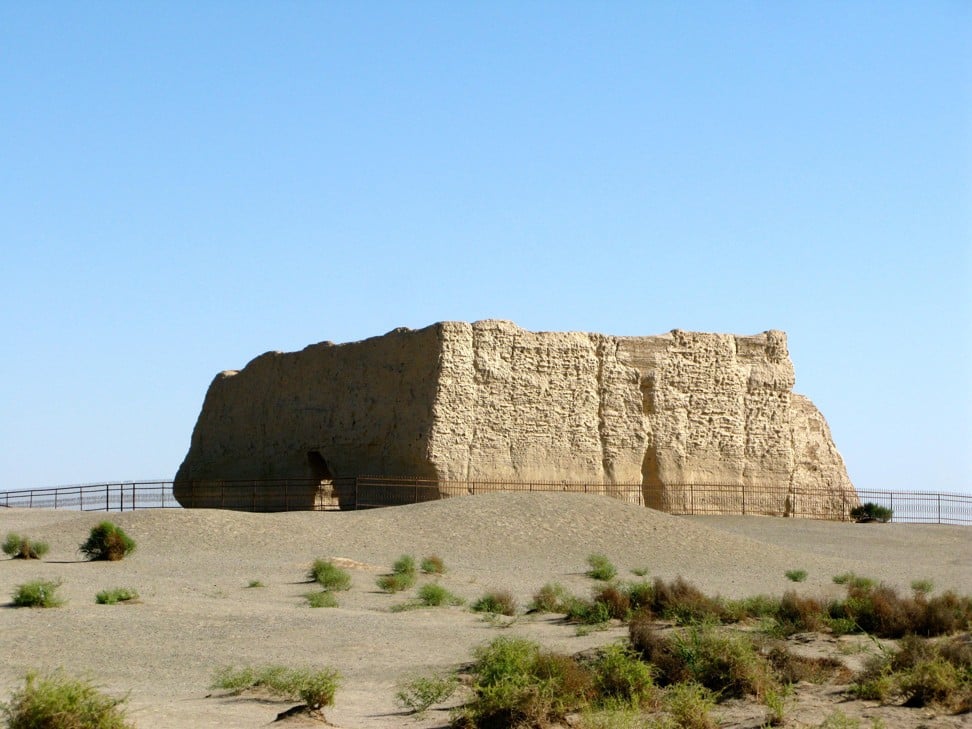
A watchtower made of rammed earth at Dunhuang, a desert outpost at the crossroads of two major Silk Road routes in China’s northwestern Gansu province. Photo: Alamy
Marco Polo worked in the Mongol capital, Khanbaliq (today’s Beijing), and was struck by the level of mercantile activity.
The Venetian gap-year pioneer wrote, “Every day more than a thousand carts loaded with silk enter the city, for a great deal of cloth of gold and silk is woven here.”
Light, easy to transport items such as paper and tea provided Silk Road traders with rich pickings, but it was China’s monopoly on the luxurious shimmering fabric that guaranteed huge profits.
So much so that sneaking silk worms out of the empire was punishable by death.
The desert outpost of Dunhuang found itself at the crossroads of two major Silk Road trade arteries, one leading west through the Pamir Mountains to Central Asia and another south to India.
Built into the Great Wall at nearby Yunmenguan are the ruins of a fortified gatehouse and customs post, which controlled the movement of Silk Road caravans.
Also near Dunhuang, the Mogao Caves contain one of the richest collections of Buddhist art treasures anywhere in the world, a legacy of the route to and from the subcontinent.
Afghanistan
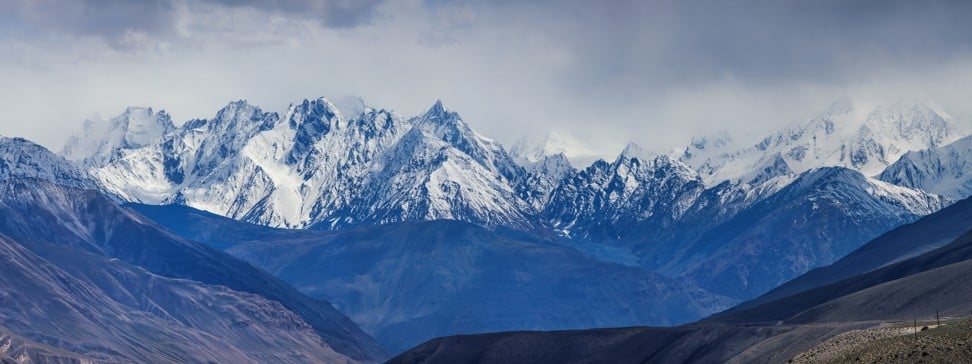
Afghanistan’s mountainous terrain was an inescapable part of the Silk Road, until maritime technologies would become the area’s undoing. Photo: Shutterstock
For merchants and middlemen hauling goods through Central Asia, there was no way of bypassing the mountainous lands we know today as Afghanistan.
Evidence of trade can be traced back to long before the Silk Road – locally mined lapis lazuli stones somehow found their way to ancient Egypt, and into Tutankhamun’s funeral mask, created in 1323BC.
Jagged peaks, rough roads in Tajikistan, roof of the world
Besides mercantile exchange, the caravan routes were responsible for the sharing of ideas and Afghanistan was a major beneficiary. Art, philosophy, language, science, food, architecture and technology were all exchanged, along with commercial goods.
In fact, maritime technology would eventually be the area’s undoing. By the 15th century, it had become cheaper and more convenient to transport cargo by sea – a far from ideal development for a landlocked region.
Iran
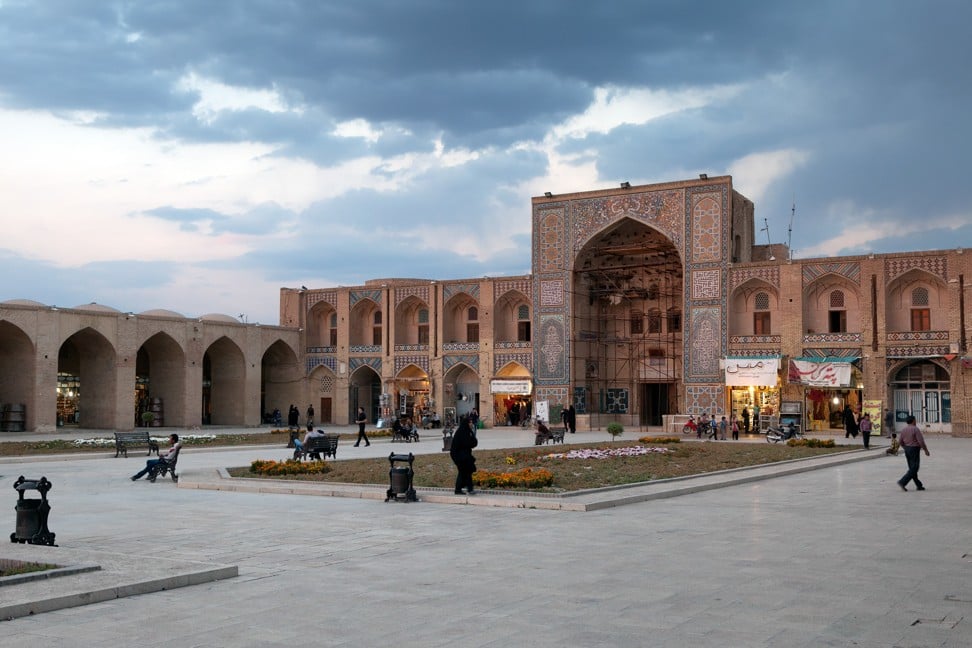
The Ganjali Khan Complex, in Iran. Photo: Shutterstock
Thanks to the Silk Road and the routes that preceded it, the northern Mesopotamian region (present-day Iran) became China’s closest trading partner. Traders rarely journeyed the entire length of the trail, however.
Merchandise was passed along by middlemen who each travelled part of the way and overnighted in caravanserai, fortified inns that provided accommodation, storerooms for goods and space for pack animals.
The good, bad and ugly sides to visiting Chernobyl and Kiev
With so many wheeler-dealers gathering in one place, the hostelries developed into ad hoc marketplaces.
Marco Polo writes of the Persian kingdom of Kerman, where craftsmen made saddles, bridles, spurs and “arms of every kind”.
Today, in the centre of Kerman, the former caravanserai building forms part of the Ganjali Khan Complex, which incorporates a bazaar, bathhouse and mosque.
Uzbekistan
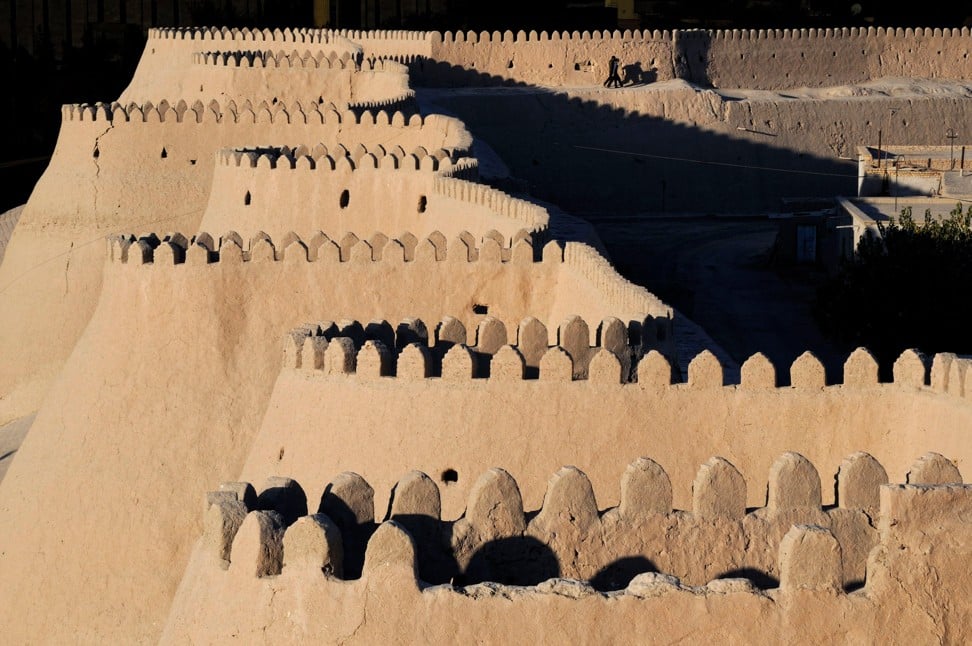
A fort in Khiva, Uzbekistan. Photo: Alamy
The double-landlocked country boasts some of the Silk Road’s most fabled destinations. Forts, such as the one still standing at Khiva, were built to protect traders from bandits; in fact, the city is so well-preserved, it is known as the Museum under the Sky.
The name Samarkand is also deeply entangled with the history of the Silk Road.
The earliest evidence of silk being used outside China can be traced to Bactria, now part of modern Uzbekistan, where four graves from around 1500BC-1200BC contained skeletons wrapped in garments made from the fabric.
Three thousand years later, silk weaving and the production and trade of textiles remain one of Samarkand’s major industries.
Georgia
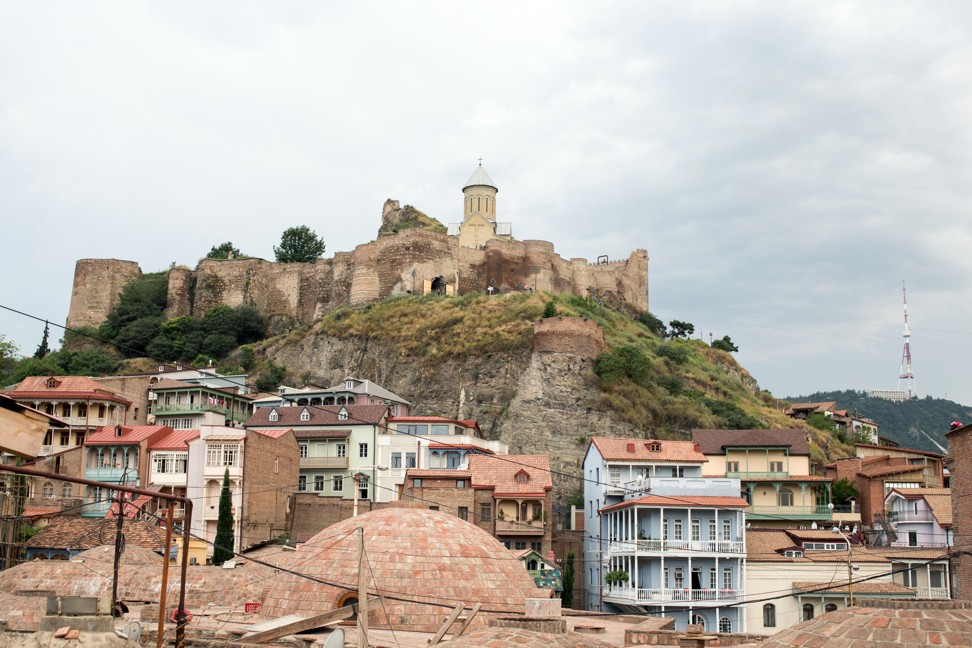
A street in old town of Tbilisi, Georgia. Photo: Alamy
Security issues in Persia led to the opening up of another branch of the legendary trade route and the first caravan loaded with silk made its way across Georgia in AD568.
Marco Polo referred to the weaving of raw silk in “a very large and fine city called Tbilisi”.
Today, the capital has shaken off the Soviet shackles and is on the cusp of going viral.
Travellers lap up the city’s monasteries, walled fortresses and 1,000-year-old churches before heading up the Georgian Military Highway to stay in villages nestling in the soaring Caucasus Mountains.
Public minibuses known as marshrutka labour into the foothills and although the vehicles can get cramped and uncomfortable, they beat travelling by camel.
Jordan
Petra, in Jordan. Photo: Alamy
The location of the Nabataean capital, Petra, wasn’t chosen by chance.
Savvy nomadic herders realised the site would make the perfect pit-stop at the confluence of several caravan trails, including a route to the north through Palmyra (in modern-day Syria), the Arabian peninsula to the south and Mediterranean ports to the west.
Huge payments in the form of taxes and protection money were collected – no wonder the most magnificent of the sandstone city’s hand-carved buildings is called the Treasury.
The Red Rose City is still a gold mine – today’s tourists pay a hefty
. The Nabataeans would no doubt approve.
Venice
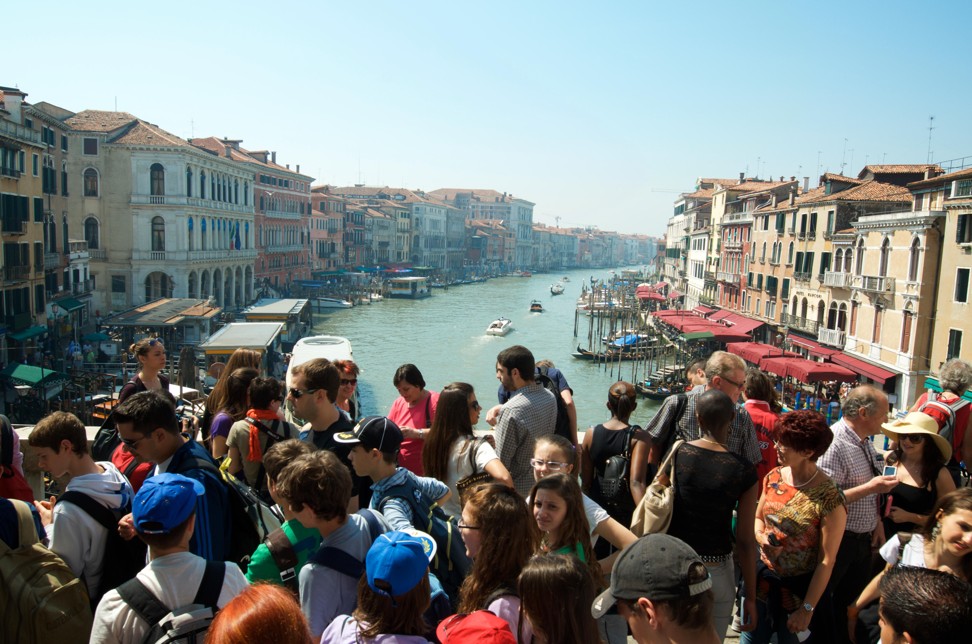
Tourists crowd onto Venice’s Rialto Bridge. Photo: Alamy
Trade enriched Venice beyond measure, helping shape the Adriatic entrepot into the floating marvel we see today.
Besides the well-documented flow of goods heading west, consignments of cotton, ivory, animal furs, grapevines and other goods passed through the strategically sited port on their way east.
Ironically, for a city built on trade and taxes, the biggest problem Venice faces today is visitors who don’t contribute enough to the local economy.
A lack of spending by millions of day-tripping tourists and cruise passengers who aren’t liable for nightly hotel taxes has prompted authorities to introduce a citywide access fee from January 2020.
Two thousand years ago, tariffs and tolls helped Venice develop and prosper. Now they’re needed to prevent its demise.
Source: SCMP
Posted in accommodation, Adriatic, Afghanistan, architecture, armour, arms, Art, Asia, Bactria, bandits, bathhouse, bazaar, Beijing, bridles, bubonic plague, Buddhist art treasures, camels, caravanserai, caravans, carpets, Caucasus Mountains, Chernobyl, cloth of gold, commercial goods, craftsmen, Death, Dunhuang, Egypt, Europe, exchanged, Ferdinand von Richthofen, floating marvel, Food, fort, from China to Italy, funeral mask, Ganjali Khan Complex, Gansu Province, garments, Georgia, Georgian Military Highway, German geographer, glassware, Gold, goods, Great Wall, grew rich, Han Dynasty, horses, hostelries, iran, Jordan, Kerman, Khanbaliq, Khiva, Kiev, languages, lapis lazuli, Marco Polo, maritime technology, marketplaces, marshrutka, medicines, Merchandise, Mesopotamian region, Mogao Caves, Mongol capital, Mosque, Museum under the Sky, Nabataean capital, pack animals, Palmyra, Pamir Mountains, paper, Persian kingdom, Petra, philosophy, punishable, Red Rose City, Rialto Bridge, saddles, Samarkand, Science, Silk Road, Silk Road destinations, silk worms, skeletons, slaves, sneaking, Space, spices, spurs, storerooms, Syria, Tajikistan, Tbilisi, Tea, Technology, towns, Trade, traders, Tutankhamun, Uncategorized, Uzbekistan, Venetian gap-year pioneer, Venice, weapons, Yunmenguan Pass |
Leave a Comment »
19/05/2019
- US paper mills are expanding capacity to take advantage of a glut of cheap waste materials
- Some facilities that previously exported plastic or metal to China have retooled so they can process it themselves
China phased in import restrictions on scrap paper and plastics in January last year. Photo: AP
The halt on China’s imports of waste paper and plastic that has disrupted US recycling programmes has also spurred investment in American plants that process recyclables.
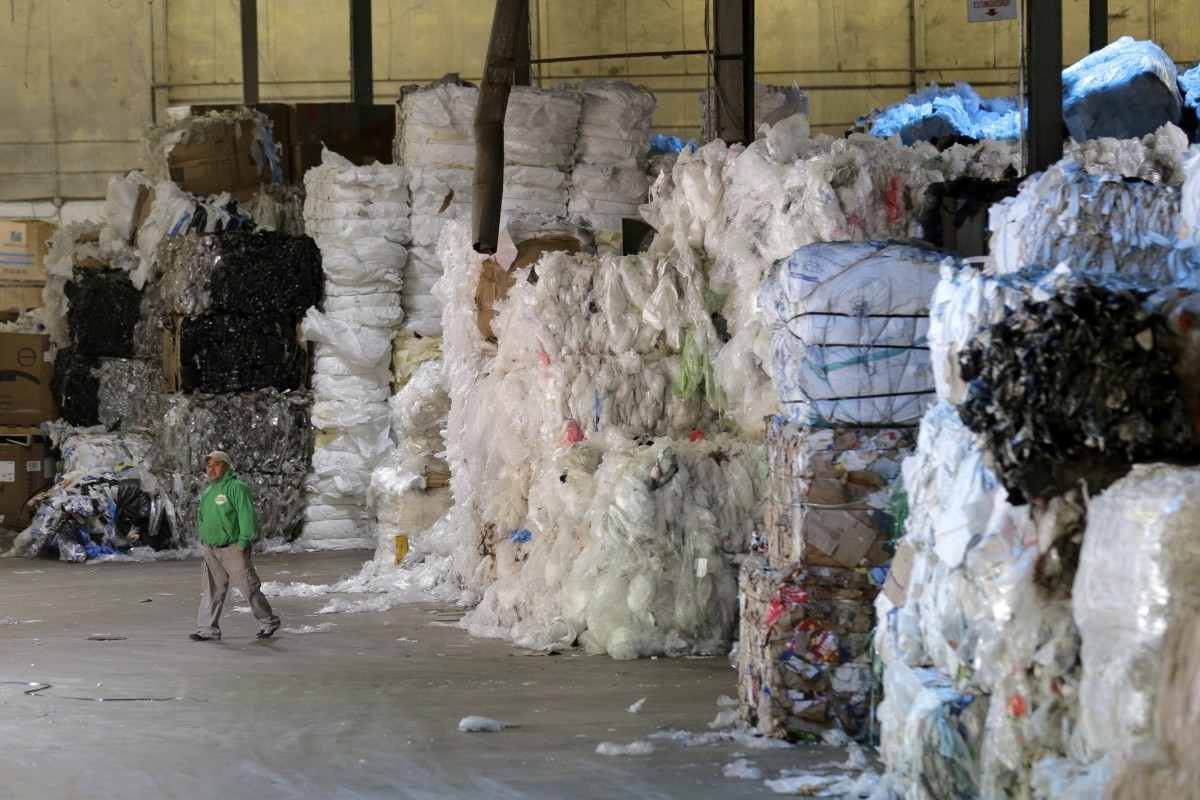
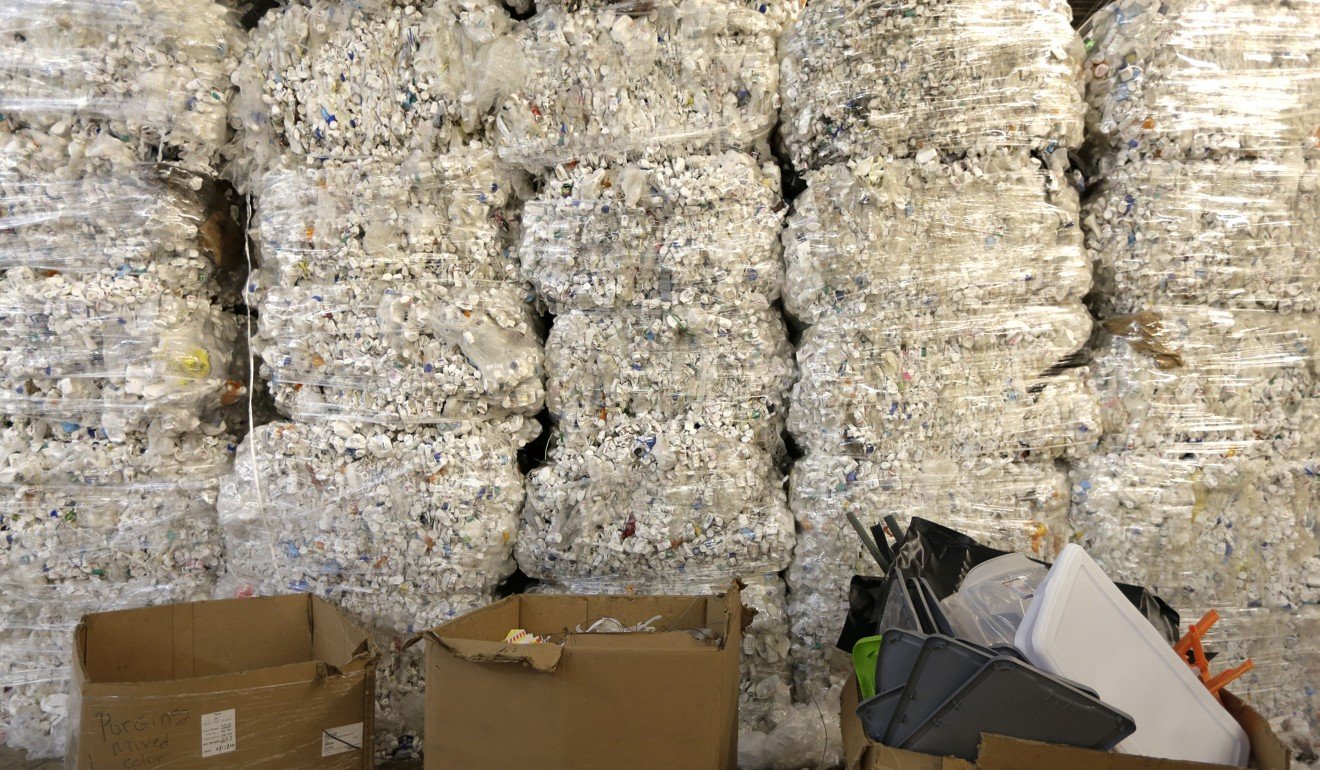
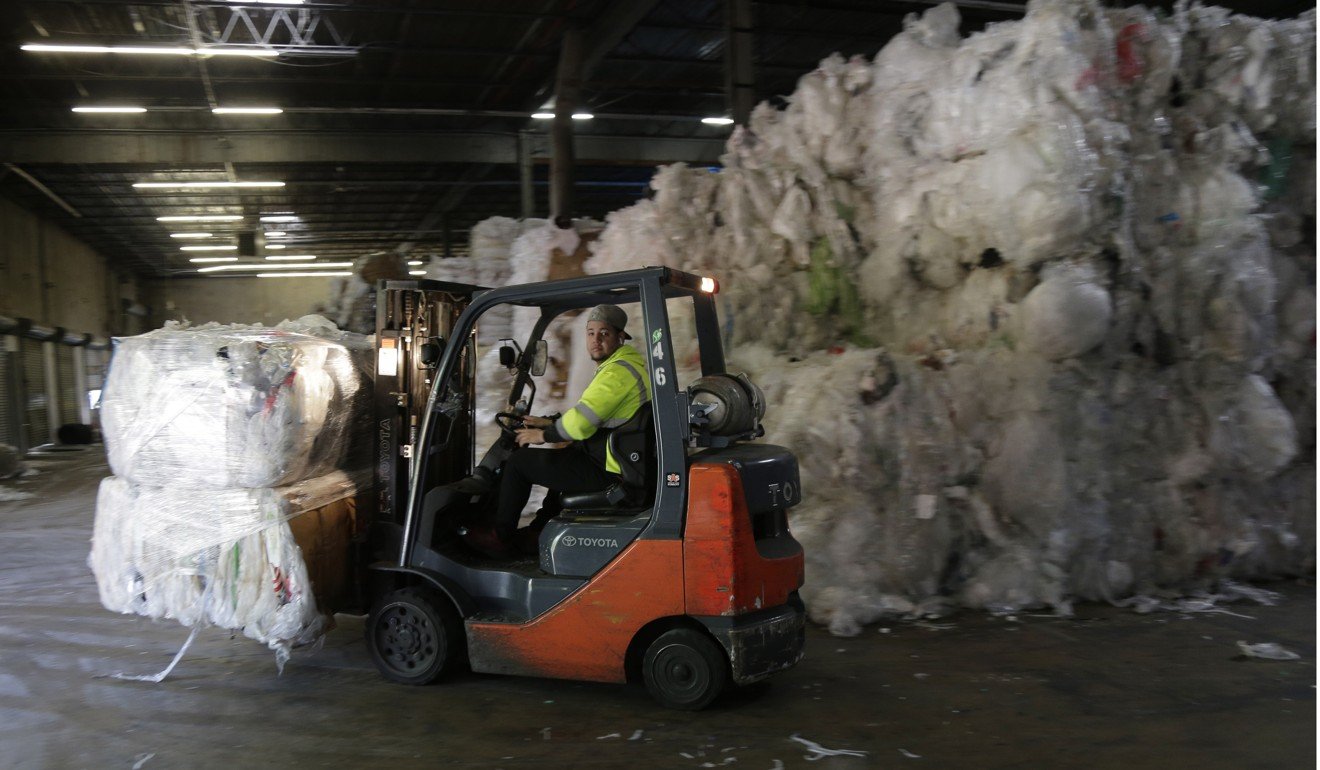
US paper mills are expanding capacity to take advantage of a glut of cheap scrap. Some facilities that previously exported plastic or metal to China have retooled so they can process it themselves.
And in a twist, the investors include Chinese companies that are still interested in having access to waste paper or flattened bottles as raw material for manufacturing.
“It’s a very good moment for recycling in the United States,” said Neil Seldman, co-founder of the Institute for Local Self-Reliance, a Washington-based organisation that helps cities improve recycling programmes.
Global scrap prices plummeted in the wake of China’s ban. Photo: AP
China, which had long been the world’s largest destination for paper, plastic and other recyclables, phased in import restrictions in January last year.
Global scrap prices plummeted, prompting waste-hauling companies to pass the cost of sorting and baling recyclables on to municipalities. With no market for the waste paper and plastic in their blue bins, some communities scaled back or suspended kerbside recycling programmes. But new domestic markets offer a glimmer of hope.
How China’s ban on plastic waste imports became an ‘earthquake’
About US$1 billion in investment in US paper processing plants has been announced in the past six months, according to Dylan de Thomas, a vice-president at The Recycling Partnership, a non-profit organisation that tracks and works with the industry.
Hong Kong-based Nine Dragons, one of the world’s largest producers of cardboard boxes, has invested US$500 million over the past year to buy and expand or restart production at paper mills in Maine, Wisconsin and West Virginia.
Brian Boland, vice-president of government affairs and corporate initiatives for ND Paper, Nine Dragons’ US affiliate, said that as well as making paper from wood fibre, the mills would add production lines turning more than a million tonnes of scrap into pulp to make boxes.
“The paper industry has been in contraction since the early 2000s,” he said. “To see this kind of change is frankly amazing. Even though it’s a Chinese-owned company, it’s creating US jobs and revitalising communities like Old Town, Maine, where the old mill was shuttered.”
Hong Kong-based Nine Dragons has invested US$500 million in paper mills in Maine, Wisconsin and West Virginia. Photo: Handout
:
The Northeast Recycling Council said in a report last autumn that 17 North American paper mills had announced increased capacity to handle recyclable paper since the Chinese cut-off.
Another Chinese company, Global Win Wickliffe, is reopening a closed paper mill in Kentucky. Georgia-based Pratt Industries is constructing a mill in Wapakoneta, Ohio that will turn 425,000 tonnes of recycled paper per year into shipping boxes.
Plastics also had a lot of capacity coming online, de Thomas said, noting new or expanded plants in Texas, Pennsylvania, California and North Carolina that turned recycled plastic bottles into new bottles.
Chinese companies were investing in plastic and scrap metal recycling plants in Georgia, Indiana and North Carolina to make feedstocks for manufacturers in China, he said.
GDB International processes bales of scrap plastic film into pellets to make garbage bags and plastic pipe. Photo: AP
In New Brunswick, New Jersey, the recycling company GDB International exported bales of scrap plastic film such as pallet wrap and grocery bags for years. But when China started restricting imports, company president Sunil Bagaria installed new machinery to process it into pellets he sells profitably to manufacturers of garbage bags and plastic pipe.
The imports cut-off that China called “National Sword” was a much-needed wake-up call to his industry, he said.
“The export of plastic scrap played a big role in easing recycling in our country,” Bagaria said. “The downside is that infrastructure to do our own domestic recycling didn’t develop.”
China to suspend checks on US scrap metal shipments, halting imports
That was now changing, but he said far more domestic processing capacity would be needed as a growing number of countries restricted scrap imports.
“Ultimately, sooner or later, the society that produces plastic scrap will become responsible for recycling it,” he said.
It has also yet to be seen whether the new plants coming on line can quickly fix the problems for municipal recycling programmes that relied heavily on sales to China to get rid of piles of scrap.
About US$1 billion in investment in US paper processing plants has been announced in the past six months, according to a non-profit group that tracks the industry. Photo: AP
“Chinese companies are investing in mills, but until we see what the demand is going to be at those mills, we’re stuck in this rut,” said Ben Harvey, whose company in Westborough, Massachusetts, collects trash and recyclables for about 30 communities.
He had a car park filled with stockpiled paper a year ago after China closed its doors, but eventually found buyers in India, Korea and Indonesia.
China to collect applications for scrap metal import licences from May
Keith Ristau, chief executive of Far West Recycling in Portland, Oregon, said most of the recyclable plastic his company collected used to go to China but now most of it went to processors in Canada or California.
To meet their standards, Far West invested in better equipment and more workers at its material recovery facility to reduce contamination.
In Sarepta, Louisiana, IntegriCo Composites is turning bales of hard-to-recycle mixed plastics into railroad ties. It expanded operations in 2017 with funding from New York-based Closed Loop Partners.
“As investors in domestic recycling and circular economy infrastructure in the US, we see what China has decided to do as very positive,” said Closed Loop founder Ron Gonen.
Source: SCMP
Posted in advantage, bales, boxes, California, capacity, cardboard boxes, cheap, Chief Executive, China’s ba, China’s ban, Closed Loop Partners, Dylan de Thomas, expanding, exported plastic, Far West Recycling, feedstocks, garbage bags, GDB International, Georgia, Georgia-based, Global Win Wickliffe, glut, grocery bags, Hong Kong, import restrictions, India alert, Indiana, Indonesia, Institute for Local Self-Reliance, IntegriCo Composites, Keith Ristau, Kentucky, Korea, Louisiana, Maine, manufacturers, metal, National Sword, Neil Seldman, New Brunswick, New Jersey, New York, Nine Dragons, non-profit organisation, North Carolina, Northeast Recycling Council, Ohio, old mill, Old Town, Maine, Oregon, pallet wrap, paper mills, pellets, Pennsylvania, plastic pipe, Plastics, Portland, Pratt Industries, process, producers, pulp, recycling industry, retooled, revitalises, Ron Gonen, Sarepta, scrap import, scrap metal import licences, scrap metal shipments, scrap plastic film, shuttered, Sunil Bagaria, Texas, The Recycling Partnership, Uncategorized, US, vice-president, Wapakoneta, waste materials, West Virginia, Wisconsin, wood fibre |
Leave a Comment »
15/04/2019
The busiest airport in the world in terms of passenger numbers is in Atlanta, Georgia and no 2 is in Beijing, both with tens of millions more passengers every year than their nearest rivals.
So it might come as a surprise to hear that a new airport, set to open later this year, with what officials claim is the world’s largest terminal housed in a single building, is also in the Chinese capital.
This will give Beijing a breathtaking flight capacity, surpassing London’s six airports.
Until now the impressive structure has been under wraps but China Correspondent Stephen McDonell went along to have a look.
Source: The BBC
Posted in Airport terminal, Atlanta, Beijing, China alert, China Correspondent, Georgia, largest single-building, Stephen McDonell, Uncategorized |
Leave a Comment »






 CHINDIA ALERT: You'll be living in their world, very soon