Archive for ‘Giant panda’

23/10/2019

Chinese ‘panda’ pet cafe raises eyebrows

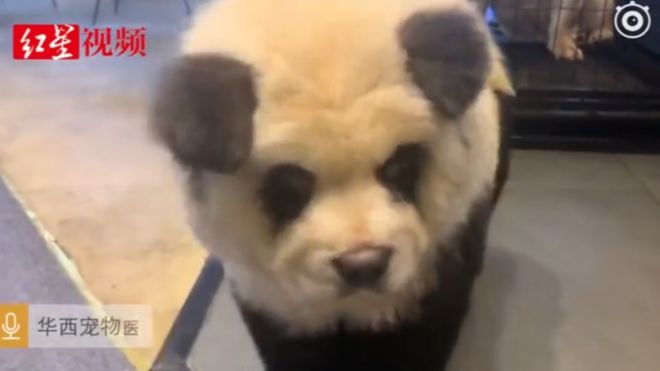
A 'panda' dog in a Chinese pet cafeImage copyright HONGXING NEWS
Image caption A pet cafe in China’s Sichuan province lets people play with dogs dyed to look like pandas.

​Animal cafes have been springing up all over the world for the last two decades as a place for animal lovers to enjoy a meal alongside their furry friends.

But a new “panda” cafe in Chengdu in south-western China – internationally known as the home of the giant panda – is raising eyebrows and a lot of concern.

According to the Chengdu Economic Daily, a cafe recently opened in Chengdu, seems at first glance to be home to six giant panda cubs.

But the “panda” cafe is – in fact – all bark and no bite because on closer inspection, it turns out they are actually the Chow Chow breed of dogs, which have been dyed to look like China’s national animal.

‘Could damage their fur and skin’

The owner of the cafe, Mr Huang, says that as well as serving food and drink, the cafe provides a dyeing service.

He tells Hongxing News that he imports his dye from Japan and has hired special staff for dyeing the dogs.

“Every time we dye it costs 1,500 yuan [$211; £163],” he says. “The dye is really expensive.” He says that this is to ensure the quality of the dye, and says that it in no way affects the animals.

You may also be interested in:

Hongxing News says that a short video inside the cafe had raised awareness of it nationally and has boosted visitor figures.

But it has also raised a lot of concern. One vet, Li Daibing, told Hongxing News that he urged people not to dye their pets, saying: “This could damage their fur and skin.”
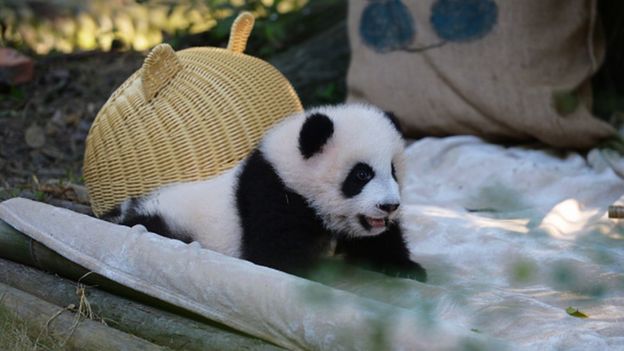
A giant panda in ChengduImage copyright VCG
Image caption Chengdu has become a popular tourist site for seeing the vulnerable species, and national Chinese treasure: the giant panda.

‘Has become normal’

Dyeing pets became a full-blown craze in China in the early 2010s, first for competitions, but then amidst a domestic wave of “extreme dog pampering”.

Since, however, there has been a growing consciousness in China about animal ethics and testing. Many of the thousands of social media users commenting on the popular Sina Weibo microblog have voiced their concern about such treatments being used on animals.

Many call the idea “crazy” and note that hair dye can “damage people’s hair and scalp”, so could similarly affect a dog.

But others argue that “it’s really cute”, and say that they perceive animal dyeing “has become normal”.

It’s not just China either – earlier this year, the Latitude Festival in Suffolk was criticised by the RSPCA after a flock of sheep were dyed pink.

Source: The BBC
18/09/2019

Giant panda death in Thailand leaves China asking questions

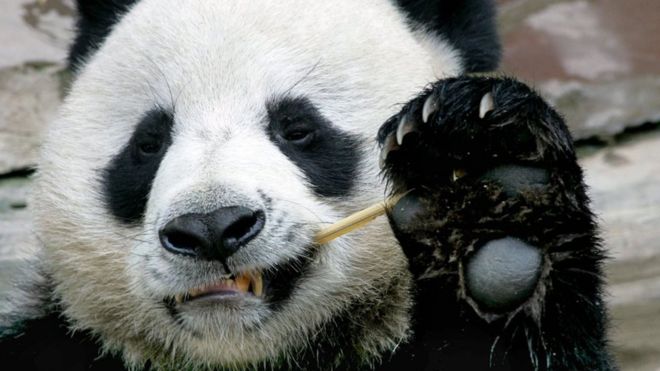
Panda bearImage copyright AFP
Image caption Chinese experts will investigate Chuang Chuang’s death

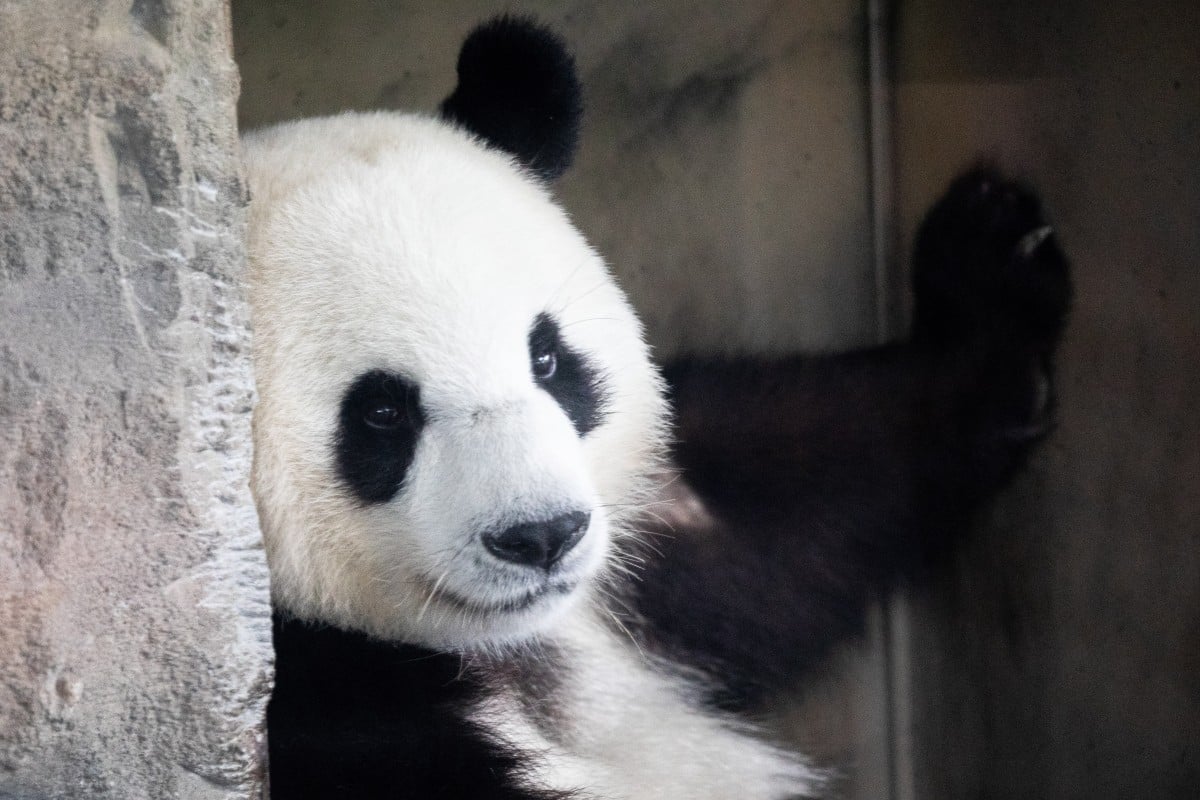
A popular giant panda has died unexpectedly in a Thai zoo – prompting China to send experts to investigate.

Chuang Chuang had been at the Chiang Mai zoo on loan from China since 2003.

The 19-year old bear was widely popular across Thailand, especially due to repeated efforts by the zoo to get him to mate with his female companion.

His unexplained death on Monday caused uproar on Chinese social media, with many users accusing Thailand of not caring properly for the animal.

Giant pandas, which are native to China, usually live for 25 to 30 years in captivity. They were regarded as endangered, but were reclassified as “vulnerable” by the International Union for Conservation of Nature, following an increase in numbers.

China loans the animals to countries around the world as a way of strengthening diplomatic ties.

There’s extensive reporting in China about the animals’ lives overseas, and Chuang Chuang’s early death has received widespread coverage in state media.

Media caption Panda diplomacy: China’s cutest peacemakers

According to Chinese news agency Xinhua, an investigation will be carried out to establish the cause of death, and experts from the China Conservation and Research Centre will travel to Chiang Mai to work with their Thai counterparts.

Some social media users on China’s Twitter-like platform Weibo were concerned, saying: “Thailand is not suitable for raising pandas”, and “they don’t treat animals as well as we think”.

Others asked for the remaining female panda in Chiang Mai, Lin Hui, to be returned to China.

Chuang Chuang had been at the Chiang Mai zoo since 2003, alongside his female companion.

Failing to show any sexual interest in Lin Hui, the zoo tried various methods to boost his sex drive, including putting him on a low-carb diet, and showing videos of mating pandas.

With all efforts failing, the zoo eventually resorted to artificial insemination and Lin Hui gave birth in 2009.

Source: The BBC

02/09/2019

Double happiness for Berlin as resident panda gives birth to twins

  • Germany welcomes first panda cubs born in the country
  • Zoo reports mother and babies doing well and in good health
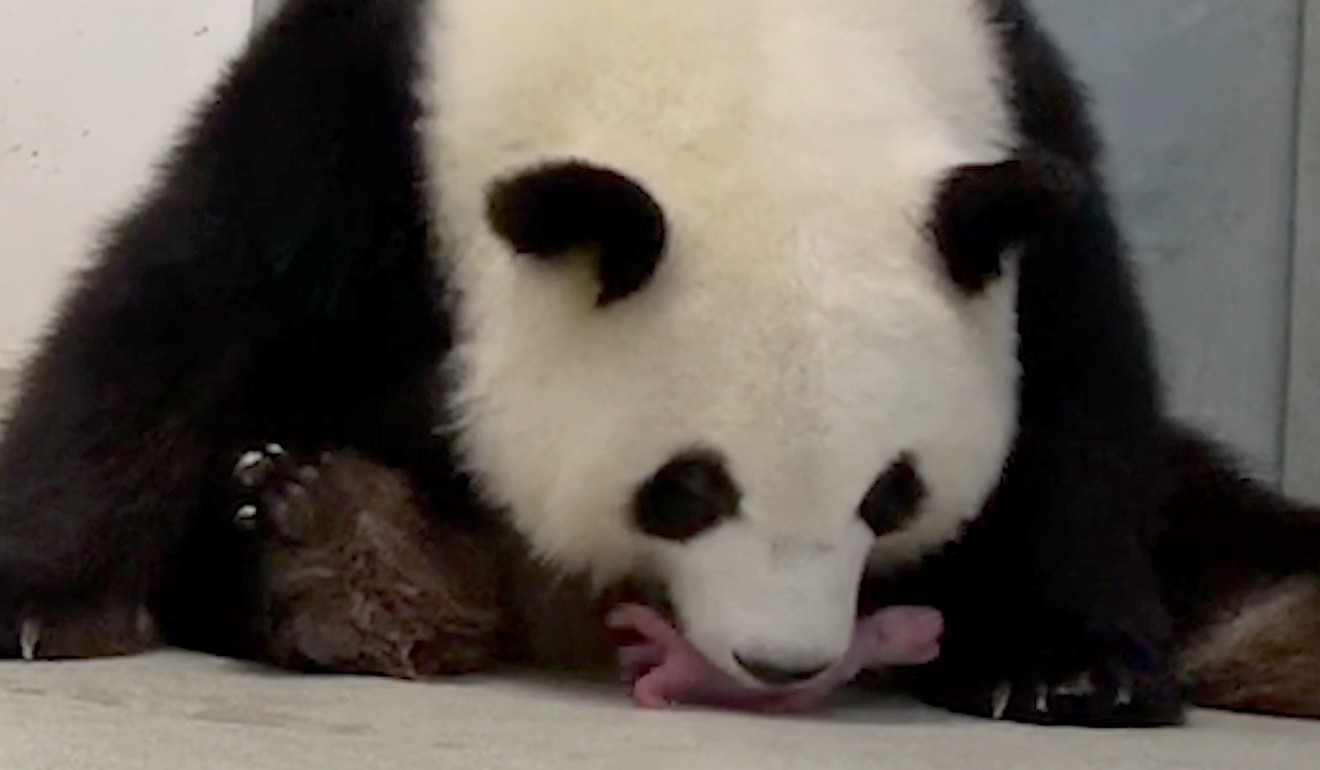
Chinese giant panda Meng Meng has given birth to twins at Berlin zoo, the first pandas to be born in Germany. Photo: EPA-EFE

Berlin zoo is celebrating the safe arrival of panda twins, in the first time that the rare animals have been born in Germany.

Resident panda Meng Meng delivered her first cub on Saturday evening, with the second baby arriving about an hour later.

The zoo posted a video on Twitter of the new mother guiding one of her pink babies to feed, with the announcement: “Meng Meng became a mom – twice! We are so happy, we are speechless.”

The cubs weighed in at 136 and 186 grams but their genders had not been determined, the zoo said.

Meng Meng guides one of her newborn panda twins to feed. Photo: EPA-EFE

“Meng Meng and her two cubs coped well with the birth and are all in good health,” zoo director Andreas Knieriem said.

At birth, the pink cubs, with their fine white down and disproportionately long tails, bear little resemblance to the adult black and white bears.

The births are particularly rare as it is notoriously hard to breed pandas.

Famed for its “panda diplomacy”, China has sent its national treasure to only about a dozen countries as a symbol of close relations.

The zoo pays US$15 million for a 15-year contract to host them, with most of the money going toward a conservation and breeding research programme in China.

While the cubs are born in Berlin, they remain Chinese and must be returned to China within four years after they have been weaned.

China has previously given three pandas to Germany but the last one, 34-year-old Bao Bao, died in Berlin in 2012, having become the oldest male panda in the world.

About 1,864 pandas remain in the wild in China, up from around 1,000 in the late 1970s, according to the environmental group WWF.

Just over 400 pandas live in zoos around the world, in conservation projects set up with Beijing.

Source: SCMP

17/07/2019

Beijing Zoo promises to improve security after visitors throw stones at giant panda

  • Animal lovers angered after viral video shows moment a visitor decided to ‘wake up’ Meng Da
  • Keepers say they will reassess physical safety measures and improve inspections
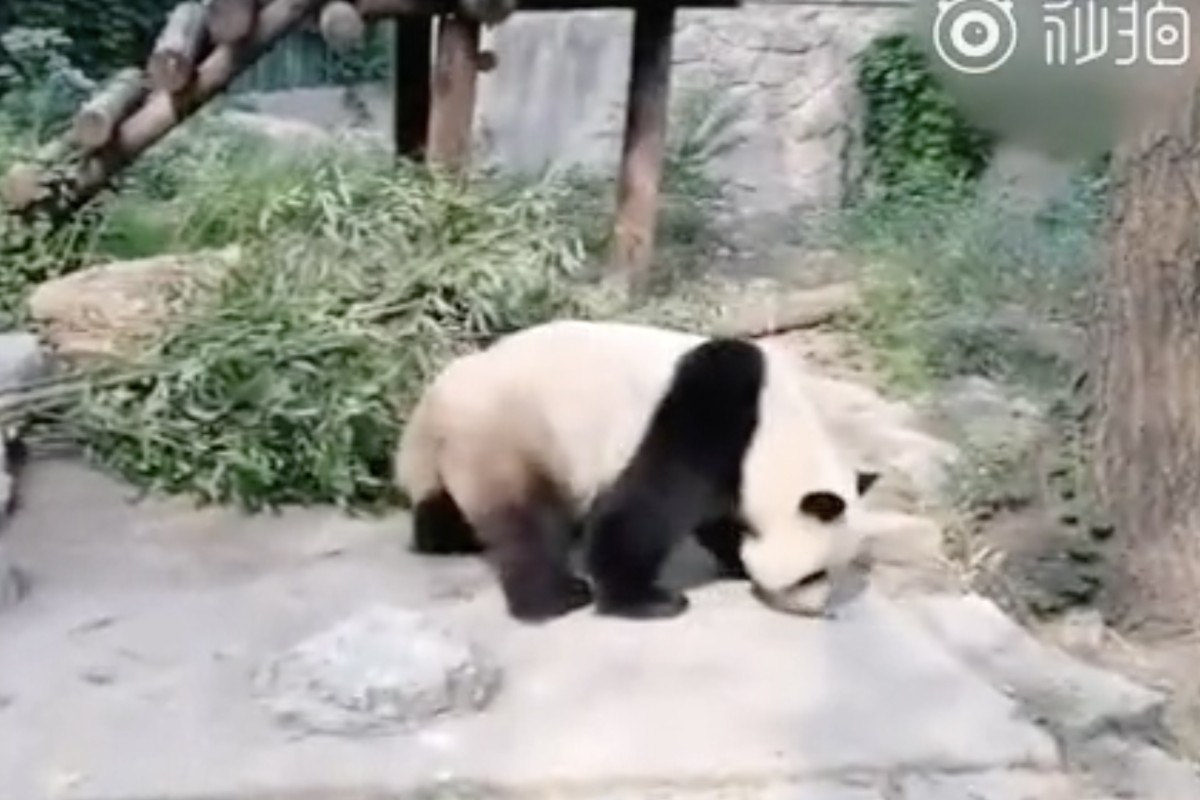
A video shows Beijing Zoo giant panda Meng Da examining a stone thrown at him by a visitor. Photo: Weibo
Beijing Zoo has promised to improve security around its giant panda enclosure after stones were hurled at Meng Da, one of its residents.
A video of the incident on Saturday was posted to Weibo, China’s version of Twitter, where it drew more than 100 million hits.
It shows Meng Da sitting in the enclosure when a stone appears to bounce next to him and stop close by. The startled panda pauses then goes over to examine the object.
Visitors are heard asking, “Who threw the stone?” But no one identifies the stone thrower. Beijing News reported that a bigger stone struck Meng Da about 30 minutes later.
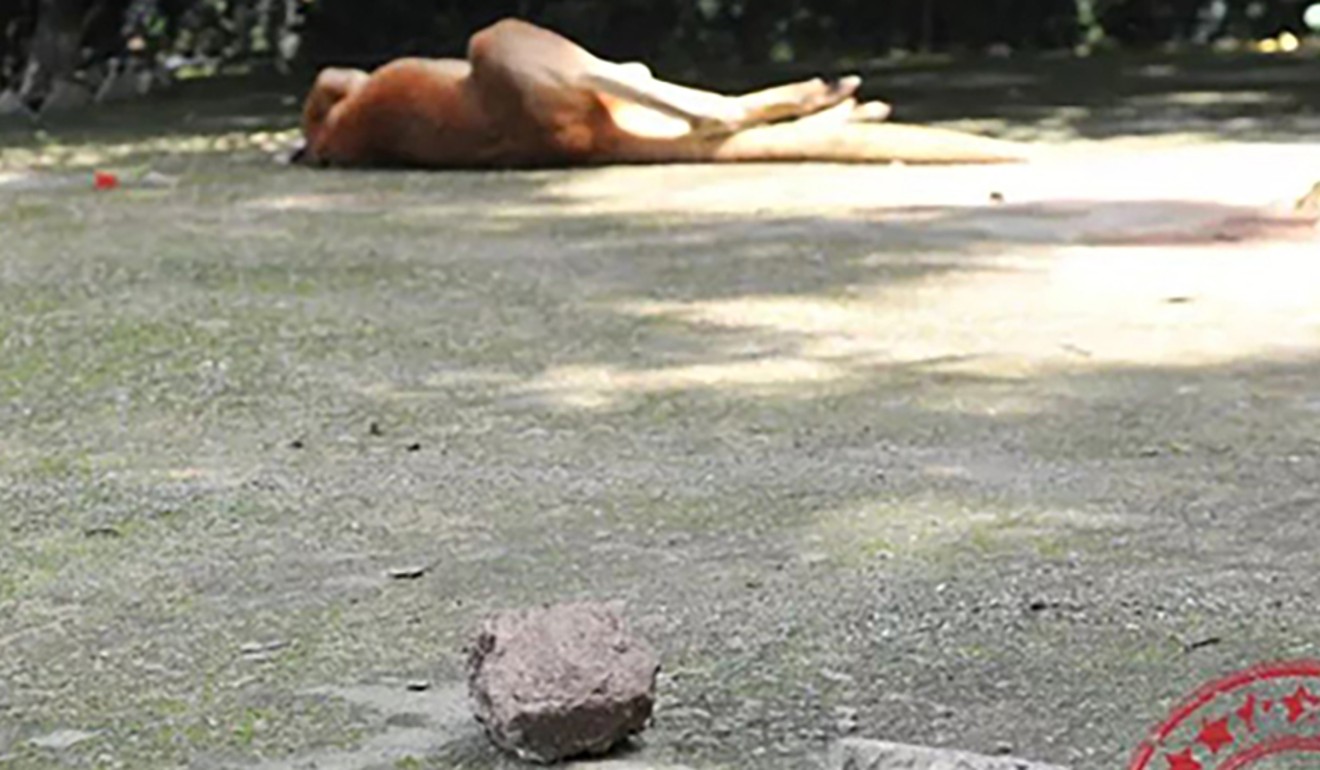
In April last year, a kangaroo died from its injuries at Fuzhou Zoo in Fujian province after visitors threw bricks and concrete at it. Photo: Sina.cn

The report quoted the person who shot the video as saying the culprits threw objects to “wake the panda up”.

On Weibo, Beijing Zoo assured panda lovers that Meng Da was unhurt and unruffled by the stone-throwing. The zoo promised to improve security and inspections at the panda enclosure.

Meanwhile, on social media there were calls for better protection of China’s national symbol in zoos. “How dare they hurt our lovable national treasure?” one Weibo user wrote.

Chinese tourists who threw rocks at panda blacklisted from nature reserve
“The zoo should build a glass wall to protect the panda,” another said. “Those tourists should be blacklisted and punished.”

In July last year, visitors to a reserve in Foping county in Hanzhong, Shaanxi province, were asked to leave and blacklisted after throwing stones at a panda, state broadcaster CCTV reported.

Chinese tourists kill kangaroo, hurling bricks to make it hop

That followed an incident in April last year, when a 12-year-old kangaroo in Fuzhou Zoo, Fujian province, was fatally injured after visitors hurled bricks and chunks of concrete at it in an attempt to make it hop.

Threatening or injuring zoo and park animals can result in a fine of 100 yuan (US$15) and offenders may face criminal charges under Beijing municipal law.

Source: SCMP

Law of Unintended Consequences

continuously updated blog about China & India

ChiaHou's Book Reviews

continuously updated blog about China & India

What's wrong with the world; and its economy

continuously updated blog about China & India