Archive for ‘Gold’

23/10/2019

China could be first country to exploit deep sea minerals

  • International rules on seabed mining set for approval in 2020, with China most likely to lead the race, UN body says
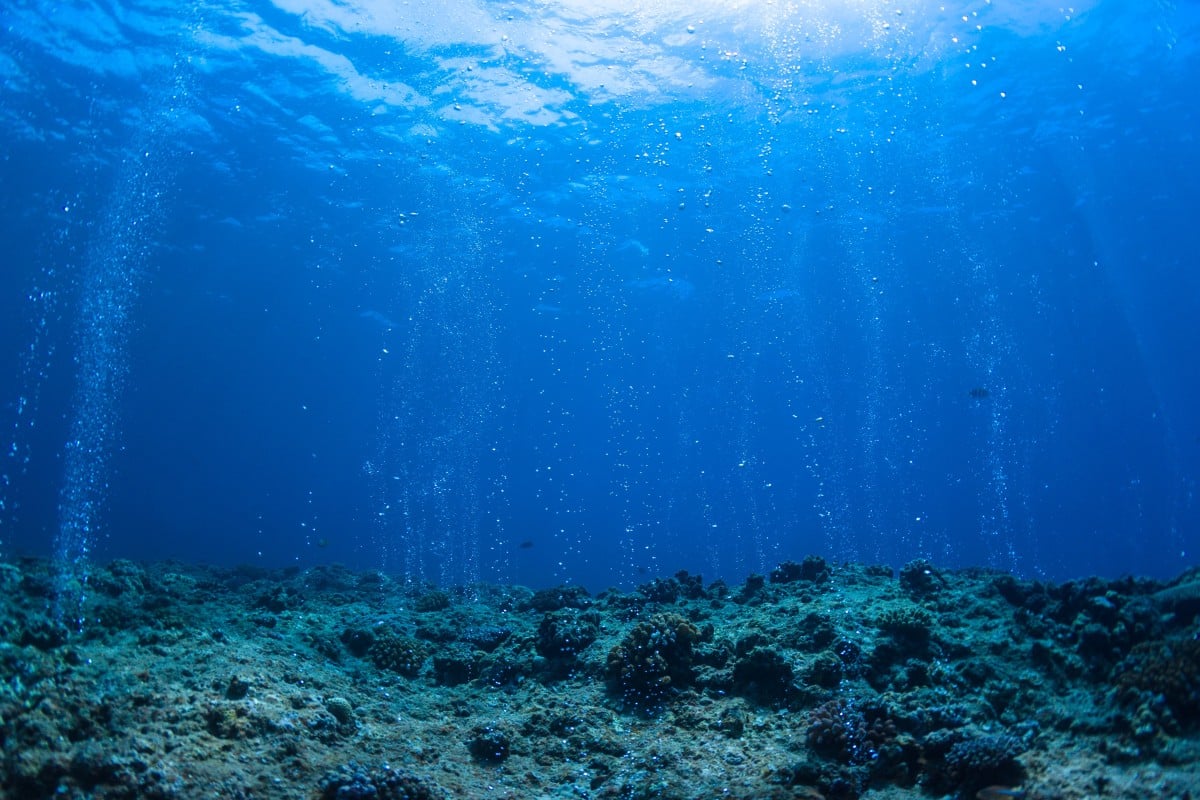
Governments, research institutions and commercial entities have already signed contracts for the exploration phase to extract minerals from the seabed, with China holding the most. Photo: Shutterstock

China is in pole position for the global race to start deep sea mining operations to extract valuable minerals used in smartphones and electric car batteries from the seabed.

The head of the International Seabed Authority (ISA) said China was likely to become the first country in the world to start mining seabed minerals if the international rules for exploitation were approved next year.

The ISA has already signed 30 contracts with governments, research institutions and commercial entities for exploration phase, with China holding the most, five contracts.

The body, which was established to manage the seabed resources by the United Nations Convention on the Law of the Sea (UNCLOS), is aiming to adopt seabed mineral exploitation rules by July 2020.

As China leads the hunt for deep-sea minerals, environmental concerns surface

“I do believe that China could easily be among the first (to start exploitation),” said Michael Lodge, ISA general secretary, who visited China last week.

“The demand for minerals is enormous and increasing, there is no doubt about the market.”

There is also interest from European countries including Belgium, Britain, Germany and Poland, as well as from the Middle East.

The quest to exploit seabed minerals – such as polymetallic nodules containing nickel, copper, cobalt and manganese – is driven by demand for smartphones and electric car batteries, and the need to diversify supply.

However, no one has yet shown that deep sea mining can be cost effective and some non-governmental organisations have questioned whether it would be possible to reach a deal on exploitation rules next year.

“I think, it’s pretty good. I think the current draft is largely complete,” Lodge said, when asked about prospects of adopting the rules by next July.

One of the issues yet to be agreed is proportionate financial payments to the Jamaica-based ISA for subsea mineral exploitation outside national waters.

“We are looking at ad valorem royalty that would be based on the value of the ore at a point of extraction … The middle range is 4 per cent to 6 per cent ad valorem royalty, potentially increasing over time,” Lodge said.

New iPhone models to use recycled rare earths, Apple says

If the rules are approved, it could take about two to three years to obtain permits to start deep sea mining under the current draft, Lodge said.

Canadian Nautilus Minerals had tried to mine underwater mounds for copper and gold in the national waters off Papua New Guinea, but ran out of money and had to file for creditor protection earlier this year.

This has not deterred others, such as Global Sea Mineral Resources (GSR), a unit of Belgian group DEME, and Canada’s DeepGreen, to continue technology tests and research.

In July, Greenpeace called for an immediate moratorium on deep sea mining to learn more about its potential impact on deep sea ecosystems, but the ISA has rejected such a proposal.

Source: SCMP

07/10/2019

Xinhua Headlines: China achieves best world championships results in 20 years over National Day holiday

The Chinese legion at the World Athletics Championships celebrated the 70th anniversary of the founding of the People’s Republic of China in style — staging their best performance at the world championships in 20 years in Doha.

By Sportswriters Ma Xiangfei, Wu Junkuan and Liu Ning

DOHA, Oct. 6 (Xinhua) — For the first time in history, the World Athletics Championships spanned almost the entirety of China’s National Day holiday.

More coincidentally, the year 2019 is the 70th anniversary of the founding of the People’s Republic of China, which gave added meaning to the Chinese delegation’s quest in Doha.

And the Chinese legion celebrated the holiday in style — staging the country’s best performance at the 10-day world championships in 20 years with three gold, three silver and three bronze medals.

“The race had a special meaning for me because it was held just before China’s National Day,” said former world record holder Liang Rui, who led a one-two finish for China in the women’s 50-kilometer race walk.

“This victory is a birthday gift from me for my homeland,” she said after finishing the race at dawn on September 29.

Liang Rui of China celebrates after the women’s 50km race walk at the 2019 IAAF World Championships in Doha, Qatar, Sept. 29, 2019. (Xinhua/Jia Yuchen)

At the same time, many Chinese back home were busy preparing for a huge nationwide celebration on October 1 in a festival atmosphere similar to that of the traditional Chinese Lunar New Year.

One day later, when China was counting down to a grand military parade and mass pageantry at Beijing’s iconic Tian’anmen square, Olympic gold medalist Liu Hong and her teammates Qieyang Shijie and Yang Liujing swept the 20km race walk podium in Doha.

“Even before we came here, the team was confident of retaining the 20km title before the National Day, and the only question was who would win it. Every one of us wanted to win the gold medal, to pay tribute to our country,” said 32-year old Liu, who returned to action in early 2019 after more than two years of maternity leave.

“This is the third time I have won at the World Championships. I am very pleased that I won this time because tomorrow will be the 70th anniversary of the founding of the People’s Republic of China. Winning all three medals, this achievement is our gift to our motherland,” she said.

China’s Liu Hong (2nd L), Qieyang Shenjie (2nd R) and Yang Liujing (1st R) compete during the women’s 20km race walk final at the 2019 IAAF World Championships in Doha, Qatar, Sept. 29, 2019. (Xinhua/Wang Jingqiang)

Hours before first light was shed on a sleepless Beijing on October 1, Xie Zhenye had written a piece of athletics history when he became the first Chinese man ever to qualify for the 200m final at the world championships.

“Yes, I created some history. I did my best today and I am proud of myself, especially on this day,” said the 26-year-old, who qualified as the third fastest runner in the 200m semifinals.

Xie eventually finished seventh in the final on Tuesday night, when 6,000km away China was deep in sleep after the National Day culminated in spectacular firework displays in the heart of the capital city.

The Asian record holder said he took valuable experience from Doha, and already has his sights set on next year’s Tokyo Olympic Games.

“I believe I have gone through the most difficult process, running in the strongest heat group and in the inside lane in the final. I took this as a test and a learning opportunity for next year’s Olympics,” he said.

“Everyone in the team was trying to keep it steady this year because our bigger goal is Tokyo.”

China’s Xie Zhenye (R) competes during the men’s 200m final at the 2019 IAAF World Athletics Championships in Doha, Qatar, on Oct. 1, 2019. (Xinhua/Xu Suhui)

As the National Day celebrations drew to a close, many Chinese people began to enjoy their holiday by traveling around the country. In the first four days of the seven-day holiday, the country received a total of 542 million domestic tourists and recorded 452.63 billion yuan (63.6 billion U.S. dollars) in domestic tourism revenue.

Many people also elected to stay at home and relax, allowing them to watch the world championships and hear more good news from Doha.

Defending champion Gong Lijiao, competing in her seventh world championships, retained her shot put title on October 3. The 30-year-old held off a strong challenge from Jamaica’s Danniel Thomas-Dodd and produced four throws over 19m, grabbing the gold with a throw of 19.55m in the fourth round.

Despite her win, Gong was unsatisfied with her performance and promised to do better in Tokyo.

“I’m so happy to win but the result was well below my expectations,” said Gong, whose personal best is 20.43m.

“I worked out too much in the warm-up before the final and was dripping with sweat. So when the competition started, I felt like I was losing all my momentum, and the air conditioning in the stadium worked against me too,” she explained.

“This is a lesson for me and I will pay more attention to these details in Tokyo. My dream is obviously to win the title then,” said Gong, who already has a silver and a bronze from the Olympic Games.

China’s Gong Lijiao celebrates after winning the title of the women’s shot put final at the 2019 IAAF World Athletics Championships in Doha, Qatar, Oct. 3, 2019. (Xinhua/Wang Lili)

Liu Shiying and Lyu Huihui also brought home a silver and a bronze medal respectively in women’s javelin, although the color of the medal was not the right one for Lyu, a clear favorite before the world championships with a four-month winning streak across 12 competitions.

“I have already competed at two world championships before, winning a silver and a bronze, and I really wanted a gold this time,” she said.

Little did she know that the Chinese team’s achievements in Doha had already made their compatriots proud.

When the women’s 20km walk race medal ceremony was held on China’s National Day on October 1, 2014 Winter Olympic gold medalist Zhang Hong watched three Chinese flags fluttering on the big screen at the Khalifa International Stadium.

The scene could well have reminded her of her days as an athlete, when she raced to the 1,000m speed skating title in Sochi in 2014, becoming the first Chinese Olympic champion in this event.

“I was so proud when I heard the national anthem on October 1. Those athletes who saw the national flags raised in the competition are the best,” said the current International Olympic Committee (IOC) member.

Gold medalist Liu Hong (C) of China, silver medalist Qieyang Shenjie (L) of China and bronze medalist Yang Liujing of China pose for photos at the awarding ceremony of women’s 20km race walk during the 2019 IAAF World Athletics Championships in Doha, Qatar, Sept. 30, 2019. (Xinhua/Wang Jingqiang)

Zhang retired after the 2018 Winter Olympics and was elected to the Athlete’s Commission of the IOC. During her visit to Doha as a representative of the IOC, Zhang was informed that she was appointed to the Future Host Commission, which will explore, monitor and encourage interest in future Olympic Games, Olympic Winter Games and Youth Olympic Games.

After joining the IOC, Zhang said she could see her country from another perspective.

“After I became an IOC member, I came to know more about athletes from other countries and regions. I didn’t know how well we Chinese athletes are taken care of until I spoke to others,” she said.

Zhang’s career path could set an example for other Chinese athletes, as China’s top sprinter Su Bingtian was nominated as one of the 15 candidates for the six available seats in the IAAF Athletes’ Commission.

“I met him in Doha the other day and gave him my encouragement. I hope he can be elected,” Zhang said.

Source: Xinhua

08/07/2019

Seven Silk Road destinations, from China to Italy: towns that grew rich on trade

  • Settlements along the route linking Europe and Asia thrived by providing accommodation and services for countless traders
  • Formally established during the Han dynasty, it was a 19th-century German geographer who coined the term Silk Road
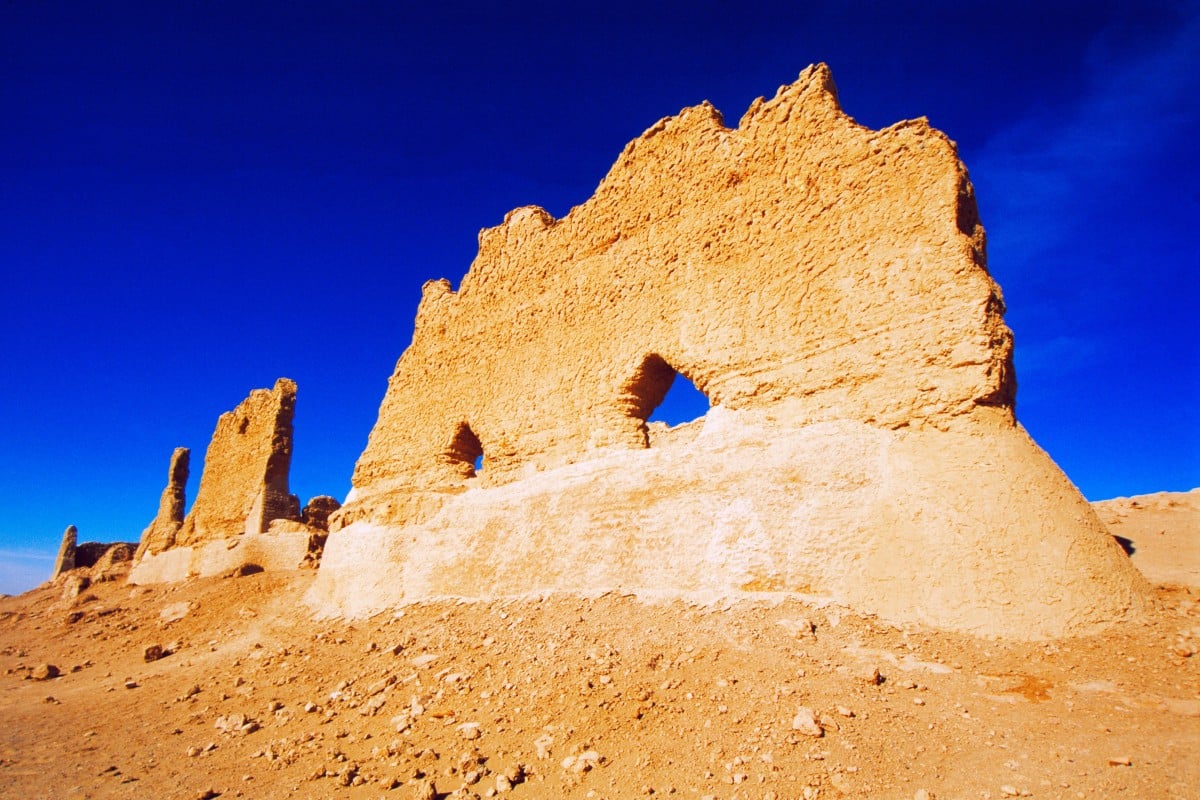
The ruins of a fortified gatehouse and cus­toms post at Yunmenguan Pass, in China’s Gansu province. Photo: Alamy
We have a German geographer, cartographer and explorer to thank for the name of the world’s most famous network of transconti­nental trade routes.
Formally established during the Han dynasty, in the first and second centuries BC, it wasn’t until 1877 that Ferdinand von Richthofen coined the term Silk Road (historians increasingly favour the collective term Silk Routes).
The movement of merchandise between China and Europe had been taking place long before the Han arrived on the scene but it was they who employed troops to keep the roads safe from marauding nomads.
Commerce flourished and goods as varied as carpets and camels, glassware and gold, spices and slaves were traded; as were horses, weapons and armour.
Merchants also moved medicines but they were no match for the bubonic plague, which worked its way west along the Silk Road before devastating huge swathes of 14th century Europe.
What follows are some of the countless kingdoms, territories, (modern-day) nations and cities that grew rich on the proceeds of trade, taxes and tolls.

China

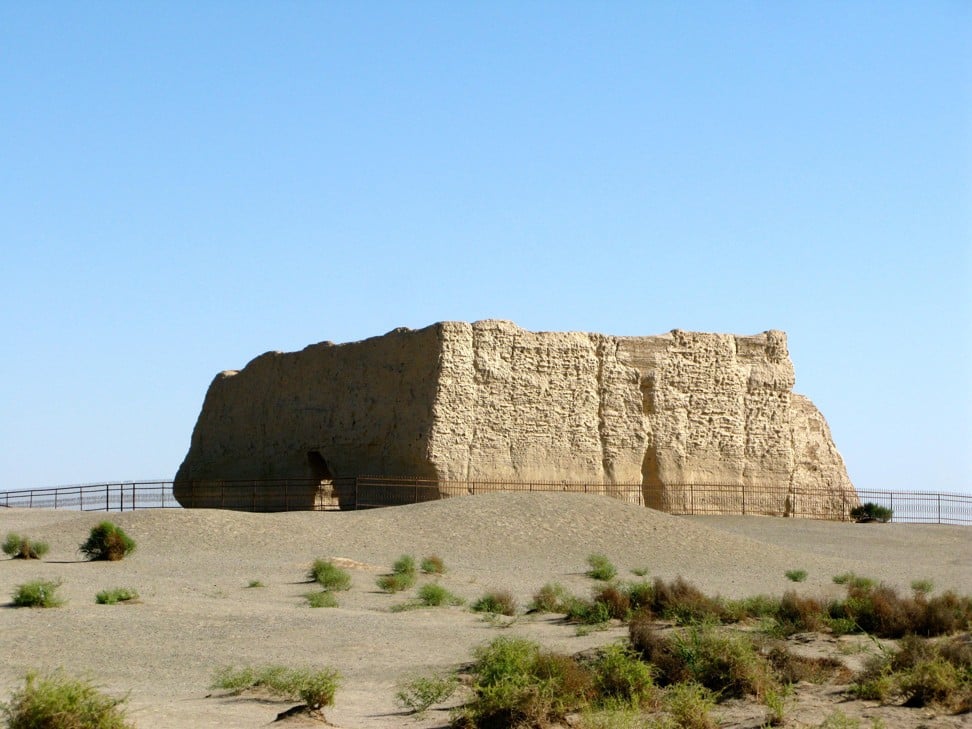
A watchtower made of rammed earth at Dunhuang, a desert outpost at the crossroads of two major Silk Road routes in China’s northwestern Gansu province. Photo: Alamy

Marco Polo worked in the Mongol capital, Khanbaliq (today’s Beijing), and was struck by the level of mercantile activity.

The Venetian gap-year pioneer wrote, “Every day more than a thousand carts loaded with silk enter the city, for a great deal of cloth of gold and silk is woven here.”

Light, easy to transport items such as paper and tea provided Silk Road traders with rich pickings, but it was China’s monopoly on the luxurious shimmering fabric that guaranteed huge profits.

So much so that sneaking silk worms out of the empire was punishable by death.

The desert outpost of Dunhuang found itself at the crossroads of two major Silk Road trade arteries, one leading west through the Pamir Mountains to Central Asia and another south to India.

Built into the Great Wall at nearby Yunmenguan are the ruins of a fortified gatehouse and cus­toms post, which controlled the movement of Silk Road caravans.

Also near Dunhuang, the Mogao Caves contain one of the richest collections of Buddhist art treasures any­where in the world, a legacy of the route to and from the subcontinent.

Afghanistan

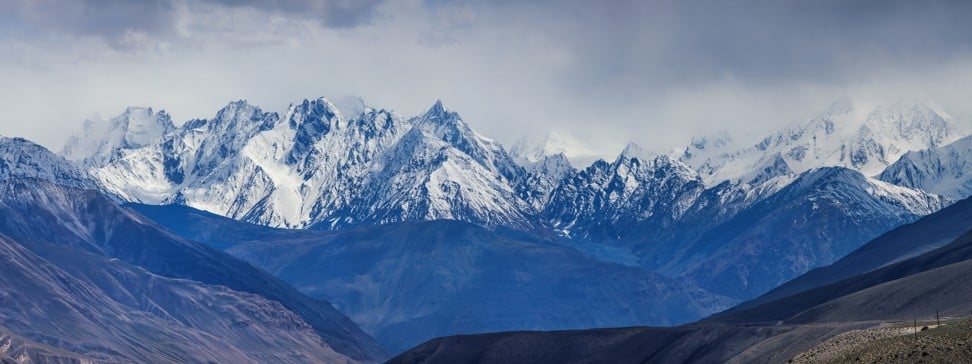
Afghanistan's mountainous terrain was an inescapable part of the Silk Road, until maritime technologies would become the area's undoing. Photo: Shutterstock
Afghanistan’s mountainous terrain was an inescapable part of the Silk Road, until maritime technologies would become the area’s undoing. Photo: Shutterstock

For merchants and middlemen hauling goods through Central Asia, there was no way of bypassing the mountainous lands we know today as Afghanistan.

Evidence of trade can be traced back to long before the Silk Road – locally mined lapis lazuli stones somehow found their way to ancient Egypt, and into Tutankhamun’s funeral mask, created in 1323BC.

Jagged peaks, rough roads in Tajikistan, roof of the world

Besides mercan­tile exchange, the caravan routes were responsible for the sharing of ideas and Afghanistan was a major beneficiary. Art, philosophy, language, science, food, architecture and technology were all exchanged, along with commercial goods.

In fact, maritime technology would eventually be the area’s undoing. By the 15th century, it had become cheaper and more convenient to transport cargo by sea – a far from ideal development for a landlocked region.

Iran

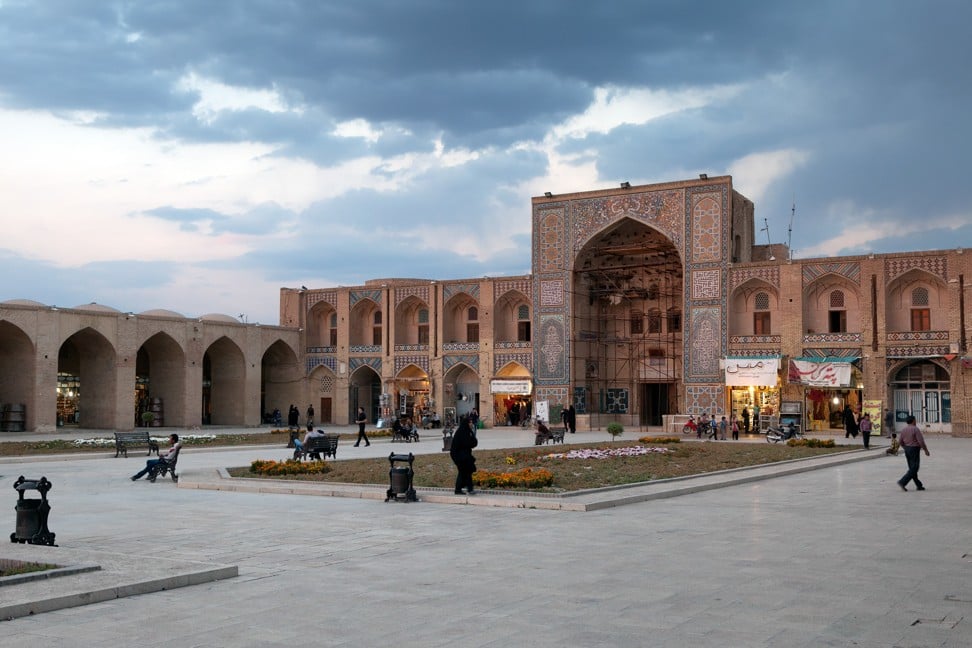
The Ganjali Khan Complex, in Iran. Photo: Shutterstock

Thanks to the Silk Road and the routes that preceded it, the northern Mesopotamian region (present-day Iran) became China’s closest trading partner. Traders rarely journeyed the entire length of the trail, however.

Merchandise was passed along by middlemen who each travelled part of the way and overnighted in caravan­serai, forti­fied inns that provided accom­mo­dation, storerooms for goods and space for pack animals.

The good, bad and ugly sides to visiting Chernobyl and Kiev

With so many wheeler-dealers gathering in one place, the hostelries developed into ad hoc marketplaces.

Marco Polo writes of the Persian kingdom of Kerman, where craftsmen made saddles, bridles, spurs and “arms of every kind”.

Today, in the centre of Kerman, the former caravanserai building forms part of the Ganjali Khan Complex, which incorporates a bazaar, bathhouse and mosque.

Uzbekistan

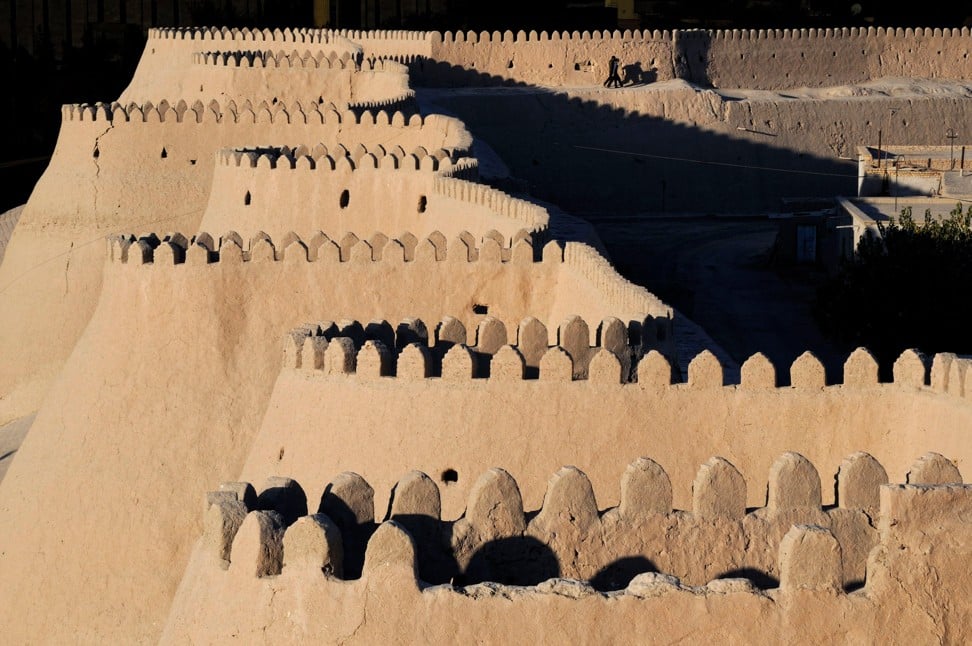
A fort in Khiva, Uzbekistan. Photo: Alamy

The double-landlocked country boasts some of the Silk Road’s most fabled destinations. Forts, such as the one still standing at Khiva, were built to protect traders from bandits; in fact, the city is so well-preserved, it is known as the Museum under the Sky.

The name Samarkand is also deeply entangled with the history of the Silk Road.

The earliest evidence of silk being used outside China can be traced to Bactria, now part of modern Uzbekistan, where four graves from around 1500BC-1200BC contained skeletons wrapped in garments made from the fabric.

Three thousand years later, silk weaving and the production and trade of textiles remain one of Samarkand’s major industries.

Georgia

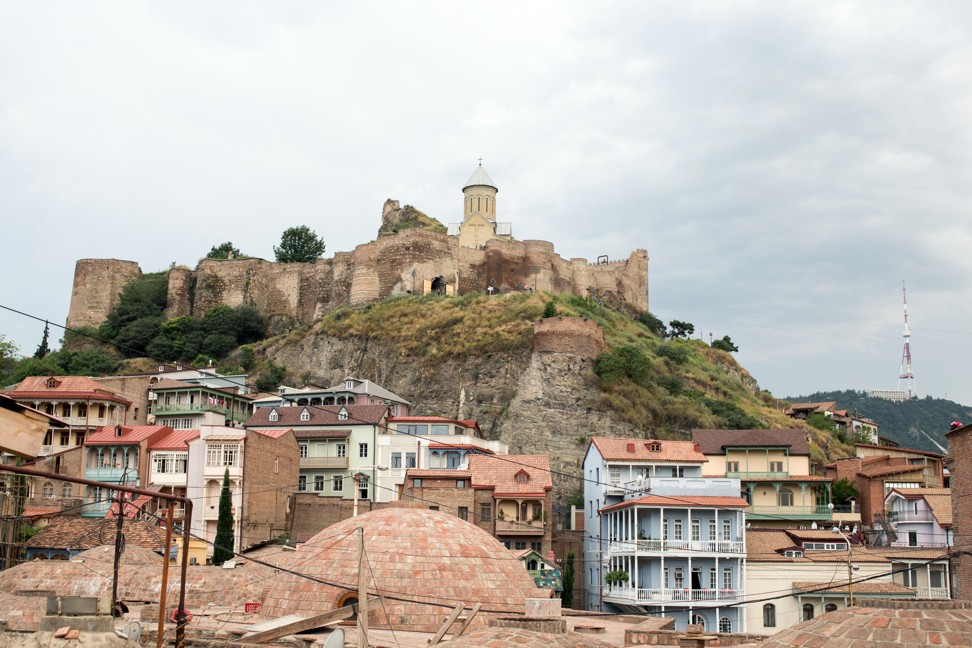
A street in old town of Tbilisi, Georgia. Photo: Alamy

Security issues in Persia led to the opening up of another branch of the legendary trade route and the first caravan loaded with silk made its way across Georgia in AD568.

Marco Polo referred to the weaving of raw silk in “a very large and fine city called Tbilisi”.

Today, the capital has shaken off the Soviet shackles and is on the cusp of going viral.

Travellers lap up the city’s monaster­ies, walled fortresses and 1,000-year-old churches before heading up the Georgian Military Highway to stay in villages nestling in the soaring Caucasus Mountains.

Public minibuses known as marshrutka labour into the foothills and although the vehicles can get cramped and uncomfortable, they beat travelling by camel.

Jordan

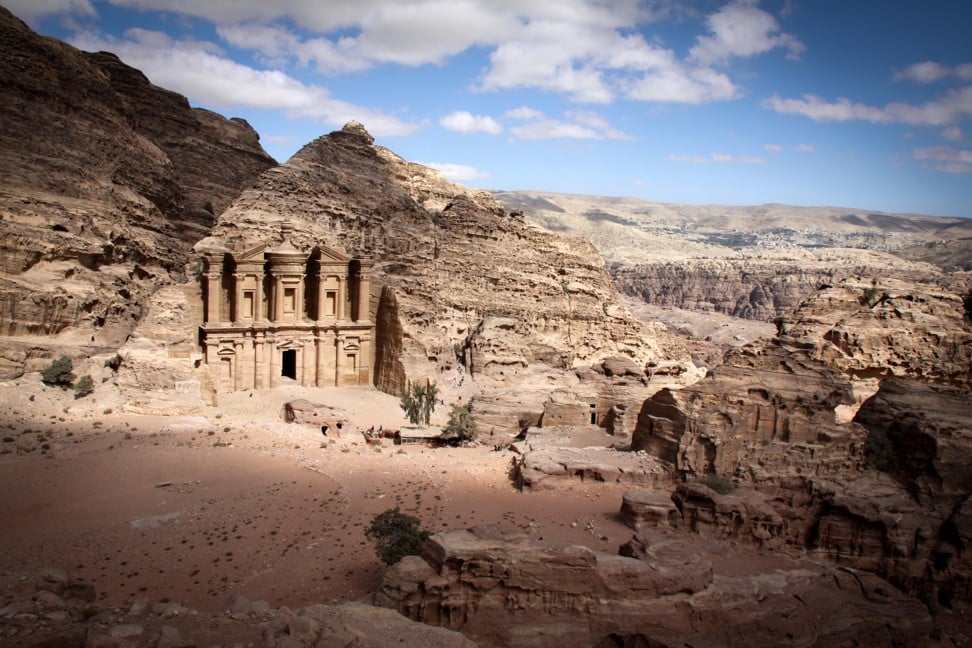
Petra, in Jordan. Photo: Alamy

The location of the Nabataean capital, Petra, wasn’t chosen by chance.

Savvy nomadic herders realised the site would make the perfect pit-stop at the confluence of several caravan trails, including a route to the north through Palmyra (in modern-day Syria), the Arabian peninsula to the south and Mediterranean ports to the west.

Huge payments in the form of taxes and protection money were collected – no wonder the most magnificent of the sand­stone city’s hand-carved buildings is called the Treasury.

The Red Rose City is still a gold mine – today’s tourists pay a hefty

US$70 fee to enter Petra

. The Nabataeans would no doubt approve.

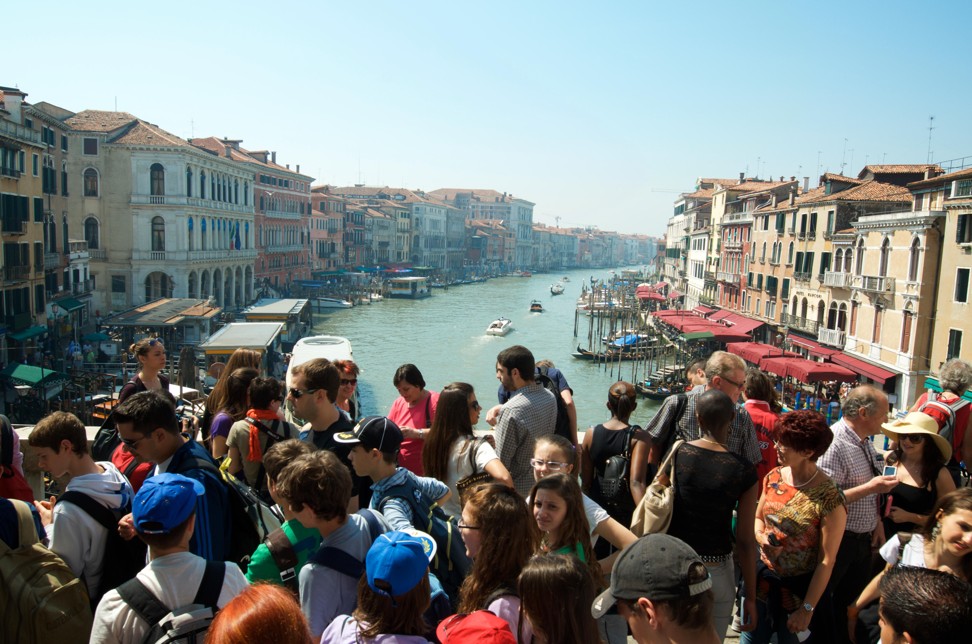
Venice

Tourists crowd onto Venice’s Rialto Bridge. Photo: Alamy

Trade enriched Venice beyond measure, helping shape the Adriatic entrepot into the floating marvel we see today.

Besides the well-documented flow of goods heading west, consignments of cotton, ivory, animal furs, grapevines and other goods passed through the strategically sited port on their way east.

Ironically, for a city built on trade and taxes, the biggest problem Venice faces today is visitors who don’t contribute enough to the local economy.

A lack of spending by millions of day-tripping tourists and cruise passengers who aren’t liable for nightly hotel taxes has prompted authorities to introduce a citywide access fee from January 2020.

Two thousand years ago, tariffs and tolls helped Venice develop and prosper. Now they’re needed to prevent its demise.

Source: SCMP

03/07/2019

Indeed! Gold found in garbage as Shanghai mandates sorting

SHANGHAI, July 2 (Xinhua) — Many Shanghai residents may be experiencing headaches as they face daily tests as to which piece of garbage goes in dry refuse and which goes in recyclable.

A man surnamed Liu, however, may not be that grumpy after all because he managed to retrieve 18 pieces of gold ornaments from his trash.

The Shanghai police told Xinhua that a resident surnamed Liu, who lives in the Putuo District of the city, threw a cardboard carton away a few days ago. He sorted it correctly by putting it into a waste bin labeled recyclable, but he received a call about his trash from the local residents’ committee.

Xun Siwei, a garbage collector in the neighborhood, found that the carton contained a plastic bag full of golden accessories.

“I looked at the gold, and my heartbeat went up. They are gold, but I know they belong to someone else. I can not keep them,” said Xun.

Xun reported his finding to the police on June 28. Police checked the accessories and found a name and birth date inscribed onto a golden badge. Based on the details, police contacted the residential neighborhood Liu lives in and got in touch with him.

Liu said had been searching for the gold for three years, but failed to locate it.

“Getting these valuables back is the boon of garbage sorting,” he said. “My family will spare no effort in carrying out the garbage sorting campaign.”

Shanghai is widely promoting a mandatory garbage sorting system, which requires residents to throw away garbage at a fixed time and place. A disposal site is designated for every 300 to 500 households, where volunteers carefully check whether the household waste is accurately classified.

The city enacted a set of regulations on household garbage sorting and recycling starting Monday, which requires residents to sort household garbage into four categories: dry refuse, wet trash, recyclable waste and hazardous waste. Individuals who fail to sort garbage may be fined up to 200 yuan (about 29 U.S. dollars).

Mr Liu’s gold being retrieved has gathered interested commentators online. “There is really hidden gold in your garbage,” one netizen exclaimed.

“Have faith in garbage sorting, it will bring you good luck,” anther netizen commented.

Source: Xinhua

Law of Unintended Consequences

continuously updated blog about China & India

ChiaHou's Book Reviews

continuously updated blog about China & India

What's wrong with the world; and its economy

continuously updated blog about China & India