Archive for ‘Google’

20/05/2019

Huawei’s use of Android restricted by Google

Google has barred the world’s second biggest smartphone maker, Huawei, from some updates to the Android operating system, dealing a blow to the Chinese company.

New designs of Huawei smartphones are set to lose access to some Google apps.

The move comes after the Trump administration added Huawei to a list of companies that American firms cannot trade with unless they have a licence.

Google said it was “complying with the order and reviewing the implications”.

Huawei said it would continue to provide security updates and after sales services to all existing Huawei and Honor smartphone and tablet products covering those have been sold or still in stock globally.

“We will continue to build a safe and sustainable software ecosystem, in order to provide the best experience for all users globally,” it added.
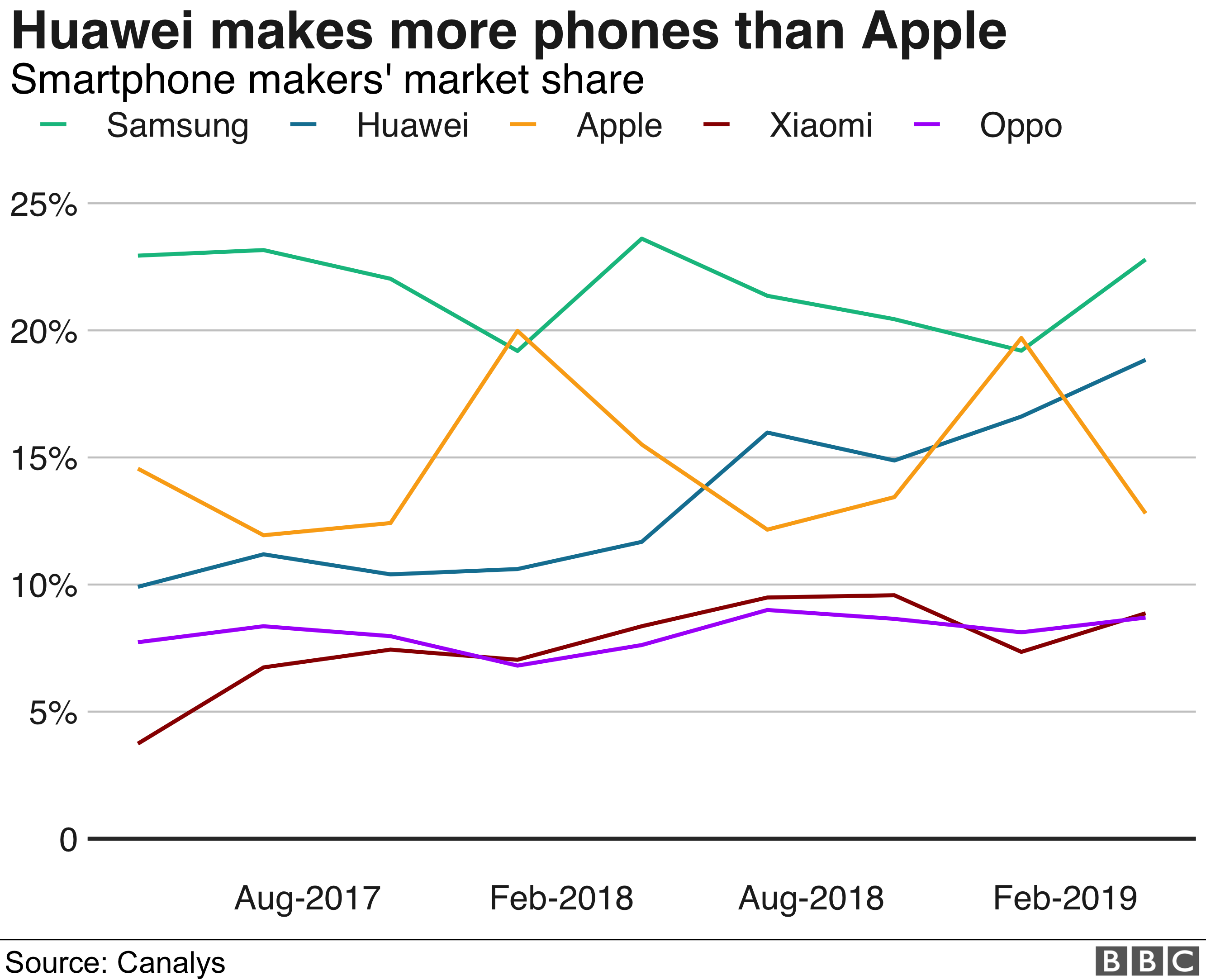
Mobile market shares

What does this mean for Huawei users?

Existing Huawei smartphone users will be able to update apps and push through security fixes, as well as update Google Play services.

But when Google launches the next version of Android later this year, it may not be available on Huawei devices.

Future Huawei devices may no longer have apps such as YouTube and Maps.

Huawei can still use the version of the Android operating system available through an open source licence.

Ben Wood, from the CCS Insight consultancy, said the move by Google would have “big implications for Huawei’s consumer business”.

What can Huawei do about this?

Last Wednesday, the Trump administration added Huawei to its “entity list“, which bans the company from acquiring technology from US firms without government approval.

In his first comments since the firm was placed on the list, Huawei chief executive Ren Zhengfei told Japanese media on Saturday: “We have already been preparing for this.”

He said the firm, which buys about $67bn (£52.6bn) worth of components each year according to the Nikkei business newspaper, would push ahead with developing its own parts.

Huawei faces a growing backlash from Western countries, led by the US, over possible risks posed by using its products in next-generation 5G mobile networks.

Several countries have raised concerns that Huawei equipment could be used by China for surveillance, allegations the company has vehemently denied.

Huawei has said its work does not pose any threats and that it is independent from the Chinese government.

However, some countries have blocked telecoms companies from using Huawei products in 5G mobile networks.

So far the UK has held back from any formal ban.

“Huawei has been working hard on developing its own App Gallery and other software assets in a similar manner to its work on chipset solutions. There is little doubt these efforts are part of its desire to control its own destiny,” said Mr Wood.

Media caption We explain the controversy around Huawei’s 5G tech – using castles

Short-term damage for Huawei?

By Leo Kelion, BBC Technology desk editor

In the short term, this could be very damaging for Huawei in the West.

Smartphone shoppers would not want an Android phone that lacked access to Google’s Play Store, its virtual assistant or security updates, assuming these are among the services that would be pulled.

In the longer term, though, this might give smartphone vendors in general a reason to seriously consider the need for a viable alternative to Google’s operating system, particularly at a time that the search giant is trying to push its own Pixel brand at their expense.

As far as Huawei is concerned, it appears to have prepared for the eventuality of being cut off from American know-how.

Its smartphones are already powered by its own proprietary processors, and earlier this year its consumer devices chief told German newspaper Die Welt that “we have prepared our own operating systems – that’s our plan B”.

Even so, this move could knock its ambition to overtake Samsung and become the bestselling smartphone brand in 2020 seriously off course.


What about the US-China trade war?

The latest move against Huawei marks an escalation in tensions between the firm and the US.

The company is facing almost two dozen criminal charges filed by US authorities. Washington is also seeking the extradition of Huawei executive Meng Wangzou from Canada, where she was arrested in December at the behest of American officials.

It comes as trade tensions between the US and China also appear to be rising.

The world’s two largest economies have been locked in a bruising trade battle for the past year that has seen tariffs imposed on billions of dollars worth of one another’s goods.

Earlier this month, Washington more than doubled tariffs on $200bn of Chinese goods, prompting Beijing to retaliate with its own tariff hikes on US products.

The move surprised some – and rattled global markets – as the situation had seemed to be nearing a conclusion.

The US-China trade war has weighed on the global economy over the past year and created uncertainty for businesses and consumers.

Source: The BBC
11/04/2019

China urges relevant countries to offer fair business environment for enterprises

BEIJING, April 10 (Xinhua) — China on Wednesday urged relevant countries to offer a fair, just and non-discriminatory business environment for enterprises of various countries, including Chinese ones.

Foreign Ministry spokesperson Lu Kang made the remarks at a routine press briefing when asked whether Australia applies double standards on the cybersecurity issue.

Recently, a number of Australian media reported that relevant Australian law mandated communication enterprises install “backdoors” for the Australian government. Google, Apple, Amazon and other technology companies have expressed serious concern about the act, saying it threatens cybersecurity in Australia and the world.

While the Australian side previously claimed that the country does not want any company in its communications networks that have an obligation to any other government. For this reason, Australia banned Huawei from the 5G telecommunications network.

Noting China has been closely following the relevant developments, Lu said the communication market and international cooperation will be seriously affected when it forces enterprises to install “backdoors” by legislation, which builds its own security and interests on the basis of violating other countries’ security and the privacy of their citizens.

“As you can see, the business communities have expressed serious concern about this,” Lu said.

A puzzling thing is that on the one hand, relevant countries use cybersecurity and sensationalize the so-called “security threat” of other countries or enterprises with trumped-up charges. On the other hand, they are doing things that endanger cybersecurity, Lu said.

“I am just as interested as you are in what the Australian government would say,” said the spokesperson.

Emphasizing that China has always attached great importance to and firmly maintained cybersecurity, Lu said that the Chinese side is willing to continue to actively participate in international cooperation in cybersecurity and work with all parties to build a peaceful, secure, open, cooperative and orderly cyberspace.

Source: Xinhua

19/12/2018

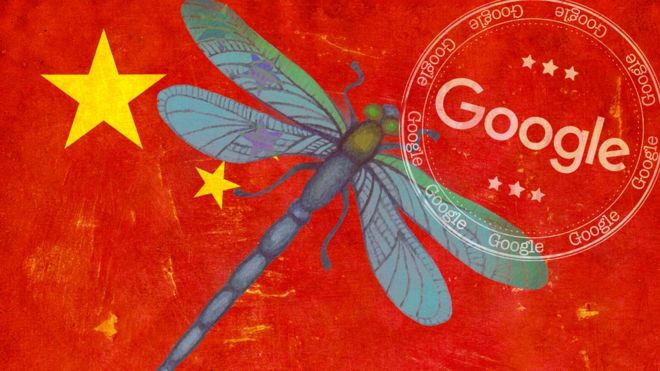
Google China: Has search firm put Project Dragonfly on hold?

China, Google, Project Dragonfly
Image captionGoogle’s plans for a Chinese search engine have reportedly halted

Google has reportedly “effectively ended” plans for a censored search engine in China.

The Intercept, which revealed the existence of Project Dragonfly in August, says Google has been “forced to shut down a data analysis system it was using” to feed the project.

And access to data “integral to Dragonfly… has been suspended for now, which has stopped progress”.

Google said it had no immediate plans to launch a Chinese search engine.

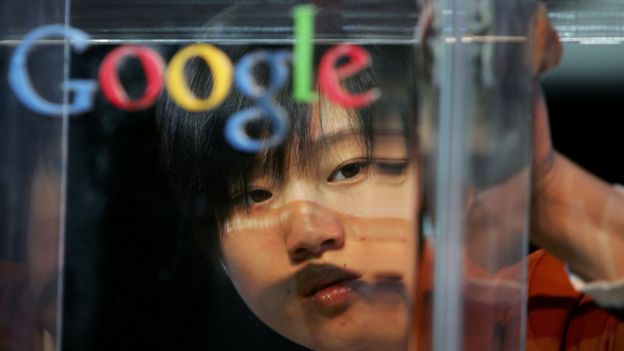
A Chinese woman's face appears behind a Google logoImage copyrightGETTY IMAGES
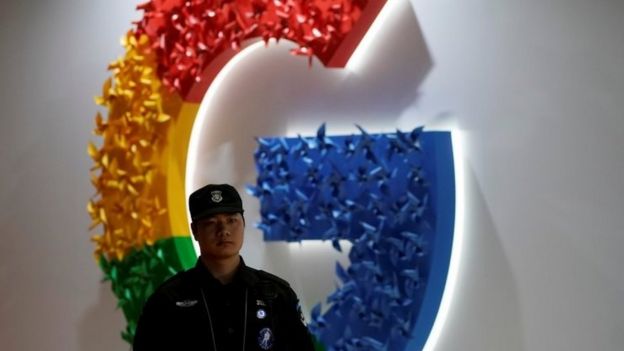
Image captionGoogle has faced protests about the search engine it was working on for China

What is The Intercept reporting?

Citing internal Google documents and inside sources, the Intercept says Project Dragonfly began in the spring of 2017 and accelerated in December after Google’s chief executive, Sundar Pichai, met a Chinese government official,

An Android app with versions called Maotai and Longfei were developed and could be launched within nine months if Chinese government approved, it says.

Using a tool called BeaconTower to check if users’ search queries on Beijing-based website 265.com would fall foul of China’s censors, Google engineers came up with a list of thousands of banned websites, including the BBC and Wikipedia, which could then be purged from the Dragonfly search engine.

But members of Google’s privacy team confronted the Dragonfly project managers, saying the system had “been kept secret from them”.

And after several discussions, “Google engineers were told that they were no longer permitted to continue using the 265.com data to help develop Dragonfly, which has since had severe consequences for the project”.

China, Google, Project DragonflyImage copyrightREUTERS
Image captionGoogle’s Project Dragonfly is reportedly on hold in China

What are the issues with launching a search engine in China?

The so-called great firewall of China is notorious for not allowing its citizens free access to all the content available on the internet.

China has in the past two years imposed increasingly strict rules on foreign companies, including new censorship restrictions.

Some Western sites are blocked outright, including Facebook, Twitter and Instagram.

Certain topics such as the Tiananmen Square protests in 1989 are also completely blocked.

References to political opposition, dissidents and anti-Communist activity are also banned as are those to free speech and sex.

Any search engine in China would have to comply with the Chinese government’s strict rules on censorship.

Presentational grey line

Analysis

by Dave Lee, BBC North America technology reporter

Even with this news today, I don’t think Google’s ambitions in China are over – just stalled.

Sundar Pichai has clearly decided that China is too important (and lucrative) a market to pass up and so, while Dragonfly has met a significant bump in the road – thanks to its own privacy team, the company will almost certainly find a new approach to serving the Chinese market.

But in doing so it might do serious harm to its brand.

Now more than ever, US technology companies are under pressure to act in the interests of both America and Americans.

Bowing to Beijing’s demands with whatever Project Dragonfly morphs into will be a stain on Google’s principles and its reputation.

Presentational grey line

How advanced were the plans?

We learned from Mr Pichai’s recent appearance on Capitol Hill that more than 100 engineers had been working on the project at one point in time.

When quizzed by lawmakers on the plans, he said: “Right now, we have no plans to launch in China.”

He said all efforts were “internal” and did not currently involve discussions with the Chinese government.

In response to further questions, Mr Pichai said the company would be “fully transparent” with politicians if it released a search service in China.

The BBC understands Project Dragonfly never reached the point of having a full and final privacy review by Google.

A letter from more than 300 Google employees in November, co-signed by Amnesty International, asked the company to halt the project entirely.

China, Google, Project Dragonfly
Image captionGoogle’s Project Dragonfly is reportedly on hold in China

Why does Google want to get back into China?

Quite simply, China is the biggest internet market in the world.

Google launched a search engine in the authoritarian state in 2006, google.cn.

Google was compliant with the Chinese government’s censorship requirements at the time but the search company pulled the plug in 2010, citing increasing concerns about cyber-attacks on activists.

Despite its main search engine and YouTube video platform being blocked, Google still has more than 700 employees and three offices in China and has been developing alternative projects.

Its Google Translate app for smartphones was approved in China last year.

It also invested in Chinese live-stream game platform Chushou in January and has launched an artificial intelligence game on the social media app WeChat.

12/12/2018

Google has ‘no plans’ to launch Chinese search engine – CEO

WASHINGTON (Reuters) – Google has “no plans” to relaunch a search engine in China though it is continuing to study the idea, Chief Executive Sundar Pichai told a U.S. congressional panel on Tuesday amid increased scrutiny of big tech firms.

Lawmakers and Google employees have raised concerns the company would comply with China’s internet censorship and surveillance policies if it re-enters the Asian nation’s search engine market.

Google’s main search platform has been blocked in China since 2010, but the Alphabet Inc unit has been attempting to make new inroads into the country, which has the world’s largest number of smartphone users.

“Right now, there are no plans to launch search in China,” Pichai told the U.S. House of Representatives Judiciary Committee.

But he added that internally Google has “developed and looked at what search could look like. We’ve had the project underway for a while. At one point, we’ve had over 100 people working on it is my understanding.”

Pichai said there are no current discussions with the Chinese government. He vowed that he would be “fully transparent” with policymakers if the company brings search products to China.

In a letter in August to U.S. lawmakers, Pichai said providing such a search engine would give “broad benefits” to China but that it was unclear whether Google could launch the service there.

A Chinese government official, speaking on the condition of anonymity, told Reuters last month that it was unlikely Google would get clearance to launch a search service in 2019.

Pichai did not say what steps Google would take to comply with Chinese laws if it re-entered the market.

Under questioning from Democratic Representative David Cicilline, Pichai said he would “happy to engage” to discuss legislation that would empower the Federal Trade Commission to address discriminatory conduct online.

Cicilline told Pichai it was “hard for me to imagine that you could operate in the Chinese market under the current government framework and maintain a commitment to universal values, such as freedom of expression and personal privacy.”

The company’s rivals in shopping and travel searches have long complained about being demoted in Google search results.

Much of the House hearing focused on Republican concerns that Google’s search results are biased against conservatives and that the company had sought to influence the outcome of the 2016 presidential election.

Democrats rejected that claim as “fantasy,” and at least one said the search results highlighted more conservative voices.

Pichai said the search engine attempts to help people register to vote or find a polling place, but rejected assertions the company paid for Latino voters’ transportation to polls in some states.

“We don’t engage in partisan activities,” Pichai told the panel.

Law of Unintended Consequences

continuously updated blog about China & India

ChiaHou's Book Reviews

continuously updated blog about China & India

What's wrong with the world; and its economy

continuously updated blog about China & India