Archive for ‘Great Leap Forward’

01/10/2019

China anniversary: How the country became the world’s ‘economic miracle’

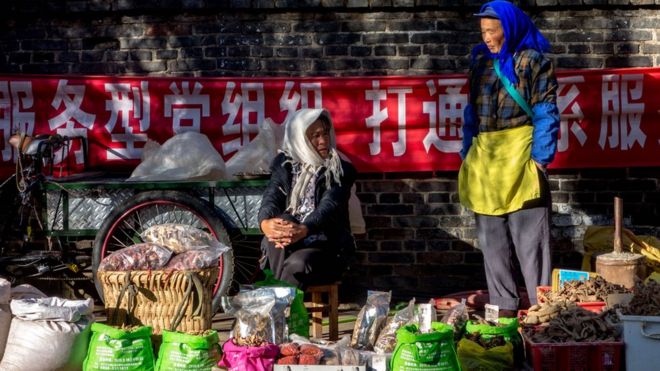
Local women sell produce in the market. Zhongyi market, located at the southern gate of Dayan ancient city, in Lijian, Yunnan Province in ChinaImage copyrightGETTY IMAGES

It took China less than 70 years to emerge from isolation and become one of the world’s greatest economic powers.

As the country celebrates the anniversary of the founding of the People’s Republic of China, we look back on how its transformation spread unprecedented wealth – and deepened inequality – across the Asian giant.

“When the Communist Party came into control of China it was very, very poor,” says DBS chief China economist Chris Leung.

“There were no trading partners, no diplomatic relationships, they were relying on self-sufficiency.”

Over the past 40 years, China has introduced a series of landmark market reforms to open up trade routes and investment flows, ultimately pulling hundreds of millions of people out of poverty.
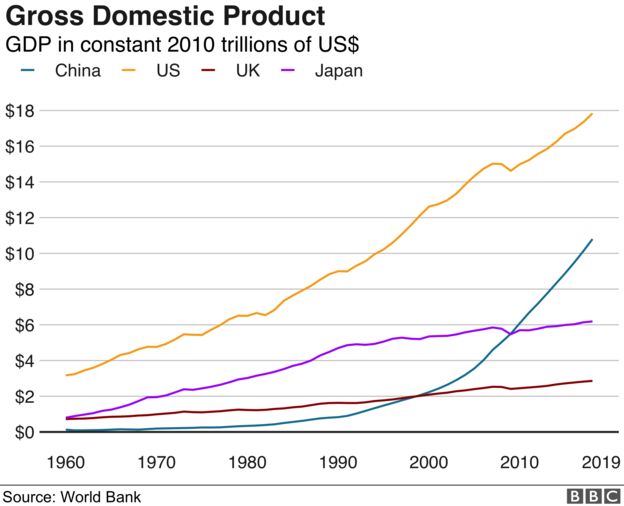
Chart showing gross domestic product of US, China, Japan and the UK

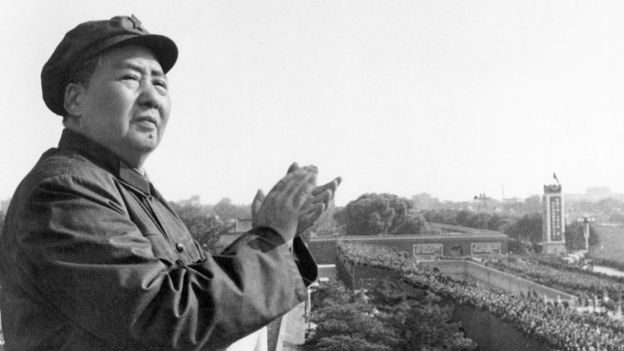
The 1950s had seen one of the biggest human disasters of the 20th Century. The Great Leap Forward was Mao Zedong’s attempt to rapidly industrialise China’s peasant economy, but it failed and 10-40 million people died between 1959-1961 – the most costly famine in human history.

This was followed by the economic disruption of the Cultural Revolution in the 1960s, a campaign which Mao launched to rid the Communist party of his rivals, but which ended up destroying much of the country’s social fabric.

‘Workshop of the world’

Yet after Mao’s death in 1976, reforms spearheaded by Deng Xiaoping began to reshape the economy. Peasants were granted rights to farm their own plots, improving living standards and easing food shortages.

The door was opened to foreign investment as the US and China re-established diplomatic ties in 1979. Eager to take advantage of cheap labour and low rent costs, money poured in.

“From the end of the 1970s onwards we’ve seen what is easily the most impressive economic miracle of any economy in history,” says David Mann, global chief economist at Standard Chartered Bank.

Through the 1990s, China began to clock rapid growth rates and joining the World Trade Organization in 2001 gave it another jolt. Trade barriers and tariffs with other countries were lowered and soon Chinese goods were everywhere.

“It became the workshop of the world,” Mr Mann says.
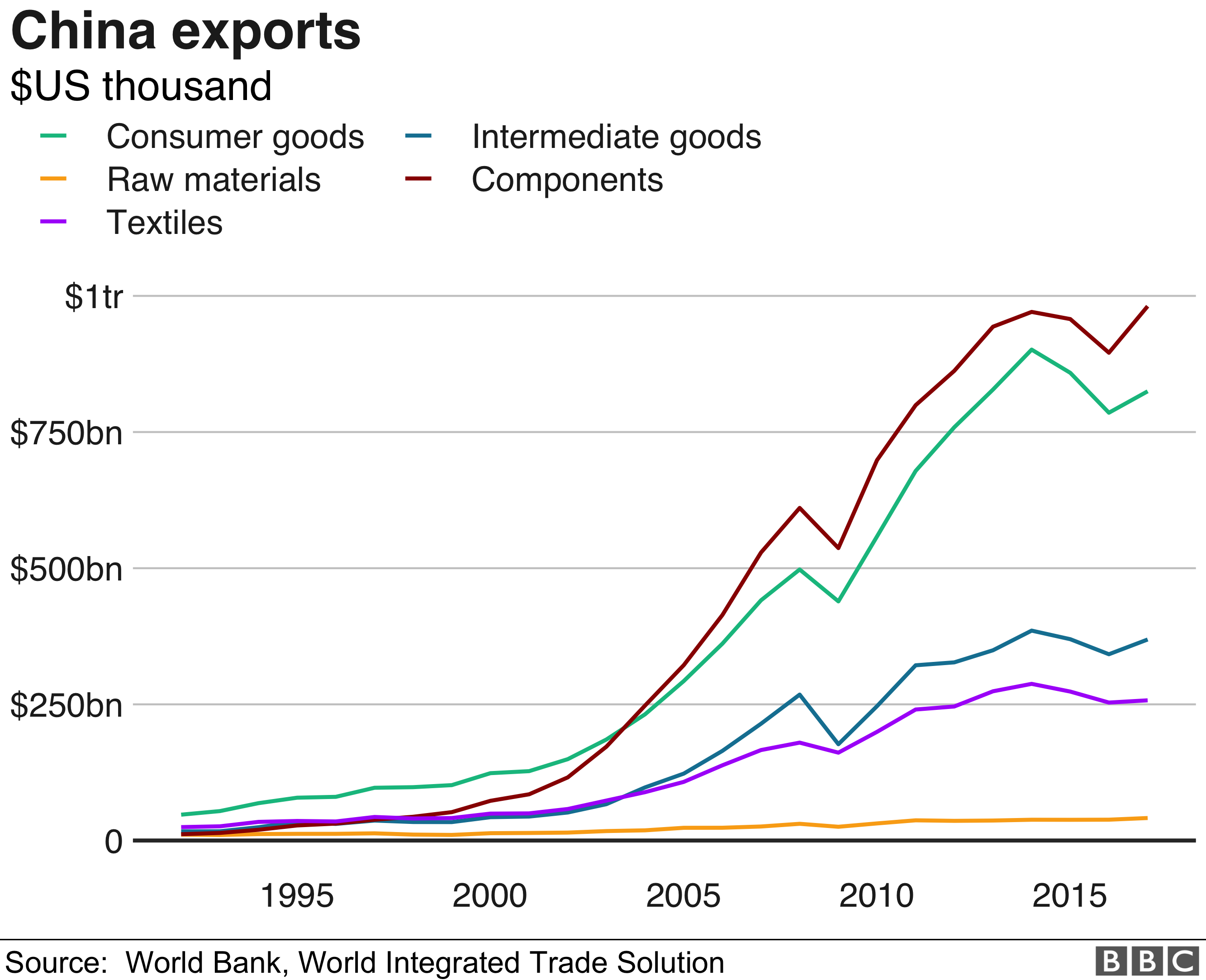
Chart showing China exports

Take these figures from the London School of Economics: in 1978, exports were $10bn (£8.1bn), less than 1% of world trade.

By 1985, they hit $25bn and a little under two decades later exports valued $4.3trn, making China the world’s largest trading nation in goods.

Poverty rates tumble

The economic reforms improved the fortunes of hundreds of millions of Chinese people.

The World Bank says more than 850 million people been lifted out of poverty, and the country is on track to eliminate absolute poverty by 2020.

At the same time, education rates have surged. Standard Chartered projects that by 2030, around 27% of China’s workforce will have a university education – that’s about the same as Germany today.
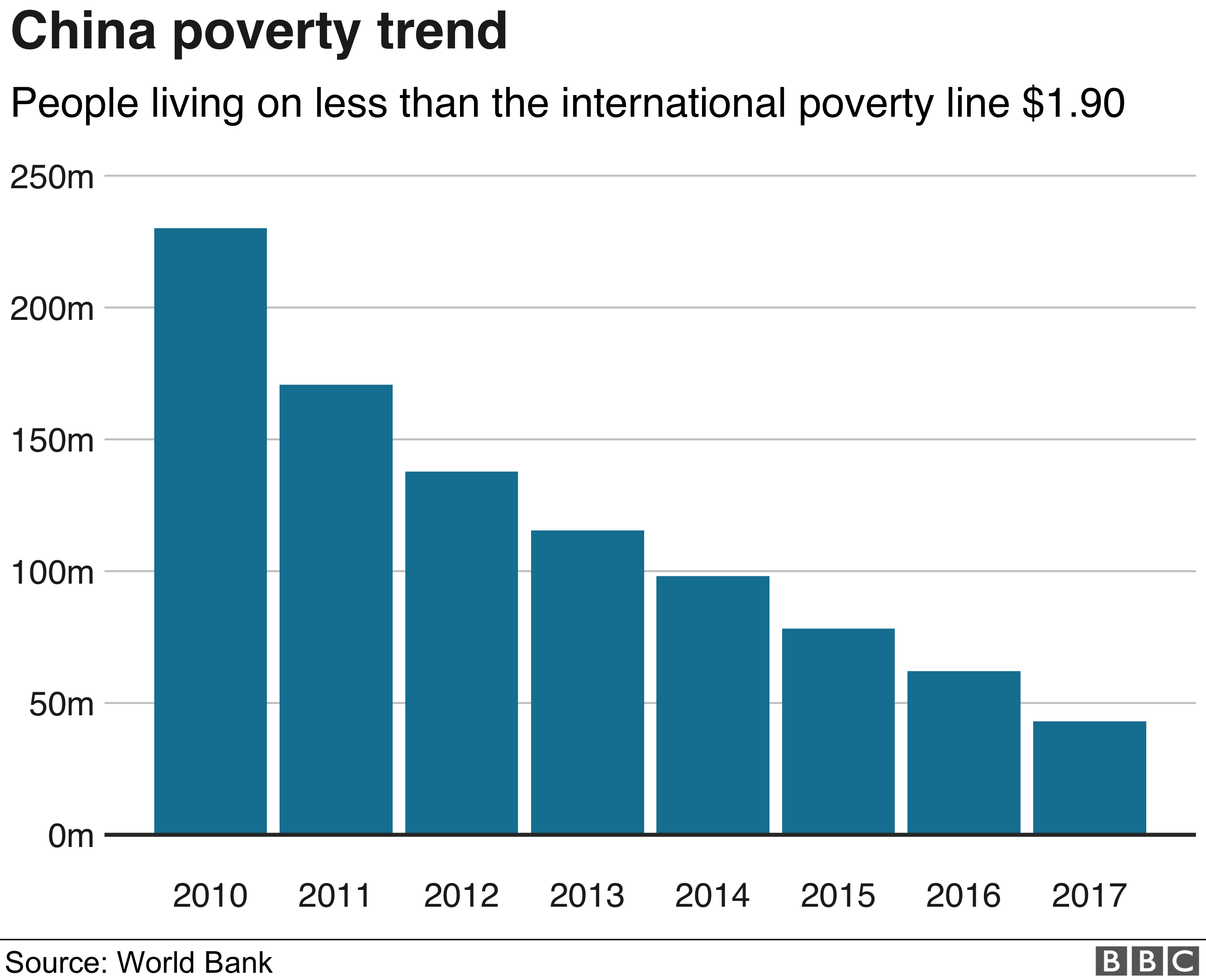
China poverty rates

Rising inequality

Still, the fruits of economic success haven’t spread evenly across China’s population of 1.3 billion people.

Examples of extreme wealth and a rising middle class exist alongside poor rural communities, and a low skilled, ageing workforce. Inequality has deepened, largely along rural and urban divides.

“The entire economy is not advanced, there’s huge divergences between the different parts,” Mr Mann says.

The World Bank says China’s income per person is still that of a developing country, and less than one quarter of the average of advanced economies.

China’s average annual income is nearly $10,000, according to DBS, compared to around $62,000 in the US.
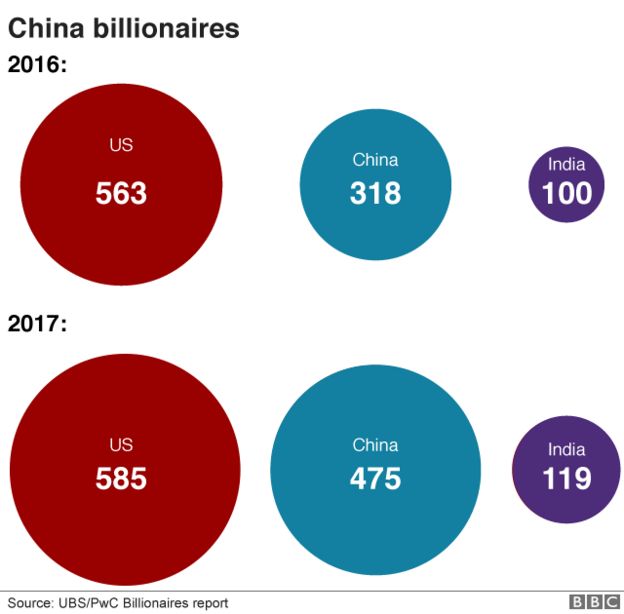
Billionaires in China, the US and India

Slower growth

Now, China is shifting to an era of slower growth.

For years it has pushed to wean its dependence off exports and toward consumption-led growth. New challenges have emerged including softer global demand for its goods and a long-running trade war with the US. The pressures of demographic shifts and an ageing population also cloud the country’s economic outlook.

Still, even if the rate of growth in China eases to between 5% and 6%, the country will still be the most powerful engine of world economic growth.

“At that pace China will still be 35% of global growth, which is the biggest single contributor of any country, three times more important to global growth than the US,” Mr Mann says.

The next economic frontier

China is also carving out a new front in global economic development. The country’s next chapter in nation-building is unfolding through a wave of funding in the massive global infrastructure project, the Belt and Road Initiative.
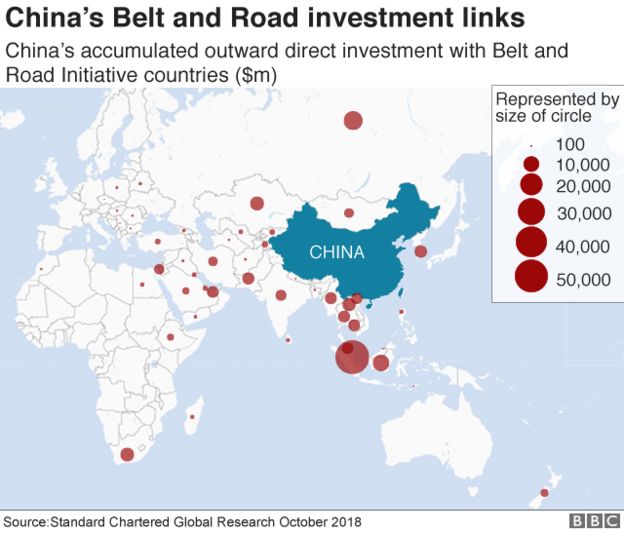
Map showing Chinese investment as part of the Belt and Road initiative

The so-called new Silk Road aims to connect almost half the world’s populations and one-fifth of global GDP, setting up trade and investment links that stretch across the world.

Source: The BBC
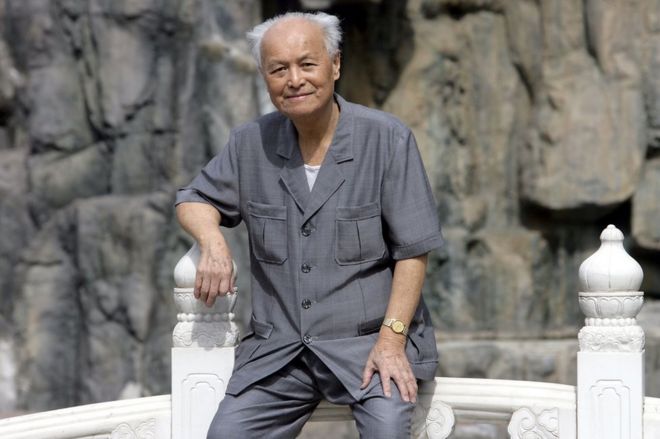
17/02/2019

Li Rui: The old guard Communist who was able to criticise Xi Jinping

Li RuiImage copyrightAFP
Image captionLi Rui remained an activist and idealist until his death

“We are not allowed to talk about past mistakes.”

Li Rui said this in 2013, while reflecting on the similarities between China’s then-new leader Xi Jinping and the founding father of Communist China, Mao Zedong.

Mr Xi, he warned, was echoing Mao’s suppression of individual thought, and was trying to build a similar cult of personality – both things he had experienced at first hand.

Li Rui joined the Communist Party in 1937, at the start of the brutal Sino-Japanese war, and 12 years before the party won the civil war that established the People’s Republic. He was hand-picked by Mao to become his personal secretary in 1958.

But he was also imprisoned soon afterwards for criticising Mao’s Great Leap Forward, the failed modernisation programme now thought to have killed between 30 and 60 million people through torture and starvation.

Despite this turbulent history with the party, the fact that Mr Li was one of the original revolutionaries meant that he occupied a special place in contemporary China – one that allowed him a degree of freedom to talk about the ruling party’s many issues, and how he felt things should be done differently.

People may not be allowed to talk about past mistakes, but Mr Li did it anyway – and his work has helped historians understand the truth and scale of Mao’s atrocities.

Li Rui died in Beiijng on Saturday, aged 101.

An underground revolutionary

As a university student, Mr Li joined a group of idealistic Communist activists protesting against Japanese occupation. Shortly afterwards, at the age of 20, he officially joined the party. He was tortured for his communist activism.

But things changed when the party came into power in 1949, and by 1958 Mr Li had become the youngest vice minister in China.

It was also that year that he had a meeting with Mao that would change the course of his life. Mao, having seen Mr Li argue passionately against building the Three Gorges Dam on the Yangtze River, chose him to be his personal secretary.

Their relationship didn’t last long.

‘Mao put no value on human life’

In 1959, Mr Li openly criticised Mao’s Great Leap Forward – a policy that was supposed to boost China’s economic output, but instead unleashed widespread famine across the country.

For this transgression Mr Li was expelled from the Communist Party, and he was imprisoned for eight years in Qincheng, maximum security prison built for the detention of disgraced senior party officials.

“Mao’s way of thinking and governing was terrifying,” he would tell the Guardian newspaper many years later. “He put no value on human life. The deaths of others meant nothing to him.”

Mao ZedongImage copyrightGETTY IMAGES
Image captionLi Rui said Mao Zedong, pictured, “put no value on human life”

Following Mao’s death, the more pragmatic Deng Xiaoping came to power in 1978 and Mr Li was rehabilitated and allowed back into the party. He then became a strong advocate for political reform, and in his later years, threw himself into calling for China to move further towards a European socialist-style system.

He wrote five books on Mao, all of which were published overseas and banned in mainland China. His last book, published in 2013, called for the current “one-party, one-leader and one-ideology regime” to be overhauled. His daughter, Li Nanyang, has spoken of having her copies of his memoir confiscated at Beijing’s airport.

Aside from writing books, he worked right into his 90s as a patron of the reformist magazine Yanhuang Chunqiu – roughly translated as “China through the ages”.

Presentational grey line

Read more on other notable lives

Presentational grey line

The magazine was taken over in 2016. Its editor Wu Si was forced out, and its former staff released a statement warning that “anybody who publishes any periodicals with the title of Yanhuang Chunqiu will be nothing to do with [them]”.

Professor Steve Tsang, director of SOAS’s China Institute, tells BBC News that this affected Li Rui deeply.

“The single most important thing that Li Rui had, was the patronage that he gave to the magazine Yanhuang Chunqiu,” Professor Tsang says. “It does still exist, but it’s been completely changed it terms of management and focus. It’s practically a different magazine.”

The last idealist

But even though his writing was censored, Mr Li was not a dissident – he remained a party member until his death. And the fact that he was left to compose his memoirs from a prestigious apartment block in Beijing shows how, despite his outspoken criticism of the current leadership, he continued to be revered for his role as one of the country’s original revolutionaries.

But with Mr Li dies the idealism of the activist who joined his party eight decades ago, and spent the years since vigorously rebelling against leaders who abused their power.

“He was among the last of that generation of idealists who joined the Communist Party at the beginning, and who tried to hold the Communist Party to the rhetoric [they heard] when they were being recruited,” Prof Tsang says.

“There is probably nobody else who will hold the party now to what the party had originally said it was meant to do.”

Source: The BBC

Law of Unintended Consequences

continuously updated blog about China & India

ChiaHou's Book Reviews

continuously updated blog about China & India

What's wrong with the world; and its economy

continuously updated blog about China & India