Archive for ‘Greenland’

01/09/2019

Did China’s growing presence in Arctic prompt Donald Trump’s offer to buy Greenland?

  • US president likely had Beijing ‘on his mind’ when he made his audacious offer, diplomat says
  • Proposal ‘could be interpreted as a very clear signal’ to China and Denmark that the US sees Greenland as part of an exclusive strategic zone, academic says
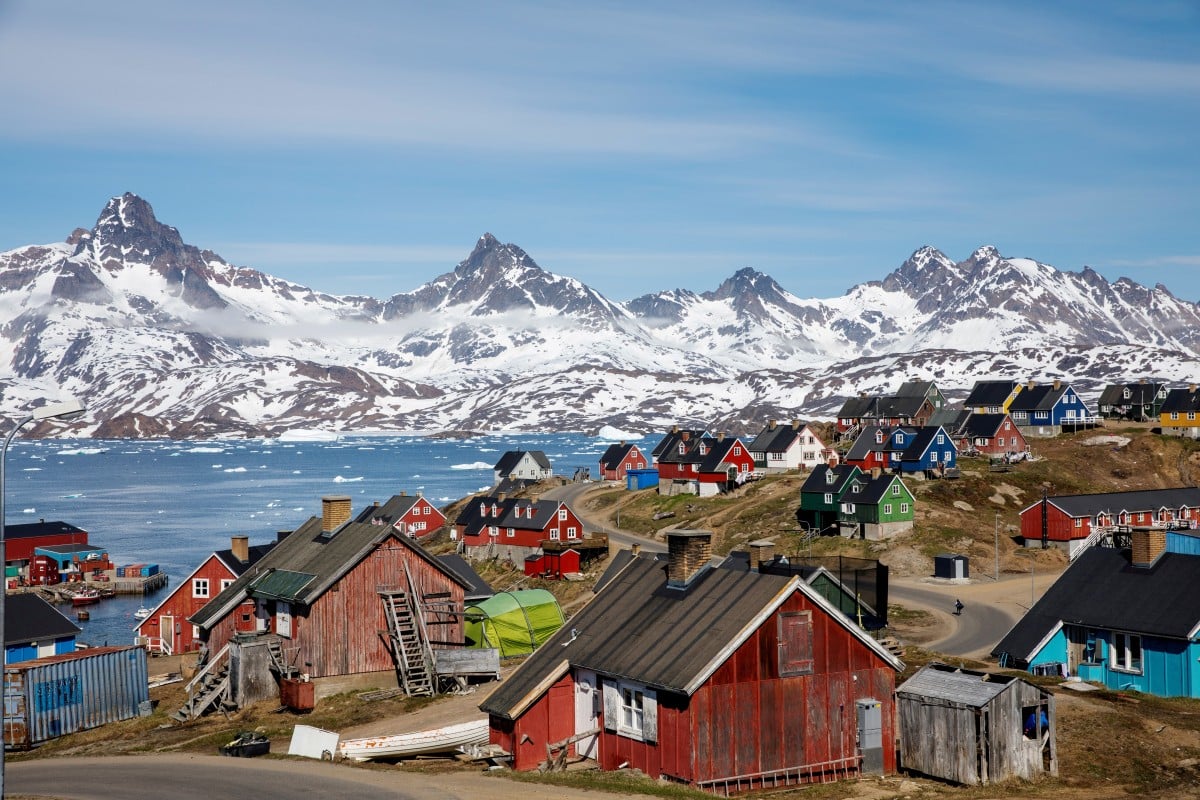
China has been building closer ties with Greenland in recent years. Photo: Reuters

US President Donald Trump’s eyebrow-raising idea to buy Greenland from Denmark last month epitomised what analysts say is Washington’s fear of the growing interplay of Chinese money, Russian aggression and Arctic political division.

Of all the countries involved in the region, Denmark is feeling the most heat, and not just because Trump recently cancelled a trip and called its Prime Minister Mette Frederikse “nasty” for describing his plan to buy the world’s largest island “absurd”.

Over the past few years, both of Denmark’s self-ruled governments – Greenland and the Faroe Islands – have increasingly turned to China for commercial deals, adding weight to Beijing’s growing strategic influence in the vast area that forms the common backyard of Europe, North America and Russia.

Russia seeks Chinese support in developing Arctic shipping routes

Greenland is of particular concern to the White House and the Pentagon as it is home to the US Thule Air Force Base, located far above the polar circle and which served as the first line of defence during the cold war.
Nowadays, the island is also strategically important for the US ballistic missile early warning system, as the shortest route from Europe to North America goes via the ice-cloaked, resource-rich territory.

“Though it’s difficult to tell the motivations of President Trump, he likely had China on his mind with his Greenland offer,” said a Beijing-based diplomat, who asked not to be named.

The US was likely to step up its presence in Greenland in the future, the person said.

In May, US Secretary of State Mike Pompeo accused China and Russia of introducing a strategic power struggle into the Arctic region and described Beijing’s behaviour there as aggressive.

When Greenland signalled an interest in engaging a Chinese state-owned company to build two airports in 2017 – the island’s prime minister flew to Beijing to appeal for financial backing – Copenhagen stepped in amid US pressure, reluctantly agreeing to finance the projects from the public coffers.

Denmark’s reluctance stems from a long-standing mistrust between Copenhagen and Greenland, as the island’s quest for economic development is viewed by the Danes as an attempt to shore up capital to push for a future independence movement.

“There is no doubt that the US foreign and security policy community is becoming far more interested in Greenland as a strategic asset,” said Andreas Bøje Forsby, a researcher at the University of Copenhagen’s Nordic Institute of Asian Studies.

“Proposing to buy Greenland could be interpreted as a very clear signal to both China and Denmark that Greenland is part of an exclusive American strategic zone,” he said.
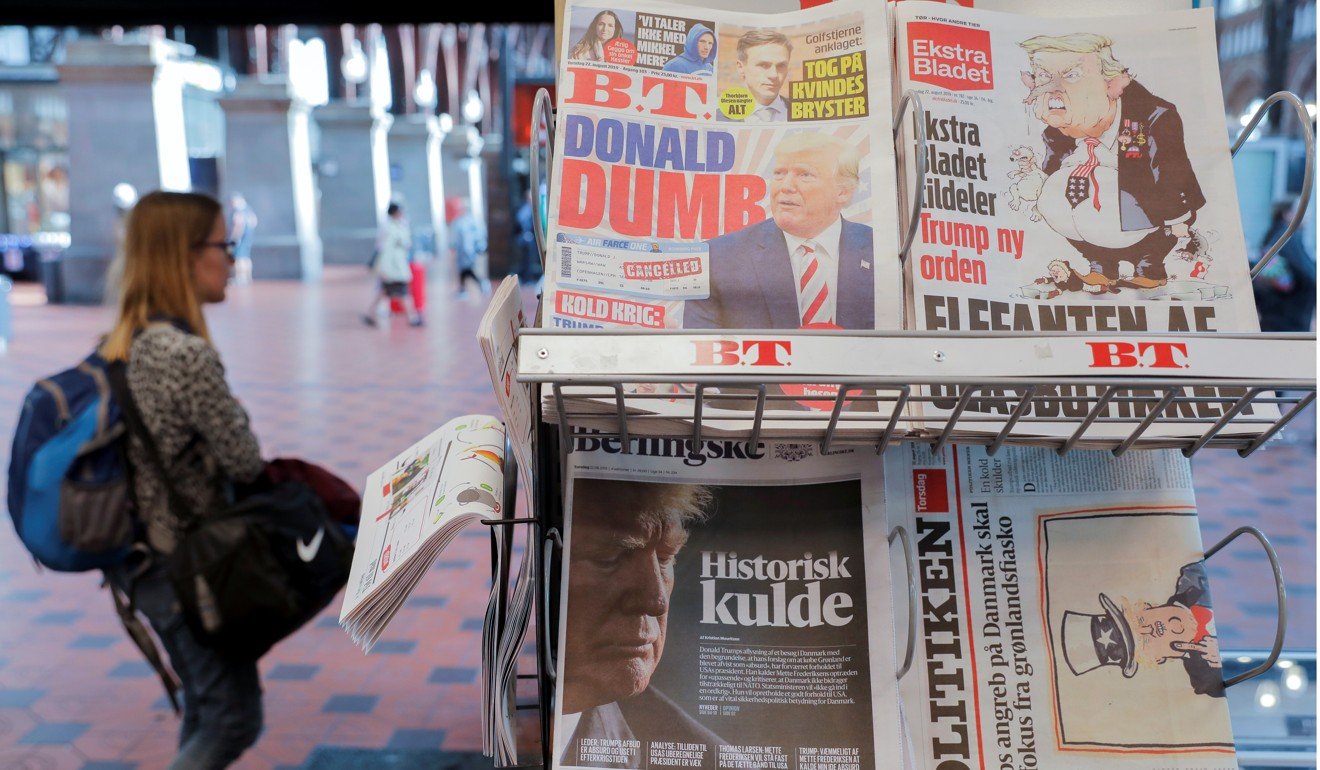
Danish Prime Minister Mette Frederikse described Donald Trump’s plan to buy Greenland as “absurd”. Photo: Reuters

The government of the Faroe Islands – an archipelago located between Scotland, Norway and Iceland – has a similar readiness to engage with China but for a different purpose.

Unlike Greenland, there are no immediate political movements calling for independence from Denmark, making its overall relationship with Copenhagen more amiable.

This month, the Faroese government will open a liaison office in Beijing, located within the Danish embassy.

“Our top priority is to have a free-trade agreement with China,” Sigmundur Isfeld, the first head of the Faroe Islands’ representation to Beijing, said.

US defence report flags China’s expanding military reach in the Arctic

With Norway – a key competitor of the Faroes in the fishing and export industries – eyeing a similar arrangement with China, the time was ripe to clinch a deal, he said.

“It is a challenge for us … we need to get in the game.”

Although part of Denmark, the Faroe Islands are not part of the European Union and therefore have to form separate trade agreements with other countries.

“For example, there is an EU-Japan economic partnership agreement. It covers all EU nations, but it does not cover the Faroe Islands,” Isfeld said.
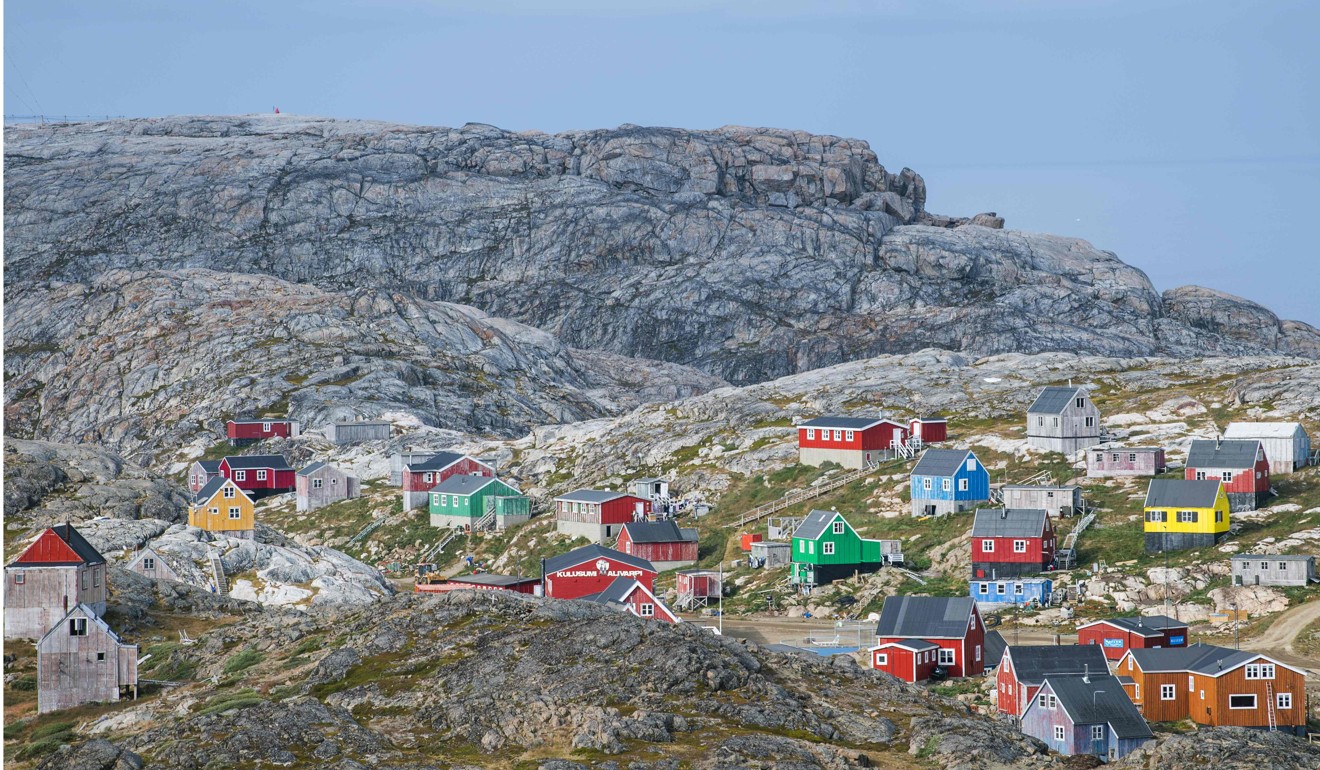
Trade between Greenland and China totalled US$126 million in 2108. Photo: AFP

China, for its part, has sought to exert its economic and cultural influence on the Faroes, which has a population of about 52,000 people.

Huawei

, the embattled Chinese telecoms giant, has been working with the islands’ main telecoms provider for four years and is said to be finalising a plan for 5G upgrades across the archipelago.

Beijing also helped fund a project for a Chinese-Faroese dictionary.
With a population of about 56,000 people, Greenland is one of China’s smallest trading partners. In the first seven months of 2019, trade between the two was US$126 million, with Chinese imports of fish accounting for the bulk of the total.
The Greenland government’s annual political and economic report for 2019 said that strong demand for metals from China had contributed to mineral and mining projects in the country, though China’s transition to a less mineral-intensive economy could spell trouble for the future of the sector.
The island’s gross domestic product is expected to grow by 3 per cent this year, according to the report, with seafood – principally cod, halibut and prawns – set to continue to be its chief export.
The end of the Arctic as we know it
China’s attempts in recent years to expand its involvement in Greenland have run into roadblocks.
In 2016, a Chinese mining company expressed interest in taking over an abandoned marine station in Grønnedal, an offer that the Danish government turned down the following year. A Chinese state-owned construction company had also offered to build airports in Greenland, but withdrew its offer this year.
Also this year, China expanded its involvement in exporting from Kvanefjeld, one of the world’s largest deposits of rare earths and uranium, by creating a joint venture to process and export the resources.
Beijing has made clear its strategic ambitions in the region. Early last year, it unveiled its Polar Silk Road strategy, plotting the course for its future development goals in the region – including scientific, commercial, environmental preservation and resource extraction efforts.
It also aligned its Arctic interests with its Belt and Road Initiative. Chinese companies are encouraged to invest in building infrastructure along the routes and conduct commercial trial voyages to gauge feasibility.
Putin boasts of nuclear icebreaker fleet as he outlines Arctic expansion plans

Anders Rasmussen, a former Danish prime minister and erstwhile Nato secretary general, said in an article published in Atlantic magazine last month that with melting ice caps opening the Arctic Sea to shipping, Arctic sea lanes “will likely become another flashpoint of renewed competition among the great powers as climate change alters our world”.

It was a situation he said he found “regrettable, but inevitable”.

“Both China and Russia are interested in getting a foothold in Greenland, to expand their influence in the Arctic region,” Rasmussen said. “Instead of being a source of contention,

Greenland should serve to highlight how many interests the United States and Denmark have in common.”

Source: SCMP
19/12/2018

How Greenland could become China’s Arctic base

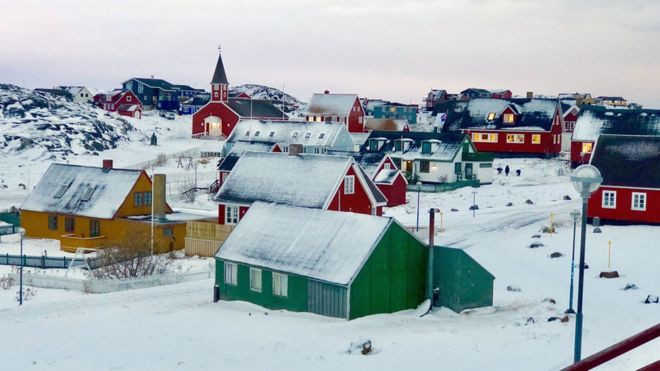
A town in typical Greenland style is pictured - brightly-painted wooden walls and triangular roofs covered in snow are the main features of these sparsely dotted homes
Image captionGreenland’s capital, Nuuk, needs investment – but could it come from China?

China is flexing its muscles. As the second richest economy in the world, its businessmen and politicians are involved just about everywhere in Asia, Africa and Latin America.

Now, though, China is taking a big interest in a very different part of the world: the Arctic.

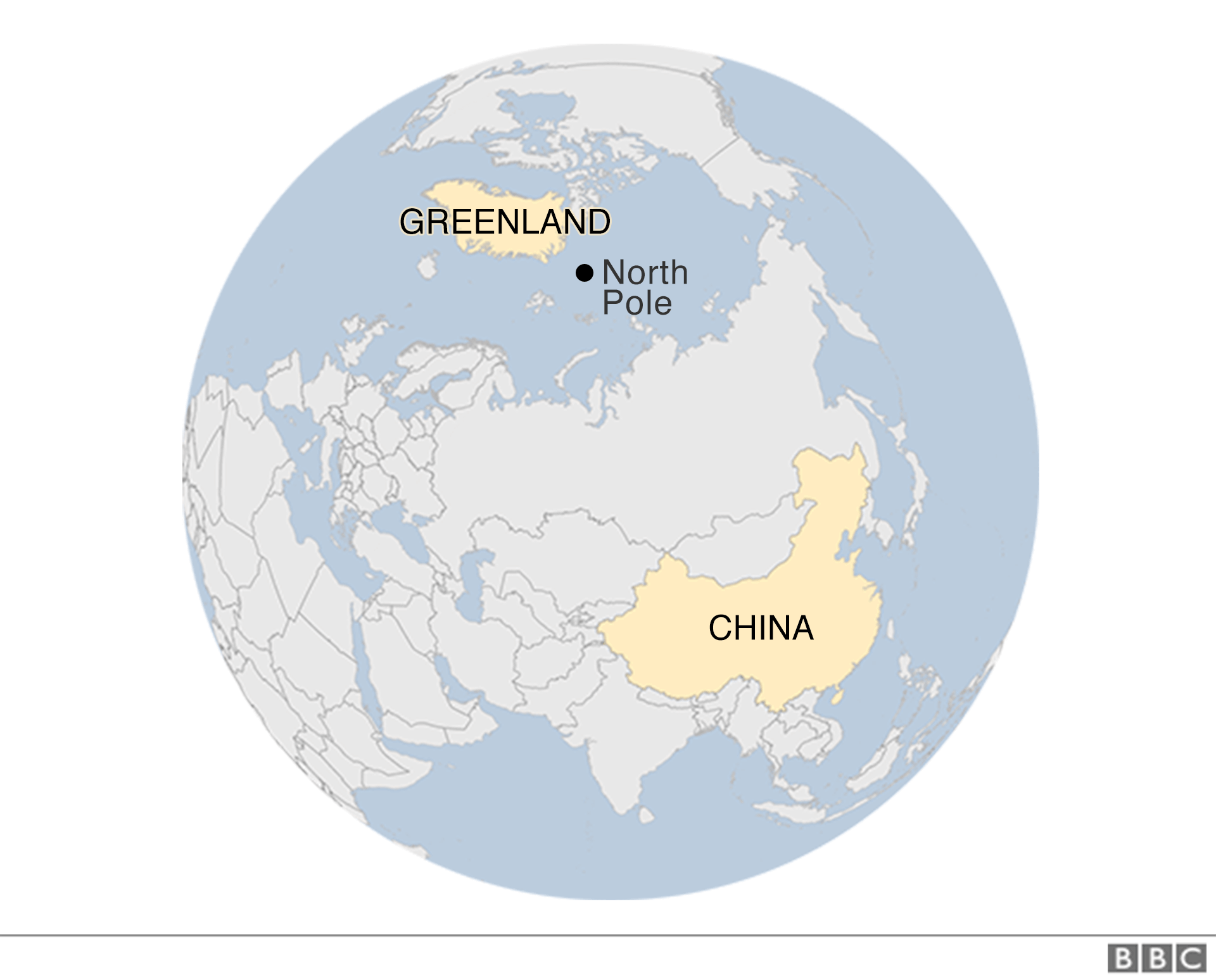
It has started calling itself a “near-Arctic” power, even though Beijing is almost 3,000km (1,800 miles) from the Arctic Circle. It has bought or commissioned several ice-breakers – including nuclear-powered ones – to carve out new routes for its goods through the Arctic ice.

And it is eyeing Greenland as a particularly useful way-station on its polar silk road.

A map is seen on a curved globe surface of the earth -Greenland is marked on the top, just a short distance from the North Pole, also marked - and China's location has two extremely large nations of Mongolia and Russia between it and the pole

Greenland is self-governing, though still nominally controlled by Denmark.

It is important strategically for the United States, which maintains a vast military base at Thule, in the far north. Both the Danes and the Americans are deeply worried that China should be showing such an interest in Greenland.

Least densely populated place on Earth

You’ve got to go there to get an idea of how enormous Greenland is.

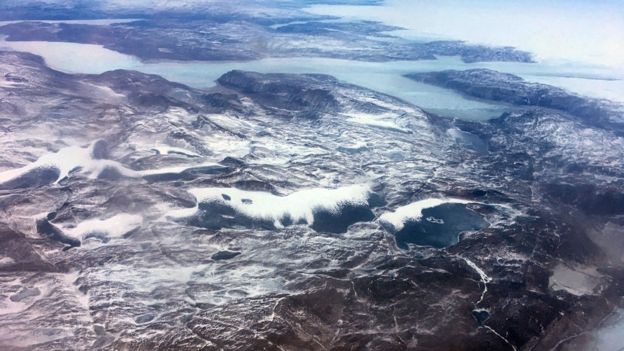
It’s the 12th-largest territory in the world, 10 times bigger than the United Kingdom: two million square kilometres of rock and ice.

A vast frozen swathe of Greenland is seen in this aerial shot
Image captionMost of Greenland is covered in permanent ice – a vast frozen wilderness

Yet its population is minuscule at 56,000 – roughly the size of a town in England.

As a result, Greenland is the least densely populated territory on Earth. About 88% of the people are Inuit; most of the rest are ethnically Danish.

In terms of investment neither the Americans nor the Danes have put all that much money into Greenland over the years, and Nuuk, the capital, feels pretty poor. Denmark does hand over an annual subsidy to help Greenland meet its needs.

Every day, small numbers of people gather in the centre to sell things that will generate a bit of cash: cast-off clothes, children’s schoolbooks, cakes they’ve made, dried fish, reindeer-horn carvings. Some people also sell the bloody carcases of the big King Eider ducks, which Inuits are allowed to hunt but aren’t supposed to sell for profit.

China’s air power

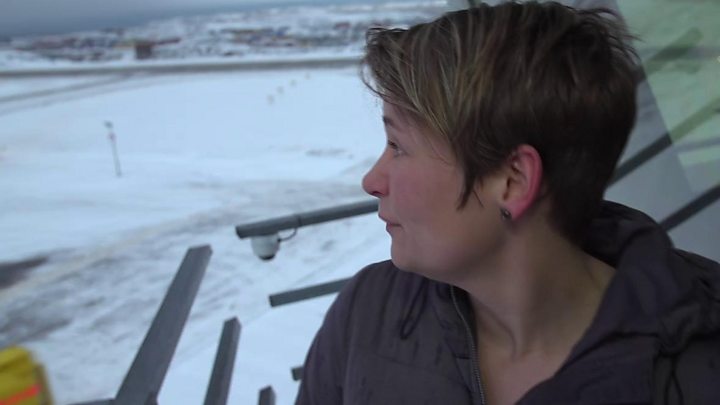
At present you can only fly to Nuuk in small propeller-driven planes. In four years, though, that will change spectacularly.

The Greenlandic government has decided to build three big international airports capable of taking large passenger jets.

China is bidding for the contracts.

Media captionAirport officials say the planned work is a huge project – but an important one

There’ll be pressure from the Danes and Americans to ensure the Chinese bid doesn’t succeed, but that won’t stop China’s involvement in Greenland.

Interestingly, I found that opinion about the Chinese tended to divide along ethnic lines.

Danish people were worried about it, while Inuits thought it was a good idea.

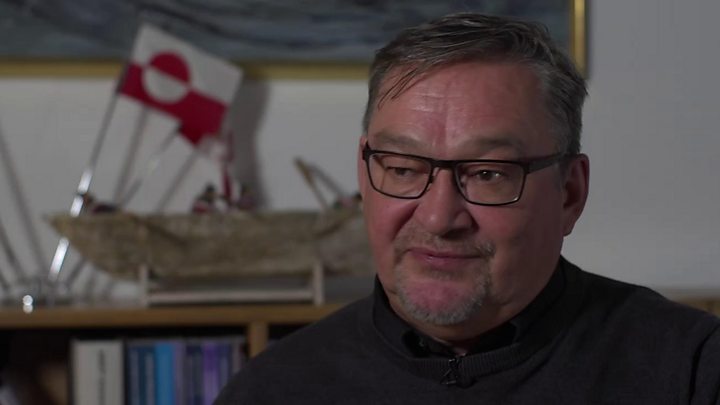
The Greenlandic prime minister and foreign minister refused to speak to us about their government’s attitude to China, but a former prime minister, Kuupik Kleist, told us he thought it would be good for Greenland.

But the foreign affairs spokesman of the main Venstre party in the Danish coalition government, Michael Aastrup Jensen, was forthright about Chinese involvement in Greenland.

“We don’t want a communist dictatorship in our own backyard,” he said.

Much-needed wealth

China’s sales technique in other countries where its companies operate is to offer the kind of infrastructure they badly need: airports, roads, clean water.

The Western powers that once colonised many of them haven’t usually stepped in to help, and most of these governments are only too grateful for Chinese aid.

But it comes at a price.

Media captionThe former prime minister says someone – anyone – has to invest in Greenland

China gets access to each country’s raw materials – minerals, metals, wood, fuel, foodstuffs. Still, this doesn’t usually mean long-term jobs for local people. Large numbers of Chinese are usually brought in to do the work.

Country after country has discovered that Chinese investment helps China’s economy a great deal more than it helps them. And in some places – South Africa is one of them – there are complaints that China’s involvement tends to bring greater corruption.

But in Nuuk it’s hard to get people to focus on arguments like these.

What counts in this vast, empty, impoverished territory is the thought that big money could be on its way. Kuupik Kleist put the argument at its simplest.

“We need it, you see,” he said.

Law of Unintended Consequences

continuously updated blog about China & India

ChiaHou's Book Reviews

continuously updated blog about China & India

What's wrong with the world; and its economy

continuously updated blog about China & India