12/04/2020
- Between January 20 and April 4, PM2.5 levels across the country fell by more than 18 per cent, according to the environment ministry
- But observers say that as soon as the nation’s factories and roads get back to normal, so too will the air pollution levels
Blue skies were an unexpected upside of locking down cities and halting industrial production across China. Photo: AFP
China’s air quality has improved dramatically in recent weeks as a result of the widespread city lockdowns and strict travel restrictions introduced to contain the
. But experts say the blue skies could rapidly disappear as factories and roads reopen under a government stimulus plan to breathe new life into a stalled economy.
According to the Ministry of Ecology and Environment, between January 20 and April 4 the average concentration of PM2.5 – the tiny particles that pose the biggest risk to health – fell by 18.4 per cent from the same period of last year.
Meanwhile, the average number of days with good air quality – determined as when the air pollution index falls below 100 – rose by 7.5 per cent, it said.
Satellite images released by Nasa and the European Space Agency showed a dramatic drop in nitrogen dioxide emissions in major Chinese cities in the first two months of 2020, compared with a year earlier.
According to Nasa, the changes in Wuhan – the central China city at the epicentre of the initial coronavirus outbreak – were particularly striking, while nitrogen dioxide levels across the whole of eastern and central China were 10 to 30 per cent lower than normal.
The region is home to hundreds of factories, supplying everything from steel and car parts to microchips. Wuhan, which has a population of 11 million, was placed under lockdown on January 23, but those
restrictions were lifted on Wednesday
.
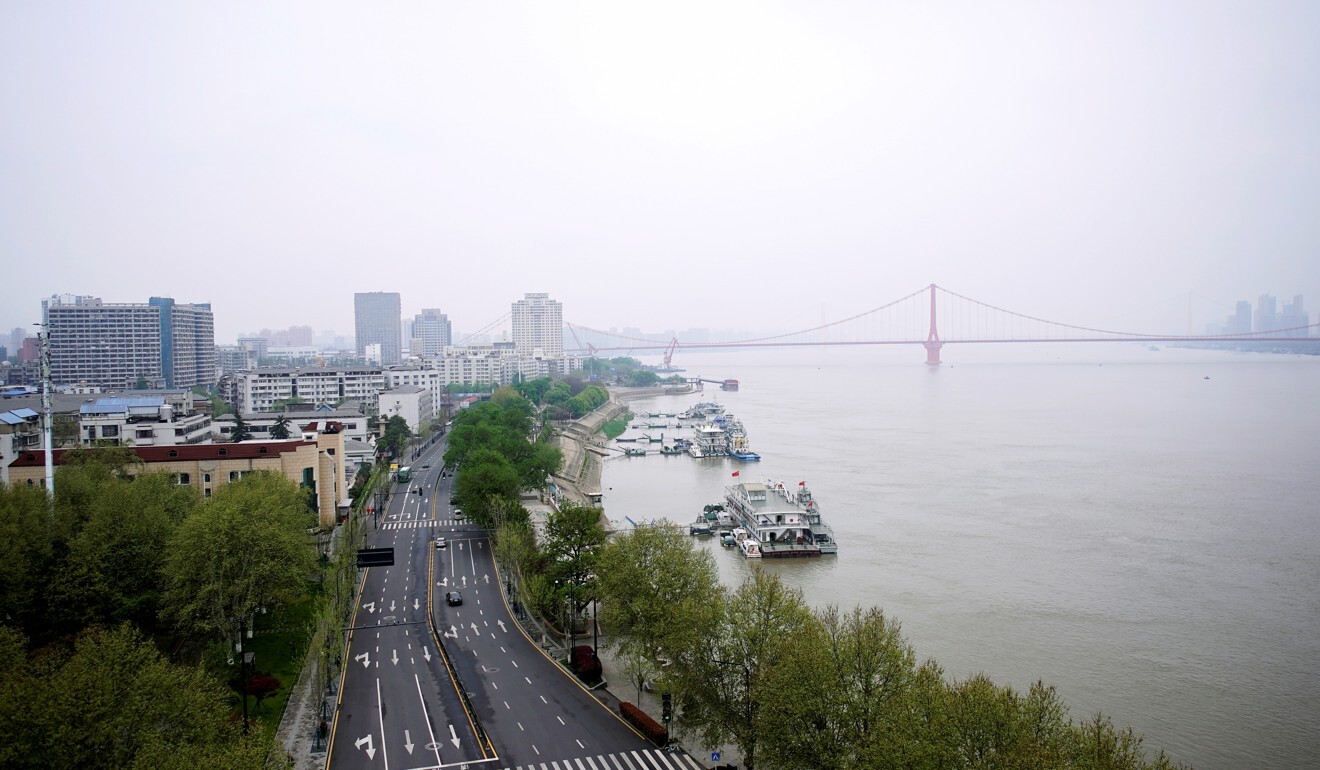
Air pollution is likely to return to China’s cities once the lockdowns are lifted. Photo: Reuters
Nitrogen dioxide is produced by cars, power plants and other industrial facilities and is thought to exacerbate respiratory illnesses such as asthma.
The space agency said the decline in air pollution levels coincided with the restrictions imposed on transport and business activities.
That was consistent with official data from China’s National Development and Reform Commission, which recorded a 25 per cent fall in road freight volume and a 14 per cent decline in the consumption of oil products between January and February.
Guangzhou cases prompt shutdown in ‘Little Africa’ trading hub
Liu Qian, a senior climate campaigner for Greenpeace based in Beijing, said the restrictions on industry and travel were the primary reasons for the improvement in air quality.
According to official data, in February, the concentrations of PM2.5, nitrogen dioxide and sulphur dioxide – a toxic gas that comes mostly from industrial burning of coal and other fossil fuels – all fell, by 27 per cent, 28 per cent and 23 per cent, respectively.
“The causes of air pollution are complicated, but the suspension of industrial activity and a drop in public transport use will have helped to reduce levels,” Liu said.
As the epicentre of the Covid-19 pandemic has shifted to the
United States and
, human and industrial activity in China is gradually picking back up, and so is air pollution.
Lauri Myllyvirta, lead analyst with the Centre for Research on Energy and Clean Air in Helsinki, said that levels of nitrogen dioxide pollution, measured both by Nasa satellites and official stations in China, started inching back up in the middle of March and had returned to normal levels by the end of the month.
That coincided with the centre’s findings – published on Carbon Brief, a British website on climate change – that coal consumption at power plants and oil refineries across China returned to their normal levels in the fourth week of March.
How the Wuhan experience could help coronavirus battle in US and Europe
Ma Jun, director of the Institute of Public & Environmental Affairs, a Beijing-based charity, said a stimulus plan to kick-start the economy would have a significant impact on air pollution.
“Once industrial production is fully resumed, so are the emission levels,” he said. “Unless another outbreak happens and triggers another lockdown, which would be terrible, the improvement achieved under the pandemic is unstable and won’t last long.”
After the 2008 financial crisis, Beijing launched a 4 trillion yuan (US$567.6 billion) stimulus package that included massive infrastructure investment, but also did huge damage to the environment. In the years that followed, air pollution rose to record highs and sparked a public backlash.
Even before the
Covid-19 outbreak, China’s economy was slowing – it grew by 6.1 per cent in 2019, its slowest for 29 years – and concerns are now growing that policymakers will go all out to revive it.
“Local governments have been under huge pressure since last year, and there are fears that environmental regulations will be sidelined [in the push to boost economic output],” Ma said.
But Beijing had the opportunity to get it right this time by investing more in green infrastructure projects rather than high-carbon projects, he said.
“A balance between economic development and environmental protection is key to achieving a green recovery, and that is what China needs.”
Source: SCMP
Posted in 20, 2020, 4, air pollution, air quality, April, Asthma, ‘Little Africa’, back, balance, Beijing, blue skies, brought, business activities, car parts, Carbon Brief, cars, charity, China, China’s economy, Chinese cities, climate campaigner, Coal, concentrations, consumption, coronavirus epidemic, coronavirus outbreak, COVID-19, COVID-19 outbreak, Covid-19 pandemic, decline, drop, eastern and central China, environment ministry, Environmental protection, environmental regulations, epicentre, Europe, European Space Agency, everything, exacerbate, expect, factories, February, fossil fuels, get back, green infrastructure projects, green recovery, Greenpeace, Guangzhou, Helsinki, high-carbon projects, Home, Human, hundreds, improvement, industrial activity, industrial burning, industrial facilities, industry, Institute of Public & Environmental Affairs, January, last, levels, local governments, lockdowns, March, microchips, months, NASA, National Development and Reform Commission, Nitrogen dioxide, oil products, PM2.5, PM2.5 levels, policymakers, power plants, primary reasons, public transport, region, respiratory illnesses, restrictions, road freight, roads, shifted, sidelined, slowing, so too, space agency, Steel, supplying, suspension, tiny particles, to normal, toxic gas, trading hub, Transport, travel, Uncategorized, United States, Wednesday, Wuhan |
Leave a Comment »
23/10/2019
- International rules on seabed mining set for approval in 2020, with China most likely to lead the race, UN body says
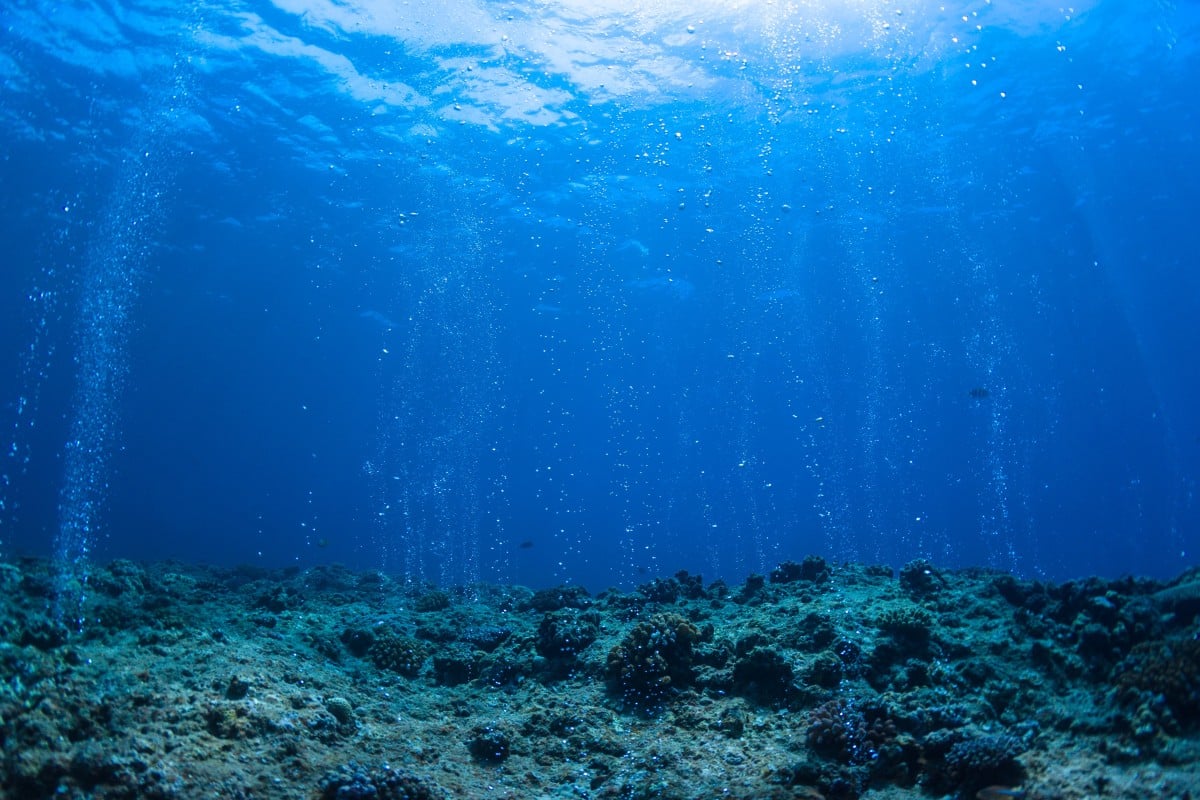
Governments, research institutions and commercial entities have already signed contracts for the exploration phase to extract minerals from the seabed, with China holding the most. Photo: Shutterstock
China is in pole position for the global race to start deep sea mining operations to extract valuable minerals used in smartphones and electric car batteries from the seabed.
The head of the International Seabed Authority (ISA) said China was likely to become the first country in the world to start mining seabed minerals if the international rules for exploitation were approved next year.
The ISA has already signed 30 contracts with governments, research institutions and commercial entities for exploration phase, with China holding the most, five contracts.
The body, which was established to manage the seabed resources by the United Nations Convention on the Law of the Sea (UNCLOS), is aiming to adopt seabed mineral exploitation rules by July 2020.
As China leads the hunt for deep-sea minerals, environmental concerns surface
“I do believe that China could easily be among the first (to start exploitation),” said Michael Lodge, ISA general secretary, who visited China last week.
“The demand for minerals is enormous and increasing, there is no doubt about the market.”
There is also interest from European countries including Belgium, Britain, Germany and Poland, as well as from the Middle East.
The quest to exploit seabed minerals – such as polymetallic nodules containing nickel, copper, cobalt and manganese – is driven by demand for smartphones and electric car batteries, and the need to diversify supply.
However, no one has yet shown that deep sea mining can be cost effective and some non-governmental organisations have questioned whether it would be possible to reach a deal on exploitation rules next year.
“I think, it’s pretty good. I think the current draft is largely complete,” Lodge said, when asked about prospects of adopting the rules by next July.
One of the issues yet to be agreed is proportionate financial payments to the Jamaica-based ISA for subsea mineral exploitation outside national waters.
“We are looking at ad valorem royalty that would be based on the value of the ore at a point of extraction … The middle range is 4 per cent to 6 per cent ad valorem royalty, potentially increasing over time,” Lodge said.
New iPhone models to use recycled rare earths, Apple says
If the rules are approved, it could take about two to three years to obtain permits to start deep sea mining under the current draft, Lodge said.
Canadian Nautilus Minerals had tried to mine underwater mounds for copper and gold in the national waters off Papua New Guinea, but ran out of money and had to file for creditor protection earlier this year.
This has not deterred others, such as Global Sea Mineral Resources (GSR), a unit of Belgian group DEME, and Canada’s DeepGreen, to continue technology tests and research.
In July, Greenpeace called for an immediate moratorium on deep sea mining to learn more about its potential impact on deep sea ecosystems, but the ISA has rejected such a proposal.
Source: SCMP
Posted in Apple, Belgian, Belgium, Britain, canada, Canadian Nautilus Minerals, China alert, cobalt, copper, deep sea, DeepGreen, DEME, electric car batteries, exploit, first country, Germany, Global Sea Mineral Resources (GSR), Gold, Greenpeace, International rules, International Seabed Authority (ISA), IPhone, manganese, Middle East, minerals, national waters, Nickel, Papua New Guinea, Papua New Guinea (PNG), Poland, polymetallic nodules, rare earths, recycled, seabed mining, smartphones, Uncategorized, United Nations Convention on the Law of the Sea (UNCLOS), valuable minerals |
Leave a Comment »
14/07/2019
- Court revokes licence for coal-fired power plant in Kenyan town whose Unesco World Heritage status is at stake
- Beijing’s efforts to cut emissions domestically coincide with coal-financing ventures overseas
A proposed coal-fired power plant in Kenya involving four Chinese companies has provoked protests. Photo: Handout
This article is part of a series in which the South China Morning Post examines the local impact of Chinese investment and infrastructure projects in Africa.
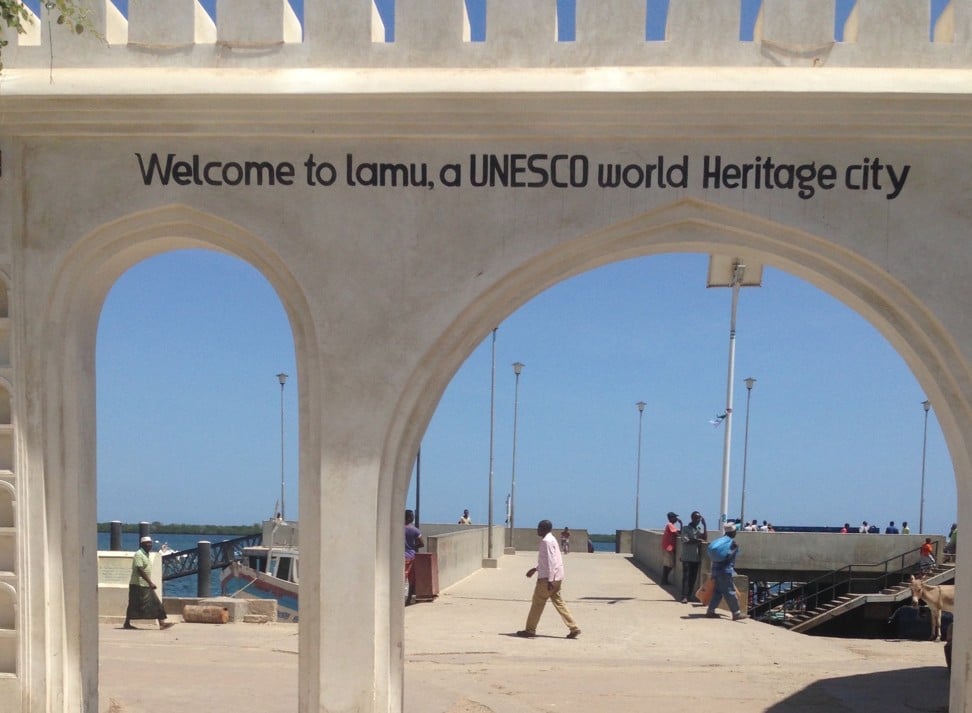
There are a few places in the world that have held onto their traditions. One is the island of Lamu, close to Kenya’s northern coast, which is an epicentre of Swahili culture in East Africa and home to its oldest and best-preserved history.
Nowhere combines the culture’s architecture and heritage like Lamu Old Town, where there are two streets, few cars and dozens of mosques and churches. Donkeys and wooden carts are the main modes of transport.
The town is a Unesco World Heritage Site with multibillion-dollar tourism and fishing industries. But it risks losing its global allure after Unesco’s World Heritage Committee warned that a US$2 billion coal-fired power plant planned in the area threatened its heritage site status.
Four Chinese companies are involved in the project. The United States also supported it, with its envoy to Kenya, Kyle McCarter, saying the country needed cheaper power and American energy firm GE promising to inject US$400 million for a 20 per cent stake in Amu Power, the operating company. The Kenyan government has said the plant would enable the country to have a diversified source of electricity.
Lamu Old Town’s Unesco status helps to support its tourism and fishing industries. Photo: Handout
However, the project’s future is uncertain after a Kenyan court, the National Environment Tribunal, ordered on June 26 that a fresh environmental impact assessment be carried out. The tribunal, which oversees decisions made by the National Environment Management Authority, also revoked the licence issued by the authority to Amu Power.
A lack of public consultation to date, as well as the environmental risks, were cited by the court, whose ruling is binding on the government. Unesco has urged Amu Power to proceed with the impact assessment, which in turn could have an impact on perceptions of Beijing’s signature transcontinental infrastructure strategy, the
.
Two days after the court’s verdict, Wu Peng, the Chinese ambassador to Kenya, met groups opposed to the building of the coal plant, days after they had been dispersed by police when they tried to protest at the embassy. Wu acknowledged the need to develop a different approach to hear the public’s views.
Anti-coal campaigners have been demanding China back out. Of the plant’s estimated US$2 billion cost, US$1.2 billion is coming from the Industrial Commercial Bank of China.
The three Chinese companies – Sichuan Electric Power Design and Consulting, China Huadian, and Sichuan No 3 Power Construction – teamed up with Kenya’s Centum Investments and Gulf Energy in a venture to form Amu Power. Another Chinese firm, Power Construction (PowerChina), was contracted to build the plant, which is expected to generate 1,050 megawatts of electricity.
The Chinese embassy in Nairobi said it had asked the Chinese investors to wait for Kenya’s decision on whether it should go ahead.
“Our position is that the Kenyan people are the final decision makers in this project and the Chinese government respects that,” embassy spokeswoman Huang Xueqing said.
Despite committing to cutting China’s reliance on coal, Beijing is still funding several coal-powered plants around the world. Both China and Kenya signed the
on climate change in 2016, promising to cut carbon emissions.
China may be providing a market for its coal by outsourcing its fossil fuel use to other countries, according to 350.org, which campaigns to prevent climate change and works to end use of fossil fuels.
Yossi Cadan, a senior campaigner for the organisation, said many people looked to China to be the new world leader in addressing climate change, given its government’s ambitious initiative to reduce emissions domestically. US President Donald Trump, by contrast, made the controversial decision to
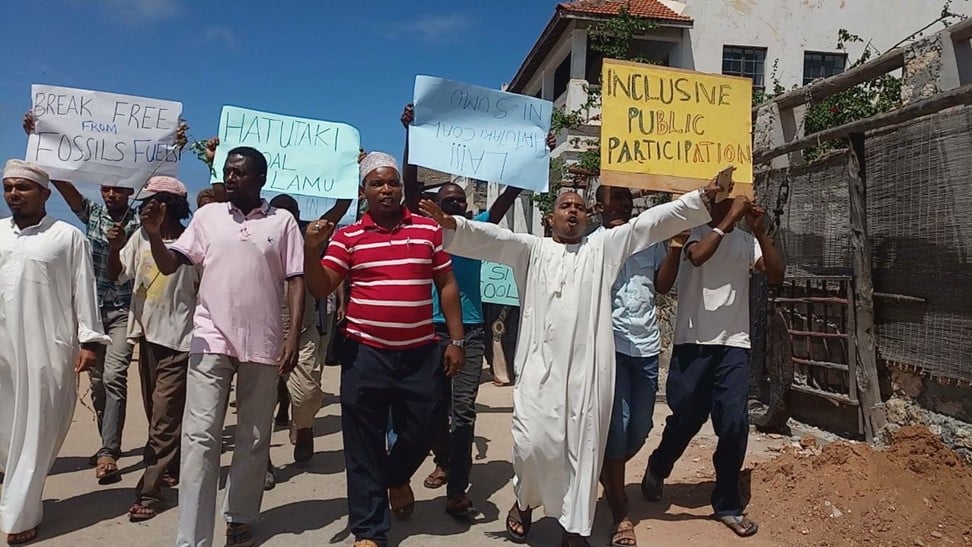
Activists and Lamu residents have protested about the coal plant. Photo: Handout
“While China seems determined to meet its Paris climate agreement targets at home, it undermines those efforts to reduce global emissions by simultaneously investing in coal projects across the world,” Cadan said.
According to Cadan, cancellations and delays of coal projects in China left a desperate Chinese coal industry looking elsewhere, assisted by Chinese financial institutions.
He argued that if China was serious about being a global leader in reducing emissions and tackling the climate crisis, it must apply the same restrictions it was
to coal financing outside China.
Analysts said that if the Lamu coal project were to be abandoned, other Chinese-funded coal power projects in Africa would come under the spotlight.
China is funding eight coal-powered projects in Africa, including Egypt’s Hamrawein plant, which has an estimated cost of US$4.2 billion and is expected to generate six gigawatts of power.
Omar Elmawi, campaign coordinator at deCOALonize, was among the campaigners who met ambassador Wu two weeks ago.
“Other African countries could take a cue from [the Kenyan situation],” he said. “Already key financial institutions are coming up with policies that are either cutting back on or refusing to fund new coal plant projects. This will add to the pressure on China to abandon coal projects.”
Lauri Myllyvirta, lead analyst at Greenpeace’s air pollution unit, said the Lamu case could spur the Chinese government to adapt its criteria for supporting overseas energy projects. This could include requiring coal-fired power projects overseas to meet more stringent emissions standards.
“Currently, essentially all of the overseas coal-fired power projects with involvement from Chinese banks and firms plan to use much weaker emissions control technology than is allowed in China, leading to much worse air quality impacts and public health impacts – which was the case in Lamu,” Myllyvirta said.
“It’s hard to see how [a weaker emissions standard] fits with the Chinese leadership’s objectives of greening the belt and road, and projecting a positive, technologically advanced image of China overseas.”
Source: SCMP
Posted in African ambitions, air pollution unit, Amu Power, Beijing, Belt and Road Initiative (BRI), Centum Investments and Gulf Energy, China alert, China Huadian, Chinese Ambassador to Kenya, churches, climate change, coal plant, coal-fired power plant, deCOALonize, East Africa, Egypt, Greenpeace, Hamrawein plant, Industrial Commercial Bank of Chin, Kenya, Lamu Old Town, mosques, Nairobi, National Environment Management Authority, Paris climate agreement, Power Construction (PowerChina), resistance, Sichuan Electric Power Design and Consulting, Sichuan No 3 Power Construction, Swahili culture, test, Uncategorized, Unesco World Heritage status, US President Donald Trump |
Leave a Comment »
22/06/2019
- Inadequate infrastructure and industry standards are holding the country back in the battle to save the environment, new study finds
In some extreme cases, incomplete pipework meant factories in industrial parks discharged directly into waterways. Photo: Reuters
A shortage of waste water pipelines, lax local government oversight and a lack of industry standards are holding back efforts to cut industrial water pollution in China, according to a new joint study.
The research by Greenpeace and Nanjing University also found that many of the country’s waste water treatment plants were among its biggest polluters singled out by authorities.
Researchers made the assessment by examining data and reports released by the Ministry of Ecology and Environment last year. According to the reports, 243 – or 56 per cent – of the 436 major polluters fined in 2018 for excessive discharges were waste water treatment plants.
That is despite Beijing claiming to be one of the biggest processors of industrial and household waste water by volume in the world.
Fighting water pollution is part of Beijing’s pledge to fix the country’s depleted environment by 2020, one of the priorities President Xi Jinping identified at the start of his second five-year term in late 2017.
Dong Zhanfeng, deputy director of the Environmental Policy Department at the Chinese Academy for Environmental Planning, said waste water treatment was an important part of the fight against pollution.
“It’s called a ‘critical battle’ because the work is really tough,” Dong said.
China says progress made on water pollution, but battle remains
To try to curb contamination from industry, the central government has urged provincial authorities to concentrate factories in industrial parks, where infrastructure must be built to treat waste water.
The Greenpeace-Nanjing University researchers found that by the end of the third quarter last year, 97 per cent of 2,411 industrial waste water treatment plants needed for industrial parks around the country had been constructed. But not all of the completed plants were in full use because of insufficient pipes connecting factories and the treatment plants.
In extreme examples cited by the report, incomplete pipework meant two treatment plants in Hubei laid dormant for two years, forcing factories in the industrial parks to discharge directly into waterways.
In other cases, factories not linked to industrial waste water treatment plants discharged into the general sewage system, with the effluent ending up at household waste water treatment plants that could only filter part of the industrial waste.
This was the case in the southwest province of Guizhou, where a lack of pipework meant 89 of the 128 industrial parks relied on city sewage systems to treat polluted water.
Deng Tingting, a Beijing-based campaigner with Greenpeace East Asia, said conditions were a mess.
“Brand new waste water treatment plants sit unused while waste pumps into streams and rivers.
The current state of affairs is a mess, and it keeps companies from entering the growing market for waste water treatment. The decision not to shepherd this growing industry is a risky one,” Deng said.
China admits patchy progress tackling soil, water pollution, with some rivers worsening
The Ministry of Ecology and Environment estimated last year that in all China needed 400,000km (248,550 miles) of waste water pipework, costing around 1 trillion yuan (US$145 billion). The ministry did not say how much remained to be built.
Another major problem identified by the study was the lack of treatment standards for industrial waste water plants, with many plants relying on quality standards for household waste water treatment.
In addition, the researchers highlighted the problem of local governments and industrial park administrators shirking their responsibility to enforce standards.
The study called for clear demarcation of regulatory and oversight responsibilities among local environmental watchdogs, industry, industrial parks and water treatment plants.
Source: SCMP
Posted in Beijing, China alert, clean up, factories, Greenpeace, Inadequate infrastructure, incomplete pipework, industrial parks, Ministry of Ecology and Environment, Nanjing University, President Xi Jinping, Uncategorized, waste water, waste water pipelines, waste water treatment plants |
Leave a Comment »
23/04/2019
- When recycling businesses gravitated to Malaysia, a black economy went with them
- Some countries treat China’s ban as an opportunity and have been quick to adapt
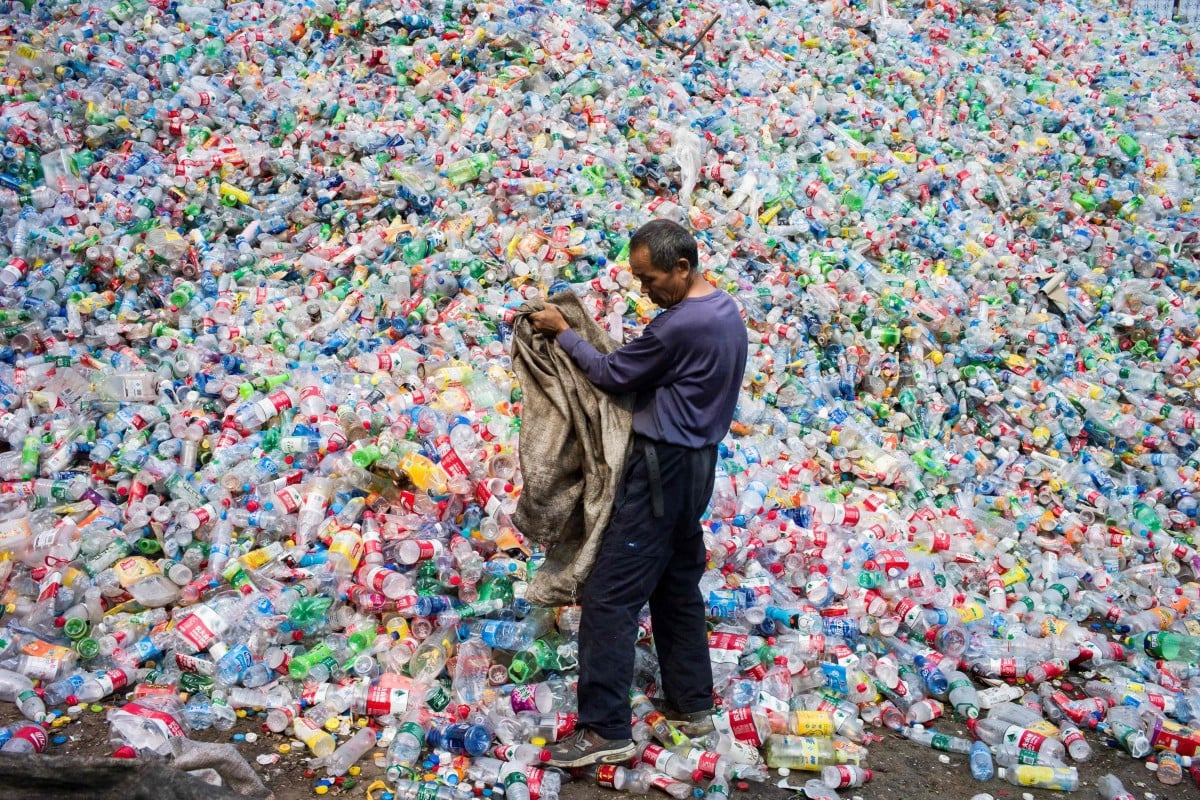
For years, China was the world’s leading destination for recyclable rubbish, but a ban on some imports has left nations scrambling to find dumping grounds for growing piles of waste. Photo: AFP
From grubby packaging that engulfs small Southeast Asian communities to waste that piles up in plants from the US to Australia, China’s ban on accepting the world’s used plastic has thrown recycling efforts into turmoil.
For many years, China took the bulk of scrap plastic from around the world, processing much of it into a higher quality material that could be used by manufacturers.
But, at the start of 2018, it closed its doors to almost all foreign plastic waste, as well as many other recyclables, in an effort to protect its environment and air quality, leaving developed nations struggling to find places to send their waste.
“It was like an earthquake,” Arnaud Brunet, director general of Brussels-based industry group The Bureau of International Recycling, said.
“China was the biggest market for recyclables. It created a major shock in the global market.”
Instead, plastic was redirected in huge quantities to Southeast Asia, where Chinese recyclers have shifted.
With a large Chinese-speaking minority, Malaysia was a top choice for Chinese recyclers looking to relocate, and official data showed plastic imports tripled from 2016 levels to 870,000 tonnes last year.
China to collect applications for scrap metal import licences from next month, trade group says
In the small town of Jenjarom, close to Kuala Lumpur, plastic processing plants appeared in large numbers, pumping out noxious fumes around the clock.
Huge mounds of plastic waste, dumped in the open, piled up as recyclers struggled to cope with the influx of packaging from everyday goods, such as foods and laundry detergents, from as far afield as Germany, the US, and Brazil.
Residents soon noticed the acrid stench over the town – the kind of odour that is usual in processing plastic, but environmental campaigners believed some of the fumes also came from the incineration of plastic waste that was too low quality to recycle.
“People were attacked by toxic fumes, waking them up at night. Many were coughing a lot,” resident Pua Lay Peng said.
“I could not sleep, I could not rest, I always felt fatigued,” the 47-year-old added.
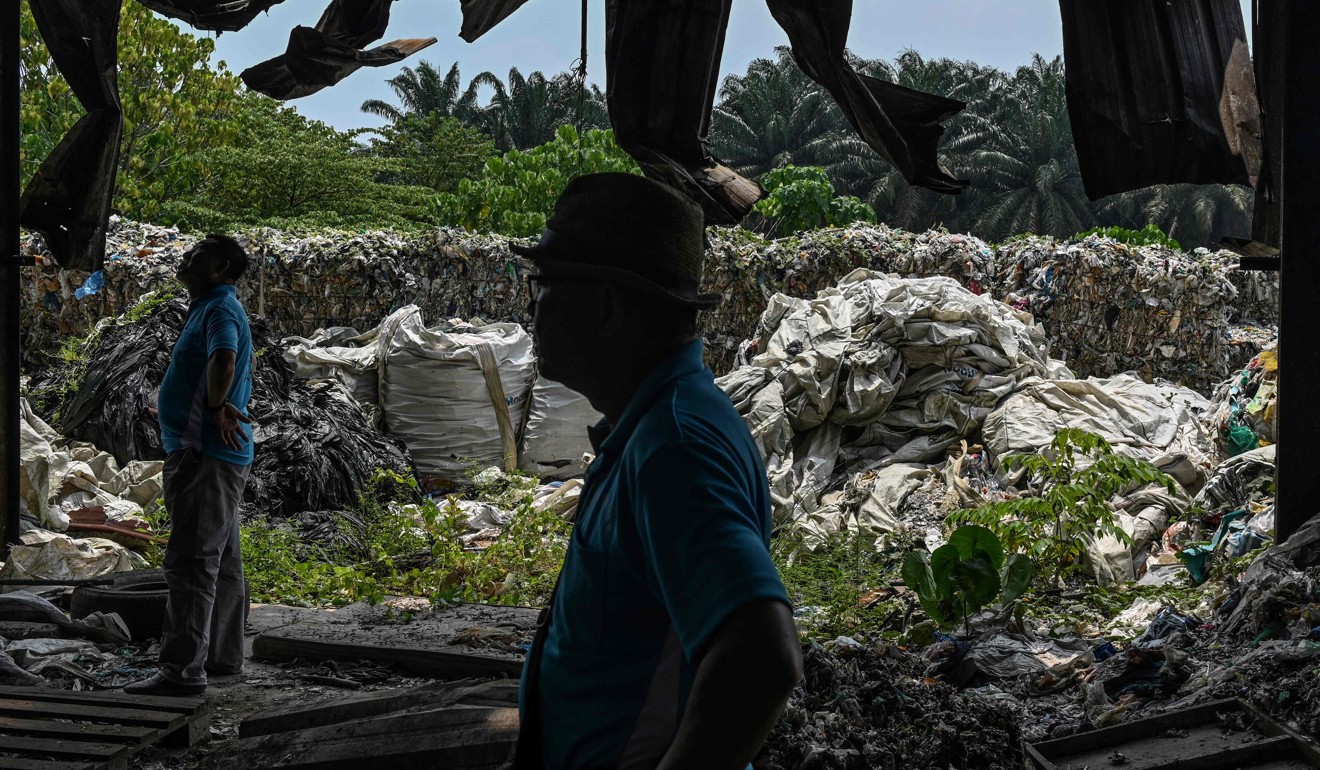
Representatives of an environmentalist NGO inspect an abandoned plastic waste factory in Jenjarom, outside Kuala Lumpur in Malaysia. Photo: AFP
Pua and other community members began investigating and, by mid-2018, had located about 40 processing plants, many of which appeared to be operating without proper permits.
Initial complaints to authorities went nowhere but they kept up pressure, and eventually the government took action. Authorities started closing down illegal factories in Jenjarom, and announced a nationwide temporary freeze on plastic import permits.
Thirty-three factories were closed down, although activists believed many had quietly moved elsewhere in the country. Residents said air quality had improved but some plastic dumps remained.
Chinese recycling expert breeds thousands of flies to turn kitchen waste into cash
In Australia, Europe and the US, many of those collecting plastic and other recyclables were left scrambling to find new places to send it.
They faced higher costs to have it processed by recyclers at home and in some cases resorted to sending it to landfill sites as the scrap piled up so quickly.
“Twelve months on, we are still feeling the effects but we have not moved to the solutions yet,” said Garth Lamb, president of industry body Waste Management and Resource Recovery Association of Australia.
Some have been quicker to adapt to the new environment, such as some local authority-run centres that collect recyclables in Adelaide, South Australia.
The centres used to send nearly everything – ranging from plastic to paper and glass – to China but now 80 per cent is processed by local companies, with most of the rest shipped to India.
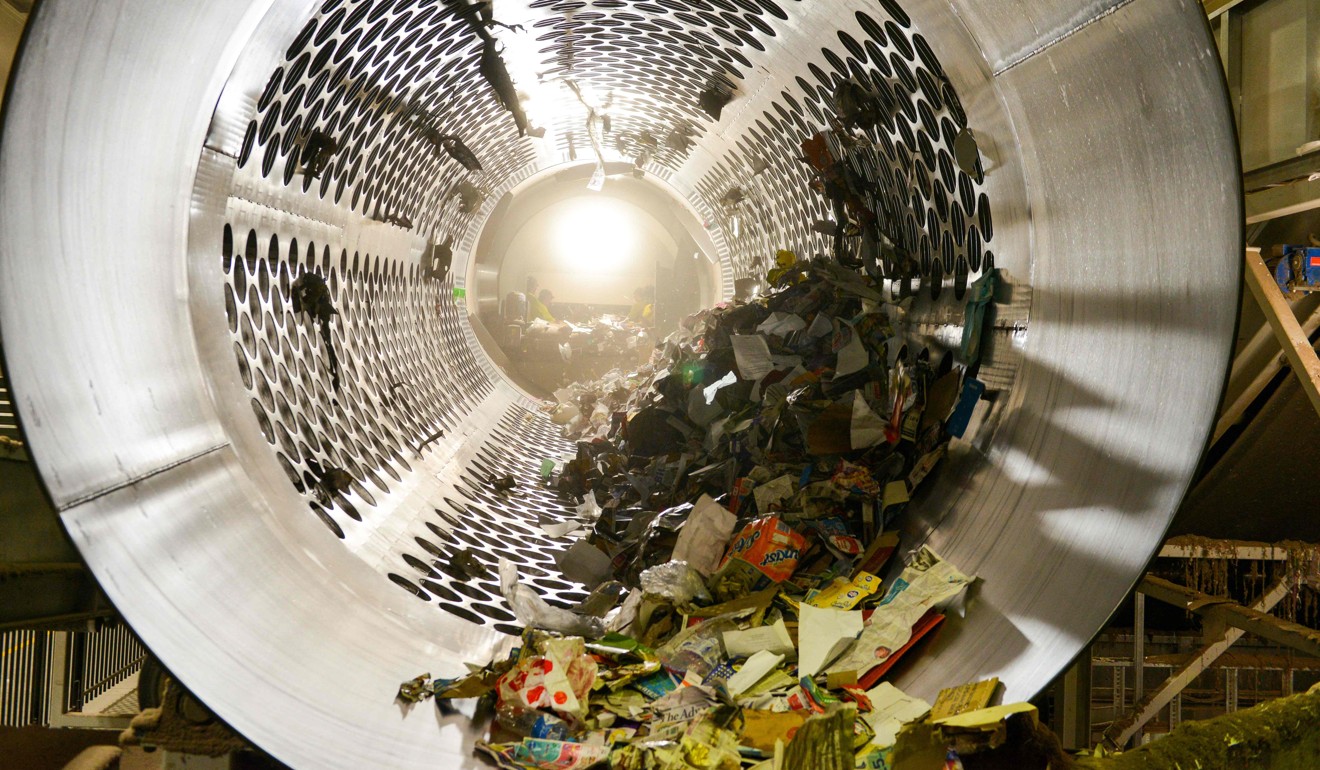
Rubbish is sifted and sorted at Northern Adelaide Waste Management Authority’s recycling site at Edinburgh, a northern suburb of the city of Adelaide. Photo: AFP
“We moved quickly and looked to domestic markets,” Adam Faulkner, chief executive of the Northern Adelaide Waste Management Authority, said.
“We’ve found that by supporting local manufacturers, we’ve been able to get back to pre-China ban prices.”
In mainland China, imports of plastic waste dropped from 600,000 tonnes per month in 2016 to about 30,000 a month in 2018, according to data cited in a recent report from Greenpeace and environmental NGO Global Alliance for Incinerator Alternatives.
Once bustling centres of recycling were abandoned as firms shifted to Southeast Asia.
How China’s plastic waste ban has left Japan to deal with mountains of trash
On a visit to the southern town of Xingtan last year, Chen Liwen, founder of environmental NGO China Zero Waste Alliance, found the recycling industry had disappeared.
“The plastic recyclers were gone – there were ‘for rent’ signs plastered on factory doors and even recruitment signs calling for experienced recyclers to move to Vietnam,” she said.
Southeast Asian nations affected early by the China ban – as well as Malaysia, Thailand and Vietnam were hit hard – have taken steps to limit plastic imports, but the waste has simply been redirected to other countries without restrictions, such as Indonesia and Turkey, the Greenpeace report said.
With only an estimated nine per cent of plastics ever produced recycled, campaigners said the only long-term solution to the plastic waste crisis was for companies to make less and consumers to use less.
Greenpeace campaigner Kate Lin said: “The only solution to plastic pollution is producing less plastic.”
Source: SCMP
Posted in Adam Faulkner, Adelaide, Arnaud Brunet, Australia, biggest market for recyclables, Brazil, Brussels-based industry group, Bureau of International Recycling, Chen Liwen, Chief Executive, China alert, China Zero Waste Alliance, China’s ban on plastic waste imports, director-general, earthquake, environmental ngo, Europe, founder, Garth Lamb, Germany, Global Alliance for Incinerator Alternatives, Greenpeace, Greenpeace campaigner, Japan, Jenjarom, Kate Lin, Kuala Lumpur, Malaysia, Mainland China, Malaysia, Northern Adelaide Waste Management Authority, president of industry body, Pua Lay Peng, recycling efforts, South Australia, Southeast Asian, Thailand, turmoil, Uncategorized, US, Vietnam, Waste Management and Resource Recovery Association of Australia, Xingtan |
Leave a Comment »






 CHINDIA ALERT: You'll be living in their world, very soon