Archive for ‘guideline’

13/02/2020

Coronavirus: dim sum off the menu as Guangzhou bans eating in restaurants

  • Elderly resident says he can’t recall this happening in his city before, not even during the Cultural Revolution
  • Outbreak is expected to deal a heavy blow to businesses, especially smaller eateries, with some already forced to close
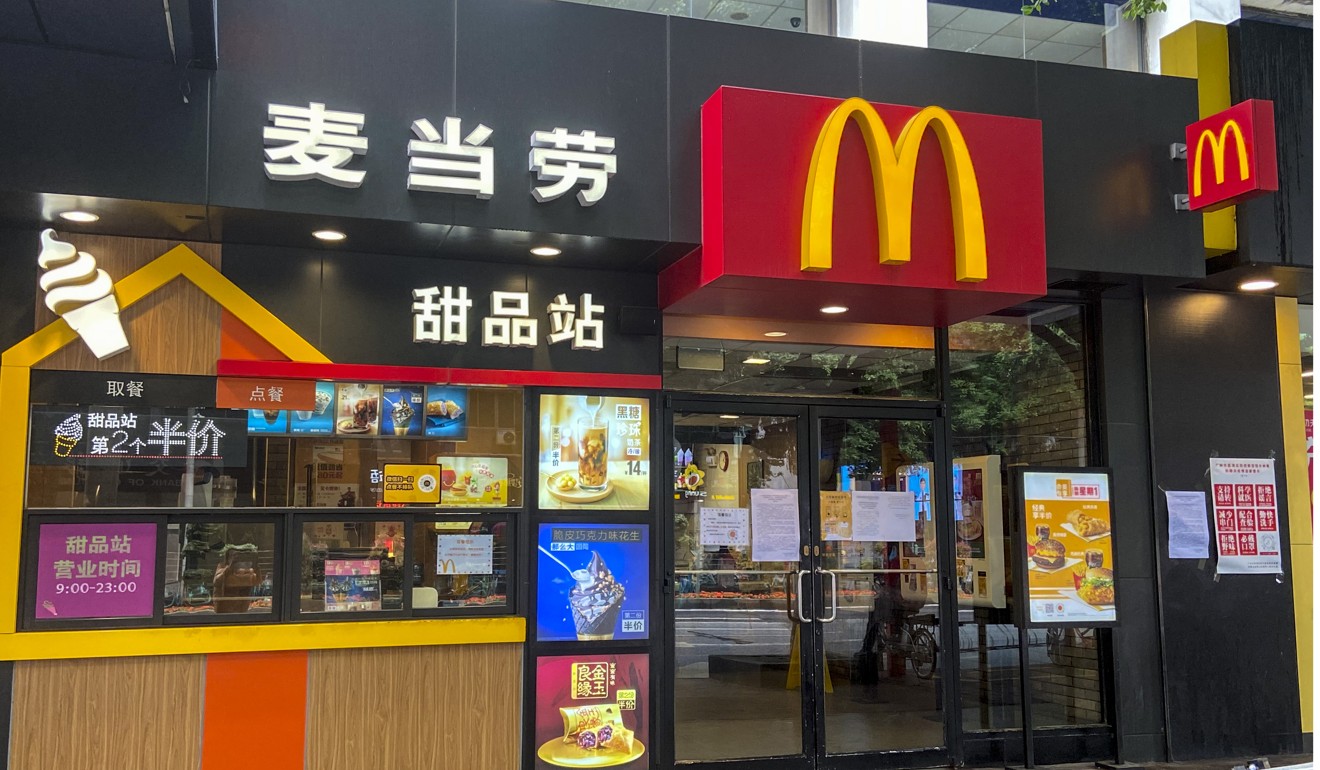
Residents can still get takeaway meals in Guangzhou, but they have been encouraged to order online and have them delivered. Photo: He Huifeng
Guangzhou is home to more than 15 million people and a busy trading port, and has been known as China’s most open city since the 1600s. For locals, going to restaurants for yum cha, or “drinking tea”, and dining on dim sum is an important part of the city’s history and culture – a tradition that has been carried through many generations.

“Even in the ‘three years of natural disasters’ [from 1959 to 1961, when China was in the grip of a famine] I remember there were still restaurants open,” He said. “I was really shocked [by the ban]. I guess the epidemic situation must be severe, otherwise Guangzhou definitely wouldn’t introduce this measure.”

China’s Hubei province reports huge spike in coronavirus cases, rising 10-fold from previous day
Many people in Guangzhou and across the country went back to work on Monday after an extended Lunar New Year break – another measure to try to stop the virus from spreading – with the government keen for businesses to return to normal operations.

The ban on dining in applies to restaurants, but employees can continue to have meals at their company canteens. And while residents can still get takeaways from restaurants, they have been encouraged to do this online, and have their meals delivered, rather than collecting their orders.

Group gatherings have also been banned in the city, and according to Nanfang Daily, some 126 banquets that would have involved more than 90,000 people have been cancelled by authorities already. The authorities did not say how long the measures would be in place.

Guangzhou is not the only city in Guangdong province to bring in a ban on dining in restaurants – Futian district in Shenzhen, Xiangzhou in Zhuhai, Foshan and Zhongshan have all taken the same step.

Beijingers gradually return to work as China’s fight against deadly coronavirus continues
In Guangzhou, while residents try to adapt, businesses are expecting to take a hit. One of the city’s top hotels said the virus outbreak could have a severe impact on the industry.

“Now we will focus on promoting takeaways for local customers. They can order our meals through apps providing online takeaway ordering services,” said Fion Liang, director of sales and marketing at The Garden Hotel. “As for guests staying in the hotel we will deliver meals to their rooms.”

To work or not to work: the difficult coronavirus question facing China
13 Feb 2020

She said the outbreak did not have a big impact on the hotel’s business in January, because the situation only became severe at the end of the month.

“The impact was definitely much bigger in February. If the epidemic continues to be severe throughout February, the occupancy rate of our rooms will be in the single digits this month,” Liang said. “[Most] hotels in Guangzhou are in the same situation.”

The outbreak is expected to deal a heavy blow to restaurants in the city, especially smaller eateries, and some have already been forced to close. June Zhao, the owner of dumpling restaurant Xi Xi, decided to shut down on Wednesday – the day the eat-in ban was announced.

Prospects had been good for the restaurant – it also sold books and alcohol in the evenings, and its trendy decor drew a young crowd.

“We had just started making money last winter and we were looking forward to earning more over the Lunar New Year holiday. But then the coronavirus came, our turnover fell to several hundred yuan a day, and we lost hope,” she said. “The new ban makes this situation worse – takeaway is not a good choice for dumplings, especially in winter. The losses will continue if we stay open.”

Coronavirus: major cities given power to seize private property
13 Feb 2020

The ban has also interrupted daily routines. Freelance cameraman Cony Yu, 28, usually spends some of his working day at cafes, but that is no longer possible. “[Now] I don’t have a comfortable place to sit aside from my home – even the parks have all been closed,” Yu said.

China disinfects entire cities to fight coronavirus outbreak, some twice a day
In the southern tech hub of Shenzhen, dining in has also been banned in central Futian district. Zhu Hao, a financial analyst based in the district, has been working from home for a week and ordering takeaway food every day. But he has to collect it from the gate at his residential compound, where security staff check the temperature of anyone entering or leaving.
He is losing patience with the restrictions. “I want to eat out. I want beef hotpot, coconut chicken, Korean barbecue and seafood,” he said.
In other Shenzhen districts, many restaurants and shopping centres have been temporarily closed or can only provide takeaway meals – including fast food chains such as McDonald’s and Starbucks.
Other places have strict rules for customers. At a bread shop, customers must register their ID and phone numbers and have their temperatures checked before they can enter. And for now, all hotpot restaurants have been closed.
Source: SCMP
15/04/2019

China unveils guideline for improving natural resource asset management

BEIJING, April 14 (Xinhua) — Chinese authorities on Sunday unveiled a guideline on reforming the country’s property rights system for natural resource assets.

By 2020, a system featuring confirmed ownership, clarified rights and responsibility, strict protection, smooth transfer and effective supervision should have been basically in place, reads the guideline released by the general offices of the Communist Party of China Central Committee and the State Council.

The efficiency of natural resource development and use, as well as resource protection, should have been significantly enhanced by then, providing strong support for improving ecological civilization, and guaranteeing national ecological security and resource security, the guideline says.

The system should play a fundamental role in strictly protecting resources and promoting ecological functions, and also play a key role in optimizing resource allocation, improving the efficiency of resource development and use, and promoting high-quality development.

China will explore more effective ways to realize the rights and interests of natural resource assets owners by giving play to the decisive role of the market in allocating resources, the guideline reads.

Meanwhile, the country must strengthen government supervision and administration, and promote the reasonable use of natural resources by natural resource rights holders, it says.

The country will improve the legal system for property rights over natural resource assets, protect the rights and interests of property rights holders on an equal footing, and give better play to the role of the property rights system as both an incentive and restraint in promoting ecological progress.

Local governments are encouraged to carry out bold explorations in accordance with local conditions to accumulate sufficient practical experience for reforming the property rights system, according to the guideline.

China will accelerate the formulation of unified classification standards for natural resources, and establish a unified investigation, monitoring and evaluation system.

It will make a balance sheet for natural resource assets, establish a dynamic monitoring system and keep track of changes in all types of natural resources in a timely manner, the document reads.

Efforts will also be made to accelerate the confirmation and registration of natural resource ownerships, with a focus on major ecological space including national parks, key state-owned forests, wetlands and major rivers.

The country will compile and implement a plan for the ecological restoration of natural space, and establish and improve a mechanism of restoration and comprehensive management of mountains, forests, land, lakes and grassland.

China will improve the system of compensation for damages to the ecological environment, with the persons liable taking the responsibility for restoration or compensation, according to the document.

Source: Xinhua

Law of Unintended Consequences

continuously updated blog about China & India

ChiaHou's Book Reviews

continuously updated blog about China & India

What's wrong with the world; and its economy

continuously updated blog about China & India