Archive for ‘Han Chinese’

09/10/2019

US imposes China visa restrictions over Uighur issue

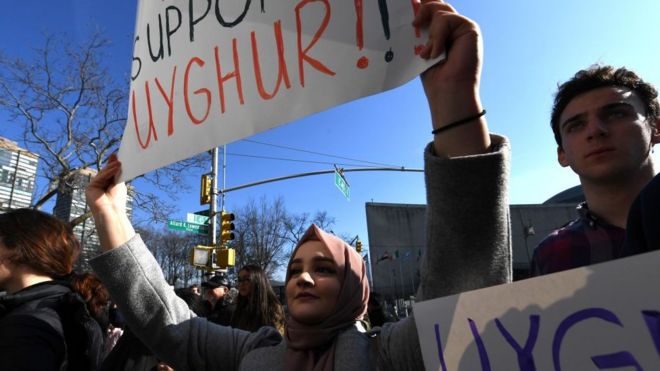
Uighur protesters demonstrating in the US in FebruaryImage copyright GETTY IMAGES
Image caption Protests calling for Uighur freedom have been happening all year

The US has said it will impose visa restrictions on Chinese officials accused of involvement in repression of Muslim populations.

It follows the decision on Monday to blacklist 28 Chinese organisations linked by the US to allegations of abuse in the Xinjiang region.

US Secretary of State Mike Pompeo said the Chinese government had instituted “a highly repressive campaign”.

China has dismissed the allegations as groundless.

In a statement, Mr Pompeo accused the Chinese government of a string of abuses against Uighurs, ethnic Kazakhs, Kyrgyz Muslims and other minority Muslim groups.

These included “mass detentions in internment camps; pervasive, high-tech surveillance; draconian controls on expressions of cultural and religious identities; and coercion of individuals to return from abroad to an often perilous fate in China”.

China has rebuffed the US moves.

“There is no such thing as these so-called ‘human rights issues’ as claimed by the United States,” foreign ministry spokesman Geng Shuang said on Monday.

“These accusations are nothing more than an excuse for the United States to deliberately interfere in China’s internal affairs.”

Media caption The BBC visits the camps where China’s Muslims have their “thoughts transformed”

Visa restrictions are to be imposed on Chinese government and Communist Party officials, as well as their family members.

“The United States calls on the People’s Republic of China to immediately end its campaign of repression in Xinjiang, release all those arbitrarily detained, and cease efforts to coerce members of Chinese Muslim minority groups residing abroad to return to China to face an uncertain fate,” the US statement said.

The US and China are currently embroiled in a trade war, and have sent delegations to Washington for a meeting about the tensions later this week.

What is the situation in Xinjiang?

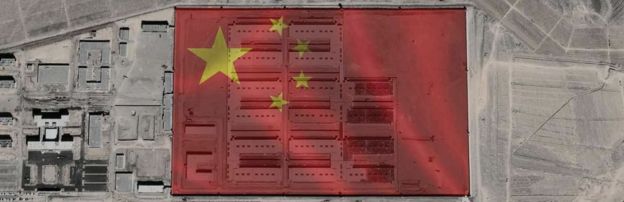
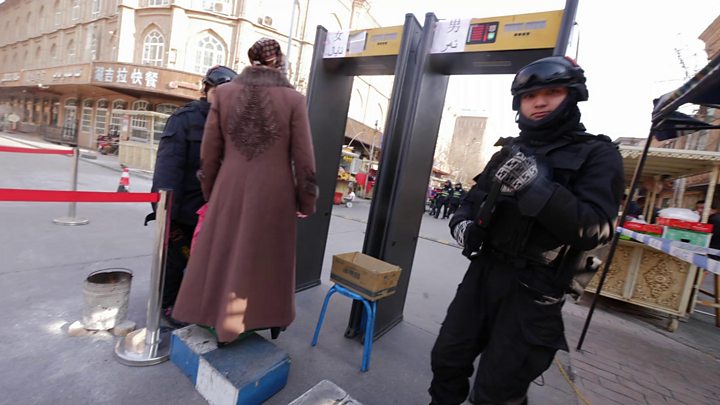
China has been carrying out a massive security operation in Xinjiang, in its far west, in recent years.

Human rights groups and the UN say China has rounded up and detained more than a million Uighurs and other ethnic minorities in vast detention camps, where they are forced to renounce Islam, speak only in Mandarin Chinese and learn obedience to the communist government.

But China says they are attending “vocational training centres” which are giving them jobs and helping them integrate into Chinese society, in the name of preventing terrorism.

Media caption The BBC’s John Sudworth meets Uighur parents in Turkey who say their children are missing in China

There have been increasingly vocal denunciations from the US and other countries about China’s actions in Xinjiang.

Last week, Mr Pompeo alleged that China “demands its citizens worship government, not God” in a press conference in the Vatican.

And in July more than 20 countries at the UN Human Rights Council signed a joint letter criticising China’s treatment of the Uighurs and other Muslims.

Who are the Uighurs?

Uighurs are ethnically Turkic Muslims. They make up about 45% of the Xinjiang region’s population; 40% are Han Chinese.

China re-established control in 1949 after crushing short-lived state of East Turkestan.

Since then, there has been large-scale immigration of Han Chinese and Uighurs fear erosion of their culture.

Xinjiang is officially designated an autonomous region within China, like Tibet to its south.

Source: The BBC
22/05/2019

Beyond the Yellow River: DNA tells new story of the origins of Han Chinese

  • Researchers say history of China’s biggest ethnic group is more complex than many believe
  • DNA study involving 20,000 unrelated people points to three river origins
The study of Han DNA by the team from the Kunming institute challenges a long-held view of the early origins of Chinese civilisation. Photo: Xinhua
The origins of China’s biggest ethnic group can be traced back to three river valleys, deposing the Yellow River as the sole cradle of Chinese civilisation, according to a new study.
The Yellow has long been hailed as the mother river of Han Chinese, who make up nearly 92 per cent of the country’s population today.
But research published in the online journal Molecular Biology and Evolution on Wednesday said the Yangtze and Pearl rivers – as well as the Yellow – gave rise to genetically separate groups about 10,000 years ago. Those ancestors then mingled to become the largest ethnic group in the world today, it said.
“The history of Han Chinese is more sophisticated than thought,” said Professor Kong Qingdong, a researcher with the Kunming Institute of Zoology at the Chinese Academy of Sciences and lead scientist in the study. “Many details need investigation.”
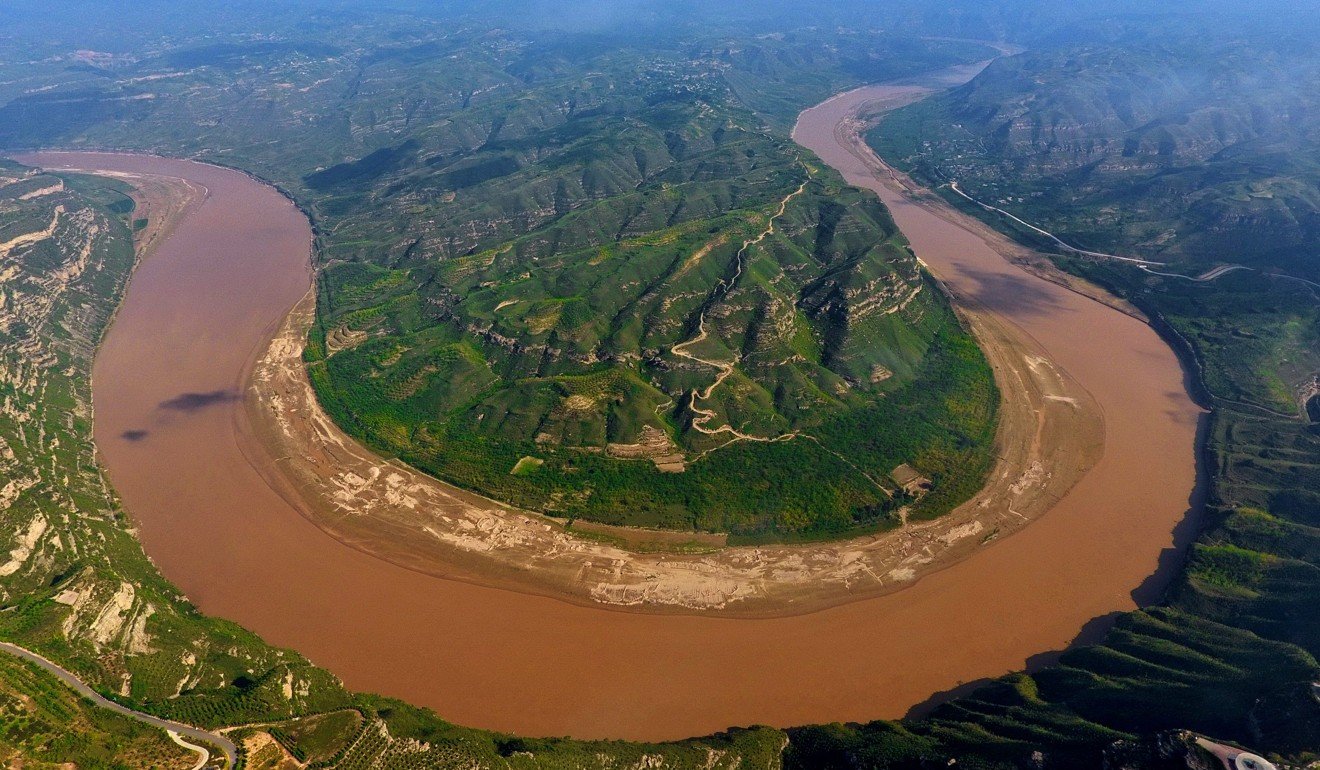
A DNA study suggests the Yellow River (above) may have to share its place as a cradle for Han Chinese with the Yangtze and the Pearl. Photo: Xinhua

After analysing DNA samples from more than 20,000 unrelated Han Chinese, examining their dialects and family geography and comparing those to archaeological DNA records, scientists concluded that the Yangtze and Pearl had equal claim with the Yellow to Han origins.

Progenitors from the three river valleys evolved independently, the Kunming team said, and distinctions found in the mitochondrial DNA (the mother’s line) of study volunteers added weight to their assertion.

Who are you? DNA tests help Chinese retrace ancient steps

About 0.07 per cent of the DNA examined in the Han Chinese study differed according to river valley origin. By comparison, the difference was much lower – 0.02 per cent – when the study volunteer data was assessed by dialect, the researchers said.

Earlier studies of genetic markers and microsatellite data that mapped the prevalence of DNA revealed that Han Chinese can be generally divided into two groups: North and South. The latest study found that the genetic variation between North and South Han Chinese is 0.03 per cent, considerably less significant than the distinction by rivers.

Dr Li Yuchun, lead author of the paper, said the findings helped trace the history of Han to the dawn of civilisation, the emergence of agriculture and the sustainable growth of population.

The earliest migrants from Africa to China arrived in what is now the southwest between 60,000 and 100,000 years ago, studies said. The genes of this group of hunter-gatherers were largely unchanged for tens of thousands years.

About 10,000 years ago, agricultural practices began to emerge in the valleys of the three rivers. Archaeologists found evidence of millet cultivation around the Yellow River, rice in the Yangtze, and roots and tubers in the Pearl.

The busy Yangtze River flows through Chongqing in southwest China. Photo: Xinhua

“Increasing food led to a population boom in these areas. We can see it in the separate path of gene evolution,” Li said.

The research also found that women were able to preserve their genetic story better than men as they stayed at home to tend the fields, while men went to explore, trade or wage war.

“Females are resilient to invasion,” she said.

The cultural significance of knowing one’s ancestry

The research team planned to examine the Y-chromosome, which passed from father to son, to study the expansion of the Han civilisation, Li said.

“It will be interesting to hear the story from a male perspective,” she said.

As the Han empires expanded, many ancient ethnic groups such as Huns, Siberians, Khitan in northern China and the Thai-Khadai speaking peoples in the south, passed from the record.

Some researchers think these minorities become extinct, but others believe they were absorbed into the Han Chinese population.

Source: SCMP

11/02/2019

China retaliates after Turkey’s claims about Abdurehim Heyit

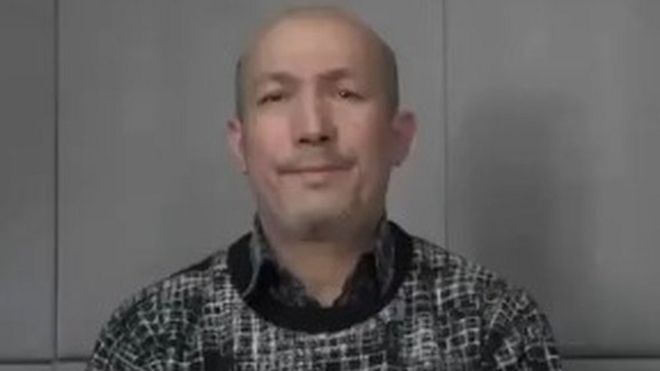
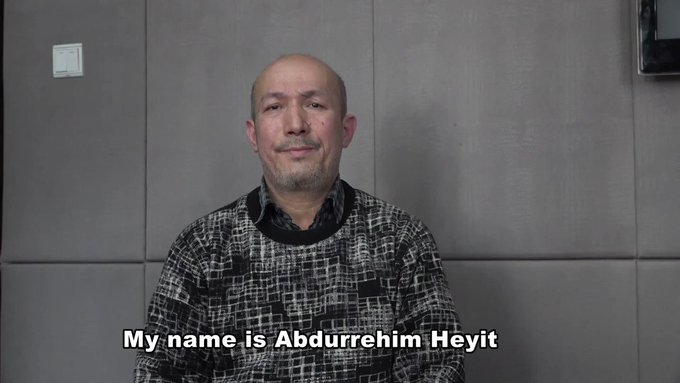
screenshot of video appearing to show Abdurehim HeyitImage copyrightCRI
Image captionA screenshot of the footage appearing to show Mr Heyit

China has railed at Turkish claims it is mistreating its Uighur minority, after a dispute about the fate of a prominent musician.

Turkey cited reports Abdurehim Heyit had died in a detention camp, and called China’s treatment of the Uighurs a “great embarrassment for humanity”.

China then released a video allegedly showing Mr Heyit alive.

The Uighurs are a Muslim minority in north-western China who speak a language closely related to Turkish.

They have come under intense surveillance by the authorities and up to a million Uighurs are reportedly being detained. A significant number of Uighurs have fled to Turkey from China in recent years.

China has asked Turkey to revoke its “false” claims. A Chinese foreign ministry spokeswoman said the musician was “very healthy”.

“We hope the relevant Turkish persons can distinguish between right and wrong and correct their mistakes,” spokeswoman Hua Chunying told reporters.

What is in the video?

The video was released by China Radio International’s Turkish-language service, which said Turkey’s criticism of China was unfounded.

Dated 10 February, the video features a man said to be Mr Heyit stating that he is in “good health”.

He gives the date of the video and says he has “never been abused”.

The man is wearing civilian clothes, and is speaking the Uighur language.

What did Turkey say?

Turkey foreign ministry had said that detained Uighurs were being subjected to “torture” in “concentration camps”.

Foreign ministry spokesman Hami Aksoy said the reports of Mr Heyit’s death “further strengthened the Turkish public’s reaction to the serious human rights violations in Xinjiang”.

China has described the comments as “completely unacceptable”.

Meanwhile Nury Turkel – chairman of the US-based Uyghur Human Rights Project – told the BBC that some aspects of the video were “suspicious”.

Mr Turkel says China has the technology to doctor the footage and said it was “their responsibility to prove the video is authentic”.

So far, few Muslim-majority countries have joined in public international condemnation of the allegations.

Analysts say many fear political and economic retaliation from China.

Presentational grey line

Turkey’s strategic blunder?

By John Sudworth, BBC News, Beijing

Critics have long seen Turkey’s silence over the plight of China’s Uighurs as a strategic blunder, undermining President Recep Tayyip Erdogan’s lofty claim to moral leadership of the Muslim world.

But belatedly basing its condemnation of China’s system of internment camps on a wrongful claim of a death in custody might be seen as an even bigger blunder.

That is certainly the view of China’s foreign ministry. “The video clip has provided very good evidence for the truth,” the ministry’s spokeswoman said.

In reality, it’s impossible to verify anything about the status of Abdurehim Heyit. Before the claims of the musician’s death, and China’s quick rebuttal, there had been no official word about his detention at all.

Like hundreds of thousands of Uighurs, he had simply disappeared into a legal black hole.

And the video bears all the hallmarks of the forced, televised confessions regularly produced by the combined efforts of China’s Communist Party-controlled courts, police investigators and state-run media.

China has been quick to claim that the reports of Mr Heyit’s death prove that much of the criticism of the situation in Xinjiang is based on falsehoods.

But critics will continue to argue that the confusion – stemming from the lack of any independent scrutiny – shows precisely why there’s such growing concern, even, finally, in Turkey.

Presentational grey line

China’s hidden camps

BBC
Presentational grey line

What do we know about Heyit’s fate?

Heyit was a celebrated player of the dutar, a two-stringed instrument that is notoriously hard to master. At one time, he was venerated across China. He studied music in Beijing and later performed with national arts troupes.

Mr Heyit’s detention reportedly stemmed from a song he had performed, titled Fathers. It takes its lyrics from a Uighur poem calling on younger generations to respect the sacrifices of those before them.

But three words in the lyrics – “martyrs of war” – apparently led Chinese authorities to conclude that Mr Heyit presented a terrorist threat.

Who are the Uighurs?

The Uighurs make up about 45% of the population in Xinjiang.

Media captionJohn Sudworth reports from Xinjiang, where one million Uighurs have reportedly been detained

They see themselves as culturally and ethnically close to Central Asian nations.

In recent decades, large numbers of Han Chinese (China’s ethnic majority) have migrated to Xinjiang, and the Uighurs feel their culture and livelihoods are under threat.

Xinjiang is officially designated as an autonomous region within China, like Tibet to its south.

Source: The BBC
Law of Unintended Consequences

continuously updated blog about China & India

ChiaHou's Book Reviews

continuously updated blog about China & India

What's wrong with the world; and its economy

continuously updated blog about China & India