Archive for ‘Harvard’

28/02/2020

US professor Anming Hu charged with hiding China ties from Nasa

  • Tennessee academic Hu was arrested on Thursday and charged with three counts of wire fraud and three counts of making false statements
  • The Justice Department said Hu hid his link to the Peking University while taking funding from the US space agency
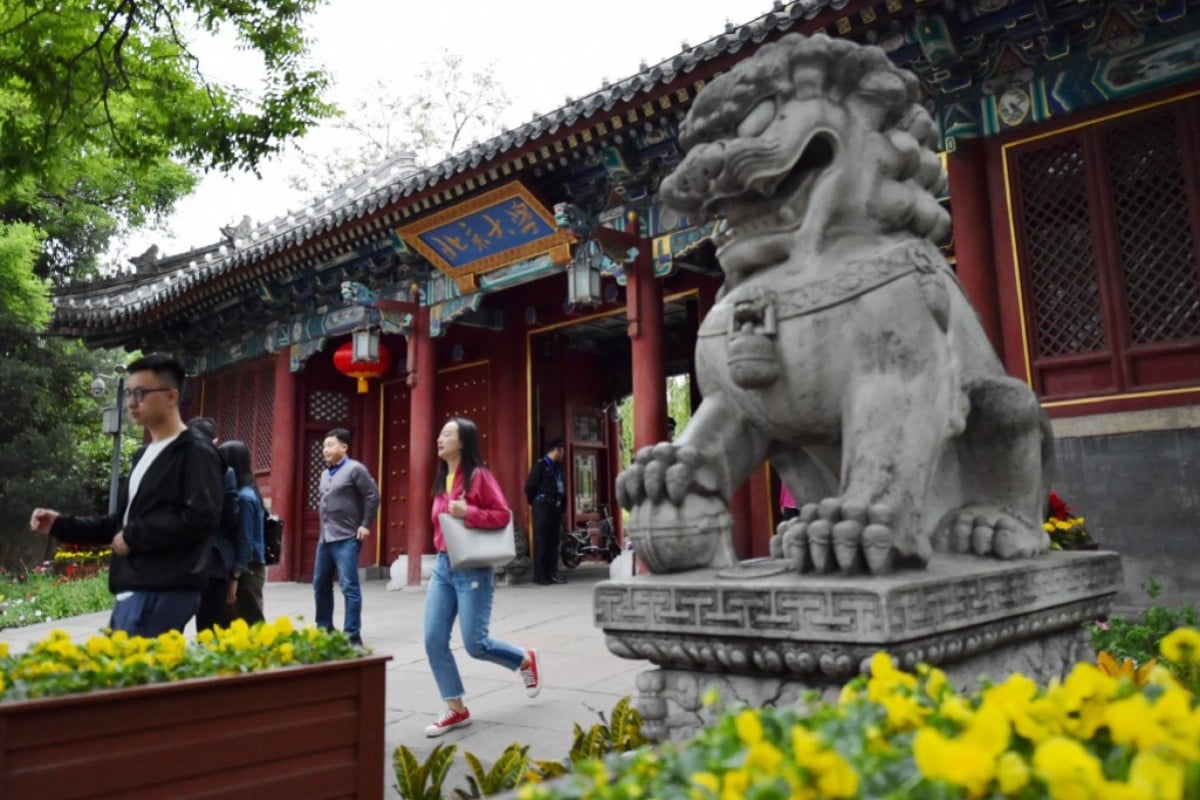
Peking University in Beijing. Photo: Xinhua

US authorities on Thursday charged a professor at a university in Tennessee with fraud and false statements, saying he hid his link to a Chinese institution while taking funding from Nasa.

In the latest case related to US efforts to halt alleged unauthorised technology transfers to China, the Justice Department said Anming Hu hid his ties to Peking University of Technology while he taught and did research at University of Tennessee, Knoxville.

The indictment said that from 2016, Hu “engaged in a scheme to defraud the National Aeronautics and Space Administration” (Nasa) by hiding his affiliation with the Peking University.

“Federal law prohibits Nasa from using appropriated funds on projects in collaboration with China or Chinese universities,” the Justice Department said in a statement.

Hu was arrested on Thursday and charged with three counts of wire fraud and three counts of making false statements.

The wire fraud charges bring up to 20 years in prison and a fine of up to $250,000 each; the false statement counts each bring a maximum five years in prison.

Chinese man pleads guilty to photographing US Navy base

23 Feb 2020

The case was brought by the national security division of the Justice Department, which has taken aim over the past year at a number of Chinese nationals for allegedly stealing industrial and other secrets to boost China’s economy and defence sectors.

“This is just the latest case involving professors or researchers concealing their affiliations with China from their American employers and the US government. We will not tolerate it,” said John Demers, the assistant attorney general for national security.

US charges Harvard chemistry chair with lying about China ties

17 Feb 2020

Washington says Beijing both pressures and incentivises its nationals to bring back proprietary technology from the US.

Among those arrested for allegedly supporting Beijing’s illicit technology acquisition efforts is the chairman of Harvard University’s chemistry and chemical biology department.

Charles Lieber allegedly hid from Harvard and US authorities payments of $50,000 a month for his personal needs and $1.5 million in lab funding from a Chinese university.

Source: SCMP
17/05/2019

I M Pei, Louvre pyramid architect, dies aged 102

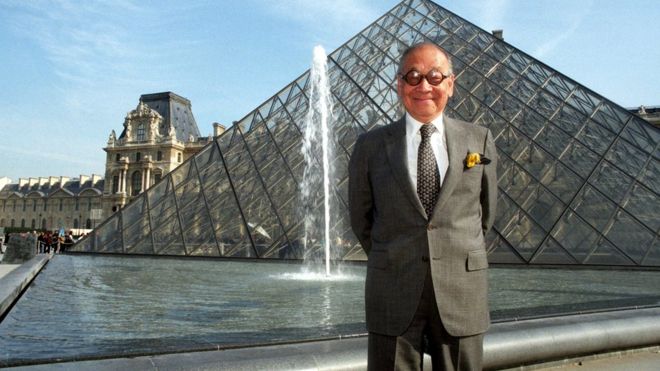
I M Pei on the 10th anniversary of The Pyramid of the Louvre, April 1999Image copyright AFP

I M Pei, the architect behind buildings including the glass pyramid outside the Louvre in Paris, has died aged 102.

Tributes have been pouring in, remembering him for a lifetime of designing iconic structures worldwide.

Pei’s designs are renowned for their emphasis on precision geometry, plain surfaces and natural light.

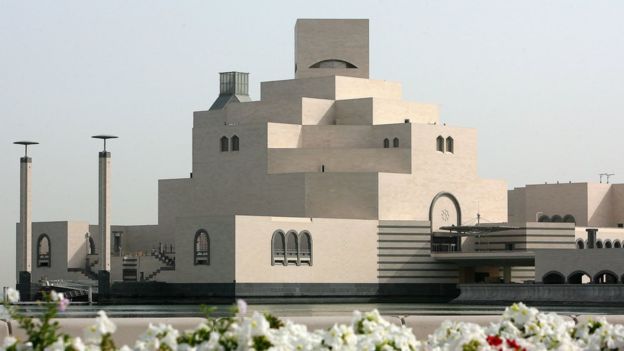
He carried on working well into old age, creating one of his most famous masterpieces – the Museum of Islamic Art in Doha, Qatar – in his 80s.

A pragmatic artist

Ieoh Ming Pei was born in Guangzhou in 1917, and moved to the US at the age of 18 to study at Pennsylvania, MIT and Harvard.

He worked as a research scientist for the US government during World War Two, and went on to work as an architect, founding his own firm in 1955.

One of the 20th Century’s most prolific architects, he has designed municipal buildings, hotels, schools and other structures across North America, Asia and Europe.

Qatar's Islamic Museum of ArtImage copyright GETTY IMAGES
Image caption Qatar’s Islamic Museum of Art is one of Pei’s most famous designs
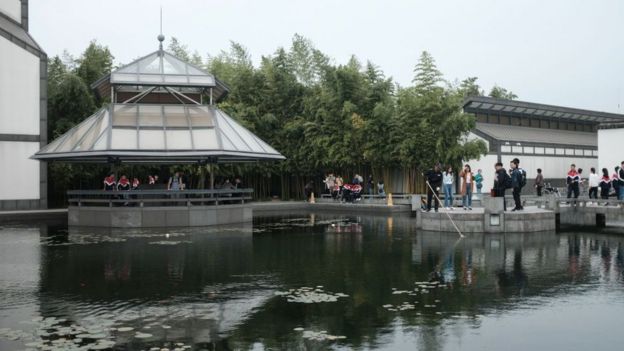
Suzhou Museum in ChinaImage copyright AFP/GETTY
Image caption The architect also designed the Suzhou Museum in China, which was completed in 2006

His style was described as modernist with cubist themes, and was influenced by his love of Islamic architecture. His favoured building materials were glass and steel, with a combination of concrete.

Pei sparked controversy for his pyramid at the Louvre Museum. The glass structure, completed in 1989, is now one of Paris’ most famous landmarks.

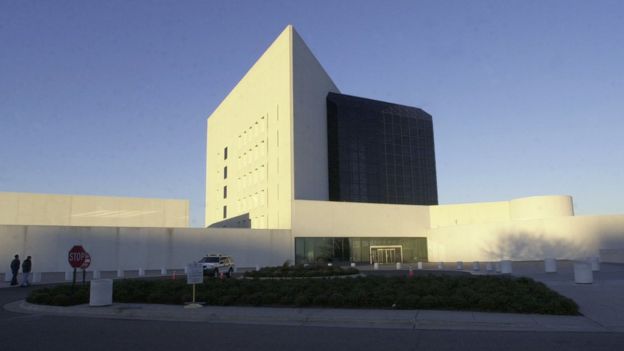
The John F. Kennedy Library and Museum in BostonImage copyright GETTY IMAGES
Image caption Pei designed Boston’s John F Kennedy Library and Museum
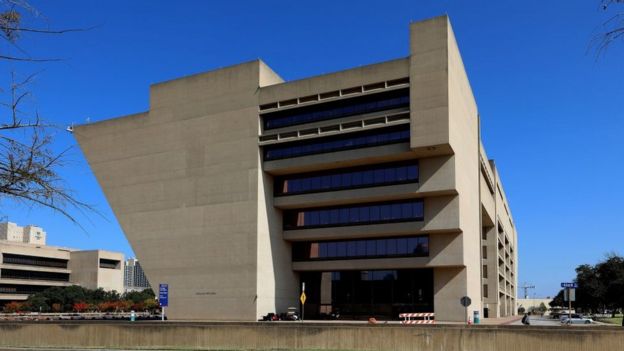
Dallas City Hall, designed by architects I M Pei and Theodore J MushoImage copyright GETTY IMAGES
Image caption I M Pei designed Dallas City Hall with fellow architect Theodore J Musho
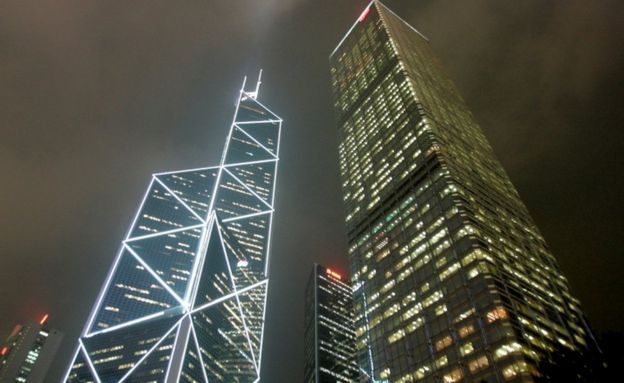
I M Pei's Bank of China tower (L) in Hong KongImage copyright REUTERS
Image caption I M Pei’s Bank of China tower (L) in Hong Kong

His other work includes Dallas City Hall and Japan’s Miho Museum.

“I believe that architecture is a pragmatic art. To become art it must be built on a foundation of necessity,” he once said.

He was won a variety awards and prizes for his buildings, including the AIA Gold Medal, the Praemium Imperiale for Architecture.

In 1983 Pei was given the prestigious Pritzker Prize. The jury said he had he “has given this century some of its most beautiful interior spaces and exterior forms”.

He used his $100,000 prize money to start a scholarship fund for Chinese students to study architecture in America.

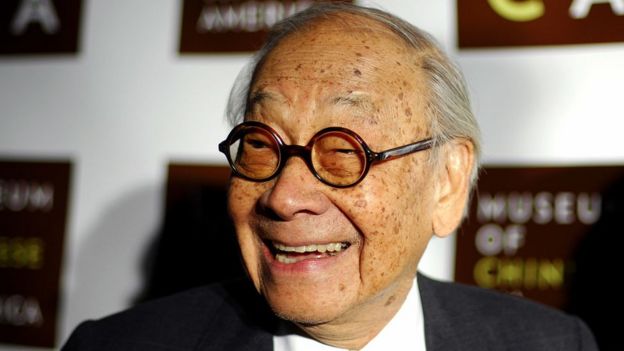
I M PeiImage copyright FILM MAGIC/GETTY
Source: The BBC
Law of Unintended Consequences

continuously updated blog about China & India

ChiaHou's Book Reviews

continuously updated blog about China & India

What's wrong with the world; and its economy

continuously updated blog about China & India