Archive for ‘Hawaii’

04/05/2020

China’s long-range Xian H-20 stealth bomber could make its debut this year

  • Beijing ‘carefully considering’ unveiling the plane at the Zhuhai Airshow in November at a time of heightened regional tension
  • H-20 will give China the nuclear triad of submarines, ballistic missiles and bombers
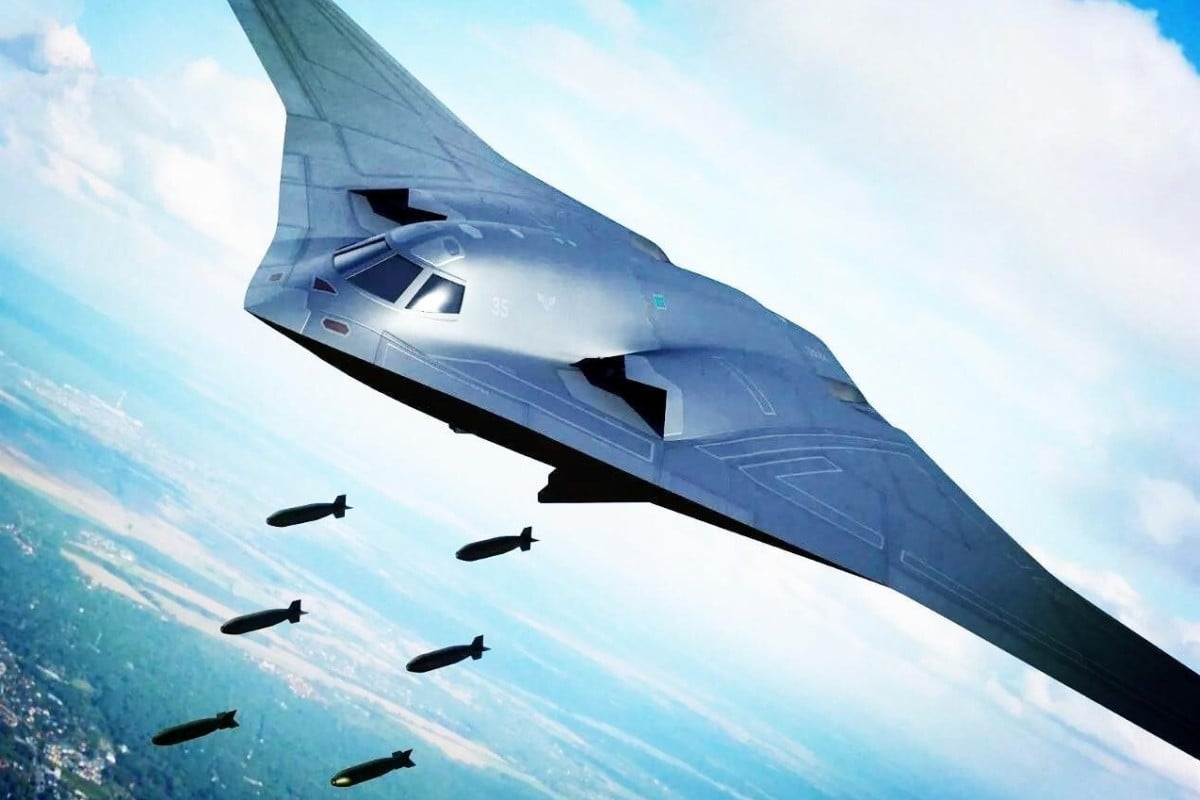
An artist’s impression of what the H-20 may look like. Photo: Weibo
China’s new generation strategic bomber is likely to be ready for delivery this year, but Beijing is said to be weighing the impact of its unveiling at a complex time in regional relations due to the coronavirus pandemic.
Military sources said the Xian H-20 supersonic stealth bomber – expected to double the country’s strike range – could make its first public appearance at this year’s Zhuhai Airshow in November, if the pandemic was sufficiently under control.
“The Zhuhai Airshow is expected to become a platform to promote China’s image and its success in pandemic control – telling the outside world that the contagion did not have any big impacts on Chinese defence industry enterprises,” a source said.
But the appearance of the bomber at this year’s air show could heighten tensions by directly threatening countries within its strike range, especially Australia, Japan and the Korean peninsula.
Thrilling aerobatics fill the skies to open air show in central China
“The Beijing leadership is still carefully considering whether its commission will affect regional balance, especially as regional tensions have been escalating over the Covid-19 pandemic,” another source said.
“Like intercontinental ballistic missiles, all strategic bombers can be used for delivering nuclear weapons … if China claimed it had pursued a national defence policy which is purely defensive in nature, why would it need such an offensive weapon?”
Tensions in the region have worsened in the past month with a war of words between Beijing and Washington over the pandemic, and both sides increasing naval patrols.
The US defence department has estimated a cruising distance of more than 8,500km (5,300 miles) for the H-20, the last in China’s 20 series of new generation warplanes, which includes the J-20 stealth fighter jet, the Y-20 giant transporter and the Z-20 medium-lift utility helicopter.

The arrival of the H-20 would mark the completion of China’s “nuclear triad” of ground-based intercontinental ballistic missiles, submarine-launched missiles and air-launched weapons.
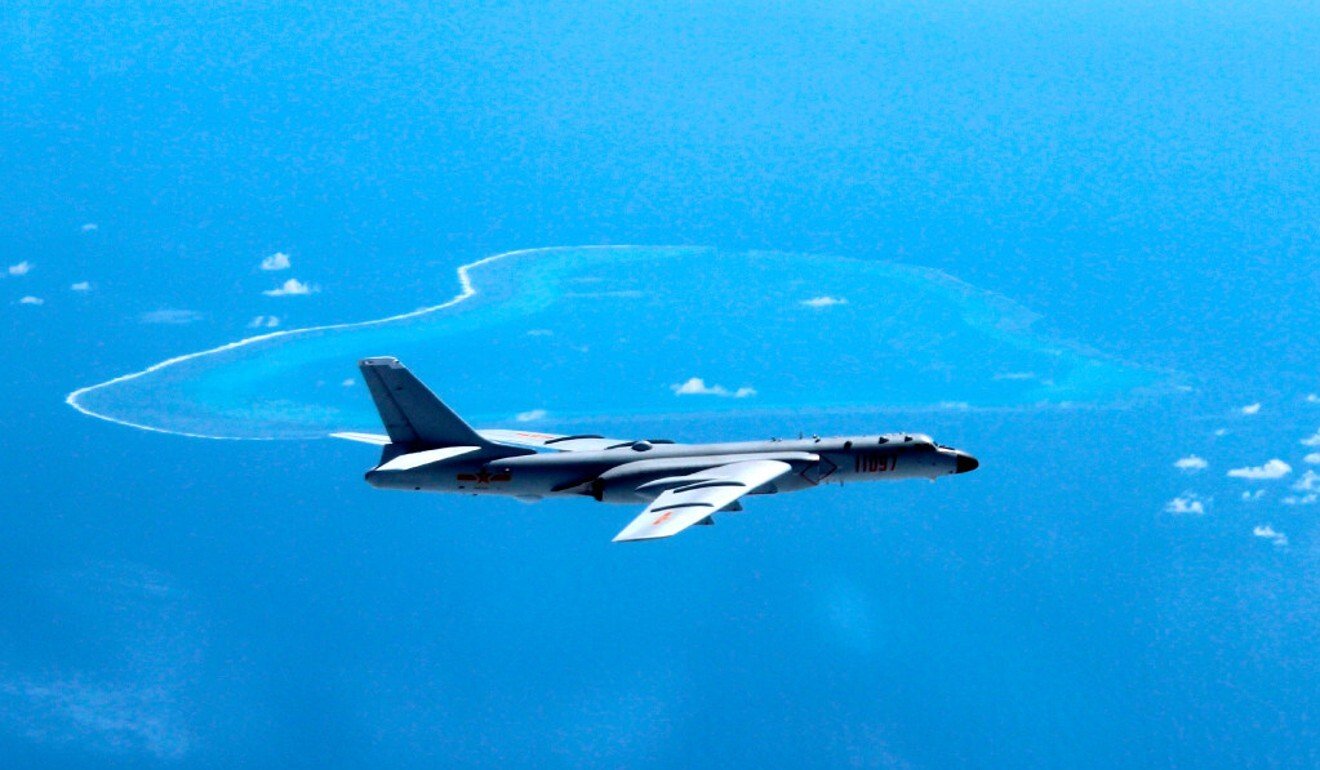
An H-6K bomber, or China’s B-52, flies over the South China Sea. Photo: AP
Chinese state television has said the H-20 could alter the strategic calculus between the US and China by doubling the strike range of its current H-6K, dubbed the country’s B-52.

The H-20 has reportedly been designed to strike targets beyond the second island ring – which includes US bases in Japan, Guam, the Philippines and other countries – from bases in mainland China. The third island chain extends to Hawaii and coastal Australia.

It will be equipped with nuclear and conventional missiles with a maximum take-off weight of at least 200 tonnes and a payload of up to 45 tonnes. The bomber is expected to fly at subsonic speeds and could potentially unleash four powerful hypersonic stealth cruise missiles.

However, like China’s first active stealth fighter jet, the J-20, engine development of the H-20 bomber has fallen behind schedule, according to sources.

For the J-20, engineers were developing high-thrust turbofan WS-15 engines, but the jet is understood to be using either Chinese WS-10B or Russian-built AL-31FM2/3 engines, which compromise its manoeuvrability and stealth capabilities at subsonic speeds.

Military enthusiasts have speculated the H-20 might use the NK-321 Russian engine but two independent military sources said it would be equipped with an upgraded WS-10 engine.

“The WS-10 is still a transitional engine for the H-20 because it is not powerful enough. The eligible replacement may take two to three years for development,” one of the sources said.

China must meet air force demand for J-20 stealth jets, say analysts
17 Feb 2020

The second said the speed of the H-20 would be slower than its original design, with some of its original combat capability being reduced.

“That’s why the American air force doesn’t care about the H-20, because it is not strong and powerful enough to cause any challenge to their B-2 and B-21 bombers.”

If the US decided to deploy more F-35 supersonic fighter jets – it has already sold about 200 to Japan and South Korea – it could push China to bring forward the unveiling of the new bomber, the second source said.

“For example, if some US decision makers decided to deploy up to 500 F-35s to Japan, South Korea, and even Singapore, India and Taiwan – making almost all of China’s neighbours in the Indo-Pacific region use F-35s to contain China – that would pushBeijing to launch the H-20 as soon as possible.”

The H-20 is believed to have been in development since the early 2000s. The project to develop a strategic bomber was first announced by the People’s Liberation Army in 2016.

Source: SCMP
17/06/2019

China rockets to forefront of global space race with sea launch success

  • China has become the first nation to fully own and operate a floating launch platform for its space missions
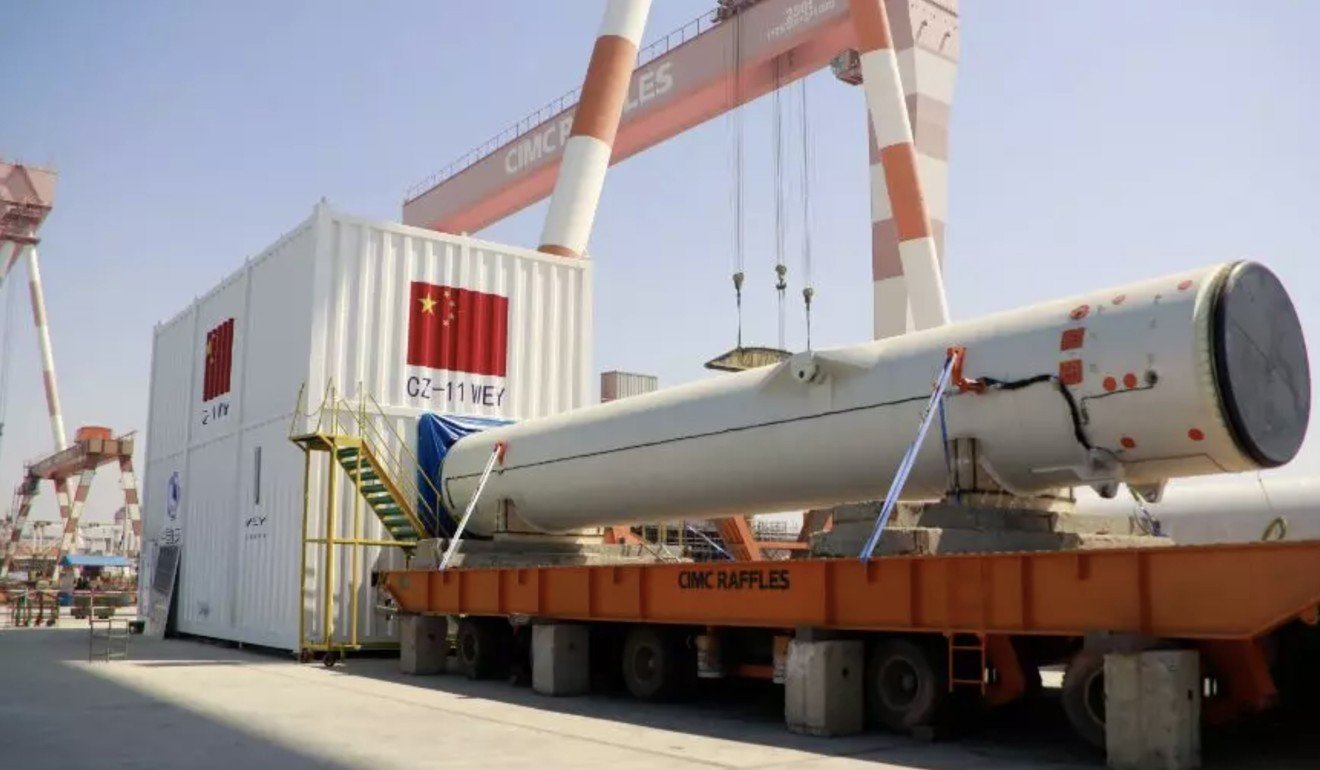
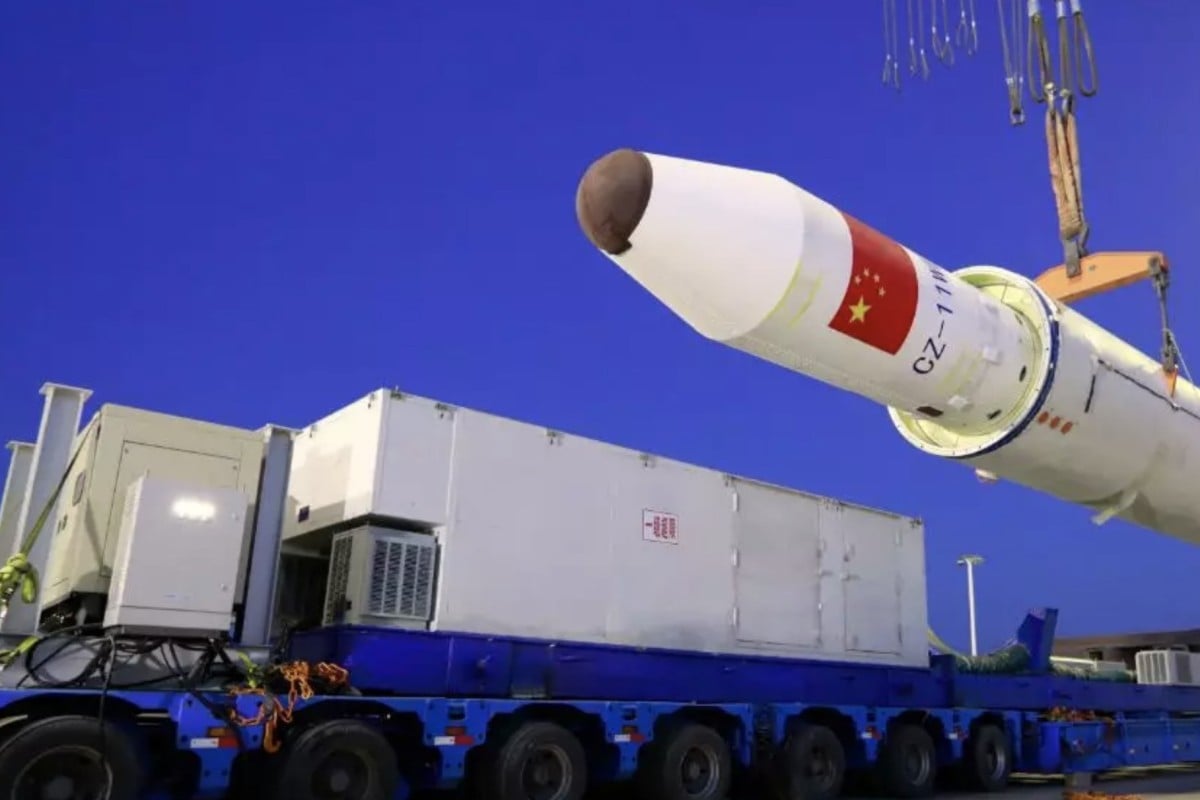
China has successfully launched a rocket into space from the Yellow Sea, making it the first nation to fully own and operate a floating sea launch platform. Photo: China National Space Administration
China successfully launched a rocket into space from a civilian cargo ship at sea on Wednesday, becoming the first nation to fully own and operate a floating sea launch platform, a technology expected to significantly reduce the cost and risk of space missions.
A Long March 11WEY rocket blasted off from the ship in the Yellow Sea at noon Beijing time, according to the China National Space Administration.
About six minutes later, five commercial satellites and a pair of “technical experiment” probes – called Bufeng, or Wind Catchers – reached their designated orbits.

The Wind Catchers will work together to detect winds on the surface of the world’s oceans. They will boost China’s ability to monitor and forecast typhoons and other extreme weather events, according to the administration.

“Launching a rocket from the sea has the advantages of high flexibility, good adaptability for specific tasks, and excellent launch economy,” said a statement on the administration’s website.

“It can flexibly select the launch point and touchdown area to meet the needs of various payloads for different orbits, and provide better aerospace commercial launch services for countries along the belt and road,” it added, referring to the Belt and Road Initiative, China’s plan to grow global trade.

The Long March 11 is a four-stage, solid fuel rocket with a design similar to a ballistic missile. It can carry a payload of about 700kg to the Earth’s lower orbit.

The first two stages of the rocket dropped in open waters in the northern Pacific Ocean, according to the administration. The rocket was equipped with a flight suspension system in case of any abnormal situation, but none occurred.

“The rocket debris will not cause damage to surrounding waters,” the administration said.

The world’s first ocean rocket launch platform, the Sea Launch, was jointly built by companies from Russia, the United States, Norway and Ukraine in the late 1990s. Its operation was halted in 2014 after military conflicts broke out between Russia and Ukraine.

Li Hong, president of the China Academy of Launch Vehicle Technology, told state media in March that the Chinese rocket and launch platform were designed and owned entirely by China, so it would not have similar problems caused by international disputes as the Sea Launch.

The launch was expected to encounter many technical and engineering challenges, including simplified procedures for pre-launch testing, the rocking motion of the ship and heat dissipation in a confined space.

But Chinese space authorities have argued the inconvenience would be offset by numerous advantages. For instance, the technology would allow China to move its launch site to as far away as Hawaii for quicker, cheaper satellite insertion to certain orbits, according to Xinhua.

Preparations get under way for Wednesday’s successful Chinese space launch from the northern Pacific ocean. Photo: China National Space Administration

A maritime launch is also expected to reduce the risk of rocket debris falling into densely populated areas.

Chinese space launch sites are typically located inland for defence purposes.

China has built its sea launch capability mainly to bolster the commercial space sector, according to Chinese space authorities.

In this mission, the rocket was sponsored and named after WEY, a young luxury car brand by Chinese sports utility vehicle manufacturer Great Wall Motor.

Chang’e 4 landing marks start of new China-US space race
Some cutting-edge car technology, such as new paint materials, will go into space for testing in the most extreme environments, according to state media reports.
The payloads include the Jilin 03A, the latest addition to a high-definition Earth observation satellite network, according to Changguang Satellite Technology Corporation, the satellite’s owner.
The company said the constellation, which will eventually comprise more than 20 satellites, would achieve global coverage for commercial applications.
One of the satellites launched on Wednesday belongs to Shanghai-based LinkSure Network, which has ambitious plans to provide free Wi-fi to everyone on the planet. The company has said it plans to eventually launch more than 200 satellites as part of the project.
Source: SCMP
06/05/2019

Ex-CIA agent Jerry Chun Shing Lee admits spying for China

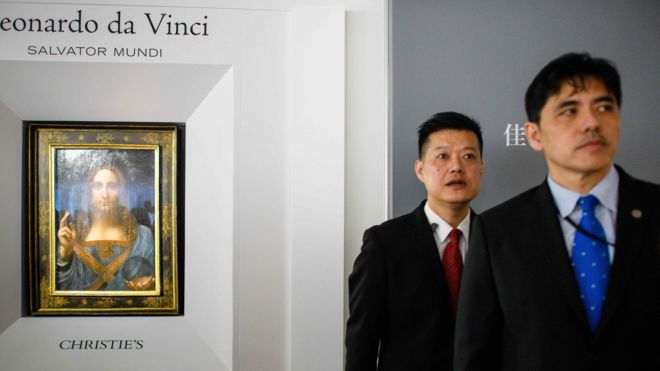
A man (R, wearing blue tie) identified by local Hong Kong media as former CIA agent Jerry Chun Shing LeeImage copyrightAFP
Image caption A man (R in blue tie) identified as Jerry Chun Shing Lee by Hong Kong media

An ex-CIA agent has pleaded guilty to spying for China, the US justice department says, in a case believed to be linked to the dismantling of a US espionage network.

Jerry Chun Shing Lee, 54, left the CIA in 2007 to live in Hong Kong, where he was recruited by Chinese agents.

Prosecutors say the naturalised US citizen was then paid to divulge information on US covert assets.

This led China to bring down a network of informants between 2010 and 2012.

About 20 informants were killed or jailed during that period – one of the most disastrous failures of US intelligence in recent years.

The US Assistant Attorney General for National Security, John Demers, said Lee’s case was the third involving US agents and China in less than a year.

“Every one of these cases is a tragic betrayal of country and colleagues,” he said.

What did Lee do?

Lee, who worked for the CIA between 1994 and 2007, pleaded guilty to conspiracy to deliver national defence information to aid a foreign government in a court in Virginia on Wednesday, the justice department said in a statement.

It said Lee was contacted by the Chinese intelligence agents in 2010. They offered him money, promising to take care of him “for life” in exchange for the required secret information. Hundreds of thousands of dollars were deposited in his Hong Kong bank account between May 2010 and December 2013.

Mr Lee created a document containing information about CIA activities, including locations to which US agents would be assigned.

In 2012, FBI agents searched a hotel room in Hawaii registered in Mr Lee’s name and found a USB drive. Investigators found the document on unallocated space in the drive, suggesting it had been deleted.

The search also revealed Lee to have a day planner and address book containing notes of intelligence provided by CIA agents, their true identities, operational meeting locations and phone numbers, and information about covert facilities.

Lee was interviewed by CIA officers in 2012 during which he said he had met Chinese intelligence officers but concealed the fact that they had set him tasks, the justice department said. In 2013 he first denied knowing about the document on his USB drive and then admitted he had created it but said he had never handed it on to Chinese agents.

Mr Lee was arrested at New York’s JFK airport in January 2018. He will be sentenced in August.


Spy v Spy

By Tara McKelvey, BBC News, Washington DC

The Lee case shows that the battle between Chinese and US spies has intensified over the past year, turning into a new “Cold War”, as Michael Collins, the deputy assistant director of the CIA’s East Asia mission center, called it.

The Chinese are investing more resources into their efforts to ferret out information about the US government, while the US government has become more aggressive in its pursuit of US citizens who have helped Chinese agents.

And when the guilty party is a former CIA officer, one of their own, the men and women who work in the field of US intelligence are ready to “bring the hammer down”, one senior intelligence official said.


CIA spy operation in China: Key dates

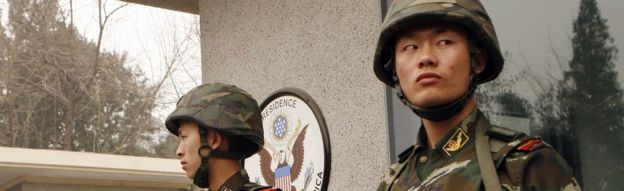
Three armed Chinese policemen guarding the US embassy in BeijingImage copyright AFP
Image caption Chinese police guard the US embassy in the capital, Beijing
  • 2010: Information gathered by the US from sources deep inside the Chinese government bureaucracy start to dry up
  • 2011: Informants begin to disappear. It is not clear whether the CIA has been hacked or whether a mole has helped the Chinese to identify agents
  • 2012: FBI begins investigation
  • May 2014: Five Chinese army officers are charged with stealing trade secrets and internal documents from US companies. Later that same month, China says it has been a main target for US spies
  • 2015: CIA withdraws staff from the US embassy in Beijing, fearing data stolen from government computers could expose its agents
  • April 2017: Beijing offers hefty cash rewards for information on foreign spies
  • May 2017: Four former CIA officials tell the New York Times that up to 20 CIA informants were killed or imprisoned by the Chinese between 2010 and 2012
  • June 2017: Former US diplomatic officer Kevin Mallory is arrested and charged with giving top-secret documents to a Chinese agent
  • January 2018: Former CIA officer Jerry Chun Shing Lee is arrested

Source: The BBC

Law of Unintended Consequences

continuously updated blog about China & India

ChiaHou's Book Reviews

continuously updated blog about China & India

What's wrong with the world; and its economy

continuously updated blog about China & India