Archive for ‘Hindu temple’

16/03/2020

In Indian capital, riots deepen a Hindu-Muslim divide

NEW DELHI (Reuters) – For years, Hindus and Muslims lived and worked peacefully together in Yamuna Vihar, a densely populated Delhi district.

But the riots that raged through the district last month appear to have cleaved lasting divisions in the community, reflecting a nationwide trend as tensions over the Hindu nationalist agenda of Prime Minister Narendra Modi boil over.

Many Hindus in Yamuna Vihar, a sprawl of residential blocks and shops dotted with mosques and Hindu temples, and in other riot-hit districts of northeast Delhi, say they are boycotting merchants and refusing to hire workers from the Muslim community. Muslims say they are scrambling to find jobs at a time when the coronavirus pandemic has heightened pressure on India’s economy.

“I have decided to never work with Muslims,” said Yash Dhingra, who has a shop selling paint and bathroom fittings in Yamuna Vihar. “I have identified new workers, they are Hindus,” he said, standing in a narrow lane that was the scene of violent clashes in the riots that erupted on Feb. 23.

The trigger for the riots, the worst sectarian violence in the Indian capital in decades, was a citizenship law introduced last year that critics say marginalises India’s Muslim minority. Police records show at least 53 people, mostly Muslims, were killed and more than 200 were injured.

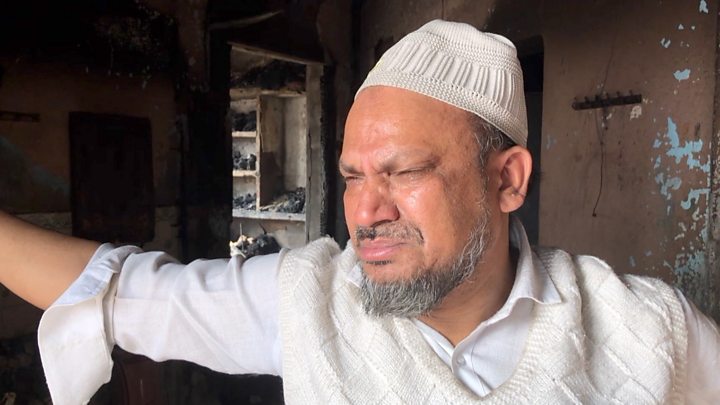
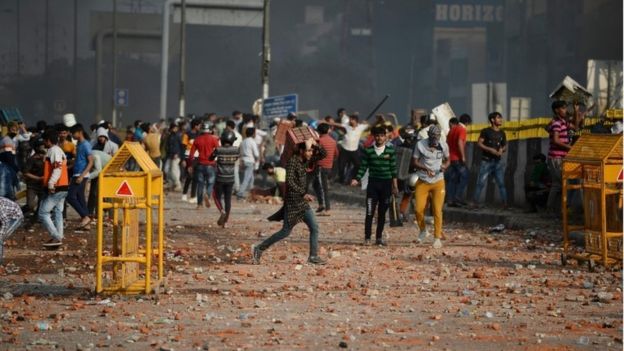
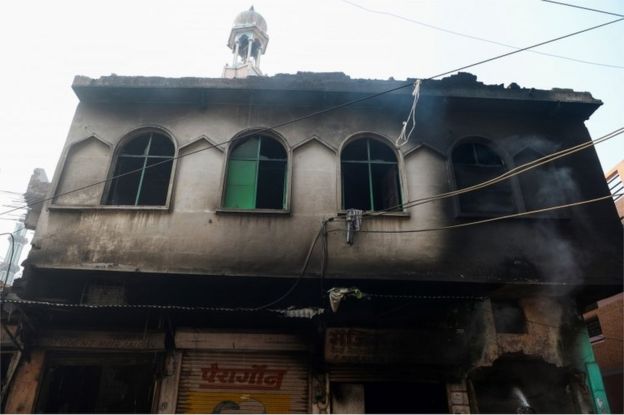
Dhingra said the unrest had forever changed Yamuna Vihar. Gutted homes with broken doors can be seen across the neighbourhood; electricity cables melted in the fires dangle dangerously above alleys strewn with stones and bricks used as makeshift weapons in the riots.

Most Hindu residents in the district are now boycotting Muslim workers, affecting everyone from cooks and cleaners to mechanics and fruit sellers, he said.

“We have proof to show that Muslims started the violence, and now they are blaming it on us,” Dhingra said. “This is their pattern as they are criminal-minded people.”

Those views were widely echoed in interviews with 25 Hindus in eight localities in northeast Delhi, many of whom suffered large-scale financial damages or were injured in the riots. Reuters also spoke with about 30 Muslims, most of whom said that Hindus had decided to stop working with them.

Suman Goel, a 45-year-old housewife who has lived among Muslim neighbours for 23 years, said the violence had left her in a state of shock.

“It’s strange to lose a sense of belonging, to step out of your home and avoid smiling at Muslim women,” she said. “They must be feeling the same too but it’s best to maintain a distance.”

Mohammed Taslim, a Muslim who operated a business selling shoes from a shop owned by a Hindu in Bhajanpura, one of the neighbourhoods affected by the riots, said his inventory was destroyed by a Hindu mob.

He was then evicted and his space was leased out to a Hindu businessman, he said.

“This is being done just because I am a Muslim,” said Taslim.

Many Muslims said the attack had been instigated by hardline Hindus to counter protests involving tens of thousands of people across India against the new citizenship law.

“This is the new normal for us,” said Adil, a Muslim research assistant with an economic think tank in central Delhi. “Careers, jobs and business are no more a priority for us. Our priority now is to be safe and to protect our lives.”

He declined to disclose his full name for fear of reprisals.

Emboldened by Modi’s landslide electoral victory in 2014, hardline groups began pursuing a Hindu-first agenda that has come at the expense of the country’s Muslim minority.

Vigilantes have attacked and killed a number of Muslims involved in transporting cows, which are seen as holy animals by Hindus, to slaughterhouses in recent years. The government has also adopted a tough stance with regard to Pakistan, and in August withdrew semi-autonomous privileges for Jammu and Kashmir, India’s only Muslim-majority state.

In November, the Supreme Court ruled that a Hindu temple could be built at Ayodhya, where a right-wing mob tore down a 16th-century mosque in 1992, a decision that was welcomed by the Modi government.

The citizenship law, which eases the path for non-Muslims from neighbouring Muslim-majority nations to gain citizenship in India, was the final straw for many Muslims, as well as secular Indians, sparking nationwide protests.

Modi’s office did not respond to questions from Reuters about the latest violence.

NIGHT VIGILANTES

During the day, Hindus and Muslims shun each other in the alleys of the Delhi districts that were hardest hit by the unrest in February. At night, when the threat of violence is greater, they are physically divided by barricades that are removed in the morning.

And in some areas, permanent barriers are being erected.

On a recent evening, Tarannum Sheikh, a schoolteacher, sat watching two welders install a high gate at the entrance of a narrow lane to the Muslim enclave of Khajuri Khas, where she lives. The aim was to keep Hindus out, she said.

“We keep wooden batons with us to protect the entrance as at any time, someone can enter this alley to create trouble,” she said. “We do not trust the police anymore.”

In the adjacent Hindu neighbourhood of Bhajanpura, residents expressed a similar mistrust and sense of insecurity.

“In a way these riots were needed to unite Hindus, we did not realise that we were surrounded by such evil minds for decades,” said Santosh Rani, a 52-year-old grandmother.

She said she had been forced to lower her two grandchildren from the first floor of her house to the street below after the building was torched in the violence, allegedly by a Muslim.

“This time the Muslims have tested our patience and now we will never give them jobs,” said Rani who owns several factories and retail shops. “I will never forgive them.”

Hasan Sheikh, a tailor who has stitched clothing for Hindu and Muslim women for over 40 years, said Hindu customers came to collect their unstitched clothes after the riots.

“It was strange to see how our relationship ended,” said Sheikh, who is Muslim. “I was not at fault, nor were my women clients, but the social climate of this area is very tense. Hatred on both sides is justified.”

Source: Reuters
26/02/2020

Why Delhi violence has echoes of the Gujarat riots

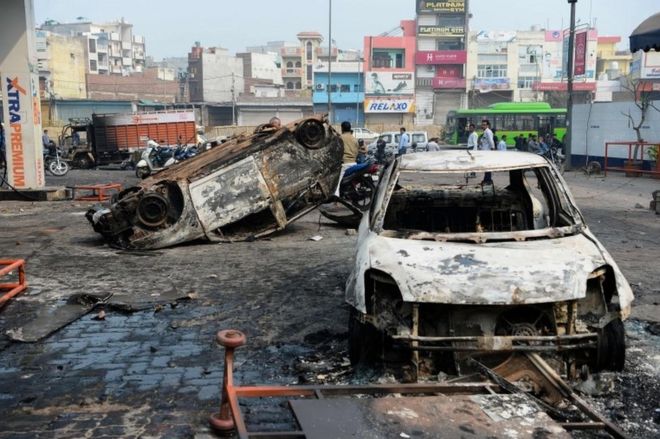
Local residents look at burnt-out vehicles following clashes between people supporting and opposing a contentious amendment to India"s citizenship law, in New Delhi on February 26, 2020Image copyright AFP
Image caption Delhi remains on edge after three days of rioting

The religious violence which has roiled Delhi since the weekend is the deadliest in decades.

What began as small clashes between supporters and opponents of a controversial citizenship law quickly escalated into full-blown religious riots between Hindus and Muslims, in congested working class neighbourhoods on the fringes of the sprawling capital.

Armed Hindu mobs rioted with impunity as the police appeared to look the other way. Mosques and homes and shops of Muslims were attacked, sometimes allegedly with the police in tow. Journalists covering the violence were stopped by the Hindu rioters and asked about their religion. Videos and pictures emerged of the mob forcing wounded Muslim men to recite the national anthem, and mercilessly beating up a young Muslim man. Panicky Muslims began leaving mixed neighbourhoods.

On the other side, Muslim rioters have also been violent – some of them also armed – and a number of Hindus, including security personnel, are among the dead and injured.

Media caption Delhi religious riots: ‘Mobs set fire to my house and shop’

Three days and 20 deaths later, Prime Minister Narendra Modi tweeted his first appeal for peace. There were no commiserations for the victims. Delhi’s governing Aam Aadmi Party was criticised for not doing much either. Many pointed to the egregious failure of Delhi’s police – the most well-resourced in India – and the inability of opposition parties to rally together, hit the streets and calm tensions. In the end, the rioters operated with impunity, and the victims were left to their fate.

Demonstrators gather along a road scattered with stones following clashes between supporters and opponents of a new citizenship law, at Bhajanpura area of New Delhi on February 24, 2020Image copyright AFP
Image caption More than 20 people have been killed in the rioting

Not surprisingly, the ethnic violence in Delhi has drawn comparisons with two of India’s worst sectarian riots in living memory. Nearly 3,000 people were killed in anti-Sikh riots in the capital in 1984 after the then prime minister Indira Gandhi was assassinated by her Sikh bodyguards. And in 2002, more than 1,000 people, mostly Muslims, died after a train fire killed 60 Hindu pilgrims in Gujarat – Mr Modi was then the chief minister of the state. The police were accused of complicity in both riots. The Delhi High Court, which is hearing petitions about the current violence, has said it cannot let “another 1984” happen on its “watch”.

Ashutosh Varshney, a professor of political science at Brown University who has extensively researched religious violence in India, believes that the Delhi riots are beginning to “look like a pogrom” – much like the ones in 1984 and 2002.

Pogroms happen, according to Prof Varshney, when the police do not act neutrally to stop riots, look on when mobs go on the rampage and sometimes “explicitly” help the perpetrators. Evidence of police apathy in Delhi has surfaced over the past three days. “Of course, the violence thus far has not reached the scale of Gujarat or Delhi. Our energies should now focus on preventing further escalation,” he says.

Political scientist Bhanu Joshi and a team of researchers visited constituencies in Delhi ahead of February’s state elections. They found the BJP’s “perfectly oiled party machinery constantly giving out the message about suspicion, stereotypes and paranoia”. In one neighbourhood, they found a party councillor telling people: “You and your kids have stable jobs, money. So stop thinking of free, free. [She was alluding to free water and electricity being given to people by the incumbent government.] If this nation doesn’t remain, all the free will also vanish.” Such paranoia about the security of the nation at a time when India has been at its most secure has “widened” existing ethnic divisions and “made people suspicious”, Mr Joshi said.

burnt-out mosque and shops are seen following clashes between people supporting and opposing a contentious amendment to India"s citizenship law, in New Delhi on February 26, 2020.Image copyright AFP
Image caption Mosques have been vandalised in the clashes

In the run-up to the Delhi elections Mr Modi’s party embarked on a polarising campaign around a controversial new citizenship law, the stripping of Kashmir’s autonomy and building a grand new Hindu temple on a disputed holy site. Party leaders freely indulged in hate speech, and were censured by poll authorities. A widely reported protest against the citizenship law by women in Shaheen Bagh, a Muslim-dominated neighbourhood in Delhi, was especially targeted by the BJP’s campaign, which sought to show the protesters as “traitors”.

“The repercussion of this campaign machine is the normalisation of suspicion and hate reflected in WhatsApp groups, Facebook pages, and conversations families have among themselves,” says Mr Joshi.

It was only a matter of time before Delhi’s fragile stability would be shaken. On Sunday a BJP leader issued a threat, telling the Delhi police they had three days to clear the sites where people had been protesting against the citizenship law and warned of consequences if they failed to do so. The first reports of clashes emerged later that day. The ethnic violence that followed was a tragedy foretold.

Source: The BBC

17/04/2019

India’s Supreme Court considers call to open mosques to women

NEW DELHI (Reuters) – India’s Supreme Court agreed on Tuesday to consider a petition from a Muslim couple to allow women into mosques, seeking to overturn a centuries-old practice that largely bars women from the places of worship.

Women are not allowed inside most mosques in India although a few have separate entrances for women to go into segregated areas.

The petitioners, Yasmeen Peerzade and her husband Zuber Peerzade, said that women were allowed to enter mosques during the time of the Prophet Mohammad.

“Like men, women also have the constitutional rights to offer worship according to their belief,” they said in their petition.

“There should not be any gender discrimination and allow Muslim women to pray in all mosques,” they said.

The Muslim couple referred to the temple ruling, which angered conservative Hindus, as a precedent to support their call for women to be allowed to pray at mosques.

A representative of a prominent organisation of Islamic scholars, the Jamiat Ulema-e-Hind, was not immediately available for comment.

The petition comes at a sensitive time for relations been minority Muslims and the majority Hindu community.

Some members of Prime Minister Narendra Modi’s Hindu nationalist ruling party have been accused of stirring communal animosity as the party seeks a second term in a staggered general election now underway.

Supreme Court judge S.A. Bobde said the court will examine the couple’s request at length.

The court in 2017 ruled as unconstitutional a law which allows Muslim men to divorce their wives simply by uttering the word “talaq”, which means divorce in Arabic, three times.

This year, the government issued an executive order making instant divorce an offence punishable with up to three years in jail.

Source: Reuters

Law of Unintended Consequences

continuously updated blog about China & India

ChiaHou's Book Reviews

continuously updated blog about China & India

What's wrong with the world; and its economy

continuously updated blog about China & India