Archive for ‘Hinduism’

08/03/2020

‘Kingdoms of women’: how modernity threatens Asia’s female-centric societies

  • Matriarchal and matrilineal communities centred around women have existed for centuries in China, India and Indonesia
  • But a recent influx of tourism, technology and mainstream patriarchal ideas is rapidly changing their way of life
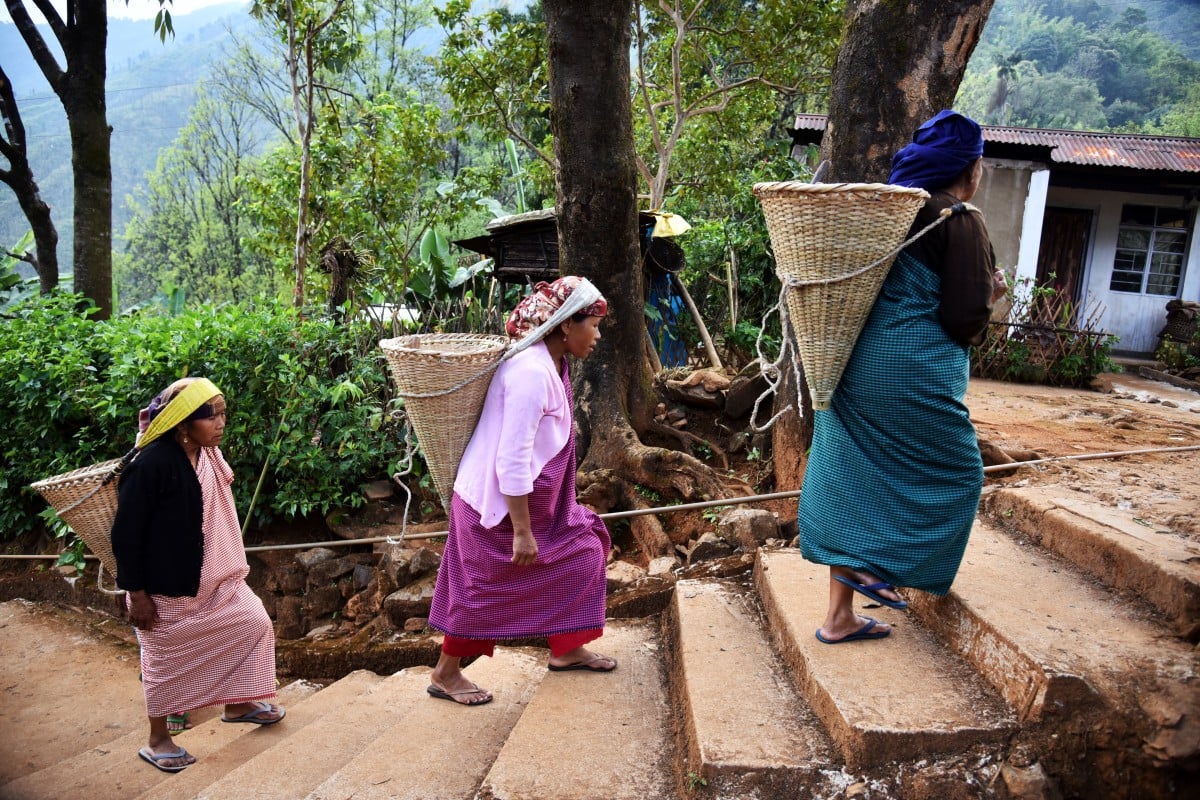
Khasi women leave their village of Nongtraw in India’s northeastern Meghalaya state to collect herbs from the fields. Photo: AFP
While women’s rights may have become a major topic of discussion around the world in recent years, there are female-centric communities that for centuries have distinguished themselves by carving out their own feminist traditions in places such as China, India
and Indonesia.
But many of these matriarchal and matrilineal societies are now struggling to survive, amid threats posed by the modern world such as mass tourism, technology and the infiltration of ideas from mainstream patriarchal society.
In China, for instance, there is a small Mosuo tribe known as the “kingdom of women”.

“Key to the Mosuo culture is their matrilineal family structure, with a basic building block of only members sharing the same female bloodline making up the family … Any male bloodline is not taken into account,” says Choo Waihong, a former Singaporean corporate lawyer who has researched the community for the past decade.
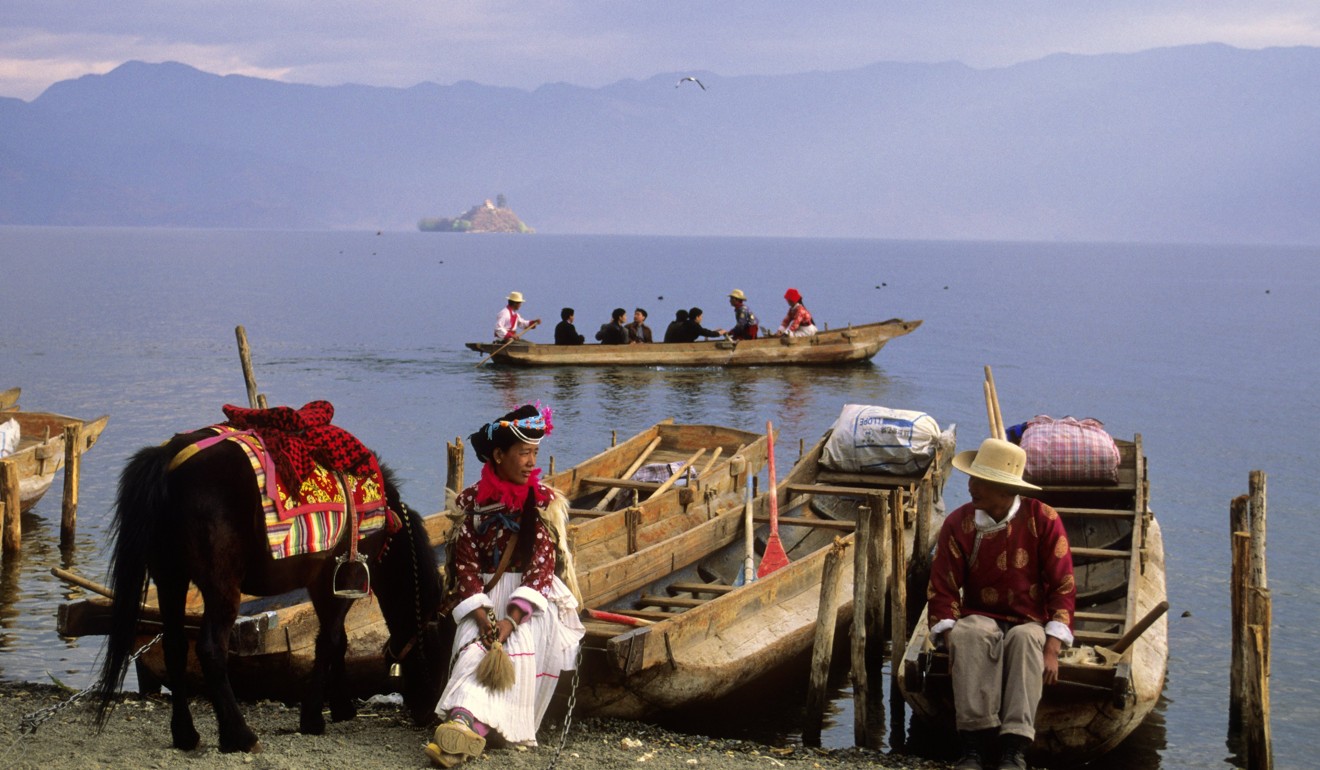
Lugu Lake in China’s Yunnan province is home to the Mosuo tribe. Photo: hemis.fr
At the top of the hierarchy is the grandmother, who is the head of the household. “Her daughters run the home and look after all the children of the female siblings … The sons and grandsons are expected in their supporting role to shoulder the manual tasks required to maintain the farmstead,” Choo says.

Researchers say that there are about 30,000 to 40,000 Mosuo people – most of whom live in the far eastern foothills of the Himalayas in Yunnan, southwest China. This unique community has come together in a series of villages dotted around a mountain and Lugu Lake, while growing numbers have moved out to work in larger towns and cities elsewhere in the country.

According to Choo, author of the book The Kingdom of Women: Life, Love and Death in China’s Hidden Mountains, the most distinctive facet of this community that sets it apart from mainstream society is the absence of formal marriage arrangements between men and women. Instead, they have “walking marriages”, where the man goes to the woman’s home, spends the night with her and then leaves the following morning.
The Kingdom of Women: China’s ‘lost tribe’ of matriarchs, the Mosuo
15 Mar 2017

The couple can choose to have a temporary or even a permanent arrangement as partners, but they are not bound by marriage ties. If they have children, the baby belongs to the woman’s household. “In fact, the man is not considered part of the matrilineal family and his ties to the baby do not determine the social place of the baby,” the researcher says.

Such a society, where women are not subjected to men and sexual freedom is an intrinsic part of their culture, is so radically different from mainstream patriarchal family structures that the Mosuo tribe has been examined and studied over time. More recently, its unique features have also become an eye-catching selling point for the local tourism industry.

TOURISM INDUSTRY

The Mosuo tribe used to live off the land by farming, herding and hunting. But many families now rely on tourism after the tribe’s culture and Lugu Lake became more popular and widely known.

“Tour buses on fancy freeways and planes arriving at a new airport bring more and more tourists daily to turn the whole area into a busy  travel playground,” Choo says. “Every household around the lake is involved one way or another with the hotel, restaurant and tour guide industries.”

While the tourism industry has brought money and better food for most families as well more access to educational opportunities for their children, it is also posing a serious threat to their culture and traditional ways of life.

“The greatest challenge for the tribe is their rapid transition from living a rudimentary subsistence farming way of life right into a burgeoning modern middle-class existence within a short span of 20 or so years,” Choo says.
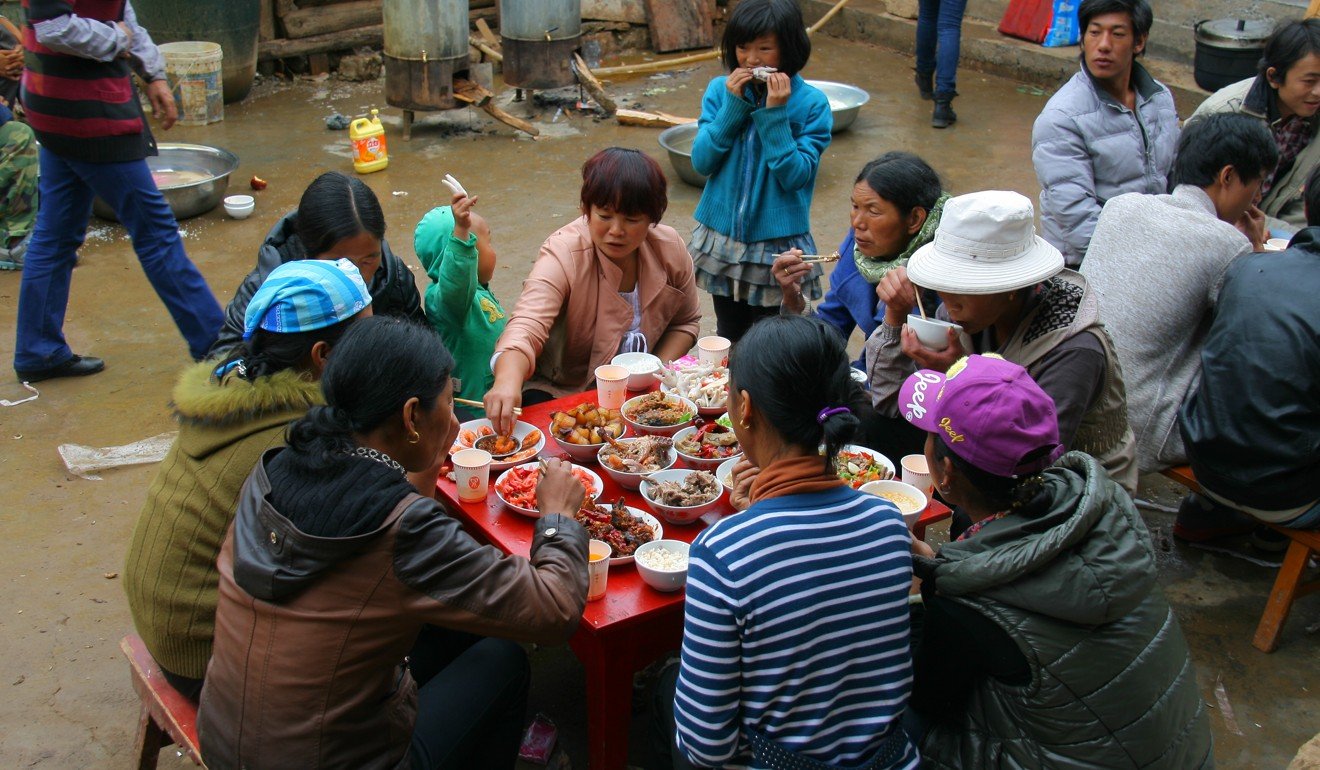
Mosuo people pictured at a wedding ceremony with an all-meat feast in 2013. Photo: Shutterstock
The Mosuo are now being bombarded not only by mainstream traditional Chinese values, but also by new economic values connected to money and the digital economy. “That is a lot to take in for people who had no writing to support their oral language … and only had primary schools for their children not so long ago,” she says.

Older Mosuo are now being pushed to learn Mandarin in order to keep up with the younger generations.

At the same time, the researcher says, “their long-held cultural beliefs and principles are evolving as the young generation gets exposed to the outside world and start to question the old ways of doing things.”

How life is changing for Thailand’s Karen tribe

17 Mar 2017

Walking marriages are not as common, with more youngsters getting married and forming nuclear families. “Large matrilineal families which were the norm are now breaking up into smaller nuclear families. All this dilutes the traditional matrilineal Mosuo family structure,” Choo says.

“The central place of the female in old Mosuo society is slowly being affected, as the male Mosuo are beginning to entertain some patriarchal outlook in the face of outside cultural influences.”

China may have radically reinvented itself in recent decades, but the changes to the Mosuo tribe have been nearly as dramatic. “The world of the Mosuo when I first ventured into their midst 12 years ago is a distant past as I look [today in 2020] at how they have changed,” Choo says.

PATRIARCHY IN DISGUISE

There are dozens of female-centric communities scattered around the world. The Garo and Khasi tribes, which are also traditionally matrilineal societies, can be found mostly in India.

In a Khasi family, the youngest daughter inherits the ancestral property, while in the Garo community, women also inherit property, but don’t necessarily have to be the youngest daughter of the family.

Caroline Marak, former head of the Garo Department at the North Eastern Hill University in India, says that the Garo are female-oriented, but not female-dominated. Women “have no part in the field of administration decision-making”, she wrote in an academic paper.

In recent years, the husbands of Garo women who are property owners have had a greater say over land deals, such as with government. “We are now trying to reclaim our rights from the males,” says Sume Sangma, secretary of the Garo Mothers Union NGO. “Women in the community are self-reliant and we are fighting for their real power.”
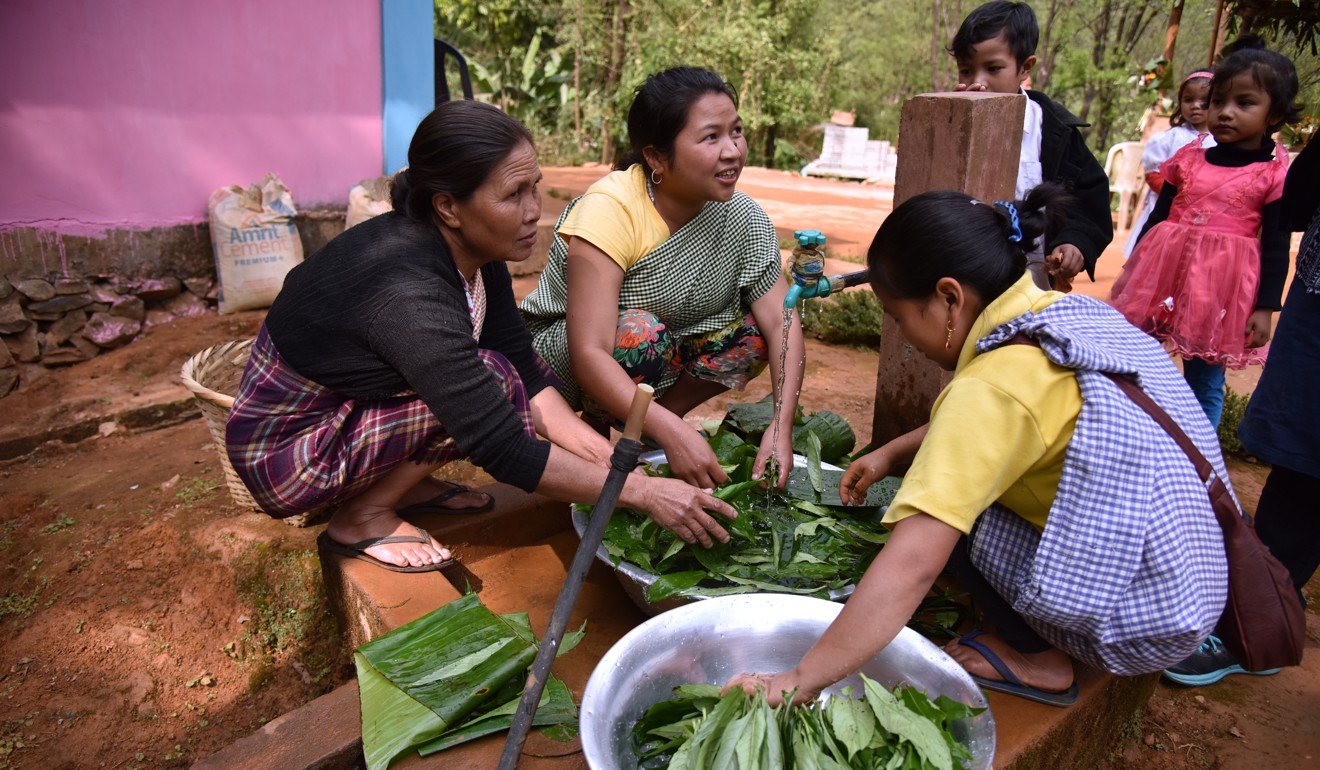
Khasi women wash leaves for cooking in the village of Nongtraw in India’s north-eastern Meghalaya state. Photo: AFP
Tiplut Nongbri, from the Centre for North East Studies and Policy Research at the Jamia Millia Islamia in New Delhi, also says women don’t have much authority in Garo and Khasi societies. “Patriarchy is in disguise in both the communities. The societies are matrilineal only as far as descent, residence and inheritance of property are concerned,” she says. “Women are not allowed to take part in politics.”
RG Lyngdoh, former home minister of Meghalaya – the hilly state in north-eastern India where both communities are based – says inward migration and the presence of Christian missionaries in the state have affected traditional lifestyles. “The old practices of equity between males and females have eroded,” Lyngdoh says.
“This has led to a perception of inadequacy among the males, [creating] discord within the family, which found expression in many negative ways, such as domestic violence and abandonment of wives, which never existed within the Khasi community.”
Gertrude Lamare, a member of the Khasi-Jaintia community now pursuing her PhD in anthropology at the London School of Economics and Political Science, argues that “with families becoming more nuclear, women do have a huge role in the decision-making process”.
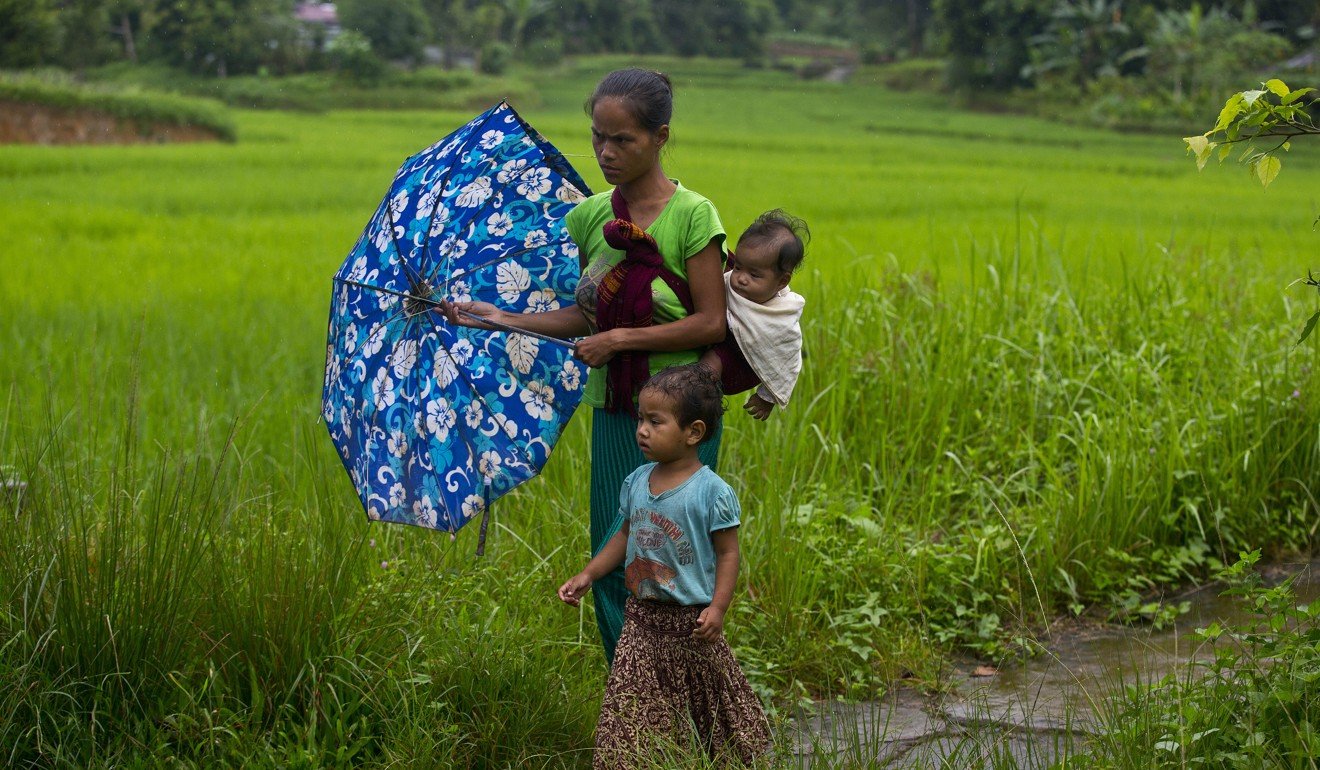
A Khasi woman walks in the rain with children past a paddy field along the Assam-Meghalaya state border in India. Photo: AP
Researchers have estimated that there are 1 million Garo in India and 
Bangladesh

, and 1.7 million Khasi in the Khasi and Jaintia Hills.
Some of them have become increasingly wary of outsiders preying on their natural resources, which are dwindling, thanks to deforestation and climate change.
Another challenge these communities are facing has to do with the growing trend of mixed marriages. “In recent years, children of a Khasi or Garo mother and non-tribal father [have] not [been] welcomed. The males in the family want their women to marry within the tribal community,” researcher Nongbri says, noting that younger generations are going through an identity crisis.
STILL PROUD
The world’s largest known matrilineal society today is believed to be in Indonesia: the Minangkabau, also known as Minang. Their community of about 8 million is scattered around the world, but most are in Indonesia’s West Sumatra province. While traditionally animist, they were later influenced by Hinduism and Buddhism, and most have since embraced Islam.
But much like the others, their community is also changing.
Nursyirwan Effendi, dean of the Faculty of Social and Political Science at Andalas University, says that many of those who remain in villages and rural areas still hold tight to the tribe’s values.
“Women are central in the distribution of assets, such as rice fields, gardens and [houses], from their ancestors,” he says.
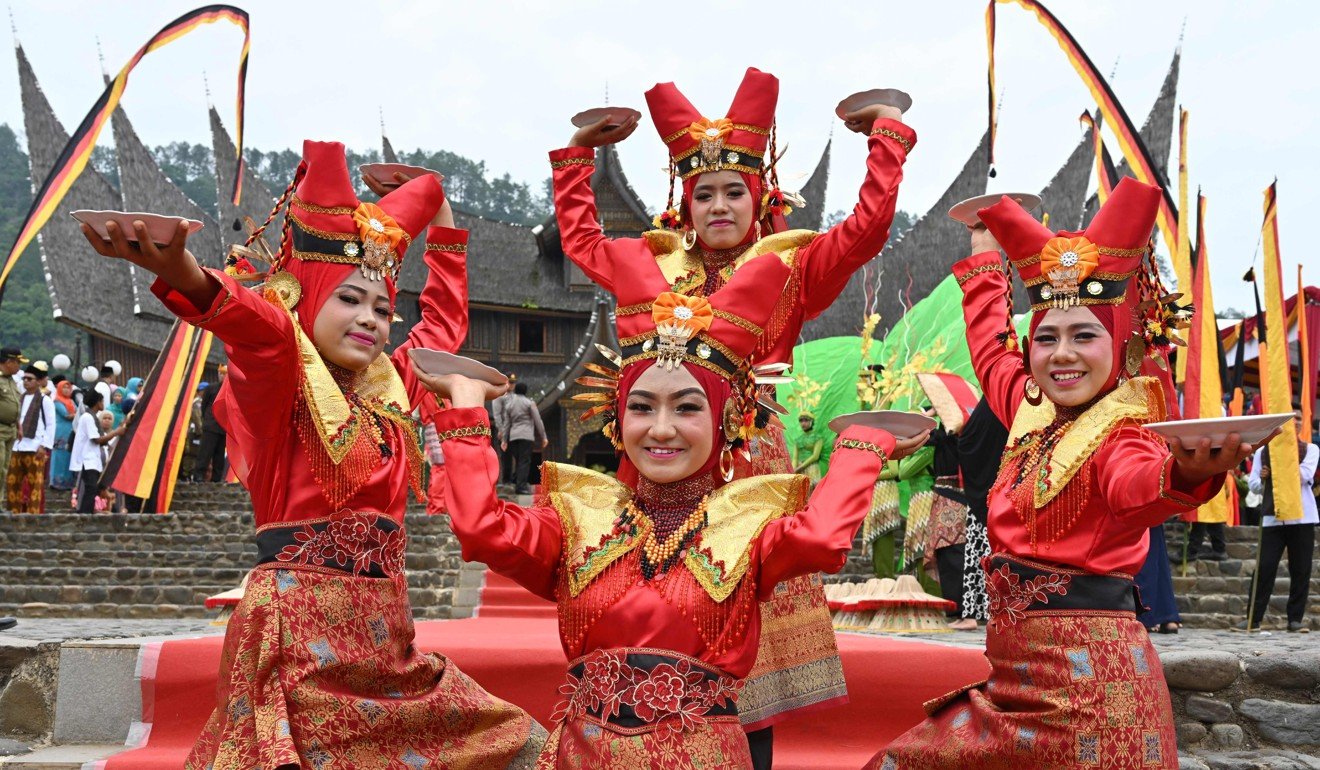
Dancers pose during the 2018 Minangkabau art and culture festival in Batusangkar, West Sumatra. Photo: AFP
Traditionally, Minangkabau women play an essential role in their children’s education and hold inheritance rights, while men are expected to take jobs elsewhere and occupy political and religious positions. When they do get married, the man moves to the woman’s house.
But Nursyirwan, who is of Minangkabau descent, notes that many have left for bigger cities, where they do not closely follow the community’s traditions.
An example of this is Afrianto Sikumbang, a 53-year-old businessman who was born to Minangkabau parents in West Sumatra province but now lives in the capital, Jakarta. Although he married a Minangkabau woman, he says they “don’t really apply” the tribe’s values in their daily life.
Sonya Anggraini, 35, who also works in the capital, has got used to city life, but remains proud of her ancestral roots and hopes that Minangkabau culture will persist for years to come.
“I am a member of my mother’s family, not of my father’s,” she says. 
Source: SCMP
16/10/2019

Ayodhya dispute: The complex legal history of India’s holy site

In this file photograph taken on December 6, 1992 Hindu youths clamour atop the 16th century Muslim Babri Mosque five hours before the structure was completely demolished by hundreds supporting Hindu fundamentalist activists.Image copyright AFP
Image caption The dispute turned to violence in 1992 when a Hindu mob destroyed a mosque at the site

The Ayodhya dispute, which stretches back more than a century, is one of India’s thorniest court cases and goes to the heart of its identity politics.

Hindus believe that Ayodhya, a city in the northern state of Uttar Pradesh, is the birthplace of one of their most revered deities, Lord Ram.

But Muslims say they have worshipped there for generations.

A court case pertaining to the ownership of the land has been dragging on in the Supreme Court for years, but a verdict is expected next month.

The court concluded its final hearing into the case on Wednesday.

What is the row actually about?

At the centre of the row is a 16th Century mosque that was demolished by Hindu mobs in 1992, sparking riots that killed nearly 2,000 people.

Many Hindus believe that the Babri Masjid was actually constructed on the ruins of a Hindu temple that was demolished by Muslim invaders.

Muslims say they offered prayers at the mosque until December 1949 when some Hindus placed an idol of Ram in the mosque and began to worship the idols.

Over the decades since, the two religious groups have gone to court many times over who should control the site.

Since then, there have been calls to build a temple on the spot where the mosque once stood.

The case currently being heard by five judges in the top court is to determine who the land in question belongs to.

A verdict is expected between 4 and 15 November.

Hinduism is India’s majority religion and is thought to be more than 4,000 years old. India’s first Islamic dynasty was established in the early 13th Century.

Who is fighting the case?

The long and complicated property dispute has been dragging in various courts for more than a century.

This particular case is being fought between three main parties – two Hindu groups and the Muslim Waqf Board, which is responsible for the maintenance of Islamic properties in India.

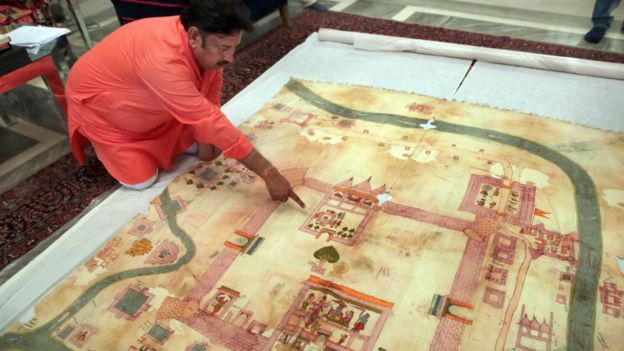
Ramu Ramdev, OSD at the City Palace, points out Lord Ramas birth place in an old dilapidated map of Ayodhya depicting the birthplace of Lord Rama, being taken out from archives of erstwhile royal family of Jaipur, at City Palace, on August 11, 2019 in Jaipur, India.Image copyright GETTY IMAGES

The Hindu litigants are the Hindu Mahasabha, a right-wing political party, and the Nirmohi Akhara, which is a sect of Hindu monks.

They filed a title dispute in the Allahabad High Court in 2002, a decade after the mosque was demolished.

A verdict in that case was pronounced in September 2010 – it determined that the 2.77 acres of the disputed land would be divided equally into three parts.

The court ruled that the site should be split, with the Muslim community getting control of a third, Hindus another third and the Nirmohi Akhara sect the remainder. Control of the main disputed section, where the mosque once stood, was given to Hindus.

The judgement also made three key observations.

It affirmed the disputed spot was the birthplace of Lord Ram, that the Babri Masjid was built after the demolition of a Hindu temple and that it was not built in accordance with the tenets of Islam.

The Supreme Court suspended this ruling in 2011 after both Hindu and Muslim groups appealed against it.

What are the other important legal developments?

In 1994 the Supreme Court, which was ruling on a related case, remarked that the concept of a mosque was “not integral to Islam”. This has bolstered the case made by Hindus who want control of the entire site.

In April 2018, senior lawyer Rajeev Dhavan filed a plea before the top court, asking judges to reconsider this observation.

But a few months later the Supreme Court declined to do so.

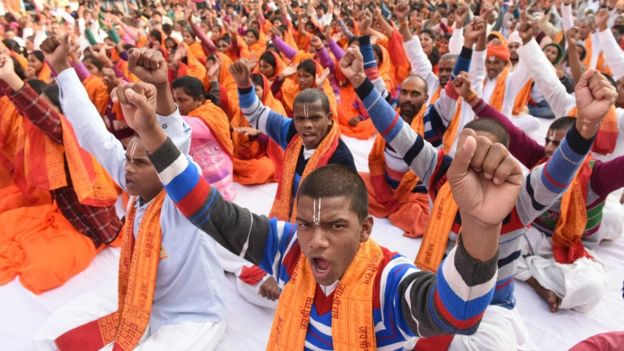
VHP saints at Karsevak Puram taking park in Hindu Swabhiman Sammelan organized by the VHP to mark 25th anniversary Babri Masjid demolition, on December 6, 2017 in AyodhyaImage copyright GETTY IMAGES
Image caption Hindu activists are demanding the construction of the Ram Temple

Have religious tensions eased in India in recent years?

Ever since the Narendra Modi-led Hindu nationalist BJP first came to power in 2014, India has seen deepening social and religious divisions.

The call for the construction of a Hindu temple in Ayodhya has grown particularly loud, and has mostly come from MPs, ministers and leaders from the BJP since it took office.

Restrictions on the sale and slaughter of cows – considered a holy animal by the majority Hindus – have led to vigilante killings of a number of people, most of them Muslims who were transporting cattle.

An uninhibited display of muscular Hindu nationalism in other areas has also contributed to religious tension.

Most recently, the country’s home minister Amit Shah said he would remove “illegal migrants” – understood to be Muslim – from the country through a government scheme that was used recently in the north-eastern state of Assam.

Source: The BBC

19/06/2019

Viewpoint: How the British reshaped India’s caste system

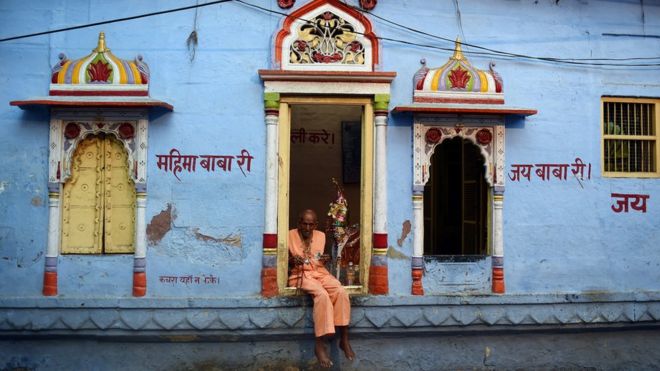
A priest sits in front of a Hindu templeImage copyright AFP

A Google search for basic information on India’s caste system lists many sites that, with varying degrees of emphasis, outline three popular tropes on the phenomenon.

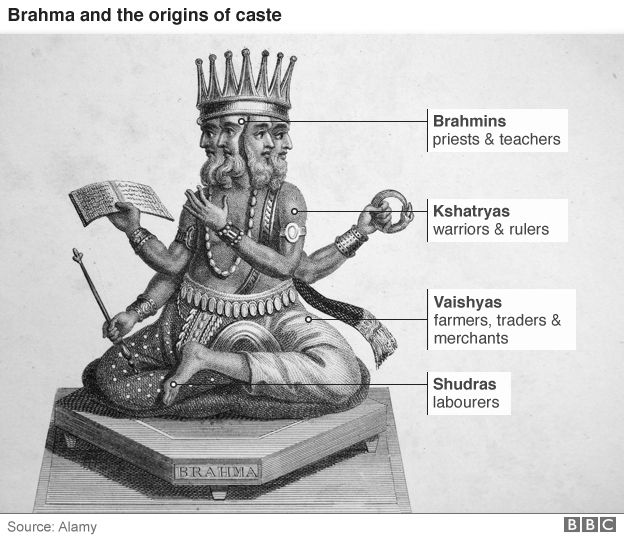
First, the caste system is a four-fold categorical hierarchy of the Hindu religion – with Brahmins (priests/teachers) on top, followed, in order, by Kshatriyas (rulers/warriors), Vaishyas (farmers/traders/merchants), and Shudras (labourers). In addition, there is a fifth group of “Outcastes” (people who do unclean work and are outside the four-fold system).

Second, this system is ordained by Hinduism’s sacred texts (notably the supposed source of Hindu law, the Manusmriti), it is thousands of years old, and it governed all key aspects of life, including marriage, occupation and location.

Third, caste-based discrimination is illegal now and there are policies instead for caste-based affirmative action (or positive discrimination).

These ideas, even seen in a BBC explainer, represent the conventional wisdom. The problem is that the conventional wisdom has not been updated with critical scholarly findings.

The first two statements may as well have been written 200 years ago, at the beginning of the 19th Century, which is when these “facts” about Indian society were being made up by the British colonial authorities.

In a new book, The Truth About Us: The Politics of Information from Manu to Modi, I show how the social categories of religion and caste as they are perceived in modern-day India were developed during the British colonial rule, at a time when information was scarce and the coloniser’s power over information was absolute.

graphic
Image caption Conventional wisdom says the caste system is a four-fold categorical hierarchy of the Hindu religion

This was done initially in the early 19th Century by elevating selected and convenient Brahman-Sanskrit texts like the Manusmriti to canonical status; the supposed origin of caste in the Rig Veda (most ancient religious text) was most likely added retroactively, after it was translated to English decades later.

These categories were institutionalised in the mid to late 19th Century through the census. These were acts of convenience and simplification.

The colonisers established the acceptable list of indigenous religions in India – Hinduism, Sikhism, Jainism – and their boundaries and laws through “reading” what they claimed were India’s definitive texts.

The so-called four-fold hierarchy was also derived from the same Brahman texts. This system of categorisation was also textual or theoretical; it existed only in scrolls and had no relationship with the reality on the ground.

This became embarrassingly obvious from the first censuses in the late 1860s. The plan then was to fit all of the “Hindu” population into these four categories. But the bewildering variety of responses on caste identity from the population became impossible to fit neatly into colonial or Brahman theory.

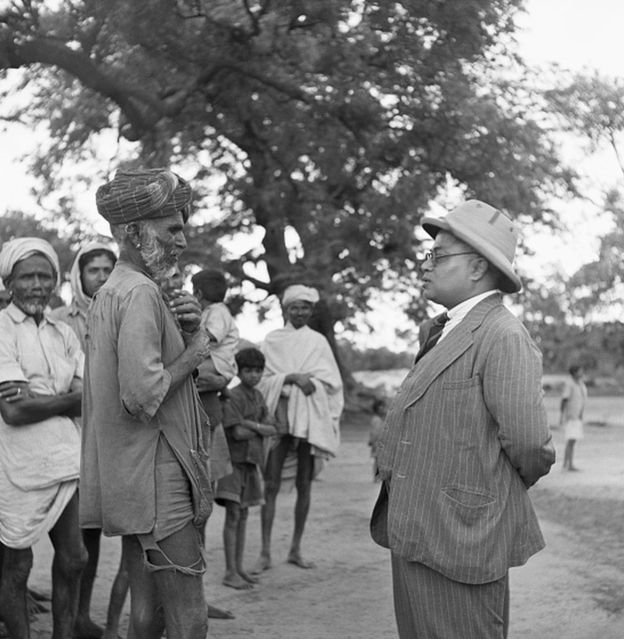
A leader of those formerly considered untouchable discusses a food shortage with a government official. Bengal Province, British India. | Location: Bengal Province, British IndiaImage copyright GETTY IMAGES
Image caption A leader of those formerly considered untouchable with a government official in British India

WR Cornish, who supervised census operations in the Madras Presidency in 1871, wrote that “… regarding the origin of caste we can place no reliance upon the statements made in the Hindu sacred writings. Whether there was ever a period in which the Hindus were composed of four classes is exceedingly doubtful”.

Similarly, CF Magrath, leader and author of a monograph on the 1871 Bihar census, wrote, “that the now meaningless division into the four castes alleged to have been made by Manu should be put aside”.

Anthropologist Susan Bayly writes that “until well into the colonial period, much of the subcontinent was still populated by people for whom the formal distinctions of caste were of only limited importance, even in parts of the so-called Hindu heartland… The institutions and beliefs which are now often described as the elements of traditional caste were only just taking shape as recently as the early 18th Century”.

In fact, it is doubtful that caste had much significance or virulence in society before the British made it India’s defining social feature.

Astonishing diversity

The pre-colonial written record in royal court documents and traveller accounts studied by professional historians and philologists like Nicholas Dirks, GS Ghurye, Richard Eaton, David Shulman and Cynthia Talbot show little or no mention of caste.

Social identities were constantly malleable. “Slaves” and “menials” and “merchants” became kings; farmers became soldiers, and soldiers became farmers; one’s social identity could be changed as easily as moving from one village to another; there is little evidence of systematic and widespread caste oppression or mass conversion to Islam as a result of it.

All the available evidence calls for a fundamental re-imagination of social identity in pre-colonial India.

The picture that one should see is of astonishing diversity. What the colonisers did through their reading of the “sacred” texts and the institution of the census was to try to frame all of that diversity through alien categorical systems of religion, race, caste and tribe. The census was used to simplify – categorise and define – what was barely understood by the colonisers using a convenient ideology and absurd (and shifting) methodology.

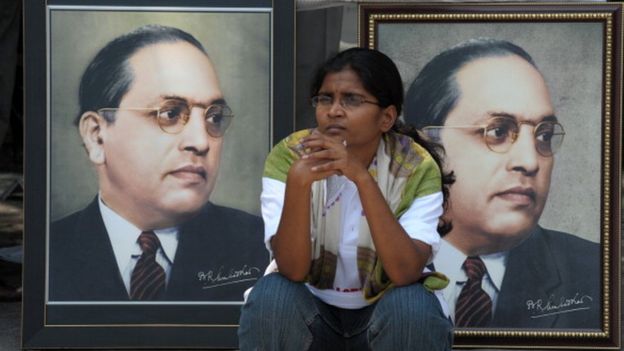
n Indian woman sits infront of portraits of Bhimrao Ramji Ambedkar during 122nd birth anniversary celebrations for Ambedkar in Hyderabad on April 14, 2012.Image copyright AFP
Image caption India’s constitution was written by BR Ambedkar, a member of the Dalit community which is at the bottom of the caste system

The colonisers invented or constructed Indian social identities using categories of convenience during a period that covered roughly the 19th Century.

This was done to serve the British Indian government’s own interests – primarily to create a single society with a common law that could be easily governed.

A very large, complex and regionally diverse system of faiths and social identities was simplified to a degree that probably has no parallel in world history, entirely new categories and hierarchies were created, incompatible or mismatched parts were stuffed together, new boundaries were created, and flexible boundaries hardened.

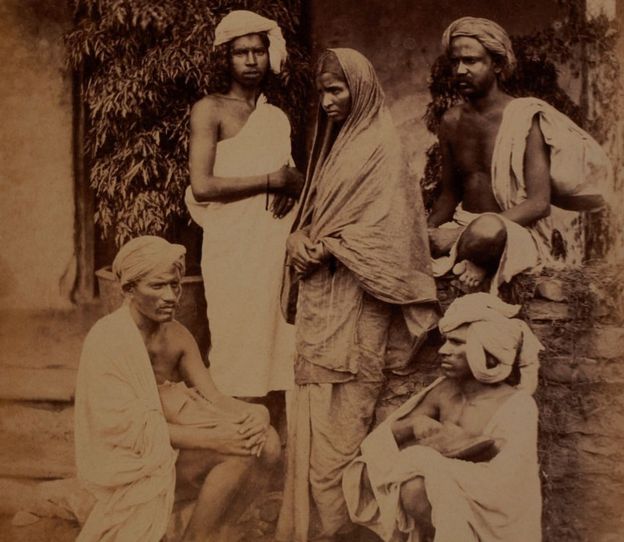
Group of Untouchables, India, circa 1890Image copyright GETTY IMAGES
Image caption Dalits, or untouchables, were at the bottom of the caste system

The resulting categorical system became rigid during the next century and quarter, as the made-up categories came to be associated with real rights. Religion-based electorates in British India and caste-based reservations in independent India made amorphous categories concrete. There came to be real and material consequences of belonging to one category (like Jain or Scheduled Caste) instead of another. Categorisation, as it turned out in India, was destiny.

The vast scholarship of the last few decades allows us to make a strong case that the British colonisers wrote the first and defining draft of Indian history.

So deeply inscribed is this draft in the public imagination that it is now accepted as the truth. It is imperative that we begin to question these imagined truths.

Source: The BBC

Law of Unintended Consequences

continuously updated blog about China & India

ChiaHou's Book Reviews

continuously updated blog about China & India

What's wrong with the world; and its economy

continuously updated blog about China & India