Archive for ‘History’

31/07/2012

* Synopsis of “From the Ruins of Empire”

Synopsis from Penguin Books – http://www.penguin.com.au/products/9780241954676/ruins-empire-revolt-against-west-and-remaking-asia

“Viewed in the West as a time of self-confident progress, the Victorian period was experienced by Asians as a catastrophe. As the British gunned down the last heirs to the Mughal Empire, burned down the Summer Palace in Beijing, or humiliated the bankrupt rulers of the Ottoman Empire, it was clear that for Asia to recover a new way of thinking would be required.

Pankaj Mishra‘s fascinating, highly entertaining new book tells the story of a remarkable group of men from across the continent who met the challenge of the West. Incessantly travelling, questioning and agonising, they both hated the West and recognised that an Asian renaissance needed to be fuelled in part by engagement with the enemy. Through many setbacks and wrong turns, a powerful, contradictory and ultimately unstoppable series of ideas were created that now lie behind everything from the Chinese Communist Party to Al Qaeda, from Indian nationalism to the Muslim Brotherhood.

From the Ruins of Empire allows the reader to see the events of two centuries anew, through the eyes of these journalists, poets, radicals and charismatics, who created the ideas which in turn were to doom the new empires, and which lie behind the powerful Asian nations of the twenty-first century today.”

14/07/2012

* China top leaders vow to better handle people’s petitions

Xinhua: “China’s top leaders on Friday met representatives for a nationwide conference on the work of handling the people’s petitions, vowing to safeguard the people’s rights and interests and strengthen ties between the authorities and the people.

President Hu Jintao, Premier Wen Jiabao, Vice President Xi Jinping and Vice Premier Li Keqiang met the representatives before the conference, extending their greetings to all the government staff handling the people’s letters and calls.

Zhou Yongkang, a member of the Standing Committee of the Political Bureau of the Communist Party of China (CPC) Central Committee, and secretary of the Committee of Political and Legislative Affairs of the CPC Central Committee, also met representatives and delivered a speech at the conference.

The petitioning, also known as letters and calls, is the administrative system for hearing complaints and grievances from Chinese citizens.

The bureaus of letters and calls at all levels are commissioned to receive letters, calls, and visits from individuals or groups, and then channel the issues to respective departments, and monitor the progress of settlement.”

via China top leaders vow to better handle people’s petitions – Xinhua | English.news.cn.

Petitioning has been a historic means for members of the public, however lowly to put forward their grievances to someone high enough to deal with it. Sometimes, a petition would go all the way to the Emperor or, at least, to his chief minister.

The Chinese government is merely reaffirming this historic practice.

See also: http://en.wikipedia.org/wiki/Petitioning_(China)

13/07/2012

* SE Asia meeting in disarray over sea dispute with China

Reuters: “Southeast Asian nations have failed to reach agreement on a maritime dispute involving China, ending a foreign ministers’ summit in disarray after Beijing appeared to split the 10 countries over the contentious issue.

The Philippines said in a statement on Friday that it “deplores” the failure of the Association of Southeast Asian Nations (ASEAN) summit to address the worsening row, and criticized Cambodia in unusually strong language for its handling of the issue.

China has been accused of using its heavy influence over summit chair Cambodia and several other ASEAN members to block regional-level discussions on the issue and attempts to agree a binding maritime Code of Conduct.

The Philippines said it took “strong exception” to Cambodia’s statement that the non-issuance of a communiqué was due to “bilateral conflict between some ASEAN member states and a neighboring country”.

It said it had only requested that the communiqué mention the recent standoff between Chinese and Philippine ships at the Scarborough Shoal, a horseshoe-shaped reef in waters that both countries claim.

“The Chair has consistently opposed any mention of the Scarborough Shoal at all in the Joint Communiqué and today announced that a Joint Communiqué ‘cannot be issued’,” the Philippine statement said.

The failure to issue a joint statement marks a sharp deterioration in efforts to cool tensions following recent incidents of naval brinkmanship over the oil-rich waters.

China, whose trade and investment ties with Cambodia have surged in recent years, has warned that “external forces” should not get involved in the dispute. Vietnam, Malaysia, Brunei and Taiwan also lay claim to parts of the South China Sea.”

via SE Asia meeting in disarray over sea dispute with China | Reuters.

Despite good intentions, territorial imperatives overcame desire for resolution.

See also: China’s external tensions

10/07/2012

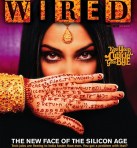
* A Recent History of India Through Western Magazine Covers

A Recent History of India Through Western Magazine Covers – NYTimes.com.

06/07/2012

* For the Indian Father of the ‘God Particle,’ a Long Journey from Dhaka

NY Times: “For the Indian Father of the ‘God Particle,’ a Long Journey from Dhaka

English: Satyendra Nath Bose in Paris 1925

English: Satyendra Nath Bose in Paris 1925 (Photo credit: Wikipedia)

In the word “boson,” (as in Higgs-Boson) as media reports have plentifully pointed out during the past two days, is contained the surname of Satyendra Nath Bose, the Calcutta physicist who first mathematically described the class of particles to which he gave his name. As was common with Indian scientists in the early 20th century, however, his work might easily have eluded international recognition. Like the mathematician Srinivasa Ramanujam, Mr. Bose was saved from obscurity by a generous and influential mentor in Europe. In Mr. Bose’s case, that mentor turned out to be one of the greatest physicists of them all: Albert Einstein.”

via For the Indian Father of the ‘God Particle,’ a Long Journey from Dhaka – NYTimes.com.

26/06/2012

Craig Hill's avatarCraig Hill

On June 20th 1900, in response to widespread foreign encroachment upon China‘s national affairs, Chinese nationalists launched the so-called Boxer Rebellion in Peking. Calling themselves I Ho Ch’uan, or “the Righteous and Harmonious Fists,” the nationalists occupied Peking, killed several Westerners, including German ambassador Baron von Ketteler, and besieged the foreign legations in the diplomatic quarter of the city.

By the end of the 19th century, the Western powers and Japan had forced China’s ruling Qing dynasty to accept wide foreign control over the country’s economic affairs. In the Opium Wars, popular rebellions, and the Sino-Japanese War, China had fought to resist the foreigners, but it lacked a modernised military and suffered millions of casualties.

In 1898, Tzu’u Hzi, the dowager empress and an anti-imperialist, began supporting the I Ho Ch’uan, who were known as the “Boxers” by the British because of their martial…

View original post 206 more words

22/06/2012

* China adds more trains for holiday travel rush

Xinhua: “China’s Ministry of Railways said Friday it has put more trains on to ease transportation pressure during the three-day Dragon Boat Festival holiday from June 22-24.

The ministry added 196 provisional passenger trains for the travel rush Thursday, one day ahead of the holiday, 70 more than the eve of last year’s holiday, it said in a statement.

China’s railways are expected to carry 6.75 million passengers on Friday, the travel peak of this holiday, up 4.7 percent from the holiday travel peak last year, the ministry has said.

It estimated a daily average passenger flow of 6.1 million from June 21 to 24, up 5 percent from that during last year’s holiday travel rush.

The Dragon Boat Festival, also called Duanwu Festival, is traditionally celebrated on the fifth day of the fifth month on the Chinese lunar calendar.

The festival commemorates the famous ancient Chinese poet Qu Yuan. Chinese people prepare and eat zongzi, or leaf-packed glutinous rice dumplings, drink wine and race dragon boats on the day.

The festival falls on June 23 this year.”

via China adds more trains for holiday travel rush – Xinhua | English.news.cn.

Although the festival commemorates a historic Chinese event – see http://mandarin.about.com/od/chineseculture/a/dragon_boat.htm – over recent years it has become an international sporting event http://www.dragonboatcalendar.com/ . Not dissimilar to the Greek Marathon now an international sport.

30/05/2012

* China could owe America one trillion dollars

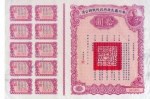
China has a secret: It owes American investors hundreds of billions of dollars.

The Chinese government doesn’t like to talk about it and the U.S. government doesn’t want to raise it. But decades ago, Beijing defaulted on debt owed to Americans, as well as investors and governments around the world. In one case, it was paid. In the rest it was not. More than 20,000 American investors own this debt. The U.S. government may also own Chinese war debt, unpaid since World War II.

With the simple stroke of an executive proclamation, President Barack Obama can begin the process of addressing this issue. A 1930s-era law has established a quasi-public agency within the Securities and Exchange Commission, known as the Corporation of Foreign Securities Holders, which can arbitrate this dispute, much as a predecessor agency did for decades. China can both afford and benefit from this solution; it will afford goodwill at a time when relations between the world’s two superpowers are strained.

The story begins nearly 100 years ago, in 1913, when the government of China began issuing bonds to foreign investors and governments for infrastructure work to modernise the country. As the country fell into civil war in 1927, paying these debts became increasingly difficult and the government fell into default. Even so, in April 1938, the Nationalist government of China began to issue U.S.-dollar denominated bonds to finance the war against Japan’s brutal invasion.

Locked in a pitched battle for survival, the government issued these bonds into 1940. As part of its wartime financial aid, the U.S. government further provided a $500 million credit to China in March 1942, shipping gold there and helping to stabilise the currency. In return, it appears that the U.S. government redeemed some of these dollar-denominated bonds. But China doesn’t appear to have repaid this debt either, according to State Department records, and the declaration of the People’s Republic of China in 1949 ended decades of political, military and financial cooperation.

While successor governments are usually bound by the debts of predecessor governments, the new Communist government refused to pay any of these claims. The issue lay dormant for decades, just as the bilateral relationship did. Then, in 1979, as part of normalising relations, Washington released government financial claims regarding the expropriation of American property and appears to have dropped the matter of the war debt entirely. However, it is one thing for government decision-makers to let go of government debt, however questionable that is.

And it is entirely another thing for individual citizens to press their claims. Some U.S. investors tried to sue the Chinese government in the 1980s and 1990s. However, the Foreign Sovereign Immunities Act makes it very hard for any U.S. citizen to sue a foreign government in U.S. courts because the law generally says that U.S. courts do not have jurisdiction.

The law usually only allows the jurisdiction of U.S. courts if a foreign government waives its immunity, commits a tort or seizes property. Recent additional exceptions have been added for terrorism. China lost an initial summary judgement for failing to appear in court but, with the urging of the U.S. State Department, later appeared in court and successfully argued that U.S. courts did not have jurisdiction.

Today, the Chinese bonds held by U.S. investors may be worth as much as $750 billion, according to Jonna Bianco, president of the American Bondholders Foundation, who estimates the value of bonds held by investors worldwide may be $10 billion, including interest and penalties for default.

China Daily Mail blog: “China could owe America one trillion dollars.”
Law of Unintended Consequences

continuously updated blog about China & India

ChiaHou's Book Reviews

continuously updated blog about China & India

What's wrong with the world; and its economy

continuously updated blog about China & India