Chindia Alert: You’ll be Living in their World Very Soon
aims to alert you to the threats and opportunities that China and India present. China and India require serious attention; case of ‘hidden dragon and crouching tiger’.
Without this attention, governments, businesses and, indeed, individuals may find themselves at a great disadvantage sooner rather than later.
The POSTs (front webpages) are mainly 'cuttings' from reliable sources, updated continuously.
The PAGEs (see Tabs, above) attempt to make the information more meaningful by putting some structure to the information we have researched and assembled since 2006.
City’s richest person was ‘very pleased’ to have bumped into group of youngsters in Hokkaido, mother says on social media
Li has a personal fortune of US$31.7 billion and is known for his charitable acts
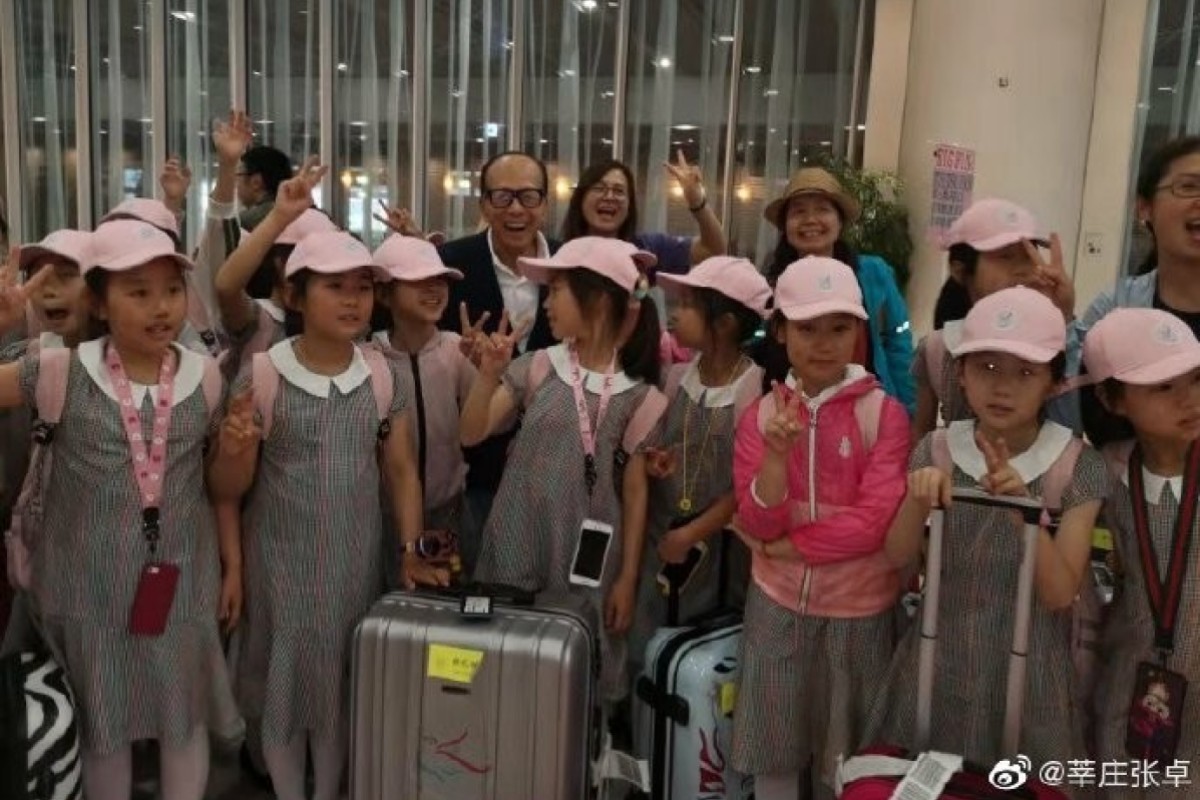
The youngsters from Shanghai got a wonderful surprise when they met billionaire Li Ka-shing at an airport in Japan. Photo: Weibo
Christmas came early for a group of children from Shanghai on Tuesday when they met Hong Kong billionaire Li Ka-shing at an airport in Japan while en route to a dance competition and he offered to pay for their trip … and buy them each a gift.
The 45 youngsters and their teachers from the Little Pigeon Dancing Group in the east China metropolis were passing through New Chitose Airport in Hokkaido, the northernmost of Japan’s main islands, when the serendipitous meeting happened, according to social media posts.
“The children bumped into Mr Li Ka-shing at the airport, who looked very pleased and volunteered to take pictures with the children,” Zhang Zhuo wrote on Weibo – China’s Twitter-like platform – on Thursday, adding that she was the mother of one of the dancers.
“Today a staff member from the Li Ka Shing Foundation contacted the dance group and offered to sponsor the trip to Japan,” she said. “The children shot a video to wish him good health,” she said.
Li met the youngsters from the Little Pigeon Dancing Group in Hokkaido. Photo: Weibo
One of the dance teachers wrote on Weibo that Li was “so pleased after seeing the children at the airport that he decided to sponsor for the trip”.
“So rich and generous, charitable and loving,” she said.
It was not clear exactly how much Li donated, but based on a post by another of the teachers, the cost of the trip was 18,840 yuan (US$2,700) per child, so it would appear to have been in excess of US$120,000.
As part of the offer, the foundation said also that the children should treat themselves to a gift.
Zhang said her daughter treated herself to an eraser, as it was something she wanted to buy before the trip.
“It is not about how expensive the gift is. It’s happiness that counts. We must know to be grateful and moderate,” she wrote.
Li’s influence at Shantou University under threat
Born in 1928 near Shantou in south China’s Guangdong province, Li moved to Hong Kong as a child. According to the latest Forbes list he is richest person in Hong Kong and 28th richest in the world, with a personal fortune of US$31.7 billion.
In 1981 he helped to establish Shantou University and since then the Li Ka Shing Foundation has donated more than 10 billion yuan to support its development.
Last month, the university announced that starting this autumn, for the next four years all new intakes will have the entire cost of their university education paid for by the foundation – a donation of about 100 million yuan a year.
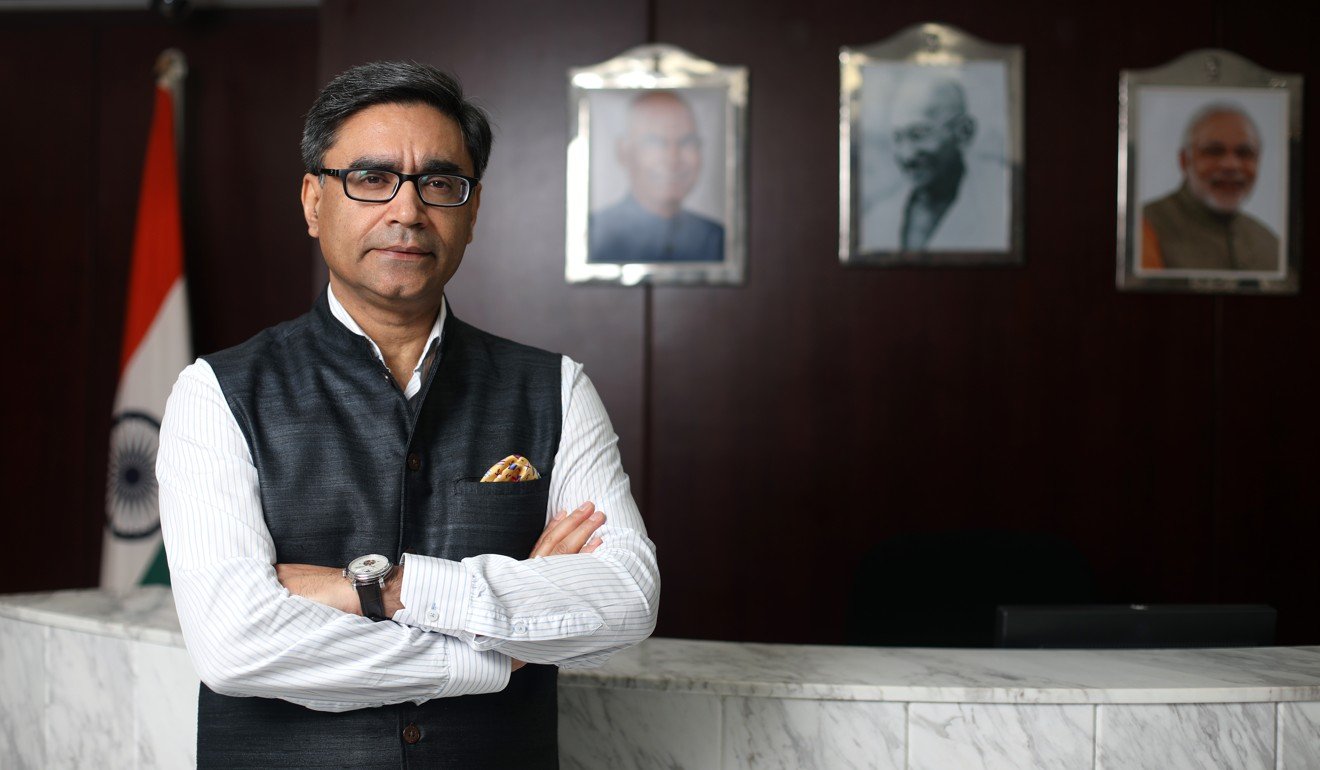
Ambassador to China Vikram Misri says they will be ‘meeting more and more in common waters’, and more exchanges are needed
He also says preparations are under way for President Xi Jinping to visit India
The INS Kolkata arrives in Qingdao for PLA Navy 70th anniversary celebrations in April.
The Indian ambassador called for more communication between the two navies. Photo: Reuters
The Chinese and Indian navies should establish communication because they are increasingly operating within close proximity, according to India’s ambassador to China.
While the two nations’ militaries communicated extensively, it was mainly between their land forces, and that should be extended to the navies and air forces, Vikram Misri said.
“We need to talk about the two air forces and the two navies – especially the two navies – because we are operating in the same waters and increasingly in the coming years, we will be meeting more and more in common waters,” Misri said.
“I think it is important for us to develop those levels of understanding and communication,” he said. “There are some [navy and air force] exchanges now, but not as well developed as in the case of the land force.”
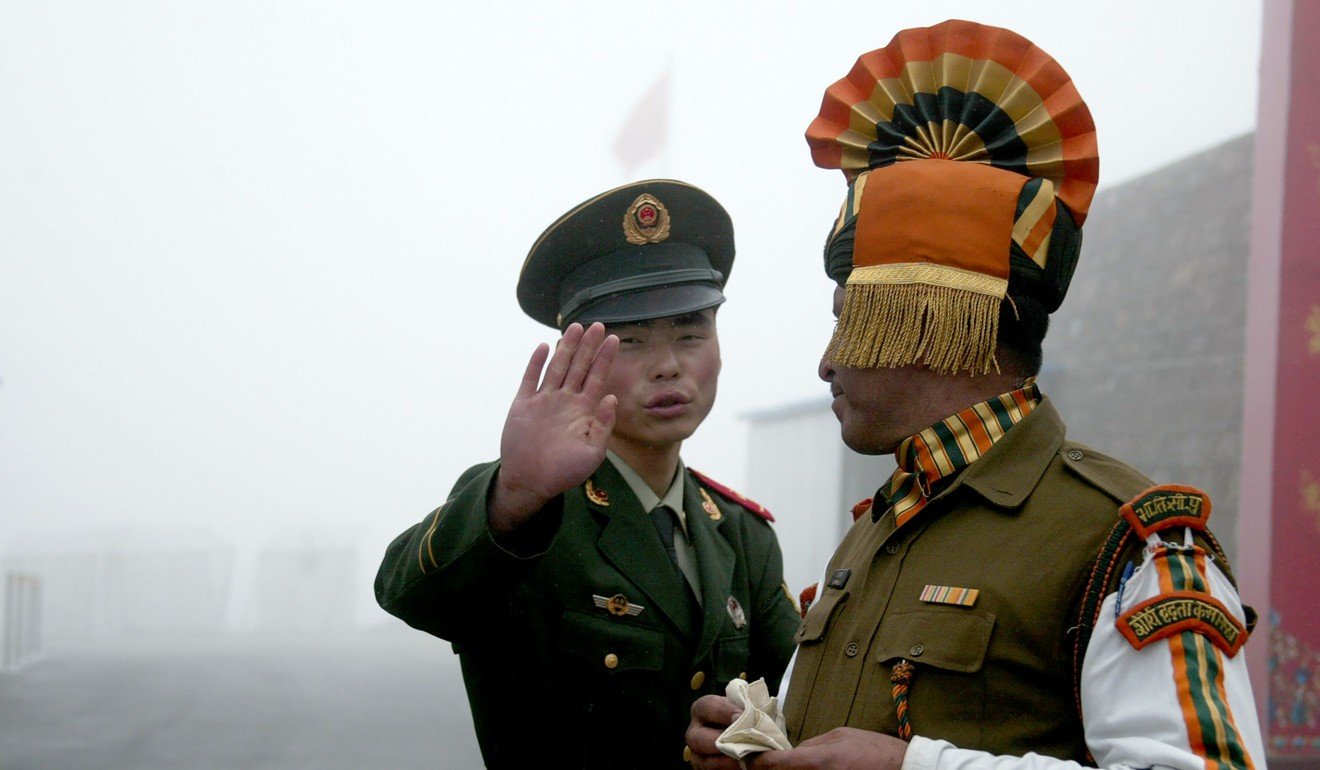
China and India have made efforts to repair their relations since a tense stand-off at the Doklam plateau two years ago, when communications between their forces along the border were seen as inadequate to contain the tension.
China and India have sought to repair relations after a tense stand-off at Doklam. Photo: AFP
Misri said the two nations had made incremental progress, and opened new points where “border personnel can meet and exchange information, or exchange views about any particular situation”.
The ambassador was visiting the Indian consulate in Hong Kong over the weekend, six months after taking up the post and six weeks after Prime Minister Narendra Modi was re-elected.
He said preparations were under way for Chinese President Xi Jinping to visit India, which was expected to happen in the fourth quarter, after they pledged earlier to strengthen cooperation.
have periodically flared along their 4,000km (2,485-mile) border, resulting in a brief war in 1962. Relations have also been strained by China’s ties with Pakistan, and India’s concern over China’s growing presence in the Indian Ocean.
India has also not signed on to China’s global trade and infrastructure strategy, the
, which has projects that run through the disputed Kashmir region.
“Our concerns with regards to this particular initiative are very clear, and we have continued to share them very, very frankly with our Chinese partners,” Misri said. “I think there is understanding on the part of our Chinese partners with regard to this.”
Indian ambassador to China Vikram Misri said New Delhi’s concerns on the Belt and Road Initiative were clear. Photo: Xiaomei Chen
But he said the two nations should not let their differences evolve into disputes, and they should focus on areas where they can cooperate.
One such area was maritime and investment cooperation in the Indo-Pacific region, including infrastructure and disaster response. The US in recent years has focused on the Indo-Pacific region, and has asked its allies to send naval vessels to the area as a counterbalance to Beijing.
“We have made the point that our vision of the Indo-Pacific is not a strategy, which sometimes is a concern on the part of some partners, aimed against any particular country,” Misri said. “It is definitely not a military alliance in any format.
“It is on the other hand a vision that aims at economic and development cooperation with our partners in the Indo-Pacific space,” he said, adding that India was discussing such cooperation with China.
He also said trilateral meetings between China, India and Russia would become more regular after their three leaders met on the sidelines of the
summit in Osaka, Japan last month, when they vowed to uphold multilateralism.
Those meetings would allow the nations to address challenges facing the international trading system and pushback against globalisation, but Misri said they should not be seen as a bid to counter the US, which is also involved in a trade battle with India.
India also had a trilateral meeting with Japan and the United States during the G20 summit.
“The fact that these countries seek us out also shows that they see value in engaging with India, and we have important issues to discuss in each of these settings,” he said. “None of our individual relationships is going to come at the cost of a relationship with any other partner.”
The ambassador said there could be a broader consensus on counterterrorism. Photo: AP
Misri also said there could be a broader consensus between China and India on counterterrorism. The two nations have clashed over Indian efforts to blacklist Masood Azhar, leader of the Pakistan-based terror group Jaish-e-Mohammed (JeM), at the United Nations, which China objected to for years – a move seen in India as being done at the behest of Islamabad.
Azhar was finally listed as a global terrorist by the UN in May, after JeM claimed responsibility for a deadly terror attack on Indian security forces in Pulwama in February, although the listing did not directly reference the attack.
“It could have happened earlier … but I’m glad that it did happen, and we hope to build on that – that should be taken as progress, and we hope to build on that in the coming years,” Misri said.
“Everybody is aware of the context in which the listing happened, and therefore, I don’t think it’s hidden from anybody as to what this was aimed at or who this was aimed at, or what the motivation for the action might have been.”
As for the tensions between India and Pakistan following the terror strike in Indian-controlled Kashmir, Misri said progress would be “largely dependent on Pakistan” and the actions it needed to take to address the “ecosystem of terror that prevails in different parts of that country”.
Image caption Local people say having an incinerator near their homes will be dangerous
While the world’s attention has been focused on the protests in Hong Kong, another Chinese city has been witnessing unrest on a scale rarely seen on the mainland.
Thousands of citizens in Wuhan, the capital city of central Hubei province, took to the streets last week for several days.
They were angry about a planned waste incineration plant they say will bring dangerous levels of pollution to their town.
But as the protests steadily grew over the week, a censorship and public security operation kicked in to try to keep a lid on the unrest.
Why are they so angry?
Wuhan desperately needs to find ways to handle the waste generated by its 10 million residents. So it has drawn up plans for a huge incinerator, to be based in the Yangluo zone of Xinzhou district, where about 300,000 people live.
According to a city government document published in February, the incinerator would possess a daily capacity of 2,000 tonnes of rubbish.
Xinzhou district also already hosts a waste landfill, the strong smells of which, according to some locals, can be caught even when one passes the area on a bus.
But there has been public concern that badly-made incinerators can emit dioxins that are highly toxic and can damage the immune system, interfere with hormones and cause cancer. In 2013, five such plants in Wuhan city were found to be sub-standard and emitting dangerous pollutants, according to China’s state broadcaster CCTV.
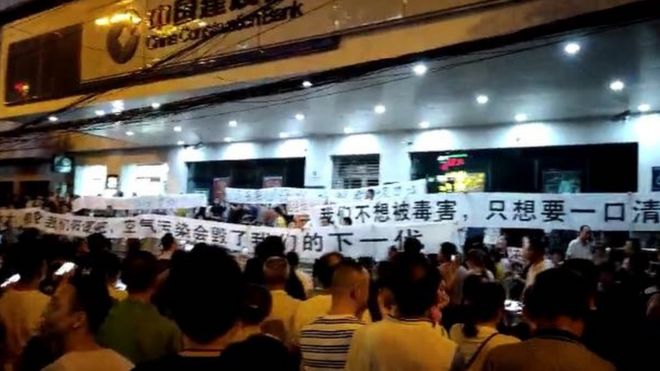
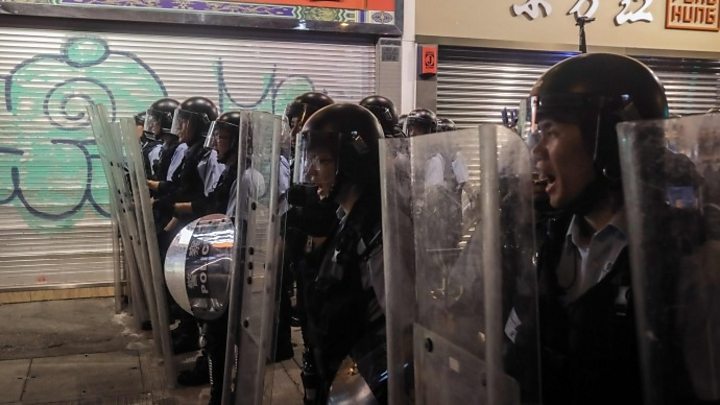
Image copyright OTHERImage caption Grainy social media footage showed huge numbers of police moving into the town
In late June, rumours began spreading that work had already started on the new plant, on a patch of land in Yangluo designated as an industrial park, close to residences and two schools.
Local people took to the streets for several days, demanding that the location be re-thought. They held banners with slogans like “air pollution will damage the next generation” and “we don’t want to be poisoned, we just need a breath of fresh air”. They weren’t demanding it be scrapped completely, just that it be moved further away.
The protests grew over several days and, according to some locals, the night with the biggest crowds saw up to 10,000 people taking part.
How has the government responded?
At first the Xinzhou district government attempted to calm the unrest. It issued a statement last Wednesday denying that work had started on the incinerator. It said the project hadn’t even been registered, nor had it gone through any environmental assessment.
They said the local government would attach “great importance to the voices of the people” in its decision-making, but warned that public security authorities would crack down on any “illegal criminal acts such as malicious incitement and provocation”.
Several locals said people were detained but the exact number couldn’t be confirmed.
Over the weekend, the authorities appear to have successfully quashed the protests. Some locals said riot police were on the streets and shops around the protest sites had been ordered to shut by 6pm.
Meanwhile, China’s censors have been at work. Local voices on social media have been vanishing fast. Videos and photos of the crowded streets and clashes between the protesters and the police can be censored within hours. While there were a few reports in domestic media about the incinerator, none of them covered the protests.
Local people have said they’re not satisfied with the district government’s reassurances, because it’s the municipal authorities who have the final say.
But the municipality has kept quiet so far.
How unusual is this for China?
China often sees public protests like this, but mostly on a much smaller scale.
While the Chinese public have largely avoided protests about political reforms since the Tiananmen movement was crushed in 1989, “not in my back yard” protests related to environmental problems have become more common.
Civil movements against high-polluting projects date back to at least 2007 when a significant protest broke out in Xiamen city of Fujian province against an industrial chemical plant.
The incident became well-known at a time of lighter censorship, and the local government ended up moving the location of the project out of the city.
Media caption Hong Kong police and protesters clash
In 2015 there were protests in both Shanghai and northern Tianjin over planned manufacturing plants which locals felt put them in danger.
And in 2017, Qingyuan city in Guangdong province also saw protests over an incinerator.
During the Qingyuan protests nearly 10,000 locals took to the streets and police reportedly fired tear gas at the height of the unrest. Three days later the government cancelled the planned incinerator.
Might the Wuhan authorities learn from Qingyuan?
So far there’s no sign of that.
Even after a week of protests the city government seems deaf to public opinion.
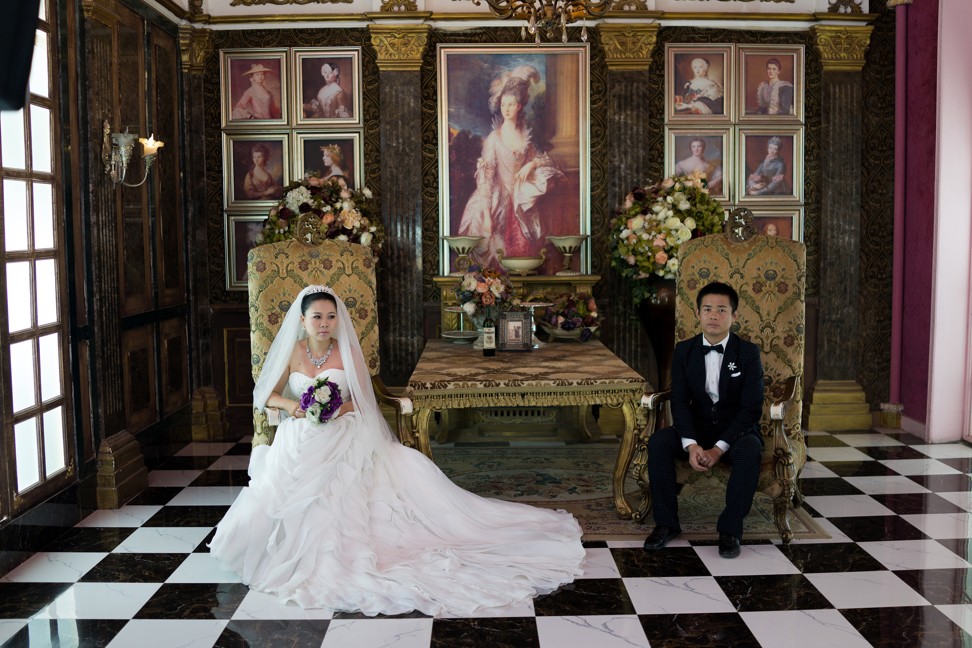
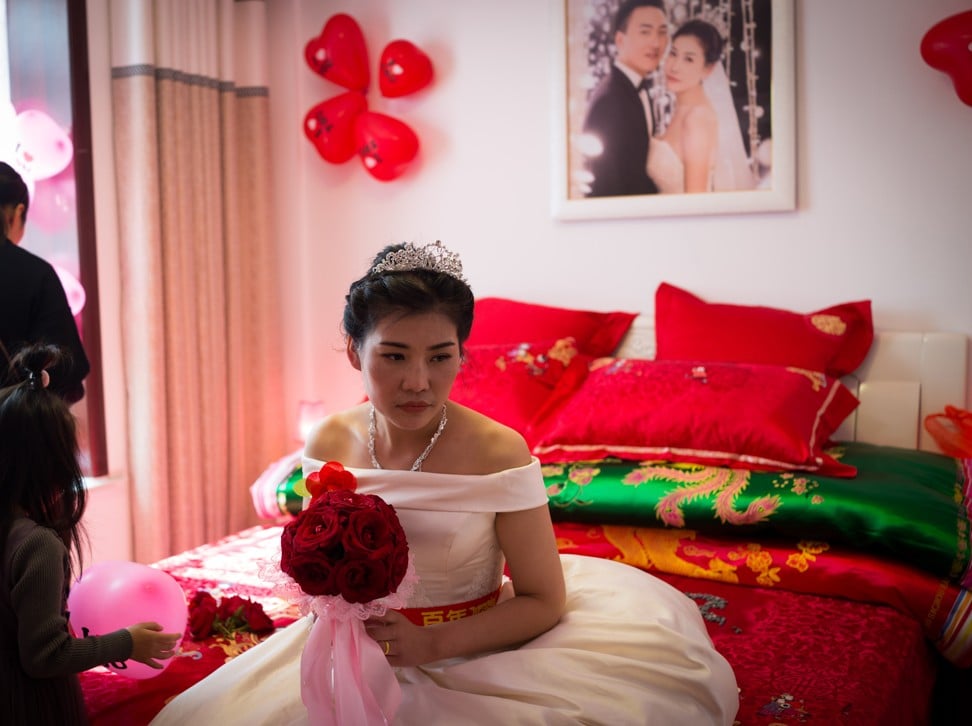
Documentary looks at the fantasy photo shoots of couples, including some who married decades ago when only drab clothing was allowed
It looks beyond the colourful clothes to consider issues of freedom, status, money and the new ‘China dream’
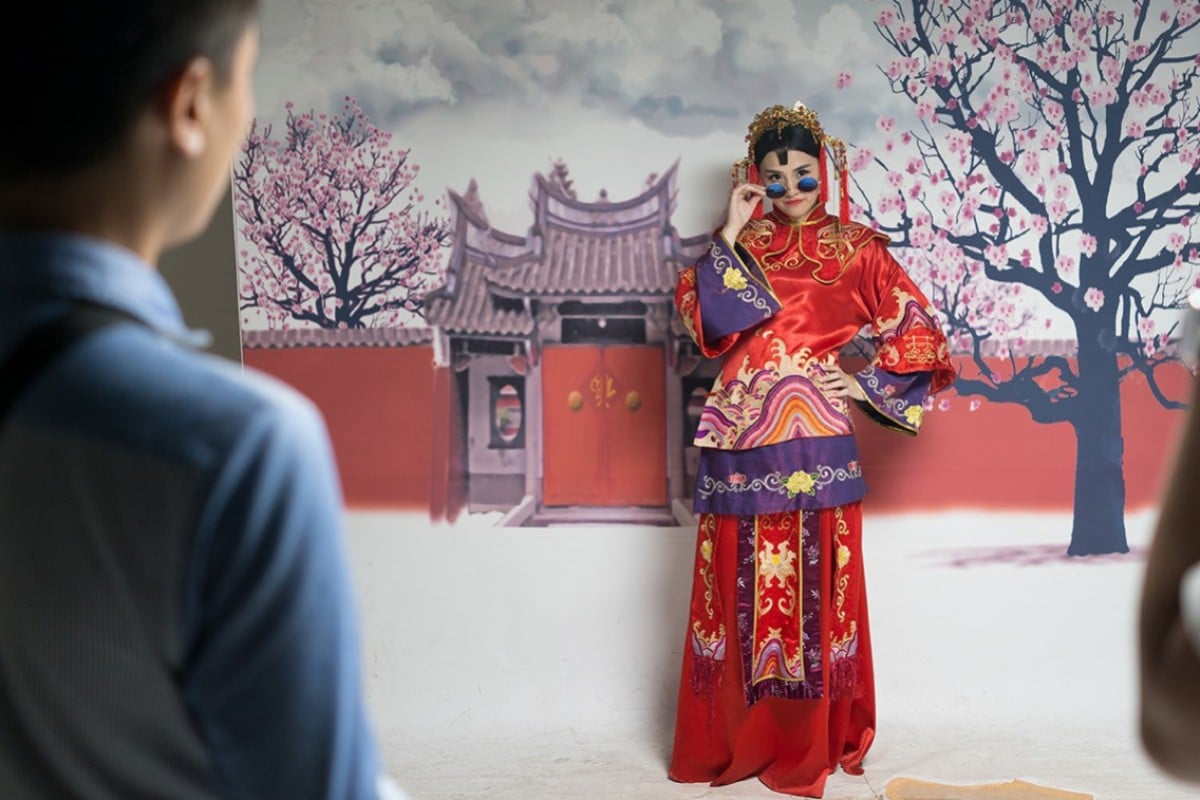
A still from China Love, a documentary by Olivia Martin-McGuire.
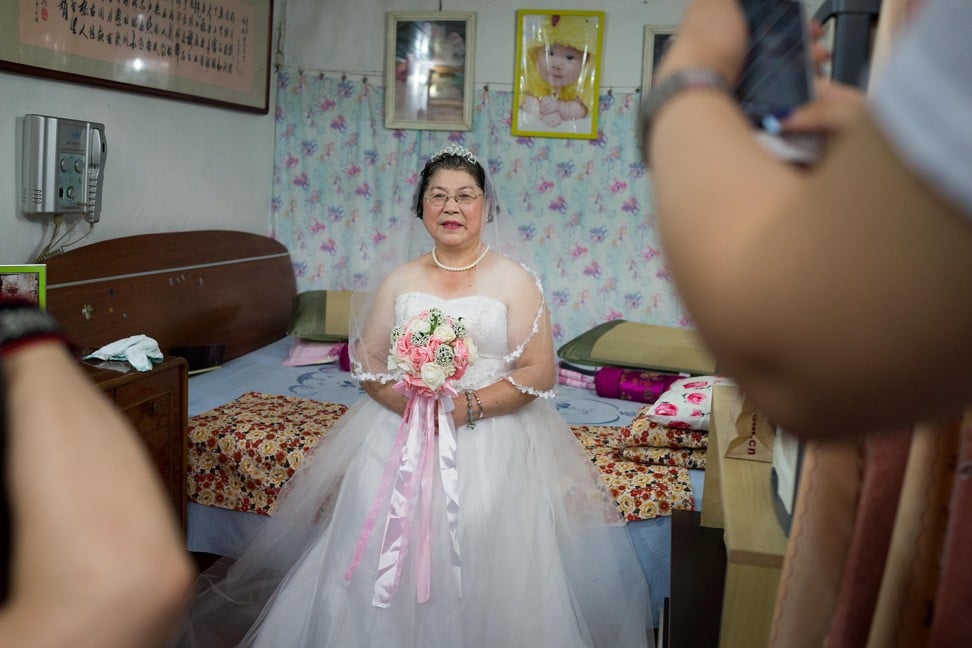
Pei-Pei and Xuezhong live in Shanghai’s French Concession. They married in 1968 and, as was typical for the time, have just one small black-and-white wedding photo.
“Pre-wedding photography could never have happened in 1968 because of the Cultural Revolution,” says Xuezhong, referring to the upheaval that took place under Mao Zedong, from 1966 to 1976. “Colourful clothing was not allowed. We had no choice.”
They did choose, however, to create new memories by having the wedding photos of their dreams taken decades later in a modern setting.
Their story is one of five featured in the documentary
, which explores relationships in contemporary China through the lens of the booming pre-wedding photo industry. It follows couples as they navigate love and family in the lead-up to the most important ritual in Chinese society: marriage.
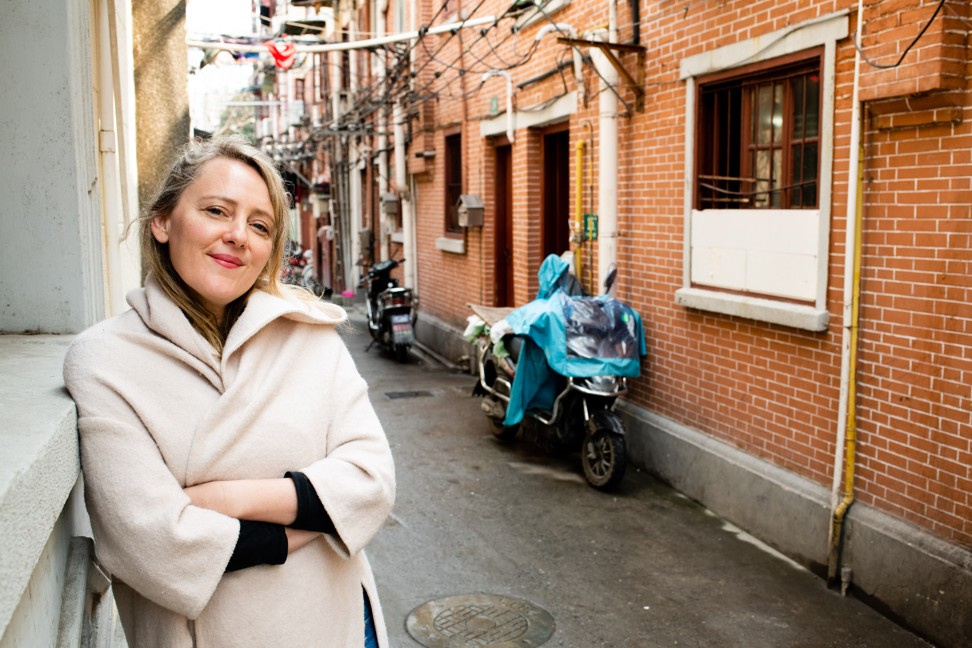
The documentary debuts in Hong Kong this week, with a special screening on Thursday at the Asia Society, in Admiralty. Attending the screening will be the film’s Australian director, Olivia Martin-McGuire, who spent four years in Shanghai, where a series of photographs taken on the city’s streets developed into a fascination with matters of the heart.
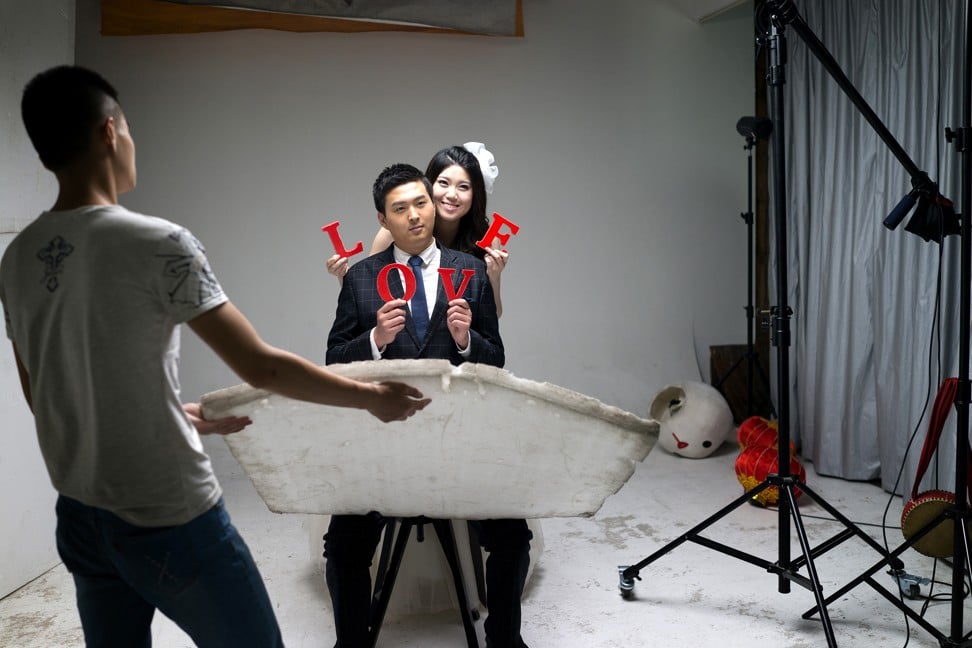
“It started when I saw all these couples in amazingly colourful costumes – some hitching up their dresses to reveal trainers – having [pre-wedding] photos taken near The Bund,” she says.
But Martin-McGuire says the film is more than a commentary on the pre-wedding photography business. It delves into issues of freedom, status, money and the new “China dream”.
“Just over 40 years ago, marriage in China was arranged by the state. Romantic love was seen as a capitalist concept,” she says.
China Love director Olivia Martin-McGuire. Photo: Gráinne Quinlan
Fast forward a generation and the picture couldn’t be more different, with China’s wedding industry today worth a staggering US$80 billion, according to Martin-McGuire.
A big part of that goes on the pre-wedding photos, with some couples spending up to US$500,000 for shoots in exotic locations.
Shoots usually involve several costume and backdrop changes, and can see couples transform into characters from a fantasy. Take Jenny Cheng, born in Urumqi, capital of the Xinjiang Uygur autonomous region, and Australian-born David Shaw. The couple, who are featured in the film and will attend the screening in Hong Kong, had their wedding photos taken under water.
“I wanted the film to feel youthful, fun, and represent the sense of possibility that is infectious in China,” says Martin-McGuire.
China Love will be screened on Thursday, at 6.30pm, at the Asia Society, 9 Justice Drive, Admiralty, followed by a panel discussion. Visit
The city’s ambitious waste and recycling rules took effect on Monday, aiming to emulate successes of comparable policies in Japan, Taiwan and California
President Xi Jinping has urged China – the world’s second-biggest waste producer after the United States – to sort rubbish better
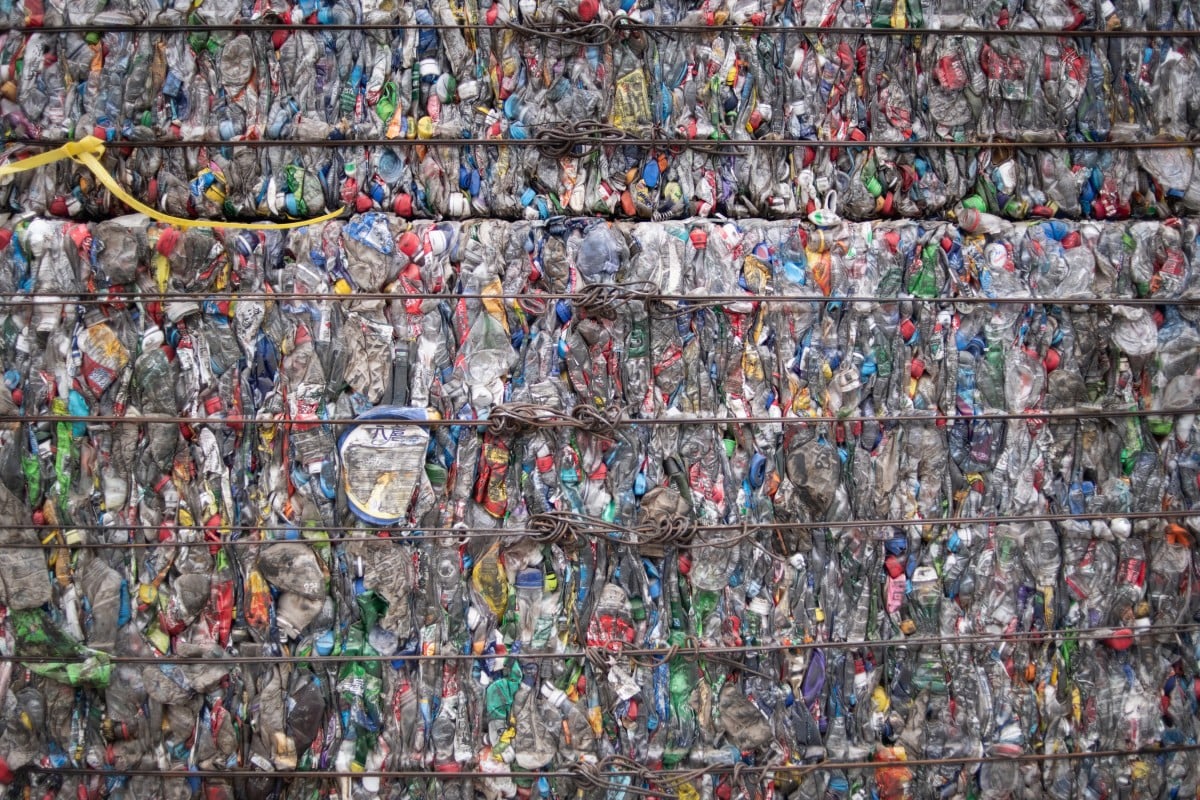
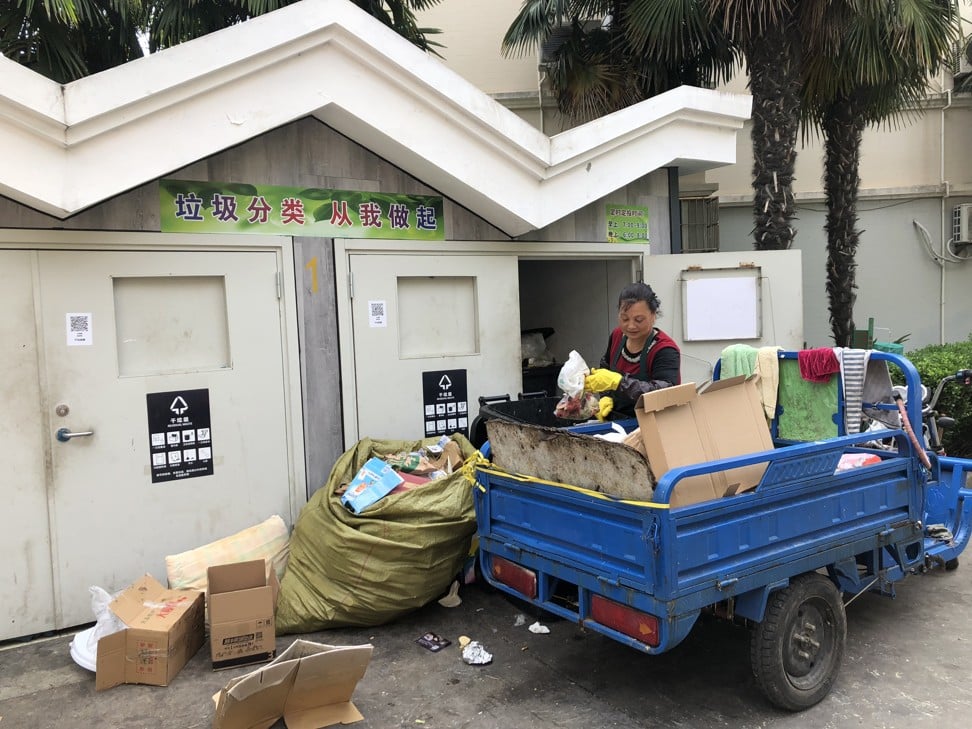
Recyclables such as plastic must be separated from wet garbage, dry garbage and hazardous waste under the new rules in Shanghai. Photo: AFP
At 9pm, Li Zhigang was sitting in front of his fruit shop on a bustling street in central Shanghai’s Xujiahui area, peeling the thin layers of plastic from rotten pears and mangoes.
“This is so much trouble!” he mumbled to himself while throwing the plastic into one trash can and the fruit into another.
In the past, Li simply threw away what could not be sold with the packaging on, but from July 1 he could be fined up to 200 yuan (about US$30) for doing so.
Like Li, many of the tens of millions of residents in the eastern Chinese city have been complaining in recent weeks that the introduction of compulsory
is making life difficult, but at the same time have been having to learn to do it.
Calls for garbage sorting have brought little progress in China in the past decade, but Shanghai is leading a fresh start for the world’s second-largest waste producer with its new municipal solid waste (MSW) regime, observers have said.
China generated 210 million tonnes of MSW in 2017, 48 million tonnes less than the United States, according to the World Bank’s What a Waste database.
“If we say China is now classifying its waste, then it’s Shanghai that is really doing it,” said Chen Liwen, a veteran environmentalist who has worked for non-governmental organisations devoted to waste classification for the past decade.
“It’s starting late, comparing with the US, Japan or Taiwan, but if it’s successful in such a megacity with such a huge population, it will mean a lot for the world,” she said.
A cleaner re-sorts household waste left at a residential facility in Shanghai. Photo: Alice Yan
Household waste in the city is now required to be sorted into four categories: wet garbage (household food), dry garbage (residual waste), recyclable waste and hazardous waste.
General rubbish bins that had previously taken all types of household waste were removed from buildings. Instead, residents were told to visit designated trash collection stations to dispose of different types of waste during designated periods of the day.
Companies and organisations flouting the new rules could be fined 50,000-500,000 yuan (US$7,000-70,000), while individual offenders risked a fine of 50-200 yuan.
The city’s urban management officers will be mainly responsible for identifying those who breach the rules.
Huang Rong, the municipal government’s deputy secretary general, said on Friday that nearly 14,000 inspections had been carried out around the city and more than 13,000 people had been warned on the issue since the regulations were announced at the start of the year.
As July 1’s enforcement of the rules approached, it became a much-discussed topic among Shanghainese people. A hashtag meaning “Shanghai residents almost driven crazy by garbage classification” was one of the most popular on China’s Twitter-like Weibo platform.
“My daughter took a box of expired medicine from her workplace to the trash collection station near our home yesterday because she couldn’t find the local bin for hazardous waste,” Li said.
While the measures force a change of habits for most people, they bring opportunities for some.
Du Huanzheng, director of the Recycling Economy Institute at Tongji University, said waste sorting was crucial for China’s recycling industry.
“Without proper classification, a lot of garbage that can be recycled is burned, and that’s a pity,” he said. “After being classified, items suitable to be stored and transported can now be recycled.”
G20 set to agree on ways to reduce plastics in oceans
Shanghai’s refuse treatment plants deal with 19,300 tonnes of residual waste and 5,050 tonnes of kitchen waste every day, according to the municipal government. By contrast, only 3,300 tonnes of recyclables per day are collected at present.
Nationwide, the parcel delivery industry used more than 13 billion polypropylene woven bags, plastic bags and paper boxes as well as 330 million rolls of tape in 2016, but less than 20 per cent of this was recycled, according to a report by the State Post Bureau.
Prices of small sortable rubbish bins for home use have surged on e-commerce platforms, while bin makers are also developing smart models in response to new needs.
Some communities are deploying bins that people are required to sign in with their house number to use, and are equipped with a “big data analysis system”. The system records households have “actively participated” and which have not, so that neighbourhood management can publicise their addresses and make house visits, according to a report by Thepaper.cn.
In a residential community in Songjiang district, grocery store owner Nie Chuanguo has found something new to sell: a rubbish throwing service.
He has offered to visit homes, collect waste and throw it into the right bin at a designated time. He charges 30 yuan a month for those living on the ground and first floors, 40 yuan for those on the second and third, and 50 yuan for the fourth and fifth.
“This service will start from July 1. Many people have come to inquire about it,” he said.
According to Du, waste classification is not only about environmental impact or business opportunities. “Garbage sorting is an important part of a country’s soft power,” he said.
For China, it was an opportunity to improve its international reputation, he said. “In the past, Chinese people were rich and travelled abroad, but they threw rubbish wilfully, making foreigners not admit we are a respected powerhouse.”
He added: “It’s also related to 1.3 billion people’s health, since the current waste treatment methods – burying and burning – are not friendly to the environment.”
Shanghai’s part in tackling waste comes amid President Xi Jinping’s repeated calls for the country to sort waste better.
“For local officials, it is a political task,” said Chen, who heads a waste management programme in rural China called Zero Waste Villages.
Huang said the president had asked Shanghai in particular to set a good example in waste classification.
In March 2017, the central government set out plans for a standardised system and regulations for
, with a target for 46 major cities, including Shanghai, to recycle 35 per cent of their waste by then.
In early June, Xi issued a long statement calling for more action from local governments.
However, it was a long process that required input from individuals, government and enterprises, Du said.
“Japan took one generation to move to doing its waste sorting effectively, so we shouldn’t have the expectation that our initiative will succeed in several years,” Du said.
How China’s ban on plastic waste imports caused turmoil
“The lessons we can learn from Japan include carrying out campaigns again and again, and paying close attention to educating young pupils about rubbish classification.”
Chen echoed that Shanghai’s waste sorting frenzy now was only a beginning.
“What we can see now is that people are being pushed to sort waste by regulators, but what’s next? How shall we keep up the enthusiasm?” she asked.
She suggested that how well officials worked on garbage sorting should be included in their job appraisal, and that ultimately people should pay for waste disposal.
“The key to waste classification, going by international experience, is making polluters pay,” Chen said.
Most of Hong Kong and Taiwan’s dumped plastic bottles come from mainland
There is plenty of experience for Shanghai to learn from in California, where unrecyclable waste is charged for at twice the price of recyclables, and Taiwan, where people are charged only for disposal of residual waste, according to Chen.
Taiwan has one of the world’s most impressive recycling rates, with nearly 60 per cent of its waste between January and October last year having been recycled, according to the Taipei government.
The daily amount of garbage produced per person during that period was about 0.41kg – down substantially from 1.14kg in 1997 – the government said.
Hong Kong has tried to copy the Taipei model over the years but failed, with a recycling rate of MSW slightly above 30 per cent in recent years, according to official data.
until late 2020 at the earliest. Under its plan, 80 per cent of household waste will have to go into designated bags and will be priced at an average of 11 HK cents (1 US cent) per litre.
On Friday, Shanghai officials admitted that there were plenty of challenges involved in
sorting and transport.
Zhang Lixin, deputy chief of the municipal housing administration, said: “Many property management companies fear the difficulties brought by garbage sorting or are reluctant to implement the new rules.”
The administration trained the heads of more than 200 companies across the city in April, he said.
“We do find that some cleaners and rubbish trucks mix the waste, despite residents being asked to throw different types in different bins,” said Deng Jianping, head of the city’s landscaping and city appearance administration – the government department spearheading the initiative.
In the interests of curbing such practices, they could face fines of up to 50,000 yuan or even have their licences revoked, he said.
China’s talent is turning away from multinationals and towards domestic tech champions in the search for a more fulfilling career
Change in sentiment comes amid raging US-China tech war and perceptions of ‘bamboo ceiling’ in the West
An increasing number of Chinese jobseekers are looking towards domestic tech firms. Image: SCMP
Molly Liu left her hometown Beijing to pursue a master’s degree in the United States in the 1990s.
After graduation, she fought hard to win an entry-level position at a US-based consultancy and after a period was later sent back to China to help the company’s expansion.
In the land of opportunity, the ambitious US firm showered her with avenues to pursue her career and she ended up working in Hong Kong as well as being one of the first people on the ground for the consultancy in Shanghai, Beijing, Taipei and Singapore.
Times have changed, though. Recently, her only son, Ben Zhang, turned down a hard-to-get job offer from a Boeing subsidiary in the US after gaining a master’s degree in computer science from Carnegie Mellon University in Pittsburgh, Pennsylvania.
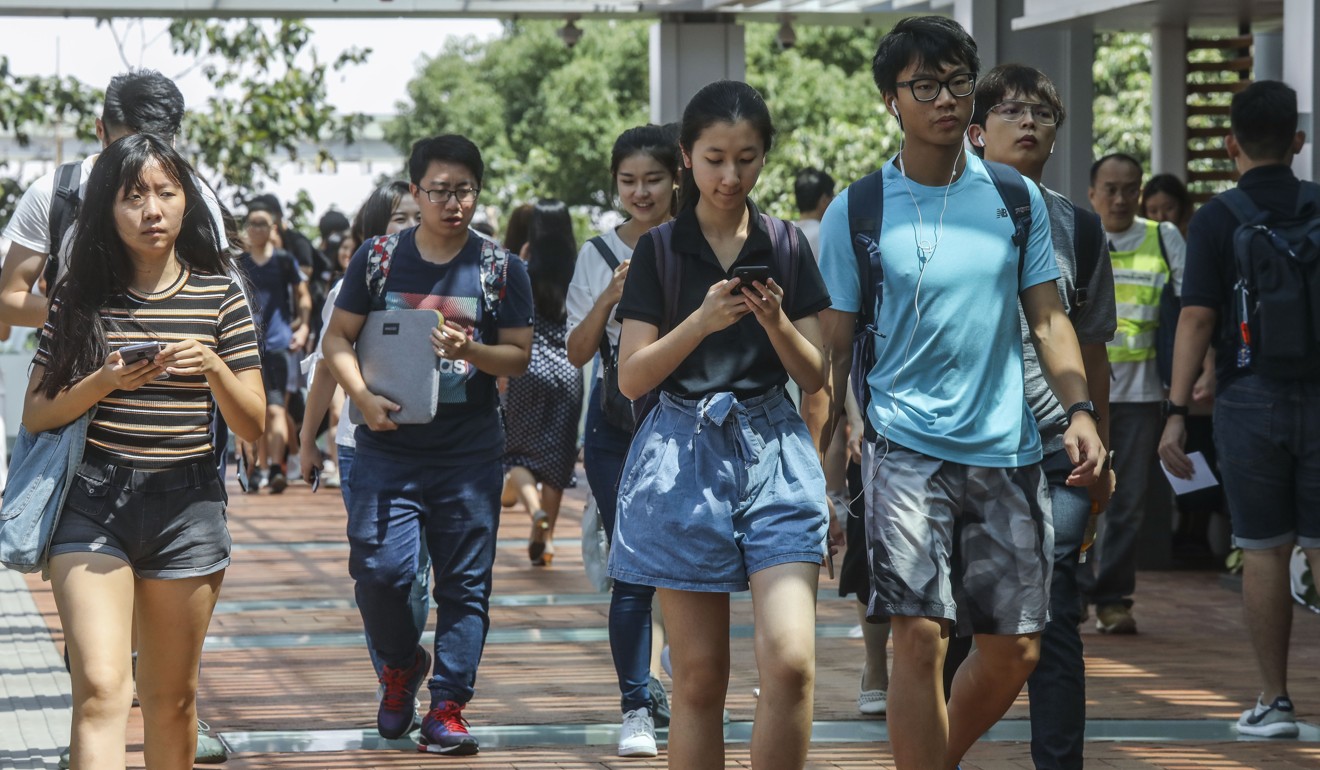
Chinese students educated in the US are now looking more at jobs in China. Photo: SCMP
He decided to return to Beijing in 2018 and now works as a product manager at Chinese smartphone maker Xiaomi. He is convinced that the start-up turned tech major can offer him the same sort of opportunities today that the US tech consultancy offered his mother in the 1990s.
This family story about the career choices of two different generations of US-educated Chinese students reflects a wider trend. Once upon a time, US corporations could cherry-pick top Chinese talent from American universities with the promise of large salaries, generous benefits and the chance to work at market-leading organisations.
Today, China’s cutting-edge technology companies – often referred to as China Tech Corporation (CTC) – are the most sought-after employers among many Chinese students, who want more than just a cushy life.
This marks another blow for multinational corporations (MNCs) already struggling to do business in China amid a myriad of restrictions and growing hostility towards them as the US-China trade and tech war gathers pace.
“What I look for in a job is not money. My parents are not counting on me to support them,” says 28-year-old Zhang, whose team in Xiaomi is working on a wide array of connected devices, from televisions to lamps to smart locks. “What I care about most is personal improvement and access to the best resources a company can offer.”
“In Boeing, I could probably work on a new product once every two to three years. But at Xiaomi, every three months, we can roll out a new product,” he added. “You can bring so many things into people’s everyday lives in China, like using your voice to control a TV or an air conditioner – things you can only imagine in the US.”
Zhang is not alone and many Chinese today perceive a “bamboo ceiling” in the US, where they are more often seen as engineers rather than executives.
One Chinese executive who now oversees the technology unit of a listed finance and insurance firm in China said that he used to lead a team of 20 engineers at one of the world’s most valuable tech companies in Silicon Valley.
“My job was to keep optimising the performance of a product [in Silicon Valley],” he said.
“But within three years in China, I was promoted to the chief scientist of our entire company, leading a team of 1,000,” said the man, who asked to remain anonymous as some of his family still reside in the US.
How Trump’s assault on Huawei is forcing the world to contemplate a digital iron curtain
According to an April survey by professional networking site LinkedIn, an increasing number of Chinese jobseekers share Zhang’s outlook. LinkedIn compiled a list of the top 25 most desired employers in China, and about 60 per cent were local Chinese companies, with 13 of them internet firms.
CTC bagged four of the top five spots, with e-commerce giant Alibaba, search giant operator Baidu and Bytedance – which operates short video hit TikTok – taking the lead.
Tesla ranked sixth behind its Chinese challenger Nio. Amazon, the only other foreign company in the top ten, ranked eighth.
Alibaba is the owner of the South China Morning Post.
Li Qiang, executive vice-president of Zhaopin, one of China’s largest online recruiters, described the rising status of CTC among jobseekers as “the dawning of a new era”.
“Nowadays, there is nothing a multinational can offer that a domestic firm cannot, be it a compensation package or the chance to be part of international expansion,” said Beijing-based Li.
“Jobseekers are not particularly looking for domestic firms or multinational firms. They are after good firms and most of the good firms in China these days happen to be domestic tech firms,” said Li.
Li’s comments reflect the wider opportunities within the domestic economy for Chinese jobseekers today, after the rise of many successful private-sector companies and a thriving start-up scene over the past 10 years, meaning it’s not just a one-way street to a state-owned enterprise (SOE) any longer.
A survey by Zhaopin in late 2018 found that 28 per cent of Chinese university students said MNCs were their employer of choice, down from 33.6 per cent in 2017.
Even on pay and benefits, CTC is catching up with multinationals. Zhang said Xiaomi matched the offer from the Boeing unit in the US and many leading tech firms offer benefits such as gym memberships and childcare facilities.
And the rags-to-riches stories of many leading China tech entrepreneurs, some of whom have become billionaires, continue to grab media attention and inspire the younger generation.
To be sure, Chinese students would still rather work for an MNC than an SOE – but the rise of CTC can be seen in company rankings and in the total number of CTC companies in the top employer list, according to Zhaopin.
For a growing number of Chinese students, the doors to America are closing
William Wu, China country manager of global employer brand consultancy Universum, said that the one element Chinese jobseekers pay most attention to these days is whether or not a job can be “a good reference point for a future career”. And a growing number of private Chinese companies now have global brand recognition.
A recent survey by Universum shows that Apple and Siemens were the only two Western names in the top 10 ideal employers for Chinese students in the engineering sector this year, while there were four foreign firms in the top 10 list in 2017.
Huawei Technologies, the Chinese telecoms giant that has been put on a US trade blacklist after the Trump administration said it was a national security risk, ranked top in the Universum list. Xiaomi, the smartphone maker Ben Zhang works for, ranked second while Apple, one of the most valuable tech firms in the US, ranked seventh.
It seems that China’s rising clout in the world is now an attractive factor for jobseekers.
“Every engineer would like to see the technology they’ve worked on have the potential to change the world one day,” said Li Yan, head of multimedia understanding at Chinese short video major Kuaishou. “In the old times Chinese companies were at the bottom of the global value chain, now they are climbing up, providing more opportunities for talent to create world-changing products.”
At Beijing-based Kuaishou, Li’s 100-strong artificial intelligence algorithm team – many of whom joined from Microsoft Asia Research – is working to make machines understand content better than humans by studying the millions of user-generated videos on the company’s platform every day.
CTC companies do have a strong home advantage, with big Western firms having to navigate a myriad of restrictions.
For example, the “Great Firewall” lets Chinese authorities control the content and information reaching the country’s 800 million-plus internet population. Western firms also face other forms of red tape, such as having to form joint ventures with local partners.
Amazon earlier this year announced the close of its China marketplace, giving up the brutal fight with Chinese online shopping giants such as Alibaba to capture domestic e-commerce market share. Oracle China reportedly laid off 900 people in March as it winds down its research and development center in the country.
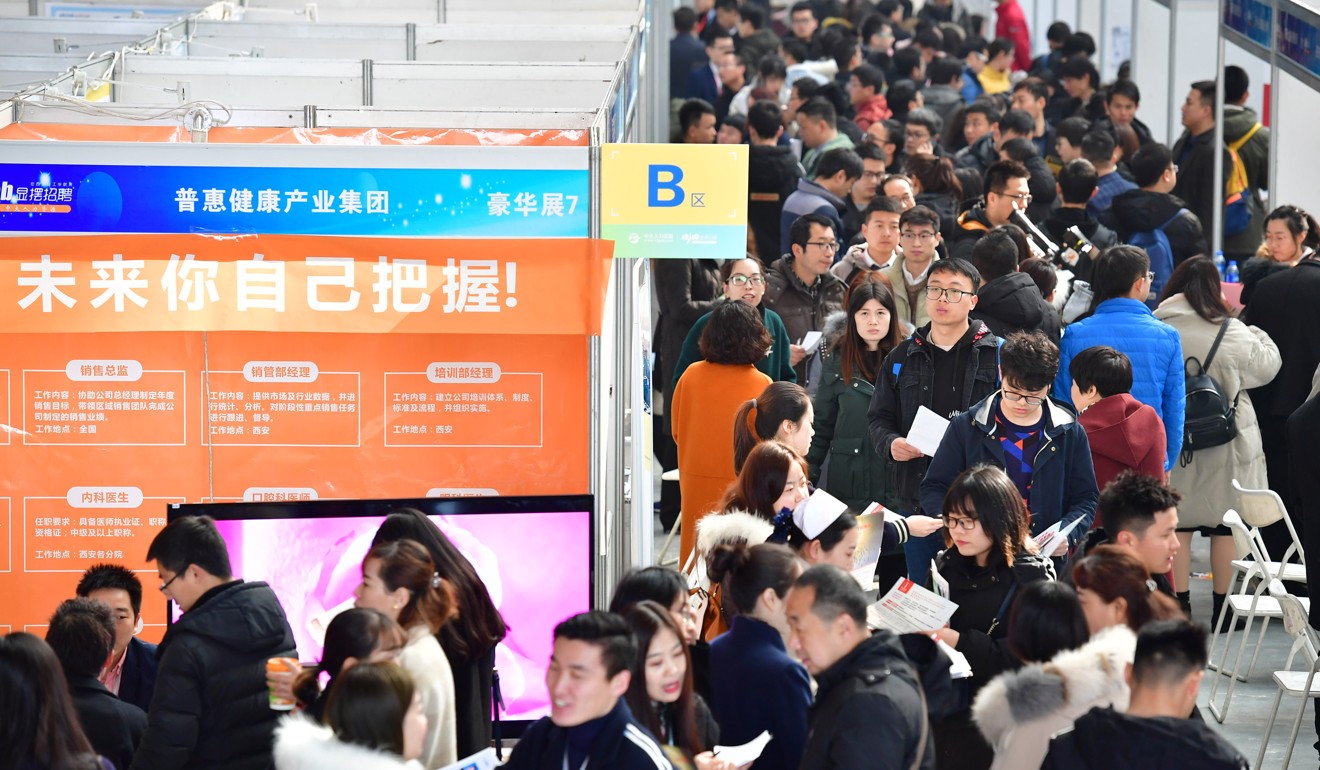
Job applicants visit a provincial job fair at Qujiang International Conference and Exhibition Center in Xian, northwest China’s Shaanxi Province in February. Photo: Xinhua
Oracle has never confirmed the number of lay-offs but said the job cuts formed part of an overall global strategy transformation.
However, there has been little sympathy for those losing their jobs in China, judging by social media posts.
Some people posted that those working for big US tech firms are not “wolf” enough compared with counterparts who work for local tech firms, referring to the long work-hours culture of the domestic tech scene.
A viral story titled “Why there should be no pity for the sacked Oracle China employees” said the company was Beijing’s biggest nursery because of the flexible “work from home” culture and generous compensation package offered to employees.
Oracle said to begin mass lay-offs in China as part of global move to cloud services
“They had every chance to join rising domestic internet firms. But they settled for high salary and low work pressure, which eventually made them frogs in boiling water. Why pity them?” said the article, adding that the earlier people give up on the “glory” of working for MNCs, the quicker they will benefit.
Not all Chinese workers would agree, and there has been a recent backlash against the “996” culture within China’s tech sector, where people routinely work from 9am to 9pm, six days a week.
With geopolitical uncertainty growing day by day, though, many Chinese are asking why leave the family behind for an uncertain fate overseas?
A survey done by consultancy BCG and The Network in 2018 showed that only one in three China residents was willing to move abroad for work, down from 61 per cent in 2014. The country is also the 20th most popular destination worldwide to relocate for a job, compared with 29th in the 2014.
“One of my graduate classmates in the US just gave up a six-digit package at Oracle and joined drone maker DJI in Shenzhen,” said Ben Zhang. “I asked what prompted his return to China. He sent me the viral article and asked, ‘who wants a life that one can see the end of from the very beginning?’”
Both individuals and businesses need to play their part in lowering carbon emissions, and increasing the city’s proportion of clean energy seems inevitable
With two-thirds of Hong Kong’s carbon emissions coming from power generation, increasing the proportion of clean energy seems inevitable.
Switching off all air conditioning to achieve zero carbon emissions may sound a little extreme. But it underlines the challenges in fighting global warming, a common goal that involves behavioural and institutional changes from all stakeholders.
As the threats loom larger and the clock for action ticks faster, it is time we made tough choices. The options for Hong Kong have been mapped out in the public consultation on the long-term decarbonisation strategy, with the focus being drawn to importing more nuclear energy from across the border.
The idea strikes a raw nerve, not just because it touches on the issue of nuclear safety, but also resistance arising from the perceived higher reliance on the mainland. The lack of information about the actual impact on electricity tariffs also makes discussion difficult.
With two-thirds of the city’s carbon emissions coming from power generation, increasing the proportion of clean energy seems inevitable.
Currently, nuclear power from the mainland accounts for about a quarter of our energy supply. As long as safety is not an issue, there is no reason why we cannot develop on that basis, along with more use of solar and other renewable energies.
In addition to other institutional options such as phasing out polluting fuels for vehicles and introducing more incentives for green buildings, a great deal can be achieved at both individual and corporate levels.
For example, air conditioning will be just as comfortable when set at 24 degrees Celsius instead of 21. Cutting down on fashion and plastic consumption helps, as can replacing business trips by video conferencing.
How far are you willing to go to save planet from climate change?
These changes are simple and easy to do, but they go a long way in saving our planet.
To combat climate change, the Paris Agreement has set a carbon reduction target to keep the increase in the global average temperature to well below 2 degrees Celsius.
A small city like ours may seem too little to make an impact on climate change. But as a responsible global citizen and a heavily developed world city, we have a duty to help mitigate the impact.
The consultation has put the relevant issues into perspective in a timely manner. For the sake of sustainable development and the well-being of future generations, tough choices will have to be made.
British trade officials’ anxious moments unfounded as £500 million agreement signed
Strong statement on Hong Kong protest by UK Foreign Secretary Jeremy Hunt fails to scupper talks
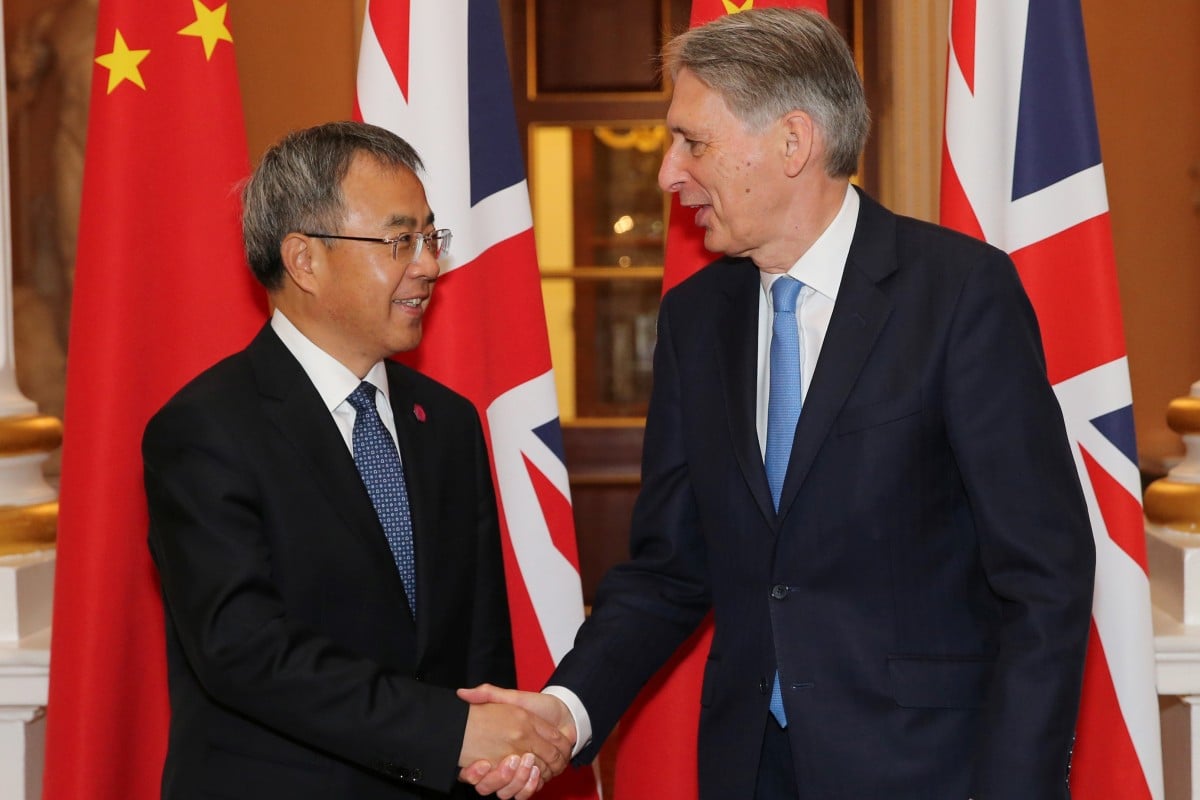
Chinese Vice-Premier Hu Chunhua (left) and British Chancellor Philip Hammond shake hands at London’s Mansion House. Photo: Reuters
China and Britain have clinched £500 million (US$630 million) worth of deals in a high-profile trip by a Chinese vice-premier to London on Monday, despite fears by British trade officials that the talks might be derailed because of protests in Hong Kong.
Vice-Premier Hu Chunhua and British Chancellor Philip Hammond vowed to work together to protect global trade, but not before officials in Whitehall wondered if the public uproar in Hong Kong would scupper a deal they see as a vital boost amid the Brexit uncertainty.
Hong Kong people took to the streets on two consecutive Sundays to protest against a bill that could allow extraditions from Hong Kong to mainland China. An estimated 2 million people took part in the most recent march on Sunday, calling for the bill to be scrapped altogether.
The anxiety of officials over the trade deal was compounded by a strongly worded statement by Jeremy Hunt, the foreign secretary now vying to be Britain’s next prime minister, who called on the Hong Kong government to “listen to the concerns of its people and its friends in the international community and to pause and reflect on these controversial measures”.
US forced to perform tricky balancing act over Hong Kong extradition bill
But as soon as Hong Kong Chief Executive Carrie Lam Cheng Yuet-ngor announced the suspension of the bill, Hunt issued another statement, this time “praising” the decision.
“Whitehall is so concerned about how the two events will affect each other. The foreign office didn’t want to understate the relevance of the Sino-British Joint Declaration, while the Exchequer wanted to make sure the deals would be signed,” a source with knowledge of the ongoing developments told the South China Morning Post.
The job consequently fell to Theresa May – who is entering her final days as prime minister – to raise the issue of Hong Kong with Hu.
Her office did not elaborate on their conversations, but a Conservative Party source said: “I expect her mention of Hong Kong to be minimal and a matter of mere gesture. To infuriate the world’s second biggest economy would be the last thing for a caretaker PM to do.”
Hong Kong has continued to be a subject of interest for foreign leaders following the suspension of the contentious bill that would allow anyone in Hong Kong suspected of mainly serious crimes to be sent to mainland China for trial.
China halts WTO battle over market economy status
US President Donald Trump would touch upon the issue if and when he met Chinese President Xi Jinping during the G20 summit in Japan later this month, US Secretary of State Mike Pompeo said on Sunday.
In the light of the ongoing trade war with the US,
but has been a largely untouched subject since Britain decided to leave the European Union a year later.
While in London, Hu co-chaired the latest China-UK Economic and Financial Dialogue with Hammond. The pair also officiated at the launch of the long-awaited London-Shanghai Stock Connect project, which went live on Monday and enables companies listed in Britain to sell shares in China.
Hong Kong must defend its values to forge an economic future
Under the scheme, Shanghai-listed companies can raise new funds via London’s stock market while British companies can broaden their investor base by selling existing shares in Shanghai.
Britain has hailed the deals with China as a diplomatic success amid the business uncertainties looming over Brexit, with Secretary for International Trade Liam Fox calling the creation of 175 new jobs in Britain “significant wins” for the British market.
Although Britain stopped short of endorsing China’s Belt and Road Initiative, the two countries concluded a memorandum of understanding on infrastructure cooperation in third countries, according to a statement by Britain’s Department of International Trade.
Britain also secured permission from China to export beef by the end of the year at the earliest, ending more than two decades of a Chinese government ban implemented in response to the BSE outbreak.
HONG KONG, June 15 (Xinhua) — An official in charge of the Office of the Commissioner of the Chinese Foreign Ministry in Hong Kong Special Administrative Region (HKSAR) on Saturday expressed understanding, respect and support for the decision by the HKSAR chief executive to suspend the exercise to amend the HKSAR’s Fugitive Offenders Ordinance and the Mutual Legal Assistance in Criminal Matters Ordinance.
The official also voiced continuous staunch support for HKSAR Chief Executive Carrie Lam and the SAR government in governing Hong Kong in accordance with law, safeguarding the country’s sovereignty, security and development interests, and upholding Hong Kong’s enduring prosperity and stability.
“We firmly support the SAR government’s efforts to amend the ordinances,” he said, adding that the amendments to the two ordinances aim to plug a legal loophole in the existing legal framework, demonstrate social justice and improve Hong kong’s rule of law, which is necessary, legitimate and reasonable.
The contents of the amendments conform to the international law and the common practices of the international community, and help fight crimes, he said.
The official strongly condemned the violent acts by some people, and voiced firm support for the Hong Kong police force to mete out punishment in accordance with law, uphold Hong Kong’s rule of law and protect Hong Kong’s social stability.
Since Hong Kong’s return to the motherland, Hong Kong people have been enjoying unprecedented and extensive rights and freedoms, including the freedoms of speech and assembly, he said.
However, freedom is by no means without boundaries, and rights must be exercised within the framework of the rule of law. Any civilized society ruled by law will not tolerate unlawful acts which impact peace and security, he said.
He stressed that Hong Kong is China’s Hong Kong and its affairs are purely China’s internal affairs. “We resolutely oppose any external forces interfering in its affairs with any excuse or in any form. Any attempts to create chaos in Hong Kong and jeopardize its prosperity and stability are doomed to fail,” he said.
“Again, we urge relevant countries to comply with the international law and the basic norms governing international relations, fully respect China’s sovereignty and the SAR government in exercising governance in accordance with law and immediately stop the wrong words and deeds that undermine Hong Kong’s prosperity and stability,” the official said.
Firm is expected to go public in Hong Kong on Friday, with Zhang’s 68 per cent stake giving her a US$7.9 billion fortune
She and husband Sun Piaoyang will join world’s richest pharmaceutical families, rivalling the Sacklers and Bertarellis
A technician loads containers on a rack at a Cyagen Biosciences facility in Jiangsu province, China, in March. Photo: Bloomberg
Zhong Huijuan quit her job teaching chemistry to teenagers and got into the drug business.
The career switch has paid off handsomely.
Her Hansoh Pharmaceutical Group, China’s largest maker of psychotropic drugs, is poised to go public on Friday in Hong Kong with a market value of US$10.4 billion. Zhong holds a 68 per cent stake, giving her a US$7.9 billion fortune, according to the Bloomberg Billionaires Index.
Zhong, 58, is not even the richest person in the family. Her husband Sun Piaoyang, 60, is worth US$9.2 billion, thanks to the success of his Jiangsu Hengrui Medicine, a maker of anti-tumour drugs whose stock has returned about 16,300 per cent since it went public in Shanghai almost two decades ago.
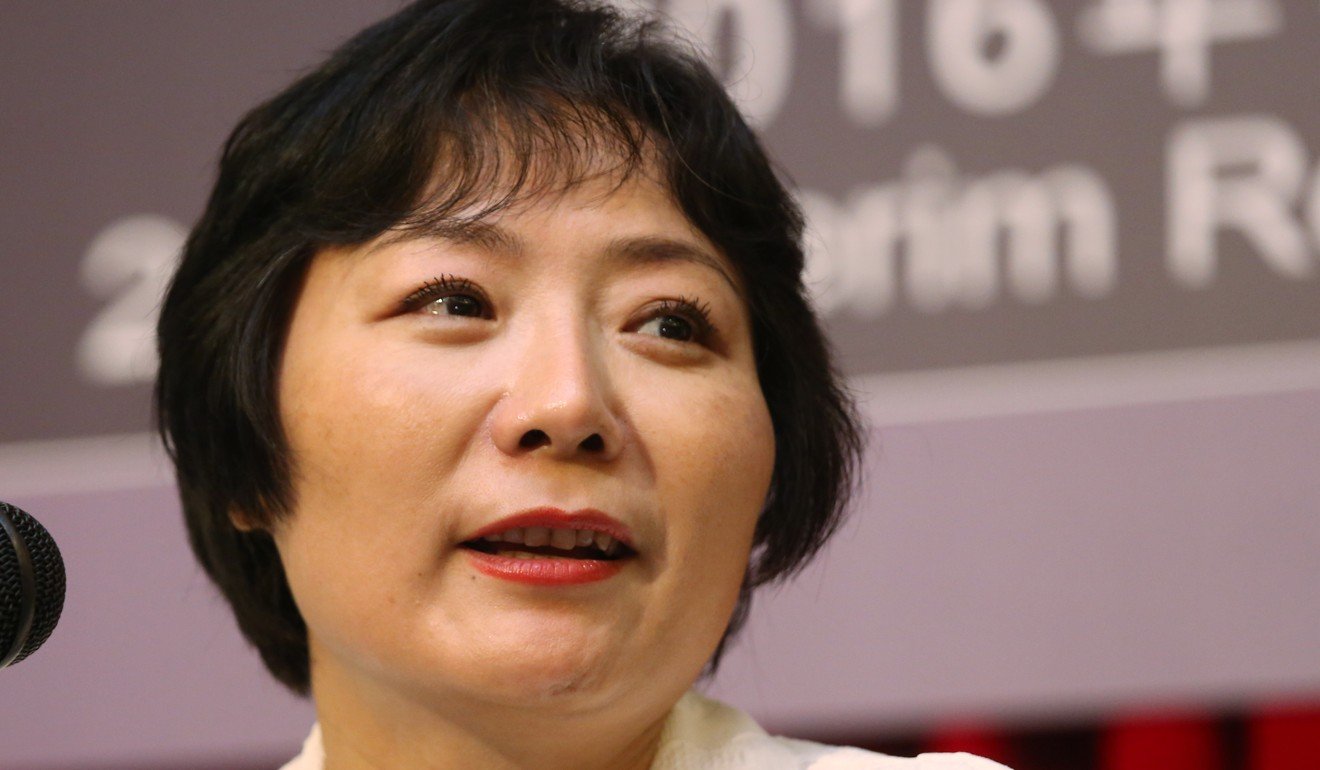
Longfor Group Holdings Chairwoman Wu Yajun attends the company’s interim results announcement at the JW Marriott Hotel in Hong Kong in August 2016. Photo: May Tse
They are poised to be among the world’s richest pharmaceutical families, with a combined fortune that rivals the Sacklers, who made a fortune selling opioids, and the Bertarellis of Switzerland.
Health-care spending in China has surged to 5.9 trillion yuan (US$853 billion) last year from 3.5 trillion yuan in 2014, and is projected to top 9.4 trillion yuan in 2023, Hansoh said in a prospectus for the offering.
Cen Junda, a long-time investor of the Lianyungang, Jiangsu-based company, is also a billionaire with a stake valued at about US$1.7 billion.
Iris Luo, a spokeswoman for Hansoh, declined to comment on their fortunes.
Who is Yang Huiyan, China’s richest woman?
The IPO will make Zhong China’s third-richest woman, after two real estate moguls: Country Garden Holdings co-chairman Yang Huiyan, and Longfor Group Holdings
Chairwoman Wu Yajun, who are worth US$21.4 billion and US$9.9 billion, respectively.
Zhong graduated with an undergraduate degree in chemistry from Jiangsu Normal University in July 1982 and taught chemistry at Yan’an middle school in Lianyungang in the early 1990s, according to the website of All-China Women’s Foundation. She founded Hansoh in 1995.
The company, which researches and produces drugs for six major therapeutic areas, reported 1.9 billion yuan in profit in 2018, an 18 per cent increase from a year earlier, the prospectus shows. The drug maker gets almost half of its revenue from cancer treatments.
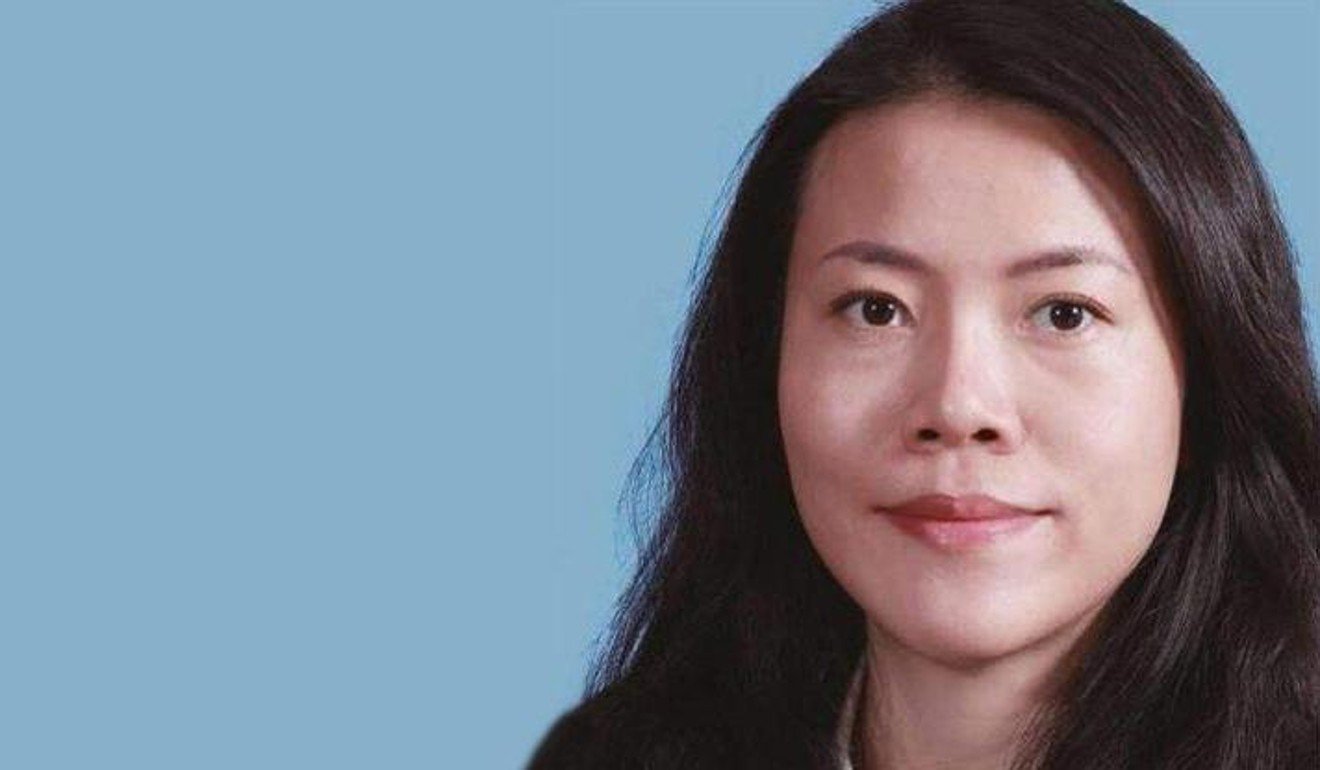
Country Garden Holdings co-chairman Yang Huiyan, who is worth US$21.4 billion, is China’s richest woman. Photo: Handout
“We believe its R&D will focus on making generics as soon as possible to take the first-mover advantage, a strategy many leading pharma companies applied in the past,” said Zhang Jialin, a Hong Kong-based analyst at ICBC International Research.
Hansoh’s cornerstone investors include Singapore’s sovereign wealth fund, GIC, and Hillhouse Capital, Asia’s biggest private equity buyer, helping to draw more market interest in Friday’s IPO. Hengrui’s earlier success also may help bolster investor confidence in Hansoh.
“The synergies between Hengrui and Hansoh, particularly in R&D and distribution, will bring the latter advantages over industry competitors,” said Mia He, a Bloomberg Intelligence analyst.











 CHINDIA ALERT: You'll be living in their world, very soon