Archive for ‘Hong Kong’

16/02/2019

Hong Kong seizes $1m worth of rhino horn at airport

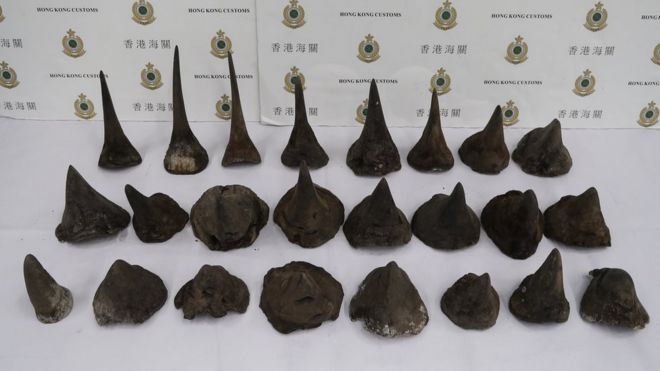
Photo released by Hong Kong Customs and Excise Department of seized rhino hornsImage copyrightAFP/GETTY
Image captionThe haul accounts for 20% of Hong Kong’s rhino horn seizures in five years

Airport authorities in Hong Kong have arrested two men smuggling a record number of suspected rhino horns worth $1m (£780,000) on Thursday.

Some 24 severed rhino horns weighing 40kg (88lb) were found in the bust – Hong Kong’s largest ever seizure.

The alleged smugglers were in transit to Ho Chi Minh City in Vietnam from Johannesburg in South Africa.

Customs officials said the illegal haul was brazenly transported through the terminal in two cardboard boxes.

The airport incident comes just two weeks after Hong Kong seized a record eight tonnes of pangolin scales and more than 1,000 elephant tusks.

A local environmental group said Thursday’s rhino horns accounted for 20% of the total amount of Hong Kong’s rhino horn seizures since 2013.

Hong Kong is a known transit point for the illegal wildlife trade, and conservation groups have urged the authorities to crack down on smuggling.

Rhino horn is used in China and Vietnam in some traditional medicine, despite containing little more than keratin, the same protein that makes human hair and fingernails.

The demand for rhino horn has fuelled wildlife poaching, particularly in South Africa, which is home to about 80% of the world rhino population.

Conservation groups say the number of rhinos killed has been gradually decreasing since 2014, but more than 1,000 rhinos continue to be killed in South Africa every year.

Source: The BBC

07/02/2019

Hong Kong holds fireworks show to celebrate Lunar New Year

CHINA-HONG KONG-SPRING FESTIVAL-FIREWORKS (CN)


Fireworks illuminate the sky over the Victoria Harbour in Hong Kong, south China, Feb. 6, 2019, to celebrate the Spring Festival. (Xinhua/Li Gang)

HONG KONG, Feb. 6 (Xinhua) — Spectacular flower patterns of fireworks roared above Victoria Harbor, followed by patterns of green “8” and yellow golden ingots, sending traditional blessings to locals.

It was the opening scene of the fireworks show in China’s Hong Kong Special Administrative Region. The show started at 8:00 p.m. local time Wednesday, the second day of the first month of the Chinese lunar calendar.

A total of 23,888 fireworks lightened up the sky during the 23-minute show.

In one scene, a lot of fireworks went across the harbor with a racing speed effect, as if playing hide-and-seek.

“The scene symbolizes that we should set our goals for the new year and work hard towards goals with faith. Eventually, we will achieve the targets,” said Wilson Mao, CEO of a multi-media production company which designed the firework show.

Another scene echoed the approaching Valentine’s day. It displayed miscellaneous shades of strobes and waterfall-like movements to create heart-thumping effects and send blessings of everlasting love bond.

In the last scene, dazzling fireworks filled the sky with high intensity and lasted for 25 seconds, bringing the show to an end.

A Hong Kong resident surnamed Lo said he enjoyed the show, especially the powerful sounds of the fireworks.

Sharing his wishes for the lunar new year, Lo said he hoped “Hong Kong continues to prosper, and people have good jobs and stay healthy.”

Source: Xinhua

07/02/2019

Spotlight: Cross-border infrastructure helps promote tourism in Hong Kong and Greater Bay Area

HONG KONG, Feb. 6 (Xinhua) — Benefiting from the Hong Kong section of the Guangzhou-Shenzhen-Hong Kong Express Rail Link and the Hong Kong-Zhuhai-Macao Bridge, China’s Hong Kong Special Administrative Region (SAR) witnessed a record high of tourist arrivals last year.

Data released by the Hong Kong Tourism Board showed that the overall tourist arrivals soared to around 65.1 million in 2018, up 11.4 percent from that of 2017. Among the overall growth, visitor arrivals from the mainland saw a rise of 14.8 percent to 51 million.

As the cross-border infrastructure further ties up the Hong Kong SAR and the mainland, Hong Kong will further promote tourism in the Guangdong-Hong Kong-Macao Greater Bay Area (Greater Bay Area), said tourism industry insiders.

“From the latter half of 2017, Hong Kong began to see an upturn in tourism, and witnessed a continuous increase in the number of tourists in 2018,” said Yiu Si-wing, member of the Legislative Council of the HKSAR.

“Since the operation of the Express Rail Link and the bridge, we see an apparent growth in visitor arrivals to Hong Kong.” Yiu pointed out.

He viewed tourists from the mainland as the driving force to push Hong Kong’s visitor arrivals to a new high. “It takes less time and fewer procedures for those visitors to Hong Kong via the Express Rail Link than before when they need to transfer to Hong Kong after first arriving at Shenzhen,” said Yiu.

Cross-border infrastructure has facilitated the transportation between the mainland and Hong Kong by integrating the SAR into the national high-speed railway network.

An increasing number of tourists traveled by the Express Rail Link to Hong Kong, and to meet their demand for in-depth tour, new routes featuring natural and cultural characteristics have been introduced, said Ng Hi-on from China Travel Service.

The Hong Kong Tourism Board has promoted “Old Town Central” and “Hong Kong Neighborhoods” as tailored tours for travelers to experience Hong Kong.

Besides, tourists can enjoy festivals and events in Hong Kong, such as night parade, horse racing and flower markets.

Cruise tour is another product the Hong Kong Tourism board has promoted. After the launch of the Express Rail Link in September 2018, the Dream Cruises company introduced a “rail cruise” route in November, welcoming more than 1,000 tourists from Hubei and Yunnan provinces and Guangxi Zhuang Autonomous Region to Hong Kong for a land-sea trip.

Tourism in the Greater Bay Area has huge potential, as cities in the area can work with one another to develop multi-destination travel with cross-border infrastructure, according to Anthony Lau, the executive director of the Hong Kong Tourism Board.

Yiu said that travelers can travel through cities in the Greater Bay Area via transport links and the tour pattern enriches their trip.

He called for more efforts by Guangdong Province, and the Hong Kong and Macao SARs to forge closer bonds so as to build the Greater Bay Area into a tourism brand.

Source: Xinhua

03/02/2019

World War One grenade among potatoes at Hong Kong crisp factory

A World War One-era German hand grenade, 2 February 2019Image copyrightGETTY IMAGES
Image captionThe grenade is believed to have been dug up accidentally in France

A World War One-era German hand grenade has been found among a delivery of potatoes shipped from France to a crisp factory in Hong Kong, police say.

The muddy device, which was 3in (8cm) wide, was “in an unstable condition” because it had been discharged but had failed to detonate, officials said.

It was discovered at the Calbee crisp-making factory in the eastern Sai Kung district on Saturday morning.

The bombe de terre was safely detonated on site by bomb disposal officers.

“All the information to date suggests that the grenade was imported from France together with the other potatoes,” Superintendant Wong Ho-hon told reporters.

He added that the device was defused using a “high-pressure water firing technique”.

It is believed to have been dug up accidentally with potatoes planted in a field in France before being exported.

The grenade was likely to have been left behind, dropped by soldiers there during the war, or left there after it was thrown,” Dave Macri, a military historian, told the South China Morning Post.

Last year, thousands of people were forced to evacuate a busy commercial area of Hong Kong while police defused a “severely damaged” World War Two bomb found on a construction site.

It was the second to be found in Hong Kong within the same week.

Source: The BBC

30/01/2019

“One country, two systems” will further benefit Hong Kong in new era: liaison office director

HONG KONG, Jan. 29 (Xinhua) — With “one country, two systems” as its greatest advantage, Hong Kong will acquire more of a sense of contentment and happiness by staying committed to the basis of “one country” and well leveraging the benefits of “two systems,” an official said here Tuesday.

Wang Zhimin, director of the Liaison Office of the Central People’s Government of China in the Hong Kong Special Administrative Region (HKSAR), made the remarks while addressing more than 4,000 attendees at the liaison office’s Chinese New Year reception held at the Hong Kong Convention and Exhibition Center.

In 2018, China celebrated the 40th anniversary of its reform and opening-up, and solemnly declared a firm resolve to carry on this cause without pause in the new era, Wang said.

He added that Hong Kong has actively participated in the development of the Belt and Road Initiative and the Guangdong-Hong Kong-Macao Greater Bay Area, with a positive trend of integrating itself into the country’s overall development.

“By participating in the Greater Bay Area construction, the HKSAR, for the first time, is deeply engaged in drafting and implementing an outline of a national strategic plan,” he said.

“All of these achievements again explain that ‘one country, two systems’ is Hong Kong’s greatest advantage and the Chinese mainland with reform and opening-up is Hong Kong’s biggest stage,” he said.

This year marks the 70th anniversary of the founding of the People’s Republic of China. Pointing out that during the past 70 years, Hong Kong has always been developing and thriving together with the mainland, Wang expressed hope that all circles of Hong Kong society will contribute to the country’s comprehensive opening-up in a more proactive manner.

“Hong Kong compatriots will acquire more of a sense of contentment, security and happiness by staying committed to the basis of ‘one country’ and well leveraging the benefits of ‘two systems’,” he said.

Wang also pledged that the liaison office will open its doors wider in the new year, and will invite the HKSAR government officials and friends from various social walks, including all members of the HKSAR Legislature Council, for a gathering to further enhance mutual understanding.

Source: Xinhua

20/01/2019

China’s tech hub Shenzhen misses growth target but leapfrogs Hong Kong into Asia’s top 5, mayor says

  • Gross domestic product up 7.5 per cent in 2018 to US$350 billion, mayor Chen Rugui says
  • But claim city’s economy now among Asia’s biggest may be premature as Hong Kong has yet to show its hand
PUBLISHED : Sunday, 20 January, 2019, 6:04pm
UPDATED : Sunday, 20 January, 2019, 6:04pm

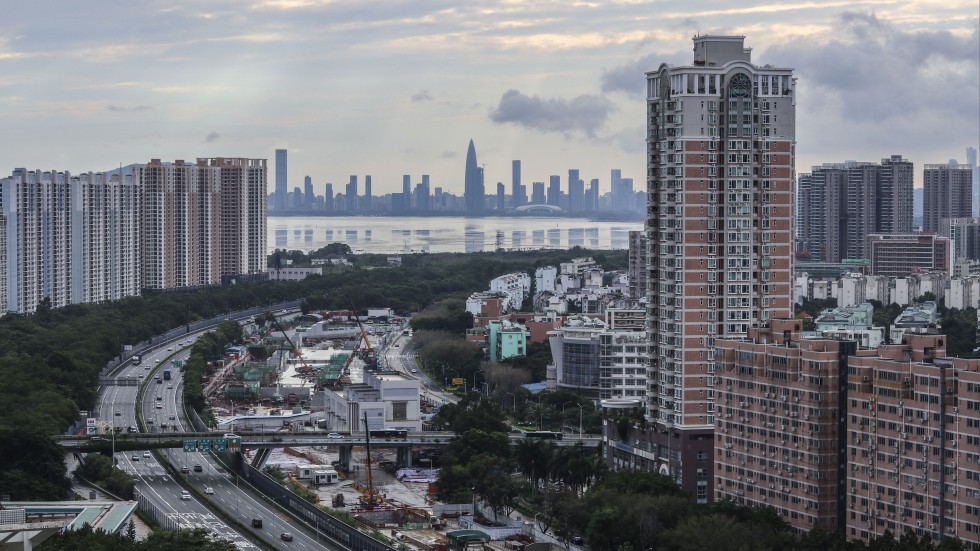
Shenzhen failed to meet its economic growth target last year due to worse than expected results in key technology sectors but its mayor remains confident it did enough to overtake Hong Kong and join the ranks of the five biggest city economies in Asia for the first time in its history.

The south China boom town has been steadily making ground on Hong Kong in recent years, but its nominal gross domestic product in 2017 fell about US$3.4 billion short of a place among the giants of Tokyo, Seoul, Shanghai, Beijing and Hong Kong.

In 2018, Shenzhen’s GDP increased by 7.5 per cent to about 2.4 trillion yuan (US$352.71 billion), mayor Chen Rugui said at the opening of the annual municipal people’s congress on Friday. Its growth target was 8 per cent.

“The economic size [of Shenzhen] is among Asia’s top five cities,” he said.

Despite Chen’s confidence, Hong Kong’s 2018 figures, which will not be released until next month, are expected to show GDP growth of about 3.2 per cent to HK$2.86 trillion (US$364.6 billion), which would see it edging out its mainland neighbour once again.

The gap between the two cities’ economies is now so small that fluctuations in exchange rates and methods of calculation can sway the result, although both have sought to play down the rivalry.

Early last year, Shenzhen’s statistics agency even issued a clarification of the city’s nominal GDP figure for 2017, confirming it was still smaller than Hong Kong’s.

Shenzhen is known as China’s hi-tech hub and is home to many of the country’s biggest technology names, including Huawei and Tencent.

While its strategic emerging industries – which includes such fields as information technology, biotechnology and new materials – contributed 37 per cent of the 2018 GDP figure, the ratio was down from about 40 per cent in each of the previous two years. The result was also disappointing in terms of Shenzhen’s broader goals, having set itself a target to grow the sector to 42 per cent of GDP by the end of its current five-year plan period in 2020.
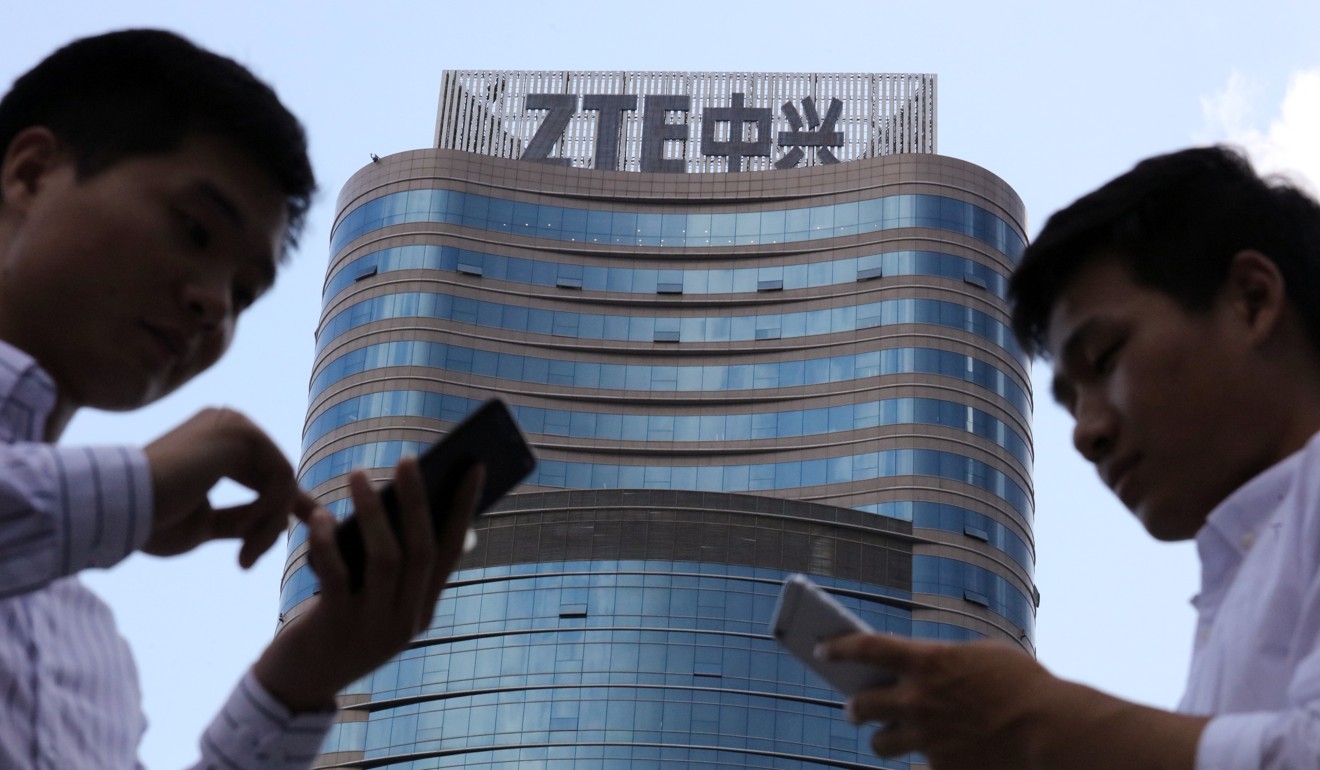
The combined GDP growth among strategic emerging industries slowed to 8.5 per cent in 2018, from 13.6 per cent the year before, although the city still managed to attract 3,000 new hi-tech firms, taking the total to about 14,000.

Shenzhen spent about 100 billion yuan, or 4.16 per cent of its GDP, on research and development last year – a slight increase from 4.13 per cent in 2017 – and this is targeted to rise to 4.25 per cent in 2020.

Its foreign trade in 2018 grew by 7 per cent year on year to about 3 trillion yuan – as output from firms with annual revenue of at least 20 million yuan gained 8.8 per cent – while retail sales increased by 2.5 per cent to 616.3 billion yuan.

As China continues to fight a trade war with the United States, Shenzhen, like most other cities and provinces in the world’s most populous nation, has cut its economic growth target for 2019, to 7 per cent. It has also lowered it new jobs target for the year to 80,000, from nearly 109,000 in 2018.

Chen said that the economic downturn had put a huge strain on the city’s growth prospects, while a lack of available talent in the field of research and development was stifling innovation and doing nothing to ease its over-reliance on imports for many core components and equipment.

He said the city remained committed to supporting the development of the Greater Bay Area by speeding up the Qianhai-Shenzhen-Hong Kong cooperation zone – part of the Guangdong free-trade zone – and the Lau Ma Chau Loop – a new innovation and technology park. It would also support the expansion of the Qianhai Cooperation Zone, he said, but did not elaborate.

Wang Hailong, a deputy to the Shenzhen People’s Congress and boss of a local telecommunication equipment company, said he was not surprised by the slower growth in emerging sectors.

“It’s essential to invest in innovation through research if Shenzhen wants to maintain its remarkable expansion,” he said. “But in the current climate, it’s not easy to attract top global talent.”

Guo Wanda, vice-president of the Shenzhen-based think tank China Development Institute, warned of a possible “hollowing out” of the local economy if the city government failed to support hi-tech companies during this difficult period as they may be lured away.

Source: SCMP

18/12/2018

Xi meets with HKSAR chief executive

CHINA-BEIJING-XI JINPING-HKSAR CHIEF EXECUTIVE-MEETING (CN)

Chinese President Xi Jinping (R) meets with Chief Executive of Hong Kong Special Administrative Region (HKSAR) Carrie Lam, who is on a duty visit, in Beijing, capital of China, Dec. 17, 2018. (Xinhua/Xie Huanchi)

BEIJING, Dec. 17 (Xinhua) — President Xi Jinping on Monday met with Chief Executive of Hong Kong Special Administrative Region (HKSAR) Carrie Lam who is on a duty visit to Beijing.

During the meeting, Xi heard a report from Lam on Hong Kong’s current situation and the HKSAR government’s work.

Xi said that over the past year, Lam had led the HKSAR government to firmly defend the policy of “one country, two systems” and the HKSAR Basic Law and made plans for Hong Kong’s long-term development.

Xi also praised HKSAR government’s active participation in the development of the Guangdong-Hong Kong-Macao Greater Bay Area and the Belt and Road Initiative, as well as its efforts to solve the problems concerning the interests of local residents and create conditions for the growth and development of young people.

“The central government fully endorses the work of Chief Executive Lam and the work of the HKSAR government,” Xi said.

Xi noted that compatriots in Hong Kong and Macao, like the people in the mainland, are the creators of the “great miracle” delivered by the nation’s reform and opening-up.

Xi said, “we will unswervingly adhere to the policy of ‘one country, two systems’ and support Hong Kong and Macao to integrate their development into the development of the country, to cultivate new advantages, play a new role, realize new development and make new contribution.”

Law of Unintended Consequences

continuously updated blog about China & India

ChiaHou's Book Reviews

continuously updated blog about China & India

What's wrong with the world; and its economy

continuously updated blog about China & India