Chindia Alert: You’ll be Living in their World Very Soon
aims to alert you to the threats and opportunities that China and India present. China and India require serious attention; case of ‘hidden dragon and crouching tiger’.
Without this attention, governments, businesses and, indeed, individuals may find themselves at a great disadvantage sooner rather than later.
The POSTs (front webpages) are mainly 'cuttings' from reliable sources, updated continuously.
The PAGEs (see Tabs, above) attempt to make the information more meaningful by putting some structure to the information we have researched and assembled since 2006.
BEIJING (Reuters) – China tentatively plans to hold its delayed annual gathering of parliament in late April or early May, two people involved in preparations told Reuters, as new coronavirus cases in the country drop sharply even as they surge elsewhere.
The annual meetings of the National People’s Congress (NPC) and the Chinese People’s Political Consultative Conference (CPPCC), known as the “two sessions”, were scheduled for early March but were delayed due to the virus outbreak, with no new date announced.
Holding the events, which typically draw a combined 5,000 delegates to Beijing’s Great Hall of the People, would be a major indication that the Chinese leadership sees things as returning to normal.
The State Council Information Office and the media department of the Standing Committee of the NPC did not immediately respond to faxed requests for comment on Monday.
The outbreak that originated in the central city of Wuhan has infected more than 80,000 people in the country, killed 3,200 and wreaked economic havoc, causing factory output to plunge at the sharpest pace in three decades.
The NPC’s timing is not finalised, and one of the people said the number of attendees may be reduced, with those visiting from outside Beijing needing to undergo quarantine.
People now arriving in the capital from elsewhere in China must spend two weeks in quarantine.
“We still have to play it by ear, as the coronavirus rapidly spreads across the world,” said the person, declining to be identified given the sensitivity of the matter.
The NPC, China’s parliament, usually sits for at least 10 days. The CPPCC, a largely ceremonial advisory body, runs in parallel.
During parliament, legislators pass laws and unveil economic targets, defence spending projections and other important policy decisions. It is also an occasion for China’s ruling Communist Party to announce major policy and personnel changes.
This year, the NPC is expected to discuss the recent months of anti-government protests in Hong Kong, with China’s economy also expected to be a key item on the agenda.
BEIJING, March 12 (Xinhua) — China’s determination to achieve the goal of poverty elimination remains unwavering despite the impact from the novel coronavirus disease (COVID-19), according to Liu Yongfu, director of the State Council Leading Group Office of Poverty Alleviation and Development.
About 3 million more migrant workers from the poverty-stricken areas have returned to their jobs last week, said Liu. He added that one-third of the poverty-relief projects had resumed operation as of March 6, and resumption will be accelerated.
The country’s poverty alleviation tasks are near completion, as the number of impoverished people fell to 5.51 million at the end of 2019 from 98.99 million at the end of 2012, and the number of poverty-stricken counties fell to 52 in 2020.
Guidance on establishing the poverty-relief supervision and aid mechanism will be released soon to prevent people from returning to poverty after being lifted out of it, according to Liu.
Measures should be taken to ensure the quality of compulsory education as well as develop vocational, higher and pre-school education in impoverished areas to eliminate poverty from the roots, he said.
Efforts to relieve poverty will not be stopped, even after absolute poverty is eradicated, said Liu, stressing that the country would then bridge the development gap and realize common prosperity.
Liu also noted that a census targeting poor people will be launched this year to ensure the data authenticity and accuracy of the achievements of the poverty alleviation tasks.
He also praised the help from Hong Kong in the fight against poverty. Nanjiang county in southwestern China’s Sichuan province has lifted all of the poor populations out of poverty last year, with parts of the contributions made by the government of Hong Kong Special Administrative Region and all walks of life in Hong Kong.
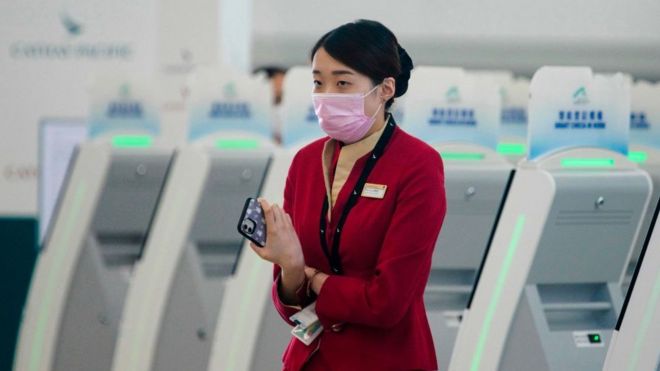
Cathay Pacific has said it expects a “substantial” loss in the first half of this year as the impact of the coronavirus outbreak takes it toll.
The Hong Kong carrier also saw a 28% drop in 2019 profits as it struggled during the city’s political protests.
The airline is now battling with the fallout of the virus as passenger numbers plummet.
Chairman Patrick Healy said the first half of 2020 was expected to be “extremely challenging financially”.
The development comes with thousands of flights already cancelled worldwide, as airlines struggle to cope with a slump in demand caused by the coronavirus outbreak.
British Airways, Ryanair and EasyJet have all cancelled flights to and from Italy until April, while Norwegian Air and American Airlines have also announced significant cuts to services.
Calling 2019 a “turbulent year”, Mr Healy said he expected “our passenger business to be under severe pressure this year and that our cargo business will continue to face headwinds”.
While Cathay Pacific has reduced flights to help save costs, “we expect to incur a substantial loss for the first half of 2020,” he added.
The airline reported a net profit of HK$1.69bn (£170m) for last year, down from a HK$2.35bn profit in 2018.
In other developments:
Dutch airline KLM is cancelling all its flights to and from Milan, Venice and Naples until 3 April
Austrian rail operator OBB has announced it is suspending all trains in and out of Italy – which has more than 10,000 confirmed cases of the virus – until further notice
Seat, the Spanish unit of car-maker Volkswagen, is considering temporary lay-offs at its Barcelona plant
Ride-hailing app Uber says it plans to offer an as-yet unspecified amount of financial assistance to its drivers who have to self-isolate for up to 14 days
Embattled sector
The airline industry faces a loss of revenue of up to $113bn this year, according to aviation trade body IATA, as thousands of planes are grounded amid travel restrictions across the globe.
After UK-based airline Flybe went into administration last week, analysts are warning of more failures to come for the embattled airline industry.
Earlier this week, Korean Air warned the coronavirus outbreak could threaten its survival, in a memo sent to employees.
The global spread of the coronavirus has hit both holidaymakers and business travellers. The Global Business Travel Association said on Wednesday that 43% of its member companies have cancelled business trips booked for this month.
BANGKOK (Reuters) – Thailand will temporarily suspend issuing visas on arrival to visitors from 19 countries and territories, including China, to contain the spread of the coronavirus, its interior minister said on Wednesday.
The suspensions were the latest measures imposed in the tourism-reliant Southeast Asian country, which has reported 59 cases of the virus and one death so far. Globally, over 113,000 people have been infected in over 100 countries.
“People from any country who want to come will need to apply for a visa with our embassies,” Minister of Interior Anupong Paochinda told reporters.
“Thai embassies everywhere will ensure that no sick people will travel to Thailand.”
Visa on Arrival (VoA) will be suspended for nationals of all 19 countries and territories previously eligible, including Bulgaria, Bhutan, China, Cyprus, Ethiopia, Fiji, Georgia, India, Kazakhstan, Malta, Mexico, Nauru, Papua New Guinea, Romania, Russia, Saudi Arabia, Taiwan, Uzbekistan, and Vanuatu, according to a list provided to reporters by the Ministry of Foreign Affairs.
However, Russian passport holders will not be affected by the suspension of the visa on arrival from Russia, as they can still travel to Thailand and stay for 30 days under a visa waiver agreement, an official at the ministry told Reuters.
Visa exemptions will be cancelled for South Korea, Italy and Hong Kong, Anupong said.
“These measures will solve the problem of foreigners arriving from risky zones,” he said.
Anupong said he would start the process immediately but it was not immediately clear when they will be effective.
Chatree Atchananant, director-general of the foreign ministry’s Consular Affairs Department, said visa applicants will need to present medical certificates and insurance as part of the screening at Thai embassies.
Last week, Thailand designated South Korea, China, Macao, Hong Kong, Italy and Iran as “dangerous communicable disease areas.”
Thai authorities urged people arriving from the six places to self-quarantine for 14 days.
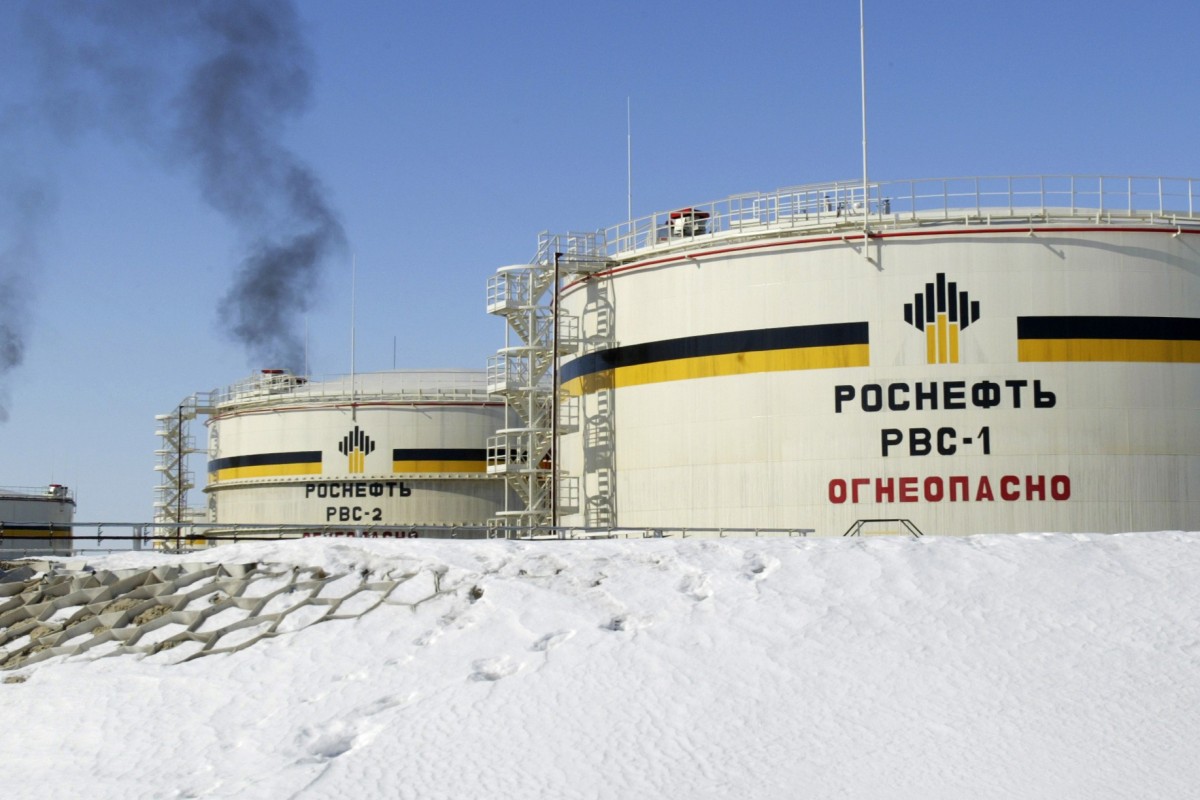
China imported 72 per cent of its oil in 2019, with Saudi Arabia and Russia, who are now locked in a price war, its largest suppliers
Oil prices again fell on Wednesday, with Brent crude down to US$36 a barrel as Saudi Arabia moved to boost output capacity in an escalation of its price war with Russia
China imported 506 million tonnes (3.7 billion barrels) of oil in 2019, an increase of 9.5 per cent from 2018, marking the 17th consecutive year of increased imports. Photo: AP
China’s coronavirus-hit industrial enterprises could receive a welcome boost from plunging oil prices, with the world’s largest importer and consumer set for significant cost savings, analysts said.
A total of 72 per cent of the oil consumed in China was imported in 2019, an average of 10 million barrels per day, meaning any sharp drop in costs as a result of the price war between Saudi Arabia and Russia will help firms reduce costs as they struggle to resume production.
“China benefits a lot from the price war as it is the world’s biggest crude importer,” said Bai Jun, an economic committee member at the China Petroleum Society, an association of Chinese energy researchers.
China imported 506 million tonnes (3.7 billion barrels) of oil in 2019, an increase of 9.5 per cent from 2018, marking the 17th consecutive year of increased imports.
Lower oil prices should raise output by 0.3 per cent above what it would have been with higher oil prices. This will provide some relief, but is a small offset to the many other drags facing the economy Julian Evans-Pritchard
Saudi Arabia and Russia topped a list, also including Angola, Iraq and Oman, that accounted for about 55 per cent of China’s total crude imports in 2018, according to China’s customs data.
Profits for China’s industrial firms could increase by 2 per cent this year as a result of lower oil prices, according to Julian Evans-Pritchard, senior China economist at Capital Economics.
“Lower oil prices should raise output by 0.3 per cent above what it would have been with higher oil prices. This will provide some relief, but is a small offset to the many other drags facing the economy, including the slump in global demand that has contributed to the fall in oil prices,” he said.
“For example, a 2 percentage point decline in export growth would fully wipe out the gains we foresee from lower oil prices. We expect a slowdown in
Global stock markets plummet amid coronavirus panic and falling oil prices
On the other hand, a crash in international oil prices could potentially lead to an increasingly monopolised supply structure as small suppliers could be priced out in the market. This would fly in the face of Beijing’s long-term strategy of securing multiple sources of supply, Wang Yongzhong, who leads the global energy research at the Chinese Academy of Social Sciences, a government think tank, said.
Beijing “is concerned more about the energy security, or how to find multiple sources of stable supply [than a gain from lowers prices],” according to Wang.
The price of Brent crude, the international benchmark, fell back to US$36 a barrel on Wednesday, reversing gains made earlier in the day, after plunging more than 30 per cent on Friday after Saudi Arabia moved to boost output capacity in the opening of a price war with Russia. In 2019, according to customs data, China’s average import price per barrel was around US$65.
China is also a big oil producer with 190 million tonnes (1.4 billion barrels) of output last year and the average cost is higher than US$40 per barrel – a fall in oil prices can push them into lossesBai Jun
But the drop is oil prices is not an unmitigated positive for the Chinese economy, as it will adversely impact domestic oil producers and overseas oilfield investments.
“China is also a big oil producer with 190 million tonnes (1.4 billion barrels) of output last year and the average cost is higher than US$40 per barrel – a fall in oil prices can push them into losses,” added Bai from the China Petroleum Society.
Dong Xiucheng, a professor at the University of International Business and Economics in Beijing, agreed that a lower oil price could help Chinese consumers and facilitate
but that it would also create a “cold winter” for China’s oil producers, especially state-owned enterprises who still have to maintain production levels.
“The coming days for them will be very hard,” Dong said. “State-owned players need to consider production targets and social stability. Workers can’t lose their jobs.”
As oil prices are falling, these projects could translate into big burden for Chinese investors as there’s now a big question mark over whether these projects can make any money Zhu Kunfeng
China National Offshore Oil (CNOOC), one of China’s three state-owned oil companies, has seen its share price in Hong Kong plummet over 20 per cent this week, closing down almost 6 per cent on Wednesday alone.
Zhu Kunfeng, a Beijing-based expert with consultancy firm IHS Markit, said the plunge in international crude prices could dampen China’s domestic output and force it to rely more on overseas supplies.
The collapse in oil prices could also question the financial viability of many Chinese-invested oil projects overseas.
“Chinese companies had been aggressive in buying overseas oil assets in the early 2010s … in the name of improving China’s energy security”, Zhu said.
“As oil prices are falling, these projects could translate into big burden for Chinese investors as there’s now a big question mark over whether these projects can make any money.”
Japan risks massive financial losses and a political blow for Shinzo Abe’s government if the Tokyo Olympics are cancelled or postponed
The Olympics were last cancelled in 1940 after Japan invaded China and the outbreak of World War II, but the Zika virus did not stop the 2016 Rio Games
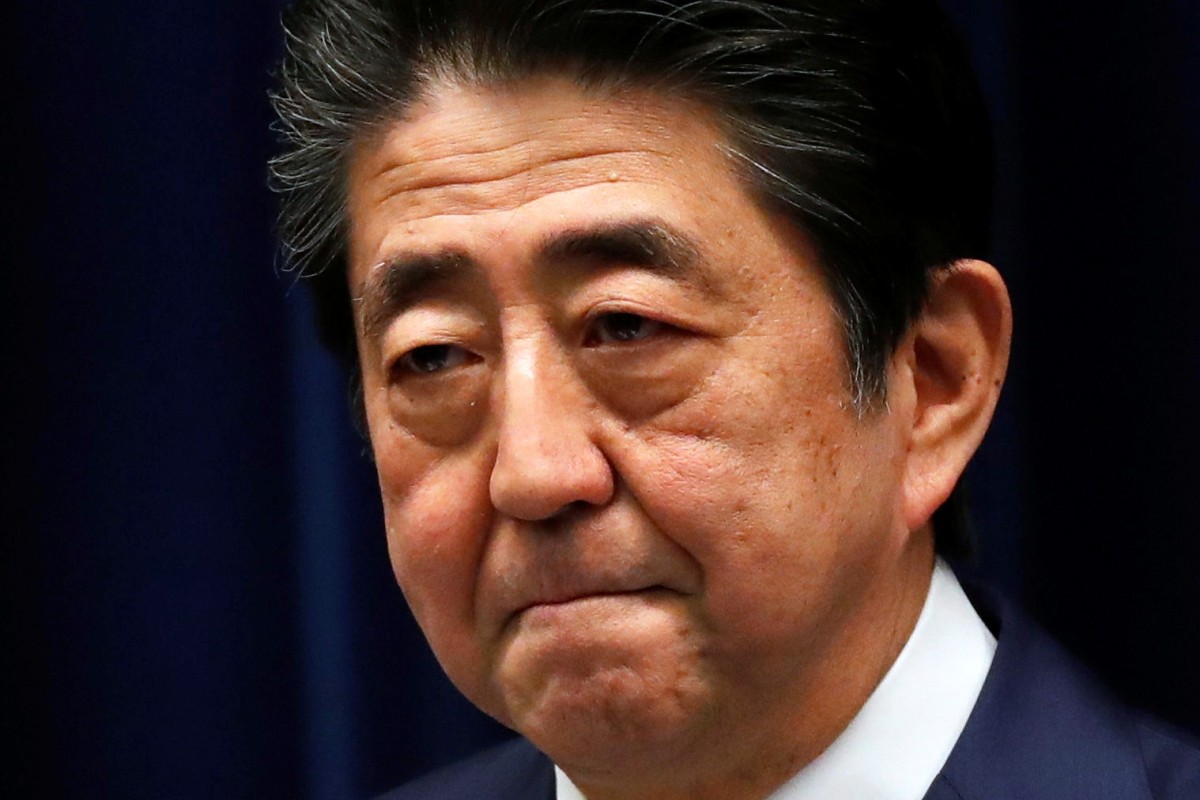
Japan’s Prime Minister Shinzo Abe attends a news conference on the coronavirus. An analyst said the cancellation of the Olympic Games would not only be a financial blow, but would also dent the political pride of his government, which wanted to show the world that Japan could host a successful Olympics. Photo: Reuters
, which explains the government’s single-minded commitment to going ahead with the event in the face of the threat posed by the novel coronavirus.
The Japanese government on Wednesday morning reiterated that the Games would go ahead in July as scheduled, with chief cabinet secretary Yoshihide Suga declaring that preparations were continuing despite the spread of the virus worldwide.
The previous day, the International Olympic Committee (IOC) threw its weight behind Tokyo’s position. “We are preparing for a successful Olympic Games, Tokyo 2020,” said IOC head Thomas Bach.
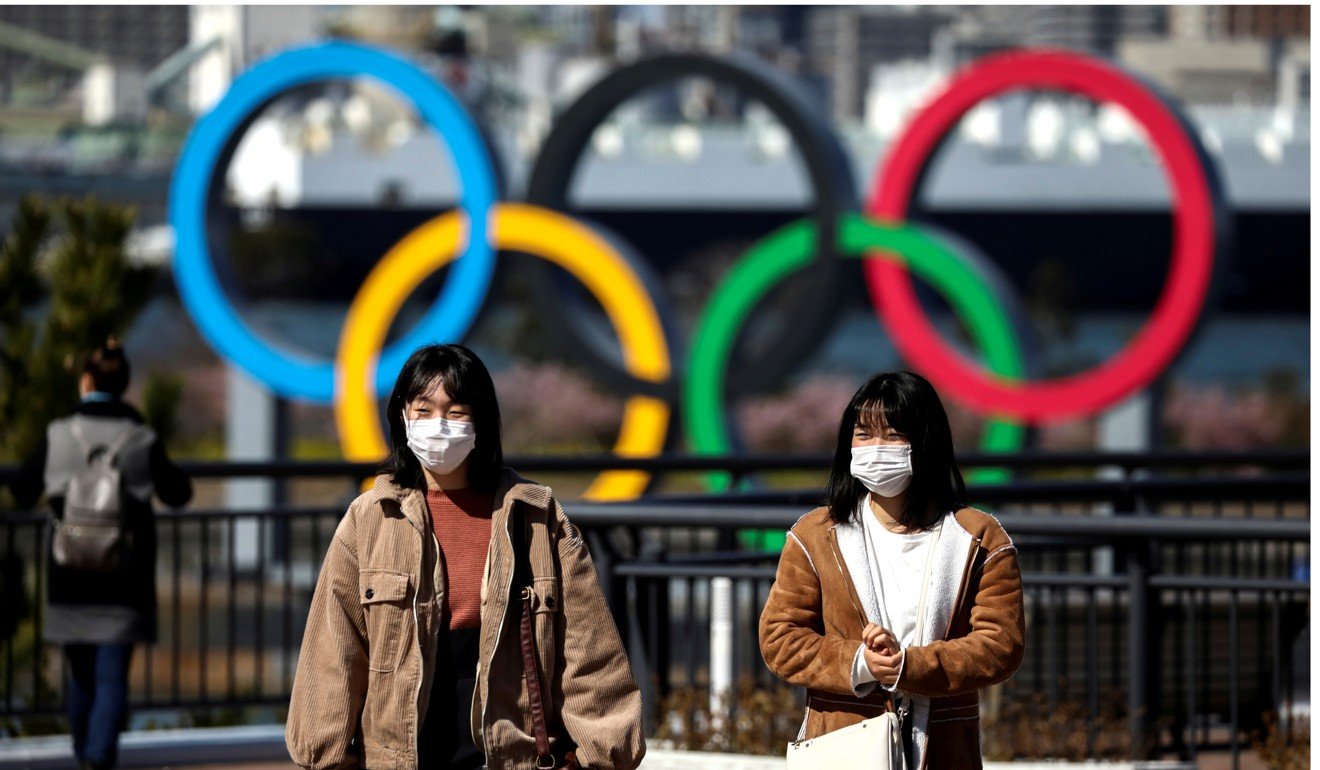
People wearing protective face masks are seen in front of the Olympic rings at the waterfront area at Odaiba Marine Park in Tokyo, Japan. Photo: Reuters
“I would like to encourage all the athletes to continue their preparations … with great confidence and full steam,” he said. “From our side, we will continue to support the athletes and the national Olympic committees.”
Both statements came on the heels of a comment by Seiko Hashimoto, Japan’s minister with responsibility for the Games, who suggested that the contract with the IOC “could be interpreted as allowing for a postponement” until later in the year. On Thursday, Hashimoto acknowledged to the Upper House budget committee that a cancellation or delay of the games would be “unacceptable for the athletes”.
Stephen Nagy, an associate professor of international relations at Tokyo’s International Christian University, said a great deal is at stake for Japan as the last time a modern Olympic Games was cancelled was in 1940 – ironically as a result of Japan’s invasion of China in July 1937, and the outbreak of World War II. Meanwhile, the Rio Games in Brazil went on as planned in 2016 despite the outbreak of the Zika virus.
While the 1940 cancellation has largely been forgotten, it would unquestionably cause serious loss of face to the Abe administration if events did conspire to halt Tokyo 2020, he said.
I think it’s much more about the national political pride of ‘Team Abe’Economist Noriko Hama
Noriko Hama, an economist at Doshisha University in Kyoto believes a number of issues are behind the government’s refusal to contemplate the Games being postponed or cancelled, but one is dominant.
“Yes, it’s about the money that has already been spent on facilities and new infrastructure and the windfall from tens of thousands of foreign tourists, but I think it’s much more about the national political pride of ‘Team Abe’,” she said.
“They wanted to show the world that they could do this, that they would be one of the very few cities to host an Olympics for a second time and that it would be a massive success,” she said. “It’s about chest-thumping.”
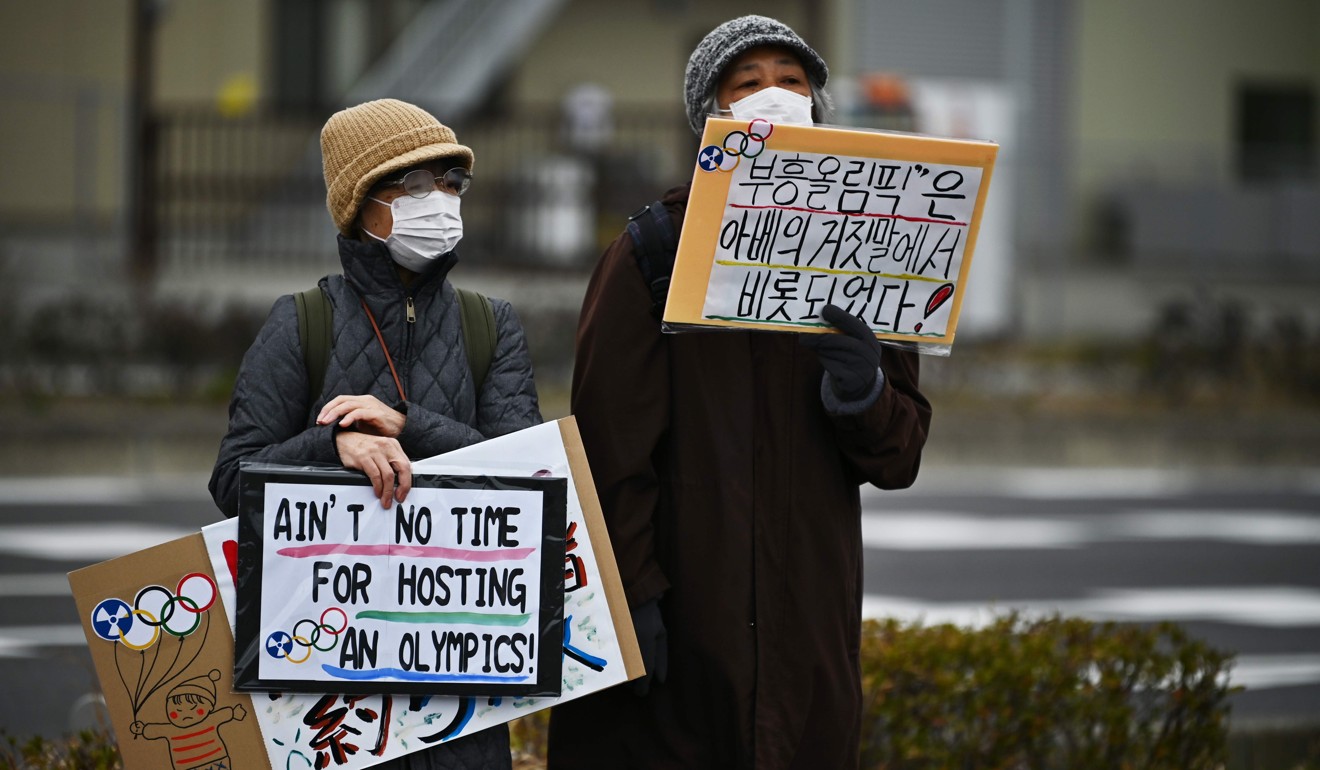
Protesters hold placards during a demonstration against the Olympics, Prime Minister Shinzo Abe and nuclear energy. Photo: AFP
Hama pointed out that many Japanese people had been sceptical about the Games, and for a variety of reasons.
Many are unhappy at the cost, which was previously estimated at 1.06 trillion yen (US$9.81 billion) but organisers confirmed in December had risen to 1.35 trillion yen (US$12.35 billion), plus another 3 billion yen required to move the marathon and walking events from Tokyo to Sapporo, in Hokkaido, to avoid the heat and humidity of the capital.
Others said the Games will cause widespread disruption to the lives of ordinary people and that Tokyo was still not fully prepared for the huge numbers of people that will inevitably flood the city. Some voiced concerns that holding the Games at the peak of a Japanese summer would cause problems for athletes, officials and spectators alike. There have been predictions that the heat is going to cause loss of life.
Only an apocalypse – or government ineptitude – can stop the Olympics
29 Feb 2020
“But there is this strange sort of blind obstinacy that is driving the whole thing forward regardless,” said Hama. “And now the coronavirus has added another layer of very serious concern and I believe the government need to think very carefully what they are going to do.”
Nagy said the Japanese government would be reluctant to postpone the Games as that would “once again tarnish the brand”.
“Seven or eight years ago, Japan was largely seen as a stagnant country that was struggling to shake off the legacy of two decades of economic underperformance, but that changed quite suddenly,” he said.
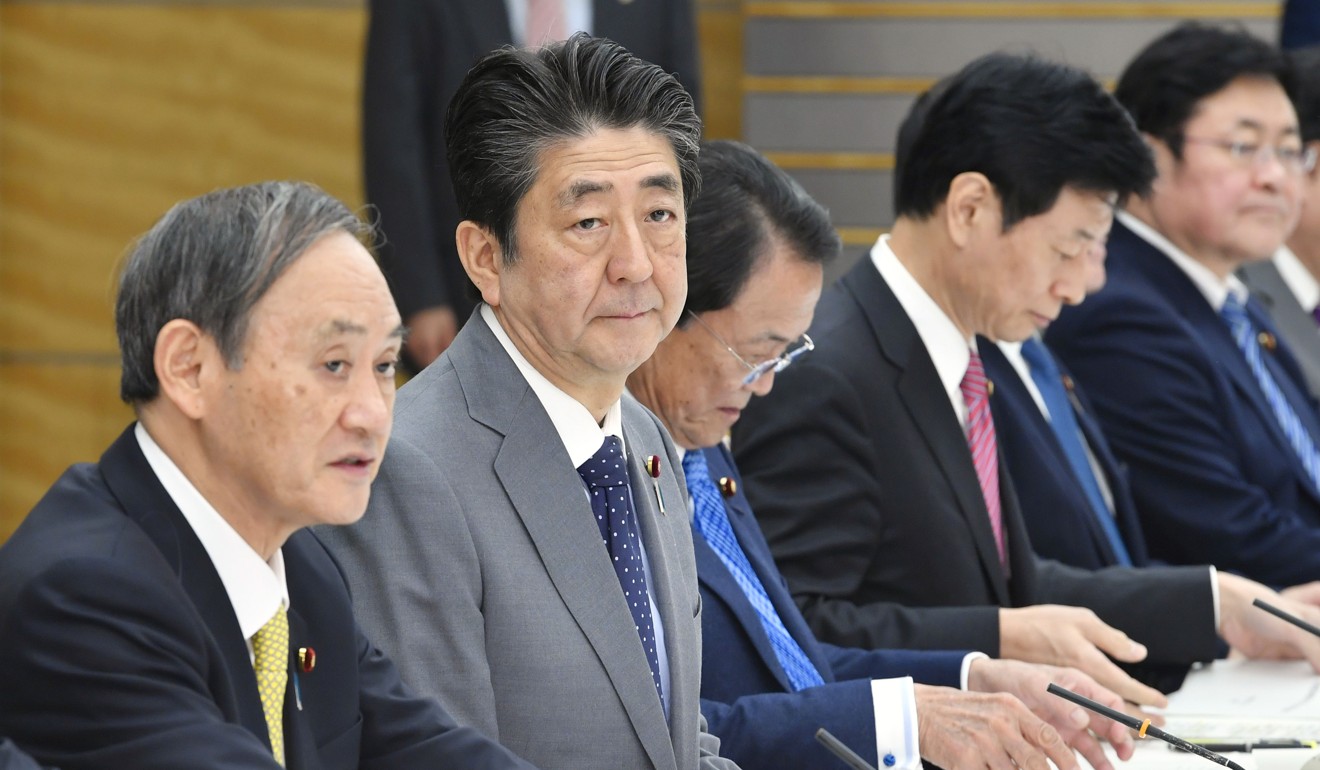
Japan’s chief cabinet secretary Yoshihide Suga and Prime Minister Shinzo Abe attend a meeting with other ministers in Tokyo. Photo: Kyodo
“Now the ‘Japan brand’ is strong and vibrant as they have successfully hosted G-7 conferences and, more importantly, last year’s Rugby World Cup.”
The rugby served to put Japan on the world stage, said Nagy, and everyone went away feeling very positive and it worked exceptionally well as a “dry run” for the Olympics.
Other considerations are the massive amount of money that was spent on preparing for the Games, as well as the political capital that Abe was obliged to use up to win the right to be the host city and then smooth the way in the run-up to the event.
Hong Kong backs IOC’s Olympic pledge despite coronavirus threat
4 Mar 2020
Dick Pound, a senior member of the IOC, said there is a window of two to three months in which organisers must make a decision, meaning there could only be clarity by the end of May. He told Associated Press that if the coronavirus situation worsens, it would probably mean a cancellation.
“You just don’t postpone something on the size and scale of the Olympics. There’s so many moving parts, so many countries and different seasons, and competitive seasons, and television seasons. You can’t just say, ‘We’ll do it in October’,” he said. It was also unlikely that the IOC would move the Games to another city at such short notice.
In the meantime, the local organising committee said it had stepped up its measures to protect runners and spectators for the torch relay, including limiting the number of visitors at venues and monitoring the health of runners.
While the Japanese government remains defiant that the Olympics will go ahead as scheduled, Nagy said both Abe and the IOC were walking a “fine line” on making a final decision.
“There are simply no good choices at this point,” he said. “Policymakers just do not know how long this virus is going to stick around, whether it is going to mutate or anything else. But there will come a point when they absolutely have to make a decision.
Coronavirus fear, paranoia reveal cracks in Japan’s polite facade
3 Mar 2020
“If they wait too long and the outbreak goes on longer than anticipated, then they risk the possibility of a poor public turnout and people getting ill,” he said. “But if they cancel too early and the virus disappears, then they will be accused of being alarmist and of wasting all the effort and money that has already gone into the Games.
“The best they can do, in the circumstances, is to use science and facts and compare this outbreak to previous cycles – and then hope the decision that they do make is the right one.”
Plunges in official and private sector purchasing managers’ indices amid the coronavirus outbreak prompted sharp revisions of economic forecasts
Analysts expect China to enact additional fiscal and monetary stimulus but stop short of massive support enacted after the global financial crisis in 2008
Due to the outbreak of the coronavirus, the once unthinkable scenario in which China’s economy posts a zero growth rate or even an absolute contraction compared to the previous quarter is now seen as a real possibility. Photo: AP
The odds are rising that China will report a sharp deceleration in growth – or even a contraction in the first quarter as a result of the impact of the coronavirus epidemic.
The outbreak has paralysed the country’s manufacturing and service sectors, putting Beijing in the difficult position of either forgoing its economic growth goal for 2020 or returning to its old playbook of massive debt-fuelled economic stimulus to support growth.
The larger-than-expected deterioration in the official and private sector purchasing managers’ indices for both the manufacturing and services sectors to all-time lows in February – the first available economic indicators showing the extent of the economic damage done by the epidemic – has prompted economists to slash their Chinese growth forecasts.
Several are even expecting the once unthinkable scenario in which China’s economy posts a zero growth rate or even an absolute contraction compared to the previous quarter, even though the weakness is likely to be only short-lived.
A contraction in first quarter growth would be the first since the end of the Cultural Revolution in 1976.
A report published by the East Asian Institute at the National University Singapore noted that China could report a contraction of 6.3 per cent in the first quarter from the first quarter of 2019, while the growth rate for 2020 is set to fall well short of the 5.6 per cent needed by Beijing to meet its economic goal.
If China still wants to achieve an average 5.6 per cent growth for 2020, it would have to engineer a growth rate of as high as 12.7 per cent in the second half of the year, according to the report by Bert Hofman, Sarah Tong and Li Yao.
“The question is whether this is feasible and whether the consequences in terms of increased debt and potentially less productive investment are worth the price,” according to the report.
What is gross domestic product (GDP)?
China’s headline year-over-year gross domestic product (GDP) growth rate has hovering in a narrow range between 6 per cent and 7 per cent for 18 consecutive quarters until the end of 2019, but a sharp dip in the otherwise steady growth trajectory in the world’s second largest economy would send fresh warning signs about the risks of relying excessively on China as a production base and consumption market, particularly for large multinationals from Hyundai to Apple.
An official recognition of an economic contraction, even a brief one, would break a long tradition of China reporting consistent growth to prove the Communist Party’s ability to manage the economy and to rally the whole country to achieve one historical milestone after another.
insisted last week that China would realise the vision of building up a “comprehensively well-off” society by 2020, an inheritance from China’s former paramount leader Deng Xiaoping and a major gauge of progress to realise Xi’s grand “Chinese dream” by the middle of the century.
One key but loosely defined parameter for achieving a “comprehensively well-off” society is that the size of the economy at the end of this year will be double that of 2010.
To achieve that, economists calculate that China must achieve a 5.6 per cent growth this year, although Beijing has been vague about the specific target, although this now seems out of reach barring massive stimulus or a redefinition of the goal.
Louis Kuijs, head of Asia economics at Oxford Economics, said his group has cut its forecast for the year-on-year growth rate to 2.3 per cent for the first quarter and 4.8 per cent for 2020 overall, adding that it would be next to impossible for China to make up the lost ground during the reminder of the year given the impact of the coronavirus
on the rest of the world, particularly South Korea, Japan and Italy, who are all major trading partners.
It will be extremely difficult, to say the least, to meet the annual growth targets for 2020 set previously. It would require massive, unreasonable amounts of stimulus, if it is at all possible, given the headwinds Louis Kuijs
“It will be extremely difficult, to say the least, to meet the annual growth targets for 2020 set previously. It would require massive, unreasonable amounts of stimulus, if it is at all possible, given the headwinds,” Kuijs said.
Instead, it would “make much more sense” for the Chinese leadership to play down the need to literally meet the previously set economic target,” he added.
Beijing’s social and economic development targets for this year have not yet been made public, even though Xi has pledged that the government would still achieve them despite the challenge posed by the virus outbreak.
The full-year targets covering growth, employment and inflation are usually released at the National People’s Congress, the ceremonial gathering of China’s legislature in early March, but this key annual event has been postponed due to the threat of the coronavirus, which has infected over 80,000 people and killed more than 2,900 in the country as of Tuesday.
China’s National Bureau of Statistics is due to publish first quarter GDP growth data in mid-April, with combined industrial production, retail sales and fixed-asset investment data for January and February due next week.
They will offer a clearer picture of how much the coronavirus epidemic has damaged China’s growth in the first two months of this quarter, although the damage it has caused in China and the rest of the world is hard to measure because the epidemic is still evolving.
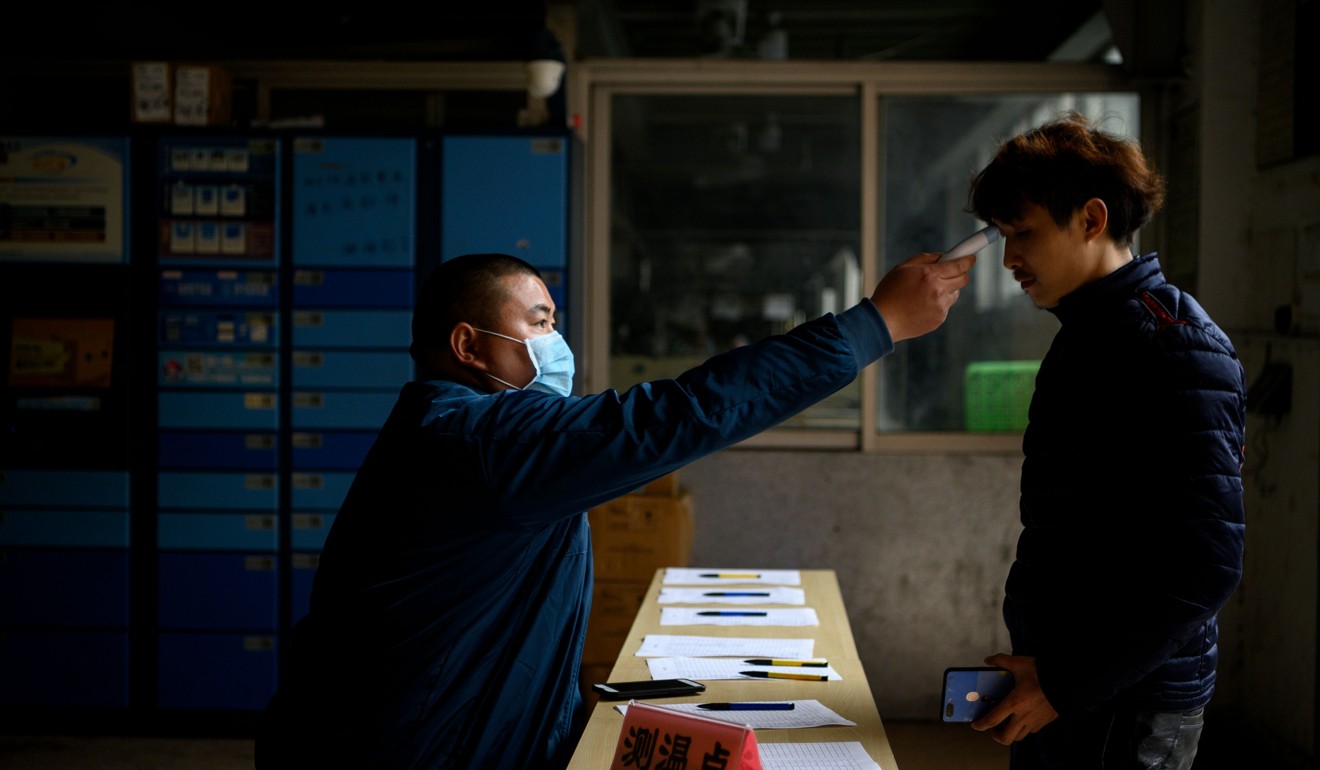
Production among manufacturing companies across China, except in the virus epicentre of Wuhan, Hubei province, have been gradually returned to normal, with firms that have close ties to local governments and access to financial resources resuming production faster than the much larger number of small businesses.
Chinese diaspora fights coronavirus discrimination in the US
The latest data from China’s industry ministry showed that only 32.8 per cent of
had restarted production as of the middle of last week, an increase of just 3.2 percentage points from three days earlier. But even among the larger enterprises the government is trying to help, many are not running at full capacity due to disrupted logistics that have impeded the delivery of raw materials to factories and finished products to customers.
A shortage of workers due to travel barriers erected to stem the spread of the virus, or local regulations that prevent factories from resuming full operations until they have implemented sufficient health safeguards, are also hampering efforts.
Foxconn, which assembles most of Apple’s iPhones in China, said normal production is not expected to resume until the end of March.
China, though, has limited its economic aide policies to “targeted” fiscal and monetary moves, avoiding the massive stimulus it undertook in 2008 in response to the global financial crisis that led to the negative side-effects of high debt and unproductive investments.
[China] will be cautious about the scale of any intervention. The size of the stimulus will likely depend on how quickly economic activity recovers on its own Andy Rothman
Andy Rothman, a San Francisco-based strategist for investment fund Matthews Asia and a long-time watcher of the Chinese economy, said China will report a sharp fall in economic activity in the first quarter and that it “is prepared to implement a stimulus”.
“But [China] will be cautious about the scale of any intervention. The size of the stimulus
will likely depend on how quickly economic activity recovers on its own,” Rothman said.
China’s ruling Communist Party has never reported a contraction in economic growth since the country started the reform and opening up movement in 1978.
Even in 1990, when China was hit by Western sanctions following the crackdown on the 1989 pro-democracy movement, the country still reported an annual growth of 3.8 per cent.
The larger-than-expected fiscal and monetary policy stimulus will help make meeting the targets for 2020 less challengingLiu Li-Gang
In the history of quarterly GDP growth rates – China started to report such data in 1994 going back to 1992 – the lowest growth rate on record of 6.0 per cent was in the third and fourth quarters of 2019.
The most recent year that China admitted to an economic contraction was 1976, the final year of the Culture Revolution and the year when chairman Mao Zedong died.
Liu Li-Gang, the chief China economist for Citigroup Global Markets Asia in Hong Kong, said Beijing has the policy reserves to keep economic growth on track, including increasing the fiscal deficit and loosening monetary policy.
“The lower GDP growth [in the first quarter] means that larger fiscal and monetary policy easing will be needed,” Liu said. “The larger-than-expected fiscal and monetary policy stimulus will help make meeting the targets for 2020 less challenging.”
Purchasing managers’ indexes for both manufacturing and service sectors drop to all-time lows
Steep falls raise questions over extent of damage epidemic has caused to China’s economy and how long it will take the country to recover
Many Chinese factories have faced a labour shortage as migrants have been unable to return to work because of the coronavirus outbreak. Photo: AFP
The damage caused by the coronavirus outbreak to China’s US$14 trillion economy could be much worse than Beijing hoped, as official measures for the country’s factory and service activity indicated on Saturday, threatening President Xi Jinping’s vision for 2020 and underscoring his urgent appeal to get production back to normal.
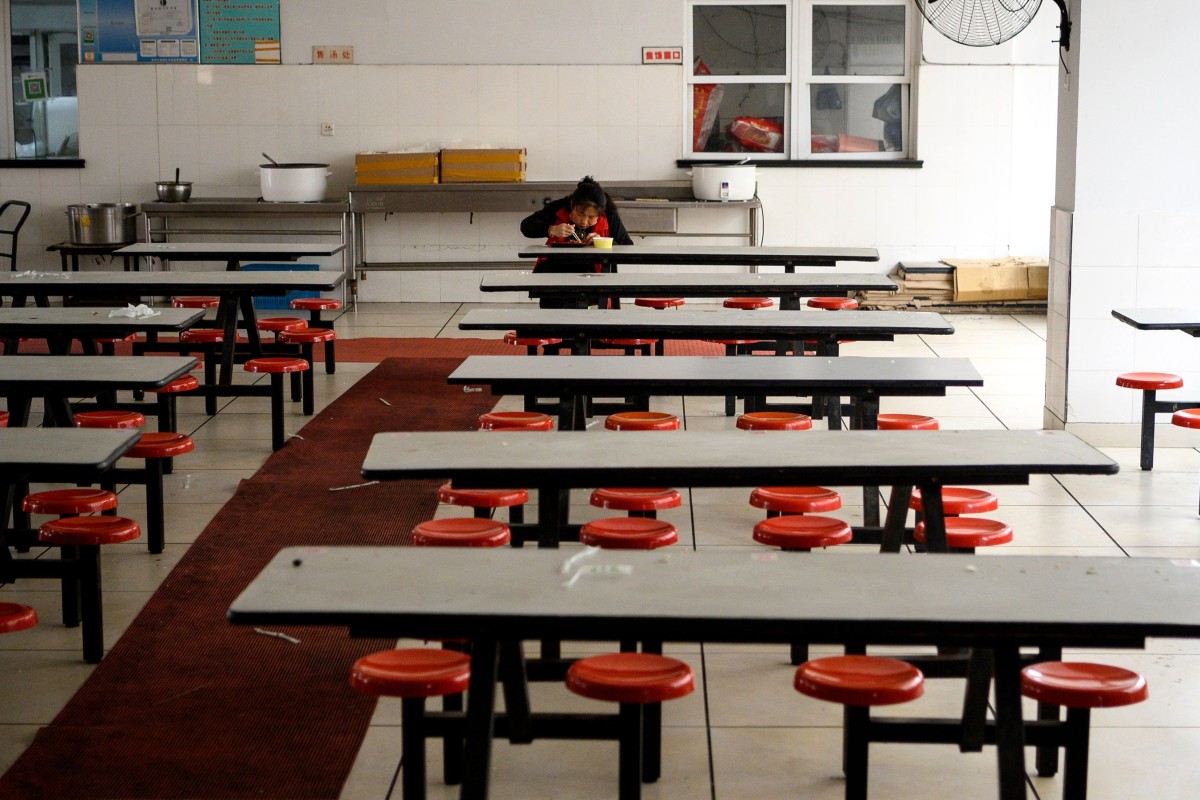
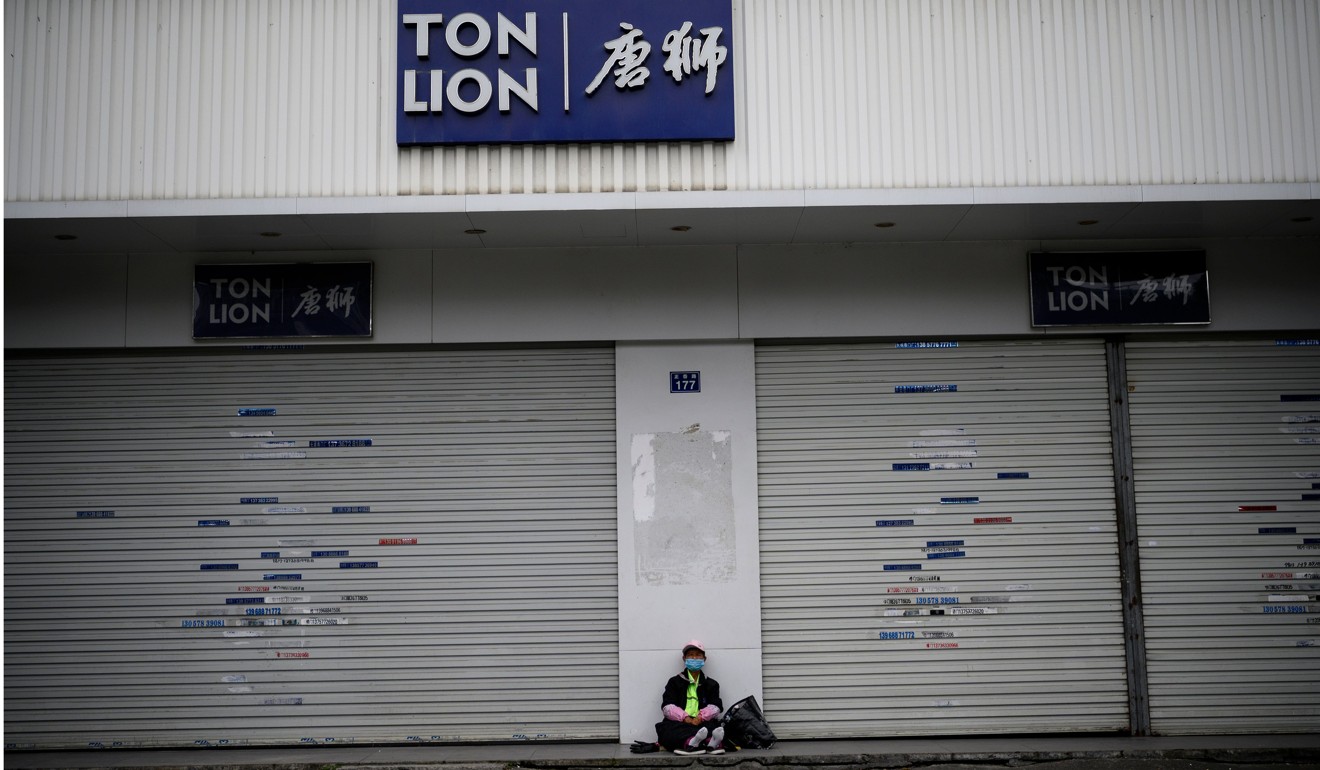
Monthly economic indicators for February sank to all-time lows as the coronavirus halted China’s manufacturing machine and froze activity in the service sector – from retailing to recycling – painting a bleak picture of the world’s second-biggest economy and challenging Beijing’s repeated assurance that the impact would be manageable and short-lived.
Covid-19, the disease caused by the coronavirus – was first reported in Wuhan in December. Since then it has spread to more than 50 countries and more than 85,000 people have been infected. The outbreak has disrupted travel and cargo shipments, and caused stock markets to slump.
China’s official February purchasing managers’ indexes (PMI) for both manufacturing and services, released by the National Bureau of Statistics on Saturday, confirmed fears that China’s economy was in bad shape and fanned speculation that it may even contract in the first quarter.
Larry Hu, chief China economist at Macquarie Capital in Hong Kong, said in a note that Beijing might report negative growth for “the first time since the Cultural Revolution”.
The manufacturing PMI, which measures factory activity, dropped to 35.7 in February – below the previous all-time low of 38.8 set in November 2008 during the global financial crisis – from 50 in January when the impact of the epidemic was not apparent.
A reading below 50 indicates a contraction in activity.
The February PMI figures confirmed fears that China’s economy was in bad shape. Photo: AFP
All of the sub-indexes of the PMI pointed to the difficult situation facing Chinese factories. Output plummeted, new orders vanished, exports and imports stopped, and logistics were badly disrupted. Input prices, which reflects the costs factories must pay, was the only sub-index that remained above 50.
The non-manufacturing PMI – a gauge of sentiment in the services and construction sectors – also dropped, to 29.6 from 54.1 in January. This was also the lowest on record, beating the previous low of 49.7 in November 2011, according to the China Federation of Logistics and Purchasing, which produces the index with the National Bureau of Statistics.
The declines in the February reflect the difficulties businesses are having in bringing production back online due to shortages of labour as well as difficulties receiving supplies or shipping goods to market because of transport restrictions enacted to contain the spread of the virus.
An extended slump would put upwards pressure on unemployment, especially among small, private sector service firms. Beijing, which worries that rising joblessness could cause social unrest, has called on local governments to remove unnecessary restrictions to get businesses back to work.
The employment sub-index in the manufacturing PMI fell to 31.8 in February.
“It is not because factories have stopped hiring migrant workers, it is because the flow of migrant workers to factories has been blocked,” said Hua Changchun, an analyst at brokerage Guotai Junan Securities. “There’s no point talking about resuming production if workers can’t return to their jobs.”
Zhang Qiqun, a researcher with the Development Research Centre of State Council, said in a statement that the major economic indicators for this quarter would see “obvious drops” and China must “be prepared”.
The employment sub-index in the manufacturing PMI fell to 31.8 in February. Photo: AFP
How quickly China can dig itself out of the coronavirus hole is a matter of debate.
According to the PMI survey, about 90 per cent of medium and large-sized manufacturers are expected to resume production in March, meaning about 10 per cent will still be closed four weeks from now.
As for small firms, the industry ministry said this week that two-thirds would still be closed at the end of February.
China’s production difficulties have resulted in economic problems for nations around the world that rely on supply chains that begin or pass through the country. The global spread of the coronavirus will only exacerbate the problem.
Barclays and Nomura forecast China’s first-quarter growth at 2 per cent, while Capital Economics said it would contract in year-on-year terms.
“The sharp drop in China’s manufacturing PMI in February reinforces our view that the normalisation in economic activity will be delayed,” said Xing Zhaopeng, an economist at Australia & New Zealand Banking Group.
“There’s scant chance for a V-shaped rebound – the authorities are using targeted aids more than stimulus to stabilise the economy and that will lead to a gradual bounce.”
The National Bureau of Statistics tried to put a brave face on the data, saying there would be a substantial improvement in March.
“The resumption of work is ramping up and market confidence is steadily recovering,” said Zhao Qinghe, a senior statistician at the NBS.
“Although the novel coronavirus pneumonia epidemic has caused a larger impact on production and operations of Chinese enterprises … currently the epidemic has come under initial containment, and the negative impact on production is gradually weakening.”
Chinese State Councilor and Foreign Minister Wang Yi holds talks with Serbian First Deputy Prime Minister and Foreign Minister Ivica Dacic at the Diaoyutai State Guesthouse in Beijing, capital of China, Feb. 26, 2020. (Xinhua/Huang Jingwen)
BEIJING, Feb. 26 (Xinhua) — Chinese State Councilor and Foreign Minister Wang Yi held talks with Serbian First Deputy Prime Minister and Foreign Minister Ivica Dacic Wednesday in Beijing.
Wang said that China and Serbia are like-minded brothers who stick with each other through thick and thin, good partners in jointly promoting the Belt and Road Initiative and good friends in advancing China-Europe cooperation.
He called on both sides to uphold the open and inclusive multilateralism, oppose any kind of bullying, and work together with the international society to build a community of shared future for mankind.
Noting that the comprehensive strategic partnership between the two countries has been operating at a high level, Dacic said the novel coronavirus epidemic has not affected bilateral pragmatic cooperation in all fields.
The Serbian side openly and firmly supports the one-China principle, as well as China’s core interests and major concerns on Taiwan, Xinjiang and Hong Kong issues, he said.
Image copyright REUTERSImage caption Virus fears are only the latest in a string of troubles for Hong Kong
Hong Kong will hand out cash to adult permanent residents, to help boost spending and ease financial burden.
As part of the annual budget, $10,000 Hong Kong dollars ($1,280; £985) was announced for about seven million people over the age of 18.
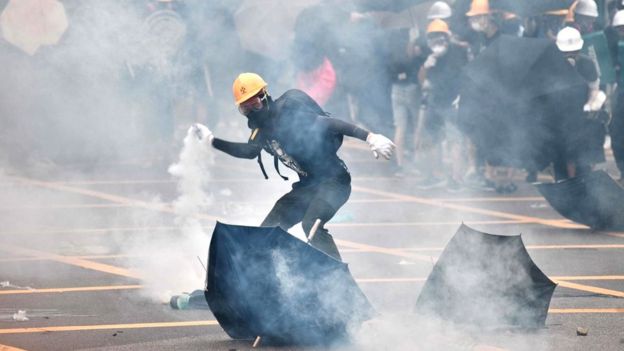
The territory’s economy has been battered by months of violent political unrest, and more recently suffered from the impact of the coronavirus.
The city has had 81 confirmed cases of the virus and two deaths.
“Hong Kong’s economy is facing enormous challenges this year,” Financial Secretary Paul Chan said on Wednesday.
“After careful consideration, I have decided to disburse HK$10,000 to Hong Kong permanent residents aged 18 or above, with a view to encouraging and boosting local consumption on the one hand, and relieving people’s financial burden on the other,” Mr Chan said.
Image copyright AFPImage caption Hong Kong has seen months of violent protests against the government
Hong Kong had previously announced a relief fund for sectors that have suffered because of the outbreak, including cash handouts for businesses like restaurants and travel operations.
In the last weeks, the threat of the coronavirus spilling over from the mainland has slowed down much of public life and dealt a serious blow to the tourism sector.
The financial hub is also reeling from the ongoing US-China trade war, slowing down trade between the world’s two largest economies.






 CHINDIA ALERT: You'll be living in their world, very soon