Archive for ‘Hua Chunying’

09/05/2019

China’s Xinjiang citizens monitored with police app, says rights group

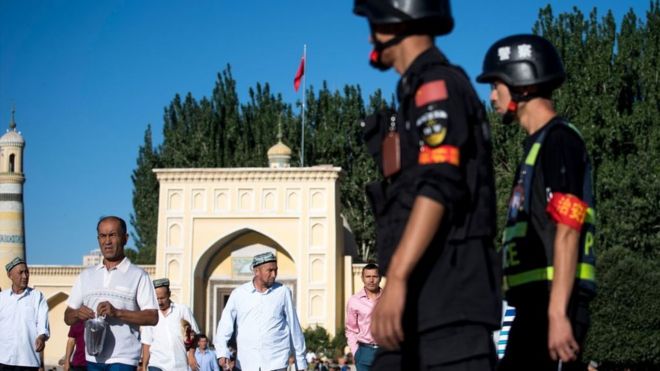
Police patrolling as Muslims leave the Id Kah Mosque in the old town of Kashgar in China's XinjiangImage copyright GETTY IMAGES
Image caption Police in Xinjiang now have one more way to record data about its citizens

Chinese police are using a mobile app to keep data on millions of ethnic Uighurs in Xinjiang province, according to Human Rights Watch (HRW).

In a report released on Thursday, HRW said it had reverse engineered the app to see how mass surveillance worked.

The app is used to closely monitor behaviours, it said, including lack of socialising, using too much electricity or having acquaintances abroad.

Rights groups say Uighur Muslims are being severely persecuted in China.

The UN has said there are credible reports up to a million Uighurs are being held in detention in Xinjiang, in what China says are “re-education centres”.

‘Most intrusive surveillance system’

According to the rights group’s report, the app is used by officials to record and file away information about people.

In particular, it targets “36 person types” that authorities should pay attention to.

These include people who seldom use their front door, use an abnormal amount of electricity and those that have gone on Hajj – an Islamic pilgrimage – without state authorisation.

The report does not make explicit mention of any ethnic groups specifically targeted, but the “36 person types” include “unofficial” imams – Islamic leaders – and those who follow Wahhabism, an Islamic doctrine.
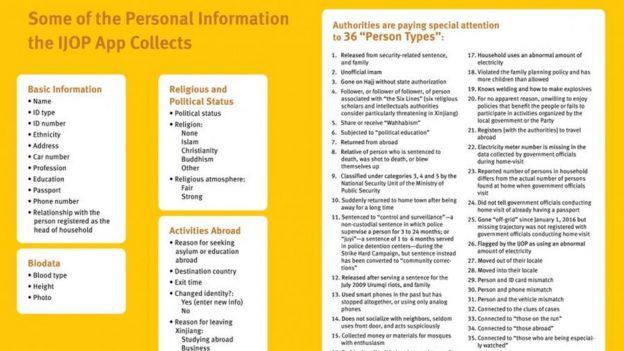
Graphic by HRWImage copyrightHRW
Image captionThe 36 person types listed in the HRW report

The information taken from the app will be fed into the central system of the Integrated Joint Operations Platform (IJOP) – the main system for mass surveillance in Xinjiang, says HRW.

HRW senior China researcher Maya Wang said IJOP was “one of the world’s most intrusive mass surveillance systems”.

“It gathers information from checkpoints on the street, gas stations, schools… pulls information from these facilities and monitors them for ‘unusual’ behaviour that triggers alerts [to the]authorities.”

The app was obtained and analysed by HRW in partnership with Cure53, a Berlin-based security firm.
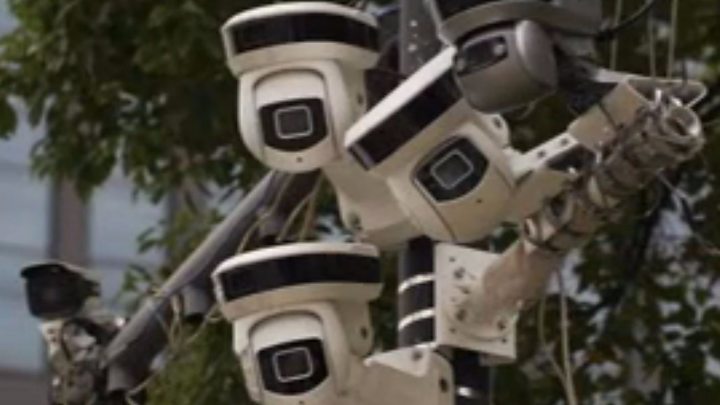
Media caption In your face: China’s all-seeing surveillance system

As well as its Xinjiang operations, China has 170 million CCTV cameras in place across the country and by the end of 2020, an estimated 400 million new ones will be installed.

All this is part of China’s aim to build what it calls “the world’s biggest camera surveillance network”.

China’s also setting up a “social credit” system that is meant to keep score of the conduct and public interactions of all its citizens.

The aim is that by 2020, everyone in China will be enrolled in a vast national database that compiles fiscal and government information, including minor traffic violations, and distils it into a single number – ranking each citizen.

China’s detention camps

Xinjiang is a semi-autonomous region and in theory at least, has a degree of self-governance away from Beijing.

The Uighurs, a mostly Muslim ethnic minority, make up around 45% of its population.

HRW’s report comes as China faces increasing scrutiny over its treatment of them and other minorities in Xinjiang.

Up to one million Uighurs are being held in detention camps across Xinjiang, a UN human rights committee heard last year.
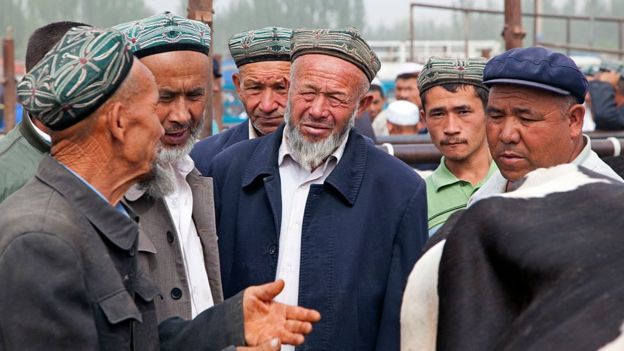
Uyghur farmers wearing doppas, trading cows at the cattle market in KashgarImage copyright GETTY IMAGES
Image caption Uighurs make up around 45% of Xinjiang’s population

One member said she was concerned by reports that Beijing had “turned the Uighur autonomous region into something that resembles a massive internment camp”.

A BBC investigation last year revealed that what appear to be “large prison-type structures” have been built across Xinjiang in the past few years.

China says these buildings are “vocational training centres” used to educate and integrate Muslim Uighurs and steer them away from separatism and extremism.

A Chinese Foreign Ministry spokeswoman, Hua Chunying, said, “everyone can see that people of all ethnicities in Xinjiang live and work in peace and contentment and enjoy peaceful and progressing lives”.

Source: The BBC
15/02/2019

Chinese FM to visit Thailand for strategic consultation

BEIJING, Feb. 14 (Xinhua) — Chinese State Councilor and Foreign Minister Wang Yi will travel to Thailand for strategic consultation from Feb. 15 to 16, Foreign Ministry spokesperson Hua Chunying said Thursday.

Wang will make the trip at the invitation of Thai Foreign Minister Don Pramudwinai, Hua said at a daily press briefing.

Source: Xinhua

14/02/2019

Sweden replaces China envoy in furore over dissident bookseller

STOCKHOLM (Reuters) – Sweden said on Thursday it had replaced its ambassador to China after her “incorrect” handling of unauthorized meetings intended to help free dissident bookseller Gui Minhai.

The Hong Kong-based, Swedish publisher of books critical of China’s communist leaders was abducted in Thailand in 2015 and later appeared in custody in mainland China.

His daughter Angela Gui said this week she had met ambassador Anna Lindstedt and two businessmen in Stockholm in January, where she was advised to keep quiet about her father’s case while negotiations were proceeding.

Sweden’s Foreign Ministry said that was not an official meeting, and Lindstedt had now returned to Sweden with an interim envoy sent to Beijing during an inquiry.

“Neither the Foreign Ministry nor the Foreign Minister were informed until after the event,” ministry spokesman Rasmus Eljanskog said in an emailed statement.

“As a consequence of the incorrect manner in which the said meetings were handled, we are now conducting an internal investigation.”

Gui, 54, became a Swedish citizen after studying there in the 1980s. After the abduction, he was released in October 2017, but his whereabouts were unclear until January last year when his daughter said he was seized by Chinese agents on a Beijing-bound train in the presence of Swedish diplomats.

China later confirmed it had detained him again.

In her blog, Angela Gui said Lindstedt invited her to Stockholm to meet two businessmen who could help secure her father’s release.

“OUTRAGEOUS SCANDAL”

“The businessman said, ‘you care about Anna (Lindstedt), right? If you keep talking to the media it’ll damage her career. You don’t want her to come to any harm, do you?’”, she said in the post on blog portal Medium.

“In order for this to happen (negotiations), I was told I needed to be quiet. I wasn’t to tell anyone about this, or say anything publicly about the case,” she added.

“I’m not going to be quiet in exchange for … an arbitrary promise that my father ‘might’ be released. Threats, verbal abuse, bribes, or flattery won’t change that.”

China’s Foreign Ministry declined comment, with spokeswoman Hua Chunying saying she knew nothing about Gui’s latest situation. On its website, China’s embassy in Stockholm said it had not authorized anyone to “engage” with Gui’s daughter.

“The Chinese side handles the Gui Minhai case in accordance with law and legal procedure,” it said.

Gui’s original abduction – along with four others in the Hong Kong book trade – fed worries about interference from Beijing despite guarantees of wide-ranging freedoms for the former British colony which returned to Chinese rule in 1997.

The four others have since returned to Hong Kong. The United States and European Union have urged Gui’s release.

Sweden said it was continuing to seek Gui’s freedom, as Lindstedt faced scathing criticism for what the leader of Sweden’s Left Party called an “outrageous scandal”.

“A Swedish ambassador has done the bidding of a dictatorship and tried to silence the daughter of a Swedish political prisoner in China,” Jonas Sjostedt told local TV.

“I don’t think we have seen a worse scandal in Swedish foreign administration for decades.”

Lindstedt could not immediately be reached for comment.

Source: Reuters

13/02/2019

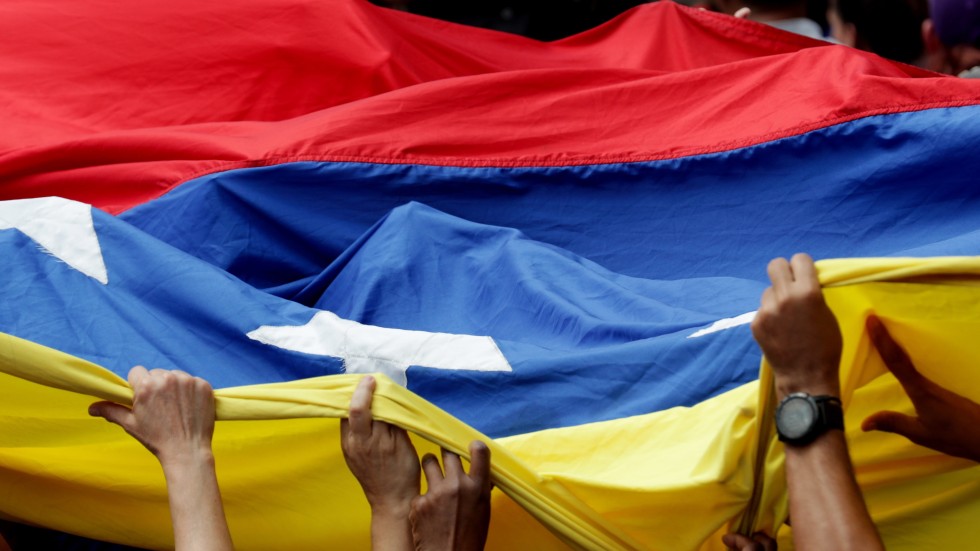
No talks between China and Venezuela opposition Beijing says, instead it’s ‘fake news’

  • Wall Street Journal report dismissed as false
  • Chinese spokeswoman repeats call for dialogue to resolve the Venezuelan crisis
PUBLISHED : Wednesday, 13 February, 2019, 5:57pm
UPDATED : Wednesday, 13 February, 2019, 5:57pm

China has dismissed a newspaper report that its diplomats held talks with the political opposition in Venezuela to protect its investments in the Latin American country as “fake news”.

The Wall Street Journal said the diplomats, concerned about oil projects in Venezuela and almost US$20 billion that Caracas owes Beijing, had held talks in Washington with representatives of Juan Guaido, the opposition leader heading US-backed efforts to oust President Nicolas Maduro.


“In fact the report is false. It’s fake news,” Hua Chunying, spokeswoman for the Chinese Foreign Ministry, told reporters on Wednesday when asked about the article.

Venezuela’s “affairs” should be resolved via dialogue, Hua said, reiterating China’s previous stance.

Guaido invoked a constitutional provision to assume the presidency three weeks ago, arguing that Maduro’s re-election last year was a sham.

Most Western countries, including the United States, have recognised Guaido as Venezuela’s legitimate head of state, but Maduro retains the backing of Russia and China as well as control of state institutions including the military.

China has lent more than $50 billion to Venezuela through oil-for-loan agreements over the past decade, securing energy supplies for its fast-growing economy.


A change in government in Venezuela would favour the country’s two main foreign creditors, Russia and China, Guaido said in an interview last month.

Source: SCMP

Law of Unintended Consequences

continuously updated blog about China & India

ChiaHou's Book Reviews

continuously updated blog about China & India

What's wrong with the world; and its economy

continuously updated blog about China & India