11/06/2019
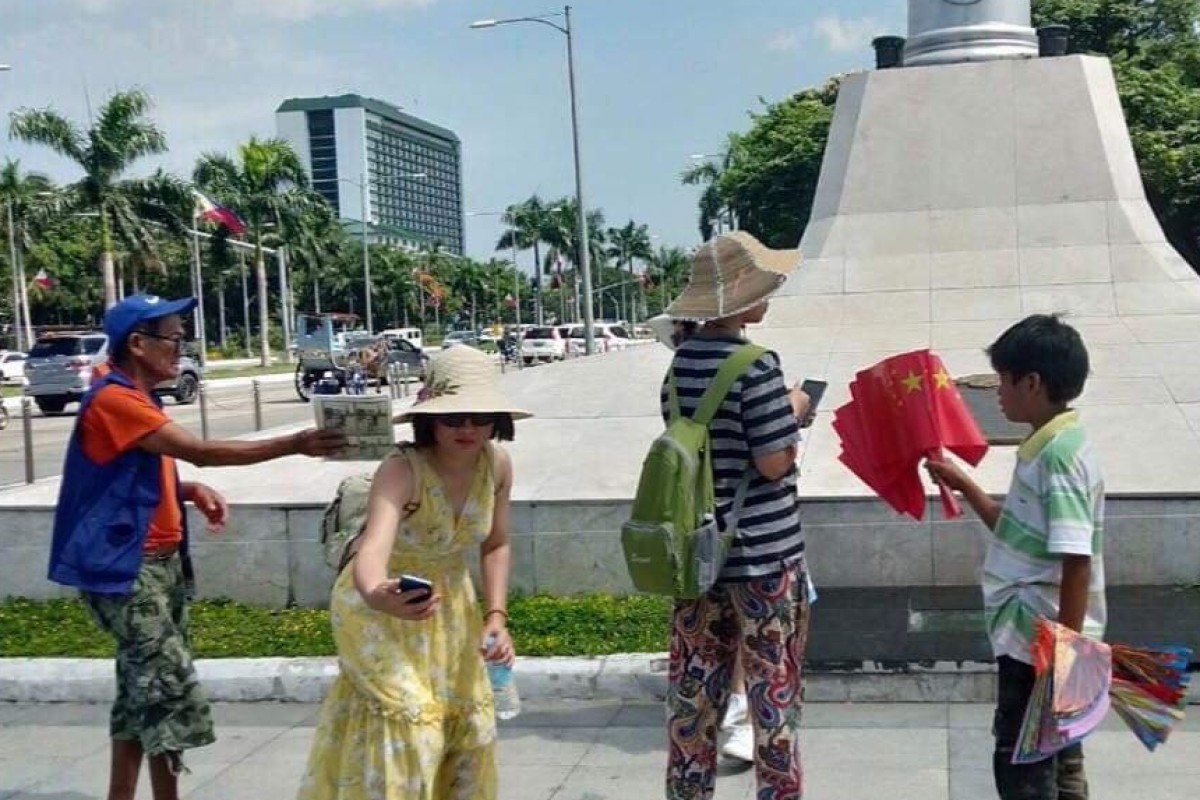
- Images claiming to show four people selling the flags at Manila’s Luneta Park days before the Philippines’ Independence Day have sparked fury online
- Under Philippine law, it is illegal for foreign flags to be displayed in public or used in commercials
Four people seemingly selling Chinese flags at the Luneta Park in Manila. Photo: Facebook
Staged photographs showing vendors selling Chinese flags in a Philippine park ahead of the country’s Independence Day should be condemned if they were an attempt to undermine bilateral relations, the Chinese embassy has said.
The embassy’s intervention comes after the photos, which purportedly show four people selling the flags at Luneta Park in Manila, sparked fury online at the weekend and reignited a debate about Chinese influence in the country.
Under Philippine law, it is illegal for foreign flags to be displayed in public or used in commercials.
Many social media users in the Philippines reacted negatively to the pictures, hitting out at what they perceived as undue influence from Beijing. In one post typical of the public’s response, Facebook user Martin Masadao criticised Philippine President
writing: “Chinese flags are sold in Luneta! Are we going to be a province of China?”
However, an investigation by the national park authorities has since found the four people in the photograph were paid to pose as if they were selling the flags.
JUST IN: National Parks Development Committee clarifies that there are no vendors selling Chinese flags in Luneta Park,and that the trending photos are fake.Their CCTV caught three Filipinos who allegedly paid the vendors to pose as if selling/buying the Chinese flags. @gmanews pic.twitter.com/KlTpazfeTO— Mav Gonzales (@mavgonzales) June 9, 2019
Taking to Twitter on Tuesday, the Chinese embassy noted that the incident had occurred on China-Philippines Friendship Day.
“We noticed the staged photos of [vendors] selling Chinese flags, which have caught widespread attention,” it said. “If this was done with good intentions to celebrate China-Philippines Friendship Day, you are welcome. However, if it was done to undermine the China-Philippine relationship, we condemn it.”
Manila’s booming logistics property attracts Chinese investment
Manila police on Tuesday said they were searching for suspects “who maliciously ordered the display and selling of Chinese flags in an unauthorised place”.
Anti-China sentiments have been rising in the Philippines over fears the Duterte administration is aligning itself too closely with Beijing.
Duterte: ‘I love China but is it right for a country to claim whole ocean?’
A surge in Chinese migrant workers has also caused resentment domestically. Some Filipinos accuse these workers of taking jobs from locals and adding pressure to the housing market.
On Tuesday, the Philippines announced it would tighten rules for foreign workers. The move follows figures showing that more Chinese workers are entering the country, many of them illegally. Foreign workers will now need a work permit as well as a working visa and a tax number.
Source: SCMP
Posted in China flags, Chinese embassy, displayed in public, foreign flags, illegal, Independence Day, Luneta Park, Manila, Philippine park, row, sold, speaks out, Uncategorized, used in commercials |
Leave a Comment »
06/03/2019
- Issue a key demand made by US President Donald Trump as part of the ongoing US-China trade war
- China expected to pass new foreign investment law next week during National People’s Congress
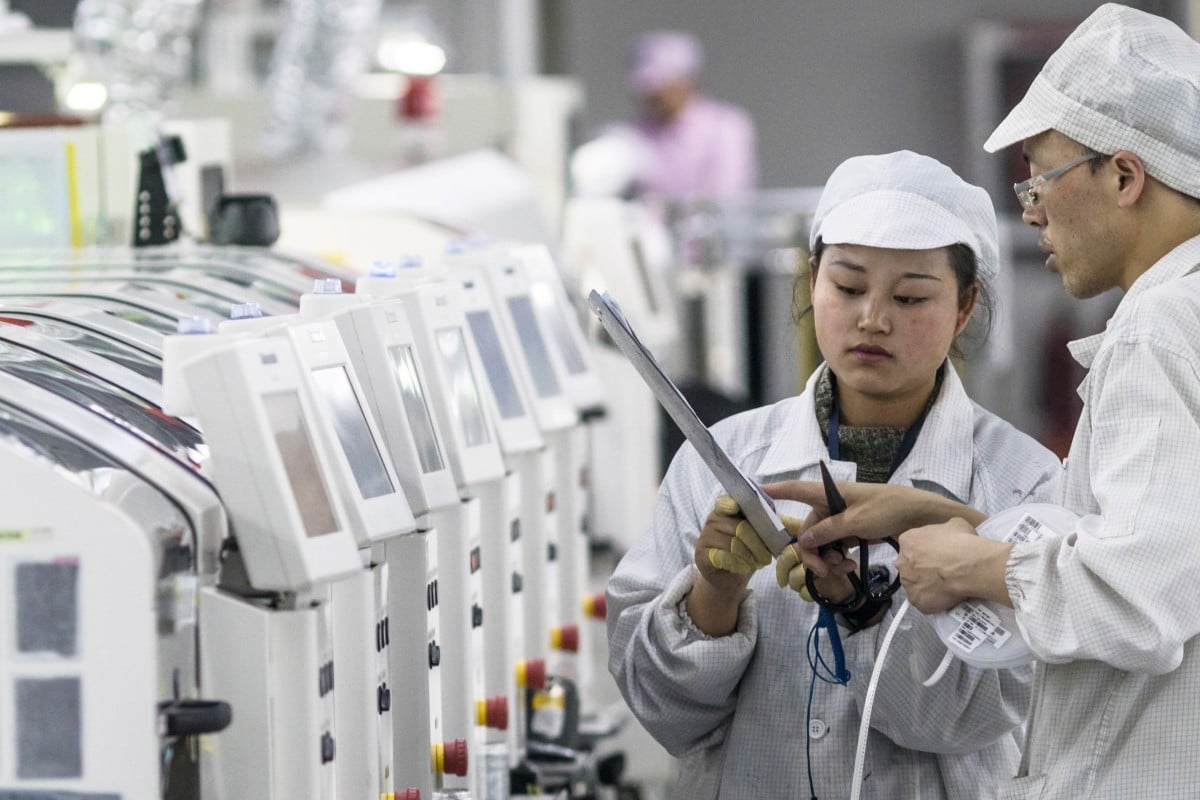
Foreign direct investment in China amounted to US$135 billion in 2018, an increase of 3 per cent from a year earlier, according to Chinese government data. Photo: EPA
Beijing will make it illegal to force foreign investors to transfer their technology to Chinese partners while also lowering market barriers for foreign firms to enter the domestic market, a senior economic planning official said on Wednesday, highlighting an effort to lure overseas investment inflows.
China is expected to pass a new law next week intended to protect the interests of foreign investors, both as a response to demands from the United States that have formed part of the ongoing trade war negotiations, and to help shore up economic growth, which slowed last year to its lowest rate in 28 years.
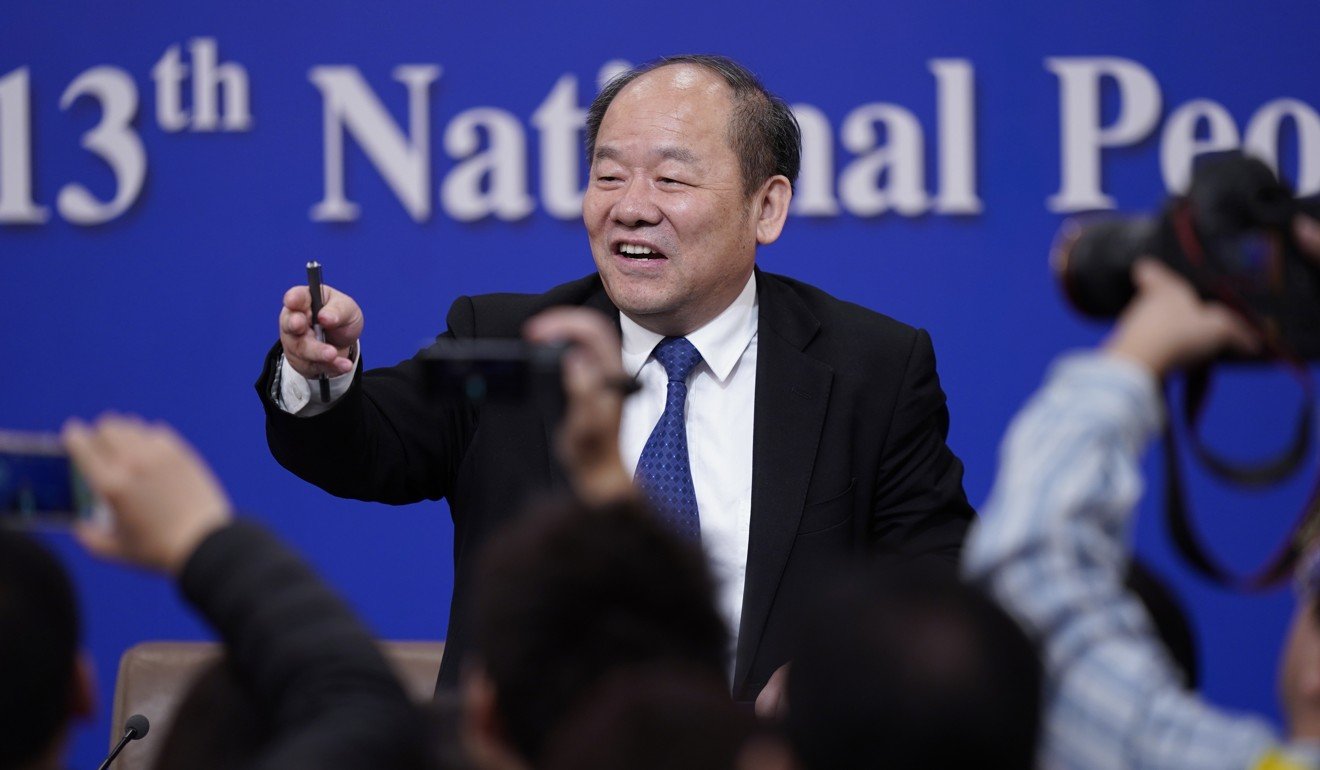
Foreign investors will be allowed to set up ventures in which they have full ownership, instead of being forced into joint ventures with local partners, in more industries, said Ning Jizhe, a vice-chairman of the National Development and Reform Commission, in Beijing on Wednesday during the National People’s Congress.
In addition, China will set up a special task force to facilitate “key” projects like electric-car maker Tesla’s new factory in Shanghai or BASF’s new chemical complex in Guangdong, both of which are solely owned by the foreign company.
China’s leadership has listed foreign investment as one of the six areas that it must “stabilise” in 2019, along with employment, growth, trade, domestic investment and market expectations.
Foreign direct investment in China amounted to US$135 billion in 2018, an increase of 3 per cent from a year earlier, according to Chinese government data.
But foreign investment into the world’s second biggest economy have slowed over last decade, which could deprive China of access to advanced technologies and marginalise the country in the development of future global supply chains.
Beijing is trying to lure more foreign capital and technology to support its plan to upgrade its manufacturing industries and boost the development of new, hi-tech sectors.
“China will roll out more opening-up measures in the agriculture, mining, manufacturing and service sectors, allowing wholly foreign-owned enterprises in more fields,” Ning said.
China law to protect intellectual property, ban forced tech transfer
Since December, China has been rushing to draft legislation for a new foreign investment law, a key clause of which prohibits local government’s from forcing transfer of technology in return for being allowed to conduct business in their jurisdictions.
The National People’s Congress is expected to endorse the new
“After passing the law, the government will take serious measures to obey and implement it,” Ning added.
He said that China will remove market entry restrictions for foreign investors to ensure that domestic and foreign firms “are treated as equals.”
Ning Jizhe, a vice-chairman of the National Development and Reform Commission. Photo: EPA
However, the jury is still out whether Beijing’s promises of fair treatment, market access and protection for intellectual property rights will be enough to generate a steady inflow of hi-tech investment.
The US has long complained that China has been unwilling to implement previous commitments under the World Trade Organisation to open up its market – allegation Beijing denies.
Shen Jianguang, chief economist at JD Digits, an arm of Chinese e-commerce firm JD.com, said restrictions on foreign investment will exist in China despite the government’s promises.
China’s domestic market remains large and attractive for some foreign investors, he said.
“Foreign investors are still very interested in the Chinese market, if the openness of the economy is sufficient,” Shen added.
Source: SCMP
Posted in agriculture, BASF, chemical complex, Chief economist, domestic market, E-commerce, forced technology transfer, foreign investors, Guangdong, illegal, JD Digits, JD.com, Manufacturing, market barriers, mining, National People’s Congress, Ning Jizhe, President Donald Trump, service sectors, Shanghai, Shen Jianguang, Tesla, Uncategorized, US-China trade war, vice-chairman of the National Development and Reform Commission, world trade organisation |
Leave a Comment »



 CHINDIA ALERT: You'll be living in their world, very soon