Archive for ‘importers’

03/11/2019

Machynlleth crocodile skull raid prompts trade warning

Seized crocodile skullImage copyright DYFED-POWYS POLICE
Image caption Trade in some species, including some types of crocodiles, is banned outright

People buying animal “souvenirs” have been warned they must check they are legal after police seized a number of crocodile skulls imported from China.

Police are investigating the finds after searching two properties in Machynlleth, Powys, on Wednesday.

Dyfed-Powys Police and North Wales Police said they had found “numerous” skulls across the searches.

Animal trade charity Traffic said importers and buyers must make sure they had the correct permits.

Richard Thomas, from Traffic, said some people would buy things such as skulls as a “talking point”.

Trade in some species, including some types of crocodiles, is banned outright, but others can be bought and sold as long as the exporting country issues permits.

Earlier this month, police seized a skull of a critically endangered Siamese crocodile from a man in Chippenham, Wiltshire, after he paid about £30 to a buyer in China.

Wiltshire Police said the man bought it as an “unusual” house ornament and had no idea that it was protected.

No further action was taken against him when police decided he had made an honest mistake.

The Convention on International Trade in Endangered Species of Wild Fauna and Flora is the main worldwide agreement controlling trade in wild animals and plants, and is signed by more than 180 countries.

In 2016, the UN estimated that the annual value of illegal wildlife trade was between $7bn-$23bn (£5.4bn-£17.8bn).

Traffic said demand for such items as horns, ivory, bones and skins was “driving unprecedented wildlife population declines”.

Source: The BBC
23/02/2019

Australia seeks clarification on China coal import ‘block’

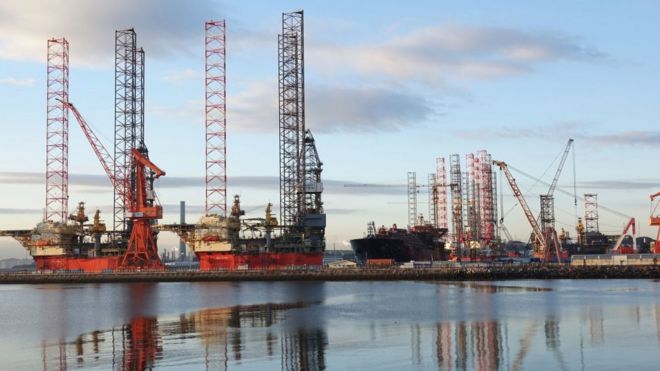
Ships and containers at a port in Dalian, ChinaImage copyrightGETTY IMAGES
Image captionOne of China’s biggest ports is reported to have halted Australian coal imports

The Australian government says it is seeking an “urgent” clarification from Beijing over reports that a major Chinese port has halted imports of Australian coal.

Australia is a top supplier of coal to China, its biggest export market.

Beijing has not confirmed the reported halt in the port of Dalian, but called changes in such arrangements “normal”.

Canberra sought to play down speculation on Friday that the matter may be linked to bilateral tensions.

Australian officials said there was “confusion” over the situation, and they were consulting their Chinese counterparts.

“I wouldn’t jump to conclusions. The Australia-China trading relationship is exceptionally strong,” Treasurer Josh Frydenberg told the Australian Broadcasting Corporation.

Fears about the issue have prompted a fall in the Australian dollar.

What has happened?

On Thursday, Reuters reported that China’s Dalian port region would not allow Australian coal to pass through customs.

The news agency quoted officials as saying that only Australian coal had been affected, with no limits placed on Indonesian and Russian shipments.

It said other Chinese ports had delayed Australian coal shipments in recent months.

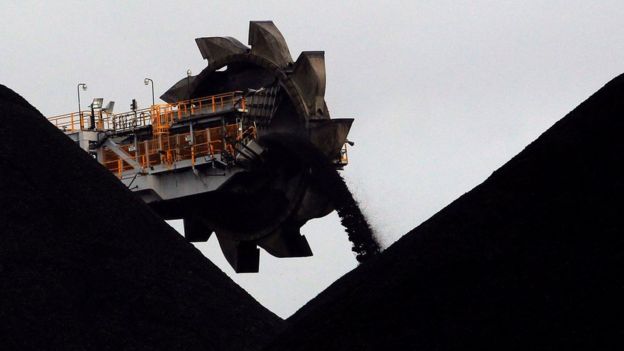
A machine places coal in stockpiles at a coal port in Newcastle, AustraliaImage copyrightREUTERS
Image captionCoal is Australia’s biggest export commodity

Australian trade officials said they had been notified of recent industry concerns about market access.

When asked about the reported halt, Chinese Foreign Ministry spokesman Geng Shuang offered general comments that authorities sought “to safeguard the rights and interests of Chinese importers and protect the environment”.

What else is being debated?

Some security analysts in Australia have suggested it could be a tit-for-tat move by China, after Australia blocked tech giant Huawei from providing 5G technology.

“The banning of those coal shipments is a form of coercion against Australia. It’s punishment against states that resist China’s pressure,” said Dr Malcolm Davis, from the Australian Strategic Policy Institute.

Other recent tensions have emerged over allegations – denied by Beijing – of Chinese interference in Australian politics and society.

However others, including the head of the Reserve Bank of Australia, have suggested that China’s concerns about its own coal industry may be behind any such halts.

Blocking “a couple of months of coal exports” would not hurt the Australian economy, said Philip Lowe.

“If it were to be the sign of a deterioration in the underlying political relationship between Australia and China then that would be more concerning,” he said.

Mr Frydenberg said: “We can see these occasional interruptions to the smooth flow but that doesn’t necessarily translate to some of the consequences that aspects of the media might seek to leap to.”

Source: The BBC

Law of Unintended Consequences

continuously updated blog about China & India

ChiaHou's Book Reviews

continuously updated blog about China & India

What's wrong with the world; and its economy

continuously updated blog about China & India