Archive for ‘India’

07/11/2019

The cheap sensor detecting landslides in India

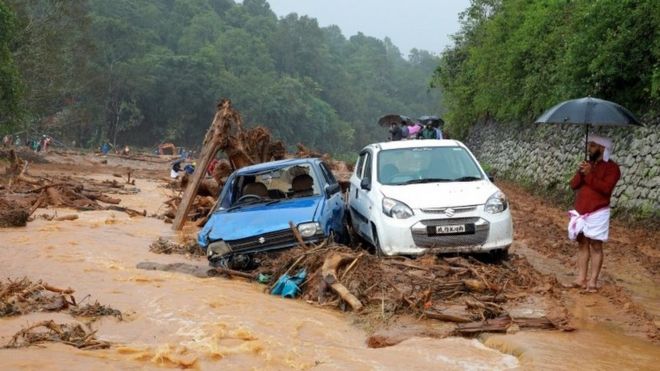
A man stands next to damaged cars after a landslide caused by torrential monsoon rains at Puthumala near Meppadi, Wayanad district, in the southern state of Kerala, India, August 14, 2019Image copyright REUTERS
Image caption Landslides are common in India after heavy rains

Landslides are common in rural and mountainous areas of India, especially after heavy rain. Scientists now say they have developed a low-cost technology for detecting them, using a motion sensor commonly found in smartphones.

The device is currently being trialled in more than 20 locations in the Himalayan state of Himachal Pradesh, where landslides kill dozens of people every year.

Scientists say they are hopeful that it will help drastically reduce the deaths and damage caused by these natural disasters.

An accelerometer is a type of motion sensor which measures changes in velocity. In smartphones, this is what allows people to use compass and maps applications and even flip their screens horizontally or vertically.

But now scientists from the Indian Institute of Technology (IIT) in Himachal Pradesh’s Mandi district have found that with some modifications, it can be used as a low-cost early warning system for landslides.

They told BBC Click’s Shubham Kishore that it will cost an estimated 20,000 rupees (£218; $282) to manufacture – a fraction of the cost of existing technologies.

Authorities say the frequency of landslides in Himachal Pradesh is due to its mountainous terrain and the instability of the Himalayas, which is a relatively young mountain range.

However, excessive rain, rampant deforestation, and unauthorised construction has exacerbated the problem.

RENUKA DO SARKAImage copyright IIT MANDI
Image caption One of the devices being fitted

The Environmental Information (ENVIS) centre for the Ministry of Environment and Forest said in a report that casualties from landslides were also growing because “the increase of road connectivity and number of vehicles plying on these roads in the state, means the number of road accidents and loss of precious human lives is increasing day by day”.

This is because landslides frequently wash away roads and destroy homes – many of which are built with materials like clay mud or unburned bricks.

Early warning

Dr Varun Dutt, a computer engineer, with his colleague, Dr KV Uday, a civil engineer, are leading efforts to develop the technology. These researchers say they are using the motion sensor to measure soil movements.

“When we embed it in the soil, the accelerometer will move when the soil moves. Essentially soil moves if some force acts on it.

“What the sensor does is allow us to record the extent of that movement. It throws up a range of data that then allows us to track small displacements in soil which causes landslides,” Dr Dutt told the BBC’s Ayeshea Perera.

He explained that a series of small soil movements could help provide an early warning to a larger disaster in the making. Due to the early warnings from small movements, detecting a landslide is easier than trying to detect an earthquake, which is more instantaneous with a very small warning corridor.

The device measures all these movements, and when it detects a significant displacement of earth which could result in a landslide, it emits loud noises and sends text messages to officials so that they can evacuate and stop vehicular movement to and around the area.

Heavy machinery removes debris as rescue personnel search for survivors and bodies of victims after a landslide along a highway at KotrupiImage copyright AFP
Image caption The new device helps to detect landslides

The device has already seen some success.

In Kutropi, in the state’s Mandi district, the device was able to successfully alert officials about an impending landslide. Police were able to turn away vehicles from a road that was later completely washed away.

Dr Uday told the BBC that they have managed to alert officials after using the device that a hill in the state’s Deode region needed to be monitored carefully as the soil movements indicated that the hill was at risk of sliding.

Dr Dutt says that state officials – who often have to deal with the tragic consequences of landslides – are excited about the technology.

“We were invited to present it at a workshop by the state government in partnership with the National Disaster Management Authority (NDMA) earlier this year.

“We showcased the technology and we got a lot of requests to commercialise it. So now we are in the process of marketing it and setting it up,” he said.

Predictive technology

The device has also won an innovation award from the government.

At present, the device has managed to demonstrate enough of a lead time to allow officials to warn residents and motorists shortly before a potential landslide.

But Dr Dutt and Dr Uday want the technology to be more predictive than reactive.

So the team has begun using Artificial Intelligence (AI) and machine learning on the sets of data thrown up by the device, and are hoping that it can develop algorithms that will enable them to predict landslides 24 hours or even a week in advance.

These algorithms are currently being refined, and scientists are hoping to test them more accurately in the field by the 2020 monsoon.

“We are excited but we want it to be accurate. There should be fewer false alarms.

“The good part is that policymakers understand that this is experimental work and it will improve as more data gets collected. If it all goes to plan, it will be very useful,” Dr Dutt said.

Source: The BBC
06/11/2019

French President Emmanuel Macron tells Chinese leader Xi Jinping talks are needed to calm Hong Kong situation

  • French leader calls for restraint and says he raised the topic ‘on several occasions’ during his visit
  • Two sides find common ground on need to defend free trade and fight climate change as Donald Trump starts process of pulling US out of Paris Climate Agreement
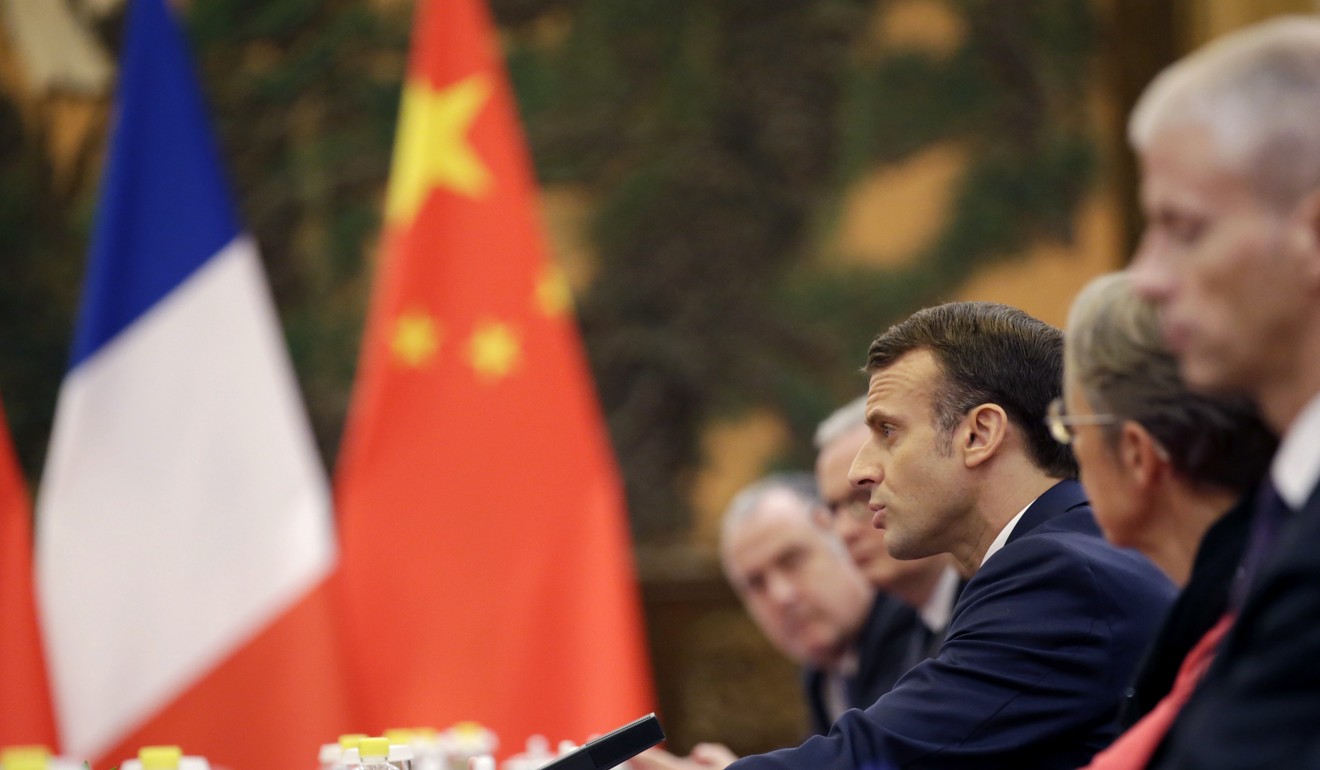
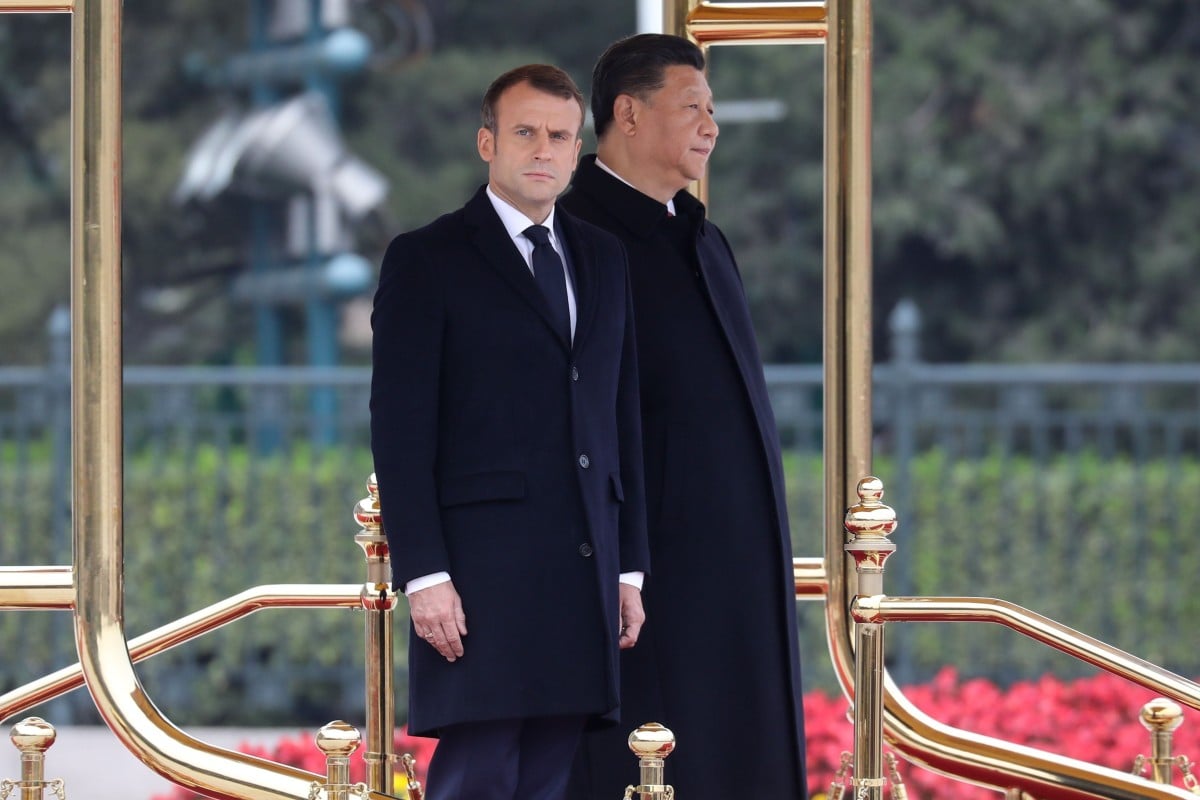
Xi Jinping and Emmanuel Macron at a welcome ceremony ahead of their talks in Beijing on Wednesday. Photo: AFP

French President Emmanuel Macron said he raised human rights and the Hong Kong situation during his talks with his Chinese counterpart Xi Jinping on Wednesday.

Macron’s visit to China concluded with pledges to work together on climate change, but the French leader also said he also called for a de-escalation of the situation in the city through dialogue after months of protests.

Macron, who had promised to raise “taboo” topics during the visit, told a press conference: “I obviously raised this with President Xi Jinping on several occasions.

“We have repeatedly called on the parties involved to [engage in] dialogue, to show restraint, to de-escalate.”

The discussion followed Xi’s meeting with Hong Kong’s embattled Chief Executive Carrie Lam Cheng Yuet-ngor in Shanghai on Monday, where he expressed “high trust” in her and “fully affirmed” support for her response to the unrest that has gripped the city since June.

Earlier the French and Chinese leaders had restated their commitment to protect free trade and pledged their continued support for the Paris Agreement as the United States begins the process of formally withdrawing from the global climate deal.

Macron expressed “regret” over “some countries’ negative attitude” towards environmental protection and the fight against climate change and pledged to work with China to halt the loss of biodiversity.

The French president’s office also released a statement on Wednesday that reaffirmed France and China’s joint support for the “irreversible” Paris Agreement.

Macron points to common ground with China on tariffs and climate action

With the European Union, China and Russia backing the pact, he added, “the isolated choice of one or another is not enough to change the course of the world. It only leads to marginalisation.”

The two countries also agreed to work together to develop joint nuclear power projects and signed a series of contracts worth US$15 billion.

The deals covered aeronautics, energy and agriculture, including approval for 20 French companies to export poultry, beef and pork to China.

An additional action plan released after the talks said French utility giant EDF and China General Nuclear Power should be encouraged to cooperate on projects in China or third countries, citing the joint efforts by the two companies to build nuclear reactors at the Hinkley Point C station in Britain as an example.

The two sides also committed to signing a contract for the construction of a nuclear fuel recycling plant in China, which would involve French energy giant Orano, by January 31.

Xi took what appeared to be a veiled swipe at the United States, which is still embroiled in a protracted trade war and other confrontations with Beijing.

“We advocate for mutual respect and equal treatment, and are opposed to the law of the jungle and acts of intimidation,” Xi said.

“We advocate for openness, inclusion and for mutually beneficial cooperation, and are opposed to protectionism and a zero-sum game.”

Macron said China and the European Union should work in partnership as the world became more unstable, calling on the two sides to further open up market access.

“We call again for trade multilateralism to respond to distortions that have appeared in the global economy, which have led to a profound rise in inequalities and imbalances that explain the surge of challenges to the international systems,” he said.

“China and Europe also share the same views that the trade war only leads to loss.”

Macron kicks off China visit with deal to protect wine and cheese from counterfeiting

Chinese state news agency Xinhua said the two countries agreed to work together to push forward with plans to assemble Airbus’s A350 model in China.

Meanwhile, Beijing Gas Group and French utility firm Engie will collaborate on a liquefied natural gas terminal and storage in the northern city of Tianjin, while France’s Total will set up a joint venture with China’s Shenergy Group to distribute liquid nitrogen gas by truck in the Yangtze River Delta.

The two countries also agreed to reach an agreement by the end of January 2020 on the cost and location of a nuclear fuel reprocessing facility to be built by Orano, formerly known as Areva.

Wu Libo a professor and director of the Centre for Energy Economics and Strategies Studies at Fudan University, said there was “great potential” for further cooperation between the two countries on nuclear energy.

“France has many useful experiences in the operation and management of nuclear power plants and its plants have long-term safe and stable operation records,” she said.

The two sides agreed to work together on joint nuclear power projects. Photo: AP

Jiang Kejun, a senior researcher at the Energy Research Institute of China’s National Development and Reform Commission, said China’s cooperation with France would add credibility to potential third-country projects.

“China has advanced third-generation technology but it’s still a new member in the nuclear power market, while France has developed nuclear energy for a long time, and its EPR reactors – a technology designed and developed in France – are in business operation,” he said.

Jiang said possible markets for the joint projects included Argentina and India, while some Middle Eastern states – such as Saudi Arabia and Qatar – had expressed interest in nuclear energy.

China’s ambassador hits out at Macron’s team for backing ‘hypocritical’ EU stance on Hong Kong

Tong Jiadong, professor of international trade at Nankai University, said that the deals between the two sides helped show that France and China could work together to counteract US unilateralism.

“Objectively speaking, this will form, or at least imply, an opposition to US unilateralism,” Tong said. “China hopes the cooperation between these two countries produces demonstrable effects for other EU member states.”

Ding Chun, a professor of European Studies at Fudan University, said he did not think the EU wanted to “choose a side” between the US and China.

But Ding continued: “If we are talking about free trade and multilateralism, there’s no doubt that the EU and China share a common view and can balance Donald Trump’s unilateralism.”

Source: SCMP

03/11/2019

China, SE Asian states push trade pact despite India doubts

BANGKOK (Reuters) – Leaders from China and Southeast Asia states called for swift agreement on what could become the world’s largest trade bloc at a regional summit on Sunday, but new demands from India left officials scrambling to salvage progress.

Hopes of finalising the Asia-wide Regional Comprehensive Economic Partnership (RCEP), which is backed by China, have been thrown into doubt at the summit of the Association of Southeast Asian Nations (ASEAN) in Bangkok, Thailand.

Summit host Thailand said late on Sunday that the deal could be signed by February 2020. Thailand had previously said it aimed to conclude negotiations by the end of the year.

New impetus to reach agreement has come from the U.S.-China trade war, which has helped knock regional economic growth to its lowest in five years.

“The early conclusion of RCEP negotiations will lay the foundation for East Asia’s economic integration,” said a statement from China’s foreign ministry after Premier Li Keqiang met Southeast Asian leaders.

But Indian Prime Minister Narendra Modi did not even mention the RCEP deal in opening remarks at a meeting with Southeast Asian leaders and instead spoke only of reviewing the existing trade agreement between ASEAN and India.

Nor did Modi mention the trade bloc, whose 16 countries would account for a third of global gross domestic product and nearly half the world’s population, in Twitter posts after meeting Thai and Indonesian leaders.

An Indian foreign ministry official later told a media briefing “Let’s take all the RCEP questions tomorrow.”

Southeast Asian countries had hoped at least a provisional agreement could be announced on Monday.

But India has been worried about a potential flood of Chinese imports. A person with knowledge of New Delhi’s negotiations said new demands were made last week “which are difficult to meet.”

TRADE WAR IMPACT

Negotiators were meeting into the evening on Sunday to try to come to an agreement, Thai government spokeswoman Narumon Pinyosinwat told reporters on Sunday.

“We don’t have a conclusion yet. Once there is one, it would be announced,” she said. “Commerce ministers are still discussing outstanding issues. The signing is expected around February next year.”

Thai Prime Minister Prayuth Chan-ocha told the formal opening of the ASEAN summit on Sunday that the 16 nations in the potential trade bloc ought to come to agreement this year to stimulate economic growth, trade and investment.

Some countries have raised the possibility of moving ahead without India on forming a bloc that also included Japan, South Korea, Australia and New Zealand.

But Thai commerce minister Jurin Laksanawisit told Reuters on Sunday that India had not pulled out.

Another advantage for Southeast Asian countries from having relative heavyweight India in the trade pact would be less domination by China.

Longstanding rivals China and India, which fought a border war in 1962, clashed verbally in recent days over India’s decision to formally revoke the constitutional autonomy of the disputed Muslim majority state of Kashmir.

The U.S. decision to send a lower level delegation to the summits this year has raised regional concerns that it can no longer be relied on as a counterweight to China’s increasing regional might.

Instead of President Donald Trump or Vice President Mike Pence, the United States will be represented by Commerce Secretary Wilbur Ross and White House national security adviser Robert O’Brien.

At the summit, China’s Premier Li said China was ready to work with countries in the region for long term peace and stability in the South China Sea, where neighbours reject Beijing’s sweeping maritime claims.

Source: Reuters

22/10/2019

India, Pakistan set to sign pilgrim corridor pact amid Kashmir tension

NEW DELHI (Reuters) – India and Pakistan are set to sign an agreement on Indian pilgrims visiting a Sikh shrine in Pakistan, rare cooperation between the nuclear-armed neighbours at a time of tension that has brought exchanges of fire on their disputed border.

The pact will introduce visa-free access from India to the Pakistani town of Kartarpur, home to a temple that marks the site where the founder of Sikhism, Guru Nanak, died.

India’s foreign ministry said in a statement late on Monday an understanding had been reached on most issues and India was prepared to sign the agreement on Wednesday.

Pakistani officials were not immediately available for comment but Pakistan’s Dawn newspaper cited a foreign ministry spokesman as saying agreement had been reached and the two sides would sign the pact soon.

The Sikh minority in India has long sought easier access to the temple in Kartarpur, which is just over the border in Muslim-majority Pakistan.

The collaboration comes at a time of tension between the rivals, with Pakistan particularly aggrieved over recent Indian government measures in its part of the divided Muslim-majority region of Kashmir.

Both countries claim the Himalayan region in full but rule it in part.

India in August revoked special autonomy in Indian-controlled Kashmir, which was accompanied by a crackdown on dissent by India’s security forces there, angering Pakistan.

The dispute over Kashmir has bedevilled relations since their independence in 1947 and sparked two of their three wars.

India said on Sunday two soldiers and a civilian were killed in cross-border shelling in Kashmir while Pakistan said one of its soldiers and three civilians had been killed.

In February, they came close to war following a suicide bombing in Indian Kashmir that killed 40 paramilitary soldiers. In response, India launched an air strike on the Pakistani side and Pakistan shot down an Indian aircraft.

The new crossing will be inaugurated in early November, just before the 550th birthday of Sikhism’s founder on Nov. 12, officials from both sides have said.

The shrine is about 4 km (2-1/2 miles) from the border. The crossing and corridor, including a road, bridge over the Ravi River and immigration office, will replace a drawn-out visa process and circuitous journey through Pakistan.

But there is still disagreement over a $20 fee that Pakistan wants to charge each visitor.

India “has consistently urged Pakistan that in deference to the wishes of the pilgrims, it should not levy such a fee”, India’s foreign ministry said.

Source: Reuters

18/10/2019

Does Huawei’s future lie with India after US ban?

HuaweiImage copyright GETTY IMAGES
Image caption The US says Huawei equipment has back doors that would enable Chinese surveillance

Chinese tech giant Huawei, which has been banned from selling 5G equipment to US telecom companies, is making an aggressive push to market itself in India.

“It’s been squeezed out of countries by a few governments already, and so a possible contract with India for 5G would be especially important,” Arun Sukumar, a tech analyst at the Observer Research Foundation, told the BBC.

“It’s worth noting that even though Huawei is comfortable at the moment, it will need to continue to invest across the world and into new markets in order to stay afloat – and what’s a bigger market than India?”

Huawei has also been banned in Australia, and several other countries are considering following suit.

The US says Huawei equipment contains back doors that would enable Chinese surveillance.

But the company has repeatedly denied claims that the use of its products poses security risks, and says it is independent from the Chinese government.

The size of India’s wireless market – dwarfed only by China – make it a vital market for any company, but the troubles Huawei is facing at present make could make India critical to its future.

The US has been pressurising India and its other allies to boycott the company and has not ruled out punitive measures against those who fail to do so.

US Commerce Secretary Wilbur Ross said during a visit to Delhi that the US hoped that its “geopolitical partner India does not inadvertently subject itself to untoward security risk”.

Jay Chen, CEO of Huawei India, told the BBC’s Devina Gupta that the company was even willing to sign an undertaking with the Indian government, promising that its equipment would contain no back doors as alleged by the US.

“We have read in the media that the US government is trying to lobby with the Indian government but I still believe that we should focus on what we can do and try our best,” he said.

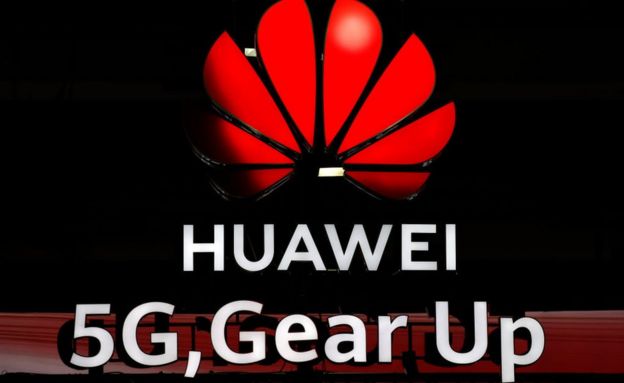
Illuminated Huawei and 5G signs are on display during the 10th Global mobile broadband forum hosted by Chinese tech giant Huawei in Zurich on October 15, 2019.Image copyright GETTY IMAGES
Image caption The company provides technology infrastructure to launch 5G networks

India has not commented on US charges against Huawei and has invited it to participate in its upcoming 5G spectrum trials, although a date for this has not been announced yet.

Mr Sukumar told the BBC that to exclude Huawei from the 5G process could actually prove detrimental to India.

“No more than five companies have the infrastructure to launch 5G, and Huawei’s infrastructure is more affordable than other Western ones like Nokia and Erikson. India’s telecom industry is already struggling, so to ally with Huawei – which could provide the service at the lowest rate – is very attractive,” he said.

India does not have a homegrown alternative to Huawei’s technology – and the company is well aware of this.

Mr Chen told the Economic Times newspaper that Huawei was now a vital part of India’s digital ecosystem and that to exclude it at this stage would risk “breaking” it entirely.

“I think the loss will not only be financial but also about losing technology development,” the newspaper quoted him as saying.

Source: The BBC

16/10/2019

China’s former ambassador to India joins team dedicated to fight against climate change

  • Luo Zhaohui, who was credited with helping to resolve 2017 Doklam stand-off peacefully, joins group set up to tackle global warming
Luo Zhaohui previously served as China’s ambassador to India. Photo: Handout

China’s former ambassador to India Luo Zhaohui has joined a national team in charge of fighting climate change, the Chinese government website has announced.

The team, led by Premier Li Keqiang, will be responsible for coming up with proposals to tackle the problem, develop proposals for energy conservation and analyse the impact of climate change on socio-economic development.

China is currently the world’s largest polluter, accounting for a quarter of the world’s total emissions, making it crucial in the effort to curb global warming.

The US withdrawal from the Paris Climate Agreement in 2017 also makes China the largest single economy committed to the efforts to limit emissions.

As well as taking up the position on the National Leading Group Dealing with Climate Change, Energy Conservation and Emissions Reduction, Luo was also promoted to the position of deputy foreign minister in late May.

In this post, Luo is in charge of Beijing’s relations with its Asian neighbours, replacing Kong Xuanyou, who was named China’s new ambassador to Japan.

Luo was credited by diplomatic observers as having helped bring relations with India back on track after the 2017 Doklam stand-off, one of the worst border disputes in decades between the two sides.

In July 2017, Luo told media in New Delhi that the Chinese people were deeply angry over the “occupation” by Indian troops of its sovereign territory but helped to resolve the situation through diplomatic means, paving the way for an informal summit between President Xi Jinping and Prime Minister Narendra Modi in Wuhan last year.

Luo, 57, has also served in diplomatic missions in Singapore and the US and was head of the foreign ministry’s department for Asian affairs.

He previously served as ambassador to Pakistan and Canada before being posted to the embassy in New Delhi in India in 2016.

Source: SCMP

07/10/2019

Aarey protests: Supreme Court steps in to save Mumbai trees after protests

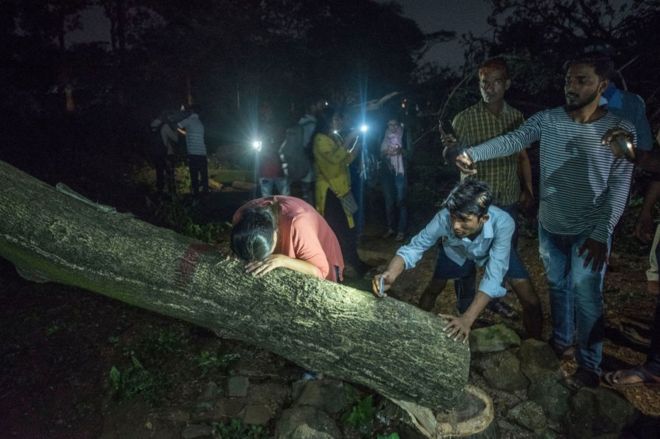
Protesters cry over felled trees in Aarey colony on October 5, 2019 in Mumbai, India.Image copyright GETTY IMAGES
Image caption Protesters cry over felled trees in Aarey colony

India’s top court has asked officials to stop cutting trees in a forested area in Mumbai city after protesters clashed with police over the weekend.

The trees, part of a green strip known as Aarey colony, were being cut to make way for a new metro rail project.

Locals have long opposed the move, and filed petitions seeking Aarey to be declared a protected area.

But a high court dismissed the petitions on Friday, sparking protests as officials began felling the trees.

They planned to cut 2,185 trees, and admitted in the Supreme Court that more than 1,500 had already been cut. But petitioners claim that officials have cut around 2,500 trees.

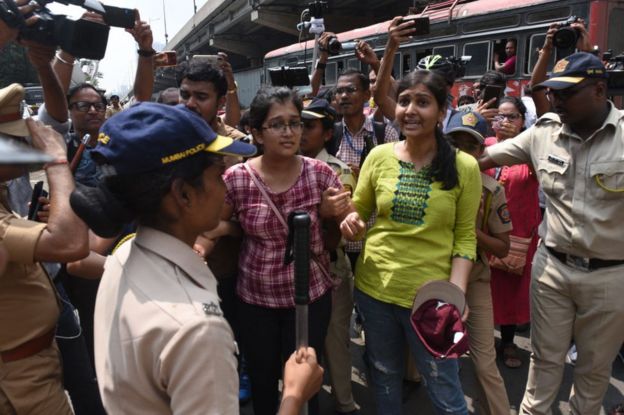
Local residents, students and environmental activists clashed with police on Friday as they took to the streets to stop authorities, and even broke through barricades to enter Aarey colony. More than 50 people were arrested and police imposed restrictions on public gatherings.

The protests grabbed the national spotlight over the weekend, and the Supreme Court took suo moto (without a formal complaint from any party) notice.

What did the Supreme Court say?

A special two-judge bench heard the matter on Monday after students wrote to the chief justice, asking the court to intervene and save the trees.

The court asked the state government of Maharashtra, where Mumbai is located, to not cut any more trees.

Activists were forcefully evacuated from Aarey Checknaka and taken to local Police Station at Goregaon, on October 5, 2019 in Mumbai, India.Image copyright GETTY IMAGES
Image caption Police arrested more than 50 protesters

The court also asked the government to maintain “status quo” – which means that no construction can take place – until 21 October when it will hear the matter again.

The court also ordered the release of all activists who were arrested or detained on bail.

What is Aarey colony?

Spread over 1,300 hectares (3,212 acres), Aarey is a densely forested area dotted with lakes and has the Mithi river flowing through it. It lies at the heart of Mumbai and is often referred to as its last green lung.

It’s locally known as the Aarey “milk colony” because most of the land was given to the department of dairy development in 1951. But they are allowed to grow cattle fodder only on a fraction of the land.

Activists break barricades to stop authorities from cutting at the main gate of Metro car shed , Picnic point, Aarey colony , Goregaon east, on October 5, 2019 in Mumbai.Image copyright GETTY IMAGES
Image caption Protesters broke through barricades and clashed with police on Friday

Earlier this year, officials cleared some 40 hectares of the forested area to build a zoo, complete with a night safari. And now, locals complain, another slice of it is in danger from the metro construction.

They also fear that the government will eventually clear the way for private builders to encroach on the Sanjay Gandhi National Park, which lies to the north of Aarey colony.

Officials, however, dismiss these fears as unfounded and point out that the construction for the metro only requires 30 hectares.

How crucial is the metro rail for Mumbai?

The city badly needs a “mass rapid transport system,” Ashwini Bhide, managing director of the Mumbai metro rail corporation, had told the BBC earlier.

The land in Aarey colony, she said, was “the most suitable land due to its size, shape and location”.

She has also been defending the decision to cut the trees on Twitter.

Presentational white space

India’s financial hub is congested and infamous for its crawling traffic jams.

Its colonial-era local train system ferries some 7.5 million people between the city’s suburbs and its centre on a daily basis.

Officials say that the metro will eventually carry around 1.7 million passengers every day and bring down the number of vehicles on the road by up to 650,000.

Source: The BBC

05/10/2019

India’s onion crisis: Why rising prices make politicians cry

A labourer carries a sack of onions at a wholesale vegetable market on the outskirts of Amritsar on September 19, 2019.Image copyright GETTY IMAGES
Image caption The onion is India’s most “political” vegetable

Onion prices have yet again dominated the headlines in India over the past week. BBC Marathi’s Janhavee Moole explains what makes this sweet and pungent vegetable so political.

The onion – ubiquitous in Indian cooking – is widely seen as the poor man’s vegetable.

But it also has the power to tempt thieves, destroy livelihoods and – with its fluctuating price a measure of inflation – end the careers of some of India’s most powerful politicians.

With that in mind, it’s perhaps unsurprising those politicians might be feeling a little concerned this week.

So, what exactly is happening with India’s onions?

In short: its price has skyrocketed.

Onion prices had been on the rise in India since August, when 25 rupees ($0.35; £0.29) would have got you a kilo. At the start of October, that price was 80 rupees ($1.13; £0.91).

Fearing a backlash, the Bharatiya Janata Party (BJP)-led government banned onion exports, hoping it would bring down the domestic price. And it did.

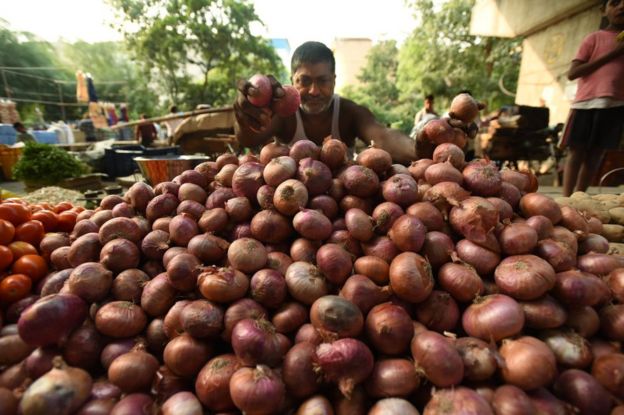
Vegetable vendors sell onions by the road, at Sector 25 on September 24, 2019 in Noida, India.Image copyright GETTY IMAGES
Image caption Onion prices peaked by the end of September

A kilo was selling for less than 30 rupees on Thursday at Lasalgaon, Asia’s largest onion wholesale market, located in the western state of Maharashtra.

However, not everyone is happy.

While high prices had angered consumers in a sluggish Indian economy, the fall in prices sparked protests by exporters and farmers in Maharashtra, where state elections are due in weeks.

And it is not just at home where hackles have been raised: the export ban has also strained trade relations between India and its neighbour, Bangladesh, which is among the top importers of the vegetable.

But why does the onion matter so much?

The onion is a staple vegetable for the poor, indispensable to many Indian cuisines and recipes, from spicy curries to tangy relishes.

“In Maharashtra, if there are no vegetables or you can’t afford to buy vegetables, people eat ‘kanda bhakari’ [onion with bread],” explains food historian Dr Mohseena Mukadam.

True, onions are not widely used in certain parts of the country, such as the south and the east – and some religious communities don’t eat them at all.

But they are especially popular in the more populous northern states which – notably – send a higher number of MPs to India’s parliament.

“Consumers in northern India wield more power over the federal government. So although consumers in other parts of India don’t complain as much about higher prices, if those in northern India do, the government feels the pressure,” says Milind Murugkar, a policy researcher.

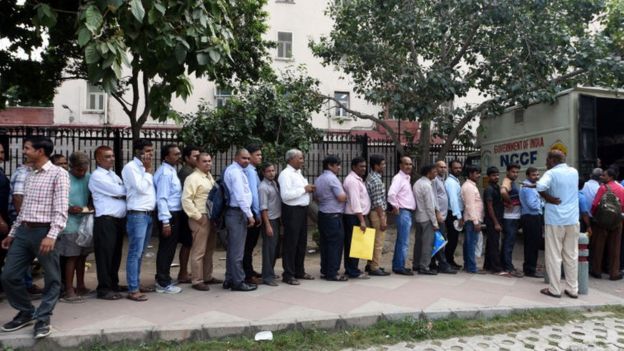
People stand in a queue to buy onions sold at Rs. 22 per kg by the Government of India, outside Krishi Bhawan on September 24, 2019 in New Delhi, India.Image copyright GETTY IMAGES
Image caption Onions are so ubiquitous that the government has been selling them at subsided rates

A drop in prices also affects the income of onion farmers, mainly in Maharashtra, Karnataka in the south and Gujarat in the west.

“Farmers see the onion as a cash crop that grows in the short term, and grows well in dry areas with less water,” says Dipti Raut, a journalist, who has been on the “onion beat” for years.

“It’s like an ATM machine that guarantees income to farmers and sometimes, their household budget depends on the onion produce,” she said.

Onions have even attracted robbers: when prices skyrocketed in 2013, thieves tried to steal a truck loaded with onions, but were caught by the police.

Why do politicians care about the onion?

Put simply, because the price moving too far one way or another is likely to anger a large block of voters, be they everyday households, or the country’s farmers.

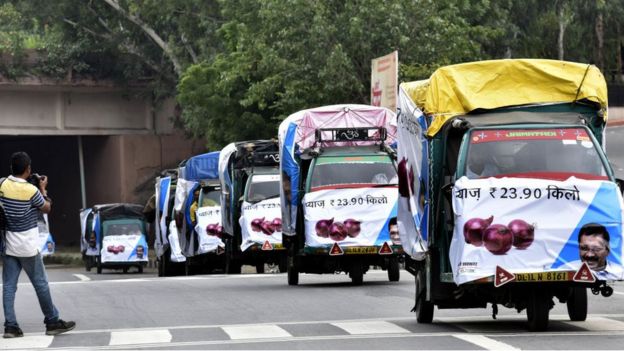
Control rate onion vans seen after flagged off by Chief Minister of Delhi Arvind Kejriwal, at Delhi secretariat, on September 28, 2019 in New Delhi, India.Image copyright GETTY IMAGES
Image caption The Delhi government transported 70 vans full of subsidised onions

Onions are so crucial they have even featured in election campaigns. The Delhi state government bought and sold them at subsidised rates in September when prices were at their peak: chief minister Arvind Kejriwal, it should be noted, is up for re-election next year.

Meanwhile, Indira Gandhi swept to power in 1980 on slogans that used soaring onion prices as a metaphor for the economic failures of the previous government.

But why did onion prices rise this year?

A drop in supply, due to heavy rains and flooding destroying the crop in large parts of India, and damaging some 35% of the onions stocks in storage, according to Nanasaheb Patil, director of the National Agricultural Co-operative Marketing Federation.

He said the flooding had also delayed the next round of produce, which was due in September.

An Indian restaurant worker cuts onions for curries in New Delhi on September 11, 2015.Image copyright GETTY IMAGES

“This has become a fairly regular phenomenon in recent decades,” Mr Murugkar said. “Onion prices swing heavily with a small drop or increase in production.”

In fact, the shortage – and subsequent rise in prices – happens almost every year around this time, according to Ms Raut.

“It’s a vicious cycle and the trader lobby and middlemen benefit from even the slightest price fluctuations,” she added.

What’s the solution?

Ms Raut says more grass-root planning and better storage facilities and food processing services will ease the problem – and making a variety of cash crops and vegetables available across the country would also ease the pressure on onions.

“The government is quick to act when onion prices rise. Why don’t they act as swiftly when prices fall?” asked Vikas Darekar, an onion farmer in Maharashtra. He said the government should buy onions from farmers at a “fair price”.

Mr Murugkar, however, feels that the government should never interfere in “onion matters”.

“If you are interested in raising purchasing power of the people, they should not curtail exports. Do we have such a ban on software exports? It’s really absurd. A government which has won such a huge majority should be able to withstand the pressures from a few consumers.”

Source: The BBC

Law of Unintended Consequences

continuously updated blog about China & India

ChiaHou's Book Reviews

continuously updated blog about China & India

What's wrong with the world; and its economy

continuously updated blog about China & India