Archive for ‘Indiana’

22/05/2020

Chinese government drops references to ‘peaceful’ reunification with Taiwan

  • The rhetoric towards the self-ruled island has hardened in Premier Li Keqiang’s annual work report
  • Beijing regards Taiwan as one of its core national interests and says it ‘resolutely opposes’ any separatist activity
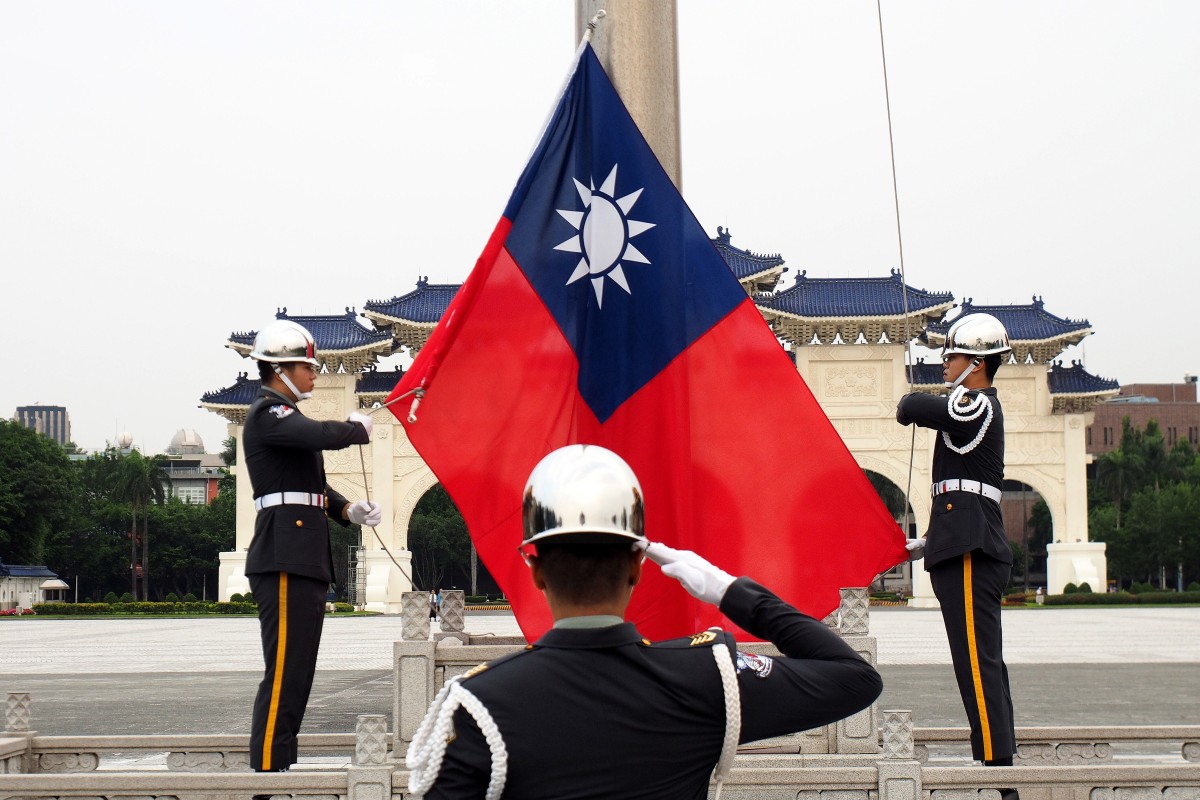
Beijing regards reunification with Taiwan as one of its core interests. Photo: EPA-EFE

Beijing has hardened its rhetoric towards Taiwan, removing references to “peaceful reunification”, in the government’s annual work report.

Observers said the change reflected the stronger stance Beijing would adopt in tackling the Taiwan issue, which it regards as one of its key national interests.

The past six work reports since President Xi Jinping took power in 2013 stressed peaceful reunification and the 1992 consensus – under which both sides tacitly agree there is only one China, but have different interpretations on what this means.

But the latest report from Premier Li Keqiang took a different tone, saying: “We will adhere to the major principles and policies on work related to Taiwan and resolutely oppose and deter any separatist activities seeking ‘Taiwan independence’.”

US to sell US$180 million worth of submarine-launched torpedoes to Taiwan

21 May 2020

“We will improve institutional arrangements, policies, and measures to encourage exchanges and cooperation between the two sides of the Taiwan Strait, further cross-strait integrated development, and protect the well-being of our compatriots in Taiwan,” the report said.

“We will encourage them to join us in opposing ‘Taiwan independence’ and promoting China’s reunification.

“With these efforts, we can surely create a beautiful future for the rejuvenation of the Chinese nation,” it said, dropping a clause that described the process as “peaceful”.

The 1992 consensus allows leeway for both parties to negotiate an agreement, but President Tsai Ing-wen has said the island would never accept it as the basis for cross-strait relations.

Taiwan’s Mainland Affairs Council said on Friday that the “one country, two systems” framework, touted by Beijing as a political basis for unification, had harmed cross-strait relations. It called for the two sides to work together to resolve their differences.

Tang Shao-cheng, an international relations specialist at Taiwan’s National Chengchi University, said the change in wording and tone of the Taiwan section of the work report could be seen as a warning to Tsai’s independence-leaning Democratic Progressive Party (DPP).

“Not mentioning ‘peace’ suggests Beijing is considering unification both by peaceful means and by force,” Tang said.

President Xi Jinping and Premier Li Keqiang at the National People’s Congress opening session on Friday. Photo: Kyodo
Derek Grossman, an analyst from US-based think tank Rand Corporation, said Beijing would continue to put pressure on the island using diplomatic, military, economic and psychological means.

“Beijing will continue to send military aircraft near the island … [it] could decide to end the Economic Cooperation Framework Agreement which has remained active in spite of Tsai’s election in 2016; Beijing could steal one or more diplomatic partners from Taipei. I would expect these types of actions to be on the table,” Grossman said.

How would mainland China attack Taiwan? A video outlines one scenario

22 May 2020

Sun Yun, director of the China programme at the Stimson Centre think tank in the US, said Beijing faced a dilemma on whether to continue economic integration with Taiwan because that had not had the political effect it wanted.

“The obstacles to unification are not economic, but political. Taiwan is unwilling to pursue unification with an authoritarian mainland. To solve that issue, presumably the mainland could pursue political reform. But in reality, the Chinese Communist Party is unwilling,” she said.

“If the economic and political approach doesn’t work, what’s left is the military approach. But with US intervention, the mainland will not prevail.”

Beijing recently warned Washington it would respond after US Secretary of State

Mike Pompeo congratulated Tsai on her second term of office

, and demanded that the US stop selling arms to the island.
Joshua Eisenman, a professor from the University of Notre Dame in Indiana, said Beijing was running out of countermeasures, since its actions had only hardened attitudes on the island and enhanced the sense of Taiwanese identity.
“As I see it, all that remains is for the [Chinese Communist Party[ to sit down and talk to the DPP without preconditions and establish a modus vivendi for cross-strait relations,” he said.
Source: SCMP
09/04/2020

Automakers push to reopen plants with testing and lots of masks

MILAN/DETROIT (Reuters) – Global automakers reeling from the COVID-19 pandemic are accelerating efforts to restart factories from Wuhan to Maranello to Michigan, using safety protocols developed for China and U.S. ventilator production operations launched in recent weeks.

Certain safety measures differ from manufacturer to manufacturer. Italian sports car maker Ferrari NV (RACE.MI) said on Wednesday it would offer voluntary blood tests to employees who wanted to know if they had been exposed to the virus.

General Motors Co’s (GM.N) head of workplace safety, Jim Glynn, told Reuters on Wednesday GM is not persuaded blood tests are useful. But Glynn said GM has studied and adapted measures taken by Amazon.com Inc (AMZN.O) to protect warehouse workers, such as temperature screening to catch employees with fevers before they enter the workplace.

Auto manufacturers and suppliers are converging on a consensus that temperature screening, daily health questionnaires, assembly lines redesigned to keep workers 3 to 6 feet (0.9 m to 1.8 m) apart, and lots and lots of masks and gloves can enable large-scale factories to operate safely.

“We know the protocols to keep people safe,” Gerald Johnson, GM’s executive vice president for global manufacturing, told Reuters in an interview. GM has relaunched vehicle plants in China and kept factories running in South Korea, he said.

GM has not said when it will reopen assembly plants in the United States. Other automakers are putting dates out in public, even though health officials and federal and state policymakers are wary of lifting lockdowns too soon.

“You see vehicle manufacturers … putting a stake in the ground,” said Brian Collie, head of Boston Consulting Group’s automotive practice. By setting a public date to restart production, they signal suppliers to get ready to ramp up, he said.

The COVID-19 pandemic has thrown the global auto industry into the worst tailspin since the 2008-2009 financial crisis. Consumer demand for vehicles has collapsed as governments have enforced lockdowns in China, and then in Europe and the United States. For the Detroit automakers and their suppliers, the shutdown of profitable truck and sport utility vehicle plants in North America has choked off cash flow.

In Europe, major automakers have said they hope to begin building vehicles again in mid-to-late April. In the United States, several big automakers, including Fiat Chrysler Automobiles NV (FCHA.MI) (FCAU.N), Honda Motor Co Ltd (7267.T) and Toyota Motor Corp (7203.T), are aiming to restart production during the first week of May.

Fiat Chrysler (FCA) and unions are discussing plans for beefed-up health measures at Italian plants to pave the way for production to restart as soon as the government eases a national lockdown due to expire on April 13, unions said on Wednesday.

Among the proposals from Fiat Chrysler’s Italian unions: move meals to the end of shifts, allowing employees to chose to avoid canteens, eat their food elsewhere and leave half an hour earlier without losing pay.

FCA did not comment on specific measures.

In the United States, some non-union automakers have also said they hope to restart vehicle plants as soon as next week.

Tire maker Bridgestone said on Wednesday it plans to restart U.S. production on April 13.

But the Trump administration has said people should continue to practice social distancing until April 30.

VENTILATOR ASSEMBLY

For the Detroit automakers, the United Auto Workers union will play a key role in deciding when and how plants will restart.

UAW President Rory Gamble said in a statement on Wednesday the union is in “deep discussions with all three companies to plan ahead over the implementation of CDC [Centers for Disease Control and Prevention] safety standards and using all available technologies to protect all UAW members, their families and the public.”

Among the union’s concerns is that members who report being ill can take time away from work without penalty, Gamble added.

The UAW has supported GM and Ford Motor Co’s (F.N) efforts to launch production of ventilators in U.S. plants – operations that have allowed the companies and the union to road-test safety measures at small scale.

At GM’s ventilator assembly plant in Kokomo, Indiana, workers and managers have been fine-tuning details such as when employees are handed masks, and when they step in front of a temperature screening device.

At first, ventilator assemblers in training at Kokomo walked down a hall before getting a mask, said Debby Hollis, one of the UAW-represented workers. Last week, she said, “They met us at the door and had us get in the masks there.”

Source: Reuters

19/05/2019

China’s ban on scrap imports revitalises US recycling industry

  • US paper mills are expanding capacity to take advantage of a glut of cheap waste materials
  • Some facilities that previously exported plastic or metal to China have retooled so they can process it themselves
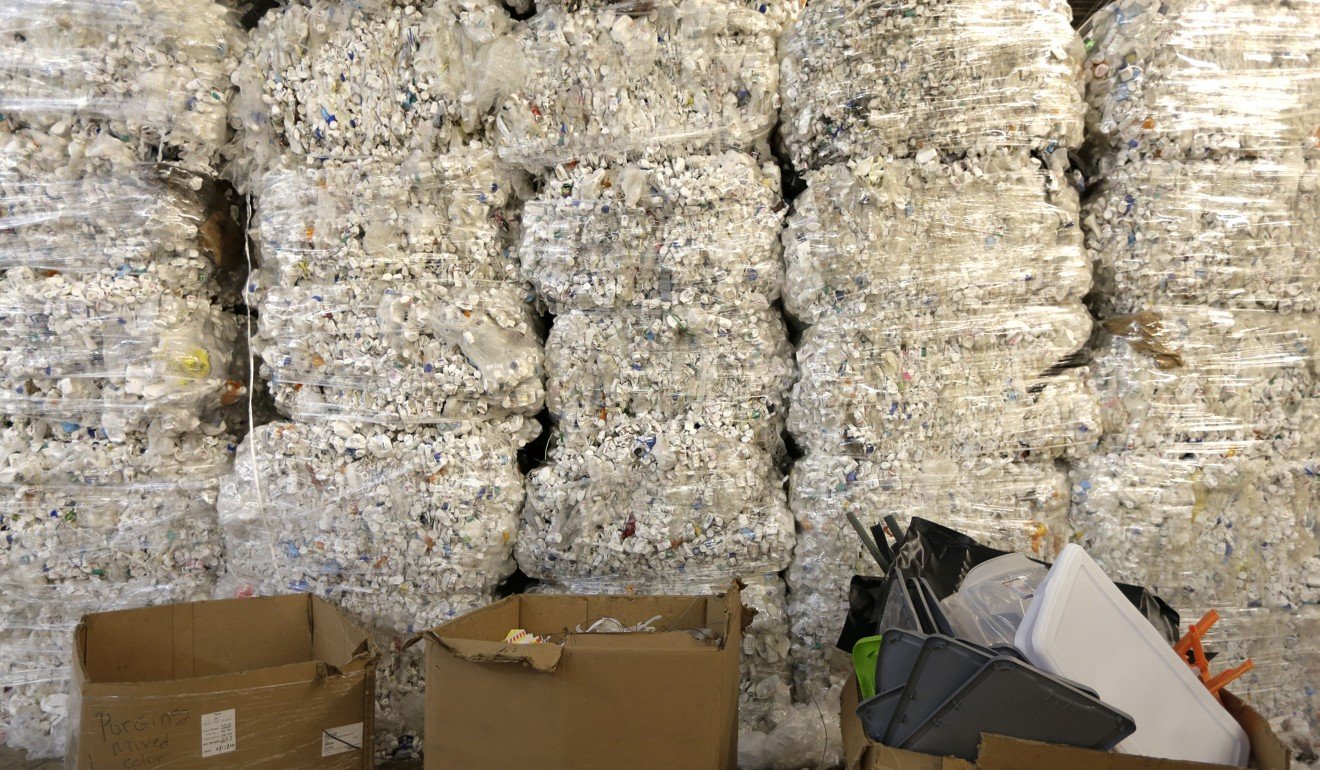
China phased in import restrictions on scrap paper and plastics in January last year. Photo: AP
The halt on China’s imports of waste paper and plastic that has disrupted US recycling programmes has also spurred investment in American plants that process recyclables.

US paper mills are expanding capacity to take advantage of a glut of cheap scrap. Some facilities that previously exported plastic or metal to China have retooled so they can process it themselves.

And in a twist, the investors include Chinese companies that are still interested in having access to waste paper or flattened bottles as raw material for manufacturing.

“It’s a very good moment for recycling in the United States,” said Neil Seldman, co-founder of the Institute for Local Self-Reliance, a Washington-based organisation that helps cities improve recycling programmes.
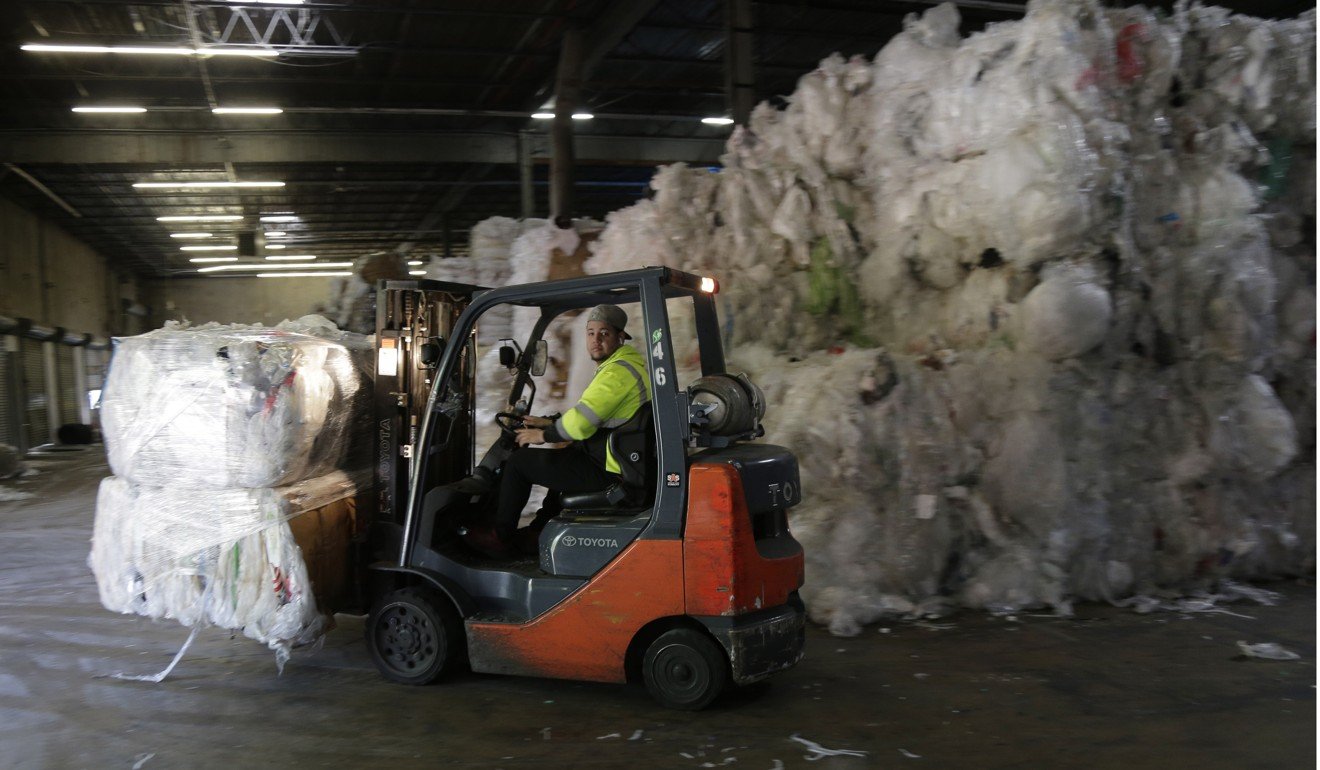
Global scrap prices plummeted in the wake of China’s ban. Photo: AP

China, which had long been the world’s largest destination for paper, plastic and other recyclables, phased in import restrictions in January last year.

Global scrap prices plummeted, prompting waste-hauling companies to pass the cost of sorting and baling recyclables on to municipalities. With no market for the waste paper and plastic in their blue bins, some communities scaled back or suspended kerbside recycling programmes. But new domestic markets offer a glimmer of hope.

How China’s ban on plastic waste imports became an ‘earthquake’

About US$1 billion in investment in US paper processing plants has been announced in the past six months, according to Dylan de Thomas, a vice-president at The Recycling Partnership, a non-profit organisation that tracks and works with the industry.

Hong Kong-based Nine Dragons, one of the world’s largest producers of cardboard boxes, has invested US$500 million over the past year to buy and expand or restart production at paper mills in Maine, Wisconsin and West Virginia.

Brian Boland, vice-president of government affairs and corporate initiatives for ND Paper, Nine Dragons’ US affiliate, said that as well as making paper from wood fibre, the mills would add production lines turning more than a million tonnes of scrap into pulp to make boxes.

“The paper industry has been in contraction since the early 2000s,” he said. “To see this kind of change is frankly amazing. Even though it’s a Chinese-owned company, it’s creating US jobs and revitalising communities like Old Town, Maine, where the old mill was shuttered.”

Hong Kong-based Nine Dragons has invested US$500 million in paper mills in Maine, Wisconsin and West Virginia. Photo: Handout

The Northeast Recycling Council said in a report last autumn that 17 North American paper mills had announced increased capacity to handle recyclable paper since the Chinese cut-off.

Another Chinese company, Global Win Wickliffe, is reopening a closed paper mill in Kentucky. Georgia-based Pratt Industries is constructing a mill in Wapakoneta, Ohio that will turn 425,000 tonnes of recycled paper per year into shipping boxes.

Plastics also had a lot of capacity coming online, de Thomas said, noting new or expanded plants in Texas, Pennsylvania, California and North Carolina that turned recycled plastic bottles into new bottles.

Chinese companies were investing in plastic and scrap metal recycling plants in Georgia, Indiana and North Carolina to make feedstocks for manufacturers in China, he said.

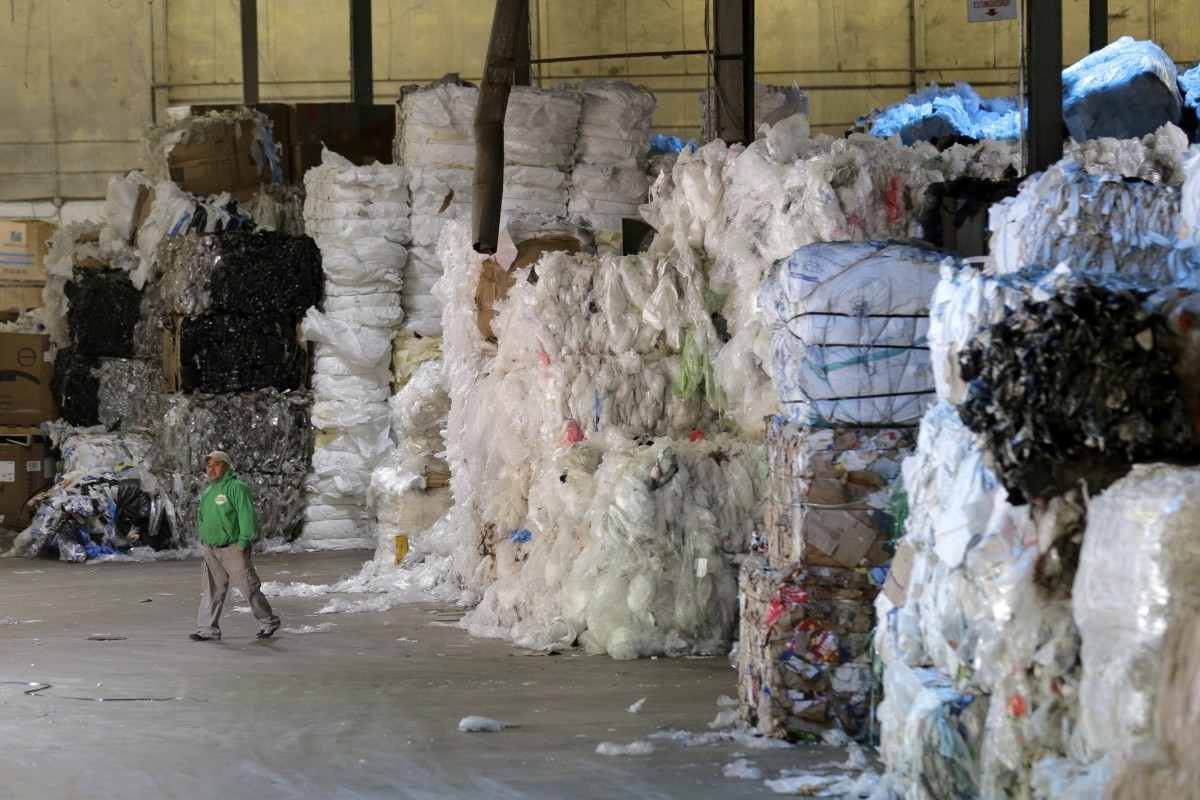
GDB International processes bales of scrap plastic film into pellets to make garbage bags and plastic pipe. Photo: AP

In New Brunswick, New Jersey, the recycling company GDB International exported bales of scrap plastic film such as pallet wrap and grocery bags for years. But when China started restricting imports, company president Sunil Bagaria installed new machinery to process it into pellets he sells profitably to manufacturers of garbage bags and plastic pipe.

The imports cut-off that China called “National Sword” was a much-needed wake-up call to his industry, he said.

“The export of plastic scrap played a big role in easing recycling in our country,” Bagaria said. “The downside is that infrastructure to do our own domestic recycling didn’t develop.”

China to suspend checks on US scrap metal shipments, halting imports

That was now changing, but he said far more domestic processing capacity would be needed as a growing number of countries restricted scrap imports.

“Ultimately, sooner or later, the society that produces plastic scrap will become responsible for recycling it,” he said.

It has also yet to be seen whether the new plants coming on line can quickly fix the problems for municipal recycling programmes that relied heavily on sales to China to get rid of piles of scrap.

About US$1 billion in investment in US paper processing plants has been announced in the past six months, according to a non-profit group that tracks the industry. Photo: AP

“Chinese companies are investing in mills, but until we see what the demand is going to be at those mills, we’re stuck in this rut,” said Ben Harvey, whose company in Westborough, Massachusetts, collects trash and recyclables for about 30 communities.

He had a car park filled with stockpiled paper a year ago after China closed its doors, but eventually found buyers in India, Korea and Indonesia.

China to collect applications for scrap metal import licences from May

Keith Ristau, chief executive of Far West Recycling in Portland, Oregon, said most of the recyclable plastic his company collected used to go to China but now most of it went to processors in Canada or California.

To meet their standards, Far West invested in better equipment and more workers at its material recovery facility to reduce contamination.

In Sarepta, Louisiana, IntegriCo Composites is turning bales of hard-to-recycle mixed plastics into railroad ties. It expanded operations in 2017 with funding from New York-based Closed Loop Partners.

“As investors in domestic recycling and circular economy infrastructure in the US, we see what China has decided to do as very positive,” said Closed Loop founder Ron Gonen.

Source: SCMP

01/03/2019

China appreciates U.S. return of Chinese relics, artifacts

BEIJING, March 1 (Xinhua) — China appreciates the return of 361 Chinese relics and artifacts by the United States, said a Foreign Ministry spokesperson Friday.

The remarks came as Lu Kang, the spokesperson of the Foreign Ministry, responded to a query about the return of the Chinese relics and artifacts by the United States.

The United States announced the return of 361 Chinese relics and artifacts to China at a ceremony held Thursday in the Eiteljorg Museum in Indianapolis, the U.S. state of Indiana.

The repatriation will lead to the return of the largest batch of relics and artifacts to China from the United States since 2009, when the two nations signed a memorandum of understanding to enhance cooperation in this regard.

“Cooperation in preservation of relics is an important part of people-to-people, cultural exchanges between China and the United States,” Lu said. “We’re willing to make concerted efforts with the United States to enhance exchange and cooperation in preservation of relics, and to make greater contribution to advancing preservation efforts of cultural heritage in the world.”

Source: Xinhua

Law of Unintended Consequences

continuously updated blog about China & India

ChiaHou's Book Reviews

continuously updated blog about China & India

What's wrong with the world; and its economy

continuously updated blog about China & India