Archive for ‘Indore’

10/04/2020

Coronavirus: Inside India’s busiest Covid-19 hospital

IndoreImage copyright GETTY IMAGES
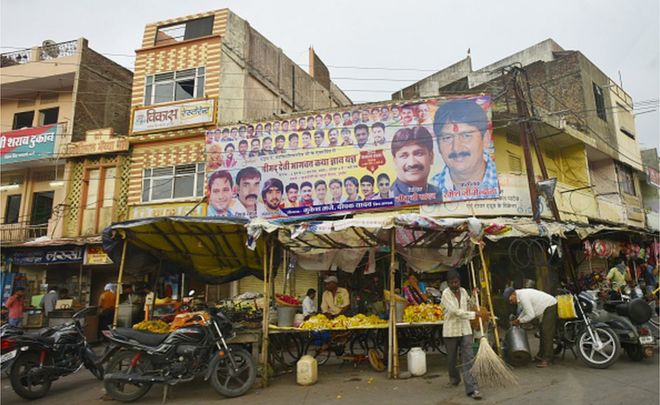
Image caption Indore is a bustling commercial city

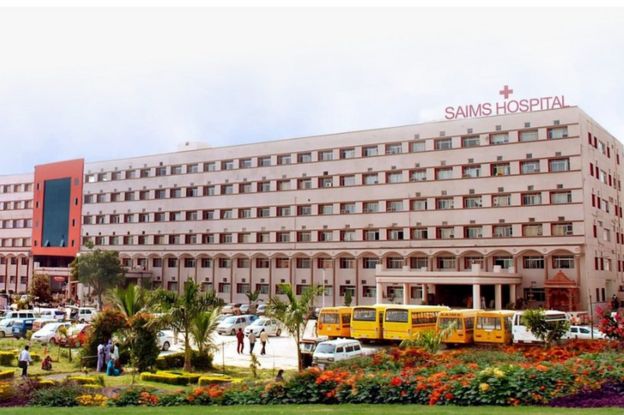
In early March, 40-year-old Ravi Dosi, a chest specialist in India, saw a baffling surge in patients with respiratory problems at outpatient clinics.

“There was almost a 50% jump in patients with upper respiratory issues and sore throat. They were not responding to antibiotics. Testing was still low and we didn’t really know what was going on,” Dr Dosi, who works at Sri Aurobindo Institute of Medical Sciences, a 1,156-bed private medical college in the central city of Indore, told me.

Less than a fortnight later, Dr Dosi began seeing an uptick in admissions of Covid-19 patients. Around the end of March, the hospital was receiving 28 infected patients every day.

They had dry cough, fever, and difficulty breathing. Their blood oxygen levels were low. They were reporting loss of taste and smell.

In the first wave of patients, nearly a dozen came from far-flung districts, more than 150km (93 miles) from Indore, a bustling commercial city in Madhya Pradesh state. The state has now become a hotspot, with nearly 400 confirmed infections out of the more than 6,400 infections and nearly 200 deaths across the country so far.

By the second week of April, Dr Dosi and his team of 100 doctors and nearly an equal number of nursing staff working 24/7 in three shifts, were treating 144 Covid-19 patients. (Thirty-one had been treated and sent home already.)

A total of 38 patients were in intensive care. Twenty-one of them were critical. There had been seven deaths. “We are handling the largest number of Covid-19 patients in India,” Vinod Bhandari, a surgeon and chairman of the hospital, told me.

Doctors now believe that the infection was spreading in the community long before the government admitted to it, and testing slowly ramped up. Until two weeks ago, Indian health authorities had been denying community transmission.
SAIMs Hospital Indore
Image caption The hospital in Indore has more than 140 patients

Now a new study by Indian Council of Medical Research (ICMR) using surveillance data from 41 labs in the country has hinted at community transmission: 52 districts in 20 states and union territories reported Covid-19 patients. Some 40% of the cases did not report any history of international travel or contact with a known case. (The survey was based on swabs collected from nearly 6,000 patients who tested positive between 15 February and 19 March.)

Back in the hospital in Indore, the doctors are battling the surge in infections.

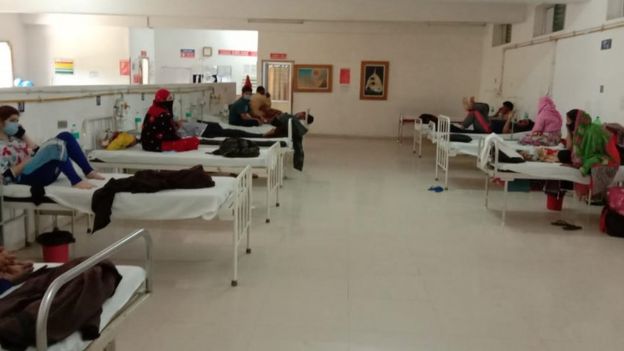
Three isolation wards spread over two floors floors are stacked with patients. (The hospital has earmarked 525 beds for Covid-19 patients.) Isolation wards have younger patients with mild infection, while elderly patients with more severe symptoms are in intensive care. The oldest patient is a 95-year-old man, and the youngest is a four-month-old boy.

The team of doctors handling patients includes chest specialists, anaesthetists, microbiologists, and dermatologists. There are patients with a lot of underlying medical conditions – diabetes, hypertension, even cancer – so all the specialists have been called in to help with the treatment.

Dr Dosi wakes up early, puts on protective gear – scrubs, face masks and shields, N95 masks, gowns, double gloves and shoe covers – before going on his rounds of the patients. Doctors say they are not facing a shortage of gear yet.

They are using 22 ventilators to help the critical patients breathe, and also providing oxygen supplies to others using nasal cannulas (nose prongs).

In the isolation wards, patients are given oral medication – antibiotics and hydroxychloroquine (commonly known as HCQ), an anti-malarial drug – and directed to maintain social distancing and wash their hands regularly.
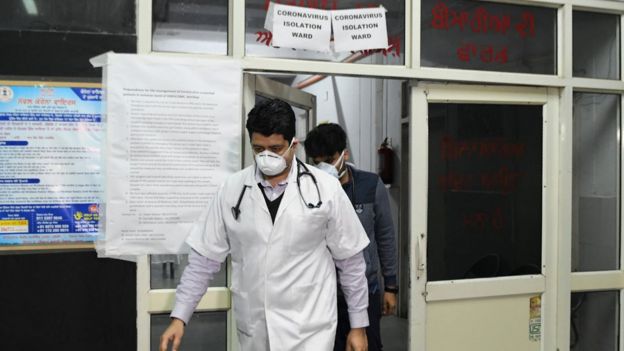
Isolation wards
Image caption The isolation wards are packed with patients

“I have never seen a challenge and crisis like this in my career. I have heard stories about an outbreak of plague in Surat [in 1994]. But this seems to be much bigger. The biggest challenge is to keep hopes alive and be positive,” says Dr Dosi.

Keeping hopes up for patients in isolation can be taxing. Three tests, say doctors, are being done for the infection – if the first test comes out positive, the patient remains in isolation for two weeks, and is tested twice on two days after the quarantine period. If the last two tests come back negative, the patient is discharged. If not, the patient has to stay in isolation for another two weeks. “It is a tough grind, mentally,” says one doctor.

Banner image reading 'more about coronavirus'
Banner

For the last three weeks, Dr Dosi has been living in the hospital, away from his wife, two sons and parents. His father is a retired pathologist. They communicate via hurried video calls, between his frantic trips to the isolation wards and intensive care.

I ask him when does he expect this to “get over”, so that he can go home.

“In a couple of weeks,” he says. “The lockdown should have helped to slow down the infection.”

Dr Dosi is alluding to the strict 21-day lockdown India imposed on 24 March to halt the spread of the infection.
migrant workerImage copyright GETTY IMAGES
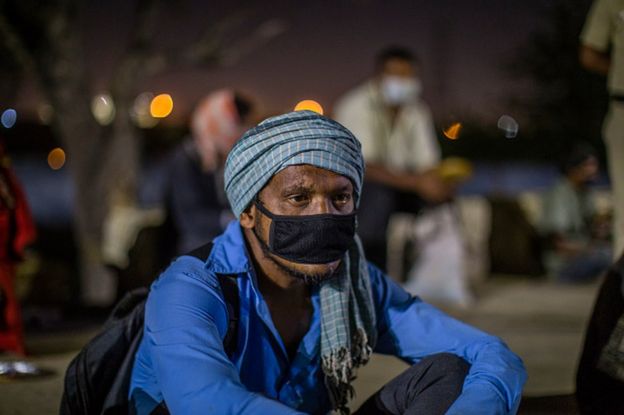
Image caption Health officials have been denying community transmission

Things are getting better, he says.

“I am getting 10 patients for admission in isolation wards, and two patients severe enough for intensive care every day now. Earlier this week, it was 50:50.”

It is possibly too early to hazard a guess about when admissions will slow down to single digits. As more people are tested, the number of patients can easily rise again.

It’s been unrelenting, Dr Dosi says.

Early, on Friday, I sent him a text to find out what was going on.

“Please. Have an emergency in ICU,” he replied.

Source: The BBC
04/04/2020

Coronavirus: India doctors ‘spat at and attacked’

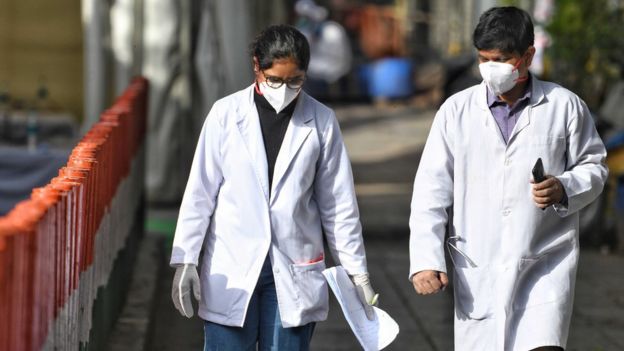
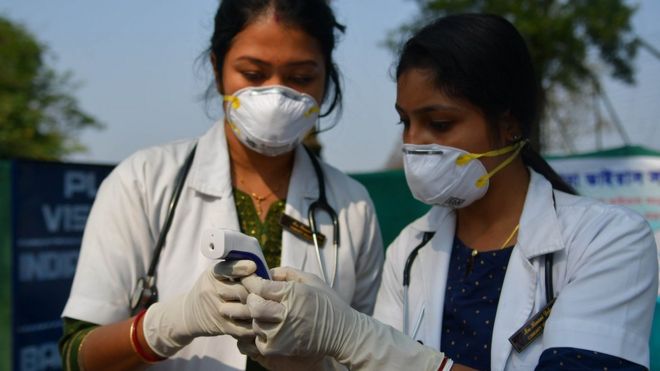
File photo showing two Indian doctors checking a thermometerImage copyright MAJORITY WORLD
Image caption Indian doctors have been working extra hours to halt the spread of the coronavirus

Several healthcare workers in India have been attacked as they battle to stop the spread of the coronavirus.

Reports say doctors have been spat at and chased away from homes, and that in one case patients directed abusive and vulgar language towards female nurses.

Some physicians and their families have also been ostracised by their neighbours because of their exposure to patients infected with Covid-19.

India has reported more than 2,300 cases and at least 50 people have died.

One video, which has gone viral, showed a mob throwing stones at two female doctors wearing personal protective equipment in the central city of Indore.

The doctors had gone to a densely-populated area to check on a woman suspected of having Covid-19 when they came under attack.

Presentational white spaceDespite being injured, one of the doctors seen in the video, Zakiya Sayed, said the incident “won’t deter me from doing my duty”.

“We were on our usual round to screen suspected cases,” she told the BBC. “We never thought that we would be attacked.”

“I had never seen scenes like that. It was frightening. We somehow fled from the mob. I am injured but not scared at all.”

Dr Sayed added: “We had no reason to suspect that people would be agitated against medical teams.”

“We are working to keep people safe. We had information about a person coming in contact with a Covid-19 patient. We were talking to the person when residents got agitated and attacked us.”

File photo showing two Indian doctorsImage copyright HINDUSTAN TIMES
Image caption Doctors have been abused and attacked in different parts of India

Seven people have been arrested in connection with the incident.

Dr Anand Rai, who is also a part of the Covid-19 taskforce in Indore, told the BBC: “Nothing can justify the attack against medical team. But it happened in a Muslim-dominated area where there is general distrust against the government.”

He said the area had recently witnessed protests against a controversial new citizenship law.

“So that anger spilled over and took the form of this attack. But whatever maybe the reason, nothing can justify violence, especially against doctors during a national health emergency,” he added.

Banner image reading 'more about coronavirus'
Banner

Meanwhile, a hospital in the northern city of Ghaziabad also witnessed unruly scenes on Thursday.

The hospital put at least 21 people in quarantine after they attended a religious event that has been linked to hundreds of positive cases across the country.

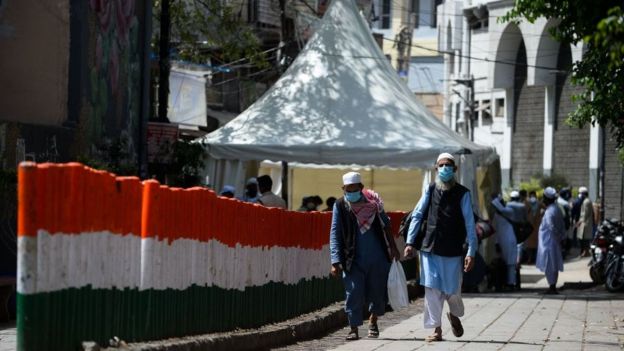
Thousands who attended the gathering in Delhi, organised by Islamic preaching group Tablighi Jamaat, have been put in quarantine, and authorities are still tracing others. It is believed that the infections were caused by preachers who attended the event from Indonesia.

At the Ghaziabad hospital, some of the quarantined attendees allegedly used abusive and vulgar language against members of staff.

Men wearing protective facemasks walk to board a special service bus taking them to a quarantine facility amid concerns about the spread of the COVID-19 coronavirus in Nizamuddin area of New Delhi on March 31, 2020.Image copyright GETTY IMAGES
Image caption Almost 400 cases of Covid-19 have been traced to a Tablighi Jamaat event in Delhi

“Some were walking naked in the hospital ward and harassing women doctors and nurses,” a doctor who works at the hospital told the BBC. “They kept asking for cigarettes and tobacco.”

A senior police officer in the city told the BBC that cases had been registered against some people after doctors filed a complaint.

“Registering cases was the last resort. Police are still trying to make them understand the severity of the situation,” he said.

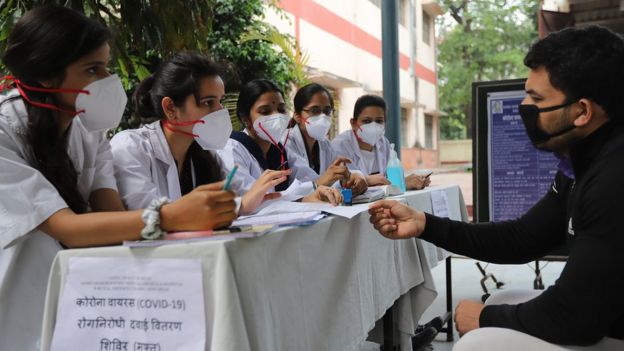
A man speaks to healthcare workers in IndiaImage copyright SOPA IMAGES
Image caption Doctors and nurses have asked people to follow their advice and not panic

Similar incidents have been reported in neighbouring Delhi.

Some attendees of the Tablighi Jamaat event who are being held in a quarantine facility run by the railways are said to have spat at doctors and misbehaved.

Deepak Kumar, spokesman for Northern Railways, said the situation there was now under control.

“The attendees have been counselled and they are now co-operating with the staff,” he said.

Delhi’s state government has reportedly written to the police, requesting more security for medical staff.

Reports of attacks on doctors and nurses have also come from the southern city of Hyderabad and the western city of Surat.

A doctor who was treating coronavirus patients is Hyderabad’s Gandhi Hospital was attacked on Wednesday.

Police have promised the doctor that “strict action will be taken against the culprits”.

File photo showing Indian doctorImage copyright NARINDER NANU
Image caption Prime Minister Narendra Modi has said that doctors are “front-line soldiers”

But it is not just a work where medical workers are facing discrimination. It has followed them home.

One doctor, who did not wish to be identified, said she felt “extremely disheartened when I learnt that even my neighbours think that me and my family shouldn’t be allowed to live in the building”.

“We want our families to be safe. But we are being discriminated for doing our job.”

“A number of doctors have tested positive across India and that shows how tough our job is at the moment. And that is why we need everybody’s support to win this war against coronavirus.”

She added: “We are following all safety protocols. We are not meeting even our families and that is stressful.”

“But seeing this open discrimination just breaks my heart. But we will go on because there is really no other option.”

Source: The BBC

Law of Unintended Consequences

continuously updated blog about China & India

ChiaHou's Book Reviews

continuously updated blog about China & India

What's wrong with the world; and its economy

continuously updated blog about China & India