Archive for ‘inspires’

22/07/2019

Mulan sparks different questions about Chinese identity in East and West

  • Delicate balance for Disney in its portrayal of China’s classic tale of female heroism
  • Too Americanised, or pandering to a mainland Chinese audience?
Chinese-American actress Crystal Liu Yifei plays the title role in Disney’s Mulan. Photo: Disney
Since the trailer for Disney’s live-action film Mulan was released last weekend, both mainland Chinese in the East and the diaspora in the West have been abuzz about their cultural identity and its representation in Hollywood – albeit for different reasons.
Chinese viewers have, on one hand, been enthusiastic about the casting of Chinese-American actress Crystal Liu Yifei in the lead role and the chance for a seemingly more “authentic” Chinese story to be told on the global stage.
On the other hand, they have pointed out historical inaccuracies – such as the southern Chinese setting when the source material states that Mulan is from the north – and expressed concerns that the plot has been too “Americanised”.
Meanwhile, many Chinese-Americans were surprised to discover upon watching the trailer that the beloved 1998 animation had changed beyond recognition – most notably with the absence of talking dragon Mushu and male love interest Li Shang. Some also felt that the new film pandered too much to a mainland Chinese audience.

“The idea of a mythic mash-up of China [in the new film] … seems to play to the idea of a unified, singular China, an artistic representation of the one-China policy, which is troubling to me,” said Jeannette Ng, a British sci-fi author with Hong Kong heritage.

“A lot of the time, this conversation acts like the only Chinese people who matter are the ones who live in mainland China – that they are the only truly authentic ones and everyone else is too Westernised to count,” she said.

The online discussion indicates the delicate balance Hollywood interpretations of Chinese classics have to strike in portraying Chinese versus American values, as big US-China co-productions try their hardest to integrate the two for bigger global box office takings.

Despite ticket sales in China falling 3.6 per cent in the first half of 2019, owing to tightened government censorship, China is still projected to overtake the US box office next year, according to a recent report by professional services firm PwC.

Disney has tried hard to make the new film more true to its ancient Chinese source material, with a detailed – if inaccurate – historical setting featuring the ancient tulou roundhouses of the southeastern province of Fujian, and a star-studded, all-Asian cast with several icons of Chinese cinema such as Jet Li, Hong Kong actor Donnie Yen and Gong Li.

Disney’s live-action version of Mulan is truer to the ancient source material. Photo: Handout

“Disney’s tent pole movies are aiming at a global audience. That being said, given that China is the largest international market and the story is based on a Chinese folk tale, Disney will definitely take the Chinese audience’s taste into consideration,” said a Chinese film producer, who asked to remain anonymous, at a major US studio in Beijing.

“However, this is also a double-edged sword, as people tend to be more picky when they see things they are familiar with.”

Indeed, several Chinese media think pieces have questioned whether elements of the original legend had become too Americanised in the film, leading to an inauthentic representation of a beloved Chinese heroine.

For instance, the Disney trailer suggests that Mulan joins the army to escape an arranged marriage, breaking away from family traditions and establishing her independence as a woman unbound by gender roles.

But in the original folk song Ballad of Mulan, on which the film is based, she volunteers to take the place of her ageing father in the army – making her a symbol of filial piety, courage and patriotism in traditional Chinese culture.

Some critics say Mulan has been Americanised. Photo: YouTube

In a widely shared analysis discussing whether Disney’s Mulan was a feminist icon, Peking University Press wrote: “Perhaps this is a cross-cultural creative misunderstanding that reflects the core differences between Chinese and Western culture. If Mulan is seen as a feminist symbol, I fear this may be wishful thinking.”

However, both Chinese-Americans and Chinese nationals agree that the film, slated for release in March, is an inspiring tale for young girls.

“I feel like the people who are criticising the film are too attached and focused on the nostalgia factor. They are not seeing the bigger picture and the positive implications of this movie,” said Alex Diep, a 23-year-old American of Vietnamese-Chinese descent.

“They are disregarding that this film gives an opportunity for young Asian girls to look up to Mulan and see her as a role model,” he said.

Some Chinese have interpreted it as an inspiring fable of female strength and liberation, especially when ingrained patriarchal values and government initiatives such as the one-child policy have restricted women’s rights over the years.

“[Mulan] remains one of the very few fighters and not conventionally feminine figures in the Disney princess canon,” Ng said.

“[T]his is some sort of feminism education for a single-child generation in China that girls can fight like men do,” tweeted Chinese journalist Li Jing.

Chinese-Americans are also optimistic that it will be a sure-fire win for Asian representation on the big screen, especially after the success of last year’s romantic comedy Crazy Rich Asians.

“[Critics of the trailer] are disregarding the fact that this movie is another opportunity to showcase Asian people in a movie where we are not perceived as a negative stereotype,” Diep said.

Others feel that the film can help build a bridge between East and West.

“Mulan is a Chinese story. It comes from a completely different culture, one which I’m not at all convinced that Hollywood, or the West at large, truly understands yet,” said

New Yorker Jonathan Pu, who is of Taiwanese descent. He said he enjoyed the lighthearted animation, but that it did not define his expectations for the remake.

“If Disney can stay true to the source material and convey [filial piety] in a way that even just some of the audience can grasp, then it will go a long way towards building bridges,” Pu said.

Ultimately, the success of this American spin on Chinese culture will rest on box office sales, which Disney hopes will exceed the 1998 animation that flopped in mainland cinemas. Recent Disney live-action remakes have had a mixed reception in China – Dumbo flopped in March, while The Lion King did moderately well on its release last weekend.

“I’m sure there will be a mixed response when the movie is released but it should have enough buzz and do well,” said the Beijing film producer.

“I hope it will be able to convey the spirit of Mulan and inspire millions of young girls.”

Source: SCMP
07/07/2019

Interview: President Xi’s letter inspires more contributions to Japan-China friendship — Japanese youth

TOKYO, July 6 (Xinhua) — “When I wrote the letter, I didn’t expect to receive a reply from President Xi Jinping. I was surprised and honored,” said Daichi Nakashima with excitement.

The 27-year-old Japanese man said he had received the reply from Xi before the Chinese leader attended the Group of 20 summit in Osaka. “When my friend told me on WeChat, I was shocked!” Nakashima said in an exclusive interview with Xinhua.

Nakashima had several times been a winner in the Panda Cup Japan Youth Essay Contest. Founded in 2014, the competition is co-sponsored by People’s China magazine, the Chinese embassy in Japan and the Japan Science Society, aiming to help Japanese youths have a more comprehensive, objective and rational understanding of China.

Nakashima began learning Chinese in college and has participated in several short-term exchange programs in China.

When talking about his original intention of writing a letter to Xi, Nakashima said, “I wanted to convey the warmth and friendship of the Chinese people I felt during my visit to China and the importance of mutual understanding and exchanges between Japanese and Chinese youths.”

Xi, in his reply, said he was glad to see that Nakashima has been studying the Chinese language and literature for a long time and, by participating in essay contests and exchange activities in China, has learned more about China and strengthened his bonds with Chinese friends.

“It’s the best affirmation and recognition of my persistence for so many years. I’m very touched,” Nakashima said.

Born in 1992, Nakashima first learned about China through classics like “Romance of the Three Kingdoms” and “Outlaws of the Marsh,” but it was a two-week trip to Tianjin in 2011 that gave him a glimpse of a vibrant China.

After that, he visited Beijing, Sichuan, Guangdong and other places. Last year, he went to Fudan University in Shanghai and studied for half a year.

Nakashima found that Chinese youth are very familiar with Japanese anime, music and so on, while Japanese youngsters do not know much about China. Their impression of China is restricted to Chinese tourists, “not knowing about Chinese movies and popular music,” he said.

Nakashima said he believes that the friendship between the two peoples needs more bilateral youth exchanges, as President Xi said in the letter.

Noting that China and Japan are close neighbors separated by only a narrow strip of water, Xi said the friendship between the two countries is rooted in the people, and that the future of the friendship between the two peoples is in the hands of the young people.

Xi said he hopes that the youth of China and Japan will strengthen exchanges and mutual learning, enhance mutual understanding, develop long-lasting friendships, and contribute to creating an even brighter future for bilateral relations.

Xi also encouraged Nakashima to continue to promote the China-Japan friendship. Nakashima said this is an encouragement, a mission and also motivation for him to move forward.

Nakashima graduated with a master’s degree in April and has begun to work in a publishing house. He has been determined to introduce excellent works such as Chinese picture books and science fiction to Japan, so that Japanese teenagers can feel the affinity between the two countries.

“I have met many friendly Chinese people and made many friends that are very important to me. In the future, I will continue to make efforts to help Japanese and Chinese youth deepen mutual understanding,” he said.

Source: Xinhua

17/06/2019

Polar bear’s fur inspires Chinese breakthrough in super insulator for space

  • Synthetic material that mimics and improves on nature could be used in China’s hypersonic space plane
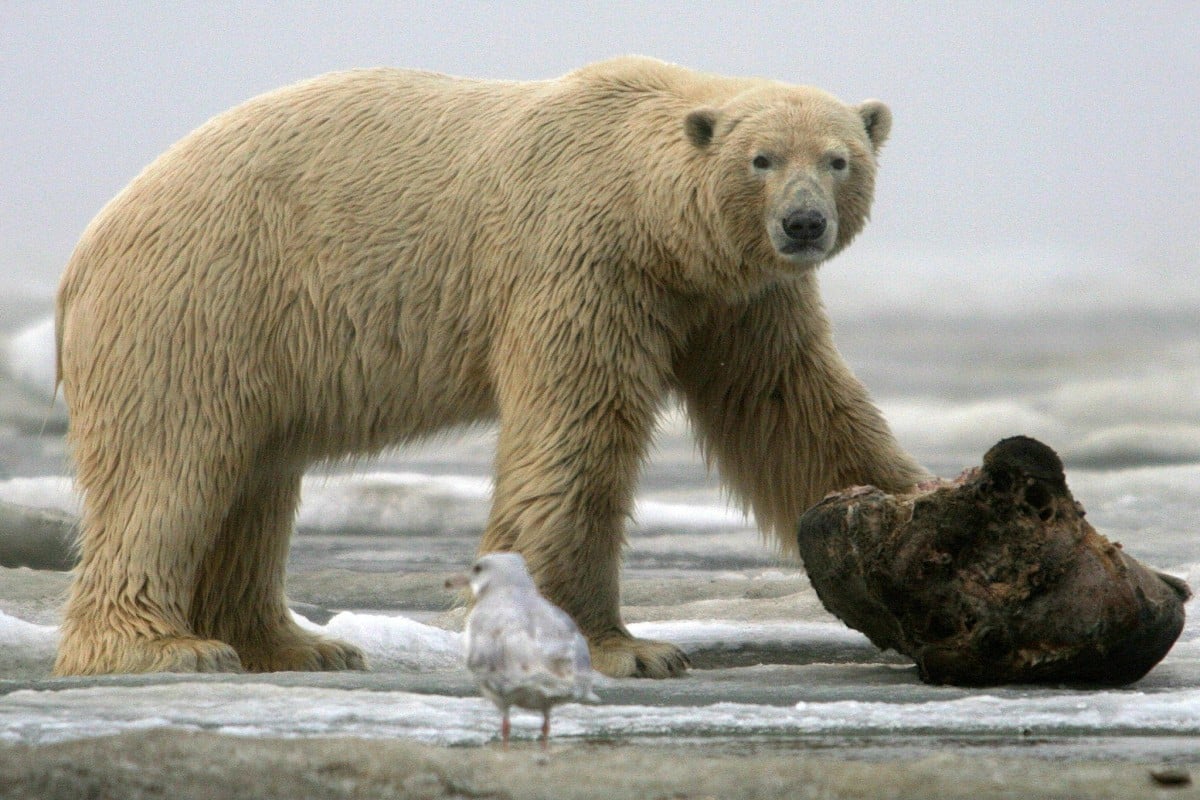
Chinese researchers have developed a super insulator based on the unique properties of polar bear fur. Photo: TNS
What can withstand heat of more than 1,000 degrees Celsius (1,832 Fahrenheit), maintain its elasticity in extreme cold, and dry almost instantly after being submerged in water?
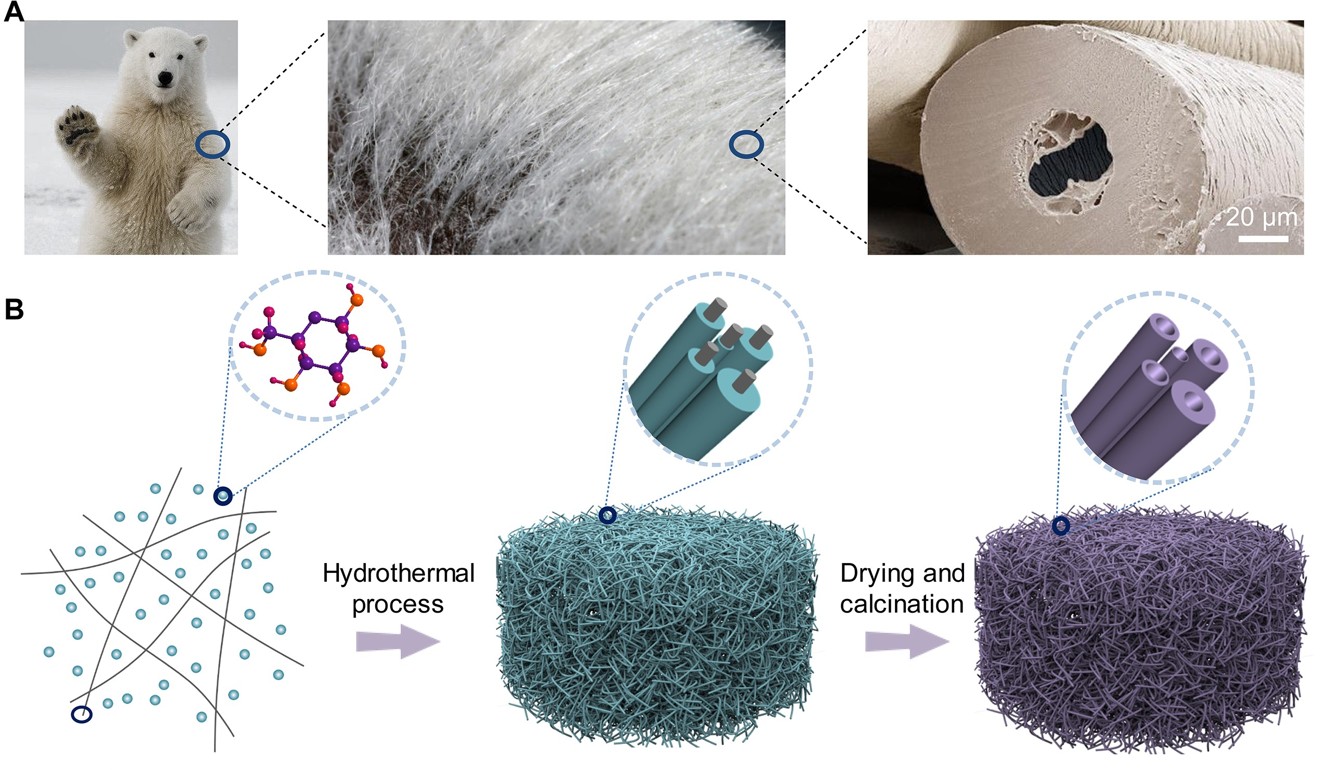
The answer is a new synthetic fur which has been developed by Chinese scientists, who set out to mimic – and improve upon – the unique properties of the polar bear’s coat.

The team, led by Professor Yu Shuhong, was at first simply curious to know what made the polar bear so comfortable and successful in the unforgiving environment of the Arctic.

In their laboratory in Hefei, in the southeastern province of Anhui, they studied polar bear hair with a high-definition microscope and found a unique difference compared to the hair of human beings and other mammals.
Chinese researchers have wrapped a carbon material around a nanowire, which is then removed, to mimic a polar bear’s unique hollow hair, which could have applications for the aerospace industry. Photo: Handout

It was hollow inside. What’s more, they observed the tubelike hairs intertwined with one another, forming a random network like a bird’s nest. Using theoretical models on a powerful computer, the researchers confirmed that the structure was an efficient heat insulator.

The only drawback was its fragility and – according to their research paper in the latest issue of online science journal Chem – the researchers have managed to develop a synthetic version strong enough to withstand being pressed one million times during testing.

The new material was lighter than any heat insulation product in use today, with one cubic metre weighing just 8kg (17.6lbs) and might have applications in many areas, including the hypersonic space plane, under development in China for low-cost transport between space station and Earth, the researchers said.

Liu Jianwei, professor with the chemistry department at the University of Science and Technology of China and a co-author of the paper, said several research institutes and aerospace companies had been in contact to discuss the possibility of mass production.

“It is a super-strong, super-light heat insulator that can be used in hostile environments,” Liu said.

“To find a new material that can be used in critical engineering projects, we needed to make it stronger. We needed to surpass nature.”

Chinese university is first to build and test own hypersonic plane
The researchers replaced the organic substance of the hair with a carbon material and used it to coat a long, fine thread known as a nanowire which was then removed through a series of physical and chemical processes, leaving a dark-coloured, spongy “fur” about the size of a thumb.
According to their study, the new material outperformed natural polar bear hair in nearly all aspects from physical strength to heat insulation. The next challenge is to develop a process that can produce the material at a scale suitable for industrial use.
At the moment, the thumb-sized sample takes about a week to form and, said Liu, there were still some issues to be resolved before it could be mass produced, including building processing equipment at a much larger scale than what is available in the laboratory. Another challenge will be to simplify and speed up the manufacturing process.
Source: SCMP
Law of Unintended Consequences

continuously updated blog about China & India

ChiaHou's Book Reviews

continuously updated blog about China & India

What's wrong with the world; and its economy

continuously updated blog about China & India