Archive for ‘Intellectual property’

19/10/2019

China’s door will ‘only open wider’, Xi Jinping tells delegates at Qingdao Multinationals Summit

  • ‘Only when China is good, can the world get better,’ president says in congratulatory letter read out at launch of event to promote global trade
  • Summit opens two weeks after South Korean giant Samsung closes its last factory in mainland China with the loss of thousands of jobs
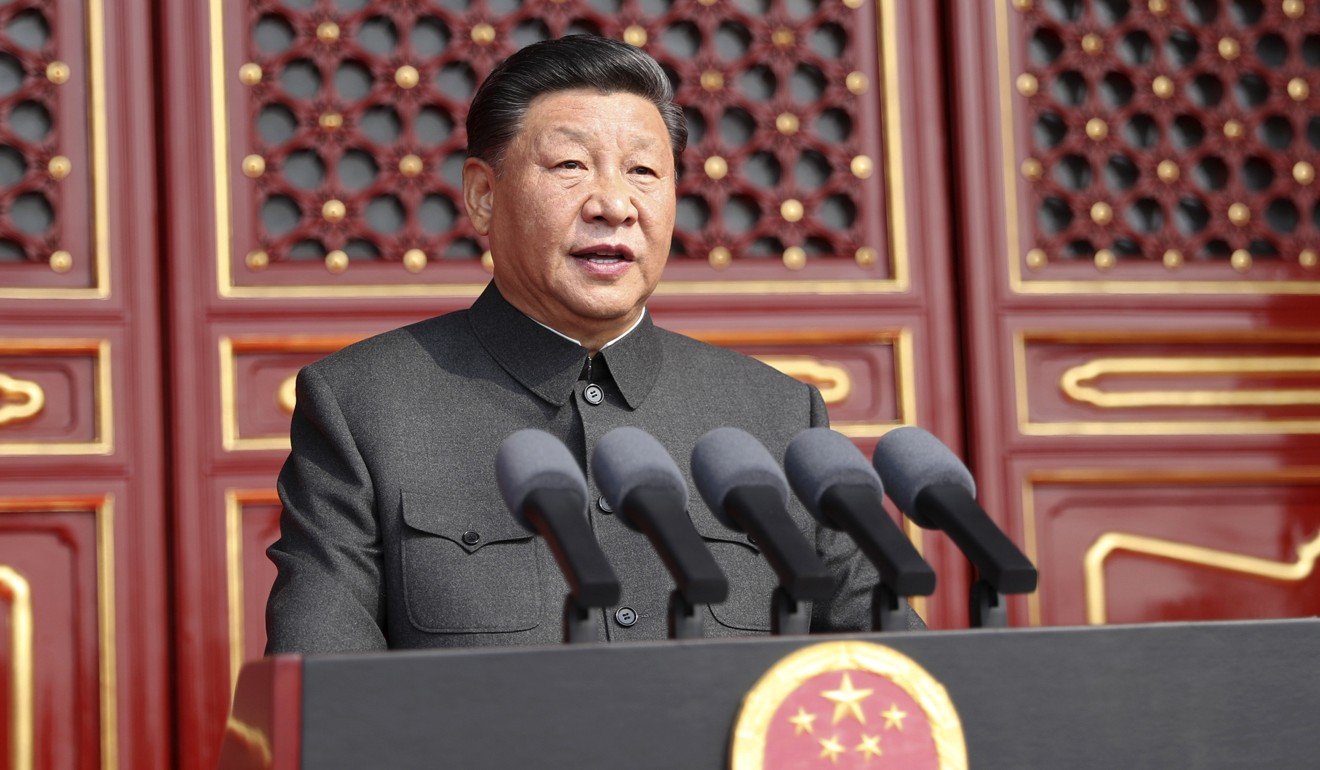
Xi Jinping has praised multinational companies for the role they have played in China’s opening up over the past four decades. Photo: AFP
Just a day after China reported its slowest ever quarterly economic growth,

President Xi Jinping

on Saturday reiterated his promise to keep opening up the nation’s markets to companies and investors from around the world.

“The door of China’s opening up will only open wider and wider, the business environment will only get better and better, and the opportunities for global multinational companies will only be more and more,” he said in a congratulatory letter read out by Vice-Premier Han Zheng at the inaugural Qingdao Multinationals Summit in the east China city.
The two-day event, which ends on Sunday, was organised by China’s commerce ministry and the provincial government of Shandong with the aim, according to its website, of giving multinational companies “the opportunity to articulate their business values and vision” and “promote cooperation with host countries”.

In his letter, Xi praised multinational companies for the role they had played in China’s opening up and reform over the past four decades, describing them as “important participants, witnesses and beneficiaries”.

China was willing to continue opening up to benefit not only itself but the world as a whole, he said.

“Only when the world is good, China is good. Only when China is good, can the world get better.”
Despite its upbeat tone, Xi’s message comes as Beijing is facing intense scrutiny from the international business community over its state-led economic model – one of the main bones of contention in its trade war with the US – and its attempts to prevent foreign firms from speaking out on issues it deems too sensitive, from Hong Kong to human rights.
Foreign firms have also long complained about the barriers they face when trying to access China’s markets and the privileged treatment it gives to state-owned enterprises. Even though Beijing has promised to reform its state sector, foreign businesses have complained of slow progress, and just last month the European Union Chamber of Commerce urged the EU to take more defensive measures against China’s “resurgent” state economy.
Xi promised “more and more” opportunities for global firms. Photo: AP

Sheman Lee, executive director of Forbes Global Media Holding and CEO of Forbes China, said at the Qingdao summit that foreign firms were facing a difficult trading environment in the world’s second-largest economy.

“Multinationals have seen their growth in China slow in recent years because of the growing challenge from local firms, a gradually saturating market and rising operation costs,” he said.

Craig Allen, president of the US-China Business Council, said that many multinational companies were reluctant to release their best products in China out of fear of losing their intellectual property.

China still not doing enough to woo foreign investment

In his letter, Xi said that over the next 15 years, the value of China’s annual imports of goods would rise beyond US$30 trillion, while the value of imported services would surpass US$10 trillion a year, creating major opportunities for multinational companies.

China would also reduce tariffs, remove non-tariff barriers and speed up procedures for customs clearance, he said.

Commerce Minister Zhong Shan said at the opening ceremony that China would also continue to improve market access and intellectual property protection.

The country supported economic globalisation and would safeguard the multilateral trade system, he said, adding that it was willing to work with the governments of other countries and multinational corporations to promote economic globalisation.
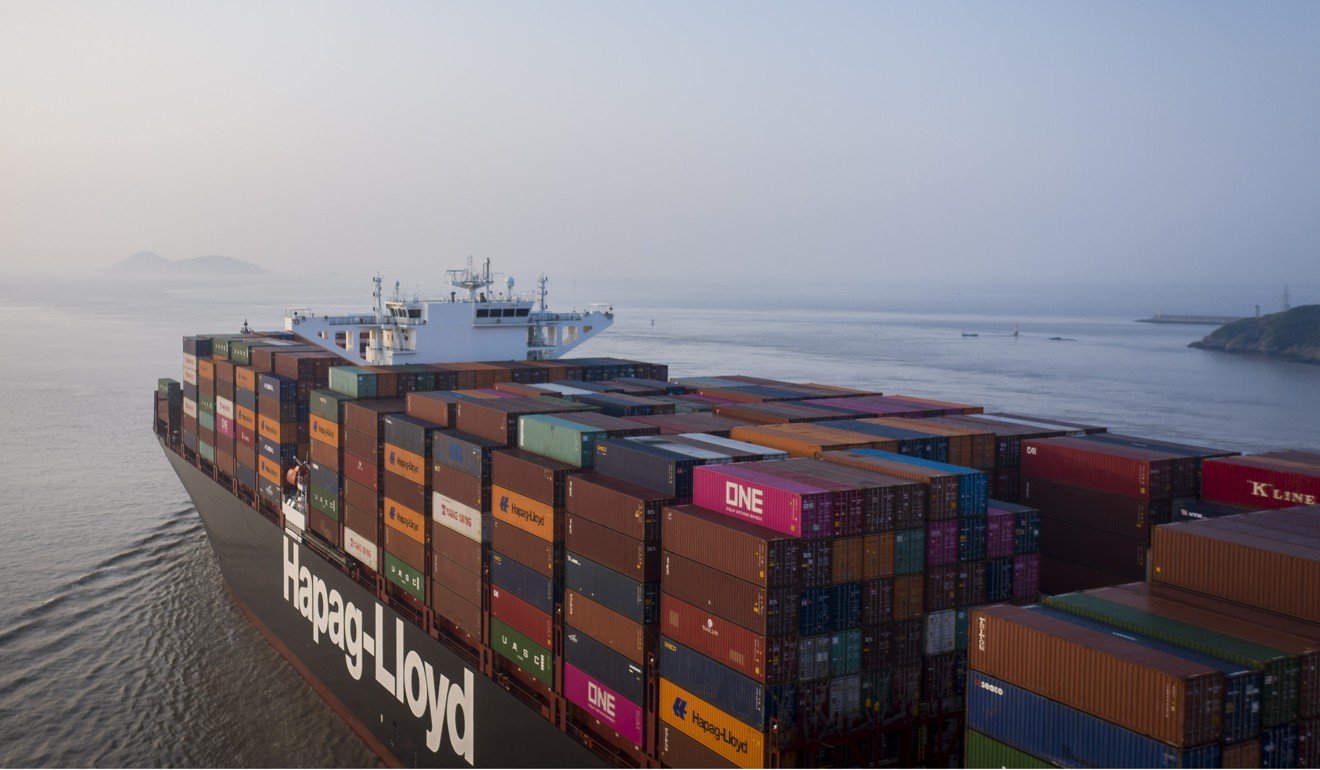
Xi Jinping says the value of China’s annual goods imports will rise beyond US$30 trillion over the next 15 years. Photo: Bloomberg
The promise to continue to open up China’s markets came after the State Council
– the nation’s cabinet – made exactly the same pledge at its weekly meeting on Wednesday.
After the latest round of trade war negotiations in Washington, Beijing said it had achieved “substantive progress” on intellectual property protection, trade cooperation and technology transfers, all of which have been major bones of contention for the United States.
Despite its pledge to welcome multinational companies into its market, China is in the process of creating a list of “unreliable foreign entities” it considers damaging to the interests of Chinese companies. The roster, which is expected to include FedEx, is seen as a response to a similar list produced earlier by the United States.
Xi’s gesture would also appear to have come too late for South Korean multinational 
Samsung Electronics

, which announced on October 4 it had ended the production of smartphones at its factory in Huizhou, Guangdong province – its last in China – with the loss of thousands of jobs.

Source: SCMP
16/10/2019

China, Singapore agree to enhance BRI, trade cooperation

CHINA-CHONGQING-HAN ZHENG-SINGAPORE-BILATERAL COOPERATION (CN)

Chinese Vice Premier Han Zheng, also a member of the Standing Committee of the Political Bureau of the Communist Party of China Central Committee, meets with Singaporean Deputy Prime Minister Heng Swee Keat in southwest China’s Chongqing, Oct. 15, 2019. (Xinhua/Liu Weibing)

CHONGQING, Oct. 15 (Xinhua) — China and Singapore on Tuesday announced that the upgraded version of the China-Singapore Free Trade Agreement will take effect on Oct. 16.

The two sides made the announcement after four bilateral cooperation mechanism meetings co-chaired by Chinese Vice Premier Han Zheng and Singaporean Deputy Prime Minister Heng Swee Keat in Chongqing.

The four meetings were the 15th China-Singapore Joint Council for Bilateral Cooperation Meeting, the 20th China-Singapore Suzhou Industrial Park Joint Steering Council Meeting, the 11th China-Singapore Tianjin Eco-City Joint Steering Council Meeting and the third China-Singapore (Chongqing) Demonstration Initiative on Strategic Connectivity Joint Steering Council Meeting.

During the meetings, the two sides comprehensively reviewed the implementation of the high-level consensus and the process of practical cooperation.

The two sides exchanged views on the high-quality joint construction of the Belt and Road, promoting regional development and cooperation, and upholding multilateralism and free trade, and made plans for the direction and focus of their cooperation in the future.

The two sides agreed to enhance connectivity, financial support, third-party cooperation, law and judicial cooperation under the framework of the Belt and Road Initiative, increase investment in the new land-sea corridor and promote upgrading of major cooperation projects.

The two sides agreed to improve regional free trade arrangements, promote regional integration, enhance multilateral economic and trade cooperation, and push forward the building of an open world economic system.

Prior to the four meetings, Han met with Heng.

Commending the positive development momentum of bilateral relations, Han, also a member of the Standing Committee of the Political Bureau of the Communist Party of China Central Committee, called on the two sides to implement the important consensus reached by the leaders of the two countries that have established strategic guidance of the development of bilateral relations. The two countries should make good use of the mechanism meetings to deepen cooperation in various fields, Han said.

“China’s reform will not stop, but will only accelerate. China’s door of opening-up will not be closed, but will only open wider,” said Han, adding that China welcomes Singapore to participate in its process of reform and opening-up in a larger scope, wider areas and at a deeper level.

Han said China and Singapore must work with each other to guard against the headwinds of unilateralism and protectionism, and resolutely safeguard the international system based on multilateralism and international laws, with the UN as its core.

Heng extended congratulations on the 70th anniversary of the founding of the People’s Republic of China and spoke highly of China’s great development achievements.

He said the friendship between Singapore and China has remained unshakable and become increasingly stronger over the years.

Heng said Singapore attaches great importance to the building of cooperation mechanisms and is ready to work with China to promote cooperation to a new height and to upgrade bilateral relations to a new level. Singapore stands ready to work with China to jointly safeguard the rules-based multilateral trading system and address global challenges.

After the mechanism meetings, Han and Heng witnessed the signing of a series of cooperation documents covering exchanges and training, technological innovation, smart city and intellectual property.

Source: Xinhua

27/09/2019

EU and Japan play ‘guardians of universal values’ in effort to challenge China’s Belt and Road Initiative

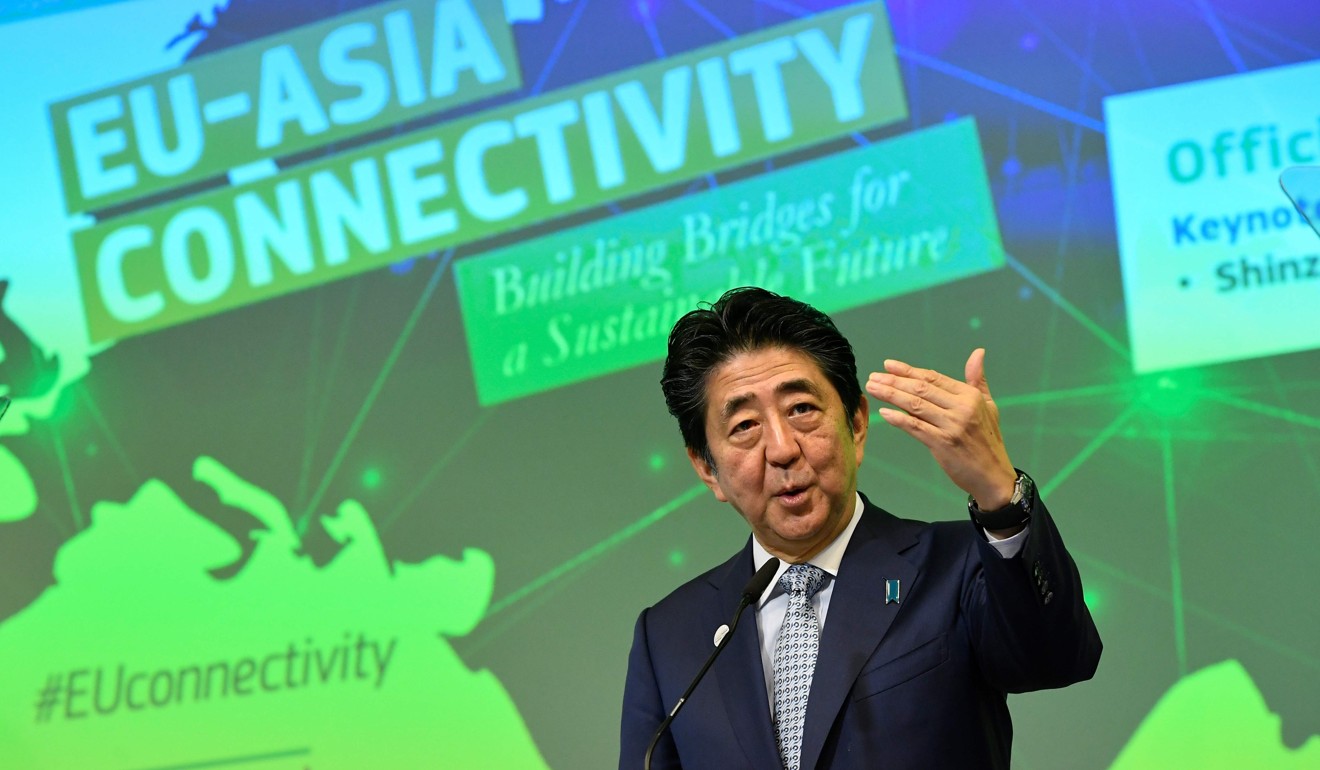
  • Japan’s Prime Minister Shinzo Abe and EC President Jean-Claude Juncker mark first anniversary of EU-Asia Connectivity scheme with swipes at China
  • Partners reach out to countries in Balkans and Africa and agree US$65.5 billion development plan
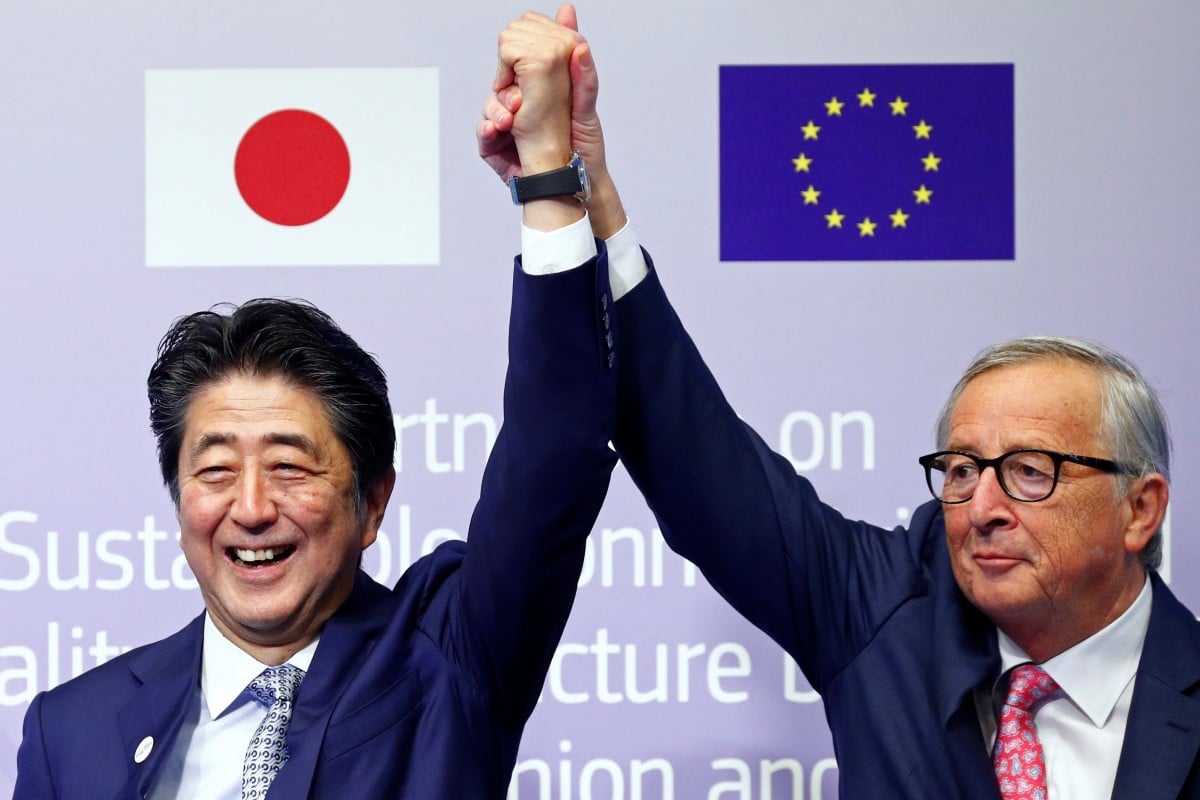
Japan’s Prime Minister Shinzo Abe (left) and European Commission President Jean-Claude Juncker mark the anniversary of the EU-Asia Connectivity scheme in Brussels, Belgium. Photo: Reuters
The European Union and Japan are stepping up their efforts to counter China’s

Belt and Road Initiative

, with their leaders vowing to be “guardians of universal values” such as democracy, sustainability and good governance.

Speaking in Brussels on Friday, Japanese Prime Minister Shinzo Abe said the world’s third-biggest economy would work with the EU to strengthen their transport, energy and digital ties to Africa and the Balkans – key regions for China’s flagship trade and development project.
At a forum to mark the first anniversary of the EU-Asia Connectivity scheme, Abe and European Commission President Jean-Claude Juncker signed an agreement formalising Japan’s involvement in the Europe-Asia plan that will be backed by a 60 billion (US$65.54 billion) EU guarantee fund, development banks and private investors.

Abe said Japan would ensure that officials from 30 African countries would be trained in sovereign debt management over the next three years, a veiled attack on what Western diplomats claim is China’s debt trap for its belt and road partners.

“The EU and Japan are linked through and through,” Abe said. “The infrastructure we build from now on must be [high] quality infrastructure.

“Whether it be a single road or a single port, when the EU and Japan undertake something, we are able to build sustainable, comprehensive and rules-based connectivity, from the Indo-Pacific to the west Balkans and Africa.”

Japan wants to extend its business reach through its alliance with the EU as its economy slows and geopolitical competition from China takes its toll.

Japan indicates China is bigger threat than North Korea in latest defence review

China’s low-key delegation to the forum was led by Guo Xuejun, deputy director general of international affairs at the foreign ministry.

The US was represented by its deputy assistant secretary of state for cyber policy, Robert Strayer, who was in Europe to lobby against Chinese telecoms giant Huawei Technologies and its involvement in fifth-generation telecoms networks.

Abe and Juncker made cybersecurity the highlight of their addresses. Juncker, who will step down from the presidency by the end of October, repeated his attack on China’s trade policies without naming the country.

“Openness is reciprocal, based on high standards of transparency and good governance, especially for public procurement, and equal access to businesses while respecting intellectual property rights,” he said.

Prime Minister Shinzo Abe says Japan will train officials from 30 African countries in sovereign debt management in three years. Photo: AFP

European policymakers and businesses have for years complained about China’s refusal to allow foreign companies in without a Chinese joint venture partner, a practice that critics claimed involved forced transfer of intellectual property to the Chinese side.

“One of the keys to successful connectivity is to respect basic rules and common sense,” Juncker said, stressing that EU-Japanese cooperation focused on the “same commitment to democracy, rule of law, freedom and human dignity”.

European businesses urge EU to take ‘defensive’ measures against China’s state-owned enterprises

When the commission proposed improved transport, energy and digital infrastructure links with Asia last year, it denied it was seeking to stymie Chinese ambitions.

The EU plan, which would be backed by additional funds from the EU’s common budget from 2021, private sector loans and development banks, amounted to a response to China’s largesse in much of central Asia and south-eastern Europe, where Beijing has invested billions of dollars.

Source: SCMP

18/08/2019

Chinese toys boom being fuelled by adult male consumers of collectibles

  • Adult consumers are fuelling a boom in China’s toy collectibles market
  • Men are spending thousands of dollars on figurines to express their identity, boost their street cred, and indulge their inner kid
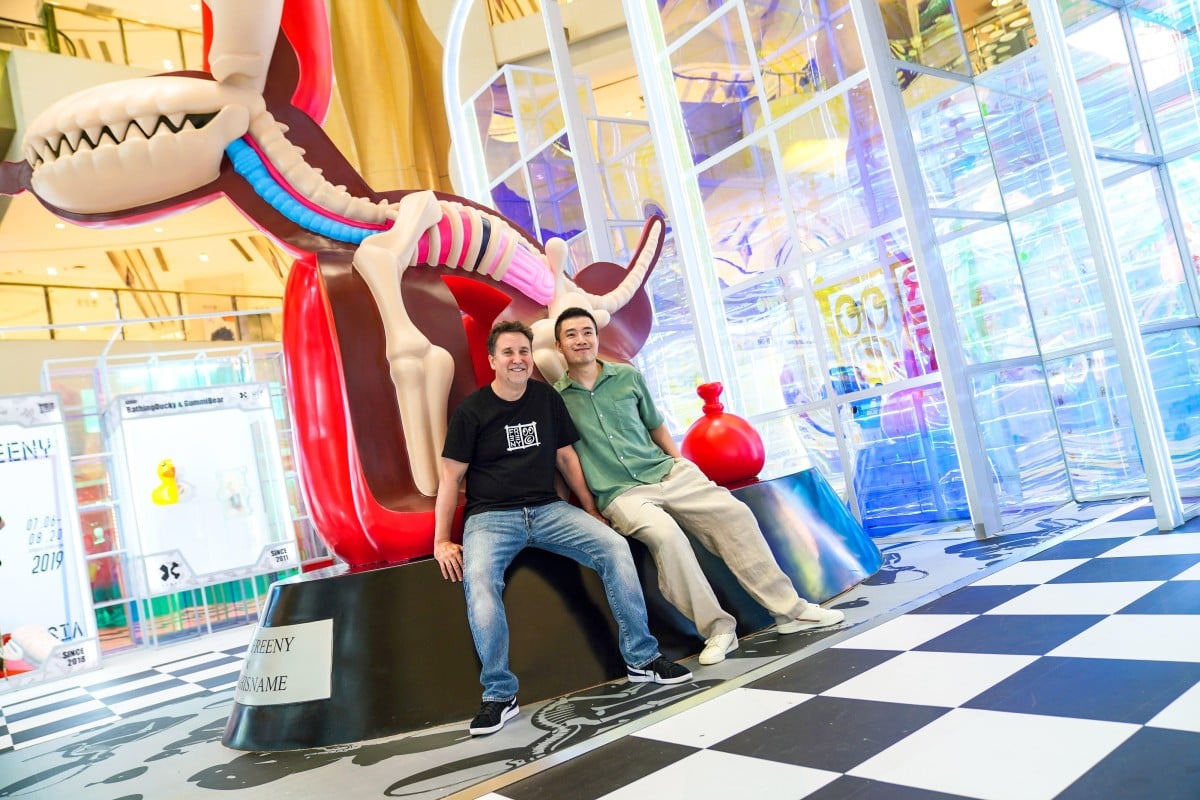
Chinese collector Don Tang with artist Jason Freeny at the Jason Freeny X-Soul Station exhibition in Shanghai. Photo: Don Tang
Don Tang is proud of his toys. So much so that the Shanghai resident, 32, puts them on display both in his home and in the office of the company he runs.
And there are plenty to display. Tang, 32, has some 100 collectibles and the number is growing all the time. Each month he sets aside 2,000 yuan (US$280) to buy the top trending toys, newest releases, or one-of-a-kind items – either from physical stores, online or at toy conventions in China.

But the toys are not connected to his work as the CEO of a firm in the intellectual property sphere. They are simply a hobby, albeit one Tang takes seriously. The crowning jewel of his collection? A 6,000 yuan KAWS action figure bought in Tokyo, Japan.

“When I return home from work each day, I get to see [my toys] and it puts me in a good mood,” says Tang, who realises some people might not get the appeal of his hobby, but says it is an “addictive” pursuit and a way of appreciating designs and craftsmanship. Whether it’s SpongeBob SquarePants, Hello Kitty or Sesame Street, each toy has its own distinct, “lovable, cute, and personalised” identity, he says.
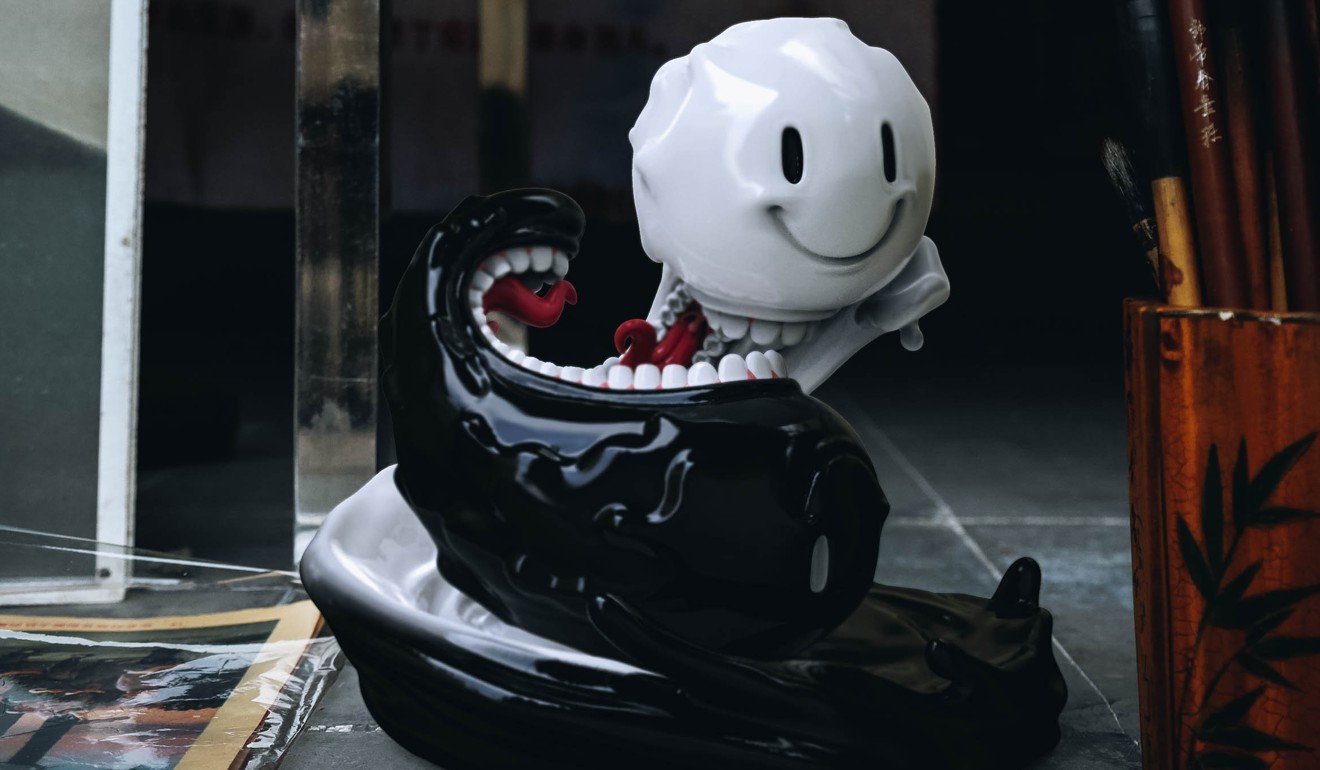
Remind you of someone? Hambuddha is a designer figurine made by Mighty Jaxx of Singapore that is aimed at the adult market. Photo: Mighty Jaxx

“When you look back at the toys that you collected at different times, you realise how your own aesthetic, tastes, and preferences have changed over time,” adds Tang, who would never dream of selling his precious collection.

Tang’s toy story is far from unique. Sales of toys and games in China – which produces 80 per cent of all the world’s toys – soared to 324 billion yuan in 2018, up from 135 billion yuan in 2013, according to market research company Euromonitor. Fuelling these sales is a growing army of toy connoisseurs just like Tang.

CASHING IN

Mighty Jaxx, a Singapore-based urban culture company that designs and manufactures collectibles and lifestyle products, is among the many companies benefiting from this surge in demand.

Its Chinese customer base accounts for 25 per cent of its projected revenue of S$10 million (US$7.21 million) for 2019 – and this proportion is expected to hit 40 per cent over the next few years, according to Mighty Jaxx’s founder and CEO, Jackson Aw, 30.

Smearing cannabis on your face: the latest Asian beauty craze
An avid toy collector himself, Aw first mused over the idea of turning his hobby into a viable business back in 2012. He ventured to Shenzhen in China for one month, knocking on factory doors just for a behind-the-scenes glimpse of the toy production process.
Being one of his first times to China, the mammoth scale of the industry came as a major “culture shock” to Aw.
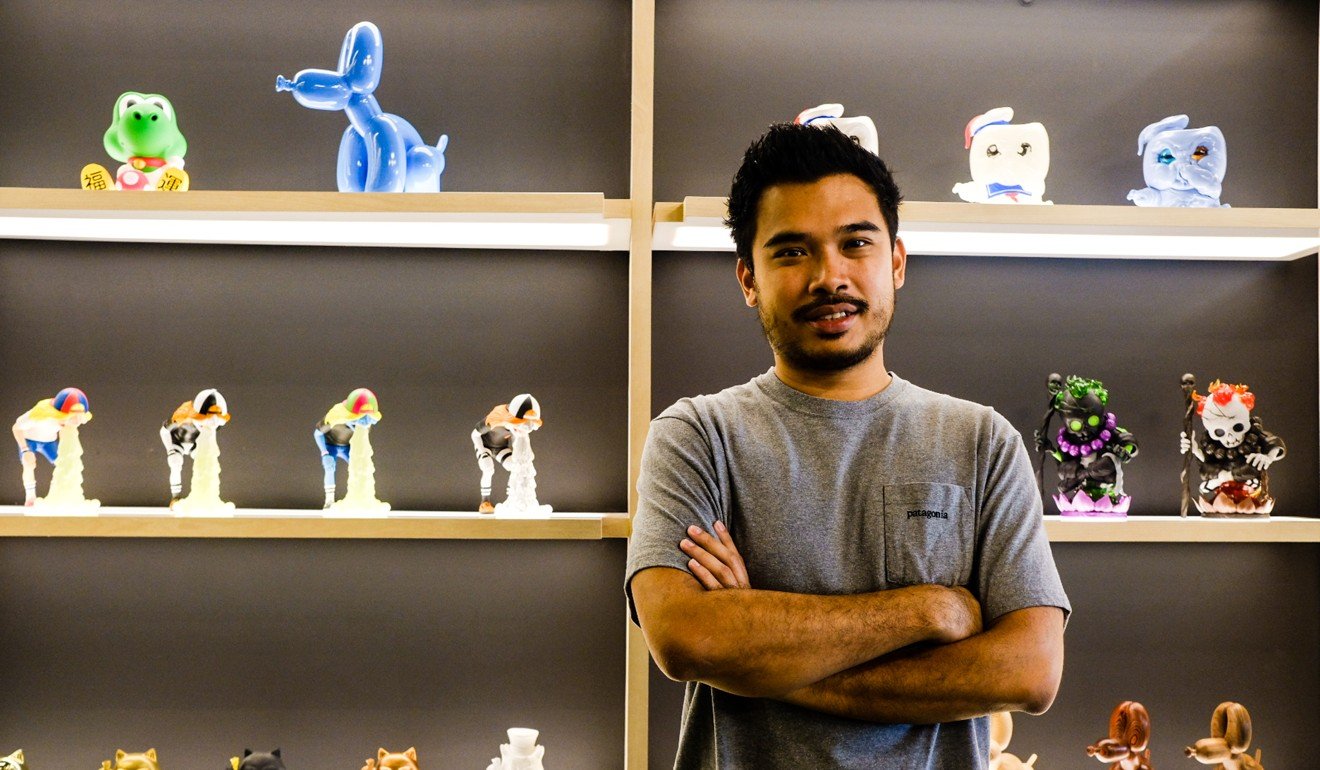
Mighty Jaxx founder and CEO Jackson Aw. Photo: Toh Ee Ming

“I had always thought that it was just one giant machine that spits out parts and that was it. But there were rows and rows of hundreds of people printing, hand painting, assembling and using different skills just to produce one toy,” the Singaporean says.

Describing the visit as his “greatest education”, Aw was inspired to launch Mighty Jaxx from his bedroom with start-up capital of S$20,000 loaned from a bank through his parents.

Fast forward to today and his online business has worked with major brands such as Warner Brothers, DC Comics, Cartoon Network, MTV and New Balance, and shipped millions of products to collectors in over 50 countries. It is best known for its XXRAY figures, developed in partnership with artist Jason Freeny, which feature dissected Justice League characters such as Batman, Superman and Wonder Woman.

Hong Kong toy makers hope Asia’s largest toy fair will help boost flagging sales

But in its early days, the China market had intimidated Aw as a “big anomaly” that was still largely closed off. Aw had found it difficult to navigate the cultural norms and familiarise himself with unfamiliar business models.

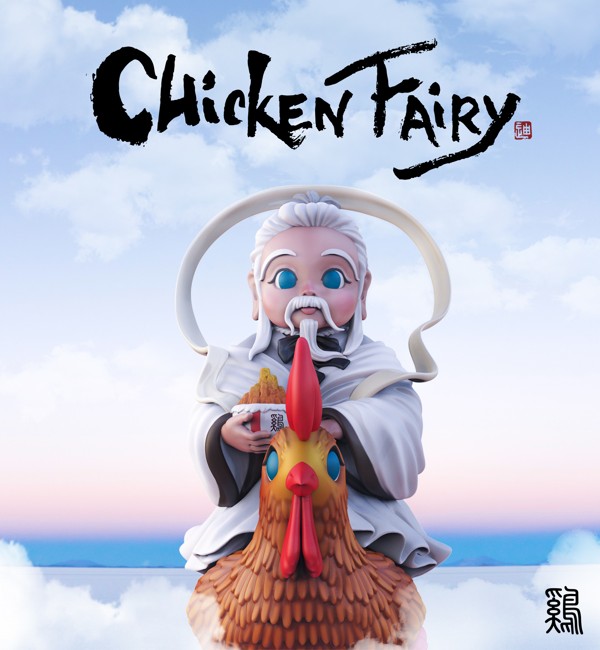
Still, sensing China’s potential, his firm embarked on wide-ranging creative collaborations to tailor its offerings to the Chinese market – from creating yin-and-yang themed toys, celestial chicken fairy deities and the “Hambuddha” (a Buddha holding a pearl-shaped hamburger while on a lotus throne).

It also partnered with Chinese artist Chen Wei (who goes by the alias Cacooca) to develop a new Panda Ink collection, which depicts a panda in the midst of an everyday activity or hobby, such as hiking, playing video games or cuddling with cats.

Mighty Jaxx’s ‘Flow by 18 Uppercut’ has a yin and yang theme with white and black halves. Photo: Mighty Jaxx

It has also collaborated with other big-name artists and celebrities trending among Chinese consumers – such as Los Angeles-based dance crew Kinjaz, who found fame in China appearing on dance shows, and ABS, a leading graffiti crew based in Beijing’s 798 Art District – and has an upcoming collaboration with Taiwanese singer Show Luo.

But it is the comic and toy conventions that provide its biggest fans, typically men in their 20s to 40s who flock in from Beijing, Shanghai and Guangzhou.

Aw says these collectors have a huge appetite to splurge on high-end collectibles, which can range in cost from anywhere between US$10 to US$2,000.

Singapore sex toy sales buzzing thanks to ‘healthy’ branding

To these collectors, price is of little concern as they are looking for “tangible products to buy and show off their personality” and build their street cred among their friends, though they still prefer to stay under-the-radar about their collection to the general public, Aw says.

Today, Mighty Jaxx’s products are manufactured in nearly 20 different factories in Shenzhen and Guangzhou. It set up its first overseas office in Shanghai last year and is planning to open its second one in Suzhou by the end of 2019, according to Aw.

Besides growing Chinese affluence, Aw credits his company’s success to a greater exposure to Western influences and China’s own unique brand of pop culture taking off domestically.

He points to one of China’s biggest blockbusters Monster Hunt, a fantasy martial arts film of how monsters live among humans.

Mighty Jaxx’s celestial chicken fairy deity is aimed at the Hong Kong and mainland China market. Photo: Mighty Jaxx

“Outside China, you wouldn’t know what the hell it’s about. But the Chinese are creating their own unique narrative and developing their own intellectual property … That’s when we know the demand for original creation in different forms is truly there,” Aw says.

Likewise, consumers live in an age of a “mishmash of pop cultures and crossovers” and “subcultures becoming mainstream”, he says.

Citing how the business has teamed up with Team Hero, a China e-sports team comprising professional computer gamers, to roll out new figurines, Aw says: “It doesn’t mean that tattoo artists, skateboarders don’t buy toys … What seems to be separate demographics are converging to become a multibillion-dollar market.”

Aw says the company is planning to expand from its current business model based on direct selling to collectors, to e-commerce distribution channels like Taobao and Tmall by the end of 2019.

He hopes eventually to set up the firm’s first retail store in Shanghai, as he believes the future lies in experiential retail.

“China has been cultivating that openness in recent decades, and we’re still very curious and excited for new things to happen [in this market],” Aw says. 

Source: SCMP

26/03/2019

How a Chinese firm fell victim to intellectual property theft

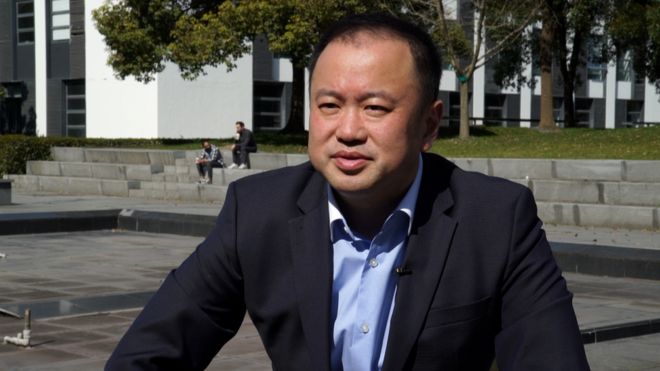
Frank Liu, head of Intco in Shanghai?
Image captionFrank Liu says his company Intco was the victim of intellectual property theft

There was no break in, no hold up. No glass was smashed. But the factory on the outskirts of Shanghai was the scene of a very modern crime. Someone stole a hoard of intellectual property.

“A couple of years ago one of my IT managers copied ten thousand pages of my entire company’s profile,” Frank Liu told me. His company Intco has been around for 25 years.

He told me the stolen download included “our technology information, our customer list, our purchasing and supply information. Everything.”

Intco is a business that makes medical devices, skirting boards and photo frames. I visited its offices at a business park in Shanghai, and a factory that sits either side of a tree-lined road south of the city.

The company recycles polystyrene waste sent to China from all over the world. Then, using heat moulding and imprinting techniques, it turns it into an array of products which end up on the floors of houses in Brazil or Russia, or hanging on walls displaying photos in the US and Britain.

“We actually have the record of how he stole it,” Mr Liu told me. “He just sold it to establish another company, as his investment.”

Mr Liu feels he has no recourse. He told me he went to the police but nothing happened. He said he still intends to pursue it.

His story is increasingly common here, for both local businesses and foreign firms.

Top officials from the US and China will hold their next round of trade talks this week and protecting intellectual property (IP) is a key demand for Washington. They argue American and other foreign companies in China have endured decades of theft and infringement.

Reacting to pressure

China has taken some steps to address the problem. The country only established copyright laws in the 1980s, but things have progressed relatively quickly since then.

China now has specialist IP courts, albeit – like every aspect of the judicial system – subservient to the ruling Communist Party. They are supposed to settle cases within 12 to 18 months.

Their creation was not due solely to outside pressure from foreign firms.

Chinese business figures like Mr Liu have also called for the country’s legal system to better protect the innovators and entrepreneurs who have turned China into much more than the “copycat” economy it was once labelled.

Benjamin Qiu, an IP lawyer with US law firm Loeb & Loeb, told me that the Chinese are now just as litigious as foreign firms.

Foreign firms are just as likely to win a case – a good case, Mr Qiu added – as domestic plaintiffs. In the past few years Lego and New Balance have both won high-profile cases against copycat manufacturers.

There is no doubt that the trade war with the US has sped up the pace of reform in China.

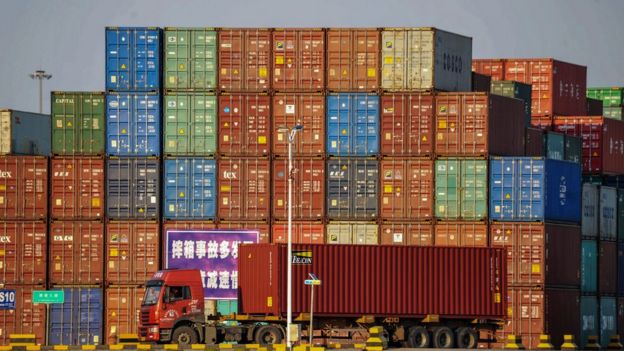
A truck transports a container next to stacked containers at a port in Qingdao in China's eastern Shandong province on October 12, 2018.Image copyrightGETTY IMAGES

President Xi Jinping recently led lawmakers, at their annual gathering in Beijing, in approving new rules for foreign investors.

The Foreign Investment Law states that the transfer of technology from foreign investors to any domestic partner must be voluntary. China has always defended this highly contentious practice by insisting it’s part of an agreed commercial arrangement.

The new law also bars government officials from passing on details of foreign investors IP.

A new era?

Now though comes the hard part – enforcement.

Mr Qiu told me the next step is “detailed regulation coming out after this law, and we want to see actual cases in local courts and also from enforcement agencies.”

If that follows, then he thinks “potentially the foreign IP owners will have more to protect [them] in China.”

Both the EU and American Chambers of Commerce welcomed the new law, but both also criticised what they said was ambiguity in the legislation. The Americans also had concerns that it was rushed through without proper consultation.

Many foreign companies have been stung over the years in China. Most have found the lure of the massive market, or what was once rock bottom labour costs, irresistible.

Some though feel the risk is too high.

A fruit industry executive recently told me his firm wanted to buy new conveyor belts for their farms in China, but the European manufacturers said no. They feared their systems would be copied here, and they’d be wiped out.

Mr Liu can’t do that. He is Chinese and wants to stay in China. But he has taken steps to try to prevent another IP theft.

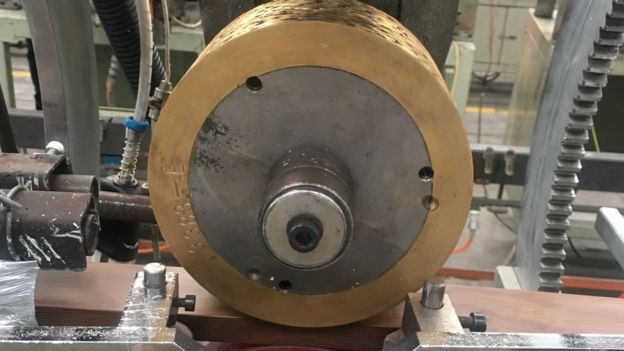
Production line at an Intco factory in Shanghai
Image captionProduction line used to create photo frames at an Intco factory in Shanghai

He is chief executive of the company he founded, but this year he told me he’s changing his title to include head of research and development. Because he can’t trust anyone else with the firms’ commercial secrets.

Protecting original ideas, techniques and information in China – “it’s a human right” he told me.

Source: The BBC

30/12/2018

China’s Supreme Court to take on intellectual property case

BEIJING (Reuters) – Intellectual property rights cases can from next month be taken to China’s Supreme Court, the government said on Saturday, as the country seeks to strengthen protections in the face of complaints from the United States about the issue.

China and the United States are currently in talks to resolve a trade dispute, in which both countries have put tariffs on imports of each other’s products.

The United States, along with the European Union, have long complained about poor enforcement of intellectual property rights in China, and this has been a key complaint of the Trump administration, along with forced technology transfers and a yawning trade gap.

Beijing in response has been seeking to show that it is serious about addressing U.S. concerns.

Deputy chief justice Luo Dongchuan told a news conference that from Jan. 1 the Supreme Court would begin handling appeals on intellectual property rights cases, whereas previously only provincial-level high courts would handle them.

“Setting up a Supreme Court intellectual property rights court is an important decision by the Communist Party, is a major step to strengthen the legal protection of intellectual property rights and will have a major impact at home and abroad.”

Luo did not directly answer a question about how the United States should view the move and what it said about China’s efforts to protect intellectual property, saying that such protection was a “basic national policy”.

“China is already the world’s second largest economy, and in the future China’s development will rely on innovation. The protection of innovation needs there to be legal protection for intellectual property rights.”

Law of Unintended Consequences

continuously updated blog about China & India

ChiaHou's Book Reviews

continuously updated blog about China & India

What's wrong with the world; and its economy

continuously updated blog about China & India