

- Next month’s nautical spectacle will allow country to show off its most advanced warships to an international audience
- More than a dozen foreign navies are expected to join in, including the United States
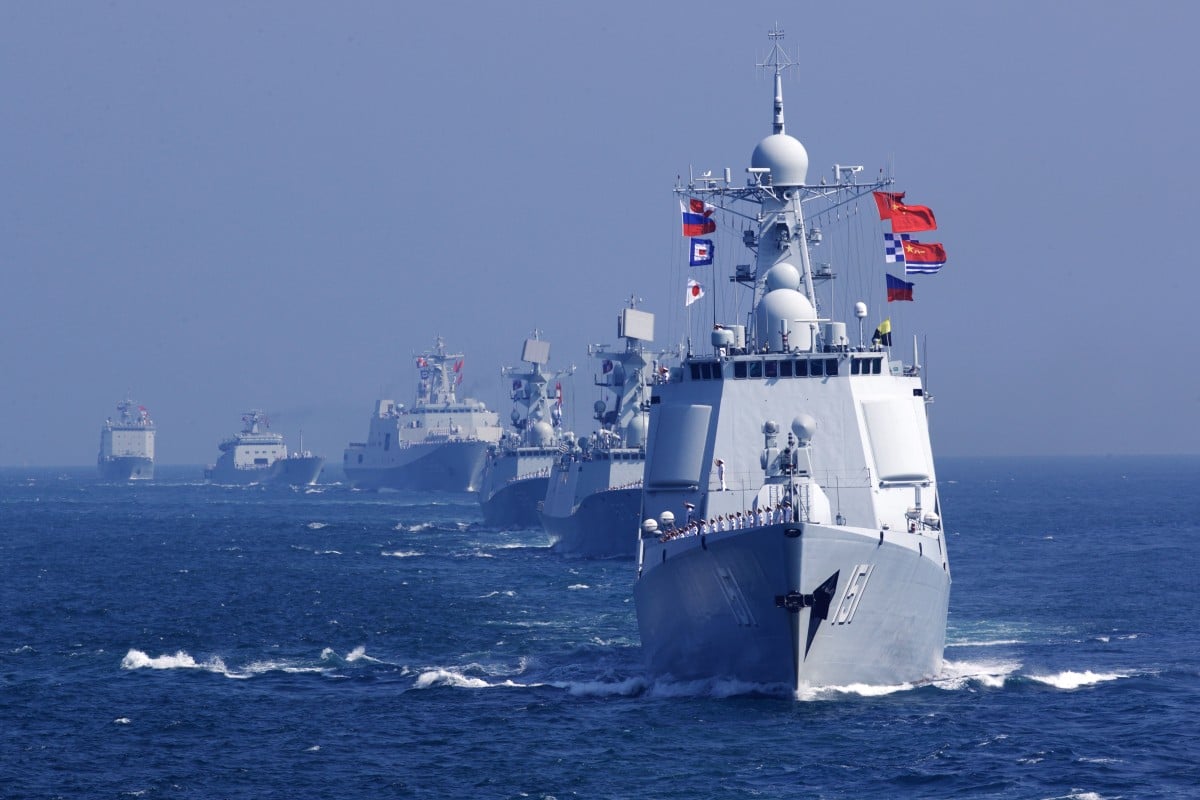
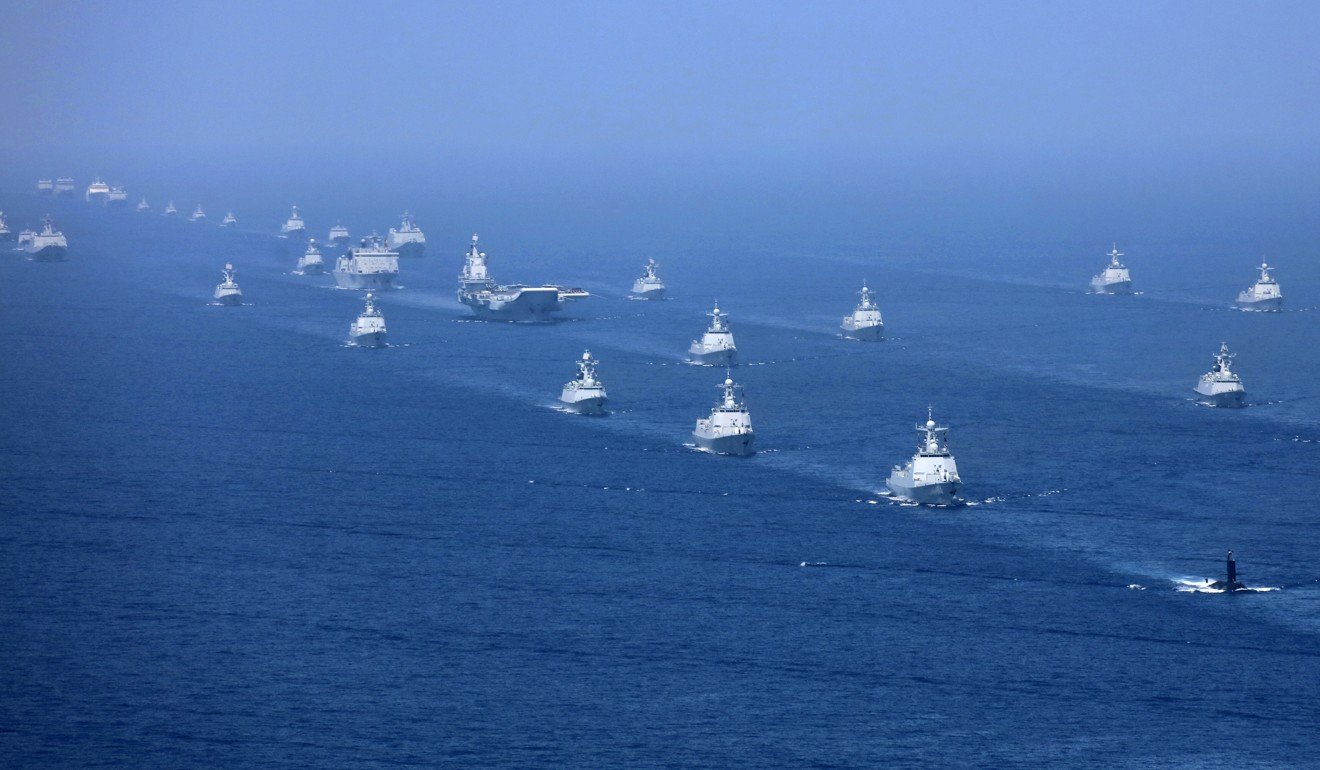
In April last year a naval review in the South China Sea featured a total of 48 vessels and 76 planes, including China’s first aircraft carrier, the Liaoning, its Type 094A and 095 nuclear submarines, 052D guided missile destroyers and J-15 fighter jets.
The experts expect that next month’s event will provide a showcase for several new and more powerful vessels including its home-grown aircraft carrier Type 001A, the Type 055 – Asia’s most powerful destroyer – and several nuclear submarines.
“The fact that China is holding the naval parade just one year after the South China Sea review shows the great importance [the leadership] attaches to the development of China’s maritime interests, the navy and its expansion,” navy expert Li Jie said.

China also held a major naval parade in 2009 to mark the navy’s 60th anniversary.
It was smaller in scale than the upcoming extravaganza with 25 PLA vessels and 31 fighter jets taking part.
Fourteen foreign navies sent ships to the 2009 parade, including the USS Fitzgerald from America and the guided-missile cruiser Varyag from Russia. France, Australia, South Korea, India and Pakistan also joined in the event.
More foreign countries are expected to join the party this year as the PLA has become more active internationally and China has sold more warships to foreign navies.
“The parade is more like a birthday party for the PLA Navy and the participation of foreign navies is a matter of diplomatic courtesy with few military implications,” said Yue Gang, a former PLA colonel.
Yue said the US and its allies would attend despite the rising tensions between the two sides.
Since 2015 the US and Chinese navies have engaged in a series of confrontations in the South China Sea as China strengthens its military presence in the region and the US has sought to challenge Beijing’s claims to the waters by conducting what it describes as “freedom of navigation” operations.
“I don’t expect they will send any of the warships that have taken part in such operations [to the parade],” Yue said.
It has been reported that the Japanese Maritime Self-Defence Force has expressed an interest in joining the parade and the Philippines – which has a rival claim to the South China Sea – is planning to send a vessel to the event for the first time.
Li said militaries such as the US and Japan would not want to miss the chance to observe the PLA Navy closely.
“In addition, greater transparency [through the parade] will also help reassure smaller regional partners such as the Philippines that China is a friendly power despite its growing military strength,” he said.
China held its first naval parade in 1957 and April’s display will be the sixth such event.
Sailors also took part in the parade through Tiananmen Square to mark the foundation of the People’s Republic on October 1 1949.
Source: SCMP

 CHINDIA ALERT: You'll be living in their world, very soon