13/09/2019
- US National Security Adviser recently said an unnamed Chinese fighter ‘looks a lot like the F-35 … because it is the F-35’
- The PLA’s only active stealth fighter the J-20 looks rather different to its US counterpart, but the FC-31 prototype may be closer to the mark
A Chinese FC031 stealth fighter pictured during a test flight in November 2014. Photo: Xinhua
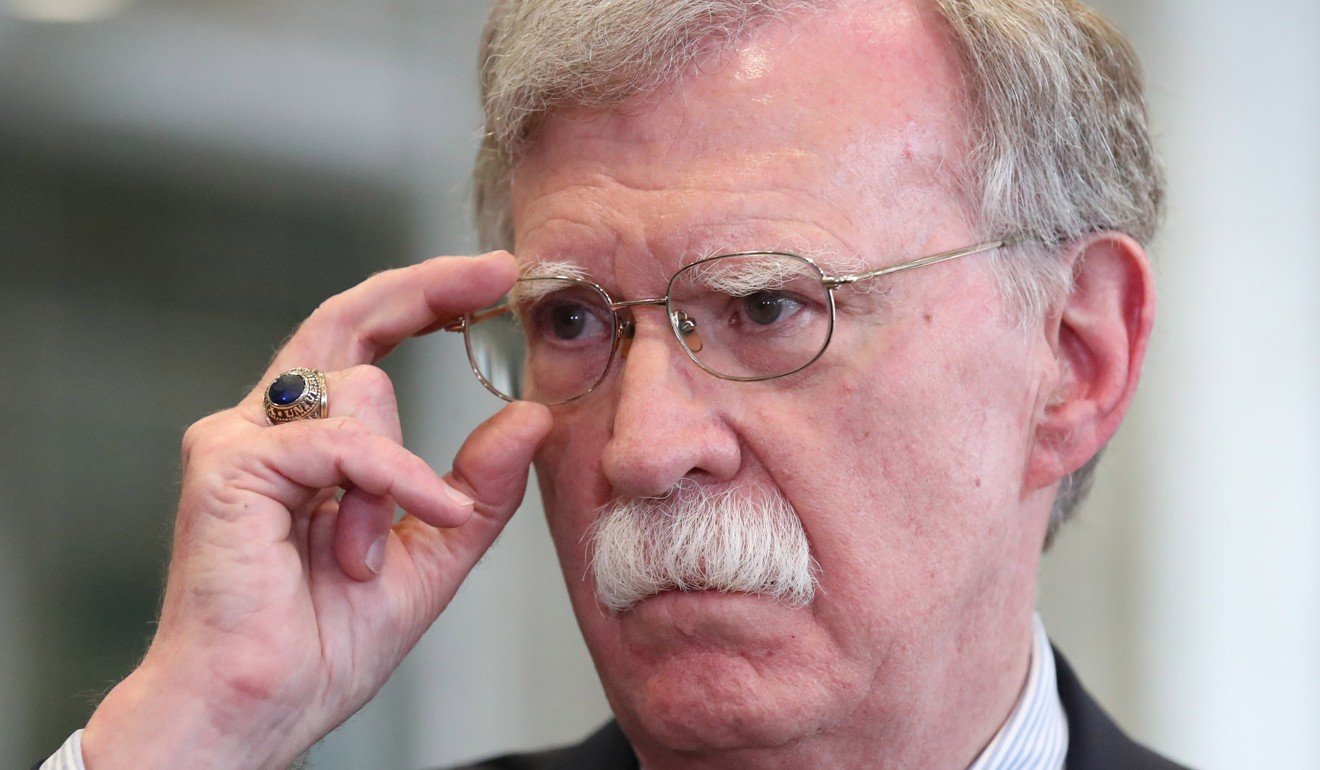
US National Security Adviser John Bolton recently accused China of stealing US technology to make a stealth fighter, a charge Beijing has denied.
On a visit to Ukraine last week, Bolton said an unnamed fifth-generation aircraft “looks a lot like the F-35, that’s because it is the F-35. They just stole it”.
At present China’s only active stealth fighter, the J-20 or Mighty Dragon, looks very different to the F-35 because it has two nose canards – which are not found on any modern US fighters – and it is larger and around 50 per cent heavier.
However, Bolton might have had another fighter in mind – the Shenyang FC-31 Gyrfalcon, which is still in the prototype phase.
John Bolton said China “just stole” the F-35 for its own fighter. Photo: EPA-EFE
The FC-31 is made by the Shenyang Aircraft Design and Research Institute, a branch of the state-owned Aviation Industry Corporation of China.
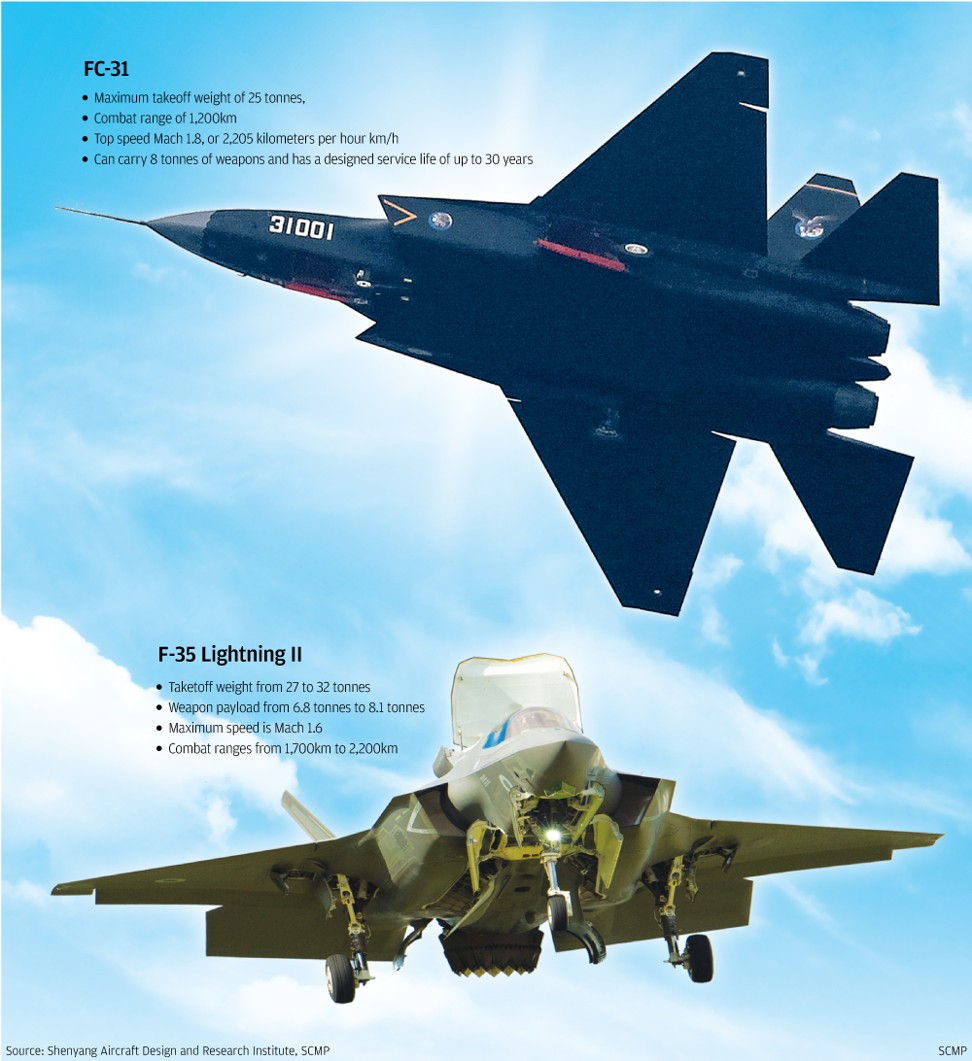
The aircraft, which made its maiden flight in 2012, has broadly similar specifications to the F-35 although it does have twin engines rather than the American jet’s single engine.
The Chinese fighter has a maximum take off weight of 25 tonnes, a combat range of 1,200km (746 miles) and a top speed of Mach 1.8, or 2,205km/h (1,370mph), whereas the US fighter’s take-off weight varies between 27 and 32 tonnes, has a top speed of Mach 1.6 and a range of up to 2,200km (1,367 miles).
The FC-31 has a weapons payload of 8 tonnes, compared with 6.8 to 8.1 tonnes for the different varieties of F-35, and a service life of up to 30 years.
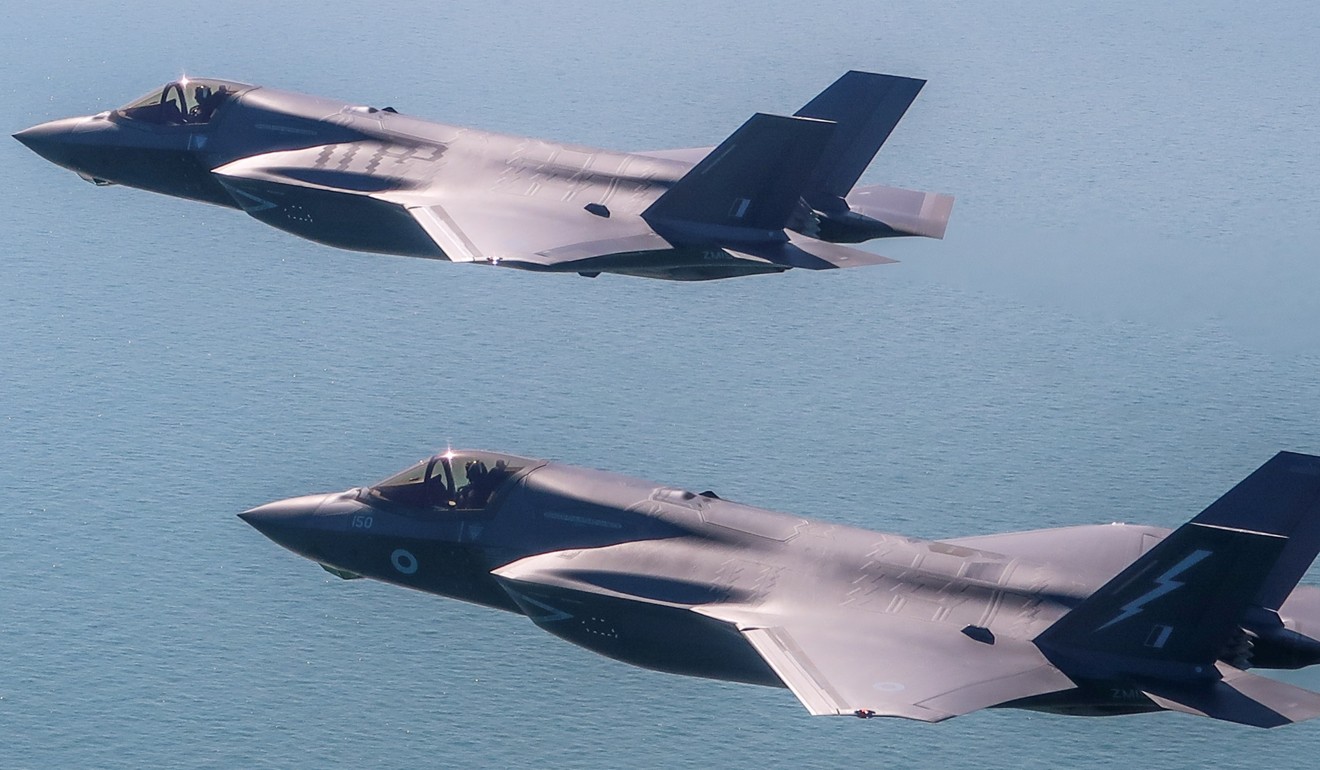
Lockheed Martin, which makes the American stealth fighter, has produced three different varieties – the land-based f-35A and two for use on ships: the vertical jump F-35B and catapult-assisted F-35C.
While the Chinese jet was primarily designed for the use of the air force, its light weight also means it could be adapted for use on carriers.
It was reported to have been in the running to be used on China’s next-generation aircraft carriers, but military sources recently said it would lose out to the J-20 because of its slow pace of development and reports of technological problems.
The US currently restricts sales of the F-35 to its closest allies: Photo: EPA-EFE/ USAF
However, the Chinese manufacturer is already actively marketing the fighter to other countries and a model of the plane appeared at the Paris Air Show in June.
One official from the Aviation Industry Corporation of China who attended the Air Show told state media that the firm hoped to “seize some share in the military aircraft market of developed nations”.
One area where the plane does have a definite advantage over its American counterpart is price. The price of a single FC-31 is expected to be about US$70 million, significantly less than the F-35 which has a price tag of around US$100 million per unit.
The US also restricts sales of the fighter to its allies, leaving a potential gap in the market for China to exploit when the fighter is ready for use.
Source: SCMP
Posted in accuses, air force, Aviation Industry Corporation of China, Beijing, China alert, F-35 technology, John Bolton, Lockheed Martin, make, Mighty Dragon, military aircraft market, Paris Air Show, Shenyang Aircraft Design and Research Institute, Shenyang FC-31 Gyrfalcon, stealing, stealth fighter, two nose canards, Ukraine, Uncategorized, US National Security Adviser |
Leave a Comment »
28/05/2019
- Coordination Council for North American Affairs becomes Taiwan Council for US Affairs, island’s foreign ministry says
- Move signifies ‘firm and close relationship between Taiwan and the US’, President Tsai Ing-wen says
Taiwan has changed the name of its de facto embassy in the United States to better reflect ever-improving ties between the sides. Photo: EPA
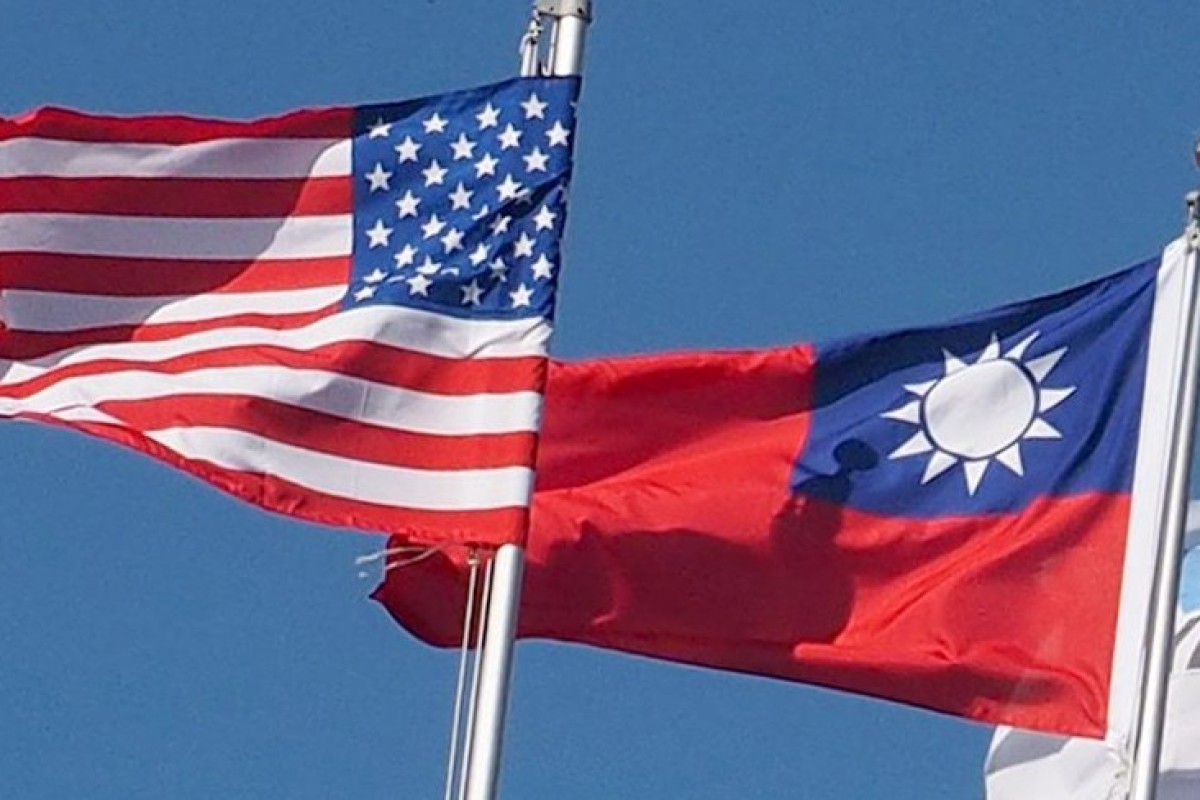
Taiwan has changed the name of its de facto embassy in the United States to better reflect relations between the sides, which are at their strongest in decades, Taipei said on Saturday.
Once the necessary formalities have been completed, the agency formerly known as the Coordination Council for North American Affairs will be called the Taiwan Council for US Affairs, the island’s foreign ministry said.
“The new name better reflects the [agency’s] role in coordinating US-Taiwan affairs. It also symbolises the close and amicable relations between Taiwan and the United States,” it said.
Observers said the name change was significant as it appeared to drop the pretence that the council was non-diplomatic or political in nature.
The name change was possible because of the consensus between Taiwan and the US. Photo: CNA
Although Washington severed formal diplomatic ties with Taipei in 1979 in favour of Beijing, the two sides retained unofficial relations that have grown ever-closer in recent years, including an increase in military exchanges and cooperation.
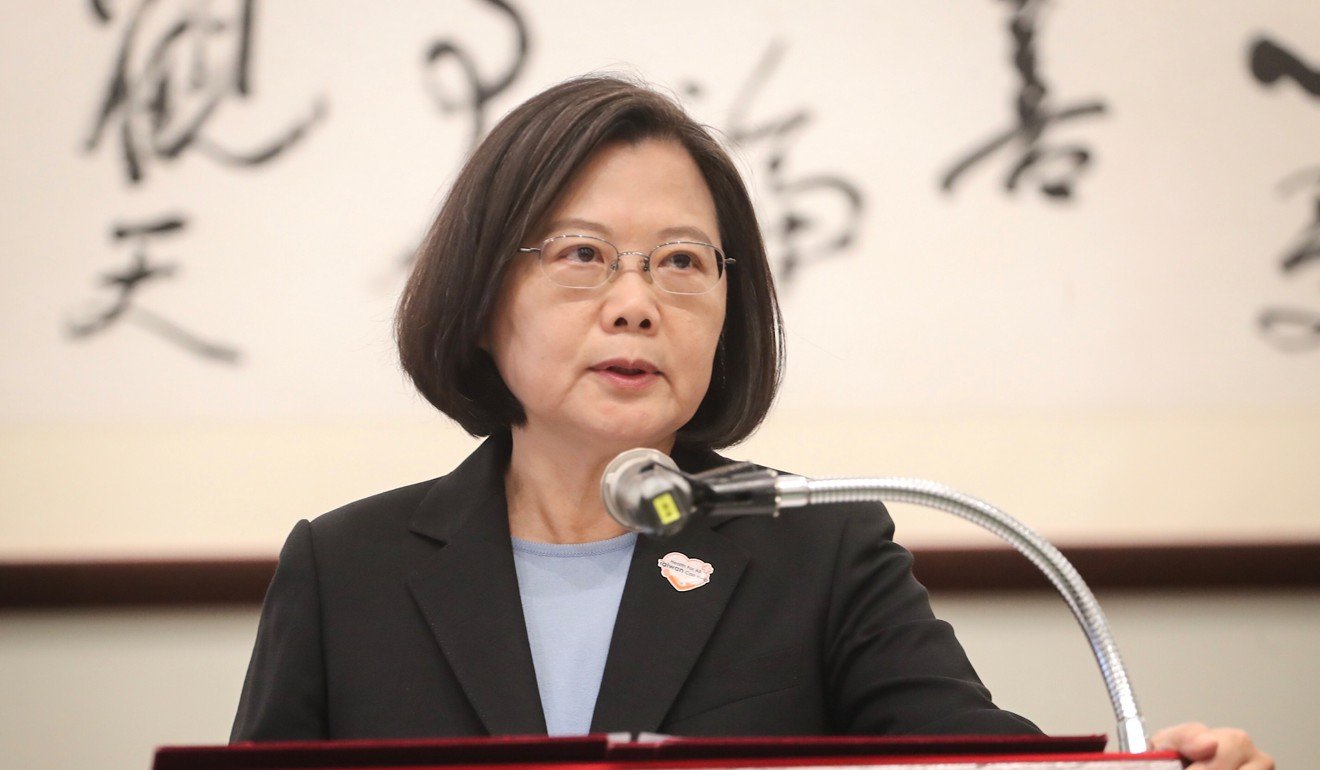
“The new name [was made possible] as a result of the consensus between Taiwan and the US,” the island’s President Tsai Ing-wen said in a Facebook post. “This is the first time the designations ‘Taiwan and the US’ have been used to refer to each other’s affairs office on an equal basis, signifying the firm and close relationship.”
Taiwan begins mass production of missile corvettes, minelayers
Taiwan had been forced to use the old title because of the “special historical background” related to the change in diplomatic allegiance 40 years ago, Tsai said.
Beijing, which considers Taiwan a wayward province awaiting reunification, by force if necessary, has demanded that Washington observe the one-China policy by not officially recognising Taiwan or allowing it to use either “Republic of China” – the island’s official name – or “Taiwan” in the title of its representative offices in the US.
Washington also enacted the Taiwan Relations Act in 1979 to prescribes relations with the island and includes a commitment to supply it with arms to protect itself.
“After continuous efforts and coordination by the two sides, and in 2019, the 40th anniversary of the Taiwan Relations Act, our office handling relations with the US is finally able to change its name,” Tsai said.
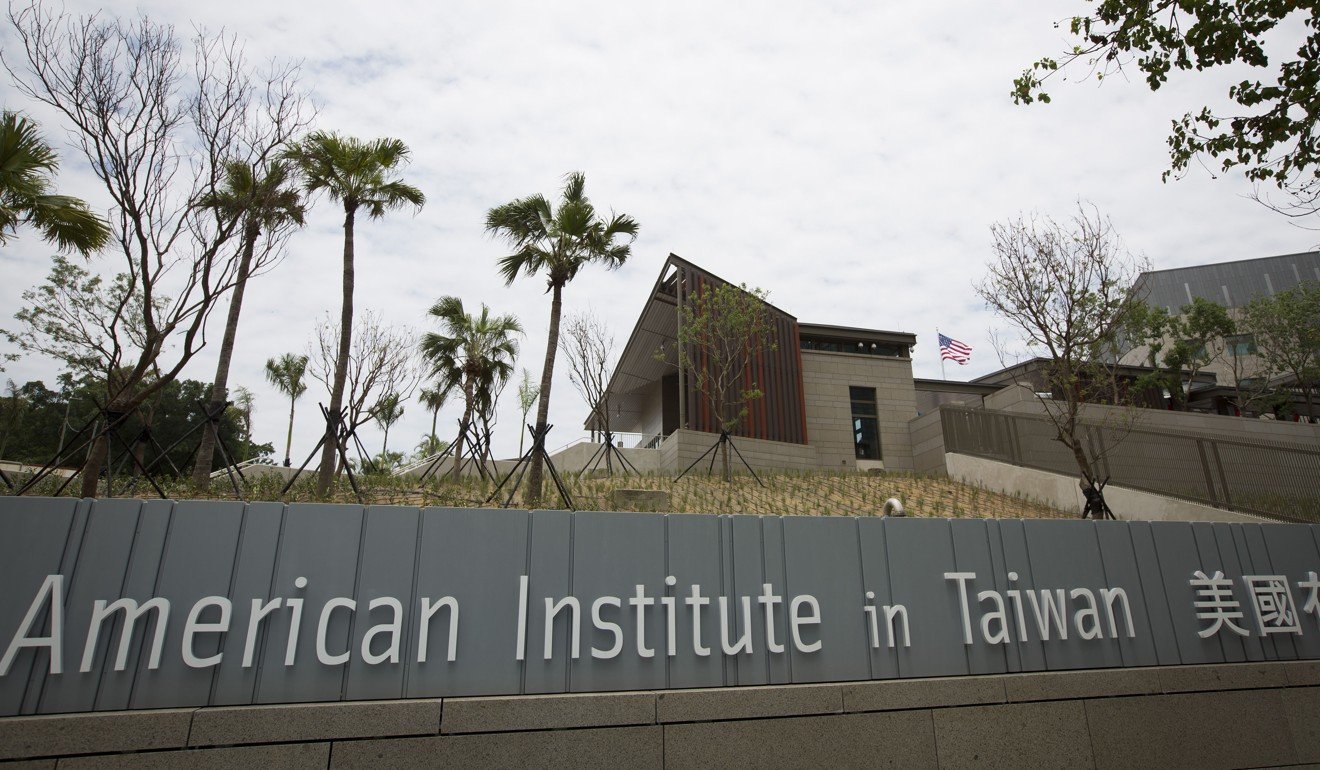
The American Institute in Taiwan relocated to a larger, purpose-built compound last month. Photo: Bloomberg
Presidential spokesman Alex Huang said the name change was due mainly to an improvement in relations between Taiwan and the US as a result of a greater cooperation on the promotion of regional peace and the Indo-Pacific security agenda.
“In the past few years, the US government has given Taiwan strong and firm support in terms of national security and participation in international events, as well as support from Congress and think tanks,” he said, referring to bills signed by US President Donald Trump that allow for exchanges between high-level officials and military personnel, and the approval of new sales of arms and logistical support to the island.
US official urges Pacific island nations to maintain diplomatic ties with Taiwan
Also, last week, Taiwan’s national security chief David Lee met US National Security Adviser John Bolton in Washington for the first talks of their kind since 1979, Taiwan’s Central News Agency reported on Saturday.
Last month, the American Institute in Taiwan – the United States’ unofficial embassy in Taipei – relocated to a significantly larger, purpose-built compound, in yet another sign of improving relations.
US support for Taiwan has increased under Trump’s leadership as he regards Beijing as a hostile competitor, not only on trade, but also in military and global influence terms.
Tensions between Taipei and Beijing have flared since Tsai became president in 2016 and refused to accept the one-China principle. The mainland subsequently halted all official exchanges with the island and embarked on a campaign to squeeze its diplomatic allies around the world.
Source: SCMP
Posted in American Institute in Taiwan, ‘reflect stronger ties’, Beijing, changes name, Congress, cooperation, Coordination Council for North American Affairs, de facto embassy, Foreign Ministry, Indo-Pacific security agenda, John Bolton, mass production, military exchanges, minelayers, missile corvettes, one-China policy, Pacific island nations, President Tsai Ing-wen, Republic of China, reunification, Taipei, Taiwan, Taiwan Council for US Affairs, Taiwan Relations Act, think tanks, Uncategorized, United States, US National Security Adviser, US President Donald Trump, Washington, wayward province |
Leave a Comment »
12/03/2019
WASHINGTON (Reuters) – White House national security adviser John Bolton said on Monday Pakistan’s foreign minister has assured him Islamabad is committed to de-escalating tensions with India and dealing “firmly” with terrorists.
Bolton’s comments follow a Feb. 14 suicide bombing, claimed by Pakistan-based militants, which killed at least 40 Indian paramilitary police.
“Spoke with Pakistani FM (Shah Mehmood) Qureshi to encourage meaningful steps against JeM (Jaish-e-Mohammed) and other terrorist groups operating from Pakistan,” Bolton said on Twitter.
“The FM assured me that Pakistan would deal firmly with all terrorists and will continue steps to deescalate tensions with India,” Bolton added.
Pakistan, which denies Indian accusations of aiding militant groups, last week announced a crackdown against all proscribed outfits.
Pakistan’s foreign ministry late on Monday said Qureshi informed Bolton “about the de-escalatory measures taken by Pakistan” in the wake of the aerial bombing missions carried out by both countries in late February.
Qureshi told Bolton that Pakistan’s strike in Kashmir on Feb. 27 was in self-defence and retaliation to India’s raid on its territory a day earlier. New Delhi said it hit a JeM training camp in Pakistan, but Islamabad denies any such camp exists.
The two countries fought an aerial dogfight over Kashmir on Feb. 27, and a couple of days later Pakistan returned a downed Indian pilot in a gesture that appeared to de-escalate the crisis.
German Foreign Minister Heiko Maas, in a joint conference with Qureshi, commended Pakistan on Tuesday for returning the pilot and offering talks with India. But he also urged Islamabad to stamp out militant groups which attack neighbouring countries.
“We both agreed that cross-border terrorism has to be permanently stopped and there too there have been positive signs in the past few days that we welcome very much,” Maas said. “Ultimately it’s about fighting any kind of terrorism and extremism.”
Source: Reuters
Posted in #MeToo, Bolton, deescalate, German Foreign Minister, Heiko Maas, India alert, Islamabad, JeM (Jaish-e-Mohammed), John Bolton, National Security Adviser, Pakistan, Pakistan’s foreign minister, Pakistani FM, Qureshi, Shah Mehmood Qureshi, suicide bombing, Twitter, Uncategorized, US |
Leave a Comment »
16/02/2019
NEW DELHI (Reuters) – The United States supports India’s right to self-defence against cross-border attacks, India’s foreign ministry said on Saturday after a deadly car bombing in disputed Kashmir raised tensions with rival neighbour Pakistan.
Prime Minister Narendra Modi has promised a strong response after a Pakistan-based militant group claimed responsibility for the suicide attack on a military convoy on Thursday that killed 44 paramilitary policemen.
India’s government said it had evidence the group, Jaish-e-Mohammad (JeM), had the backing of Pakistan and demanded Islamabad take action. Pakistan has condemned the attack and rejected India’s allegations.U.S. National Security Adviser John Bolton spoke to his Indian counterpart Ajit Doval on Friday night, promising to help bring those behind the attack to justice, the foreign ministry said in a readout of the phone call.
“The two NSAs vowed to work together to ensure that Pakistan cease to be a safe haven for JeM and terrorist groups that target India, the U.S. and others in the region,” the foreign ministry said.
“They resolved to hold Pakistan to account for its obligations under U.N. resolutions,” it added.
India has for years accused Muslim Pakistan of backing separatist militants in divided Kashmir, which the neighbours both claim in full but rule in part.
Pakistan denies that, saying it only offers political support to the Himalayan region’s suppressed Muslim people.
Modi, who is facing an election in the next few months, has called a meeting of political parties on Saturday to build support for action against Pakistan.
Indians have poured onto social media to vent their fury over the suicide bombing in Kashmir, with many of them calling for swift retribution against Pakistan as TV news shows hosted jingoistic debates.
44 killed in worst Kashmir attack in decades
When he swept to power at the head of a Hindu nationalist-led alliance in 2014, Modi vowed to pursue a tough line with Pakistan. The two countries have gone to war three times since independence from Britain in 1947, twice over Kashmir.
The attack comes at a difficult time for Pakistan, which is struggling to attract foreign investment and avert a payments crisis, with its swiftly diminishing foreign currency reserves at less than $8 billion, equivalent to two months of import payments.
Source: Reuters
Posted in Ajit Doval, foreign investment, Himalayan, import payments, India alert, Jaish-e-Mohammad, JeM, jingoistic, John Bolton, Kashmir, National Security Adviser, Pakistan, PM Narendra Modi, self-defence, Uncategorized, US |
Leave a Comment »



 CHINDIA ALERT: You'll be living in their world, very soon