29/04/2020
- Hardline politicians want president to fulfil promise to overhaul constitution to reflect the self-ruled island’s political reality
- A petition calls for two referendums on the issue – proposing it either be replaced with a new one or revised
The push for constitutional change could lead to a cross-strait conflict. Photo: Handout
Taiwanese President Tsai Ing-wen is under growing pressure from the hardline camp to push for constitutional change to reflect the self-ruled island’s independent status – something observers say could provoke a cross-strait conflict.
With Tsai due to be sworn in for a second four-year term next month after a landslide victory in January’s election, hardline pro-independence politicians want her to fulfil a 2015 campaign promise: to overhaul the constitution so that it reflects Taiwan’s political reality. The process has been stalled since Tsai’s first term, which began in 2016.
Leading the charge is the Taiwan New Constitution Foundation, a group formed last year by a Tsai adviser and long-time independence advocate Koo Kwang-ming.
The foundation launched a petition at the end of March calling for two referendums on the constitution – proposing that it either be replaced with a new one or revised.
The existing constitution was adopted when Kuomintang leader Chiang Kai-shek and the KMT fled to Taiwan and set up an interim government in 1949 following their defeat by Mao Zedong’s communists in mainland China.
Drawn up in 1947, the constitution still puts the mainland and Mongolia under the Republic of China jurisdiction – Taiwan’s official name for itself. In reality, its jurisdiction extends only to Taiwan and its outlying islands of Penghu, Matsu and Quemoy, which is also known as Kinmen.
Taiwan’s constitution was adopted when KMT leader Chiang Kai-shek fled to the island in 1949. Photo: Handout
“We have garnered more than 3,000 signatures from the public for the first phase of initiating the proposals to hold two referendums asking the president to push for constitutional change,” Lin Yi-cheng, executive director of the Taiwan New Constitution Foundation, said on Wednesday.
He said they would propose that voters be asked two questions in the referendums: “Do you support the president in initiating a constitutional reform process for the country?”
And: “Do you support the president in pushing for the establishment of a new constitution reflecting the reality of Taiwan?”
“We’re ready to send the two referendum proposals to the Central Election Commission on Thursday,” he said.
Confusion prompts call for China Airlines name change in Taiwan, but at what cost?
Under Taiwan’s Referendum Act, the process for holding a referendum involves three stages: a proposal, endorsement and voting.
Lin said there should be no problem for the commission to approve the proposal stage since they had gathered far more than the minimum 1,931 signatures needed under the act.
The endorsement stage requires a minimum of 290,000 signatures, and if the referendum is held, they will need at least 5 million votes.
Lin said if the process went smoothly, he expected a referendum could be held in August next year, allowing time for review and making the necessary arrangements.
He said if the referendum questions got enough public support, Tsai would need to deal with the issue.
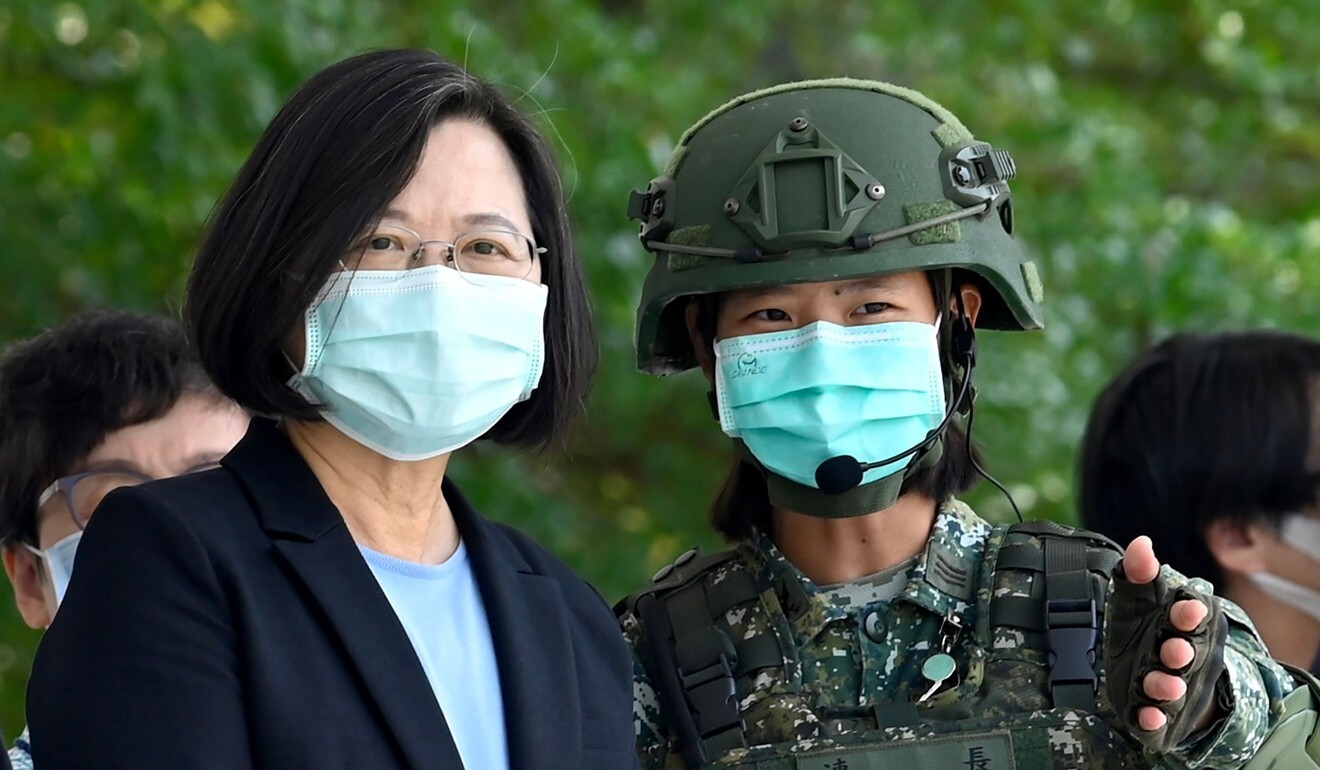
Tsai Ing-wen visits a military base in Tainan earlier this month. The pressure for constitutional change creates a dilemma for the president. Photo: AFP
Tsai’s Democratic Progressive Party government has been tight-lipped over the constitutional change issue, which Beijing sees as a move for the island to declare formal independence from the mainland.
Beijing considers Taiwan a wayward province that must be returned to the mainland fold, by force if necessary, and it has warned Tsai against declaring formal independence.
A DPP official said the foundation’s push would put Tsai in a difficult position.
“If she ignores the referendums, she will come under constant pressure from the hardline camp, and if she seriously considers taking action and instituting a new Taiwan constitution, she will risk a confrontation with Beijing, the consequence of which could be a cross-strait conflict,” said the official, who requested anonymity.
On Tuesday, Zhu Fenglian, a spokeswoman for the mainland’s Taiwan Affairs Office, warned the island against holding any referendum on constitutional revision, saying it would be doomed to end in an impasse and would ultimately fail.
“It will only push Taiwan towards an extremely dangerous abyss and bring disasters to Taiwanese compatriots,” she said.
Chinese air force’s drill ‘aimed at signalling deterrent around Taiwan’
But according to Wang Kung-yi, a political science professor at Chinese Culture University in Taipei, Tsai should not be too worried about the hardline camp move.
“The hardline camp has been marginalised greatly in the past several years as reflected by the poor showing in the legislative elections in January,” Wang said, adding that he expected Tsai to continue her relatively moderate cross-strait policy of not sharply provoking the mainland.
Source: SCMP
Posted in 1949, 2015, 2016, also known as, amid, August, be replaced, Beijing, by force, call for, calls for, campaign, Central Election Commission, Change, Chiang Kai-shek, China Airlines, Communists, confusion, considers, Constitution, constitutional, creates, cross-strait conflict, declare, defeat, Democratic Progressive Party, dilemma, earlier, either, Election, endorsement, fled, formal independence, four-year term, Hardline politicians, independent, island, islands, issue, January’s, jurisdiction, Kinmen, KMT, Kuomintang, mainland, Mainland China, Mao Zedong’s, March, marginalised, Matsu, military base, Mongolia, move for, name change, necessary, new one, next month, next year, observers, outlying islands, overhaul, Penghu, Petition, political reality, political science professor, politicians, President, pressure, pro-independence, promise, prompts, proposal, proposing, provoke, push for, Quemoy, Referendum Act, referendums, Republic of China, returned, revised, second, sees, self-ruled, status, sworn, Tainan, Taipei, Taiwan, Taiwan Affairs Office, Taiwan New Constitution Foundation, Taiwanese President, this month, Thursday, tight-lipped, to fulfil, to reflect, Tsai, Tsai Ing-wen, two, Uncategorized, under pressure, Voting, warned, wayward province |
Leave a Comment »
28/05/2019
- Asia has a rich but largely forgotten history of acceptance of queer relationships
- It was not until the colonial era that sexual and gender diversity came to be seen as a sin
An LGBT pride parade in support of Taiwan’s same-sex marriage law. Photo: Reuters
A
nyone reading the headlines about
legalisation of same-sex marriage
would get the impression this was Asia’s first taste of marriage equality. They would be quite wrong.
While Taiwan may be the first jurisdiction in Asia to legalise the modern form of same-sex marriage, such unions have been recognised across the region in various guises for centuries.
It may be true that Asia does not have a great reputation among the
community, but it does have a rich history of acceptance of sexual and gender diversity – one that has largely been forgotten.
When Europeans first encountered Chinese society, they praised many aspects of it, from its efficient government to the sophisticated lifestyles of the upper-class. But they were shocked and repulsed about one aspect of Chinese society: the “abominable vice of sodomy”.
Opinion: Three lessons for Hong Kong from Taiwan’s LGBT journey
One Portuguese Dominican friar, Gaspar da Cruz, even wrote an apocalyptic tract which portrayed China as the new Sodom – beset by earthquakes, floods, and other natural disasters due to their acceptance of that “filthy abomination, which is that they are so given to the accursed sin of unnatural vice”, that is, sodomy.
Southern China, in particular, was known for a widespread acceptance of homosexual relationships. Shen Defu, a Chinese writer during the Ming dynasty, wrote that it was common for men of all social classes in Fujian province to take male lovers. While men generally took on these lovers while maintaining respectable marriages to women, there were some men who took their lover-relationships to a quasi-marriage level. The older man would be considered qixiong (adoptive older brother) and the younger qidi(adoptive younger brother).
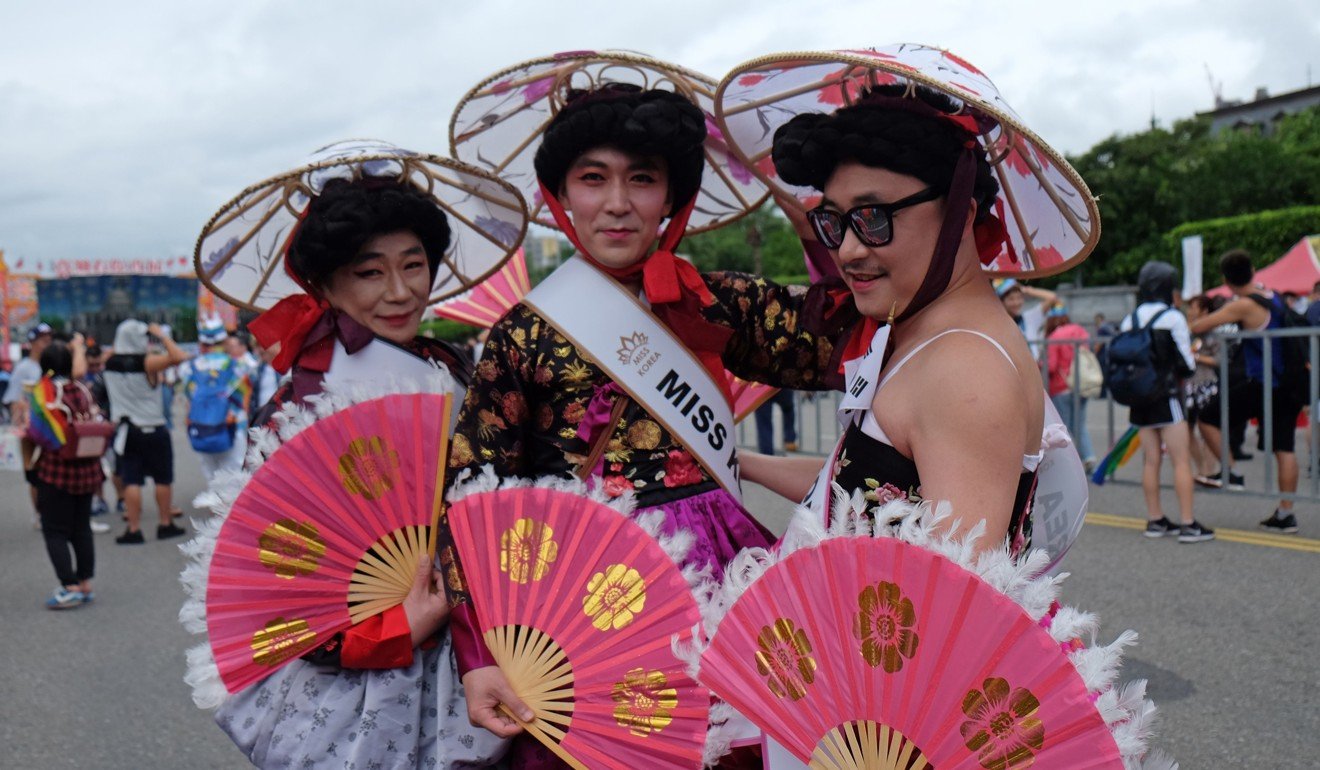
South Korean men take part in Taiwan’s annual LGBT pride parade in Taipei. Photo: AFP
Bret Hinsch, a professor of history in Taiwan, describes the ceremony based on the narration of a Chinese playwright, Li Yu (1610-1680): “Two men sacrifice a carp, a rooster, and a duck. They then exchange their exact times of birth, smear each other’s mothers with the blood of their sacrifices, and then swear eternal loyalty to one another.
The ceremony concludes with feasting on the sacrificial victims …. The younger qidi would move into the qixiong’s household. There he would be treated as a son-in-law by his husband’s parents. Throughout the marriage, many of which lasted for 20 years, the qixiong would be completely responsible for his younger husband’s upkeep.
The marriage would typically dissolve after a number of years so that the younger man could find a bride to marry to procreate and further the family lineage. The elder man was expected to pay the bride a price for the younger man.
These forms of gay “marriage” were prevalent enough in Fujian that there was even a patron deity of homosexuality, the rabbit. Many Han people from Fujian migrated to Taiwan starting in the 17th century; they now make up 80 per cent of the population.
Explained: gay rights, LGBTQ and same-sex marriage in Asia
Most literary accounts of homosexual relationships in China involve men, and there is a lively debate among scholars as to whether women enjoyed the same freedom.
Nevertheless, the most documented of female “quasi-marriages” are the “Golden Orchid Associations” in Guangdong. (Around 15 per cent of Taiwan’s population is Hakka, which historians trace specifically to Han migrants from Guangdong and surrounding areas.) The Golden Orchid Society was a movement based in Guangdong that lasted from the late Qing dynasty until the early 1900s. It provided a “sisterhood” alternative to women who did not want to get married for various reasons.
To announce her intentions, one woman would offer another gifts of peanut candy, dates and other goods. If the recipient accepted the gift, it was a signal she had accepted the proposal. They would swear an oath to one another, where sometimes one woman was designated “husband” and the other “wife”.
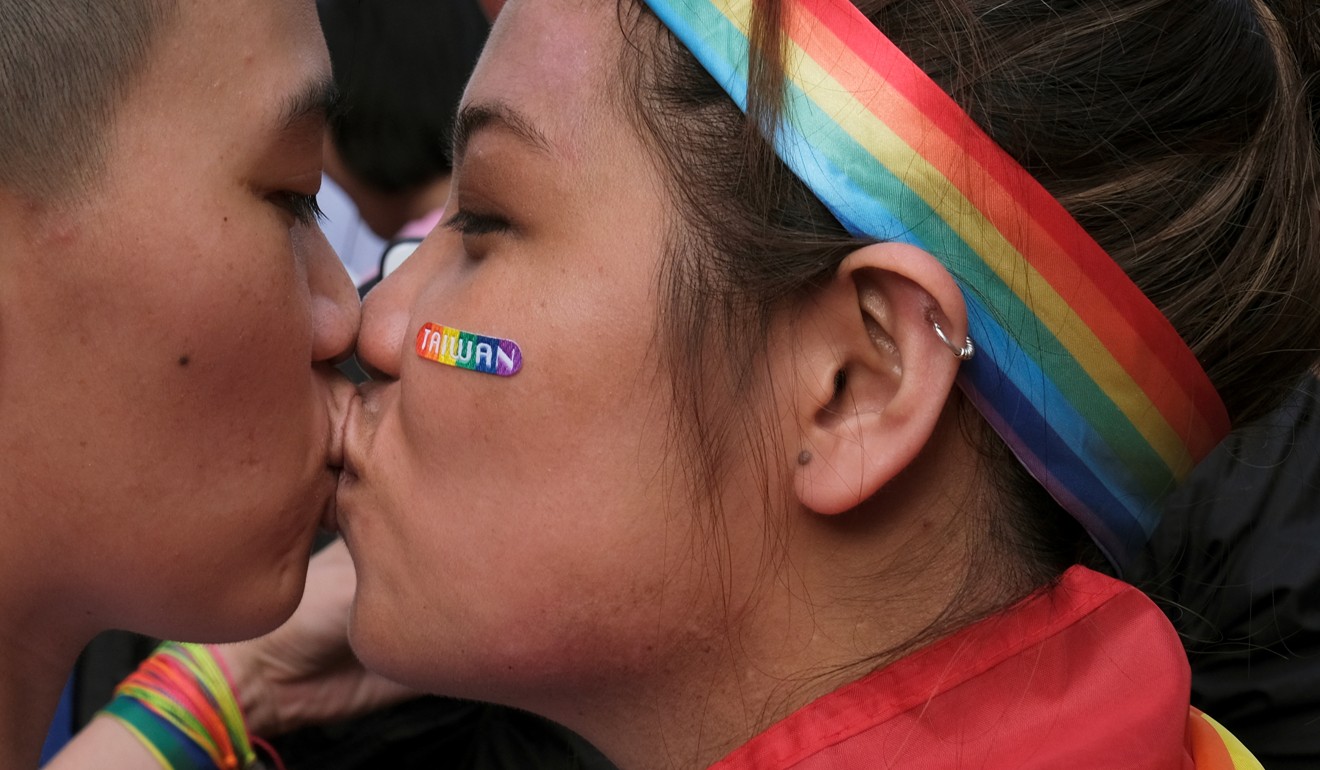
A couple kiss as they celebrate Taiwan’s legalisation of same-sex marriage. Photo: Reuters
Hinsch describes the ceremony in this way: “After an exchange of ritual gifts, the foundation of the Chinese marriage ceremony, a feast attended by female companions served to witness the marriage. These married lesbian couples could even adopt female children, who in turn could inherit family property from the couple’s parents.”
While these “marriages” are not equivalent to the same-sex marriages of today, they nevertheless are historical precedents for what is now happening in Taiwan.
And China is far from being the only country in Asia with a queer history – Southeast Asia’s LGBTQ history is even richer.
Why some members of Singapore’s LGBT community prefer life in the shadows
In the early modern period, marriages between two people of the same assigned sex but who identified as different genders, were fairly normal in many parts of Southeast Asia. We know this primarily from the records Europeans kept when they landed on Asian shores.
For instance, here is a letter by a Portuguese missionary, Antonio de Paiva, to his Catholic bishop in 1544 about his observations of the Bugis people in what is now
: “Your lordship will know that the priests of these kings are generally called bissus. They grow no hair on their beards, dress in a womanly fashion, and grow their hair long and braided; they imitate [women’s] speech because they adopt all of the female gestures and inclinations. They marry and are received, according to the custom of the land, with other common men, and they live indoors, uniting carnally in their secret places with the men whom they have for husbands …”
After this scandalised description, the author concludes with amazement that the Christian god, who had destroyed “three cities of Sodom for the same sin”, had not yet destroyed such “wanton people” who were “encircled by evil”.
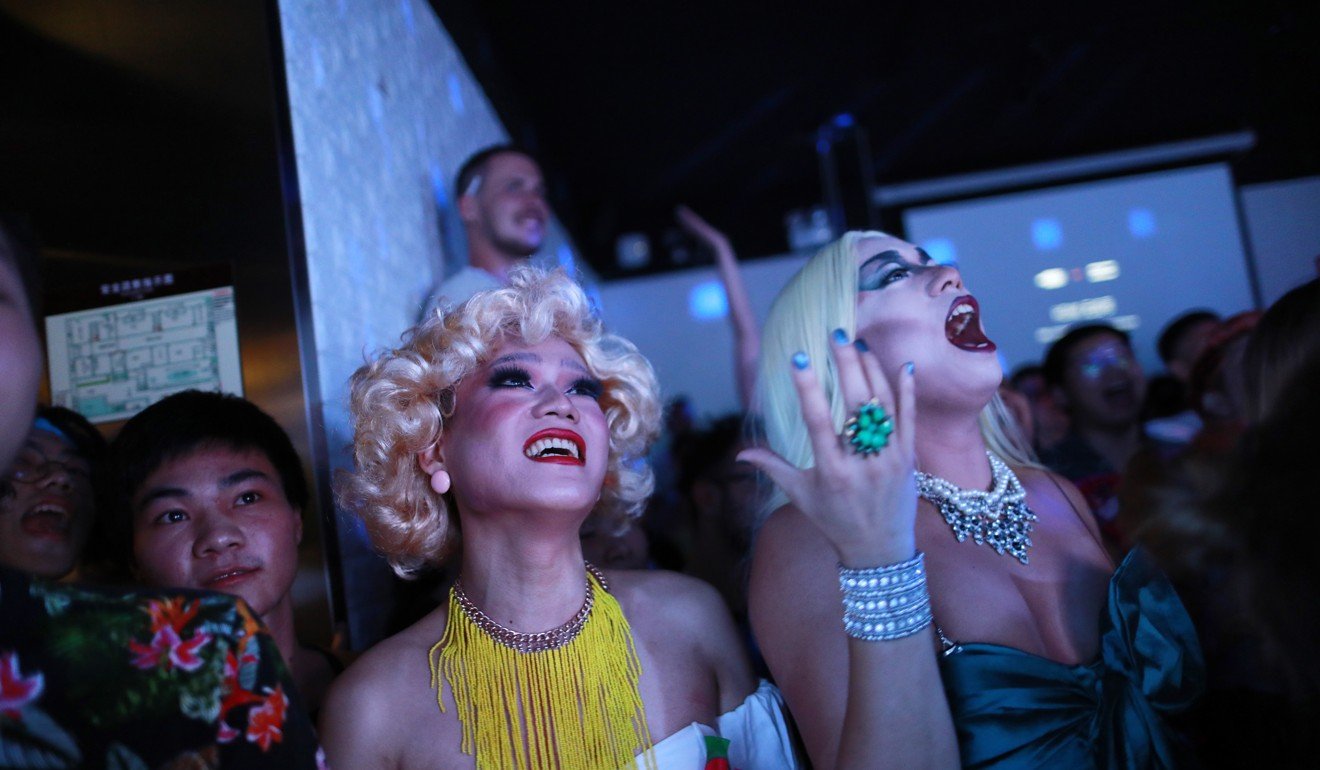
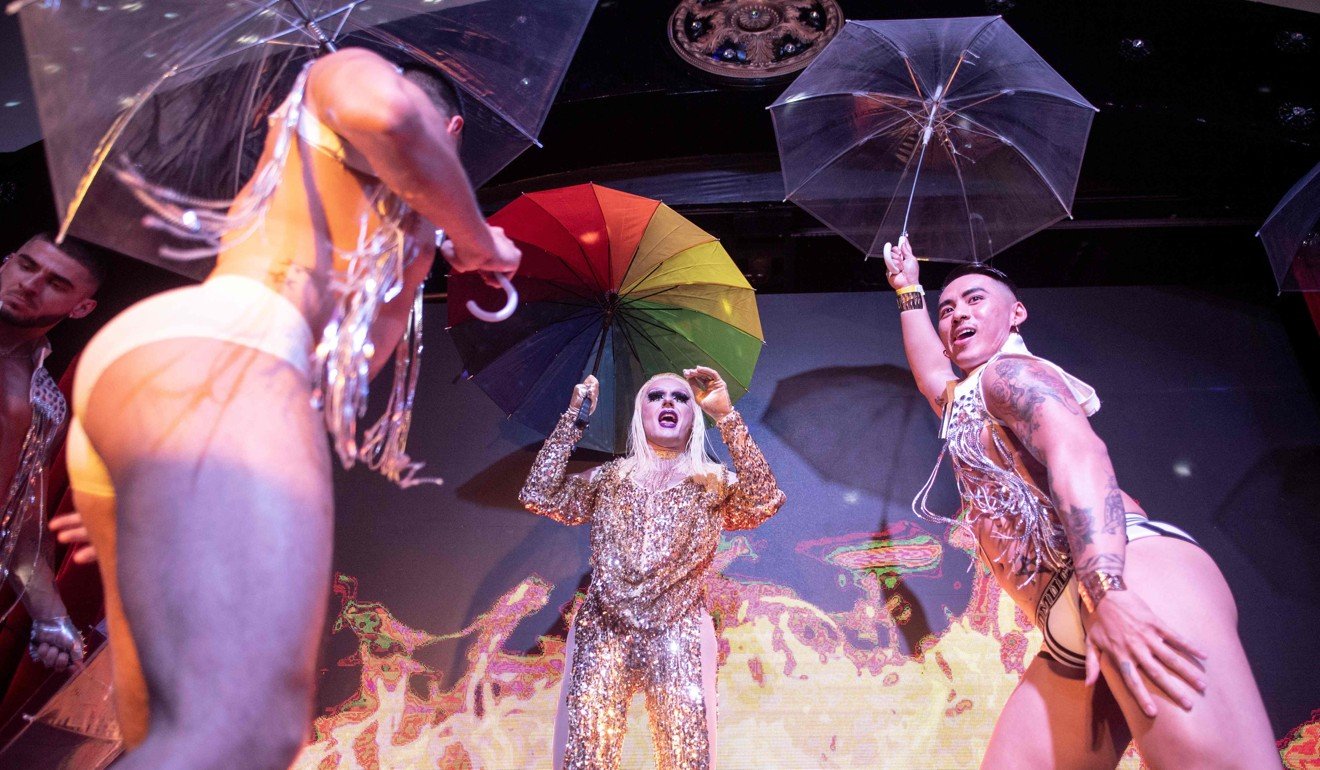
Drag queens at a gay nightclub in Beijing. Despite its reputation, Asia has a long history of accepting diversity. Photo: EPA
Dating as far back as the 13th century, bissu have traditionally served as council to kings and guarded sacred manuscripts. They are considered a fifth gender within the Bugis’ gender-system: oroané (male men), makkunrai (female women), calabai (male women), calalai (female men), and bissu, who were neither male nor female (or both).
Brunei’s LGBT residents face up to new death by stoning law against gay sex
Today, their ranks have thinned – in one area, the population has dwindled to just six people – but the tradition remains, and they still perform important blessings. Contemporary bissu are typically male-bodied individuals who adopt feminine and masculine elements in their appearance. Although in the past bissu were married men, today they are required to be celibate.
In pre-Islamic Bugis culture, bissu were accorded priestly honours and tasked with mediating between the gods and people precisely because of, not in spite of, their gender. According to professor Halilintar Lathier, an Indonesian anthropologist, Bugis culture “perceived the upper world as male and this world as female, and therefore only a meta-gender would be able to become an intermediary”.
This pattern of a “gender-expansive” priest able to marry others of the same sex recurs throughout Southeast Asia.
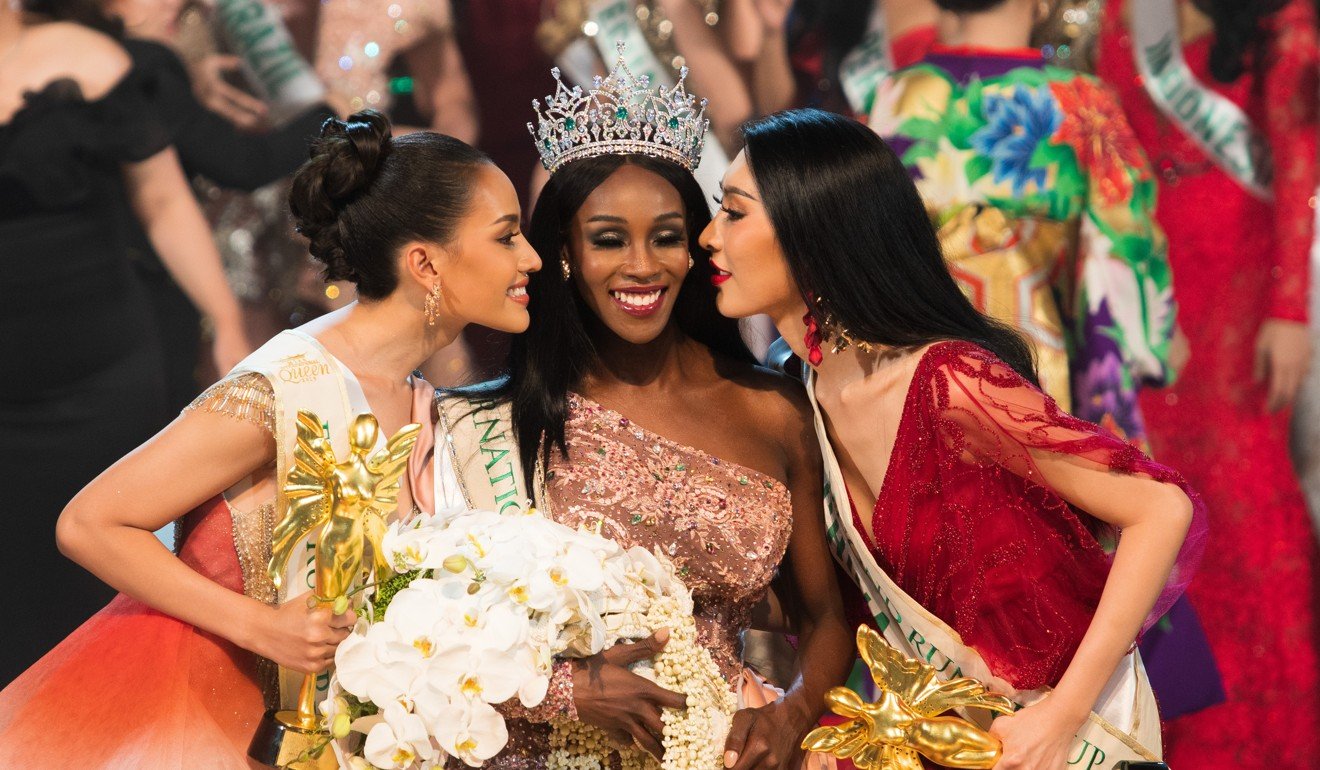
A transgender beauty contest in Pattaya, Thailand. Despite its reputation, Asia has a long history of accepting diversity. Photo: Handout
To the west of South Sulawesi is Borneo, a large island that contains all of Brunei and parts of Indonesia and
. Borneo is home to many indigenous communities, including the Iban. The Iban historically respected manang bali, who were typically male-bodied shamans who adopted feminine dress and demeanour, and who took men as their husbands. Manang bali were mediators and held roles of great ritual importance; they were typically wealthy village chiefs known for their healing arts.
West of Borneo is the Malay Peninsula, where there are records from the Malay Annals and Misa Melayu dating as far back as the 15th century about priests, called sida-sida, who served in the palaces of the Malay sultans. They were responsible for safeguarding women in the palace as well as the food and clothing of royalty, and overseeing ritual protocol. The sida-sida undertook “androgynous behaviour” such as wearing women’s clothing and doing women’s tasks. A Malay anthropologist in the 1950s, Shamsul A.B., recalls seeing male-bodied sida-sida in the royal palace in his childhood, who were believed by the population to either be celibate and asexual, or attracted to men. Michael Peletz, an anthropologist and author of Gender Pluralism in Southeast Asia, notes that based on the evidence, it is “highly likely” that sida-sida involved both male- and female-bodied people who were involved in transgender practices, and who engaged in sexual relationships with people of the same and opposite sex.
How a gay student’s suicide is helping Japan’s LGBT community speak up
Northeast of Malaysia is the
, where pre-colonial communities were religiously led by babylan: women healers and shamans who were responsible for mediating between the gods and people. Male-bodied people (asog, bayog), sometimes considered a third sex, could also hold these roles so long as they comported themselves like women. A 16th century Spanish Catholic manuscript records asog in the following manner:
“Ordinarily they dress as women, act like prudes and are so effeminate that one who does not know them would believe they are women … they marry other males and sleep with them as man and wife and have carnal knowledge.”
Dancers perform at the Shanghai PRIDE opening party. Despite its reputation, Asia has a long history of accepting diversity. Photo: AFP
The Spanish priests saw these asog as “devil-possessed”, particularly because they habitually practised “sodomy” among one another. Due to the Chinese reputation for homosexuality and various Sinophobic attitudes, some even attributed the prevalence of sodomy to the Chinese, whom they said had “infected the natives” and introduced the curse to the “Indians”, although there is no evidence of this.
COLONIAL CURVEBALL
Although these examples relate to the religious arena, anthropologists believe the respect accorded to these ritual specialists were an indicator of a wider societal acceptance of gender and sexual diversity in Southeast Asia – an acceptance that began to be eroded through the introduction of world religions (particularly Christianity), modernity, and colonialism. For example, in Malaysia, Brunei,
, Myanmar and throughout the commonwealth, the British enforced a penal code that legislated against sodomy. More than half of the countries that currently legally prohibit sodomy do so based on laws created by the British.
On gay sex, India has assumed an ancient position. Read the kama sutra
Similarly, after the Chinese were defeated by Western and Japanese imperialists, many Chinese progressives in the early 20th century sought to modernise China, which meant adopting “modern” Western ideas of dress, relationships, science and sexuality.
Concubinage was outlawed, prostitution was frowned upon, and women’s feet were unbound. It also meant importing European scientific understandings of homosexuality as an inverted or perverted pathology. These “scientific ideas” were debunked in the 1960s in the West, but lived on in China, frozen in time, and have only recently begun to thaw with the rise of LGBTQ activists in Asia.
A recent headline on the news from Taiwan read: “First in Asia: marriage equality comes to Taiwan”, as if the recent bill was an unprecedented “first” for Asia and that marriage equality – which, presumably, the headline writer associates with the West – has finally reached Asian shores.
But when we zoom out historically, it is evident that what happened in Taiwan is not so much a novel “breakthrough” for Asia. It is more a reconnection to its queer Chinese and Asian heritage, as well as a rejection of outdated Western ideas that it once adopted.
There is still much more work to be done to advance LGBT rights in Taiwan and the rest of Asia, but perhaps looking backwards in time can help us move forward.
Source: SCMP
Posted in adoptive older brother), adoptive younger brother, anthropologist, Antonio de Paiva, Asia, “Golden Orchid Associations”, “sisterhood” alternative, babylan, Beijing, bissu, Borneo, Bret Hinsch, Brunei, Bugis people, Bugis’ gender-system, calabai (male women), calalai (female men), carnal knowledge, carp, celibate, China alert, Chinese playwright, Chinese progressives, Chinese Society, colonial era, Concubinage, Drag queen, duck, embraced, encountered, Europeans, female “quasi-marriages”, Fujian Province, gay ‘marriage’, gay nightclub, gender diversity, Gender Pluralism in Southeast Asia, Guangdong, Hakka, Han, History, homosexual relationships, Iban, imperialists, Indians, Indonesia, Japanese, jurisdiction, Li Yu (1610-1680), makkunrai (female women), Malay Annals, Malay Peninsula, Malaysia, male lovers, Michael Peletz, Ming Dynasty, Misa Melayu, Myanmar, neither male nor female (or both), oroané (male men), patron deity of homosexuality, Pattaya, perverted, Portuguese missionary, professor of history, Prostitution, qidi, qixiong, queer relationships, rabbit, rooster, sexual and gender diversity, sin, Singapore, Sinophobic attitudes, Sodom, South Korean men, South Sulawesi, southern China, Spanish priests, Taiwan, Taiwan’s law, Thailand, times of birth, transgender beauty contest, Uncategorized, West, Western |
Leave a Comment »






 CHINDIA ALERT: You'll be living in their world, very soon