Chindia Alert: You’ll be Living in their World Very Soon
aims to alert you to the threats and opportunities that China and India present. China and India require serious attention; case of ‘hidden dragon and crouching tiger’.
Without this attention, governments, businesses and, indeed, individuals may find themselves at a great disadvantage sooner rather than later.
The POSTs (front webpages) are mainly 'cuttings' from reliable sources, updated continuously.
The PAGEs (see Tabs, above) attempt to make the information more meaningful by putting some structure to the information we have researched and assembled since 2006.
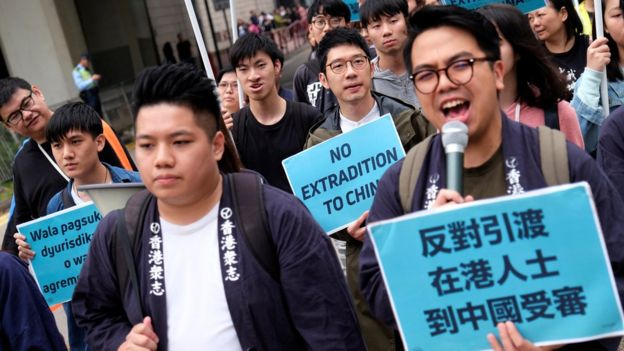
HONG KONG (Reuters) – Thousands of people marched on Hong Kong’s parliament on Sunday to demand the scrapping of proposed extradition rules that would allow people to be sent to mainland China for trial – a move which some fear puts the city’s core freedoms at risk.
Opponents of the proposal fear further erosion of rights and legal protections in the free-wheeling financial hub – freedoms which were guaranteed under the city’s handover from British colonial rule to Chinese sovereignty in 1997.
Early estimates suggested several thousand people had joined the march along Hong Kong Island from Causeway Bay to the council in the Admiralty business district.
Veteran Hong Kong activist and former legislator Leung Kwok-hung said the government’s move risked removing Hong Kongers’ “freedom from fear”.
“Hong Kong people and visitors passing by Hong Kong will lose their right not to be extradited into mainland China,” he said. “They would need to face an unjust legal system on the mainland.”
Some younger marchers said they were worried about travelling to China after the move, which comes just as the government encourages young people to deepen ties with the mainland and promotes Hong Kong’s links with southern China.
The peaceful marchers chanted demands for Hong Kong’s Executive Carrie Lam to step down, saying she had “betrayed” Hong Kong. Some sported yellow umbrellas – the symbol of the Occupy civil disobedience movement that paralysed parts of Hong Kong for 11 weeks in 2014.
The proposed changes have sparked an unusually broad chorus of concern from international business elites to lawyers and rights’ groups and even some pro-establishment figures.
Chris Patten, the last British governor of Hong Kong who handed the city back to Chinese rule in 1997, on Saturday described the move “as an assault on Hong Kong’s values, stability and security”, government-funded broadcaster RTHK reported.
Chief Executive Lam and other government officials are standing fast by their proposals, saying they are vital to plug long-standing loopholes.
Under the changes, the Hong Kong leader would have the right to order the extradition of wanted offenders to China, Macau and Taiwan as well as other countries not covered by Hong Kong’s existing extradition treaties.
As a safeguard such orders, to be issued case-by-case, could be challenged and appealed through the city’s vaunted legal system.
Government officials have said no-one at risk of the death penalty or torture or facing a political charge could be sent from Hong Kong. Under pressure from local business groups, they earlier exempted nine commercial crimes from the new provisions.
The proposals could be passed into law later in the year, with the city’s pro-democratic camp no longer holding enough seats to block the move.
The government has justified the swift introduction of the changes by saying they are needed so a young Hong Kong man suspected of murdering his girlfriend in Taiwan can be extradited to face charges there.
The government’s assurances are not enough for Lam Wing-kee, a former Hong Kong political bookseller who said in 2016 he was abducted by mainland agents in the city.
Lam left Hong Kong for Taiwan last week, saying he feared being sent back to the mainland under the new laws and his experienced showed he could have no trust in China’s legal system.
A group of 33 followers of Falun Gong, a religious sect banned in China, flew from Taiwan to Hong Kong on Saturday to join the march but were refused entry to Hong Kong, RTHK reported.
Sunday’s march comes amid renewed calls for deeper electoral reforms stalled five years ago after Occupy protests.
Four leaders of the movement were last week sentenced to jail terms ranging from eight to 16 months, part of a group of nine activists found guilty after a near month-long trial.
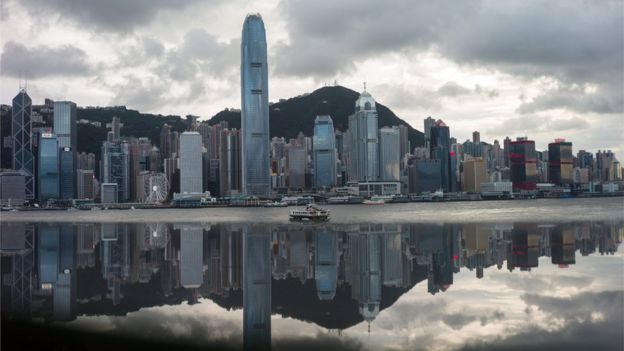
Image copyrightREUTERSImage captionHong Kong is part of China but has its own judicial system
The Hong Kong government has proposed changes to extradition laws that could allow transferring suspects to mainland China for trial. The move has further fuelled fears of erosion of the city’s judicial independence amid Beijing’s increasing influence.
The Hong Kong government will also consider extradition requests from Taiwan and Macau after the new changes.
Officials say the change is needed so that a murder suspect can be extradited to Taiwan for trial, and that mainland China and Macau must be included in the change to close a “systematic loophole”.
Hong Kong’s leader Carrie Lam has pushed for the amendments to be passed before July.
What are the changes?
The changes will allow for extradition requests from authorities in mainland China, Taiwan and Macau for suspects accused of criminal wrongdoings, such as murder and rape.
The requests will then be decided on a case-by-case basis.
Image copyrightREUTERSImage captionOver 100,000 protesters took to Hong Kong streets to rally against the government’s proposal.
Several commercial offences such as tax evasion have been removed from the list of extraditable offences amid concerns from the business community.
Hong Kong officials have said Hong Kong courts will have the final say whether to grant such extradition requests, and suspects accused of political and religious crimes will not be extradited.
Why is this controversial?
There has been a lot of public opposition, and critics say people would be subject to arbitrary detention, unfair trial and torture under China’s judicial system.
“These amendments would heighten the risk for human rights activists and others critical of China being extradited to the mainland for trial on fabricated charges,” Sophie Richardson of Human Rights Watch said in a statement.
Lam Wing Kee, a Hong Kong bookseller said he was abducted and detained in China in 2015 for selling books critical of Chinese leaders and charged with “operating a bookstore illegally”.
During a recent protest against the government proposal, Mr Lam said he would consider leaving the territory before the proposal was passed.
“If I don’t go, I will be extradited,” he said. “I don’t trust the government to guarantee my safety, or the safety of any Hong Kong resident.”
Though some pro-Beijing politicians eager to defend China, dispute the criticism of its judicial system.
Image copyrightEPAImage captionHong Kong and China – one country, two systems
The changes have also attracted opposition from the Hong Kong business community over concerns they may not receive adequate protection under Chinese law.
The proposal has already sparked a legal challenge from Hong Kong tycoon Joseph Lau, who was convicted in absentia in a corruption case in Macau in 2014.
Macau’s government has not been able to have Mr Lau extradited because of a lack of extradition agreement between Hong Kong and Macau, but that will become possible if Hong Kong’s legislature decides to amend the extradition laws.
His lawyers argue in a 44-page submission to Hong Kong’s courts that the Macau trial was marred by “serious procedural irregularities that rendered the trial incompatible with internationally mandated standards of fairness”.
Every citizen can request a judicial review like Mr Lau has done, but it’s the High Court that decides whether this will be granted. Most observers say there is little chance Mr Lau’s request will be successful.
Why the change now?
The latest proposal has come after a 19-year-old Hong Kong man allegedly murdered his 20-year-old pregnant girlfriend, while holidaying in Taiwan together in February last year. The man fled Taiwan and returned to Hong Kong last year.
Taiwanese officials have sought help from Hong Kong authorities to extradite the man, but Hong Kong officials say they cannot comply because of a lack of extradition agreement with Taiwan.
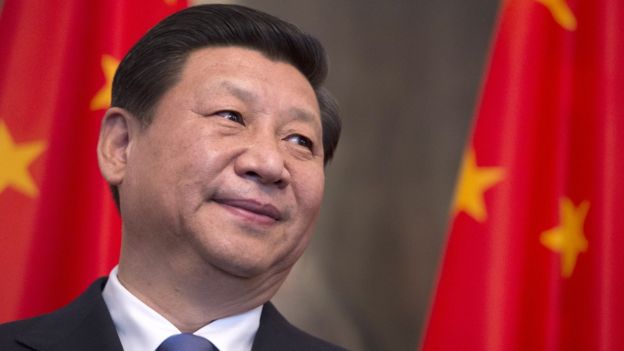
Image copyrightGETTY IMAGESImage captionUnder Xi Jinping, Beijing is seeking increasing control over Hong Kong
“Are we happy to see a suspect that has committed a serious offence staying in Hong Kong and we’re unable to deliver justice over the case?” Mrs Lam said on 1 April while responding to media questions.
She added that mainland China and Macau were included in the proposed change to address a “loophole” in current laws.
Isn’t Hong Kong part of China anyway?
A former British colony, Hong Kong is semi-autonomous under the principle of “one country, two systems” after it returned to Chinese rule in 1997.
The city has its own laws and its residents enjoy civil liberties unavailable to their mainland counterparts.
Hong Kong has entered into extradition agreements with 20 countries, including the UK and the US, but no such agreements have been reached with mainland China despite ongoing negotiations in the past two decades.
Critics have attributed such failures to poor legal protection for defendants under Chinese law.



 CHINDIA ALERT: You'll be living in their world, very soon