Chindia Alert: You’ll be Living in their World Very Soon
aims to alert you to the threats and opportunities that China and India present. China and India require serious attention; case of ‘hidden dragon and crouching tiger’.
Without this attention, governments, businesses and, indeed, individuals may find themselves at a great disadvantage sooner rather than later.
The POSTs (front webpages) are mainly 'cuttings' from reliable sources, updated continuously.
The PAGEs (see Tabs, above) attempt to make the information more meaningful by putting some structure to the information we have researched and assembled since 2006.
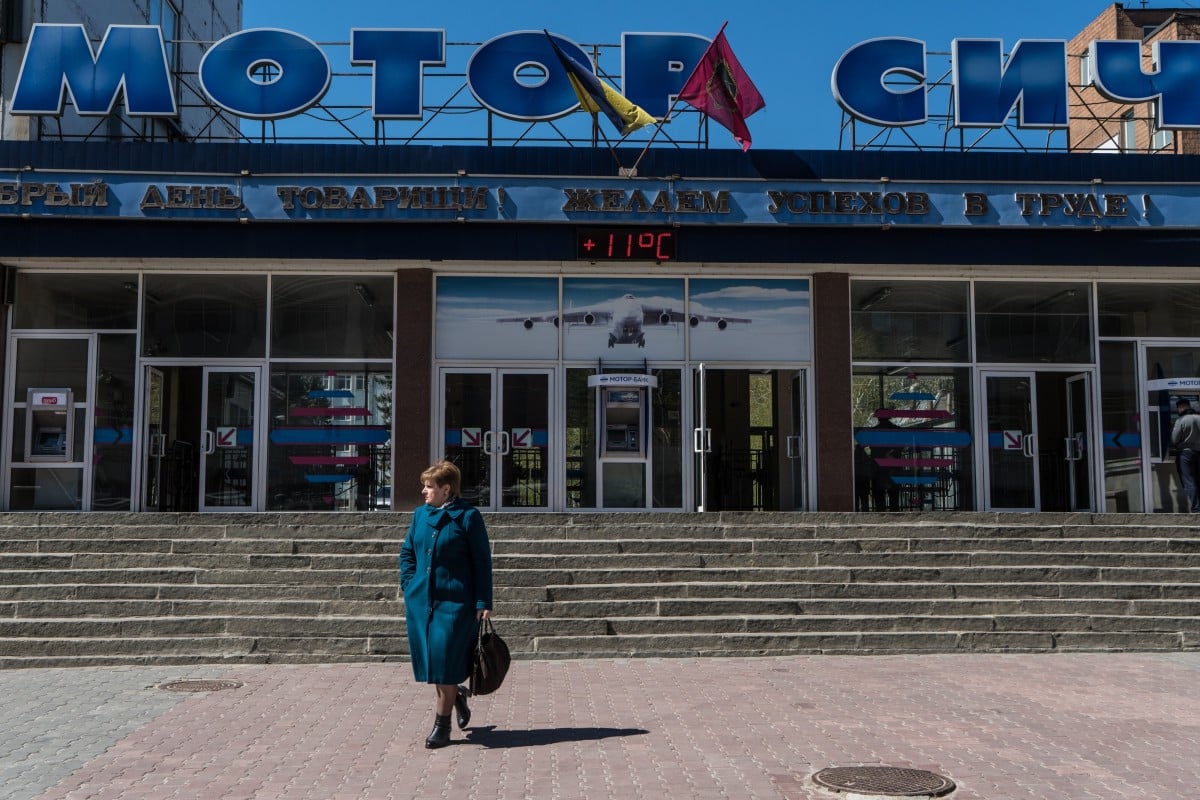
China’s Skyrizon Aircraft Holdings bought a majority stake in Motor Sich, but the shares were frozen in 2017 pending an investigation by Ukraine’s security service
Washington and Beijing have competed for influence in Ukraine since its relations with Moscow soured when Russia annexed the Crimea peninsula in 2014
Chnia’s Skyrizon says it will appeal a Kiev court’s decision to block its purchase of Ukrainian aircraft engine maker Motor Sich. Photo: Getty Images
A court in Kiev has rejected an appeal by Chinese investors to unfreeze the shares of a Ukrainian aircraft engine maker, a setback for the Chinese company that sought to buy the Ukrainian firm in a deal opposed by the United States.
China’s Skyrizon Aircraft Holdings bought a majority stake in Motor Sich, but the shares were frozen in 2017 pending an investigation by Ukraine’s security service (SBU). Washington wants the deal scrapped.
The US and China have competed for influence in Ukraine since its relations with Moscow soured when Russia annexed the Crimea peninsula in 2014.
In its ruling, the court kept the shares frozen, citing the SBU investigation into whether selling Motor Sich sabotages national security by allowing sensitive technology into foreign hands. The ruling was dated March 13, shared with the parties this week.
Skyrizon plans further appeals, said a lawyer involved in the case, speaking anonymously due to the political sensitivity of the case. Zelensky’s office, the US embassy and the Chinese embassy did not respond to requests for comment. Motor Sich and the SBU declined to comment.
Motor Sich severed ties with Russia after the annexation of Crimea. Photo: Wikipedia
Motor Sich severed ties with Russia, its biggest client, after the annexation of Crimea. The wrangle over its future has held up efforts to find new markets, and supporters of a quick resolution say it is now operating at less than half capacity.
“Motor Sich has become a hostage to the geopolitical situation,” former prime minister Anatoliy Kinakh, chairman of an industrial union which has called for the government to resolve the dispute quickly, said.
The state’s anti-monopoly committee has launched its own investigation and says it is waiting to receive more documents before deciding whether to sanction the sale.
President Volodymyr Zelensky’s administration has had to balance strengthening ties to Beijing with keeping the United States, its biggest military aid donor, onside. In recent weeks, Beijing and Washington have both offered aid to Ukraine to fight the coronavirus.
At the moment it is a very difficult task when we have the biggest powers in the world and their interests are in conflict in Ukraine,” Oleksandr Danylyuk, a former top security official under Zelensky, said.
Millions of Chinese children are raised by their grandparents but some seniors are demanding compensation
For generations in China grandparents have provided childcare, but some are no longer willing to do so for free. Photo: Shutterstock
The traditional role of grandparents in caring for China’s children has been called into question with two recent lawsuits sparking debate about whether seniors should be paid for their efforts.
Two grandmothers took their demands for compensation to court in separate cases which have highlighted the reliance of Chinese workers on their parents to provide childcare while they pursue professional advancement.
A woman in Mianyang, in the southwestern province of Sichuan, was awarded more than 68,000 yuan (US$9,500) by a local court after she sued her son and daughter-in-law for the costs of raising her nine-year-old grandchild, according to Red Star News.
The woman, identified only by her surname Wang, had been the child’s full-time carer for eight years after his parents left home to seek better-paid jobs elsewhere. Wang said she had taken care of most of her grandson’s living expenses and had decided to seek compensation when his parents said they were considering a divorce.
They should respect our contribution. Grandmother Wang, Sichuan province
“I only want to let them know through this lawsuit that it’s their obligation to raise their children,” she was reported as saying. “The young ones should not take it for granted that old people ought to look after their grandchildren. They should respect our contribution.”
Despite winning the case, she has not received a penny and the boy still lives with her.
In another case, three months ago, a Beijing court supported a woman’s demand for compensation for helping to raise her granddaughter since her birth in 2002.
The stories of the two women generated a public reflection on the Chinese way of childcare which, for generations, has involved leaving most – if not all – of the burden on grandparents.
One of 60 million: life as a ‘left-behind’ child in China
From a cultural perspective, it has been a matter of course in a country with a long history of several generations living under one roof, for grandparents to participate in child rearing, according to Xu Anqi, a researcher specialising in family studies at the Shanghai Academy of Social Sciences.
“Today, as people face fierce competition and great pressure from work, it’s still common to rely on their old parents to look after their children,” she said.
While rapid urbanisation in recent decades has broken up multi-generational households, Chinese elderly still take an active role in child rearing, with many relocating to their children’s cities to take on the job.
Millions more families do it the other way round – with parents leaving children in their hometown with the grandparents while they seek better paying jobs in the cities. In August last year, according to the Ministry of Civil Affairs, China had nearly 7 million “left behind kids”, as they are known.
My little granddaughter is adorable, and generally I enjoy doing all this.Li Xiujuan, grandmother
“Many grandmothers like me would joke that we are ‘unpaid nannies’, but at the same time we feel it’s our responsibility to help them out – they would be in financial stress if one of them quit or they hired a nanny,” said Li Xiujuan, who relocated from her hometown in the central province of Henan to Shanghai two years ago to help look after her granddaughter.
“I’m a 24-hour nanny for my grandkid. I prepare food for her, wash her clothes, attend early childhood classes with her, take her for a walk in the park twice a day, sleep beside her at noon and night …” she said.
“I never cared for my daughter when she was little like I do her daughter now. You know, it was also her grandmother who mainly took care of her daily life when she was young,” Li said, laughing.
“My little granddaughter is adorable, and generally I enjoy doing all this. The hard part is that I miss my friends and relatives back home. We don’t have friends here. I have plenty of things to do at home, but here, nothing but babysitting. People are polite, but it’s difficult to make new friends,” she said.
‘Left behind’ sisters cry when parents leave home to go to work
In a 2017 study of about 3,600 households in six major cities including Beijing and Guangzhou, the Chinese Society of Education found almost 80 per cent of surveyed households had at least one grandparent as carer before children began primary school.
The study also showed that 60 per cent of parents still relied on help from grandparents after children were old enough for primary school at the age of six.
Whether grandparents should be compensated for their efforts split a poll of 49,000 users conducted by social media platform Weibo in late June, with half believing that the older generation should be paid for raising their grandchildren. Only 2.3 per cent said babysitting grandchildren was “an unalterable principle” for the elderly.
“This arrangement could be well managed and improve blood ties if children reward the elderly in their own ways, such as sending gifts on holidays and taking them on trips,” Shanghai researcher Xu said.
I think what they need more is words of appreciation, which many of us have neglected. David Dai, Beijing parent
Grandmother Li agreed: “I think regular payment is a little awkward, but I do expect some kind of reward, like cash gifts on festivals and daily necessities as presents.”
David Dai, a 30-year-old white collar worker in Beijing, said how to reward grandparents for their contribution depended on the financial situation of each household.
“My parents are farmers – they are in good shape and not so old – in their late 50s, and if they didn’t come all the way from my hometown in Anhui to Beijing to look after my son, they would still be taking some odd jobs,” he said.
“Therefore, besides covering their living costs at my place, I give them cash gifts on their birthdays, the Spring Festival and other important occasions, because babysitting their grandchild means they lose the opportunity to work,” he added.
“In some families, the grandparents might have retired and have a good pension. They don’t lack money and enjoy spending time with their grandkids. I don’t think they need to be paid. I think what they need more is words of appreciation, which many of us have neglected,” Dai said.
China boosts childcare and maternal health services in bid to lift birth rate
But for those who never show any gratitude, their parents have every reason not to offer child rearing help or to demand payment, Xu said.
Zhang Tao, a lawyer at the Hiways Law Firm in Shanghai, noted that as long as at least one parent of a child was living, the grandparents had no obligation to help with childcare.
“The grandparents should be compensated for the money they have paid for the child’s education, medical fees, and accommodation from the beneficiary,” he said.
But whether they should be paid has become the latest controversy as more grandparents find it a burden.
A Pakistani military court sentenced Kulbhushan Jadhav to death in April 2017 on charges of spying and terrorism after having claimed to have arrested him from its restive province Baluchistan in March 2016.
Former Indian navy officer Kulbhushan Sudhir Jadhav is seen on a screen during a news conference at the Ministry of Foreign Affairs in Islamabad, Pakistan on December 25, 2017. (Reuters)
India on Monday said its national Kulbhushan Jadhav was sentenced to death by a farcical trial by a Pakistan military court without giving him consular access to India in breach of international law and convention.
Senior lawyer Harish Salve, appearing for India at the International Court of Justice that will hear the case for four days, said Pakistan has no substantive defence in the case and hadn’t even divulged fundamental details of the so-called offences for which Kulbhushan Jadhav had been convicted.
The face off comes against the backdrop of the Pulwama terror attack last week. Over 40 CRPF jawans were killed in the suicide bombing in south Kashmir that has led to national outrage and provoked Delhi to scrap the most favoured nation status to Pakistan.
The world court had stayed Jadhav’s execution in a unanimous order in May 2017 after it was approached by New Delhi. India and Pakistan have submitted written pleadings on several occasions last year.
Jadhav, a former Navy officer, had started a business and was reported to be in Iran in this connection when, according to India, he was kidnapped in March 2016. He turned up in Pakistan a few weeks later in custody of the Pakistani military that claimed to have arrested him from Baluchistan and accused him of spying and espionage.
Salve, a former solicitor general, told the UN court that India had sent 13 reminders for consular access to Jadhav on various dates but had received no positive response from Pakistan.
He told the court that Pakistan also didn’t share any details of the investigation and the alleged “confession” was obtained from Jadhav even before registering an FIR.
“Considering the trauma he (Jadhav) has been subjected to over the past three years, it would be in the interest of justice of making human rights a reality, to direct his release,” Salve told the 15-judge court.
“India seeks relief in declaring that the trial by the military court in Pakistan… hopelessly fails to satisfy even minimum standards of due process and should be declared unlawful,” he said, attacking the Pakistani government to use the case as a means of propaganda.
Pakistan will present its arguments at the ICJ on February 19. India will reply to Pakistan’s argument on February 20. Pakistan will make its closing submission on February 21.
The ICJ is expected to deliver its judgment a few months later.
BEIJING (Reuters) – Two lawyers hired by the wife of an Australian detained in Beijing for suspected espionage said they have been denied access to him by Chinese authorities on the grounds that the detainee did not agree to their appointment.
Yang Hengjun, a 53-year-old Chinese-born writer, was detained in the southern city of Guangzhou while waiting for a transfer to Shanghai last month, after flying in from New York.
He was taken to Beijing, where China has said the city’s State Security Bureau is holding him under “coercive measures”, a euphemism for detention, as he is investigated on suspicion of “endangering state security”.
One of the lawyers, Mo Shaoping, said the state security bureau informed him on Friday that Yang “did not accept lawyers appointed by his family”, but that the bureau rejected his request to verify this with Yang in person.
“The thing we’re most concerned about is whether this is the real wish of Yang Hengjun,” the other lawyer, Shang Baojun, told Reuters, adding that they hoped to glean more information when Australian consular officials are allowed to meet with him next.
China’s Ministry of State Security has no publicly available contact details. The Foreign Ministry did not immediately respond to a faxed request for comment on Saturday, but has previously said that Yang’s rights and interests were being protected in accordance with the law.
Mo previously told Reuters that his client was suspected of “espionage”, and was being held under “residential surveillance at a designated location”.
The special detention measure allows authorities to interrogate suspects for six months without necessarily granting access to legal representation. Rights groups say that the lack of oversight raises concern about abuse by interrogators.
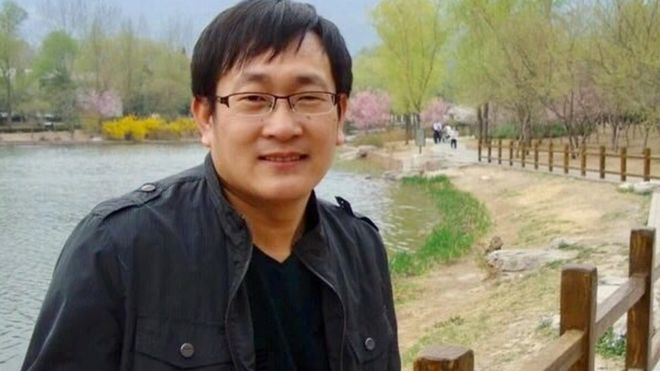
Image copyrightFAMILYImage captionWang Quanzhang went missing in a 2015 crackdown
China has sentenced prominent human rights lawyer Wang Quanzhang to four and a half years in prison for state subversion.
Wang, 42, had defended political campaigners and victims of land seizures, as well as followers of the banned spiritual Falun Gong movement.
He was one of several lawyers and activists arrested in a 2015 crackdown, and the last to go on trial.
China has intensified its prosecution of rights lawyers in recent years.
Mr Wang was “found guilty of subverting state power, sentenced to four years and six months in prison, and deprived of political rights for five years,” the court in Tianjin said.
The trial had been conducted behind closed doors with journalists and foreign diplomats barred from entering the courthouse.
Reuters news agency reports that Wang fired his state-appointed lawyer during the proceedings.
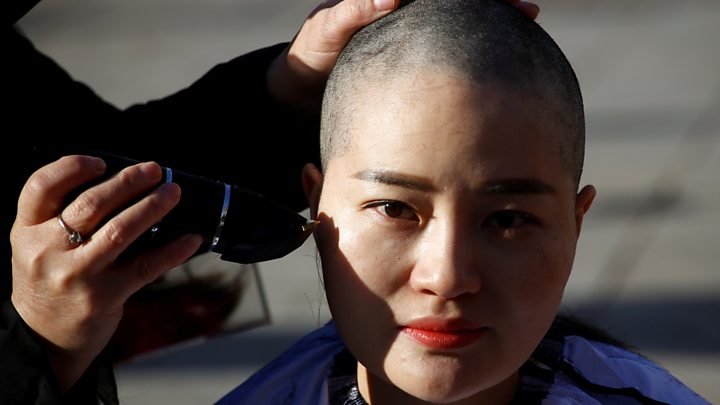
Wang’s wife, Li Wenzu, was also banned from attending and confined to her home in Beijing. A tireless champion of his case, she has shaved her head in protest against his detention and files near-weekly petitions to China’s highest court.
Media captionWang’s wife and her friends shave their heads to protest against his detention
In April, police intercepted Ms Li after she began a 100km (62 mile) march calling for her husband’s release. She was forcibly returned to Beijing and placed under temporary house arrest with her five-year-old son.
After the verdict Ms Li tweeted: “Wang Quanqi is not guilty, the public prosecution law is guilty!”
‘A chilling message’
John Sudworth, BBC News, Beijing
Wang Quanzhang had disappeared so completely into a legal black hole, that for much of the past three and half years, his family did not know if he was alive or dead.
He was denied family visits and denied the right to appoint his own lawyer.
Perhaps he’d been seriously injured, those who knew him wondered. Or perhaps, against all the odds, he was somehow managing to hold out – refusing the pressure, and perhaps the torture too, and refusing to confess.
Other lawyers caught up in the same 2015 crackdown, have since been processed, convicted and sentenced.
Whatever the reason for the delay in Mr Wang’s case – his brief one-day trial was finally held behind closed doors over Christmas – he has been found guilty for much the same reason; his attempts to use the letter of the Chinese law to hold the authorities to account in their own Communist Party-run courts.
As the Party has been making clear in recent years, it sees concepts such as constitutionalism and an independent judicial system as dangerous Western ideals.
Mr Wang’s fate is likely intended to reinforce that chilling message.
Michael Caster, researcher and author of The People’s Republic of the Disappeared, told the BBC that Wang’s case was “emblematic of Xi Jinping’s assault on the human rights and legal community”.
“The rights defence and broader civil society community in China is rightly outraged. For some time now they have rallied around Wang Quanzhang and his wife Li Wenzu as symbolic of both abuse and resistance under Xi Jinping,” he said after the sentencing.
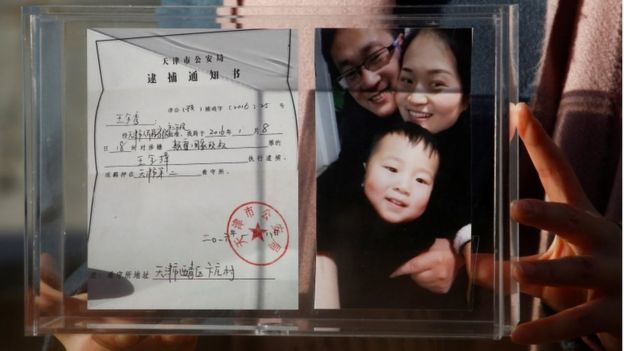
Image copyrightREUTERSImage captionLi Wenzu holds a family picture, and her husband’s detention notice
Mr Caster said that “the UN Working Group on Arbitrary Detention has found that Wang’s detention is arbitrary, which means that under international law he should never have faced a trial in the first place, and so obviously should never have faced any length of sentence”.
Rights groups have condemned the trial with Amnesty International calling it a “sham” and the verdict “a gross injustice”.
“It’s outrageous that Wang Quanzhang is being punished for peacefully standing up for human rights in China,” Amnesty China researcher Doriane Lau said in a statement.
China’s crackdown on lawyers, known as the “709” crackdown because it began on 9 July, has been seen by activists as a sign of a growing intolerance of dissent under President Xi Jinping.
More than 200 people were detained in that sweep, with many given jail terms, suspended sentences or house arrest.








 CHINDIA ALERT: You'll be living in their world, very soon