Archive for ‘loss’

04/05/2020

Coronavirus: billionaire Warren Buffett’s prediction for America after Berkshire Hathaway’s US$50 billion loss

  • Buffett’s Berkshire posted a record quarterly net loss of nearly US$50 billion
  • Company sells entire stakes in US airlines, Buffett says ‘world has changed’

Warren Buffett speaks during the virtual Berkshire Hathaway annual shareholders meeting. Photo: Bloomberg

Billionaire investor Warren Buffett said Saturday he’s confident the US economy will bounce back from its pummelling by the coronavirus pandemic because “American magic has always prevailed”.

The 89-year-old made the sanguine prediction about the world’s largest economy as his holding company Berkshire Hathaway reported first-quarter net losses of nearly US$50 billion.

Buffett also announced Saturday that his company had sold all its stakes in four major US airlines last month, as the pandemic clobbered the travel industry.

“It turns out I was wrong,” he said of his acquisitions of 10 per cent stakes in American Airlines, Delta Air Lines, Southwest Airlines and United Airlines.

Berkshire Hathaway had paid US$7 billion to US$8 billion, and “we did not take out anything like that,” he said.

Between the purchases that took place over months, and the sale, “the airlines business I think changed in a very major way” and could no longer meet Berkshire criteria for profitability, he said.

Buffett’s announcement may further hurt airlines already pushed to the brink by coronavirus lockdown measures, now looking to the US government for US$25 billion in relief funds.

Berkshire Hathaway, based in Omaha, Nebraska, called its first-quarter setback “temporary” but said it could not reliably predict when its many businesses would return to normal or when consumers would resume their former buying habits.

Warren Buffett (left) and vice-chairman Charlie Munger at the annual Berkshire shareholder shopping day in Omaha, Nebraska in 2019. Photo: Reuters
“We’ve faced great problems in the past, haven’t faced this exact problem – in fact we haven’t really faced anything that quite resembles this problem,” Buffett said in a lengthy speech on the country’s economic history.

“But we faced tougher problems, and the American miracles, American magic has always prevailed and it will do so again.”

“We are now a better country, as well as an incredibly more wealthy country, than we were in 1789 … We got a long ways to go but we moved in the right direction,” he said, referencing the abolition of slavery and women’s suffrage.

Warren Buffett has traded his old flip phone for Apple’s iPhone

25 Feb 2020

“Never bet against America.”

Buffett is considered one of the savviest investors anywhere. His fortune of US$72 billion is the fourth-largest in the world, according to Forbes, and in normal years, the company’s annual gathering in Omaha is a high-point of the calendar for investors, a “Woodstock for capitalists”.

But the devastating economic impact of the pandemic has hit hard at Berkshire Hathaway’s wide range of investments, and the need for social distancing forced it to hold the annual meeting online.

Buffett addressed his shareholders in a live-stream flanked only by Gregory Abel, who is in charge of Berkshire’s non-insurance operations.

His business partner for six decades, 96-year-old Charlie Munger, did not appear.

China’s first-quarter GDP shrinks for the first time since 1976 as coronavirus cripples economy
Buffett, in a statement, played down his company’s bleak-looking net figure. He said a better measure of the company’s performance was its operating earnings, which exclude investments and are less subject to sharp fluctuations.
By that measure, Berkshire Hathaway saw growth to US$5.9 billion from US$5.55 billion a year earlier.
The brutal drop in the net – to a loss of US$49.75 billion from a profit last year of US$21.7 billion – resulted primarily from the virus-related decline in value of its broad investment portfolio, which ranges from energy to transport to insurance and technology.
Chinese cryptocurrency billionaire finally sits down to eat with Warren Buffett
7 Feb 2020

The annual meeting often has an almost carnival atmosphere, as thousands of fans and investors flock to Nebraska to hear from the celebrated “Oracle of Omaha”. Buffett, famous for his relatively modest lifestyle, turns 90 on August 30.

In documents filed Saturday, Berkshire noted that until mid-March many of its companies were posting “comparative revenue and earnings increases” over the same 2019 period.

Many of its companies – including in rail transport, energy production and some manufacturing and service businesses – are deemed essential and are able to continue working amid the far-reaching confinement orders.

But their turnover slowed considerably in April, the company statement said.

Moves taken by those companies such as employee furloughs, salary cuts and reductions, and capital spending reductions are “necessary actions” and “temporary,” it said.

Source: SCMP
18/02/2020

India’s bird population ‘going down sharply’

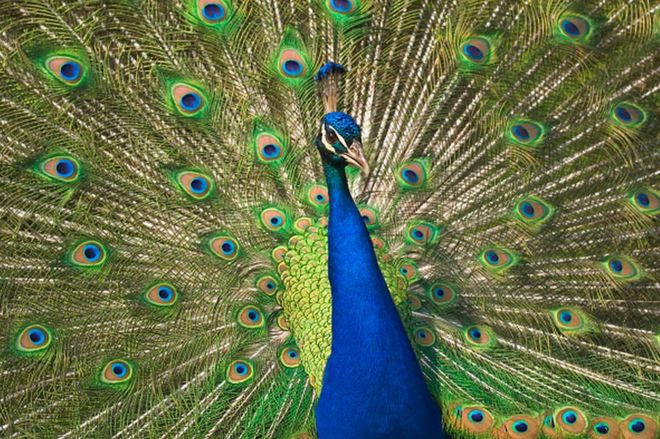
Indian peafowlImage copyright GETTY IMAGES
Image caption The population of peafowl, the national bird, has increased significantly

Much of India’s bird population has sharply declined in the past few decades, according to a major study.

The State of India’s Birds report relied on the observations of more than 15,000 birdwatchers who helped assess the status of 867 birds.

It found the greatest decline in the numbers of eagles, vultures, warblers and migrating shorebirds.

But the population of peafowl, the national bird, has increased significantly.

Hunting and habitat loss are the two main reasons behind the decline. “Collision” with electricity lines, according to the study, is a “prime current threat” to birds.

The report, the first comprehensive study of its kind, made two assessments: the drop in bird population over the last 25 years, and over the last five years.

“In the long-term trend assessment, there was appropriate data available only for 261 species, of which 52% had declined [in numbers]. For current trends, there was data only for 146 species, of which [numbers of] nearly 80% were declining,” said MD Madhusudan, co-founder of Nature Conservation Foundation.

It’s based on more than 10 million observations, drawn from sightings and meticulous notes made by professional birdwatchers.

The data was then collated on eBird, a global crowdsourced database that has real-time data on the distribution and abundance of birds.

Presentational grey line
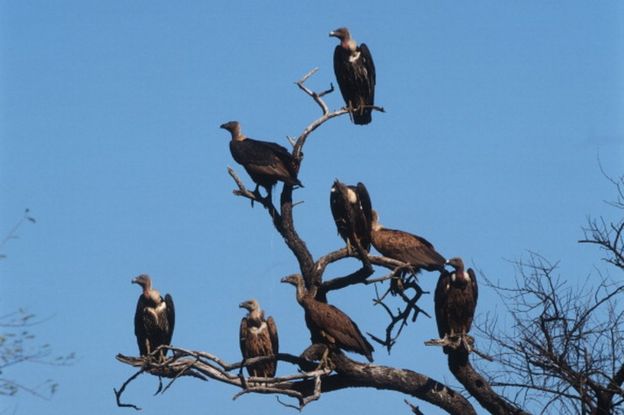
Indian white-rumped vultureImage copyright GETTY IMAGES
Image caption The population of the white-rumped vulture has gone down

Species that have suffered the highest declines

  • White-rumped Vulture
  • Richard’s Pipit
  • Indian Vulture
  • Large-billed Leaf Warbler
  • Pacific Golden Plover
  • Curlew Sandpiper

Species whose numbers have increased

  • Rosy Starling
  • Feral Pigeon
  • Glossy Ibis
  • Plain Prinia
  • Ashy Prinia
  • Indian Peafowl

(Source: State of India’s Birds report)

Presentational grey line

The local sparrow population was found to be roughly stable across the country as a whole, although it has fallen in the major cities.

The population of migratory birds – both long distance and within the subcontinent – also showed a “steep decline”.

The report says that since the 1990s, the numbers of several species of vultures, bustards and other specialist grassland birds have also drastically dropped.

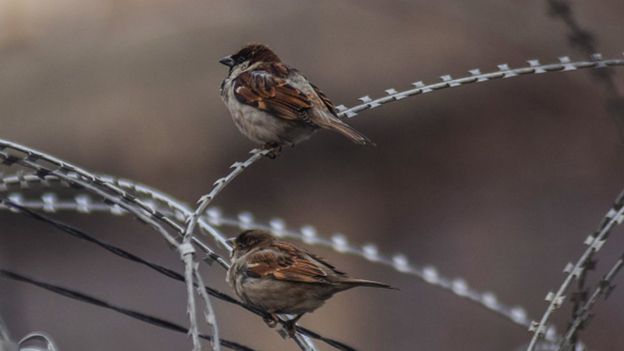
Indian sparrowImage copyright AFP
Image caption The local sparrow population has declined in the major cities

Some species popular in the bird trade, such as the Green Munia, are at “dangerously low” numbers, the report says.

Meanwhile, the Jerdon’s Courser, an endangered bird with “mysterious” breeding habits which was rediscovered in 1986 after a gap of 138 years, has not been seen since 2008.

But there’s some good news as well: the Forest Owlet, another endangered bird that was rediscovered in 1997, is being reported from many more locations.

Indian Hindu pilgrims enjoy a boat ride as sea gulls fly at Sangam in Allahabad on October 29, 2018.Image copyright AFP
Image caption The study assessed the status of 867 birds in India

But the study cautions that its research is also a chronicle of “individual species”, and not a report on the “overall health of India’s birds, including those considered common and hence of little conservation concern”.

It says that “abundance trends” are available only for “a handful of bird species” – and mostly for those that tend to be “larger, more obviously threatened and relatively charismatic”.

“For the vast majority of Indian birds, lack of data has hindered a clear understanding of how they are faring. Such an understanding is vital for conservation science, management and policy.”

Source: The BBC

12/12/2018

India’s Modi suffers biggest state election loss, boosting opposition

NEW DELHI (Reuters) – India’s ruling party lost power in three key states on Tuesday, dealing Prime Minister Narendra Modi his biggest defeat since he took office in 2014 and boosting the opposition ahead of national polls next year.

The results in the heartland rural states of Rajasthan, Chhattisgarh and Madhya Pradesh could force the federal government run by Modi’s Hindu nationalist Bharatiya Janata Party (BJP) to raise spending in the countryside, where more than two-thirds of India’s 1.3 billion people live.

Political analysts said the BJP’s defeat would underscore rural dismay with the government and could help unite the opposition led by the Congress party. Modi is personally popular but has been criticised for failing to deliver jobs for young people and better conditions for farmers.

Reacting late on Tuesday to the results, Modi wrote on Twitter: “Victory and defeat are an integral part of life. Today’s results will further our resolve to serve people and work even harder for the development of India.”

The results came as a shot in the arm for Rahul Gandhi, president of the left-of-centre Congress, who is trying to forge a broad alliance with regional groups and present Modi with his most serious challenge yet in a general election that must be held by May.

Congress has ruled India for most of its post-independence era after 1947 but was decimated by Modi’s BJP in national polls in 2014. Since then, it had struggled to make major inroads, even in state polls.

Gandhi, the fourth generation scion of the Nehru-Gandhi dynasty, has sought to build a coalition of regional groups.

On Tuesday, celebrations erupted outside the Congress party headquarters in New Delhi, with supporters dancing, setting off fircrackers and brandishing posters praising Gandhi.

“We are going to provide the states with a vision and a government they can be proud of,” Gandhi told reporters.

“There is a feeling among people that the promises made by the prime minister … have not been fulfilled.”

In Chhattisgarh, Congress was ahead in 68 of the 90 seats at stake, with the BJP on 16, according to data from the Election Commission. In Rajasthan, the Congress was leading in 99 of the 199 seats contested, against 73 for the ruling BJP.

CONGRESS CONFIDENT

In Madhya Pradesh, the most important of the five states that have held assembly elections in recent weeks, Congress was leading with 113 seats while the BJP had 110 out of 230.

Slideshow (9 Images)

Regional parties were leading in two smaller states that also voted, Telangana in the south and Mizoram in the northeast.

Congress said it was confident it could form governments in all three big states. The BJP previously ruled all three, for three terms in two of them.

The BJP said the state results would not necessarily dictate what happens in next year’s general election.

Investors said the BJP had not fared as badly as feared, and nationally would still likely have an edge over an opposition coalition in the general election.

“A disappointing set of state election results … suggests that the ruling national party has lost some goodwill,” London-based economic research consultancy, Capital Economics, said in a note.

“That said, we maintain our view that the BJP will secure victory in the general election, which would allow PM Modi to get his reform agenda back on track after a lacklustre 2018.”

Markets recovered from sharp early losses and ended marginally higher, though the central bank governor’s sudden resignation on Monday kept investors nervous.

A lawmaker for the BJP said it had erred in focusing its campaign on partisan themes, such as the building of a Hindu temple at a site disputed by Muslims, instead of offering jobs and growth.

“We forgot the issue of development that Modi took up in 2014,” said Sanjay Kakade.

Law of Unintended Consequences

continuously updated blog about China & India

ChiaHou's Book Reviews

continuously updated blog about China & India

What's wrong with the world; and its economy

continuously updated blog about China & India