Archive for ‘Macao’

12/09/2019

President Xi meets Macao’s new chief executive

CHINA-BEIJING-XI JINPING-HO IAT SENG-MEETING (CN)

Chinese President Xi Jinping meets with Ho Iat Seng, the newly elected and appointed chief executive of the Macao Special Administrative Region, at the Great Hall of the People in Beijing, capital of China, Sept. 11, 2019. (Xinhua/Xie Huanchi)

BEIJING, Sept. 11 (Xinhua) — President Xi Jinping on Wednesday met with Ho Iat Seng, the newly elected and appointed chief executive of the Macao Special Administrative Region (SAR), at the Great Hall of the People in Beijing.

Xi congratulated Ho on his appointment by the central government as the fifth-term chief executive of the Macao SAR.

“You has long adhered to the position of loving the country and Macao, enthusiastically served the Macao society, worked wholeheartedly on public posts including as a member of the National People’s Congress Standing Committee and president of the Legislative Assembly of the Macao SAR, and made contributions to the country’s reform and opening up, modernization, as well as prosperity and stability of Macao,” Xi said to Ho, adding that the central government fully recognizes such efforts.

“Your nomination and election with overwhelming support fully show that you have won broad endorsement in Macao,” Xi told Ho.

This year marks the 20th anniversary of Macao’s return to the motherland.

For the past 20 years, under the leadership of two chief executives Edmund Ho Hau Wah and Chui Sai On, the Macao SAR government has united people from all walks of life, fully and accurately understood and implemented the principle of “one country, two systems,” firmly upheld the authority of the Constitution and the Basic Law, passed on the core values of loving the country and Macao, promoted Macao’s rapid economic growth, sustained improvement in people’s livelihood and social stability and harmony, demonstrating to the world a successful practice of “one country, two systems” with Macao characteristics, said Xi.

“One country, two systems” has proved to be a workable solution welcomed by the people, said Xi.

Xi hoped that Ho will accurately grasp Macao’s situation and the country’s strategic development needs, unite and lead the Macao SAR government and people from all walks of life to strive for the region’s long-term development and continue the successful implementation of “one country, two systems.”

Ho said he is honored to be appointed the fifth-term chief executive of the Macao SAR by the central government.

Ho pledged to, under the leadership of President Xi and the central government, firmly implement the “one country, two systems” principle, safeguard the authority of the Constitution and the Basic Law, maintain favorable relations between the central government and the Macao SAR, uphold the central government’s overall governing power, defend the country’s sovereignty, security and development interests and make steady progress in implementing the “one country, two systems” principle.

Han Zheng and other senior officials also attended the meeting.

Source: Xinhua
11/06/2019

China sees over 6 mln entries, exits during Dragon Boat Festival holiday

BEIJING, June 10 (Xinhua) — China’s border check agencies saw about 6.13 million inbound and outbound trips made during the three-day Dragon Boat Festival holiday, up 6.3 percent year on year, the National Immigration Administration (NIA) said Monday.

During the holiday that ended Sunday, Chinese mainland residents made more than 3.2 million entries and exits, up 11.3 percent from the previous year, NIA data showed. Entries and exits made by residents from Hong Kong, Macao and Taiwan stood on a par with the same period last year at about 2.1 million.

Entries and exits made by foreign citizens increased by 5.3 percent to 812,000, according to the NIA.

Compared with major airports in places such as Beijing, Shanghai and Guangzhou, some small and medium-sized airports reported an obvious rise in their trans-border passenger volumes during the holiday this year, said the NIA, citing that of an airport in the port city of Tianjin surging 28.6 percent.

Source: Xinhua

25/05/2019

Across China: “Sino-British Street” seeks rejuvenation

SHENZHEN, May 25 (Xinhua) — A southern Chinese trade hub boasting special links with Hong Kong is hoping the enhanced efforts to build the g will revitalize its tourism industry and local economy.

Chung Ying Street, or “Sino-British Street,” straddles the Hong Kong Special Administrative Region and the mainland city of Shenzhen and has been a special zone where local residents from both sides are allowed to cross the border freely.

It was once a boomtown popular among mainland visitors, who entered with a special permit to snatch duty-free goods from Hong Kong, but fell into decline after travel to Hong Kong was made easier for mainlanders.

The street derived from a small village, which was divided by the “Sino-British” borderline after Hong Kong became a British colony in the 19th century.

Sha Jintao, a 73-year-old resident, remembers how the street became a boomtown as China opened up and tightened links between the mainland and Hong Kong.

“When I was a child, there were only a few farmers and fishermen living on the mainland side of the street, while the Hong Kong side bustled with shops and businesses,” Sha said.

But as Shenzhen rose as a forefront of China’s reform and opening up starting in the late 1970s, the street became the center of changes. New shops and factories propped up with the inflow of Hong Kong investments, and the fancy commodities from its Hong Kong stores wooed in large numbers of mainland tourists.

Historical records show the number of tourists flocking into the 250-meter-long street peaked at 100,000 a day in the 1980s. As many as 89 jewelry stores opened in its heyday and sold 5 tonnes of gold jewelry in half a year.

SURVIVAL CRISIS

The heyday was however short-lived. After Hong Kong returned to the motherland in 1997, the street began to lose its appeal, as shopping in Hong Kong was made much easier for mainland tourists. Its daily visitors dropped below 10,000 after 2003, when mainlanders were allowed to independently travel to Hong Kong.

Many stores closed due to a loss of customers, and some survived by selling fake jewelry, winning the street much notoriety, recalled Sha, who then headed the local neighborhood committee.

Sha said the ephemeral boom was limited to the era when most Chinese had limited access to the outside world, so as the country opened its door wider, the street’s function as a “window” faced an inevitable doom.

“Now with a smartphone, a consumer could easily buy goods from across the globe,” he said, referring to China’s cross-border e-commerce boom. “So if is just for the purpose of shopping, why take the trouble of traveling to the Chung Ying Street?”

The street is now more of a cultural site, dotted with relics and museums displaying its history, but locals are hopeful that the ongoing construction of the Guangdong-Hong Kong-Macao Greater Bay Area will usher in another golden era for their neighborhood.

China has planned to turn the greater bay area, which encompasses Hong Kong, Macao and nine cities in Guangdong Province, into the world’s largest bay area in terms of GDP by 2030.

Earlier this month, the city government of Shenzhen said it will upgrade its ports with Hong Kong to boost the greater bay area development. The Shatoujiao Subdistrict, where the Chung Ying Street is located, was reserved for a new cooperation zone featuring tourism and consumption.

Optimism is running high in the community. New industries like artificial intelligence (AI), health and high-end shipping service have taken root in Yantian District, which administers Shatoujiao, and Sha is buzzing around to connect business people from Hong Kong and Shenzhen.

“Shatoujiao and its Chung Ying Street have boasted the one-of-the-kind advantage in Shenzhen-Hong Kong cooperation. We’ll work hard to turn the blueprint of the greater bay area into a reality here,” said Chen Qing, party secretary of Yantian.

Source: Xinhua

08/04/2019

Fears over Hong Kong-China extradition plans

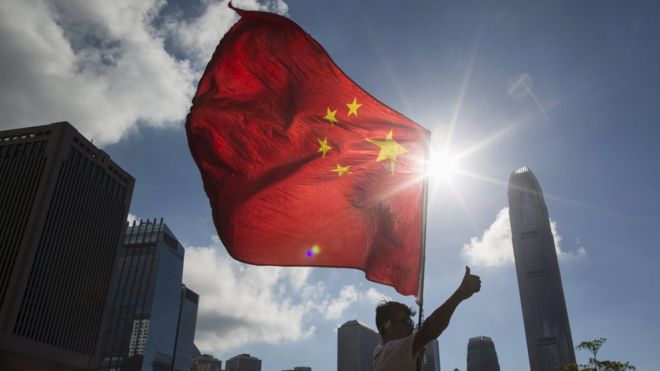
Chinese flag in front of Hong Kong skylineImage copyrightREUTERS
Image captionHong Kong is part of China but has its own judicial system

The Hong Kong government has proposed changes to extradition laws that could allow transferring suspects to mainland China for trial. The move has further fuelled fears of erosion of the city’s judicial independence amid Beijing’s increasing influence.

The Hong Kong government will also consider extradition requests from Taiwan and Macau after the new changes.

Officials say the change is needed so that a murder suspect can be extradited to Taiwan for trial, and that mainland China and Macau must be included in the change to close a “systematic loophole”.

Hong Kong’s leader Carrie Lam has pushed for the amendments to be passed before July.

What are the changes?

The changes will allow for extradition requests from authorities in mainland China, Taiwan and Macau for suspects accused of criminal wrongdoings, such as murder and rape.

The requests will then be decided on a case-by-case basis.

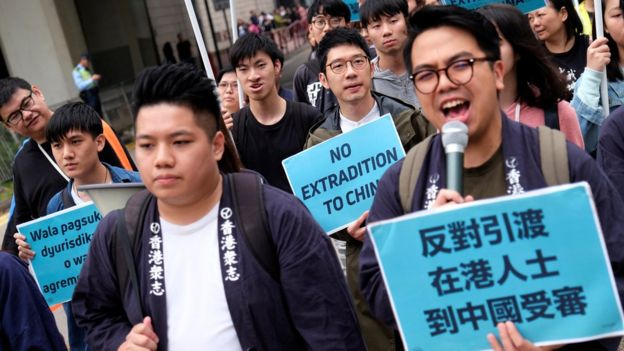
Demonstrators march during a protest to demand authorities scrap a proposed extradition bill with China, in Hong KongImage copyrightREUTERS
Image captionOver 100,000 protesters took to Hong Kong streets to rally against the government’s proposal.

Several commercial offences such as tax evasion have been removed from the list of extraditable offences amid concerns from the business community.

Hong Kong officials have said Hong Kong courts will have the final say whether to grant such extradition requests, and suspects accused of political and religious crimes will not be extradited.

Why is this controversial?

There has been a lot of public opposition, and critics say people would be subject to arbitrary detention, unfair trial and torture under China’s judicial system.

“These amendments would heighten the risk for human rights activists and others critical of China being extradited to the mainland for trial on fabricated charges,” Sophie Richardson of Human Rights Watch said in a statement.

Lam Wing Kee, a Hong Kong bookseller said he was abducted and detained in China in 2015 for selling books critical of Chinese leaders and charged with “operating a bookstore illegally”.

During a recent protest against the government proposal, Mr Lam said he would consider leaving the territory before the proposal was passed.

“If I don’t go, I will be extradited,” he said. “I don’t trust the government to guarantee my safety, or the safety of any Hong Kong resident.”

Though some pro-Beijing politicians eager to defend China, dispute the criticism of its judicial system.

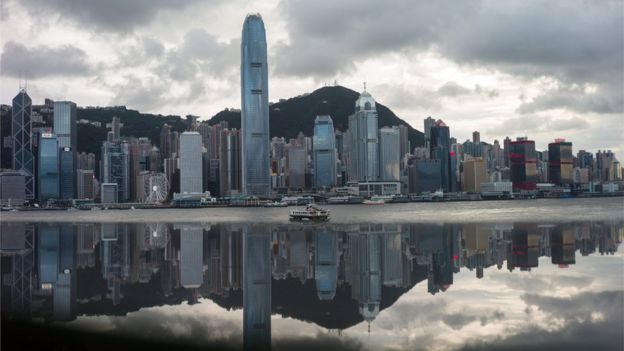
Hong Kong skylineImage copyrightEPA
Image captionHong Kong and China – one country, two systems

The changes have also attracted opposition from the Hong Kong business community over concerns they may not receive adequate protection under Chinese law.

The proposal has already sparked a legal challenge from Hong Kong tycoon Joseph Lau, who was convicted in absentia in a corruption case in Macau in 2014.

Macau’s government has not been able to have Mr Lau extradited because of a lack of extradition agreement between Hong Kong and Macau, but that will become possible if Hong Kong’s legislature decides to amend the extradition laws.

His lawyers argue in a 44-page submission to Hong Kong’s courts that the Macau trial was marred by “serious procedural irregularities that rendered the trial incompatible with internationally mandated standards of fairness”.

Every citizen can request a judicial review like Mr Lau has done, but it’s the High Court that decides whether this will be granted. Most observers say there is little chance Mr Lau’s request will be successful.

Why the change now?

The latest proposal has come after a 19-year-old Hong Kong man allegedly murdered his 20-year-old pregnant girlfriend, while holidaying in Taiwan together in February last year. The man fled Taiwan and returned to Hong Kong last year.

Taiwanese officials have sought help from Hong Kong authorities to extradite the man, but Hong Kong officials say they cannot comply because of a lack of extradition agreement with Taiwan.

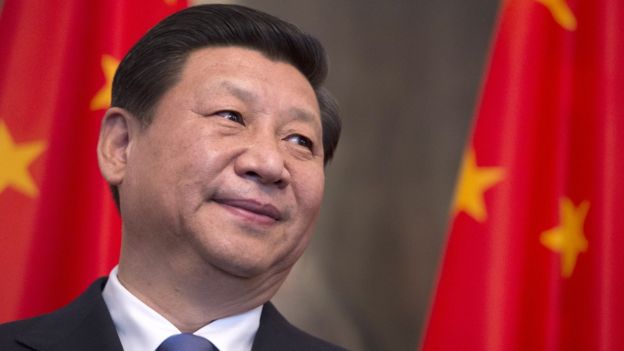
Xi JinpingImage copyrightGETTY IMAGES
Image captionUnder Xi Jinping, Beijing is seeking increasing control over Hong Kong

“Are we happy to see a suspect that has committed a serious offence staying in Hong Kong and we’re unable to deliver justice over the case?” Mrs Lam said on 1 April while responding to media questions.

She added that mainland China and Macau were included in the proposed change to address a “loophole” in current laws.

Isn’t Hong Kong part of China anyway?

A former British colony, Hong Kong is semi-autonomous under the principle of “one country, two systems” after it returned to Chinese rule in 1997.

The city has its own laws and its residents enjoy civil liberties unavailable to their mainland counterparts.

Hong Kong has entered into extradition agreements with 20 countries, including the UK and the US, but no such agreements have been reached with mainland China despite ongoing negotiations in the past two decades.

Critics have attributed such failures to poor legal protection for defendants under Chinese law.

Source: The BBC

07/03/2019

Chinese leaders stress high-quality development

(TWO SESSIONS)CHINA-BEIJING-LI KEQIANG-NPC-PANEL DISCUSSIONS (CN)

Chinese Premier Li Keqiang, also a member of the Standing Committee of the Political Bureau of the Communist Party of China (CPC) Central Committee, joins panel discussions by deputies from Guangxi Zhuang Autonomous Region at the second session of the 13th National People’s Congress in Beijing, capital of China, March 6, 2019. (Xinhua/Ding Lin)

BEIJING, March 6 (Xinhua) — Senior Chinese leaders on Wednesday urged for more efforts to advance high-quality development.

Li Keqiang, Wang Yang and Han Zheng — members of the Standing Committee of the Political Bureau of the Communist Party of China Central Committee — made the remarks at the annual “two sessions” of the country’s top legislative and political advisory bodies.

Joining panel discussions by deputies to the 13th National People’s Congress (NPC) from southwest China’s Guangxi Zhuang Autonomous Region, Premier Li Keqiang stressed following the guidance of Xi Jinping Thought on Socialism with Chinese Characteristics for a New Era as China’s development faces more and graver risks and challenges in 2019.

He called for efforts to keep the economic growth within an appropriate range and promote high-quality development, and urged solid implementation of the planned tax and fee cuts to reduce burden on the real economy.

At the joint panel discussions of political advisors from economy and agriculture sectors, Wang Yang, chairman of the Chinese People’s Political Consultative Conference National Committee, told them to focus on major and difficult tasks, such as high-quality development and supply-side structural reform, and to deepen their investigations and researches. Wang also urged the advisors to guide the people in correctly interpreting the changes in economy and boost their confidence in development.

Vice Premier Han Zheng joined the panel discussions by lawmakers from Hong Kong. He expressed the support to Hong Kong’s bid to build itself into an international innovation and technology hub, and encouraged the people of Hong Kong, especially the youth, to start up businesses and work in the Guangdong-Hong Kong-Macao Greater Bay Area.

Han also joined panel discussions by lawmakers from Macao. He said that Macao will be supported in its efforts to expand new development space, and to develop its tourism and exhibition industries.

Source: Xinhua

18/12/2018

Xi meets with Macao SAR chief executive

CHINA-BEIJING-XI JINPING-MACAO SAR CHIEF EXECUTIVE-MEETING (CN)

Chinese President Xi Jinping (R) meets with Chief Executive of the Macao Special Administrative Region (SAR) Chui Sai On, who is on a duty visit, in Beijing, capital of China, Dec. 17, 2018. (Xinhua/Xie Huanchi)

BEIJING, Dec. 17 (Xinhua) — President Xi Jinping on Monday met with Chief Executive of the Macao Special Administrative Region (SAR) Chui Sai On, who is on a duty visit to Beijing.

During the meeting, Xi heard a report by Chui on Macao’s current situation and the Macao SAR government’s work.

Xi said that over the past year, the Macao SAR government, under Chui’s leadership, had faithfully fulfilled its duties, been prudent and steady in its work style, and implemented the “one country, two systems” policy and the Macao SAR Basic Law.

The Macao SAR government had improved the institutions and mechanisms for safeguarding national security, proactively taken part in the development of the Guangdong-Hong Kong-Macao Greater Bay Area and in the Belt and Road Initiative, promoted the proper diversification of the economy, improved the livelihood of the people, and strengthened the disaster prevention and reduction system, winning the praise of the Macao society, Xi said.

“The central government fully endorses the work by Chui and the Macao SAR government,” he said.

In the process of reform and opening up of the new era, Hong Kong and Macao still have a special status and unique advantages, and can still play an irreplaceable role, Xi said.

Xi said he believed the compatriots of Macao would seize the opportunities, expand the space of development and foster new drivers of growth by integrating the SAR’s own development into the development of the country, and greet the 20th anniversary of Macao’s return to the motherland with new achievements.

17/12/2018

Macao holds int’l parade to mark 19th anniversary of return to motherland

CHINA-MACAO-PARADE (CN)

Performers attend the Macao International Parade, which is held to celebrate the 19th anniversary of Macao’s return to the motherland, in Macao, south China, Dec. 16, 2018. (Xinhua/Cheong Kam Ka)

MACAO, Dec. 16 (Xinhua) — The government of China’s Macao Special Administrative Region (SAR) held an international parade Sunday afternoon to mark the 19th anniversary of Macao’s return to the motherland.

The parade attracted more than 70 groups from the Chinese mainland, the Macao SAR and the Hong Kong SAR, as well as those from foreign countries including Japan, Brazil, Spain, Italy, Portugal, France, Mozambique, Malaysia, among others.

The parade featured performances such as folk dances, acrobatics, stilt walking, Chinese martial arts and puppet shows.

The parade started from the renowned Ruins of St. Paul’s and ended at Sai Van Lake Square, where the groups took to the stage one by one.

The parade, one of the major cultural events in Macao since 2011, was organized by Macao’s Cultural Affairs Bureau and the Macao Government Tourism Office.

Law of Unintended Consequences

continuously updated blog about China & India

ChiaHou's Book Reviews

continuously updated blog about China & India

What's wrong with the world; and its economy

continuously updated blog about China & India