14/04/2020
- Vietnamese ships spent months last year shadowing the Haiyang Dizhi 8 as it surveyed the resource-rich waters within Vietnam’s exclusive economic zone
- Its return follows charges laid by the US that China is ‘exploiting the distraction’ and vulnerability caused by the pandemic
The Haiyang Dizhi 8 at sea. Photo: Weibo
A Chinese ship
embroiled in a stand-off with Vietnamese vessels last year
has returned to waters near Vietnam as the United States accused
China
of pushing its presence in the
South China Sea while other claimants are pre-occupied with the coronavirus.
Vietnamese vessels last year spent months shadowing the Chinese Haiyang Dizhi 8 survey vessel in resource-rich waters that are a potential global flashpoint as the
challenges China’s sweeping maritime claims.
China and Vietnam ‘likely to clash again’ as they build maritime militias
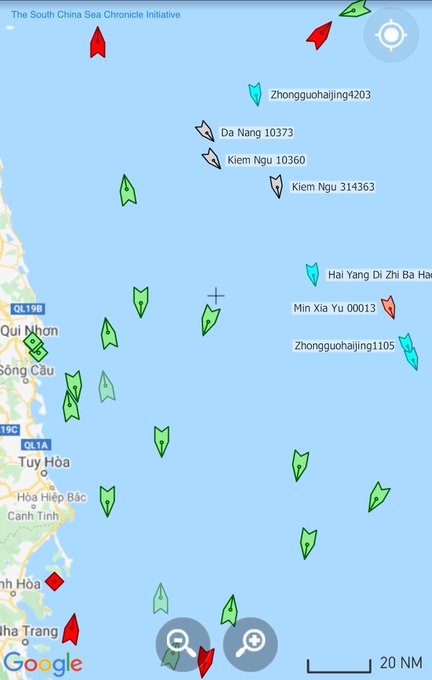
On Tuesday, the ship, which is used for offshore seismic surveys, appeared again 158km off
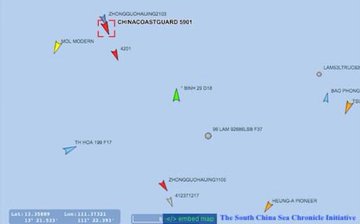
Vietnam’s coast, within its exclusive economic zone (EEZ), flanked by at least one Chinese coastguard vessel, according to data from Marine Traffic, a website that tracks shipping.
At least three Vietnamese vessels were moving with the Chinese ship, according to data issued by the Marine Traffic site.
The presence of the Haiyang Dizhi 8 in Vietnam’s EEZ comes towards the scheduled end of a 15-day nationwide lockdown in Vietnam aimed at curbing the spread of the coronavirus.
It also follows
, an act that drew a protest from Vietnam and accusations that China had violated its sovereignty and threatened the lives of its fishermen.
“We call on the PRC to remain focused on supporting international efforts to combat the global pandemic, and to stop exploiting the distraction or vulnerability of other states to expand its unlawful claims in the South China Sea,” the US State Department said in a statement, referring to China.
Vietnam pulls DreamWorks’ ‘Abominable’ over South China Sea map
, which also has disputed claims in the South China Sea, has raised its concerns too.
On Saturday, the Global Times, published by the official People’s Daily newspaper of China’s ruling Communist Party, said Vietnam had used the fishing boat incident to distract from its “ineptitude” in handling the coronavirus.
Vietnam’s Ministry of Foreign Affairs did not immediately respond to a request for comment.
Helped by a mass quarantine and aggressive contact-tracing, Vietnam has recorded 265 cases of the novel coronavirus and no deaths. Nearly 122,000 coronavirus tests have been carried out in Vietnam.
Coronavirus: what’s behind Vietnam’s containment success?
China and Vietnam have for years been at loggerheads over the potentially energy-rich waters, called the East Sea by Vietnam.
China’s U-shaped “nine-dash line” on its maps marks a vast expanse of the waters that it claims, including large parts of Vietnam’s continental shelf where it has awarded oil concessions.
and Brunei claim some of the waters that China claims to the south.
During the stand-off last year, at least one Chinese coastguard vessel spent weeks in waters close to an oil rig in a Vietnamese oil block, operated by Russia’s Rosneft, while the Haihyang Dizhi 8 conducted suspected oil exploration surveys in large expanses of Vietnam’s EEZ.
“The deployment of the vessel is Beijing’s move to once again baselessly assert its sovereignty in the South China Sea,” said Ha Hoang Hop, at the Singapore-based ISEAS-Yusof Ishak Institute.
“China is using the coronavirus distraction to increase its assertiveness in the South China Sea, at a time when the US and Europe are struggling to cope with the new coronavirus.”
Source: SCMP
Posted in Aircraft carrier, amid, awarded, ‘exploiting the distraction’, “Abominable”, Beijing’s, Brunei, caused, charges, Chinese, coastguard vessal, Communist Party, concessions, containment, Continental Shelf, coronavirus, Coronavirus pandemic, Da Nang, disputed waters, distraction, DreamWorks, Europe, follows, Global Times, last year, Malaysia, maps, marks, Ministry of Foreign Affairs, months, newspaper, off, Oil, oil block, operated, pandemic, People’s Daily, PRC, pre-occupied, resource-rich, return, returns, Rosneft, Russia’s, shadowing, Singapore, South China Sea, spent, success, survey ship, surveyed, Uncategorized, US, vast expanse, Vietnam, Vietnam’s, Vietnamese ships, vulnerability, waters |
Leave a Comment »
17/03/2020
- AutoNavi’s latest data shows increase in offline traffic and searches of major business districts
- Traffic data could signal that consumer activity in China has entered a recovery
AutoNavi’s mobile app users can search the names of malls and shops to see real-time traffic data. Photo: AP
Data from AutoNavi, the maps app operated by Alibaba Group Holding, shows that traffic in major shopping districts in China picked up by an average of 30 per cent over the past month, as consumer activity gradually returns to normal now that the coronavirus infection rate appears to have peaked in the country.
The early sign of increased consumer activity in China contrasts with the panic and economic uncertainty now engulfing Europe and the US, as the widening pandemic forces governments around the world to take lessons from China on how to tackle the spread of the disease with curfews and social distancing measures.
AutoNavi’s latest big data report, released on Monday, shows that traffic in and around shopping districts in several major cities in the country rose 30 per cent over the weekend of March 14-15 compared with the weekend of February 15-16, when the coronavirus in China was at its height and many areas in the country were under lockdown.
China’s Meituan Dianping to join maps service battle
15 Aug 2019
“Consumer confidence is starting to rebound as the coronavirus comes under control,” said Guo Ning, vice-president of AutoNavi. “We are seeing more and more people stepping out, with offline consumption slowly recovering.”
Alibaba is the owner of the South China Morning Post.
China’s nearly two-month lockdown has dealt a hammer blow to the economy, with retail sales – a key metric of consumption – down by 20.5 per cent across the combined two months of January and February, marking the first decline on record. The virus has however proved a boon for China’s e-commerce sector, as shoppers stuck at home buy even more online.
The new data appears to show that the country’s offline economy could now see a slow recovery. This does not mean that retail businesses can slack off on preventive measures – hand sanitiser, extra cleaning and temperature monitoring are likely to remain fixtures of everyday life in shopping malls.
AutoNavi’s mobile app users can search the names of malls and shops to see real-time traffic data – often used to avoid visiting malls at peak periods. AutoNavi said the average 30 per cent increase in traffic refers to the combined volume of people using the app to navigate the shopping destinations.
Alibaba’s AutoNavi crosses 100 million daily users
AutoNavi has more than 400 million monthly active users, according to company data. It was the first domestic travel platform to exceed 100 million daily active users.
Digital maps have become a key tool in China’s attempts to control the coronavirus pandemic, with competitor map apps from Baidu and Tencent also launching features to track population flows and provide information on clinics able to test for and treat the disease.
Covid-19, as the novel coronavirus is known, has now killed over 3,200 people in China and infected just over 80,000, of which around 68,000 have recovered. There are now around 87,000 confirmed cases outside China, according to the latest figures from health authorities.
Source: SCMP
Posted in Alibaba Group Holding, around, AutoNavi, Big data, China, coronavirus, Coronavirus pandemic, COVID-19, Data, Digital maps, e-commerce sector, economy, Fears, hammer blow, lockdown, maps, Meituan Dianping, novel coronavirus, recede, recovery, shopping areas, shows, south china morning post, traffic, Uncategorized |
Leave a Comment »
07/09/2019
BEIJING, Sept. 7 (Xinhua) — China’s National Museum of Classic Books unveiled an exhibition in Beijing Saturday to showcase the preservation and inheritance of ancient Chinese books over the past 70 years since the founding of the People’s Republic of China (PRC).
More than 330 precious collections from over 70 public institutions and private collectors around the country, ranging from ancient government archives, maps, manuscripts to paintings, have been put on display.
The exhibition, sponsored by the Ministry of Culture and Tourism and the National Cultural Heritage Administration, is the largest of its kind since the founding of the PRC in 1949.
With digital virtual sand table demonstration, holographic and immersive digital scenes, the curator tries to use diversified means and modern technologies to facilitate audience experience.
Source: Xinhua
Posted in ancient Chinese books, ancient government archives, audience experience, Beijing, China's National Museum of Classic Books, Country, curator, digital virtual sand table demonstration, display, exhibition, founding, founding of the People's Republic of China (PRC), holographic and immersive digital scenes, manuscripts, maps, Ministry of Culture and Tourism, modern technologies, National Cultural Heritage Administration, paintings, People's Republic of China (PRC), precious collections, preservation and inheritance, private collectors, public institutions, Uncategorized |
Leave a Comment »




 South China Sea News@SCS_news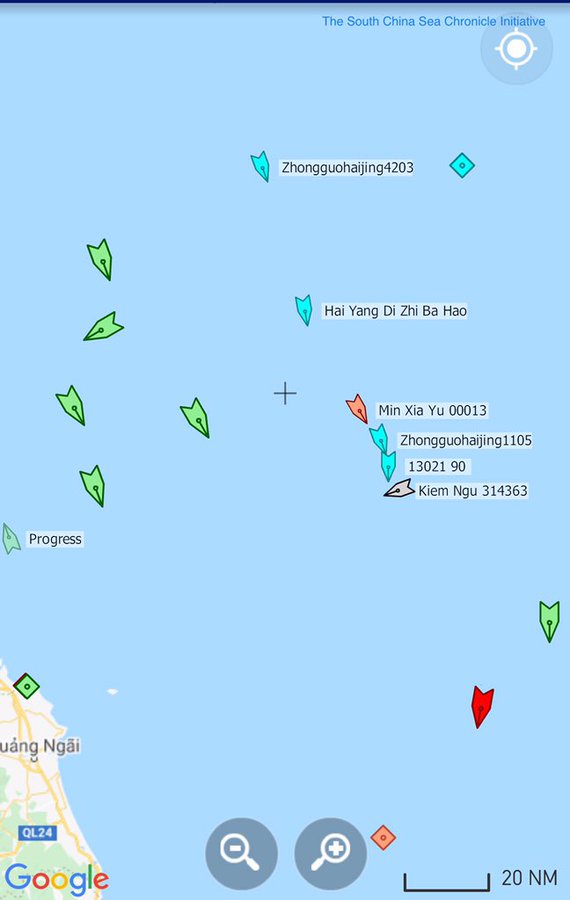




 CHINDIA ALERT: You'll be living in their world, very soon