

- ‘Forbes’ magazine reported that China’s central bank will launch its own sovereign digital currency to coincide with the Singles’ Day online shopping festival
- The People’s Bank of China is seeking to address financial risks and counter the current dominance of the US dollar

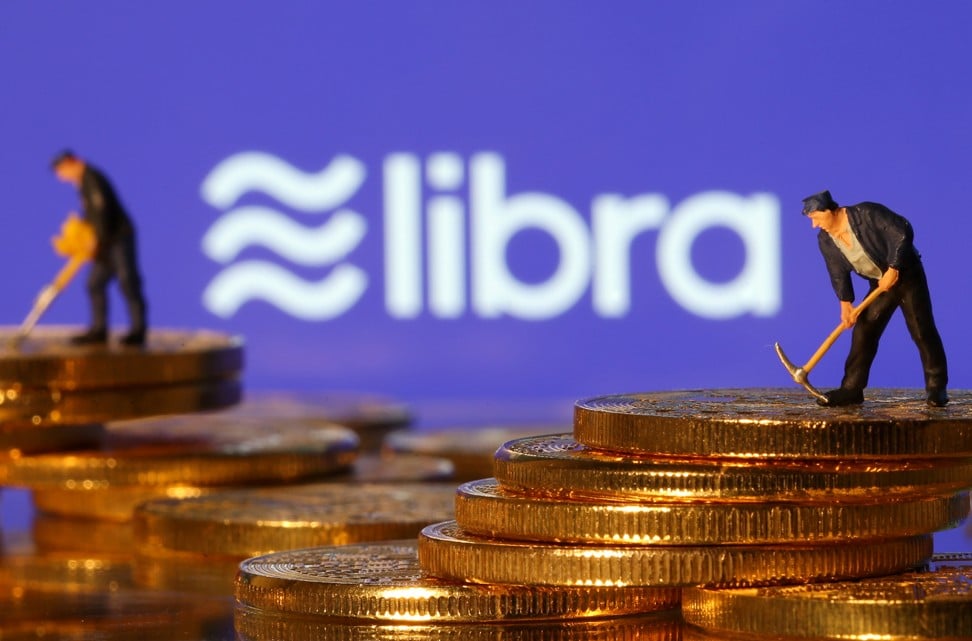
China’s desire to launch the world’s first government-backed digital currency could see the possible rival to Facebook’s Libra be launched in time for November’s Singles’ Day online shopping festival despite a Chinese media report playing down the timing as “inaccurate speculation”.
Several central bank officials have publicly spoken out over the past several weeks about the need for China to launch its own digital currency since Facebook unveiled its plans for Libra, and the People’s Bank of China (PBOC) appear to be making rapid progress ahead of an expected launch.
Forbes magazine reported this week, citing a source who previously worked for the Chinese government, that China’s central bank could launch the digital currency as soon as November 11 as its bids to address financial risks and to counter the current dominance of the US dollar.
The PBOC did not respond to a faxed request for comment on the Forbes story, although Sina.com said that the report was “inaccurate speculation” citing an unnamed source close to the central bank.
“The People’s Bank digital currency can now be said to be ready,” said Ma on August 11.
China is also ready to make Shenzhen a pilot zone for digital currency as part of plans for the city to become a socialist model city, according to a statement summarising a meeting between the Shenzhen party secretary Wang Weizhong and central bank governor Yi Gang released on Thursday.
The PBOC implemented a blanket crackdown in China on trading of cryptocurrency, including bitcoin, which are not backed by any government, viewing them as risks to China’s financial stability and security. At the same time, in 2014 the central bank created its own academy to study digital currencies and the related blockchain technology.
Neil Woodfine, director of marketing at blockchain start-up Blockstream, said a digital currency created by the PBOC would be “just like cash” and “would be fully controlled by the central bank.”
“If it’s digital instead of physical, they can close accounts and monitor all activities [in the entire financial system]. Commercial bank deposits are difficult for them to monitor, control or pull information out of for verification because the numbers are in each bank’s data centre,” Woodfine said.
to create its own digital currency have pushed Beijing to speed up its own digital currency plan as Libra could potentially pose a challenge to Chinese cross-border payments, monetary policy and even financial sovereignty.
which would be a non-sovereign digital currency controlled by a Swiss-based company, has come under intense scrutiny by regulators and central banks worldwide. Last month, the Group of Seven industrialised nations, known as the G7, called for urgent regulatory measures and other types of action to address serious concerns over Libra.
A digital currency “could dampen the domineering influence of the US dollar on global trade”, Carney said last week at the US Federal Reserve’s annual conference, adding that a digital currency has the edge to counter shocks emanating from the US through trade and exchange rates.
Daniel Wang, chief executive and co-founder of blockchain start-up Loopring, said that a Chinese government-backed digital currency may provide a new way for the yuan to compete globally.
“If the central bank wants to increase the global competitiveness of the yuan through its digital currency, only an open and standard-based competitor carries any hope,” said Wang.
A digital yuan would “remain a sovereign currency under a centralised sovereign,” continuing to require the trust from users in the Chinese central bank and government institutions behind it, Wang added.
Alfred Schipke, senior resident representative for China at the International Monetary Fund (IMF), said that the bank is “open” to digital currencies, including the one being developed by China’s central bank.

 CHINDIA ALERT: You'll be living in their world, very soon