Archive for ‘McKinsey Global Institute’

28/10/2019

Economic Watch: China’s international aviation market set to take off

BEIJING, Oct. 27 (Xinhua) — Beijing Daxing International Airport, a new aviation hub in the Chinese capital, started international flight operation Sunday, joining the country’s expanding airport network to serve outbound and inbound travelers.

During winter and spring, a total of 570,000 passenger trips are expected to be made via 15 overseas flight routes at the airport, which boasts fast customs clearance services thanks to smart technologies.

Airports across China are seeing flights to and from a growing number of overseas destinations, as domestic and international airlines race to tap the booming international aviation market.

China’s international aviation market is small compared with some countries, but enjoys fast growth and huge potential, said Zhao Wei, a professor with the Civil Aviation Management Institute of China, at the 2019 China Aviation and Tourism Forum.

The steady expansion of the outbound tourism market and the large number of individuals who are yet to enjoy air travel will drive the sector’s rise, Zhao said.

China is the world’s largest outbound tourism market. About 81.29 million overseas trips were made during the first half of this year, up 14 percent year on year. The total for the whole year might grow 12 percent year on year to reach about 168 million trips, the China Tourism Academy predicted.

The country’s airports saw 126 million cross-border passenger trips made in 2018, up 13 percent over 2017. The McKinsey Global Institute foresaw threefold growth in the number of people in China able to afford airline travel in the next 10 years, with the upper strata of China’s fast-growing middle class poised to become the principal engine of air-travel spending.

With the outbound travel market booming, the number of overseas airlines and destinations entering the Chinese market continues to increase, observed Brenda He, managing director with tourism marketing and sales services provider Travel Link Group, which saw growing market demand from overseas airlines and tourism authorities.

To improve international air travelers’ experience, aviation services should be developed in coordination with tourism development and destinations promotion, He said.

Li Xiaoping, senior vice president with China’s largest online travel agency Ctrip, said airports need to upgrade their infrastructure and services to improve travelers’ experience by meeting their diversifying consumption and entertainment demands.

Future airports will become social-networking and cultural venues, Li said. “An airport can become a sightseeing spot in its own right.”

Source: Xinhua
18/10/2019

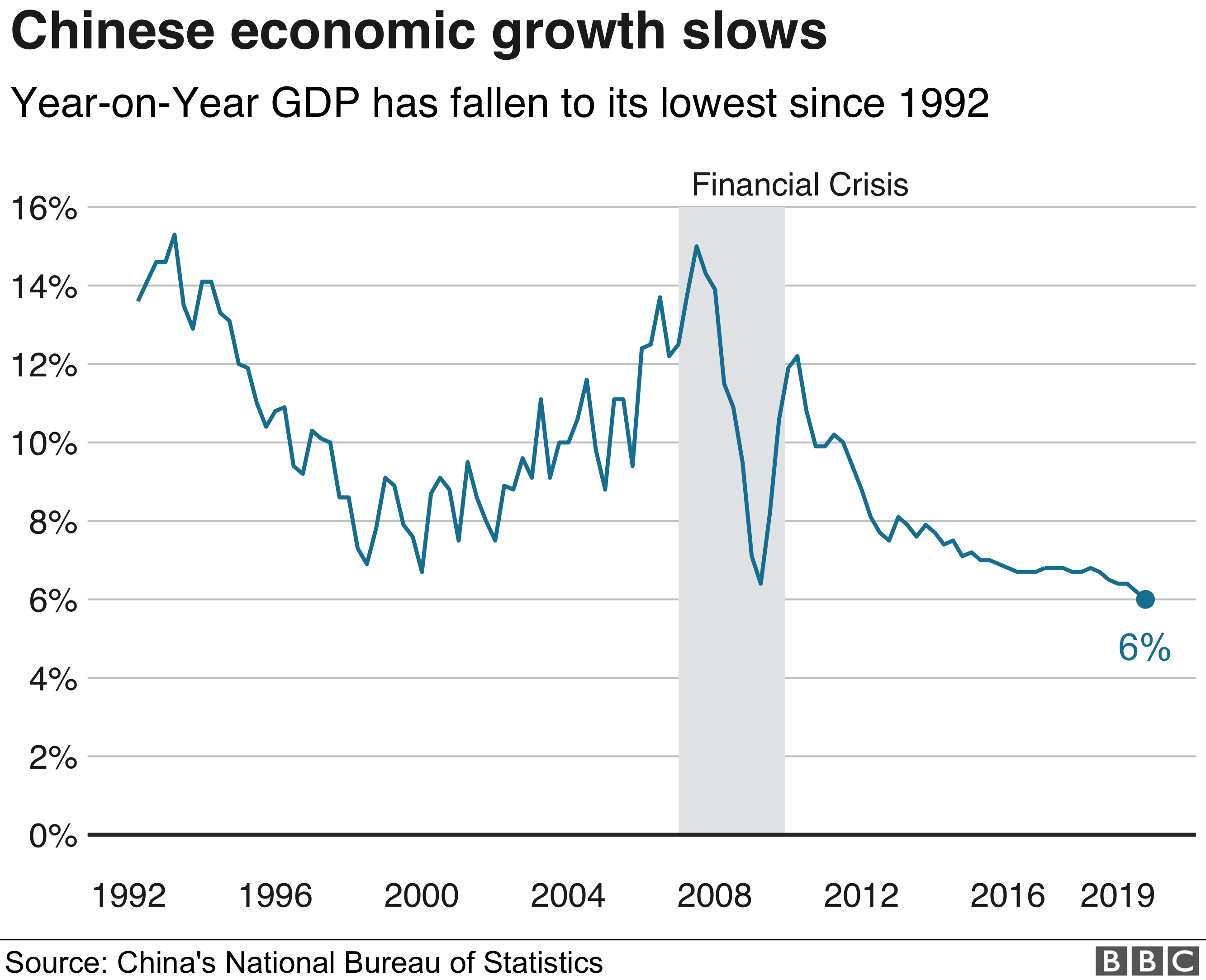
China economy: Third quarter growth misses expectations

China’s economy grew at a slower pace than expected in the third quarter as it struggled with a US-led trade war and softer domestic demand.

In the three months to September, the economy expanded 6% from a year earlier, official figures showed.

The result fell just short of expectations for 6.1% growth for the period.

The slowdown comes despite government efforts to support the economy, including measures such as tax cuts.

The latest figures mark a further loss of momentum in the world’s second largest economy, which had already seen growth languishing at its slowest pace in around three decades.

The rate remained within the government’s target range for annual growth of between 6% and 6.5%.

The strength of the Chinese economy is closely watched as slowing growth can have far-reaching consequences for the global economy.

The country has become a key engine of growth in recent decades. Its healthy demand for a range of products, from commodities to machinery, has supported growth around the world.

Some analysts worry that a sharp slowdown in China could hurt an already sluggish world economy and increase the risk of a recession.

Chart on China GDP

Julian Evans-Pritchard, senior China economist at Capital Economics, said pressure on the Chinese economy “should intensify in the coming months”.

He said more intervention by policymakers to support the economy was likely “but it will take time for this to put a floor beneath economic growth”.

What challenges does China face?

China has been fighting a trade war with the US for the past year, which has created uncertainty for businesses and consumers.

At the same time, it faces domestic challenges including a swine fever outbreak that has fuelled inflation and hit consumer spending.

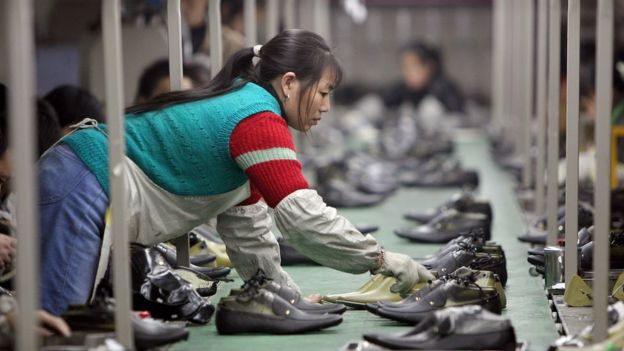
A woman works in a shoe factory in ChinaImage copyright GETTY IMAGES
Image caption China accounted for 16% of global gross domestic product in 2018, according to the McKinsey Global Institute

This week the International Monetary Fund trimmed its 2019 growth forecast for China to 6.1% from 6.2% due to the long-running trade dispute and slowing domestic demand.

But there have been some signs of progress toward resolving the trade battle, with the US and China reaching a “phase one deal” earlier this month.

The government has sought to help the economy through tax cuts and by taking measures to boost liquidity in the financial system.

Still, some analysts say the government has become more cautious in providing stimulus amid growing concerns about China’s rising debt pile.

Presentational grey line
Analysis box by Karishma Vaswani, Asia business correspondent

Any analysis of China’s economic data has to come with a caveat: Many economists believe the actual figures are much lower than what we are told, but it’s the trajectory of growth and signalling from the government that you should pay attention to.

The fact that the growth figures have come in below market expectations indicate that China’s economy is hurting more than many thought.

There were signs from China that these numbers were going to be worrying. Earlier this week, Premier Li Keqiang made the unusual move to warn local officials that they must do “everything” to make sure they hit growth targets for this year.

China’s economy is being hit on three fronts: The US-led trade war, slowing demand at home and rising domestic challenges including the outbreak of swine fever that has dealt a huge blow to its pork farmers. It’s also pushed up prices for consumers.

China’s slowdown is nothing new. But these challenges pose new headaches for policymakers who are trying to manage the slowdown. The country’s political stability depends on economic security – and over the last forty years, that’s what the Communist Party has delivered. They’re under pressure to keep that contract.

Source: The BBC

Law of Unintended Consequences

continuously updated blog about China & India

ChiaHou's Book Reviews

continuously updated blog about China & India

What's wrong with the world; and its economy

continuously updated blog about China & India