05/09/2019
- When Kazakh actress Reyizha Alimjan arrived in Shanghai last month wearing jeans and a camisole it reignited a long-running debate over who gets a say on how Chinese women should dress
- Fashion choices that would be regarded as unremarkable in Europe or North America are often seen as outrageous in the world’s most populous nation
Kazakh actress Reyizha Alimjan’s fashion choices sparked a social media storm in China last month. Photo: Weibo
When Li Xiang broke up with her boyfriend over a selfie she posted on social media, it was not just about a woman letting a man know he wasn’t entitled to tell her how to dress in public, but a matter of personal freedom, social norms and cultural tradition.
A few weeks ago, the 24-year-old media worker from Shanghai shared a photo on WeChat that showed her posing at her bedroom door in a camisole and mini shorts. Her boyfriend said it made him very “uncomfortable”, and they quarrelled.
“‘Look how scantily clad you are, and [if] that is not enough, you shared it online,’ he said,” Li recalled.
“I got mad when he said, ‘You should go and ask other men if they’d like their girlfriends to dress like that’, as if he should decide what I wear – as if I were his appendage,” she said, referring to the archaic notion that a woman is secondary to a man in their relationship.
What clothes Chinese women should or should not wear has been the subject of intense online debate in recent weeks. Photo: EPA
Their argument was not unusual in China, especially over the past month when the online world became embroiled in a war of words about women’s freedom to dress as they please.
The controversy erupted when an article defending Reyizha Alimjan – the Kazakh actress criticised for showing too much flesh when she arrived at an airport in Shanghai in late July wearing jeans and a camisole – appeared on a WeChat movie review account called Staff of the 3rd Hall on August 12.
Reyizha Alimjan was criticised for her outfit on Chinese social media. Photo: Weibo
While that perspective was supported by many women online, others disagreed and said that society was open and tolerant but that people had the right to disagree.
By coincidence, a poll about women wearing camisoles in public was launched on August 10 by a WeChat account called Cicada Creativity. About 70 per cent of the nearly 14,000 respondents said they did not dare to do so.
More than 40 per cent avoided doing so for reasons such as thinking they were “not thin enough”, but a quarter said they said no because either their boyfriends disapproved or would not allow it, or they feared they would be harassed.
Chinese women spurn Victoria’s Secret for home-grown lingerie brands
Joy Lin, a feminist from Shanghai, said the debate was so fierce because it was not just about dress.
“It’s more about people’s judgment about one’s character and morals behind what she wears,” Lin said. “If you wear revealing clothes, they would say you are asking for harassment. If you show a little skin, you are frigid. And if you are casual, they call you ‘dama’ [Chinese slang, often derogatory, for middle-aged and elderly women].”
Some women say they are often judged by the clothes they wear. Photo: AP
In her experience, Lin said that if she appeared on the streets of Shanghai – the most cosmopolitan city in China – without a bra, there would be judgmental looks from passers-by before she had walked 10 metres (33 feet).
In contrast, she did just that in Paris in July, and, “no one stared at me or came near me at all”.
“Usually, when it comes to comments about what we wear, they’re not about whether the dress matches the hairstyle or things like that, but about our bodies, whether we’re slim or not and stuff like that,” she said. “Some [comments] can be very malicious and insulting.”
#MeToo rally accuses Hong Kong police of sexual violence against protesters
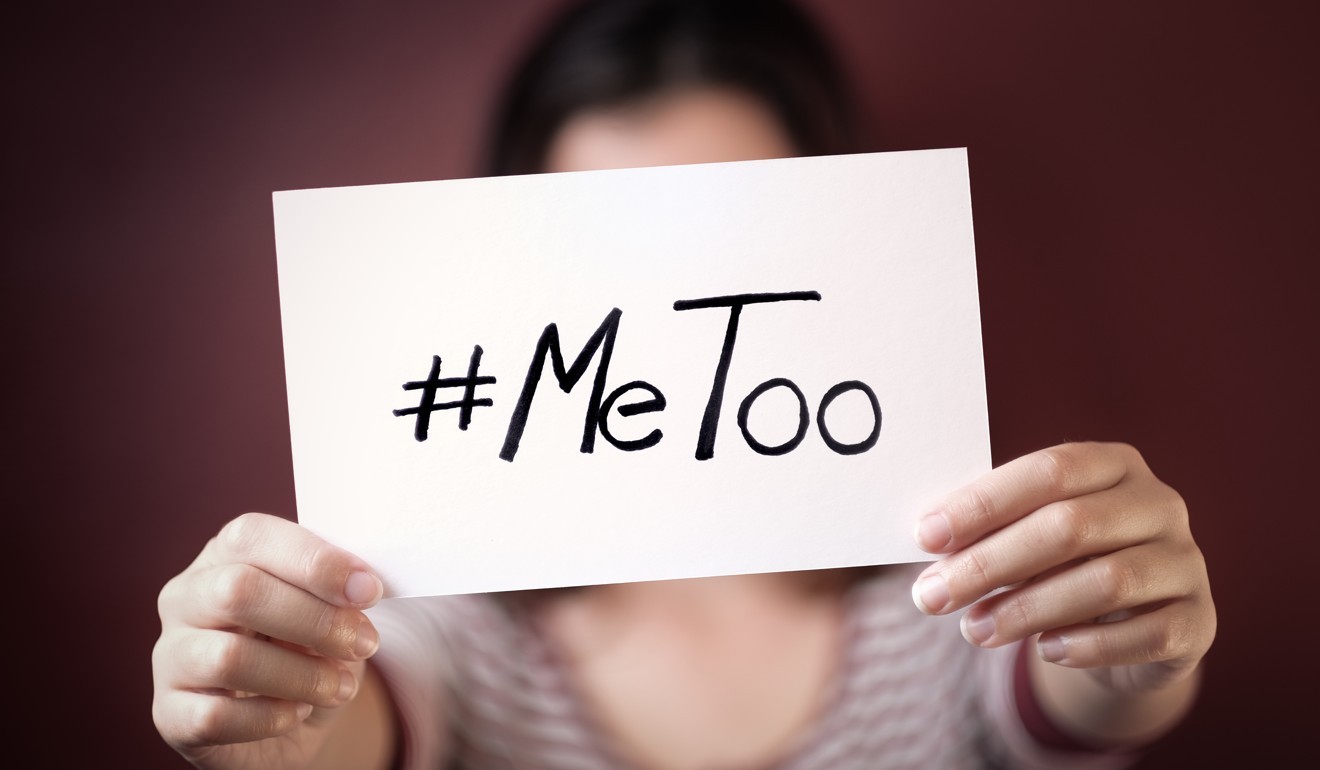
While shaming women for their clothing choices has been an issue for many years, it reached peak public awareness in China after the #MeToo movement took off in the US.
The social media campaign went viral in 2017 when dozens of women accused American film producer Harvey Weinstein of sexual assaults over a period of nearly 30 years.
The #MeToo movement took off in the US in 2017 after dozens of women accused film producer Harvey Weinstein of sexual assault. Photo: Shutterstock
Lu Peng, a researcher from the Shanghai Academy of Social Sciences, said the online debate helped encapsulate conflicts between a growing desire for freedom, gender norms and generations of tradition.
“There will hardly be a consensus on such a question about whether women have the freedom to dress,” he said. “But if this discussion can make people realise that men, not just women, also face restrictions in dressing, then it’s bringing progress.”
The simplest example was to dress for the occasion, which applies to both sexes.
“We have never been free in dressing. We’re only free within a certain extent … About what to wear in public, I don’t think we should emphasise freedom only and ignore the local culture and society,” Lu said.
Keeping a low profile has long been part of the Chinese philosophy. Photo: Xinhua
In China, there is no law banning states of dress or undress in public, nor do the Han people, who make up most of the population, have religious beliefs that restrict their mode of dress. But keeping a low profile and avoiding unwanted attention has long been part of the Chinese philosophy.
“My father will also ask me not to be ‘overexposed’, because he believes it’s increasing the risk of being harassed,” Li, the Shanghai media worker, said.
“They think they mean well, but I just want to be myself. I’m not breaking any law. I want to make my own contribution in changing this culture,” she said.
Source: SCMP
Posted in #MeToo, actress, American film producer, archaic notion, battle, bedroom door, between, bra, brands, camisole, casual, Chinese women, Cicada Creativity, City, cosmopolitan, debate, derogatory, dress, elderly women, Europe, Fashion choices, feminist, fierce, Freedom, frigid, harassment, Harvey Weinstein, home-grown, Hong Kong police, insulting, jeans, judgment, judgmental looks, Kazakh, lingerie, long-running, malicious, middle-aged, mini shorts, morals, most populous nation, North America, one’s character, outrageous, Paris, passers-by, posing, public awareness, quarrelled, reignited, relationship, reveals, Reyizha Alimjan, scantily, secondary, sexual assaults, sexual violence, shaming women, Shanghai, Shanghai Academy of Social Sciences, social media storm, tradition, Uncategorized, uncomfortable, unremarkable, US, Victoria's Secret, wear, wearing, WeChat |
Leave a Comment »
20/04/2019
SHANGHAI (Reuters) – Hundreds of people have added their names to an online petition in support of a University of Minnesota student who said she was raped last August by Richard Liu, the chief executive officer of China’s e-commerce retailer JD.com Inc.
The student, Liu Jingyao, from China, filed a civil lawsuit against JD’s CEO in a Minneapolis court on Tuesday, nearly four months after prosecutors declined to press criminal charges against him.
The law suit identified the student for the first time. The two Lius are not related.
Richard Liu, through his lawyers, maintained his innocence throughout the law enforcement investigation, which ended in December. The company did not immediately respond to an email request for comment.
It was unclear who launched the petition, which carried the hashtag #HereForJingyao, although signatories included Chinese students at foreign universities as well as in China. On Saturday, it was gathering momentum on the social media platform WeChat, with more than 500 names attached.
“To Liu Jingyao: You are not alone. We believe in survivors, we believe in your bravery and honesty, we will always stand with you. We must join hands and march together in the face of the challenge of a culture of blaming the victims of rape,” the petition said.
A Chinese-language translation of the indictment was also circulating online.
Liu Jingyao first accused Richard Liu of rape in August when he was visiting the University of Minnesota to attend a program directed at executives from China.
Liu, 46, who started JD.com as a humble electronics stall and expanded it into an e-commerce company with 2018 net revenues of $67 billion, was arrested on Aug. 31 but released without charge about 17 hours later.
A fledgling #MeToo-style movement in support of women’s rights has been slow to gain wide traction in China, where issues like sexual assault have traditionally been brushed under the carpet.
China’s ruling Communist Party, wary about grassroots organizing, has also in recent months put pressure on activists focused on issues like sexual assault on campuses and workers’ rights.
Source: Reuters
Posted in #MeToo, chief executive officer, China alert, China’s e-commerce retailer, Communist Party, JD.com CEO, JD.com Inc, Liu Jingyao, Minneapolis court, online petition, rape case, Richard Liu, suing, Uncategorized, University of Minnesota student |
Leave a Comment »
12/03/2019
WASHINGTON (Reuters) – White House national security adviser John Bolton said on Monday Pakistan’s foreign minister has assured him Islamabad is committed to de-escalating tensions with India and dealing “firmly” with terrorists.
Bolton’s comments follow a Feb. 14 suicide bombing, claimed by Pakistan-based militants, which killed at least 40 Indian paramilitary police.
“Spoke with Pakistani FM (Shah Mehmood) Qureshi to encourage meaningful steps against JeM (Jaish-e-Mohammed) and other terrorist groups operating from Pakistan,” Bolton said on Twitter.
“The FM assured me that Pakistan would deal firmly with all terrorists and will continue steps to deescalate tensions with India,” Bolton added.
Pakistan, which denies Indian accusations of aiding militant groups, last week announced a crackdown against all proscribed outfits.
Pakistan’s foreign ministry late on Monday said Qureshi informed Bolton “about the de-escalatory measures taken by Pakistan” in the wake of the aerial bombing missions carried out by both countries in late February.
Qureshi told Bolton that Pakistan’s strike in Kashmir on Feb. 27 was in self-defence and retaliation to India’s raid on its territory a day earlier. New Delhi said it hit a JeM training camp in Pakistan, but Islamabad denies any such camp exists.
The two countries fought an aerial dogfight over Kashmir on Feb. 27, and a couple of days later Pakistan returned a downed Indian pilot in a gesture that appeared to de-escalate the crisis.
German Foreign Minister Heiko Maas, in a joint conference with Qureshi, commended Pakistan on Tuesday for returning the pilot and offering talks with India. But he also urged Islamabad to stamp out militant groups which attack neighbouring countries.
“We both agreed that cross-border terrorism has to be permanently stopped and there too there have been positive signs in the past few days that we welcome very much,” Maas said. “Ultimately it’s about fighting any kind of terrorism and extremism.”
Source: Reuters
Posted in #MeToo, Bolton, deescalate, German Foreign Minister, Heiko Maas, India alert, Islamabad, JeM (Jaish-e-Mohammed), John Bolton, National Security Adviser, Pakistan, Pakistan’s foreign minister, Pakistani FM, Qureshi, Shah Mehmood Qureshi, suicide bombing, Twitter, Uncategorized, US |
Leave a Comment »
28/02/2019
- Teenager alleges man filmed his attacks and threatened her into silence
- Victim’s mother says she never knew reason for daughter’s suicide attempts
A 17-year-old girl alleges a teacher sexually assaulted her over four years and blackmailed her with video of the assaults. Photo: Weibo
A teenage girl from northwestern China has created shock waves by publicly accusing a schoolteacher of four years of rape, physical abuse and blackmail.
The girl, now 17, told the City and Youth Channel of Shaanxi Television on Wednesday that the teacher at Chenggu County No 4 Middle School in Shaanxi province forced her into a sexual relationship and threatened her with violence if she spoke about the attacks.
Authorities began an investigation into allegations against a 42-year-old man about a week ago after the girl was found beaten up on a country road. A man identified by the surname Ni was taken into police custody in connection with the attacks. The county’s education bureau has also launched an inquiry, Shaanxi Television reported.
The interview with the girl was widely reported by Chinese newspapers and had been viewed more than 18 million times on Weibo by Thursday afternoon.
China’s #MeToo claim costs university professor his job
The student claimed she was first raped in 2015, when she was summoned by Ni to a classroom on the pretext of teaching her to draw.
“He grabbed me from behind after I entered the room,” she told Shaanxi Television. “I struggled and screamed, but he covered my mouth with his hand.”
Ni repeatedly raped her over the years, she claimed, and filmed the assaults. He would often hit her and threaten to make the videos public, she said.
The alleged assaults began when the girl, then 13, was summoned to an art class at school. Photo: Weibo
Share:
They last met on February 18, when the girl tried to persuade Ni to delete the videos but she was beaten again, she said. “He slapped my face and seized me by the throat in his car. He then held me down, sat on me and continued to hit me.”
The attacks stopped when passers-by witnessed the man beating the teenager and called police, the report said.
“The girl has suffered a trauma in the past couple of years. She has tried to kill herself several times, but I did not know the real reason,” the girl’s mother said in the report. “I thought it was the pressure at school.”
For some on social media, the story was an indictment of Chinese society’s treatment of sexual assault victims.
“Such an experience would be ‘humiliating’ in China,” one commenter said. “People around her would not really feel sorry for her. They would avoid her because she was ‘dirty’.”
Teenage sexual assault survivor demands right to be heard
“All girls who have come forward in an environment with such a patchy rule of law and pressure from the public are brave,” another said.
Students at schools and colleges began to speak out last year in the wake of the international #MeToo movement and a national campaign against sexual harassment that spread across schools and college campuses.
A year ago, Luo Qianqian, a former student at Beihang University in Beijing, alleged that she and at least five other women had been sexually harassed by one of their professors.
The professor was fired after an inquiry found his behaviour “was a breach of administrative discipline and the norms of being a teacher”.
Source: SCMP
Posted in #MeToo, accuse teacher, administrative discipline, beatings and sexual assaults, Beihang University, Beijing, China alert, Chinese girl, Luo Qianqian, Ni, professor, schoolteacher, Shaanxi, suicide attempts, Television, Uncategorized |
Leave a Comment »






 CHINDIA ALERT: You'll be living in their world, very soon