14/08/2019
- Scientists’ large-scale conversion of agricultural waste into fuel offers savings up to 60 per cent, they say
- Discovery could slash military costs and bring civilian applications of hypersonic flight technology closer
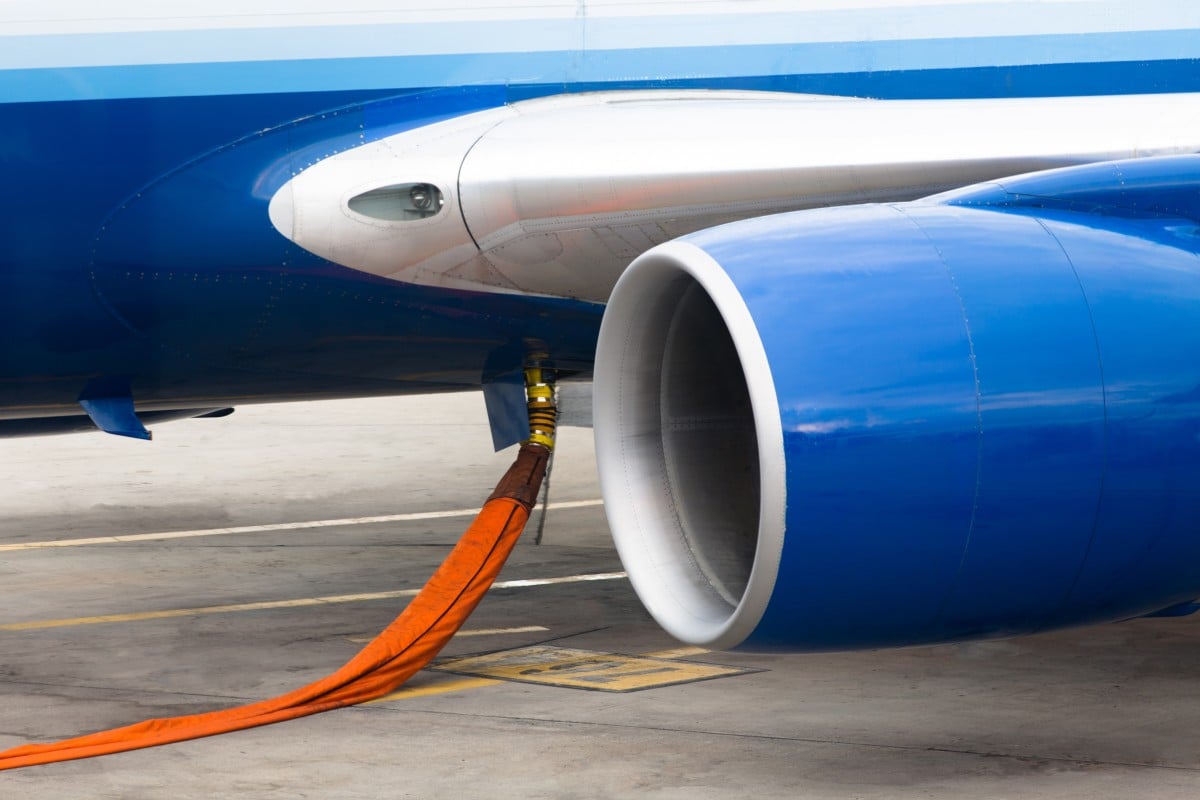
Super-fuel for military aircraft costs nearly 10 times as much as ordinary jet fuel for commercial planes. Photo: Shutterstock
Chinese scientists say they have developed a technology to convert bio-waste into fuel for missiles and hypersonic planes, reducing fuel costs by as much as 60 per cent.
The existing JP-10 super-fuel for military aircraft has numerous advantages including high energy density, good thermal stability and low freezing point, but it costs more than US$7,000 per tonne – nearly 10 times as much as ordinary jet fuel for commercial aircraft.
It is used mainly in cruise missiles and ramjet or scramjet engines on new-generation aircraft travelling at hypersonic speed, or five times faster than sound.
Scientists from the Dalian Institute of Chemical Physics, at the Chinese Academy of Sciences in the northeastern province of Liaoning, predicted using the new technology in the near future could reduce the cost to as low as US$2,547 per tonne.
The secret, according to their paper, published in the latest issue of German chemistry journal Angewandte Chemie, lies in cheap bio-waste.
Using agricultural and forestry residues including bran, chaff and mill dust, Professor Zhang Tao, Li Ning and colleagues discovered new chemical processes that can turn the waste to JP-10 fuel on a large scale with unprecedented efficiency.
At present, the super-fuel comes from coal tar or naphtha, and the synthesis is extremely costly and unfriendly to the environment.
The bio-JP-10 fuel can be produced by two different methods, one involving six steps of chemical reactions and the other only four, according to the paper.
China’s plan to make jet fuel from restaurant leftovers
Combining these methods with the latest technology in biomass conversion, the researchers said, the super-fuel can be mass-produced at a price equivalent to that of some of the bio-jet fuels already in commercial use, thanks to government subsidies provided for their environmental benefits.
“We believe that the future commercialisation of bio-JP-10 fuel is very promising, especially taking policy support and exemption from CO2 emission tax into consideration,” the authors wrote in the paper.
Liu Huoxing, professor at the school of energy and power engineering at Beijing University of Aeronautics and Astronautics, said civilian applications of hypersonic flight technology faced many challenges that remained to be solved, with the problem of high fuel prices being one of the headaches.
“No airline will buy a plane if the fuel costs too much, however fast it can fly,” he said.
Liu, who conducts research on engine technology for
hypersonic vehicles but was not involved in the Dalian study, said the reduction of production costs for jet fuel was usually incremental and it was quite rare to see a significant drop.
“This can be an important development,” he said of the Dalian findings.
China is developing various models of hypersonic speed aircraft for military and civilian use. Some are aimed at flying distances such as Shanghai to Los Angeles in a couple of hours.
Posted in agricultural waste, Angewandte Chemie, Beijing University of Aeronautics and Astronautics, bio-waste, biomass conversion, bran, chaff, cheap, China alert, Chinese Academy of Sciences, civilian applications, coal tar, commercialisation, costly, cruise missiles, Dalian Institute of Chemical Physics, Dalian study, Environment, faster than sound, forestry residues, hours, hypersonic flight technology, Hypersonic speed, jet fuel, JP-10 super-fuel, Liaoning, Los Angeles, mass-produce, Military aircraft, mill dust, missiles, naphtha, ramjet engines, restaurant leftovers, school of energy and power engineering, scramjet engines, Shanghai, super-fuel, synthesis, Uncategorized, unfriendly |
Leave a Comment »



 CHINDIA ALERT: You'll be living in their world, very soon